250mg Full-Spectrum CBD Tinctures: Labels, THC, COAs, and What to Expect

CBD label education

250mg Full-Spectrum CBD Tinctures

Labels, THC, COAs, and What to Expect

A 250mg full-spectrum CBD tincture is a hemp-derived CBD oil that typically lists 250 milligrams of CBD for the entire bottle unless the label states otherwise. The most important thing to review is not just the total CBD amount, but the serving label, CBD per serving, THC content, ingredients, extract type, batch-specific Certificate of Analysis, and safety cautions.

Safety note: Bluegrass Hemp Oil products are not intended to diagnose, treat, cure, or prevent disease. CBD may interact with medications and may not be appropriate for everyone. Full-spectrum CBD products may contain trace THC.

Label-first education
THC transparency
COA review
No medical dosing advice

CBD Product Safety Comes First

This article is educational and is not medical advice. CBD products are not intended to diagnose, treat, cure, or prevent disease. CBD may interact with medications and may not be appropriate for everyone. People taking medication, people with liver concerns, people who are pregnant or nursing, and people subject to drug testing should speak with a licensed healthcare professional before using CBD.

Full-spectrum CBD products may contain trace THC. Hemp-derived does not automatically mean THC-free. A Certificate of Analysis supports product transparency, but it does not prove medical effectiveness or guarantee a drug-test outcome.

Plain-English Definitions

These definitions help explain the terms most often found on a 250mg full-spectrum CBD tincture label.

Term Plain-English Meaning
250mg CBD Usually the total CBD amount in the bottle unless the label says otherwise.
Full-spectrum CBD Hemp extract containing CBD plus other hemp compounds and possible trace THC.
Tincture A liquid CBD product used according to the product label.
THC The intoxicating cannabinoid associated with cannabis impairment.
COA Certificate of Analysis showing batch-specific lab results.
Serving label Product directions and amount information provided by the brand.

Key Entities on This Page

This page is designed to help readers understand label, COA, THC, and safety context before making product decisions.

Entity Page Meaning
Bluegrass Hemp Oil Kentucky-based hemp company providing full-spectrum CBD products and product education.
250mg CBD tincture A lower-strength or entry-level CBD oil format depending on bottle size and serving label.
Full-spectrum hemp extract Hemp extract that may contain CBD, other cannabinoids, terpenes, and trace THC.
Certificate of Analysis Lab report used to review cannabinoid content, THC content, batch details, and available contaminant testing.
CBD safety Includes medication interactions, liver concerns, drowsiness, pregnancy or nursing caution, THC exposure, and drug-testing risk.

What Does 250mg Mean on a CBD Tincture?

A 250mg CBD tincture usually refers to the total amount of CBD in the bottle, not the amount in each serving.

To understand what you are actually reviewing, look at the product’s serving label, bottle size, CBD per serving, dropper information, THC content, ingredients, extract type, and Certificate of Analysis. Users should not assume that “250mg” means 250mg per serving unless the label clearly says that.

  • 250mg usually refers to the full bottle.
  • Serving labels explain CBD per serving.
  • Bottle size affects concentration.
  • COAs help verify label information.
  • This article does not provide medical dosing advice.

Is 250mg CBD the Whole Bottle or One Serving?

In most CBD tincture labels, 250mg refers to the total CBD amount in the bottle. The amount per serving depends on the bottle size, serving size, and label directions.

For example, if a label says “250mg CBD,” that number may describe the full bottle. The serving label explains how the brand defines one serving. Always compare the label to the batch-specific Certificate of Analysis before relying on the product information.

For a deeper walkthrough, use the Read the CBD product label guide resource before choosing a CBD tincture.

What Does Full-Spectrum CBD Mean?

Full-spectrum CBD refers to hemp extract that may contain CBD along with other hemp compounds such as minor cannabinoids and terpenes. Full-spectrum products may also contain trace THC.

Hemp-derived does not automatically mean THC-free, so users should review the product label and Certificate of Analysis carefully. THC-sensitive users and people subject to drug testing should pay close attention to total THC information, batch number, and lab results.

For more background, Understand full-spectrum CBD products and Understand the difference between CBD and THC.

Full-Spectrum vs Broad-Spectrum vs CBD Isolate

Full-spectrum CBD, broad-spectrum CBD, and CBD isolate are different extract types. The comparison should focus on label clarity, THC status, and COA verification, not broad claims that one type is better for everyone.

Type What It Means THC Consideration
Full-spectrum CBD Contains CBD plus a broader hemp plant profile. May contain trace THC.
Broad-spectrum CBD Contains CBD plus some other hemp compounds. Usually formulated without THC, but verify with a COA.
CBD isolate CBD separated from other hemp compounds. Usually no THC, but verify with a COA.

Use lab reports to compare extract type and THC status. You can Learn about CBD lab testing before reviewing a tincture label or COA.

What to Check on a 250mg CBD Tincture Label

A useful CBD tincture label should help you understand total CBD, CBD per serving, bottle size, THC content, ingredients, extract type, warning language, and batch information.

Label Item Why It Matters
Total CBD Shows the total CBD amount in the bottle.
CBD per serving Helps users understand the serving label.
Bottle size Needed to understand concentration.
Serving directions Helps users follow the product label.
THC content Full-spectrum products may contain trace THC.
Ingredients Carrier oils, flavors, allergens, and other ingredients matter.
Extract type Full-spectrum, broad-spectrum, and isolate are different.
Warning language Responsible labels include safety cautions.
Batch number Should match the Certificate of Analysis.

What a CBD Tincture Certificate of Analysis Should Show

A CBD tincture Certificate of Analysis should help users verify cannabinoid content, THC content, batch information, testing date, lab information, and available contaminant testing.

A COA supports transparency. It does not prove that a product treats symptoms, works for a medical condition, or is appropriate for every person.

COA Item Why It Matters
CBD amount Confirms cannabinoid content.
THC content Helps users evaluate full-spectrum THC exposure.
Batch number Should match the product.
Testing date Shows when testing was performed.
Lab name Supports traceability.
Contaminant testing Helps review pesticides, heavy metals, solvents, microbes, and other available tests.
Units of measurement Helps compare the COA to the product label.

Use View Bluegrass Hemp Oil Certificates of Analysis and Learn about CBD lab testing when checking batch-specific information.

Will a 250mg Full-Spectrum CBD Tincture Make You High?

CBD itself is not considered impairing. However, full-spectrum CBD products may contain trace THC. People who are sensitive to THC or who must avoid THC should review the product label and Certificate of Analysis carefully.

Do not assume every person will respond the same way to hemp-derived products. Review the label, THC content, and COA before using a full-spectrum CBD tincture.

Can Full-Spectrum CBD Affect a Drug Test?

Full-spectrum CBD products may contain trace THC. People subject to workplace, athletic, professional, licensing, legal, probation, or other drug testing should review labels and Certificates of Analysis carefully. A COA can show THC content, but it cannot guarantee a drug-test outcome.

For more context, Learn whether CBD can matter for drug testing.

Is a 250mg CBD Tincture Good for Beginners?

A 250mg CBD tincture may be considered a lower-strength option compared with higher-total-CBD bottles, but “beginner-friendly” depends on the bottle size, serving label, CBD per serving, THC content, medication use, personal sensitivity, and safety considerations.

This page does not provide medical dosing advice. A lower total CBD amount does not automatically mean a product is right for every person. Review the label, COA, and safety cautions, then speak with a licensed healthcare professional when medication, liver, pregnancy or nursing, or medical-condition questions apply.

Newer CBD shoppers may also find it useful to Read the beginner guide to CBD oil.

How to Compare 250mg CBD Oil to Stronger CBD Oils

To compare a 250mg CBD tincture with stronger CBD oils, review total CBD, CBD per serving, bottle size, extract type, THC content, serving label, ingredients, batch-specific Certificate of Analysis, lab-testing date, and safety cautions.

Higher total CBD does not automatically mean better. The right comparison starts with the label.

Comparison Point Why It Matters
Total CBD Shows how much CBD is listed in the bottle.
CBD per serving Helps compare serving labels across products.
Bottle size Affects concentration.
Extract type Full-spectrum, broad-spectrum, and isolate products differ.
THC content Full-spectrum products may contain trace THC.
Ingredients Carrier oils, flavors, and allergens may matter.
COA Helps verify cannabinoid content and available testing.

For format education, Compare CBD oil, gummies, and capsules.

CBD Safety and Medication Questions

CBD may interact with medications and may not be appropriate for everyone.

People taking prescription medications, over-the-counter medicines, herbs, supplements, sedatives, sleep aids, blood thinners, seizure medications, liver-affecting drugs, or other products should speak with a licensed healthcare professional before using CBD. CBD may cause drowsiness in some people, and CBD may raise liver-related safety questions.

  • Ask about CBD if you take prescription or over-the-counter medications.
  • Ask about CBD if you use alcohol, sedatives, or sleep aids.
  • Ask about CBD if you have liver concerns or a medical condition.
  • People who are pregnant or nursing should speak with a licensed healthcare professional.
  • People subject to drug testing should review labels and COAs carefully.
  • Full-spectrum CBD products may contain trace THC.

For a dedicated safety resource, Review CBD medication interaction guidance.

Where Bluegrass Hemp Oil Product Information Fits

Bluegrass Hemp Oil can help customers review product labels, CBD amount, THC content, ingredients, extract type, batch-specific Certificates of Analysis, lab-testing information, and product-quality questions.

Product transparency does not mean a product diagnoses, treats, cures, or prevents disease. Product links on this page are provided for label, COA, lab-testing, extract-type, cannabinoid-profile, THC-content, and product-transparency context.

Related CBD Product Transparency Resources

Use these resources to compare labels, THC content, COAs, lab testing, and product-format information.

FAQs About 250mg Full-Spectrum CBD Tinctures

What does 250mg CBD tincture mean?

A 250mg CBD tincture usually means the bottle contains 250 milligrams of CBD in total unless the label states otherwise.

Is 250mg CBD the whole bottle or one serving?

It is usually the total amount in the bottle. Check the serving label to understand CBD per serving.

What does full-spectrum CBD mean?

Full-spectrum CBD contains CBD plus a broader hemp plant profile and may contain trace THC.

Will a 250mg full-spectrum CBD tincture make me high?

CBD itself is not considered impairing, but full-spectrum CBD products may contain trace THC. Review the product label and Certificate of Analysis.

Can a full-spectrum CBD tincture affect a drug test?

Yes, it may. Full-spectrum CBD may contain trace THC, and Certificates of Analysis cannot guarantee drug-test outcomes.

Is a 250mg CBD tincture good for beginners?

It may be a lower-strength option compared with higher-total-CBD bottles, but suitability depends on the label, CBD per serving, THC content, safety factors, and individual circumstances.

What should a CBD tincture label show?

It should show total CBD, serving information, ingredients, extract type, THC content, warnings, and batch information.

What should a CBD tincture COA show?

It should show cannabinoid content, THC content, batch number, testing date, lab information, and available contaminant testing.

How do I compare 250mg CBD oil to stronger CBD oils?

Compare total CBD, CBD per serving, bottle size, extract type, THC content, ingredients, serving label, and batch-specific Certificate of Analysis.

What is the difference between full-spectrum, broad-spectrum, and CBD isolate?

Full-spectrum CBD may contain trace THC, broad-spectrum CBD is usually formulated without THC, and CBD isolate is CBD separated from other hemp compounds. Always verify with a Certificate of Analysis.

Can CBD interact with medications?

Yes. CBD may interact with medications. People taking medications should speak with a licensed healthcare professional.

Is CBD safe during pregnancy or breastfeeding?

People who are pregnant or breastfeeding should speak with a licensed healthcare professional before using CBD products. FDA consumer guidance strongly advises against CBD, THC, and marijuana use during pregnancy or breastfeeding.

Are 250mg full-spectrum CBD tinctures FDA-approved?

Retail CBD products are not FDA-approved to diagnose, treat, cure, or prevent disease.

How do I contact Bluegrass Hemp Oil with CBD label questions?

Use the Contact Bluegrass Hemp Oil with product-label questions page for product-label, Certificate of Analysis, ingredient, lab-testing, and product-transparency questions.

Written by Bill Polyniak

Bill Polyniak is the founder of Bluegrass Hemp Oil and Kentucky Cannabis Company. His work focuses on Kentucky hemp, full-spectrum CBD education, product quality, lab-testing transparency, and helping customers make informed CBD decisions. This article explains what a 250mg full-spectrum CBD tincture means, how to review CBD serving labels, what full-spectrum CBD and trace THC mean, how Certificates of Analysis support product transparency, and what safety questions adults should consider before using hemp-derived CBD products.

Read Bill Polyniak’s bio

Last updated: May 21, 2026
Product details checked: May 21, 2026
No prices listed
No medical dosing advice

How This Article Was Created

This article was created to help adults understand 250mg full-spectrum CBD tincture labels, total CBD content, serving information, THC content, Certificates of Analysis, lab testing, ingredients, medication-interaction questions, drug-testing concerns, and product-transparency details. It is educational only and is not medical advice. Bluegrass Hemp Oil products are not intended to diagnose, treat, cure, or prevent disease.

Reviewer note: This article should be reviewed by the appropriate Bluegrass Hemp Oil product-quality, compliance, or healthcare-informed reviewer before publication because it discusses CBD labels, THC, medications, pregnancy or nursing cautions, drug testing, lab testing, and safety considerations.

Educational and Product Safety Disclaimer

This article is for educational purposes only and is not medical advice. CBD products should not replace diagnosis, treatment, medication, or guidance from a qualified healthcare professional. Product details, prices, ingredients, potency, THC levels, serving information, and availability can change. Always review current product labels, ingredients, lab-testing information, THC levels, warnings, and batch-specific Certificates of Analysis before choosing a CBD product.


What Is Full-Spectrum CBD Distillate? Uses, THC, Testing & Safety

CBD Extract Education Guide

What Is Full-Spectrum CBD Distillate? Uses, THC, Testing & Safety

Quick answer: Full-spectrum CBD distillate is a concentrated hemp extract that may contain CBD plus other naturally occurring hemp compounds, including minor cannabinoids, terpenes, flavonoids, and trace THC within legal hemp limits. This guide explains how CBD distillate differs from CBD oil, broad-spectrum CBD, and CBD isolate, and how to verify quality through labels, lab testing, and Certificates of Analysis.

Bluegrass Hemp Oil context: Bluegrass Hemp Oil is a Kentucky-based CBD company that creates full-spectrum hemp-derived CBD products and educational resources. This page explains full-spectrum CBD distillate, THC considerations, drug-testing risk, residual solvent testing, product labels, and COA review before choosing a hemp-derived CBD product.

Trust line: CBD extract education, THC transparency, residual solvent testing, and COA verification come before product decisions.

THC transparency
COA verification
Residual solvent testing

CBD Distillate Safety Comes First

CBD distillate safety note: This article is educational and is not medical advice. CBD products are not intended to diagnose, treat, cure, or prevent disease. Full-spectrum CBD distillate may contain trace THC and should be evaluated through current product labels and batch-specific Certificates of Analysis. Talk with a qualified healthcare professional before using CBD if you take medication, use alcohol or sedating products, have liver concerns, have a medical condition, are pregnant or nursing, are subject to drug testing, or are choosing CBD for a child or pet.

What Is Full-Spectrum CBD Distillate? Quick Answer

Quick answer: Full-spectrum CBD distillate is a concentrated hemp extract that may contain CBD plus other naturally occurring hemp compounds, including minor cannabinoids, terpenes, flavonoids, and trace THC within legal hemp limits. It is often used as an ingredient in CBD oils, gummies, capsules, topicals, or other hemp products.

Quality should be verified through labels, ingredient lists, THC information, residual solvent testing, contaminant screening, and batch-specific Certificates of Analysis.

  • Full-spectrum CBD distillate is a concentrated hemp extract.
  • It may contain trace THC, so THC and drug-testing concerns matter.
  • It is not the same as finished CBD oil.
  • It may be used as an ingredient in finished CBD products.
  • A COA should verify CBD, THC, residual solvents, and available contaminant testing.
  • CBD distillate should not be evaluated by health claims.
  • Product labels and batch-specific lab reports matter.

For broader background, you can learn about full-spectrum CBD and review Bluegrass Hemp Oil Certificates of Analysis.

Full-Spectrum CBD Distillate Explained in Plain Language

Quick answer: Full-spectrum CBD distillate is a refined hemp extract. “Full-spectrum” refers to a broader hemp compound profile, while “distillate” refers to a concentrated extract created through refinement and distillation.

CBD distillate is a concentrated hemp extract that may be used as an ingredient in finished CBD products. Full-spectrum CBD means the extract may contain CBD plus other naturally occurring hemp compounds and trace THC. Trace THC matters because THC can be relevant for intoxication concerns, drug testing, product legality, and personal preference.

The exact compound profile can vary by hemp source, extraction method, refinement process, and batch. That is why a current product label and batch-specific Certificate of Analysis are more useful than broad marketing phrases.

Full-spectrum extracts are sometimes discussed in relation to the proposed “entourage effect.” That theory should not be treated as proof that CBD distillate provides medical benefits or treats symptoms.

Ingredient vs finished product

How CBD Distillate Is Different From CBD Oil

Quick answer: CBD distillate is usually a concentrated extract or ingredient, while CBD oil is usually a finished product made by blending hemp extract with a carrier oil. Both should be verified by labels and batch-specific COAs.

Comparison Point CBD Distillate CBD Oil
Product role Often an ingredient or concentrated extract Usually a finished consumer product
Concentration Often more concentrated Diluted into a carrier oil
Carrier oil Usually not the final carrier formula by itself Often includes MCT oil, hempseed oil, or another carrier
Use context Formulation, manufacturing, or advanced product education Consumer routine and serving clarity
Label needs Cannabinoid profile, THC, residual solvents, contaminants CBD per serving, total CBD, ingredients, THC, COA
Safety check Batch-specific lab testing is critical Batch-specific lab testing is also critical

A finished CBD oil should make serving information easier to understand. To compare finished products, learn about CBD oil and review the label before making a product decision.

Spectrum comparison

Full-Spectrum CBD Distillate vs Broad-Spectrum CBD vs CBD Isolate

Quick answer: Full-spectrum CBD distillate, broad-spectrum CBD, and CBD isolate are different extract types. The right choice depends on THC concerns, product format, ingredient transparency, lab testing, and personal preference, not broad “better” claims.

Extract Type What It Usually Means THC Consideration What to Check
Full-spectrum CBD distillate Concentrated hemp extract with CBD plus a broader hemp profile May contain trace THC within legal limits COA, THC level, cannabinoids, residual solvents, contaminants
Broad-spectrum CBD CBD plus some supporting hemp compounds, usually processed to remove THC THC should be non-detectable or below reporting limits if claimed COA and THC result
CBD isolate Purified CBD separated from most other plant compounds Usually THC-free, but verify COA and ingredient list
Full-spectrum CBD oil Finished consumer product made with hemp extract and carrier oil May contain trace THC Label, serving size, carrier oil, COA

For a deeper spectrum comparison, compare full-spectrum CBD and CBD isolate.

What Full-Spectrum CBD Distillate May Contain

Quick answer: Full-spectrum CBD distillate may contain CBD plus other naturally occurring hemp compounds. The broader profile can vary by product and batch, so the label and COA should be used to verify what is actually present.

  • CBD: The primary cannabinoid most shoppers look for in hemp-derived CBD products.
  • Minor cannabinoids: Other cannabinoids may appear when present in the hemp extract.
  • Terpenes: Aromatic compounds found in hemp and many other plants. Terpene content should not be treated as a medical-effect claim.
  • Flavonoids and plant compounds: Additional plant compounds may be present depending on the extract and processing method.
  • Trace THC: Full-spectrum hemp extracts may contain trace THC within legal hemp limits. Always verify THC on the COA.

Do not assume that a broader hemp profile guarantees stronger results, better outcomes, or symptom support. Use transparent product information, not health claims, to compare CBD products.

Drug-testing caution

THC, Full-Spectrum CBD, and Drug Testing

Quick answer: Full-spectrum CBD distillate may contain trace THC. Anyone subject to workplace, athletic, legal, military, school, or professional drug testing should review the batch-specific Certificate of Analysis and speak with a qualified professional before using full-spectrum CBD products.

  • Full-spectrum products may contain trace THC.
  • THC levels should be verified on the batch-specific COA.
  • Drug-testing risk cannot be ruled out for full-spectrum CBD.
  • THC-free claims require lab verification.
  • No full-spectrum product should be described as guaranteed safe for drug testing.

How CBD Distillate Is Made: Extraction, Refinement, and Distillation

Quick answer: CBD distillate is made through hemp extraction and refinement steps that concentrate cannabinoids and remove some unwanted materials. The exact process can vary, which is why lab testing, residual solvent testing, and batch-specific COAs matter.

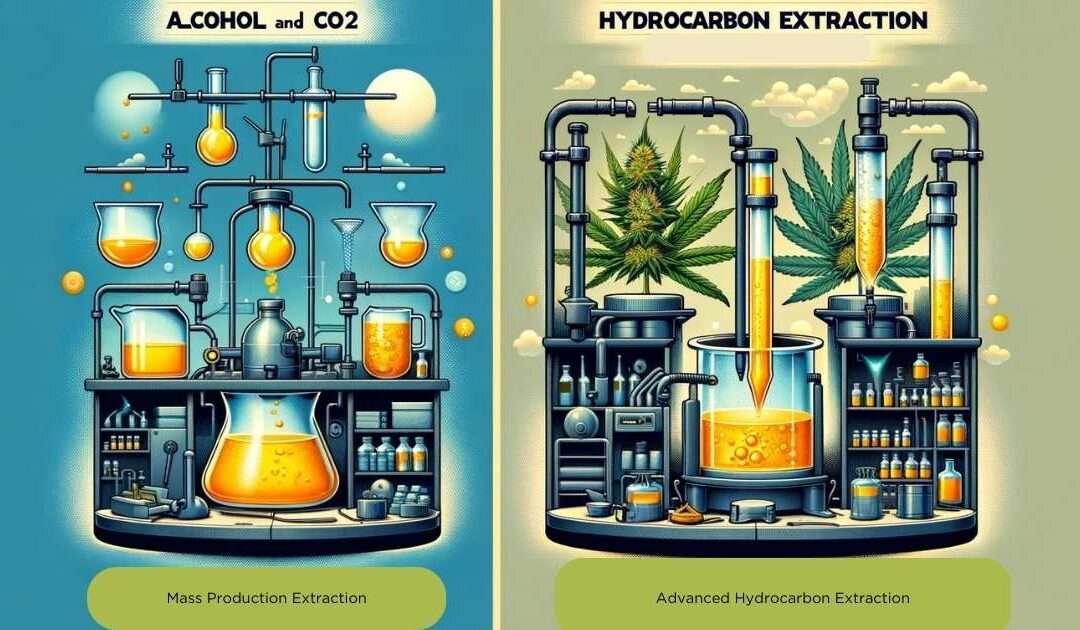
At a high level, the process may include hemp extraction, refinement steps such as removing some waxes, fats, chlorophyll, or unwanted materials, and distillation to concentrate cannabinoids. The final profile can vary based on the hemp, extraction method, refinement choices, and batch controls.

This article does not provide home extraction instructions, solvent handling instructions, or vape formulation instructions. For educational background, learn about CBD extraction methods.

Testing matters

Why Residual Solvent and Contaminant Testing Matters

Quick answer: Because CBD distillate is concentrated, lab testing matters. A useful Certificate of Analysis should help verify cannabinoid potency, THC level, residual solvents, pesticides, heavy metals, microbials, and whether the report belongs to the exact batch.

  • Potency testing: Helps verify CBD amount and cannabinoid profile.
  • THC testing: Helps verify THC level and full-spectrum status.
  • Residual solvent testing: Helps check solvent traces that may remain after extraction or processing.
  • Heavy metals testing: Helps identify contamination concerns when available.
  • Pesticide testing: Helps verify screening for agricultural contaminants when available.
  • Microbial testing: Helps check for certain microbial contaminants when available.
  • Batch matching: Helps connect the product in hand to the exact lab report.

Use both CBD lab testing standards and Bluegrass Hemp Oil Certificates of Analysis when reviewing product quality.

Common Product Uses: Oils, Gummies, Capsules, and Topicals

Quick answer: CBD distillate may be used as an ingredient in finished hemp-derived CBD products such as oils, gummies, capsules, and topicals. The finished product label should show CBD amount, ingredients, THC information, serving directions, batch number, and COA access.

CBD distillate is often discussed in product formulation contexts because it is concentrated and can be blended into different finished-product formats. Consumers should judge those finished products by label clarity, ingredients, serving information, THC transparency, and batch-specific lab reports.

  • CBD oils: Usually hemp extract blended with a carrier oil. Review CBD per serving and total CBD.
  • CBD gummies: Review ingredients, serving directions, CBD amount, THC level, and COA access.
  • CBD capsules: Review serving size, extract type, ingredients, and batch information.
  • CBD topicals: Review the full ingredient list and whether the COA matches the product batch.

To compare formats, compare CBD consumption methods and learn how to read a CBD product label.

A Note About CBD Vape Products

This page does not recommend vaping CBD distillate. Inhaled products raise different safety, ingredient, formulation, and legal concerns than oral CBD oils, gummies, capsules, or topicals. Do not add CBD distillate, oils, MCT oil, vitamin E acetate, or unverified additives to any vaping device. If a page discusses vape manufacturing, it should be reviewed for legal, safety, and regulatory compliance before publication.

Lab report checklist

How to Read a CBD Distillate COA

Quick answer: A CBD distillate COA should help verify the extract identity, batch number, CBD amount, THC level, other cannabinoids, residual solvents, and available contaminant testing. The report should match the exact batch being reviewed.

  • Product name or extract type matches the product.
  • Batch or lot number matches the product.
  • CBD amount is clearly listed.
  • Total THC is clearly listed.
  • Other cannabinoids are shown when available.
  • Terpenes are listed when available.
  • Residual solvent testing is included.
  • Heavy metals testing is included when available.
  • Pesticide testing is included when available.
  • Microbial testing is included when available.
  • Lab name, test date, and testing method are visible.
  • The COA belongs to the exact batch, not just the brand.

Start with the Bluegrass Hemp Oil Certificates of Analysis and compare each report against the physical product label.

Buyer quality review

How to Compare CBD Distillate Quality

Quick answer: Compare CBD distillate quality by reviewing extract type, CBD amount, THC level, ingredients, batch number, lab name, test date, residual solvent results, contaminant testing, and whether the company avoids disease-treatment claims.

  • Is the extract type clearly identified?
  • Is the product full-spectrum, broad-spectrum, isolate, or THC-free?
  • Is the CBD amount listed?
  • Is the THC level listed?
  • Are ingredients clearly shown?
  • Is there a batch number?
  • Is there a batch-specific COA?
  • Does the COA include potency testing?
  • Does the COA include residual solvent testing?
  • Does the COA include contaminant testing?
  • Is the test date visible?
  • Is the lab name visible?
  • Does the company provide contact information?
  • Are health claims avoided?

For Bluegrass Hemp Oil context, review Bluegrass Hemp Oil quality standards.

Claims compliance

What This Page Can and Cannot Claim

Quick answer: This page can explain full-spectrum CBD distillate, extract types, THC, product uses, lab testing, and COA verification. It should not claim that CBD distillate treats stress, pain, sleep problems, inflammation, anxiety, or disease.

Claim Area Safe Wording
Definition This page can explain full-spectrum CBD distillate as a concentrated hemp extract.
Composition It can explain that full-spectrum extracts may contain CBD, minor cannabinoids, terpenes, flavonoids, and trace THC.
THC It can explain why THC level and drug-testing risk should be verified with a COA.
Manufacturing It can explain extraction, refinement, distillation, and residual solvent testing at a high level.
Product uses It can say distillate may be used as an ingredient in CBD oils, gummies, capsules, or topicals.
Medical claims This page should not claim CBD distillate treats stress, pain, sleep problems, inflammation, anxiety, or disease.
Safety This page should not say CBD distillate is risk-free. Include medication, liver, pregnancy/nursing, child/pet, alcohol, sedative, and drug-testing cautions.
Quality Product quality should be verified by labels, ingredients, third-party testing, and batch-specific COAs.

Why Bluegrass Hemp Oil Focuses on CBD Transparency

Quick answer: Transparent CBD education helps customers compare products by extract type, ingredients, THC level, lab testing, and batch-specific COAs instead of relying on broad marketing claims.

Bluegrass Hemp Oil focuses on full-spectrum CBD education, clear labeling, lab testing, Certificates of Analysis, and product transparency so customers can compare CBD products by ingredients, THC levels, product format, and batch-specific lab results.

Lab report checklist

Compare CBD Products by Labels, THC, and COAs

Before choosing any CBD product, review the product label, full-spectrum status, THC information, ingredients, lab-testing standards, residual solvent testing when relevant, and the batch-specific Certificate of Analysis.

FAQs About Full-Spectrum CBD Distillate

What is full-spectrum CBD distillate?

Full-spectrum CBD distillate is a concentrated hemp extract that may contain CBD plus other naturally occurring hemp compounds, including minor cannabinoids, terpenes, flavonoids, and trace THC within legal limits. It should be evaluated with a product label and batch-specific Certificate of Analysis.

Is CBD distillate the same as CBD oil?

No. CBD distillate is usually a concentrated extract or ingredient, while CBD oil is usually a finished consumer product made by blending hemp extract with a carrier oil. CBD oil labels should show CBD per serving, ingredients, THC information, and COA access.

Does full-spectrum CBD distillate contain THC?

It can. Full-spectrum CBD distillate may contain trace THC within legal hemp limits. Anyone concerned about THC exposure or drug testing should review the batch-specific COA before using any full-spectrum CBD product.

Can full-spectrum CBD distillate show up on a drug test?

Full-spectrum products may contain trace THC, so drug-testing risk cannot be ruled out. Anyone subject to workplace, legal, athletic, or professional drug testing should review the COA and speak with a qualified professional before using full-spectrum CBD.

Is full-spectrum CBD distillate better than CBD isolate?

Not automatically. Full-spectrum distillate, broad-spectrum CBD, and CBD isolate are different extract types. The better choice depends on THC concerns, product format, ingredient transparency, lab testing, and personal preference, not broad better claims.

What should a CBD distillate COA show?

A CBD distillate COA should show product or batch identity, CBD amount, THC level, other cannabinoids when available, residual solvent testing, heavy metals, pesticides, microbials, lab name, test date, and whether the report matches the exact product batch.

Is CBD distillate safe?

CBD distillate should not be described as risk-free. CBD can carry safety concerns, and quality varies by product. Review labels, ingredients, THC levels, COAs, medications, alcohol or sedative use, liver concerns, pregnancy or nursing status, child or pet use, and drug-testing risk.

Is CBD distillate FDA-approved?

Do not describe CBD distillate or over-the-counter CBD products as FDA-approved unless the exact product has FDA approval. Most hemp-derived CBD products should be discussed with careful safety and label-verification language.

Is CBD distillate good for sleep or pain?

CBD distillate should not be described as a treatment for sleep problems, pain, stress, inflammation, anxiety, or disease. This page explains extract types, labels, THC, product quality, and COA review rather than making health-outcome claims.

What should I check before buying full-spectrum CBD?

Check the product label, CBD amount, THC level, extract type, ingredients, serving directions, batch number, Certificate of Analysis, residual solvent testing when relevant, contaminant testing, and whether the product fits your safety needs.

Written by Bill Polyniak

Bill Polyniak is the founder of Bluegrass Hemp Oil and Kentucky Cannabis Company. His work focuses on Kentucky hemp, full-spectrum CBD education, product quality, lab-testing transparency, and helping customers make informed CBD decisions.

This article explains what full-spectrum CBD distillate is, how it differs from CBD oil, broad-spectrum CBD, and CBD isolate, why THC and residual solvent testing matter, and how to review labels and Certificates of Analysis before choosing hemp-derived CBD products.

read Bill Polyniak’s bio

CBD extraction and safety review recommended: This article should be reviewed by the Bluegrass Hemp Oil quality or compliance team before publication because it discusses full-spectrum CBD distillate, extraction, distillation, THC, residual solvents, vaping, bulk extract use, product labels, lab testing, Certificates of Analysis, and CBD safety claims.

Sources and Safety Review Note

Updated: May 21, 2026

Product details checked: No individual product price, availability, or serving claim is cited on this page. If a specific product is added later, verify the current product label, ingredients, THC level, price, availability, and batch-specific COA before publication.

Educational disclaimer: This article is for educational purposes only and is not medical advice. CBD distillate and CBD products should not replace diagnosis, treatment, medication, or guidance from a qualified healthcare professional. Product details, prices, ingredients, potency, THC levels, and availability can change. Always review current product labels, ingredients, lab-testing information, THC levels, residual solvent testing, contaminant screening, and batch-specific Certificates of Analysis before choosing a CBD product.

Recommended sources for publication review

Bluegrass Hemp Oil education and trust links

Schema recommendations

  • Article schema: Use for the visible educational article.
  • FAQPage schema: Use only because the FAQs are visible on this page.
  • BreadcrumbList schema: Home > CBD Education > Full-Spectrum CBD Distillate.
  • Person schema: Use for Bill Polyniak if the author box is visible.
  • Organization schema: Use for Bluegrass Hemp Oil.
  • Avoid Product schema: Do not use it on this page unless a specific product with current visible price, availability, image, and offer details is added without medical or symptom claims.
Can’t Sleep Because You’re Overthinking? A Calm Night Routine & CBD Safety Guide

Can’t Sleep Because You’re Overthinking? A Calm Night Routine & CBD Safety Guide

Sleep, Stress & CBD Safety

Can’t Sleep Because You’re Overthinking? A Calm Night Routine and CBD Safety Guide

When your mind starts replaying the day the moment your head hits the pillow, the goal is not to “force” sleep. The goal is to lower stimulation, give your thoughts a safe place to land, and build a repeatable routine that tells your body it is time to rest.

Educational content only. CBD products are not intended to diagnose, treat, cure, or prevent any disease. Talk with a qualified healthcare professional before using CBD if you take medication, are pregnant or breastfeeding, have liver concerns, have a chronic condition, or are shopping for a child or pet.

Last updated: May 22, 2026

1
Park your thoughts.

Write tomorrow’s tasks, worries, and open loops before bed so your brain does not keep rehearsing them in the dark.

2
Lower the signal.

Dim lights, stop scrolling, keep the room cool, and use the same wind-down cues most nights.

3
Be careful with CBD.

Some adults use CBD as part of a relaxation routine, but the evidence for sleep is still developing and safety depends on the person, product, and dose.

Quick answer: what helps when overthinking keeps you awake?

If you cannot sleep because you are overthinking, use a predictable 30 to 60 minute wind-down routine: write worries down, choose one small next action for tomorrow, turn off bright screens, practice slow breathing, and keep your bedroom quiet, dark, relaxing, and cool. If you are considering CBD, treat it as an optional wellness product for adults, not a treatment for insomnia, anxiety, or any medical condition.

What this guide covers

Why can’t I sleep when I’m overthinking?

Nighttime overthinking often happens because the day finally gets quiet. Without work, screens, errands, or conversations competing for attention, your brain may try to process unfinished tasks, unresolved stress, emotional conversations, or tomorrow’s responsibilities.

That mental activity can keep your body in an alert state. You may notice a faster heartbeat, tight shoulders, shallow breathing, or the urge to check your phone. These cues can make sleep feel farther away, which then creates a second layer of stress: worrying about not sleeping.

Entity summary: overthinking at night

Overthinking at night means repetitive, hard-to-stop thoughts that show up near bedtime or after waking during the night. It is not a personal failure. It is often a sign that your nervous system needs stronger cues for closure, safety, and rest.

A calm night routine for racing thoughts

Use this routine as a flexible template. Start with the pieces that feel realistic. Consistency matters more than perfection.

60 minutes before bed: create closure

  • Write down the top three things on your mind.
  • Choose one realistic next step for tomorrow, not a full solution tonight.
  • Set out anything you need in the morning, such as clothes, medication reminders, keys, or work materials.
  • Lower the room lights and switch to quieter activities.

30 minutes before bed: reduce stimulation

  • Turn off electronic devices or place them outside arm’s reach.
  • Avoid work email, conflict-heavy conversations, and intense content.
  • Try gentle stretching, a warm shower, prayer, meditation, or calm reading.
  • Keep caffeine, alcohol, and large meals away from the late evening when possible.

10 minutes before bed: cue your body to rest

Try a simple breathing pattern: inhale gently through your nose, then make the exhale longer than the inhale. Repeat for several minutes. You do not need to count perfectly. The goal is to make your breathing slower, quieter, and less effortful.

Then use a short phrase such as, “I have written this down. I can return to it tomorrow.” This gives your mind a boundary without arguing with every thought.

What should I do when my mind starts racing in bed?

If you are in bed and your thoughts keep speeding up, do not turn the bed into a place where you wrestle with the day. Use a quiet reset.

  • Name the pattern: “This is worry rehearsal, not problem solving.”
  • Use a notepad: Write the thought in one sentence and add “tomorrow” beside it.
  • Shift attention: Count slow exhales, picture a familiar peaceful place, or name neutral objects alphabetically.
  • Reset gently: If you feel stuck, leave the bed for a quiet, dimly lit activity and return when sleepy.

When to ask for professional support

Speak with a healthcare professional if sleeplessness happens often, lasts for weeks, affects your work or driving, comes with panic, depression, severe anxiety, snoring or breathing pauses, chronic pain, or reliance on alcohol or sedatives to sleep.

Can CBD help me relax before bed?

Some adults use CBD as part of a nighttime wellness routine because they want support for relaxation. However, CBD should be discussed carefully in sleep content because research is still developing, products vary widely, and CBD can carry risks for some people.

CBD should not be positioned as a cure or treatment for insomnia, anxiety, depression, pain, or any other health condition. It is also not a replacement for sleep hygiene, medical evaluation, therapy, or prescribed care.

Question Safer answer Why it matters
Is CBD proven to fix sleep? No. Some adults report relaxation benefits, but evidence for sleep is not strong enough to promise results. YMYL sleep content should avoid guaranteed outcomes and disease-treatment claims.
Can CBD interact with medication? Yes, it may interact with some medicines and sedating substances. Ask a clinician or pharmacist before combining CBD with prescriptions, sleep aids, alcohol, or supplements.
Who should avoid CBD unless medically directed? People who are pregnant or breastfeeding, children, people with liver concerns, and anyone with complex medical needs. The FDA advises against CBD during pregnancy and breastfeeding, and child use should be clinician-directed.
Can full-spectrum CBD contain THC? Yes. Full-spectrum hemp products can contain small amounts of THC within legal limits. THC sensitivity, workplace testing, driving, and medication interactions should be considered.

CBD safety checklist before nighttime use

  • Talk with a healthcare professional if you take medication or have a medical condition.
  • Do not use CBD during pregnancy or breastfeeding unless your qualified clinician gives specific guidance.
  • Do not give CBD to children for sleep without direct medical supervision.
  • Avoid mixing CBD with alcohol, sedatives, or sleep medications unless approved by your clinician.
  • Do not drive or operate machinery if a product makes you sleepy, impaired, or less alert.

How to choose a higher-quality CBD product for a nighttime routine

If CBD is appropriate for you, product quality matters. A polished label is not enough. Look for transparent sourcing, batch-specific testing, plain-language serving information, and a company that avoids exaggerated medical claims.

Look for these trust signals

  • A current third-party Certificate of Analysis that matches the batch or serial number.
  • Clear CBD amount per serving and per container.
  • THC results that are easy to find and understand.
  • Testing for contaminants such as heavy metals, pesticides, residual solvents, and microbes.
  • Ingredient lists that make allergens, sweeteners, carrier oils, and flavorings clear.

Be cautious when you see

  • Claims that CBD treats insomnia, anxiety, pain, or disease.
  • No accessible lab results or lab reports that do not match the product batch.
  • Unclear serving sizes or unusually high suggested amounts for beginners.
  • Products marketed toward children for sleep without physician oversight.
  • Pressure-heavy sales language instead of education and safety context.

Product bridge: keep it educational first

Bluegrass Hemp Oil shoppers can compare Genesis Blend full-spectrum CBD oil options, review full-spectrum CBD gummies, and verify third-party CBD lab results before deciding whether CBD belongs in their personal nighttime routine.

What about essential oils, tea, or other natural sleep supports?

Simple sensory cues can help your routine feel calmer. Lavender aromatherapy, caffeine-free tea, soft music, prayer, breathing exercises, or a warm shower may help some people relax before bed. Keep expectations realistic: these tools are supports, not medical treatments.

Use essential oils carefully. Do not ingest essential oils unless directed by a qualified professional, dilute topical oils properly, and be cautious around children, pets, asthma, migraines, pregnancy, and sensitive skin.

Frequently asked questions

Why do I overthink more at night?

Night is often the first quiet moment of the day. Your brain may try to process unresolved tasks, emotions, and decisions when there are fewer distractions. A written worry list and a consistent wind-down routine can help create closure.

How do I stop my mind from racing when I’m trying to sleep?

Start by writing the thought down, naming one next step for tomorrow, and returning to a calming cue such as slow breathing or a neutral visualization. The goal is not to defeat every thought. The goal is to stop turning bedtime into problem-solving time.

Can CBD make me sleepy?

Some people feel relaxed or drowsy after using CBD, while others do not. Response can vary based on the person, product, serving size, other ingredients, medications, and whether the product contains THC. Avoid driving or risky activities if you feel impaired or unusually sleepy.

Is CBD safe to take every night?

That depends on your health history, medications, dose, product quality, and clinician guidance. CBD can have side effects and may interact with some medicines. Ask a healthcare professional before routine use, especially if you take medication or have liver concerns.

Is CBD safe for kids who can’t sleep?

Do not give CBD to children for sleep without direct guidance from a qualified healthcare professional. Sleep problems in children can have many causes and should be evaluated with pediatric care.

Can I use CBD with melatonin or sleep medication?

Ask a clinician or pharmacist first. Combining CBD with melatonin, sedatives, alcohol, or sleep medications may increase drowsiness or other risks for some people.

What is the best nighttime routine for overthinking?

A strong routine usually includes a consistent sleep and wake time, a short planning or journaling step, screen-free time, dim lights, a cool and quiet room, and a repeatable calming activity such as breathing, gentle stretching, or prayer.

Sources reviewed

This article was rebuilt to prioritize reader safety, clear sourcing, and cautious language for a health-adjacent CBD topic.

Build a calmer night one small habit at a time

Start tonight with the non-product routine first: write down what is looping in your mind, reduce bright light and stimulation, and give your body a consistent cue that the day is complete. If CBD is appropriate for you as an adult, compare products slowly, check lab results, and make safety the first step.

Jeff Talks About His Dog and Unruffled CBD Oil for Pets

Customer story • Pet CBD safety guide • Updated May 21, 2026

CBD Oil for Dog Seizures Review: Jeff’s Story, Safety & Vet Guidance

If you found this page while searching for a CBD oil for dog seizures review, start here: Jeff’s video is one pet owner’s story, not a promise of results. Dog seizures deserve veterinary care, and any pet CBD product should be reviewed with your veterinarian, the product label, THC information, and a batch-specific Certificate of Analysis.

Pet CBD education built around veterinarian guidance, label review, THC awareness, and transparent lab testing.

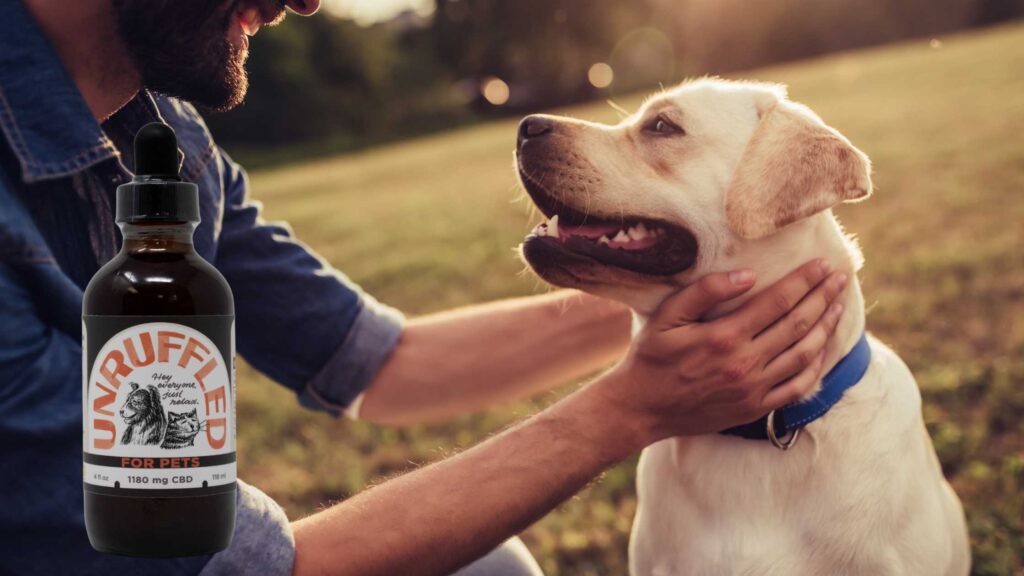
Jeff with his dog in a customer story about Unruffled CBD Oil for Pets

Jeff’s story is shared as one personal experience. Every dog’s needs are different.

Pet CBD and seizure safety

Pet CBD and Seizure Safety Comes First

This article is educational and is not veterinary advice. CBD products are not intended to diagnose, treat, cure, or prevent seizures or any disease in pets. FDA has not approved CBD for use in animals. Talk with a licensed veterinarian before giving CBD to a dog, especially if your dog has seizures, takes medication, has liver concerns, is very young or elderly, is pregnant or nursing, or has sudden, cluster, prolonged, or worsening seizures.

What to know first

CBD Oil for Dog Seizures Review: What This Page Covers

Jeff’s story may be helpful for pet owners who want to hear from another dog owner, but it should not be used as proof that CBD treats seizures. This page pairs the video with practical safety steps: when to call a veterinarian, what side effects to watch for, how to review a pet CBD label, and how to check a Certificate of Analysis.

Start with your veterinarian.
Do not replace seizure medication or emergency care.
Review CBD amount, THC level, and ingredients.
Match the product batch to a COA.
Watch for side effects or unusual behavior.
Keep pet CBD away from children and other pets.

About Bluegrass Hemp Oil’s Pet CBD Education

Bluegrass Hemp Oil is a Kentucky-based CBD company that creates full-spectrum hemp-derived CBD products and educational resources. This page shares one Unruffled CBD Oil for Pets customer story while explaining the safety questions dog owners should discuss with a veterinarian before considering CBD.

Helpful starting points include learning about CBD for dogs, reviewing CBD oil side effects for dogs, and reviewing CBD lab testing standards.

Watch Jeff’s story

Jeff Talks About His Dog and Unruffled CBD Oil for Pets

In the video below, Jeff shares his personal experience as a dog owner. Customer stories can create connection and help other pet owners feel less alone, but they are not the same as veterinary guidance or clinical evidence.

Video shared for customer-story context. Individual experiences vary and are not typical or guaranteed.

A note about testimonials

Jeff’s experience is his own. It should not be used to decide whether CBD is right for your dog, and it should not be read as a claim that CBD treats seizures. If your dog has seizures, work with a licensed veterinarian before changing any care plan.

How to Read Jeff’s Story Responsibly

A customer story can tell you what one person noticed, what they valued, and why they chose a product. It cannot prove that a product works for other dogs or that a product treats a medical condition.

Jeff’s Story Can Help With Jeff’s Story Cannot Prove
Understanding one pet owner’s experience. That CBD treats, stops, prevents, or reduces seizures.
Learning what questions other dog owners ask. That results are typical for other dogs.
Seeing why product transparency matters. That CBD can replace veterinary care or medication.
Prompting better label and COA review. That a product is safe for every dog.

Dog Seizures Require Veterinary Evaluation

Seizures can have many causes, including underlying illness, toxic exposure, neurological conditions, metabolic problems, medication issues, and other urgent concerns. A veterinarian can evaluate your dog, discuss diagnostic testing, review medication history, and help you understand next steps.

Do not stop, change, or delay prescribed seizure medication because of a CBD testimonial. If your dog has seizures, talk with your veterinarian before adding any new product to the routine.

When to seek urgent veterinary help

Call your veterinarian or an emergency animal hospital if your dog has a first-time seizure, a seizure lasting more than a few minutes, repeated seizures, cluster seizures, trouble breathing, collapse, injury, unusual behavior after a seizure, or suspected exposure to cannabis, THC, medications, toxins, or household chemicals.

Questions to Ask Your Veterinarian Before Using Pet CBD

Bring the product label and COA to your veterinarian. That gives your vet a clearer picture of the CBD amount, THC level, ingredients, and testing information before you make a decision.

Health history

Is CBD appropriate for my dog’s age, size, liver health, seizure history, and current care plan?

Medication review

Could CBD interact with any medication, supplement, or anti-seizure treatment my dog already uses?

Safety monitoring

What side effects should I watch for, and when should I call you or an emergency animal hospital?

THC review

How should I read the COA to understand THC level and possible exposure risk?

Product fit

Are the carrier oil, flavoring, CBD concentration, and serving format appropriate for my dog?

Emergency plan

What should I do if a seizure is prolonged, repeated, sudden, or different from prior episodes?

Unruffled CBD Oil for Pets: Product Facts

Unruffled CBD Oil for Pets should be described by product facts, not as a seizure treatment. The current 4 oz product page lists a liquid full-spectrum pet CBD oil with 1190 mg total CBD, 10 mg CBD per mL, wild-caught Alaskan salmon oil, and a batch-testing focus.

Product details last reviewed: May 21, 2026. Product details, prices, ingredients, availability, and lab reports may change.

Product Fact Consumer-Friendly Summary
Product name Unruffled CBD Oil for Pets
Format Liquid pet CBD oil
Bottle size 4 oz / 119 mL
Total CBD 1190 mg per bottle
CBD concentration 10 mg CBD per mL
Extract type Full-spectrum hemp extract, which may contain trace THC
Base oil Wild-caught Alaskan salmon oil
Before use Talk with your veterinarian and review the product COA

Full-Spectrum CBD, THC, and Dog Safety

Full-spectrum CBD contains CBD plus other naturally occurring hemp compounds and may contain trace THC. Dogs can be sensitive to cannabis exposure, so pet owners should review the label, THC level, and batch-specific Certificate of Analysis before considering any full-spectrum pet CBD product.

Full-spectrum CBD

Full-spectrum means a broader hemp-compound profile. It does not mean safer, stronger, or medically better.

THC caution

THC matters for dogs. If THC exposure is suspected, call a veterinarian, emergency animal hospital, or animal poison control center.

COA review

A COA helps you check CBD amount, THC level, batch identity, and available contaminant testing.

Possible Side Effects to Watch For

Any new product can affect dogs differently. Watch for sleepiness, appetite changes, vomiting, diarrhea, drooling, agitation, tremors, coordination changes, unusual behavior, or anything that feels out of character for your dog.

Stop use and contact a veterinarian if you are concerned. Seek urgent help if your dog has severe symptoms, suspected THC exposure, repeated seizures, collapse, trouble breathing, or sudden behavior changes.

How to Review a Pet CBD Label

A good label should help you understand what the product is, how much CBD it contains, whether THC is present, what ingredients are included, and how to match the product to a lab report.

Product name and intended species
CBD amount per bottle and per mL
Full-spectrum, broad-spectrum, or isolate wording
THC information
Full ingredient list
Flavoring or carrier oil
Batch or lot number
Warning statements
Company contact information

For more help, learn how to read a CBD product label.

How to Review a Pet CBD Certificate of Analysis

A Certificate of Analysis, often called a COA, helps verify what is in a pet CBD product. Match the product and batch number first, then review CBD amount, THC level, other cannabinoids, lab name, test date, and available contaminant testing.

Product name matches the bottle or package.
Batch number matches the product.
CBD amount is clearly shown.
THC level is clearly shown.
Other cannabinoids are listed when available.
Heavy metal testing is included when available.
Pesticide testing is included when available.
Residual solvent testing is included when available.
Microbial testing is included when available.
Lab name and test date are visible.

Before choosing a product, review Bluegrass Hemp Oil Certificates of Analysis and review CBD lab testing standards.

How to Choose a Pet CBD Product Safely

The safest buying process starts with your veterinarian, then moves to the label, THC information, ingredients, batch number, COA, and company transparency. Avoid products that make disease-treatment claims or do not provide clear testing information.

1. Start with the vet

Ask whether CBD is appropriate for your dog’s health history, medications, and seizure care plan.

2. Verify the label

Check CBD amount, THC level, ingredients, carrier oil, flavoring, and batch number.

3. Match the COA

Make sure the COA belongs to the exact batch before choosing any pet CBD product.

Product transparency first

Considering Unruffled CBD Oil for Pets?

Explore Unruffled only after reviewing veterinary guidance, the product label, THC information, ingredients, lab-testing standards, and the batch-specific Certificate of Analysis. Product transparency should come before any pet CBD purchase.

FAQs About CBD Oil, Dog Seizures, and Pet Safety

These answers are written for pet owners searching by voice or mobile, while keeping veterinary guidance, seizure safety, THC review, side effects, labels, and COAs at the center.

Can CBD oil stop seizures in dogs?

No CBD product should be described as stopping or treating dog seizures. Seizures require veterinary evaluation, and CBD should not replace diagnosis, anti-seizure medication, emergency care, or guidance from a licensed veterinarian. Jeff’s video is one customer story, not proof of results for other dogs.

Can CBD help dog seizures?

Pet owners often search this question, but retail CBD products should not be promoted as seizure treatments. A veterinarian can help evaluate your dog’s seizure history, medications, liver health, and safety needs before you consider any pet CBD product.

Is CBD oil safe for dogs with seizures?

Safety depends on the dog, product, THC level, medications, health history, and veterinarian guidance. FDA has not approved CBD for use in animals, so dog owners should talk with a veterinarian and review the label and COA before use.

Can CBD replace seizure medication for dogs?

No. CBD should not replace prescribed anti-seizure medication, emergency care, diagnostic testing, or a veterinarian’s treatment plan. Talk with your veterinarian before changing anything related to seizure care.

Can CBD interact with seizure medication for dogs?

CBD may interact with medications, so dogs taking anti-seizure medication or other prescriptions need veterinarian guidance. Bring the CBD label and COA to your appointment so your veterinarian can review ingredients, CBD amount, and THC level.

What side effects should I watch for with pet CBD?

Watch for sleepiness, appetite changes, vomiting, diarrhea, drooling, agitation, tremors, coordination changes, unusual behavior, or anything that seems abnormal. Contact a veterinarian if you are concerned.

Can full-spectrum CBD contain THC?

Yes. Full-spectrum CBD may contain trace THC. Pet owners should review the batch-specific COA and talk with a veterinarian before using full-spectrum CBD for a dog.

What is a pet CBD Certificate of Analysis?

A Certificate of Analysis is a lab report that helps verify CBD amount, THC level, batch identity, other cannabinoids, lab name, test date, and available contaminant testing for a specific product or batch.

Are CBD testimonials enough to choose a product?

No. Testimonials can share personal experience, but they are not clinical proof. Use veterinary guidance, product labels, THC information, ingredients, COAs, and company transparency to make a more informed decision.

When is a dog seizure an emergency?

Call a veterinarian or emergency animal hospital if a seizure is prolonged, repeated, clustered, first-time, followed by unusual behavior, causes injury, involves breathing trouble or collapse, or may involve cannabis, THC, medication, toxin, or chemical exposure.

Sources and Important Safety Notes

Updated: May 21, 2026. Product details last reviewed: May 21, 2026. This article is educational and is not veterinary advice. CBD should not replace diagnosis, treatment, prescribed medication, emergency care, behavioral evaluation, or guidance from a licensed veterinarian. Testimonials are personal experiences and are not clinical proof.

Charlotte’s Web vs Bluegrass Hemp Oil CBD for Dogs: Safety, Labels & COA Comparison

Charlotte’s Web vs Bluegrass Hemp Oil CBD for Dogs: Safety, Labels & COA Comparison

Pet CBD comparison guide

Charlotte’s Web vs Bluegrass Hemp Oil CBD for Dogs: Safety, Labels & COA Comparison

Charlotte’s Web CBD for Dogs and Bluegrass Hemp Oil Unruffled CBD Oil for Pets differ in format, CBD amount, bottle size, ingredients, flavor options, THC considerations, lab testing, Certificates of Analysis, and buyer fit. This guide compares both options with pet safety and veterinarian guidance first.

Pet CBD comparison based on labels, ingredients, THC, COAs, and veterinarian-first safety.

Vet firstAsk before use
COAMatch the batch
THCVerify levels
LabelCheck ingredients

Safety note

Pet CBD Safety Comes First

Pet CBD safety note: This article is educational and is not veterinary advice. CBD products are not intended to diagnose, treat, cure, or prevent disease in pets. FDA has not approved CBD for use in animals. Talk with a licensed veterinarian before giving CBD to a dog, especially if your dog takes medication, has liver concerns, has seizures, has arthritis or pain, is very young or elderly, is pregnant or nursing, or has sudden behavior or health changes.

Quick answer

Charlotte’s Web vs Bluegrass Hemp Oil CBD for Dogs: Quick Answer

Quick answer: Charlotte’s Web CBD for Dogs and Bluegrass Hemp Oil Unruffled CBD Oil for Pets are both pet CBD product lines, but they differ in format, CBD amount, bottle size, ingredients, flavor options, product variety, THC considerations, lab testing, and buyer fit. Pet owners should talk with a veterinarian and review the product label, THC level, ingredients, batch number, and Certificate of Analysis before choosing any CBD product for a dog.

Compare product format: oil, chew, or liquid pet CBD.
Compare CBD amount per mL or per chew.
Compare bottle size and serving clarity.
Review THC information and full ingredient lists.
Match the batch number to a COA.
Ask a veterinarian before use.

Product details checked on: May 21, 2026. Product details, prices, ingredients, availability, and lab reports may change.

Before choosing a product, pet owners can learn about CBD for dogs and review Bluegrass Hemp Oil Certificates of Analysis for label and lab-testing context.

Entity clarity

What This Page Compares

Quick answer: Bluegrass Hemp Oil is a Kentucky-based CBD company that creates full-spectrum hemp-derived CBD products and educational resources. This page compares Charlotte’s Web CBD for Dogs and Bluegrass Hemp Oil Unruffled CBD Oil for Pets by CBD amount, product format, ingredients, THC considerations, lab testing, Certificates of Analysis, pet safety, veterinarian guidance, and buyer fit.

Side-by-side

Product Comparison at a Glance

Quick answer: The clearest way to compare Charlotte’s Web CBD for Dogs and Bluegrass Hemp Oil Unruffled CBD Oil for Pets is to review product format, CBD amount, bottle size, ingredients, THC information, lab testing, and buyer fit side by side. Concentration is a product fact, not a promise of stronger benefits.

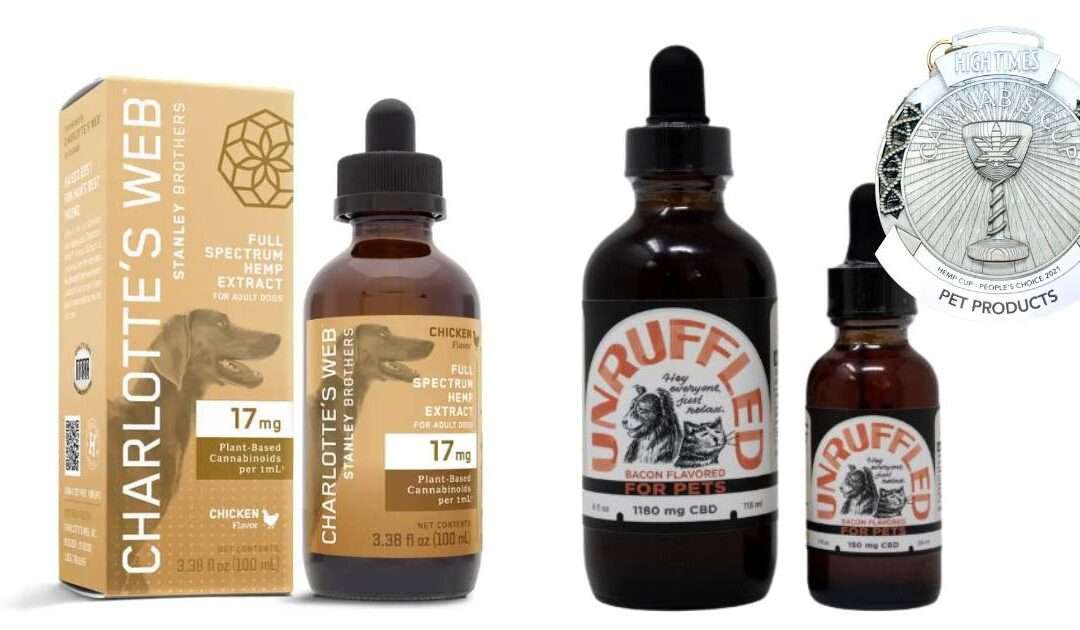
Comparison Point Charlotte’s Web CBD for Dogs Bluegrass Hemp Oil Unruffled CBD Oil for Pets
Product type Dog CBD oil and dog chews; verify current product pages. Full-spectrum liquid pet CBD oil.
Current examples 17MG CBD Oil for Dogs, dog chews, and pet-focused formats; verify current catalog. Unruffled CBD Oil for Pets, including 4 oz options.
CBD amount Current dog oil page lists 17 mg CBD per mL; verify label and COA before publishing. Current 4 oz Unruffled pages list 1190 mg total CBD and 10 mg CBD per mL; verify label and COA.
Bottle size Current dog oil page lists 30 mL and 100 mL options. 4 oz / 119 mL option listed on current product pages.
Extract type Current dog oil page describes full-spectrum hemp extract; verify by batch report. Full-spectrum pet CBD oil; verify by batch-specific COA.
Carrier/base MCT or fractionated coconut oil may be listed for dog oil; verify current label. Wild-caught Alaskan salmon oil, if current label confirms.
Flavor options Chicken and unflavored options are listed for the dog oil; dog chews vary by product. Unflavored or bacon flavor depending on selected product; verify current label.
THC consideration Review the current label and batch report before use. Review the batch-specific COA before use.
Best-fit buyer Pet owners who want dog-specific oil or chews from a broader pet product line. Pet owners who want a larger liquid pet CBD oil, salmon oil base, and clear 10 mg per mL information.

Product overview

What Is Charlotte’s Web CBD for Dogs?

Quick answer: Charlotte’s Web CBD for Dogs should be described only by current product-page facts. Its dog product line currently includes oil and chew formats, but pet owners should verify CBD amount, full-spectrum language, ingredients, flavor options, THC information, lab reports, and pricing before buying.

Current public product information for the 17MG CBD Oil for Dogs describes a full-spectrum hemp extract oil, chicken and unflavored varieties, 30 mL and 100 mL sizes, and third-party testing language. Those details can change, so the safest comparison is to check the current label and batch report before purchase.

Dog chews and specialty pet formats should be handled carefully in the comparison. Do not treat product names such as “calming,” “hip and joint,” or “skin” as proof of treatment outcomes. Pet owners should ask a licensed veterinarian before using CBD for behavior changes, pain, mobility concerns, seizures, or health conditions.

Product overview

What Is Bluegrass Hemp Oil Unruffled CBD Oil for Pets?

Quick answer: Bluegrass Hemp Oil Unruffled CBD Oil for Pets is a full-spectrum pet CBD oil that should be described by current product-page facts, including bottle size, total CBD, CBD per mL, ingredients, THC considerations, lab testing, and Certificate of Analysis access.

Current Unruffled 4 oz product pages describe a liquid pet CBD oil with 1190 mg total CBD, 10 mg CBD per mL, full-spectrum CBD extract, and wild-caught Alaskan salmon oil. Some current options may be unflavored or bacon flavored, so pet owners should review the specific label before buying.

Unruffled should be compared as a product format and ingredient profile, not as a treatment. Pet owners can learn about CBD for pets and then shop Unruffled CBD Oil for Pets only after reviewing safety, label, THC, and COA guidance.

Concentration

CBD Amount, Bottle Size, and Serving Format

Quick answer: CBD amount should be compared as concentration, not as stronger benefits. Pet owners can compare total CBD per bottle, CBD per mL, CBD per chew, bottle size, and serving format after speaking with a veterinarian.

Comparison Point Charlotte’s Web CBD for Dogs Bluegrass Hemp Oil Unruffled
Product format Verify current dog oil and chew formats. Liquid pet CBD oil.
Total CBD Verify current product labels and batch reports. Verify current Unruffled label and COA.
CBD per mL or chew Dog oil currently lists 17 mg CBD per mL; verify current label. Current 4 oz pages list 10 mg CBD per mL; verify current label.
Bottle or package size Dog oil currently lists 30 mL and 100 mL sizes. Current 4 oz bottle equals about 119 mL.
Serving clarity Review current directions with your veterinarian. Review current directions with your veterinarian.

Ingredients

Ingredients: Hemp Extract, MCT Oil, Salmon Oil, and Flavoring

Quick answer: Ingredient review is essential for pet CBD. Compare hemp extract type, carrier oil, flavoring, preservatives, additives, allergens, CBD per serving, serving directions, and whether the ingredient list fits your dog’s routine and veterinarian guidance.

Ingredient or Format Point Why Pet Owners Should Check It
CBD amount per mL or chew Helps compare concentration, not medical strength.
Full-spectrum hemp extract May contain trace THC and other hemp compounds.
Carrier oil MCT oil, salmon oil, or another base may affect product preference and suitability.
Flavoring Dogs may respond differently to chicken, bacon, unflavored, or chew formats.
Sweeteners or additives Review full ingredients and ask a veterinarian when unsure.
Batch number Connects the product to a specific COA or lab report.
THC level Important for pet safety and product verification.
COA access Helps verify CBD, THC, and available contaminant testing.

Use this section with learn how to read a CBD product label before comparing any pet CBD product.

THC caution

Full-Spectrum CBD, THC, and Pet Safety

Quick answer: Full-spectrum pet CBD may contain trace THC and other hemp compounds. Pet owners should review the product label and batch-specific Certificate of Analysis before giving full-spectrum CBD to a dog.

Full-spectrum CBD for dogs contains CBD plus other naturally occurring hemp compounds. It may contain trace THC, which matters because pets can be sensitive to THC exposure. Do not assume trace THC is risk-free. Review the current product label, batch-specific COA, and veterinarian guidance before use.

Pet owners can learn about full-spectrum CBD oil for dogs and review pet CBD safety and side effects before considering a pet CBD product.

Label review

Pet CBD Label Checklist

Quick answer: A pet CBD label should clearly identify the product, intended species or use, CBD amount, ingredients, THC information, batch number, warning language, and COA access. If any of those details are missing, ask questions before buying.

  • Product name and species or intended-use language.
  • CBD amount per bottle and CBD amount per mL or chew.
  • Serving directions and warning statements.
  • Full-spectrum, broad-spectrum, or isolate status.
  • THC information and full ingredient list.
  • Flavoring, carrier oil, allergens, and additives.
  • Batch or lot number and COA access.
  • Company contact information and veterinarian guidance reminder.

Lab reports

Lab Testing and Certificates of Analysis

Quick answer: A Certificate of Analysis helps pet owners verify what is in a CBD product. For pet CBD, check product name, batch number, CBD amount, THC level, other cannabinoids, lab name, test date, and available contaminant testing before use.

Product name matches the bottle or package.
Batch number matches the product.
CBD amount is clearly shown.
THC level is clearly shown.
Other cannabinoids are listed when available.
Heavy metals, pesticides, residual solvents, and microbials are included when available.
Lab name and test date are visible.
Results are batch-specific, not generic.

Use review Bluegrass Hemp Oil Certificates of Analysis and review CBD lab testing standards as trust and verification resources.

Buyer fit

Which Pet CBD Product Fits Your Dog Better?

Quick answer: The better fit depends on your dog, veterinarian guidance, preferred product format, ingredients, THC information, COA access, and serving clarity. Choose based on verified product facts, not disease claims or promises of stronger benefits.

Pet Owner Preference Product That May Fit Better Why
Wants dog-specific chews Charlotte’s Web, if current catalog confirms chew options. Charlotte’s Web currently lists dog chew products; verify labels and COAs.
Wants liquid pet CBD oil Compare both. Review bottle size, CBD concentration, ingredients, and COA.
Wants larger bottle size Bluegrass Hemp Oil Unruffled, if current 4 oz page confirms. Unruffled is listed as a larger 4 oz liquid pet CBD oil.
Wants 10 mg CBD per mL clarity Bluegrass Hemp Oil Unruffled, if current label confirms. Unruffled is positioned with clear 10 mg per mL serving information.
Wants salmon oil base Bluegrass Hemp Oil Unruffled, if current label confirms. Unruffled uses wild-caught Alaskan salmon oil.
Dog takes medication Ask a veterinarian first. Medication interactions and liver concerns need professional guidance.
Dog has seizures or sudden symptoms Veterinary care first. CBD should not replace diagnosis, prescribed medication, or emergency care.

Claims guardrails

What This Comparison Can and Cannot Claim

Quick answer: Pet CBD comparison pages should help pet owners compare labels, ingredients, THC, lab testing, COAs, and buyer fit. They should not claim that CBD treats dog anxiety, seizures, joint pain, arthritis, inflammation, aggression, or disease.

Claim Area Safe Wording
Product comparison This page can compare product format, CBD amount, ingredients, THC, COAs, and buyer fit.
Dog anxiety Do not claim either product treats anxiety or behavior disorders.
Joint pain or arthritis Do not claim either product treats joint pain, arthritis, inflammation, or mobility conditions.
Seizures Do not claim either product treats seizures. Seizures require veterinary care.
Full-spectrum CBD Full-spectrum CBD contains CBD plus other hemp compounds and may contain trace THC.
CBD strength Compare CBD concentration, not “stronger benefits.”
Safety Pet CBD is not FDA-approved for animals; pet owners should talk with a veterinarian.
Lab testing Encourage batch-specific COA review for CBD, THC, and contaminants.

Vet questions

Questions to Ask Your Veterinarian Before Using Pet CBD

Quick answer: A veterinarian can help evaluate your dog’s health history, medications, symptoms, and safety needs before you choose CBD. Ask questions before using any new pet CBD product.

  • Is CBD appropriate for my dog’s age, size, and health history?
  • Could CBD interact with my dog’s medications?
  • Does my dog have liver concerns or need lab monitoring?
  • Is my dog’s behavior change related to pain, illness, stress, or environment?
  • Should my dog be evaluated before trying any new product?
  • What side effects should I watch for?
  • What should I do if my dog becomes sleepy, vomits, has diarrhea, or acts differently?
  • How should I compare THC levels and COAs?
  • When is a symptom an emergency?

For product questions, pet owners can contact Bluegrass Hemp Oil with pet CBD questions, but medical and veterinary questions should go to a licensed veterinarian.

Bluegrass Hemp Oil trust

Why Bluegrass Hemp Oil Focuses on Pet CBD Transparency

Bluegrass Hemp Oil focuses on full-spectrum CBD education, clear labeling, lab testing, Certificates of Analysis, and product transparency so pet owners can compare CBD products carefully and discuss them with a veterinarian.

Soft product CTA

Considering Unruffled CBD Oil for Pets?

Explore Unruffled CBD Oil for Pets after reviewing the product label, THC information, ingredients, lab-testing standards, batch-specific Certificate of Analysis, and veterinarian guidance. Product transparency should come before any pet CBD purchase.

Voice search FAQ

FAQs About Charlotte’s Web vs Bluegrass Hemp Oil CBD for Dogs

Is Charlotte’s Web CBD for dogs better than Bluegrass Hemp Oil?

Charlotte’s Web may fit pet owners who want dog-specific oils and chews from a broader pet product line. Bluegrass Hemp Oil Unruffled may fit pet owners who want a larger full-spectrum liquid pet CBD oil with wild-caught Alaskan salmon oil and clear CBD-per-mL information. Compare labels, THC, ingredients, COAs, and veterinarian guidance before choosing.

What is the difference between Charlotte’s Web CBD for Dogs and Unruffled CBD Oil for Pets?

Charlotte’s Web currently offers dog CBD oil and several dog chew formats. Bluegrass Hemp Oil Unruffled is a full-spectrum liquid pet CBD oil made with wild-caught Alaskan salmon oil and full-spectrum CBD extract. The best choice depends on product format, ingredients, THC, CBD concentration, and COA verification.

Is CBD oil safe for dogs?

CBD is not FDA-approved for use in animals, and pet owners should talk with a veterinarian before giving CBD to a dog. Safety depends on the product, THC level, serving amount, medications, liver health, age, and the dog’s medical history.

Is full-spectrum CBD safe for dogs?

Full-spectrum CBD may contain trace THC and other hemp compounds, so pet owners should review the product label and batch-specific COA carefully. Talk with a veterinarian before giving full-spectrum CBD to a dog, especially if the dog takes medication or has health concerns.

Can CBD help dog anxiety?

Do not use CBD as a substitute for veterinary care for anxiety, aggression, fear, or behavior changes. A veterinarian can help determine whether symptoms are related to training, pain, illness, environment, or another condition that needs care.

Can CBD help dog joint pain?

Do not use CBD as a treatment for joint pain, arthritis, inflammation, or mobility changes without veterinary guidance. Dogs with pain or movement changes should be evaluated by a veterinarian.

Can CBD help dog seizures?

Dog seizures require veterinary evaluation. CBD should not replace diagnosis, anti-seizure medication, emergency care, or guidance from a licensed veterinarian. Pet owners should talk with their veterinarian before considering any CBD product for a dog with seizures.

What should I check before buying CBD oil for dogs?

Check the CBD amount, THC level, product format, ingredients, carrier oil, flavoring, batch number, COA, contaminant testing, serving directions, and company transparency. Also ask your veterinarian whether CBD is appropriate for your dog.

What is a pet CBD Certificate of Analysis?

A Certificate of Analysis is a lab report that helps verify what is in a pet CBD product. It may show CBD amount, THC level, other cannabinoids, batch identity, lab name, test date, and available contaminant testing.

Are CBD chews better than CBD oil for dogs?

CBD chews and CBD oil are different formats. Chews may be convenient for some pet owners, while oils may offer liquid serving flexibility. Compare ingredients, CBD amount, THC, COAs, and veterinarian guidance before choosing.

Author

Written by Bill Polyniak

Bill Polyniak is the founder of Bluegrass Hemp Oil and Kentucky Cannabis Company. His work focuses on Kentucky hemp, full-spectrum CBD education, product quality, lab-testing transparency, and helping customers make informed CBD decisions. This comparison explains how to evaluate Charlotte’s Web CBD for Dogs and Bluegrass Hemp Oil Unruffled CBD Oil for Pets by CBD amount, ingredients, THC considerations, lab testing, Certificates of Analysis, pet safety, veterinarian guidance, and buyer fit.

read Bill Polyniak’s bio

Pet CBD safety and compliance review recommended: This article should be reviewed by the Bluegrass Hemp Oil quality or compliance team before publication because it compares pet CBD products, full-spectrum hemp extract, THC, pet safety, medication concerns, lab testing, Certificates of Analysis, competitor product details, and veterinarian-first safety language.

Sources

Sources and Safety Review Note

Updated: May 21, 2026. Product details checked: May 21, 2026. This article is for educational purposes only and is not veterinary advice. CBD should not replace diagnosis, treatment, prescribed medication, emergency care, behavioral evaluation, or guidance from a licensed veterinarian. Product details, prices, ingredients, and availability can change. Always review current product labels, THC levels, ingredients, lab-testing information, and batch-specific Certificates of Analysis before choosing a CBD product for a dog.

Charlotte’s Web vs Bluegrass Hemp Oil: CBD Products, COAs, and Buyer Fit

Charlotte’s Web vs Bluegrass Hemp Oil: CBD Products, COAs, and Buyer Fit

CBD Brand Comparison • COAs • Buyer Fit

Charlotte’s Web vs Bluegrass Hemp Oil: CBD Products, COAs, and Buyer Fit

Charlotte’s Web and Bluegrass Hemp Oil are both CBD brands shoppers may compare when looking for hemp-derived CBD products. This guide compares product types, full-spectrum options, labels, COAs, THC considerations, ingredients, sourcing, and buyer fit so you can evaluate CBD products more confidently.

Some shoppers searching for a Charlotte’s Web CBD alternative may prefer Kentucky roots, direct product support, and full-spectrum CBD education. Others may value a larger national CBD catalog. The right comparison starts with the exact product label and batch-specific Certificate of Analysis.

Updated May 31, 2026
By Bill Polyniak
Educational comparison, not medical advice

Quick answer

Quick Answer: How Do Charlotte’s Web and Bluegrass Hemp Oil Compare?

Charlotte’s Web is a nationally recognized CBD brand with a broad product catalog. Bluegrass Hemp Oil is a Kentucky-based, family-founded CBD company focused on full-spectrum CBD education, Genesis Blend full-spectrum CBD oil, COA transparency, and direct customer support.

The better choice depends on what a shopper values most: national brand recognition, product variety, Kentucky roots, direct support, full-spectrum focus, COA access, ingredients, THC comfort level, and product format.

Editorial transparency

Editorial Transparency: How This Comparison Was Made

Bluegrass Hemp Oil makes and sells CBD products, so this comparison is written from the Bluegrass Hemp Oil perspective. This page is designed to help shoppers compare visible product-quality factors such as labels, COAs, ingredients, extract type, THC information, product format, sourcing, and customer support.

Bluegrass Hemp Oil is not affiliated with, endorsed by, or sponsored by Charlotte’s Web. Product labels, formulas, prices, and COAs can change, so shoppers should verify the current product page and batch-specific Certificate of Analysis before buying.

Key takeaways

Key Takeaways

1

Compare exact products

Do not compare CBD brands by reputation alone. Compare the exact oil, gummy, capsule, topical, or pet product.

2

Review the COA

A CBD COA should match the product and batch number, then show CBD amount, THC level, and contaminant testing.

3

Check THC comfort level

Full-spectrum CBD may contain trace THC, which can matter for sensitive shoppers or anyone subject to drug testing.

4

Know the extract type

Full-spectrum, broad-spectrum, and isolate terms describe extract profile, not promised outcomes.

5

Evaluate ingredients

Compare carrier oils, sweeteners, flavors, allergens, botanicals, capsule materials, and topical ingredients.

6

Ask for support

If a label, COA, batch number, or serving detail is unclear, contact the company before buying.

Brand snapshot

Brand Snapshot: Charlotte’s Web vs Bluegrass Hemp Oil

A fair CBD brand comparison should focus on visible product details, labels, COAs, extract type, THC level, ingredients, and shopper priorities rather than unsupported claims about results.

Comparison Point Charlotte’s Web Bluegrass Hemp Oil What Shoppers Should Verify
Brand footprint Nationally recognized CBD brand Kentucky-based, family-founded CBD company Which brand experience fits the shopper
Product catalog Broad catalog with oils, gummies, capsules, topicals, and pet products Focused CBD catalog with Genesis Blend, gummies, capsules, topicals, and pet options Exact product and format
CBD spectrum Full-spectrum, broad-spectrum, and THC-free options may be available depending on the product Strong full-spectrum CBD focus Extract type on label and COA
COA access Public COA or batch-report access should be verified on the current Charlotte’s Web site Public COA and lab-testing education should be verified on Bluegrass Hemp Oil resources Product match, batch number, and test date
THC consideration Depends on product type Full-spectrum products may contain trace THC THC level on the COA
Shopper fit Broad national brand familiarity Kentucky roots, founder-led education, and direct support Shopper priorities

Product line comparison

Product Line Comparison: Oils, Gummies, Capsules, Topicals, and Pets

Product variety matters, but the best choice depends on the exact product. Compare product labels, ingredients, serving information, extract type, THC level, and COA access before choosing.

Product Type Charlotte’s Web Bluegrass Hemp Oil What to Compare
CBD oils Multiple oil formulas Genesis Blend full-spectrum CBD oil and CBD oil options CBD per serving, carrier oil, extract type, THC, COA
CBD gummies Gummies and functional gummy formats CBD gummies made with Kentucky-grown hemp CBD per gummy, sugar, ingredients, THC, COA
CBD capsules Capsule options CBD capsules for simple serving routines CBD per capsule, capsule ingredients, COA
CBD topicals Topical products CBD topical and skin-care education Ingredients, patch testing, intended external use
Pet CBD Pet products Pet CBD education and pet product options Veterinarian guidance, ingredients, THC, COA

Pet safety note

For pets, shoppers should speak with a veterinarian before using CBD products. Do not present CBD as approved for animal health outcomes.

CBD spectrum terms

Full-Spectrum, Broad-Spectrum, and Isolate Options

CBD brands may sell full-spectrum, broad-spectrum, or isolate products. These terms describe the hemp extract profile, not promised outcomes. The Certificate of Analysis should verify the actual cannabinoid profile and THC level.

CBD Type What It Usually Means THC Consideration What to Verify
Full-spectrum CBD CBD plus other naturally occurring hemp compounds May contain trace THC COA, THC level, cannabinoid profile
Broad-spectrum CBD CBD plus other hemp compounds, usually with THC removed Verify with COA THC level and cannabinoid profile
CBD isolate CBD-only extract Usually no broader hemp profile COA and ingredient list

Focused CBD oil comparison

Genesis Blend vs Charlotte’s Web CBD Oil

Genesis Blend is Bluegrass Hemp Oil’s flagship full-spectrum CBD oil. Charlotte’s Web offers multiple CBD oil formulas. Shoppers should compare the exact product label, CBD per serving, carrier oil, extract type, THC level, ingredients, batch-specific COA, and serving directions before choosing.

Comparison Area What to Compare
Total CBD Total CBD in the bottle
CBD per serving CBD per mL, dropper, capsule, or gummy
Extract type Full-spectrum, broad-spectrum, or isolate
THC level Verified on the COA
Carrier oil MCT, hemp seed oil, olive oil, or other carrier
Ingredients Sweeteners, flavors, allergens, botanicals, or additives
Batch number Must match the COA
Lab testing Potency and contaminant testing
Company support Availability of direct product guidance

Trust signal

COA and Lab Testing Comparison

A Certificate of Analysis helps shoppers verify what is actually in a CBD product. For any CBD brand comparison, the COA should match the exact product and batch number.

  • Match the product name.
  • Match the batch or lot number.
  • Confirm total CBD amount.
  • Confirm CBD per serving.
  • Check THC level.
  • Review minor cannabinoids.
  • Check testing date.
  • Check lab name.
  • Look for heavy metal testing.
  • Look for pesticide testing.
  • Look for residual solvent testing.
  • Look for microbial testing.
  • Contact the company if anything is unclear.

Label review

How to Compare CBD Labels Fairly

A fair CBD product comparison starts with the label. Compare the exact product format, total CBD, CBD per serving, ingredients, carrier oil, extract type, THC information, batch number, expiration date, and COA access.

How to read a CBD product label

CBD Label Comparison Checklist

  • Product type
  • Total CBD
  • CBD per serving
  • Serving size
  • Extract type
  • THC information
  • Carrier oil
  • Ingredients
  • Allergens or sweeteners
  • Batch number
  • Expiration date
  • COA access
  • Safety warnings

Sourcing and story

Sourcing, Hemp Story, and Brand Fit

Brand story may matter to shoppers, but it should not replace product verification. Shoppers should compare sourcing information, hemp origin, product labels, extraction details, testing, and COAs before choosing a CBD brand.

National brand familiarity

Charlotte’s Web may fit shoppers who prefer a large, nationally recognized CBD brand with broad retail awareness.

Kentucky roots and direct support

Bluegrass Hemp Oil may fit shoppers who value a Kentucky CBD company, founder-led education, full-spectrum CBD focus, and direct product guidance.

Extraction and verification

Extraction Method: What Shoppers Should Verify

Extraction method is one quality factor, but it is not the only proof of product quality. Shoppers should look for clear extraction information, batch-specific lab testing, residual solvent testing when relevant, accurate labels, and accessible COAs.

Quality Factor Why It Matters
Extraction method Helps explain how hemp compounds are collected.
Post-processing May affect the final extract profile.
Residual solvent testing Important when solvent-based extraction is used.
Cannabinoid testing Confirms CBD and THC levels.
Contaminant testing Screens for pesticides, heavy metals, microbes, and solvents.
COA access Lets shoppers verify product and batch details.

Cannabis extraction methods explained

Safety and THC

THC, Drug Testing, and CBD Safety Considerations

THC and drug-testing callout

Full-spectrum CBD products may contain trace THC. CBD itself is not usually the target of standard drug tests, but THC exposure can matter for workplace, athletic, legal, professional, or other testing programs. No CBD company should promise that a full-spectrum CBD product will not affect a drug test. Review the COA before use.

Hemp vs marijuana explained

CBD Safety Note

CBD is not risk-free. CBD may interact with medications and may increase drowsiness when combined with alcohol or sedating products. Full-spectrum CBD may contain trace THC and may create drug-testing concerns. People who are pregnant, nursing, taking prescriptions, managing liver concerns, using sedating products, drinking alcohol, or managing a medical condition should speak with a healthcare professional before using CBD products. Keep cannabinoid products away from children and pets.

Value comparison

Cost per mg: a simple way to compare CBD value

Sticker price alone does not tell the full story. A smaller bottle can sometimes cost more per milligram than a larger bottle, while ingredients, product format, COA access, and customer support can also affect value. Use the current product page, the product label, and the batch-specific COA together.

Simple value formula
Current price ÷ total milligrams of CBD = estimated cost per mg
1

Find the current price

Use the price shown on the brand’s current product page, not an old review, advertisement, or screenshot.

2

Find total CBD

Look for the total milligrams of CBD in the bottle, package, or container. Do not confuse total CBD with CBD per serving.

3

Compare the result

Divide the current price by total CBD. Then compare extract type, ingredients, THC level, serving size, and COA access.

Example only

If a CBD oil costs $60 and contains 1,500 mg total CBD, the estimated value is $0.04 per mg. This example is for comparison math only and is not a product recommendation.

Value is not only price. A fair CBD product comparison also looks at CBD per serving, extract type, trace THC, ingredients, lab testing, COA access, product format, and the support available if shoppers have questions.

Buyer fit

Which Brand May Fit Which Shopper?

Shopper Priority Charlotte’s Web May Fit Bluegrass Hemp Oil May Fit
National brand recognition Shoppers who prefer a large, widely recognized CBD brand Shoppers who prefer a Kentucky-based, family-founded brand
Product variety Shoppers comparing a broad catalog Shoppers comparing focused full-spectrum CBD education and product paths
Direct support May depend on available customer service options Shoppers who value direct product guidance
Full-spectrum focus Product-specific verification needed Shoppers who want full-spectrum CBD education and Genesis Blend
COA review Verify current batch report access Review Bluegrass COAs and lab-testing education
Local identity National brand fit Kentucky hemp and company story fit

Product pathways

Bluegrass Hemp Oil Product Pathways

Use these pathways to explore Bluegrass Hemp Oil products by format while continuing to verify labels, COAs, ingredients, serving information, and THC considerations.

Decision tool

CBD Brand Comparison Buyer Checklist

  1. Compare the exact product, not just the brand name.
  2. Confirm total CBD.
  3. Confirm CBD per serving.
  4. Check product format.
  5. Confirm full-spectrum, broad-spectrum, or isolate status.
  6. Review THC level.
  7. Match the product and batch number to the COA.
  8. Check ingredients and carrier oil.
  9. Review contaminant testing.
  10. Compare current cost per mg only after verifying product price and total CBD.
  11. Consider drug-testing concerns.
  12. Consider medication, pregnancy or nursing, liver, alcohol, and drowsiness concerns.
  13. Contact the company if label or COA details are unclear.

Contact Bluegrass Hemp Oil for product guidance

FAQ

Frequently Asked Questions

How does Charlotte’s Web compare to Bluegrass Hemp Oil?

Charlotte’s Web is a nationally recognized CBD brand with a broad product catalog. Bluegrass Hemp Oil is a Kentucky-based, family-founded company focused on full-spectrum CBD education, Genesis Blend, COA transparency, and direct customer support. Shoppers should compare the exact product label, CBD per serving, ingredients, THC level, and COA.

Is Bluegrass Hemp Oil a Charlotte’s Web alternative?

Yes. Bluegrass Hemp Oil can be considered a Charlotte’s Web alternative for shoppers comparing full-spectrum CBD oil, brand story, sourcing transparency, customer support, COA access, and product fit.

Which is better, Charlotte’s Web or Bluegrass Hemp Oil?

The better choice depends on what the shopper values. Charlotte’s Web may fit shoppers who want a nationally recognized CBD brand with a broad catalog. Bluegrass Hemp Oil may fit shoppers who want a Kentucky-based, family-founded CBD company with full-spectrum CBD education, Genesis Blend, COA access, and direct support.

What should I compare before choosing a CBD brand?

Compare the exact product label, CBD per serving, total CBD, extract type, THC content, ingredients, carrier oil, batch-specific COA, testing date, contaminant testing, current cost per mg, and customer support.

Does Charlotte’s Web have COAs?

Charlotte’s Web provides COA and batch-report resources. Shoppers should match the exact product and lot number before relying on a COA.

Does Bluegrass Hemp Oil have COAs?

Bluegrass Hemp Oil provides Certificates of Analysis and lab-testing education to help shoppers review product and batch information.

What is the difference between Genesis Blend and Charlotte’s Web CBD oil?

Genesis Blend is Bluegrass Hemp Oil’s flagship full-spectrum CBD oil. Charlotte’s Web offers multiple CBD oil formulas. Shoppers should compare the exact label, extract type, CBD per serving, THC level, ingredients, COA, and serving directions before choosing.

Which brand is better for full-spectrum CBD?

That depends on the exact product and shopper priorities. Full-spectrum CBD should be verified by the current label and COA. Bluegrass Hemp Oil may fit shoppers who prioritize a full-spectrum CBD focus, Kentucky roots, Genesis Blend, and direct product guidance.

Can full-spectrum CBD show up on a drug test?

It is possible. Full-spectrum CBD may contain trace THC, and THC exposure may matter for workplace, athletic, legal, or professional testing programs. Review the COA and do not rely on drug-test guarantees.

How do I compare CBD oil labels?

Look for product type, total CBD, CBD per serving, serving size, extract type, THC information, carrier oil, ingredients, batch number, expiration date, COA access, and safety warnings.

What is cost per mg of CBD?

Cost per mg is calculated by dividing product price by total CBD in the product. Use current product prices and labels before comparing value.

Should I choose a national CBD brand or a Kentucky CBD company?

A national CBD brand may fit shoppers who value broad brand familiarity. A Kentucky CBD company may fit shoppers who value local identity, founder-led education, direct support, and a focused full-spectrum CBD product path.

Is Bluegrass Hemp Oil affiliated with Charlotte’s Web?

No. Bluegrass Hemp Oil is not affiliated with, endorsed by, or sponsored by Charlotte’s Web. This page is an educational comparison from the Bluegrass Hemp Oil perspective.

About the author

About Bill Polyniak

Bill Polyniak is the founder of Bluegrass Hemp Oil and Kentucky Cannabis Company. He has worked in Kentucky hemp since 2014, bringing first-wave hemp experience to full-spectrum CBD education, product formulation, extraction standards, testing transparency, and shopper support.

This comparison reflects Bill’s consumer-first approach: understand the label, review the Certificate of Analysis, compare CBD per serving, consider trace THC, and ask questions before choosing a CBD product. This page is educational and is not medical advice.

Sources and further reading

Safety and Verification References

Final takeaway

Final Takeaway

Charlotte’s Web and Bluegrass Hemp Oil should be compared by specific products, not reputation alone. Review the label, CBD per serving, extract type, THC level, ingredients, COA, testing date, product format, and company support before choosing a CBD brand.

Bluegrass Hemp Oil may fit shoppers who value Kentucky roots, full-spectrum CBD education, Genesis Blend, COA transparency, and direct product guidance.