
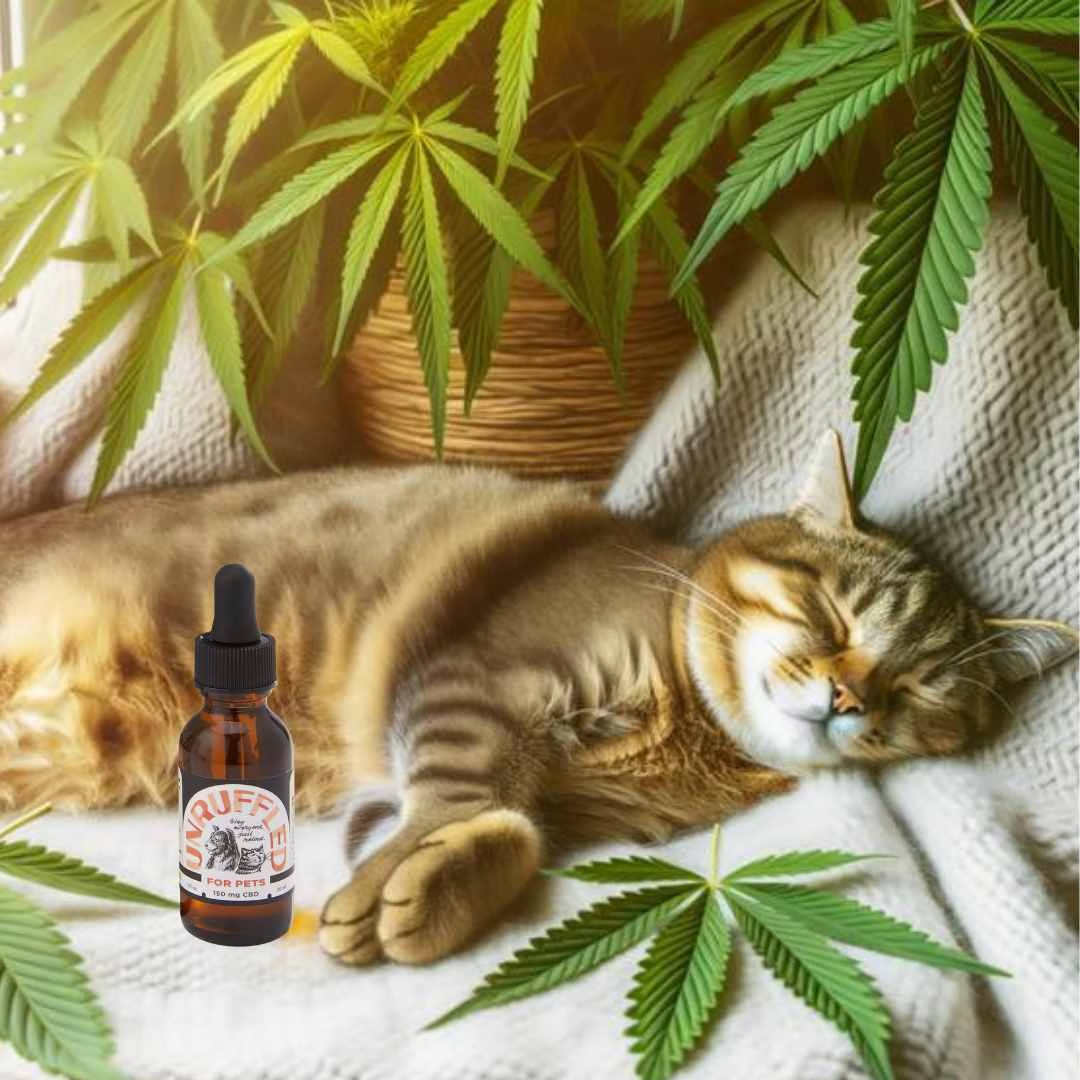
Cat CBD safety guide
CBD for Cats: Safety, Labels, Vet Questions, and Product Quality
A veterinarian-first guide for cat owners comparing pet CBD oil, labels, ingredients, Certificates of Analysis, THC information, and product-quality signals before choosing anything for a cat.
No disease-treatment claims
COA and label review
Quick answer for cat owners
Can cats use CBD oil?
Cat owners should talk with a veterinarian before using CBD with a cat. Cats can have different sensitivities than dogs, and pet CBD products should be compared by ingredient list, serving information, THC reporting, and available lab testing rather than by marketing claims.
CBD, short for cannabidiol, is a hemp compound. It is not the same as THC, the intoxicating cannabis compound. For cats, the responsible path is not hype or guesswork. It is veterinary guidance, label review, ingredient review, and product testing.
Helpful starting points include the CBD for cats safety guide, the broader CBD for pets comparison guide, and CBD Certificates of Analysis for product transparency.
Key takeaways before giving CBD to a cat
Vet guidance comes first
CBD should not replace a veterinary exam, diagnosis, emergency care, prescribed medication, or a treatment plan.
Ingredients matter
Avoid human CBD gummies, xylitol, artificial sweeteners, essential oils, and products with unclear THC information.
Testing supports transparency
A COA helps shoppers compare CBD amount, THC reporting, batch details, and contaminant screening when available.
Plain-English summary
Cat CBD terms shoppers should understand
| Term | Consumer-friendly meaning | What to check |
|---|---|---|
| CBD oil for cats | A pet product that blends hemp extract with a carrier oil. | CBD amount, carrier oil, serving information, ingredients, and COA. |
| THC | The intoxicating cannabis compound that is especially important to evaluate for pets. | Label THC statement and batch-specific testing. |
| COA | A Certificate of Analysis from a lab that reports product testing details. | Batch match, CBD, THC, lab date, and contaminant screens. |
| Human CBD edibles | Gummies, candies, baked goods, or flavored items made for people. | Do not give these to cats because ingredients and serving sizes may be unsafe. |
Why cats need cat-specific CBD guidance
Cats are not small dogs. A product that seems ordinary for a dog may be inappropriate for a cat because cats can differ in size, metabolism, ingredient sensitivity, and medication risk.
Medication review
CBD may affect pathways involved in processing some medications. Ask your veterinarian how to review prescriptions, supplements, and timing.
Cat-sized serving details
Small cats need small, measurable serving information. Avoid products that only list total bottle CBD without clear per-serving details.
Behavior changes need diagnosis
Hiding, litter box changes, appetite changes, vocalizing, over-grooming, or stiffness should be discussed with a veterinarian.
For additional pet-owner context, review cat CBD safety considerations and the cat seizure safety guide before making product decisions.
Vet-first safety note
Talk with your veterinarian before using CBD for cats
Veterinary guidance is especially important if your cat is elderly, underweight, pregnant or nursing, taking medication, scheduled for surgery, or showing sudden changes in appetite, litter box use, mobility, grooming, sleep, behavior, or neurological signs.
Bring this list to your vet
- ✓The exact product name and product URL.
- ✓The ingredient list and carrier oil.
- ✓The CBD amount per serving or per drop.
- ✓The COA or batch-specific lab report.
- ✓Your cat’s medication and supplement list.
What is CBD oil for cats?
CBD oil for cats is usually a hemp extract blended into a carrier oil and offered in small, measurable servings. It should be reviewed as a cat-specific product, not a human product repurposed for pets.
One important distinction is hemp oil vs CBD oil. Hemp seed oil is made from hemp seeds and typically does not contain meaningful CBD. CBD oil is made from hemp extract and should clearly identify cannabinoid content, serving information, carrier oil, and batch testing.
For general education, start with what CBD oil is and compare extract terminology with full-spectrum CBD vs CBD isolate explanations.
What should I check before giving CBD to my cat?
A safer cat CBD decision starts with the product label, not a promise. Review CBD amount, carrier oil, ingredients, serving directions, THC information, batch number, expiration date, and COA access.
Label checklist
- ✓CBD amount per serving or per drop.
- ✓Simple carrier oil and ingredient list.
- ✓Cat-appropriate serving directions.
- ✓Batch number, QR code, or COA access.
- ✓THC information and contaminant screening.
Avoid for cats
- ✓Human gummies, candies, or edibles.
- ✓Xylitol or artificial sweeteners.
- ✓Essential oils such as citrus or peppermint.
- ✓High-THC products or unclear THC reporting.
- ✓Products making disease-treatment claims.
For step-by-step label review, use the CBD product label reading guide and the CBD quality guide for transparent products.
Is CBD different for cats and dogs?
Cats and dogs can have different sensitivities and product needs. Do not assume that a product or routine used for a dog is appropriate for a cat.
Use the CBD for pets comparison guide for a broad overview, then return to cat-specific questions before choosing a product for your cat.
How should cat owners think about CBD serving information?
There is no universal CBD serving that fits every cat or every product. Use the product label, review the COA, ask your veterinarian, and change only one variable at a time.
| What to track | Why it matters |
|---|---|
| Label serving and CBD amount | Helps avoid guessing based on bottle size or marketing language. |
| Food timing and acceptance | Some cats accept oil better with a small amount of wet food. Do not force dosing. |
| Behavior and appetite notes | New hiding, appetite changes, vomiting, drooling, or litter box issues should be discussed with your veterinarian. |
| Medication and supplement list | Your veterinarian needs the full list to review possible interaction concerns. |
How do I read a CBD Certificate of Analysis for cat products?
Testing does not prove medical effectiveness, but it helps cat owners review cannabinoid content, THC reporting, contaminant screening, and whether the product matches the label.
Match the batch
Look for a batch number, lot number, QR code, or testing date that matches the product you have.
Check CBD and THC
Review CBD amount and THC reporting. Avoid products with unclear THC information for cats.
Look for contaminants
When available, review testing for heavy metals, pesticides, solvents, microbes, or other quality screens.
Use Bluegrass Hemp Oil Certificates of Analysis and the CBD lab testing guide as your product-transparency starting points.
What about senior cats, mobility, and neurological questions?
Senior cats and cats with neurological or mobility concerns need diagnosis first. CBD should not be used to cover up sudden changes, pain signs, seizures, urinary problems, weakness, or loss of appetite.
If your older cat is slow to jump, over-grooming, hiding, vocalizing, changing litter box habits, or acting differently, start with your veterinarian. You can also review senior cat wellness questions and cat CBD safety considerations to prepare better questions for a veterinary visit.
Related cat CBD and product safety resources
These related guides help cat owners compare product format, labels, COAs, cat-specific safety questions, and pet wellness resources.
CBD for cats safety guideCat-specific CBD considerations, labels, and product questions.
CBD for pets comparison guideCompare pet CBD formats and product quality basics.
CBD lab testing and product transparencyLearn how potency and contaminant testing support informed decisions.
Unruffled CBD Oil for cats and petsReview product details and available testing before discussing use with your veterinarian.
About the author
About Bill Polyniak
Founder, hemp educator, and product transparency advocate.
Bill Polyniak is the founder of Bluegrass Hemp Oil and Kentucky Cannabis Company. His education-first work focuses on Kentucky hemp, full-spectrum CBD product quality, transparent labels, Certificates of Analysis, and helping consumers ask better questions before choosing CBD products for themselves or their pets.
Cat CBD FAQs
Can cats use CBD oil?
Cat owners should talk with a veterinarian before using CBD with a cat. Cats can have different sensitivities than dogs, so review the product label, ingredients, serving information, and available testing before choosing any product.
Is CBD safe for cats?
Safety depends on the individual cat, product quality, ingredients, THC information, serving details, and medication history. Ask your veterinarian before use, especially for senior cats or cats with medical concerns.
What should I know before giving CBD to my cat?
Review the product label, ingredient list, serving information, THC statement, and Certificate of Analysis. Talk with your veterinarian first if your cat is elderly, takes medication, has a medical condition, or has sudden behavior changes.
Can I give human CBD gummies to my cat?
No. Human gummies and edibles may contain sweeteners, flavors, THC, or other ingredients that are not appropriate for cats. Use cat-specific product guidance and ask your veterinarian.
How do I read a CBD COA for a cat product?
Match the batch number, confirm CBD amount, review THC information, check the testing date, and look for contaminant testing when available. Contact the company or your veterinarian if anything is unclear.
Sources and further reading
Use these resources as starting points for conversations with your veterinarian and for product-quality review.
Final takeaway: choose cat CBD with care
Cat CBD decisions should be veterinarian-first, label-aware, and testing-informed. Review ingredients, serving information, THC details, COAs, and your cat’s medical context before adding CBD to a cat’s routine.
