Does CBD Oil Expire? Shelf Life, Proper Storage and Signs It Has Gone Bad

Does CBD Oil Expire? Shelf Life, Proper Storage and Signs It Has Gone Bad

```

Yes, CBD oil can expire. Like other plant-based oil formulations, CBD oil may change over time when exposed to direct light, excessive heat, oxygen, moisture or improper handling.

However, an older bottle is not automatically ineffective simply because its color has changed slightly or it has been sitting in a cabinet for several months. Product formulation, manufacturing quality, packaging, storage conditions and frequency of use all matter.

At Bluegrass Hemp Oil, we have tested retained samples of Genesis Blend Full-Spectrum CBD Oil years after they were manufactured. In our retained-sample testing, the cannabinoid results remained consistent with the original batch results.

That company-specific experience demonstrates the stability of a carefully manufactured and properly stored product. It does not mean every CBD oil will remain unchanged indefinitely, and it does not replace the expiration or best-by date printed on the bottle.

Bluegrass Hemp Oil full-spectrum CBD oil stored upright in a cool dark cabinet
Store CBD oil upright, tightly closed and away from direct sunlight and excessive heat.

How Long Does CBD Oil Last?

There is no universal shelf life that applies to every CBD oil. Products can contain different hemp extracts, carrier oils, flavoring ingredients and packaging materials.

The most reliable starting point is the expiration or best-by date provided by the manufacturer. Check the bottle or packaging for wording such as:

  • Expiration date
  • Best-by date
  • Best if used by
  • Manufactured-on date

The date you purchased the bottle is not necessarily the date it was manufactured. Production, laboratory testing, packaging and distribution generally occur before the finished product reaches the customer.

Expiration information is only one part of the package. Our CBD product label guide explains how to find serving information, total CBD content, ingredients, warnings, batch numbers and laboratory documentation.

If the printed date or batch information cannot be read, contact the manufacturer before using the product.

What Our Genesis Blend Stability Testing Found

Bluegrass Hemp Oil maintains a strong focus on formulation consistency, careful manufacturing and laboratory verification through our CBD manufacturing and quality process.

As part of that work, we have retested retained Genesis Blend samples years after their original manufacturing dates. Those samples produced cannabinoid results consistent with the results recorded when the batches were originally made.

This provides useful firsthand information about the stability of our formulation when it is properly manufactured, packaged and stored.

It is important to put those results in context:

  • The results relate specifically to the Genesis Blend samples we tested.
  • They should not be treated as a guarantee for every bottle or CBD brand.
  • An opened bottle may be affected by handling, contamination and storage conditions.
  • Customers should still follow the date and storage instructions on their bottles.
  • Only laboratory testing can accurately measure cannabinoid content in an older sample.

Customers can learn more about our testing standards through our CBD lab-testing guide and Certificates of Analysis.

If One Bottle Has Lasted for Years, Review Your Routine

If you have had the same opened bottle of CBD oil for several years, storage may not be the only issue to consider. It may also mean the product has been used only occasionally or that the suggested routine has not been followed consistently.

Genesis Blend is intended to be used as a consistent daily product rather than something taken only once in a while. Bluegrass Hemp Oil commonly recommends following the labeled serving twice daily: once in the morning and once in the evening, approximately 12 hours apart.

The morning-and-evening schedule provides a simple and repeatable routine. It should not be interpreted as a claim that CBD remains active for exactly 12 hours in every person. Absorption, metabolism and duration can vary according to the product, serving amount, method of use, food intake, frequency of use and individual physiology.

For additional guidance on measuring a serving, using the dropper and developing a consistent routine, read our guide to taking CBD oil.

Do not take additional servings simply to finish an old bottle. If a bottle is years old, past its printed date, damaged or of uncertain quality, replace it rather than trying to use it quickly.

What Causes CBD Oil to Change Over Time?

CBD oil is a finished formulation made with hemp extract and a carrier oil. Its condition depends on both the cannabinoids and the other ingredients remaining stable.

The carrier oil is an important part of the formulation because it helps distribute the hemp extract and makes the product easier to measure. Learn more about its purpose in our guide to MCT oil and CBD carrier oils.

Several environmental and handling factors may influence CBD oil over time.

Direct Light

Direct sunlight can expose CBD oil to both light and heat. A sunny windowsill, vehicle dashboard or brightly lit shelf is not an appropriate long-term storage location.

Keep the oil inside its original bottle and return it to a dark cabinet after each use.

CBD oil bottle improperly stored in direct sunlight on a windowsill
A sunny windowsill is not a suitable long-term storage location for CBD oil.

Excessive Heat

Avoid routinely storing CBD oil beside a stove, heating vent or other heat source. Vehicles, mailboxes and delivery containers can also reach elevated temperatures during warm weather.

A short period of warmth does not automatically prove that the product is unusable. Prolonged or repeated exposure to excessive heat, however, may affect the oil and shorten its useful life.

Oxygen Exposure

Opening a bottle exposes its contents to air. Replace the cap immediately after measuring a serving and make sure it is securely tightened.

The original packaging helps protect the product and preserves access to important information such as ingredients, serving directions, batch information and the expiration date.

Contamination During Use

Avoid touching the dropper to your mouth, tongue, fingers, food, countertop or another surface. Contact can introduce saliva, moisture, food particles or other contaminants into the bottle.

Hold the dropper above your mouth when taking CBD oil instead of placing it directly under your tongue. Never add water, another oil or a different product to the original CBD oil container.

Clean one milliliter CBD oil dropper held above an open Genesis Blend bottle
Keep the dropper clean and avoid touching it to your mouth, hands or another surface.

How Should CBD Oil Be Stored?

Unless the label provides different product-specific directions, store CBD oil in a location that is cool, dark and dry.

A closed pantry or cabinet away from cooking appliances is generally more appropriate than a bathroom counter, refrigerator door, windowsill or vehicle.

CBD Oil Storage Checklist

  • Keep the oil in its original labeled bottle.
  • Store the bottle upright.
  • Close the cap tightly after every use.
  • Protect it from direct sunlight.
  • Keep it away from excessive or fluctuating heat.
  • Keep the dropper clean and dry.
  • Do not add other liquids or ingredients.
  • Keep the product out of reach of children and pets.
  • Follow all product-specific instructions on the label.

Does CBD Oil Need to Be Refrigerated?

Do not assume every CBD oil needs refrigeration. Follow the storage instructions provided by the manufacturer.

For many oil-based products, a consistently cool and dark cabinet is a practical storage location. Refrigeration may temporarily make some carrier oils thicker or cloudier.

If an oil becomes thicker after being chilled, keep the bottle closed and allow it to return gradually to room temperature. Do not place the bottle in a microwave, boiling water or direct sunlight.

Does Dark CBD Oil Mean It Has Expired?

Not necessarily. Color alone cannot tell you whether CBD oil has expired.

Full-spectrum CBD oil contains CBD together with other naturally occurring hemp compounds. These components can give full-spectrum oil a deeper color, stronger aroma and more plant-forward flavor than highly refined CBD isolate.

The natural appearance and plant profile of a full-spectrum product can therefore differ from a highly refined isolate formula. Read our full-spectrum CBD guide to learn more about cannabinoids, trace THC, extract types and product testing.

Some natural variation may occur between hemp batches. Temperature, light and oxidation may also influence the appearance of an oil over time.

A darker color should be evaluated together with:

  • The expiration or best-by date
  • The bottle’s storage history
  • Changes in smell or taste
  • The condition of the seal and dropper
  • Any visible foreign material
  • The product’s batch information

Can CBD Oil Become Cloudy or Thicker?

Temperature can temporarily affect the appearance and consistency of an oil. Carrier oils, natural hemp compounds and flavoring ingredients may respond differently to colder conditions.

Cloudiness does not automatically mean that a product has spoiled. Check whether the bottle was recently exposed to cold temperatures, allow the closed bottle to return to room temperature and follow any “shake well” directions on the label.

Do not use the product if cloudiness is accompanied by mold, unexplained foreign material, an unusual odor, water inside the bottle or damaged packaging.

Signs It May Be Time to Replace Your CBD Oil

No home inspection can confirm the exact cannabinoid potency of an older bottle. That requires laboratory analysis. However, the following signs are reasonable reasons to stop using the product and contact the manufacturer or replace it.

It Is Past the Printed Date

The manufacturer is no longer representing that the product will maintain the same quality beyond its stated expiration or best-by period. An expired bottle may look normal while no longer matching its original specifications.

The Smell Has Changed Significantly

Full-spectrum CBD oil can have a naturally earthy hemp aroma. That is different from a sour, stale, rancid or unusually sharp odor that was not present when the bottle was new.

The Taste Is Rancid or Abnormal

Full-spectrum oil naturally has a plant-forward flavor, and flavored formulas will taste different from an original formula. A dramatic stale or rancid taste can indicate that the carrier oil or another ingredient has deteriorated.

Do not repeatedly taste a questionable product to determine whether it should still be used.

The Seal, Cap or Dropper Is Damaged

A cracked dropper, leaking cap, damaged seal or bottle that no longer closes properly can expose the contents to air, moisture and contamination.

There Is Visible Contamination

Do not use CBD oil containing mold, water droplets, food particles or other unexplained foreign material. Contact the manufacturer if you are unsure whether visible material is natural hemp sediment or contamination.

The Storage History Is Unknown

A bottle with no readable label, no identifiable batch information or an unknown storage history should not be used. Without the original packaging, it may be impossible to confirm its ingredients, strength, age or laboratory documentation.

Can a Certificate of Analysis Tell You Whether an Open Bottle Is Still Good?

A Certificate of Analysis documents the laboratory results for a tested batch or sample. It can help confirm cannabinoid potency, THC content and available contaminant-screening results at the time represented by the report.

It does not test the individual bottle that has been opened and stored in your home. A batch COA cannot show whether moisture entered your bottle, whether the dropper was contaminated or whether the bottle was repeatedly exposed to excessive heat.

Use the COA together with the printed date, packaging condition, storage history and guidance from the manufacturer.

How to Help Keep Genesis Blend Fresh

Genesis Blend is Bluegrass Hemp Oil’s flagship Kentucky-grown full-spectrum CBD oil. To help protect the product during routine use:

  • Read the label when the bottle arrives.
  • Note the expiration or best-by date.
  • Store the bottle upright in a cool, dark cabinet.
  • Keep the dropper clean and dry.
  • Close the bottle immediately after each serving.
  • Keep the original label intact.
  • Use the product consistently according to its label.
  • Review available laboratory information for the product.

For more help evaluating CBD oil before purchasing, read our complete CBD oil guide and CBD Quality Guide.

Frequently Asked Questions About CBD Oil Expiration

Does CBD oil really expire?

Yes. CBD oil is not guaranteed to remain unchanged indefinitely. Follow the date on the bottle and store it according to the manufacturer’s directions.

Can properly stored CBD oil remain stable for years?

Some carefully formulated and properly stored products may remain stable for an extended period. Bluegrass Hemp Oil has retested retained Genesis Blend samples years after manufacturing and found cannabinoid results consistent with their original results. That observation is specific to the samples tested and should not be treated as a universal guarantee.

Why have I had the same CBD oil bottle for years?

A bottle lasting several years may indicate that it has been used only occasionally rather than as part of a consistent routine. Follow the product label instead of taking random or infrequent servings, and do not take additional servings simply to finish an old bottle.

How often does Bluegrass Hemp Oil recommend using Genesis Blend?

Bluegrass Hemp Oil commonly recommends following the labeled serving twice daily, once in the morning and once in the evening, approximately 12 hours apart. Individual needs and medical considerations vary, so speak with a qualified healthcare professional when appropriate.

Is CBD active in everyone for exactly 12 hours?

No universal duration applies to every person or product. The 12-hour interval is a practical morning-and-evening routine, not a precise claim about how long CBD remains active in every body.

Does CBD oil need to be refrigerated?

Not necessarily. Follow the product label. Unless instructed otherwise, a cool, dark and dry cabinet is generally more appropriate than direct sunlight or excessive heat.

Why did my CBD oil become darker?

Full-spectrum oils may show natural color variation, while oxidation, temperature and light can also influence appearance. Evaluate color together with the date, smell, taste, packaging and storage history.

Can I use CBD oil after its expiration date?

Using CBD oil beyond its printed date is not recommended because its original potency and quality are no longer assured. Replace the bottle rather than relying on appearance alone.

The Bottom Line

CBD oil can expire, but age alone does not tell the whole story. Formulation quality, packaging, light, heat, oxygen, contamination and storage practices all affect an oil over time.

Bluegrass Hemp Oil has retested retained Genesis Blend samples years after manufacturing and found cannabinoid results consistent with the original batches. That experience supports the stability of our carefully produced formulation under appropriate conditions, but customers should still follow the date and storage instructions on their bottles.

If the same opened bottle has remained in your cabinet for years, review both its condition and your routine. Full-spectrum CBD is intended for consistent use. Follow the labeled serving, commonly taken once in the morning and once in the evening, instead of using it sporadically or trying to finish an old bottle quickly.

Check the date. Store it properly. Keep the dropper clean. Follow a consistent routine.

Explore Genesis Blend Full-Spectrum CBD Oil


Educational and safety notice: This article provides general product-storage and routine information. It is not medical advice. These statements have not been evaluated by the Food and Drug Administration. Bluegrass Hemp Oil products are not intended to diagnose, treat, cure or prevent any disease. Full-spectrum CBD may contain trace THC and may interact with medications. Speak with a qualified healthcare professional before using CBD if you take medication, are pregnant or nursing, have liver concerns, manage a medical condition or are subject to drug testing. Keep cannabinoid products out of reach of children and pets.

Can CBD Gummies Show Up on a Drug Test?

CBD Gummies + Drug Testing Guide

Can CBD Gummies Show Up on a Drug Test? THC, COAs, and Safety Guide

CBD gummies can create drug-testing concerns when they contain trace THC, especially in full-spectrum products. This consumer guide explains how CBD, THC, labels, Certificates of Analysis, product types, and testing policies fit together so you can make a safer, better-informed choice.

Quick answer

Can CBD Gummies Show Up on a Drug Test?

Yes, CBD gummies can be connected to a positive drug test in some situations if the product contains THC. Standard drug tests usually focus on THC or THC metabolites rather than CBD, but full-spectrum CBD gummies may contain trace THC. A CBD gummy label, batch-specific Certificate of Analysis, and your testing policy all matter.

If drug testing matters for your job, license, sport, legal status, or medical program, do not rely on a front-label phrase such as “hemp-derived” or “less than 0.3% THC.” Review the exact product’s batch-specific lab report and ask the appropriate professional about the rules that apply to you.

For broader CBD education, compare this guide with the CBD gummies guide for labels, THC, edibles, and COAs → and the CBD product guide for oils, gummies, capsules, and topicals →.

Drug Testing Caution for CBD Gummy Shoppers

No CBD company should guarantee a negative drug test. Full-spectrum CBD gummies may contain trace THC, and drug-testing outcomes can depend on the product, serving pattern, frequency of use, testing method, testing threshold, and the policy that applies to you.

People subject to workplace, DOT, military, athletic, licensing, court-ordered, probation, or medical testing should use extra caution with full-spectrum CBD gummies. If a THC-positive result could affect your work, credentials, eligibility, or legal situation, review your policy before using any CBD product.

The U.S. Department of Transportation states that its drug testing program tests for marijuana and not CBD, while also warning that CBD labels may be misleading and that products may contain more THC than the label indicates. That is why a CBD lab testing and Certificates of Analysis guide → is useful before you shop.

Key Takeaways

CBD and THC are different

CBD itself is usually not the concern in standard THC screening. Trace THC is the detail shoppers need to evaluate.

Full-spectrum may contain THC

Full-spectrum CBD gummies may contain trace THC along with CBD, minor cannabinoids, and terpenes.

Less than 0.3% is not THC-free

Hemp compliance is not the same as a guarantee of no THC or no drug-testing risk.

COAs should match the batch

A batch-specific COA helps shoppers verify cannabinoid levels for the exact product lot.

Policies vary

Employer, DOT, athletic, licensing, legal, and medical testing policies may be different.

CBD is not risk-free

CBD may interact with medications and may create safety concerns for some people.

CBD Gummies, THC, and Drug Testing: Entity Summary

This quick reference helps shoppers and search systems understand the main terms on this page without turning the article into a medical or legal claim.

EntitySimple ExplanationWhat Shoppers Should Check
CBD gummiesEdible CBD products measured by gummy or serving.CBD per gummy, ingredients, extract type, THC level, and COA access.
Full-spectrum CBDCBD plus other hemp compounds that may include trace THC.Batch-specific cannabinoid profile and total THC details.
Trace THCSmall THC amounts that may appear in hemp-derived products.Delta-9 THC, total THC, serving size, and drug-testing policy.
Drug testA screening process that may test for THC metabolites.Testing rules from your employer, sport, agency, court, or licensing body.
COACertificate of Analysis showing lab results for a product batch.Product name, batch number, THC, CBD, test date, and contaminant screens.
Bluegrass Hemp OilKentucky CBD company focused on product education and transparency.Product labels, batch testing, ingredients, COAs, and customer support.

Can Full-Spectrum CBD Gummies Contain THC?

Yes. Full-spectrum CBD gummies may contain trace THC because full-spectrum hemp extract keeps a broader hemp profile. That profile can include CBD, minor cannabinoids, terpenes, flavonoids, and compliant trace THC.

This does not mean every CBD gummy has the same THC level. It means shoppers should avoid guessing and use the product label and COA to verify the formula. If you are comparing product types, review what full-spectrum CBD means → and CBD product types explained →.

Important distinction: “Hemp-derived” and “federally compliant” are not the same as THC-free or drug-test safe. If testing matters, treat full-spectrum CBD gummies as a product that requires careful review.

How to Check CBD Gummies for THC Before Buying

Start with the label, then confirm the details with a batch-specific COA. The label helps you understand the product category, and the lab report helps you verify what the brand says.

1Read the label

Look for CBD per gummy, total CBD, ingredients, serving directions, extract type, and THC information.

2Match the batch

Confirm the COA product name and batch or lot number match the package.

3Review THC

Check delta-9 THC and total THC when listed, especially for full-spectrum gummies.

4Check testing

Review CBD potency, minor cannabinoids, testing date, lab name, and contaminant screens.

For a deeper label walkthrough, use the CBD product label checklist → and the Bluegrass Hemp Oil Certificates of Analysis page →.

CBD Gummy Label Checklist

  • CBD per gummy
  • Total CBD per container
  • Full-spectrum, broad-spectrum, or isolate status
  • Delta-9 THC or THC statement
  • Ingredient list and allergens
  • Serving directions
  • Batch or lot number
  • Expiration or best-by date
  • COA access through a QR code or link
  • Safety warnings and drug-testing cautions

How to Review a CBD Gummy Certificate of Analysis

A Certificate of Analysis is one of the clearest ways to verify a CBD gummy before you buy. It does not guarantee a drug-test outcome, but it helps you compare the product’s CBD amount, THC level, batch identity, and available contaminant testing.

  • Match the product name.
  • Match the batch or lot number.
  • Confirm CBD amount.
  • Check delta-9 THC.
  • Check total THC when listed.
  • Review minor cannabinoids.
  • Look for heavy metal testing.
  • Look for pesticide testing.
  • Look for residual solvent testing.
  • Look for microbial testing.
  • Check the lab name and testing date.
  • Contact the company if anything is unclear.

Bluegrass Hemp Oil shoppers can use the CBD lab testing and Certificates of Analysis guide → to understand how lab reports support product transparency.

Full-Spectrum vs Broad-Spectrum vs Isolate CBD Gummies

CBD gummy extract types describe the hemp profile, not guaranteed results. If drug testing matters, use these terms as a starting point, then verify the batch-specific COA.

Gummy TypeWhat It Usually MeansDrug-Testing ConcernWhat to Verify
Full-spectrum CBD gummiesCBD plus other hemp compounds and possible trace THC.May create THC-related testing concerns.Delta-9 THC, total THC, batch number, and cannabinoid profile.
Broad-spectrum CBD gummiesCBD plus other hemp compounds, typically with THC removed.Still requires verification because labels can vary.COA, THC level, product label, and testing date.
CBD isolate gummiesCBD-only extract with no broader hemp profile.Lower THC-profile complexity, but not a substitute for review.COA, ingredient list, and brand transparency.

If you are comparing edible formats, review the CBD gummies guide for labels, THC, edibles, and COAs → and the CBD absorption and bioavailability guide →.

Can CBD Gummies Cause a Positive Drug Test?

CBD gummies may contribute to a positive drug test when they contain THC and the person is tested under a policy that flags THC exposure. The risk is not the same for every person or every product.

Risk depends on context: Product THC content, serving size, frequency of use, test type, cutoff level, individual differences, and the testing policy can all matter.

Who Should Be Extra Careful?

Use extra caution if you are a DOT-regulated worker, military service member, athlete, licensed professional, healthcare worker, CDL driver, government employee, person on probation, person in court-ordered testing, or anyone whose job or legal status could be affected by a THC-positive result.

For hemp and THC basics, review hemp vs marijuana explained → before choosing full-spectrum products.

Video from Bill Polyniak

Watch Bill Polyniak Explain CBD Gummies and Drug Testing

In this short video, Bill Polyniak discusses why full-spectrum CBD gummy shoppers should pay attention to trace THC, product labels, batch-specific COAs, and drug-testing policies.

Consumer reminder: A video can help explain the issue, but it cannot predict your personal testing outcome. Review the policy that applies to you and the COA for the exact product batch.

CBD Safety: Medications, Liver, Drowsiness, Pregnancy, and THC

CBD is not risk-free. CBD may interact with medications, may raise liver-related concerns, and may increase drowsiness when combined with alcohol or sedating products. People who are pregnant, nursing, taking medications, managing liver concerns, subject to drug testing, or managing a medical condition should speak with a healthcare professional before using CBD products.

For practical product use guidance, review how to take CBD oil safely → and what CBD feels like for some users →.

How Bluegrass Hemp Oil Approaches CBD Gummies and Transparency

Bluegrass Hemp Oil shoppers should compare products by clear labels, full-spectrum status, CBD per serving, THC information, ingredient transparency, batch-specific COAs, and product support. Transparency helps shoppers make informed decisions, but it does not guarantee a drug-test outcome.

Review gummies

Compare gummy labels, THC information, edible format details, and COAs.

Use the CBD gummies guide →

Check full-spectrum basics

Understand why full-spectrum products may contain trace THC.

Read the full-spectrum CBD guide →

Ask product questions

Contact the team if label or COA details are unclear before buying.

Contact Bluegrass Hemp Oil for product guidance →

CBD Gummies Drug-Test Buyer Checklist

Use this checklist before buying CBD gummies if THC exposure or drug testing matters to you.

  • Confirm whether you are subject to workplace, DOT, athletic, military, licensing, legal, or medical testing.
  • Confirm the gummy extract type: full-spectrum, broad-spectrum, or isolate.
  • Confirm CBD per gummy and total CBD per package.
  • Review delta-9 THC and total THC when listed.
  • Match the package batch number to the COA.
  • Review ingredient list, allergens, and serving directions.
  • Look for contaminant testing where available.
  • Avoid brands that guarantee a negative drug test.
  • Ask your employer, governing body, legal professional, or healthcare professional when appropriate.
  • Contact the CBD company if label or COA details are unclear.

Frequently Asked Questions About CBD Gummies and Drug Testing

Can CBD gummies show up on a drug test?

CBD itself is usually not the target of standard THC screening, but CBD gummies can be connected to a positive drug test when they contain trace THC. Full-spectrum CBD gummies require extra caution because they may contain THC.

Do CBD gummies have THC?

Some CBD gummies may contain THC, especially full-spectrum CBD gummies. Broad-spectrum and isolate gummies are different, but shoppers should still verify the product label and COA.

Can full-spectrum CBD gummies cause a positive drug test?

They can in some situations because full-spectrum CBD gummies may contain trace THC. Risk depends on product details, serving pattern, testing method, and the testing policy that applies to you.

Does less than 0.3% THC mean a CBD gummy is drug-test safe?

No. Less than 0.3% THC is a hemp compliance threshold, not a guarantee of zero THC or a negative drug test. If testing matters, review the COA and your testing policy.

Are THC-free CBD gummies guaranteed not to affect a drug test?

No CBD company should guarantee a negative drug test. Labels can vary, products can be mislabeled, and policies can differ. Review batch testing and ask the appropriate professional if testing affects your job, license, sport, or legal status.

What should I check on a CBD gummy COA?

Match the product name and batch number, then review CBD amount, delta-9 THC, total THC when listed, cannabinoid profile, testing date, lab name, and available contaminant testing.

Are CBD gummies different from CBD oil for drug-testing concerns?

The format is different, but the drug-testing concern is similar when the product contains THC. Compare the extract type, THC level, serving directions, and COA for each product.

Who should be most cautious with full-spectrum CBD gummies?

People subject to workplace, DOT, athletic, military, licensing, legal, probation, court-ordered, or medical testing should use extra caution with full-spectrum CBD gummies.

Can CBD interact with medications?

Yes. CBD may interact with medications and may raise safety concerns for some people. Speak with a healthcare professional if you take medications, have liver concerns, are pregnant or nursing, use alcohol or sedating products, or manage a medical condition.

What should I do if a CBD gummy label or COA is unclear?

Pause before buying. Contact the company for clarification or choose a product with clearer labeling, a matching batch-specific COA, and easy-to-find THC information.

About Bill Polyniak

Bill Polyniak → is the founder of Bluegrass Hemp Oil and Kentucky Cannabis Company. His work focuses on Kentucky hemp, full-spectrum CBD education, product quality, lab testing, and helping customers make informed CBD decisions by reviewing labels, ingredients, THC content, and Certificates of Analysis.

This article is educational and consumer-facing. It is not medical advice, legal advice, employment advice, or a guarantee about any drug-test result. If testing or health questions matter for your situation, speak with the appropriate professional before using CBD products.

Final takeaway

CBD Gummies, THC, and Drug Testing Require Careful Review

CBD gummies can create drug-testing concerns when they contain trace THC. Before choosing a gummy product, compare the label, extract type, CBD per gummy, THC information, batch-specific COA, safety warnings, and the testing policy that applies to you.

The Importance of Cannabinoids and Terpenes in CBD Gummies

The Importance of Cannabinoids and Terpenes in CBD Gummies

Quick Answer: Why Do Cannabinoids and Terpenes Matter in CBD Gummies?

Cannabinoids and terpenes in CBD gummies matter because they help describe the hemp extract profile used in the product. A full-spectrum CBD gummy may contain CBD, minor cannabinoids, hemp terpenes, flavonoids, and trace THC within federally compliant hemp limits.

The safest way to compare CBD gummies is to review the product label, CBD per gummy, ingredient list, THC information, and batch-specific Certificate of Analysis. Start with the CBD gummies guide for labels, THC, edibles, and COAs when you want a full buyer-friendly overview.

Quick answer

Full-spectrum hemp gummies are best compared by what the label and lab report show, not by broad benefit promises. Look for CBD in gummies, any listed minor cannabinoids, CBD gummy THC content, ingredient details, batch number, and COA access.

Key Takeaways

  • CBD gummies are edible products with a pre-measured amount of CBD per gummy.
  • Full-spectrum CBD gummies may include CBD, minor cannabinoids, terpenes, flavonoids, and trace THC.
  • A broader hemp profile does not prove medical results. Use labels and COAs for product comparison.
  • Terpenes and minor cannabinoids should be verified through a COA when testing is available.
  • THC content matters for people subject to workplace, athletic, professional, legal, military, probation, or licensing testing.
  • Gummies can look like candy and should be kept away from children and pets.
  • Shoppers should compare CBD per gummy, total CBD, ingredients, sweeteners, THC information, batch number, and COA.
  • CBD may interact with medications and may not be appropriate for everyone.
1

Compare the hemp profile

Look for the CBD gummy cannabinoid profile, any terpene profile, extract type, and batch-specific COA.

2

Check THC and safety details

Full-spectrum gummies THC details should be reviewed before use, especially when drug testing matters.

3

Read the label like a buyer

Compare CBD per gummy, total CBD, ingredients, allergens, serving directions, and COA access.

What Are Cannabinoids in CBD Gummies?

Cannabinoids are hemp compounds that may appear in CBD gummies depending on the extract type. CBD is usually the main cannabinoid shoppers compare, while minor cannabinoids such as CBDA in gummies, CBG in gummies, CBN in gummies, and CBC in gummies may also appear in full-spectrum hemp extracts.

The Certificate of Analysis is the best place to verify which cannabinoids are present in a specific product batch. For more background, use the guide to cannabinoids in hemp products explained.

Entity Summary Box

Entity Simple explanation What shoppers should check
CBD gummies Chewable CBD edibles. CBD per gummy, ingredients, THC information, and COA.
Cannabinoids Hemp compounds such as CBD and minor cannabinoids. The cannabinoid profile on the COA.
Terpenes Aromatic plant compounds that may appear in hemp extracts. A terpene profile if lab testing is available.
Full-spectrum CBD CBD plus a broader hemp extract profile. Trace THC, minor cannabinoids, label details, and COA.
CBD isolate CBD separated from the broader hemp profile. CBD amount, ingredients, and THC status.
Entourage effect A theory about hemp compounds being discussed together. Do not treat the theory as proof of medical results.
COA Certificate of Analysis. CBD, THC, batch number, lab date, and contaminant testing when available.
Trace THC A small THC amount possible in full-spectrum products. Drug-testing and personal-sensitivity concerns.

Common Cannabinoids Shoppers May See on CBD Gummy COAs

A CBD gummy COA may list CBD and other cannabinoids depending on the product type and testing panel. These compounds should be discussed as part of a hemp profile, not as proof of medical results.

When comparing a CBD gummy lab report, look for a full-spectrum cannabinoid profile, CBD amount, delta-9 THC, total THC if provided, and batch details. This is especially important when comparing full-spectrum CBD gummies, CBD gummy THC content, and CBD gummies drug testing concerns.

Cannabinoid What to say safely What to avoid
CBD Main cannabinoid shoppers usually compare in CBD gummies. Do not present CBD gummies as medical-treatment products.
CBDA Acidic precursor form of CBD sometimes found in hemp extracts. Do not treat CBDA as proof of medical results.
CBG Minor cannabinoid sometimes discussed in full-spectrum cannabinoid profile comparisons. Do not turn minor-cannabinoid presence into a results promise.
CBN Minor cannabinoid often discussed in hemp-profile comparisons. Do not position CBN gummies as medical or guaranteed-results products.
CBC Minor cannabinoid that may appear on some COAs. Do not imply CBC changes the intended use of a CBD edible.
THC Intoxicating cannabinoid that may appear in trace amounts in full-spectrum hemp products. Do not claim there is no drug-testing risk.

What Are Terpenes in CBD Gummies?

Terpenes are aromatic plant compounds that may be part of a hemp extract’s broader plant profile. In CBD gummies, terpene content can vary by formulation, processing, and batch.

Some gummies may not show a detailed terpene profile even when the extract is full-spectrum. Shoppers should use lab testing as the source of truth rather than assuming every CBD gummy contains the same hemp terpenes. For a plain-English overview, read terpenes in hemp products explained.

Terpene What to say safely What to avoid
Caryophyllene A terpene sometimes found in hemp terpene profiles. Do not use terpene presence as a medical-results claim.
Myrcene A common cannabis and hemp terpene. Do not promise a specific body response from myrcene.
Humulene A terpene sometimes found in hemp products. Do not use humulene as a guaranteed-effect claim.
Bisabolol A terpene or aromatic compound sometimes discussed in plant profiles. Do not turn bisabolol into a treatment claim.
Guaiol A terpene sometimes found in botanical profiles. Do not imply medical effects from a terpene listing.

Full-Spectrum CBD Gummies vs Isolate Gummies

Full-spectrum vs isolate gummies is a product-type comparison, not a promise that one format is right for everyone. Full-spectrum CBD gummies may contain a broader hemp profile, while isolate gummies focus on CBD separated from the broader extract.

The better choice depends on THC comfort level, ingredients, COA access, and personal preference. Before you buy full-spectrum CBD gummies, compare what full-spectrum CBD means and CBD product types explained.

Type What it usually means THC consideration What to check
Full-spectrum CBD gummies CBD plus other hemp compounds. May contain trace THC. COA, THC level, cannabinoids, ingredients, and serving directions.
Broad-spectrum CBD gummies CBD plus other hemp compounds, usually with THC removed. Verify THC status with the COA. COA, THC status, ingredient list, and batch number.
CBD isolate gummies CBD separated from the broader hemp profile. Usually no broader hemp profile, but still verify. CBD amount, COA, ingredient list, and product label.

What the Entourage Effect Means — and What It Does Not Prove

Entourage Effect Caution Box

The entourage effect is a theory used to describe how cannabinoids, terpenes, and other hemp compounds may be discussed together in full-spectrum products. It should not be used as proof that CBD gummies provide medical results or work the same way for every person.

A safer comparison is to review the product label and COA to understand what the product contains. For a deeper explanation of entourage effect CBD gummies language and cannabinoids terpenes entourage effect discussions, see what the entourage effect means in full-spectrum CBD.

How to Compare Cannabinoid Profiles on a CBD Gummy COA

A CBD gummy COA helps shoppers verify what is actually in the product batch. Use the COA to compare CBD per gummy, total CBD, THC level, minor cannabinoids, batch number, and testing date.

This matters for full-spectrum gummy COA review, Certificate of Analysis CBD gummies searches, CBD gummy lab report review, and full-spectrum cannabinoid profile comparisons.

COA Cannabinoid Checklist

  • Match the product name.
  • Match the batch or lot number.
  • Confirm CBD per gummy.
  • Confirm total CBD per package.
  • Check delta-9 THC.
  • Check total THC if provided.
  • Review minor cannabinoids.
  • Compare the COA to the product label.
  • Check the testing date.
  • Contact Bluegrass Hemp Oil if anything is unclear.

Use the COA as the source of truth

Product pages and labels help you compare options, but the batch-specific COA is where you verify tested cannabinoid levels and THC details.

CBD lab testing and Certificates of Analysis
review CBD Certificates of Analysis

How to Compare Terpene Profiles on a CBD Gummy COA

Some CBD gummy lab reports may include terpene testing, while others may not. If terpene content matters to you, the terpene report should match the product batch and should not be used to assume medical effects.

A CBD gummy terpene profile can help describe product composition, especially for shoppers comparing terpenes in CBD gummies, full-spectrum hemp gummies, and broader hemp extract profiles.

COA Terpene Checklist

  • Check whether terpene testing is included.
  • Review which terpenes are detected.
  • Compare detected terpenes to marketing language.
  • Avoid assuming terpenes prove medical effects.
  • Check the lab date and batch match.
  • Ask the company if the terpene report is unclear.

CBD Gummies, Trace THC, and Drug Testing

Trace THC and Drug-Testing Callout

Full-spectrum CBD gummies may contain trace THC within federally compliant hemp limits. CBD itself is not usually the target of standard drug testing, but THC exposure can matter for workplace, athletic, professional, legal, military, probation, or licensing testing.

No CBD company should guarantee that a full-spectrum CBD gummy will not affect a drug test. Review the COA before use, and consider whether full-spectrum gummies THC content fits your situation.

For background on low-THC hemp and higher-THC cannabis categories, read hemp vs marijuana explained.

Ingredients, Sugar, Allergens, and Edible Safety

CBD gummies are edible products, so shoppers should review more than the CBD amount. Ingredients, sweeteners, flavorings, allergens, serving directions, THC information, and child-safe storage all matter.

Use how to read a CBD product label before buying when you want a broader label-reading walkthrough.

CBD Gummy Label Checklist

  • Product name
  • CBD per gummy
  • Total CBD per package
  • Number of gummies per package
  • Extract type
  • Full-spectrum, broad-spectrum, or isolate status
  • THC information
  • Ingredient list
  • Sugar or sweetener information
  • Flavor ingredients
  • Allergens
  • Serving directions
  • Batch number
  • Expiration date
  • COA access
  • Safety warnings

Edible Safety Box

CBD gummies are edible products and can look like candy. Keep them out of reach of children and pets.

CBD gummy medication interactions should be taken seriously because CBD may interact with medications and may not be appropriate for everyone. Speak with a qualified healthcare professional before using CBD if you take medications, have liver concerns, are pregnant or nursing, use sedating products, drink alcohol, manage a medical condition, or are subject to drug testing.

For current federal consumer safety context, review the FDA consumer update on cannabis and CBD products and the FDA guidance on CBD, pregnancy, and breastfeeding.

How Bluegrass Hemp Oil Makes Full-Spectrum CBD Gummies

Bluegrass Hemp Oil gummies should be compared by CBD per gummy, full-spectrum status, ingredient list, THC information, batch-specific COA, and product support. Product quality should be evaluated through labels, lab testing, and transparency rather than unsupported benefit claims.

For shoppers comparing Kentucky CBD gummies, Bluegrass Hemp Oil gummies, and other full-spectrum hemp gummies, the best signals are verifiable details: the product label, the CBD gummy COA, the cannabinoid profile, the terpene testing if available, and clear safety guidance.

Trust Checklist

  • Kentucky-grown hemp connection
  • Full-spectrum hemp extract profile
  • Clear CBD per gummy
  • Clear ingredient list
  • Batch-specific COA
  • THC information
  • Product support
  • Safe-use guidance

CBD quality guide for choosing transparent hemp products
CBD lab testing and Certificates of Analysis

How to Compare Bluegrass Hemp Oil Gummies

When comparing Bluegrass Hemp Oil gummies, start with the product label and COA. Compare CBD per gummy, total CBD, full-spectrum status, THC information, ingredients, flavor, serving directions, and testing details before choosing a product.

Tart Cherry CBD Gummies

Compare Tart Cherry CBD Gummies made with Kentucky-grown full-spectrum hemp by CBD per gummy, ingredients, THC information, and COA access.

Full Spectrum CBD Gummies 60 Count

Review the 60-count full-spectrum gummy subscription option and confirm current serving details, price, and availability on the product page.

Shop CBD Gummies

Browse CBD gummies by format and flavor, then compare labels, serving directions, and batch-specific COA information before choosing.

Shop CBD Products

Compare oils, gummies, capsules, and topicals if you are choosing between CBD gummies vs CBD oil or CBD gummies vs capsules.

Ask a Product Question

Contact the Bluegrass Hemp Oil team if label, COA, full-spectrum, THC, or edible-safety details are unclear.

CBD Gummy Buyer Checklist

Use this CBD gummy buyer checklist when comparing full-spectrum CBD gummies, isolate gummies, CBD gummy labels, and batch-specific COAs. It is designed for practical product comparison, not medical advice.

  • Confirm CBD per gummy.
  • Confirm total CBD per package.
  • Check whether the gummy is full-spectrum, broad-spectrum, or isolate.
  • Review THC information.
  • Review the ingredient list.
  • Check sugar, flavorings, and allergens.
  • Match the product batch to the COA.
  • Check CBD and THC levels on the COA.
  • Review minor cannabinoids if available.
  • Review terpene testing if available.
  • Check the lab date.
  • Keep gummies away from children and pets.
  • Consider medication, liver, pregnancy/nursing, alcohol, sedating products, and drug-testing concerns.
  • Speak with a healthcare professional when appropriate.
  • Contact Bluegrass Hemp Oil if label or COA details are unclear.

Related CBD Gummies and Full-Spectrum Guides

These related guides help connect CBD gummies, full-spectrum hemp profiles, label reading, COAs, product formats, and edible safety.

CBD gummies guide for labels, THC, edibles, and COAs

Use this pillar guide for CBD gummies, edible safety, THC details, and COA basics.

CBD edibles and gummies explained

Compare CBD gummies with other edible CBD formats.

what full-spectrum CBD means

Understand full-spectrum hemp extract, minor cannabinoids, trace THC, and product labels.

cannabinoids in hemp products explained

Review CBD, minor cannabinoids, and cannabinoid profiles in hemp products.

terpenes in hemp products explained

Learn how terpenes can describe hemp extract composition.

what the entourage effect means in full-spectrum CBD

Read the cautious explanation of the entourage effect and full-spectrum language.

how to read a CBD product label before buying

Use label details to compare CBD, extract type, THC, ingredients, and warnings.

CBD lab testing and Certificates of Analysis

Understand lab testing and COA transparency before comparing products.

review CBD Certificates of Analysis

Go directly to COA resources when checking batch-specific product details.

CBD product guide for oils, gummies, capsules, and topicals

Compare CBD product formats and choose the format that fits your preferences.

CBD oil, gummies, and capsules compared

Compare CBD gummies vs CBD oil and CBD gummies vs capsules.

CBD absorption and edible timing explained

Review how edible format and timing can affect shopping expectations.

what CBD feels like for some users

Read cautious experience-based language without medical promises.

Frequently Asked Questions

What are cannabinoids in CBD gummies?

Cannabinoids are hemp compounds that may appear in CBD gummies, depending on the extract type. Full-spectrum CBD gummies may contain CBD plus minor cannabinoids and trace THC. Review the COA to verify the cannabinoid profile.

What are terpenes in CBD gummies?

Terpenes are aromatic plant compounds that may appear in hemp extracts. If terpene content matters to you, review the product’s lab testing and ask the company whether terpene testing is available.

Do CBD gummies have terpenes?

Some CBD gummies may show terpene content when they use a broader hemp extract and terpene testing is available. Others may not list terpenes. Use the batch-specific COA as the source of truth.

Do full-spectrum CBD gummies have more than CBD?

Yes, full-spectrum CBD gummies may contain CBD plus minor cannabinoids, terpenes, flavonoids, and trace THC. The exact profile can vary by product and batch.

What does full-spectrum mean in CBD gummies?

Full-spectrum in CBD gummies usually means the hemp extract keeps CBD along with a broader hemp profile. It may also include trace THC, so shoppers should review the label and COA.

Are full-spectrum CBD gummies better than isolate gummies?

Not automatically. Full-spectrum and isolate gummies are different product types. The better choice depends on THC comfort level, label clarity, ingredients, COA access, and personal preference.

What is the entourage effect in CBD gummies?

The entourage effect is a theory used to describe how cannabinoids, terpenes, and other hemp compounds may be discussed together. It should not be used as proof that CBD gummies provide medical results.

How do I compare cannabinoid profiles in CBD gummies?

Compare the product label with the COA. Check CBD per gummy, total CBD, delta-9 THC, total THC if listed, minor cannabinoids, batch number, and testing date.

How do I read a CBD gummy COA?

Match the product and batch number, confirm CBD per gummy, check delta-9 THC and total THC if provided, review minor cannabinoids, look for available contaminant testing, and check the testing date.

Do CBD gummies contain THC?

Full-spectrum CBD gummies may contain trace THC within federally compliant hemp limits. Check the product label and COA before use.

Can full-spectrum CBD gummies show up on a drug test?

They may. THC exposure can matter for drug testing. People subject to workplace, athletic, professional, legal, military, probation, or licensing testing should review the COA and use caution.

What should I check before buying CBD gummies?

Check CBD per gummy, total CBD per package, extract type, THC information, ingredients, sweeteners, allergens, batch number, COA, lab-testing date, serving directions, and safety warnings.

Are CBD gummies safe to keep around children or pets?

CBD gummies can look like candy. Keep all CBD gummies out of reach of children and pets, and follow product-label directions.

What is the difference between CBD gummies and CBD edibles?

CBD gummies are one type of CBD edible. CBD edibles can also include other food-style formats. With any edible, compare serving directions, ingredients, allergens, THC information, and COA access.

Final Takeaway

Cannabinoids and terpenes can help describe the broader hemp profile in full-spectrum CBD gummies, but they should not be treated as proof of medical results. The safest way to compare CBD gummies is to review the label, CBD per gummy, ingredients, THC information, batch-specific COA, edible safety warnings, and product format before buying.

For the next step, compare the CBD gummies guide for labels, THC, edibles, and COAs or review Tart Cherry CBD Gummies made with Kentucky-grown full-spectrum hemp.

Author and education note

This guide is published by Bluegrass Hemp Oil’s education team and connected to the work of Bill Polyniak, Bluegrass Hemp Oil founder and Kentucky hemp educator. Bill’s public founder profile describes his work in Kentucky hemp, full-spectrum product education, transparent labels, and COA-focused customer guidance.

This article is for general product education only. It is not medical advice. CBD products should not replace guidance from a qualified healthcare professional.

Alzheimer’s Disease: Symptoms, Treatment Updates, and CBD Safety

Alzheimer’s Disease: Symptoms, Treatment Updates, and CBD Safety

Alzheimer’s education and CBD safety

Alzheimer’s Disease: Symptoms, Treatment Updates, and CBD Safety

Alzheimer’s disease is a serious, progressive brain disorder that can affect memory, thinking, behavior, communication, and independence over time. Families researching Alzheimer’s may also encounter information about CBD and hemp extracts. This guide explains Alzheimer’s basics, current treatment updates, caregiver considerations, and what families should know before considering CBD products.

Educational notice: This article is for educational purposes only and is not medical advice. Alzheimer’s disease should be diagnosed and managed with guidance from qualified healthcare professionals. Bluegrass Hemp Oil products are not intended to diagnose, treat, cure, or prevent Alzheimer’s disease, dementia, memory loss, agitation, sleep problems, anxiety, or any disease.

Prepared by: Bill Polyniak and the Bluegrass Hemp Oil education team. Last updated: May 31, 2026. Medical note: This consumer education article is not a substitute for diagnosis, treatment, or guidance from a licensed healthcare professional.

Quick answer for families and voice search

Quick Answer: What Should Families Know About Alzheimer’s Disease and CBD Safety?

Alzheimer’s disease is a progressive brain disorder that should be diagnosed and managed with qualified medical care. CBD products are not approved to diagnose, treat, cure, or prevent Alzheimer’s disease, dementia, memory loss, agitation, sleep problems, anxiety, or any disease.

Families comparing CBD information should focus on safety questions: medication interactions, drowsiness or fall risk, liver concerns, THC exposure, product labels, batch-specific lab reports, and whether a healthcare professional has reviewed the person’s full care plan.

Medical care comes first

Persistent memory, thinking, or behavior changes should be evaluated by a healthcare professional.

CBD is a safety conversation

CBD may interact with medications and may increase drowsiness, so caregivers should ask a clinician or pharmacist first.

Product transparency matters

If CBD is discussed, review CBD product labels, THC information, ingredients, and Certificates of Analysis.

Helpful internal guides: CBD medication interaction considerations, CBD lab testing and Certificates of Analysis, and CBD product guide for oils, gummies, capsules, and topicals.

Entity summary for AI answers

Alzheimer’s Disease and CBD Safety at a Glance

Topic Consumer-facing summary Safe next step
Alzheimer’s disease A progressive brain disorder that can affect memory, thinking, communication, behavior, and independence. Ask a healthcare professional about evaluation, diagnosis, treatment options, and caregiver planning.
Treatment updates Some FDA-approved treatments are used for certain people with early Alzheimer’s disease and require careful screening and monitoring. Discuss eligibility, risks, MRI monitoring, and care goals with the treating clinician.
CBD safety Retail CBD products are not Alzheimer’s treatments and may carry medication, drowsiness, liver, THC, and product-quality concerns. Review a healthcare professional’s guidance, product label, and batch-specific COA before any CBD decision.

Question: What is Alzheimer’s disease?

What Is Alzheimer’s Disease?

Alzheimer’s disease is the most common type of dementia. It is progressive, and it is not a normal part of aging. Over time, it can affect memory, communication, judgment, mood, behavior, and the ability to handle daily tasks.

Not all memory changes are Alzheimer’s disease. A healthcare professional can evaluate possible causes and recommend appropriate testing or referrals. This matters because sleep problems, medication effects, depression, thyroid concerns, vitamin deficiency, and other conditions can sometimes contribute to memory or thinking changes.

Question: What are the early signs?

Common Signs and Symptoms of Alzheimer’s Disease

The signs below can have many possible causes. They are reasons to schedule a medical evaluation, not reasons to self-diagnose or try a supplement in place of care.

Memory and daily tasks

Memory loss that disrupts daily life, difficulty completing familiar tasks, or trouble managing appointments and finances may signal a need for evaluation.

Communication and orientation

Trouble following conversations, finding words, understanding time or place, or getting lost in familiar areas should be discussed with a professional.

Judgment and behavior

Poor judgment, misplaced items, withdrawal from hobbies, mood changes, personality changes, or new confusion can be part of a broader pattern.

Important: Do not connect memory symptoms to CBD products. Alzheimer’s symptoms should be evaluated by qualified healthcare professionals.

How Alzheimer’s Disease Is Diagnosed

A diagnosis should not be made from symptoms alone. A healthcare professional can evaluate memory changes, rule out other possible causes, and recommend appropriate next steps.

Clinical review

Medical history, family or caregiver observations, medication review, and discussion of daily function.

Cognitive and neurological testing

Cognitive screening, neurological exam, and referral to neurology, geriatrics, or a memory clinic when appropriate.

Lab and imaging support

Bloodwork, brain imaging, and biomarker testing when appropriate to help clarify diagnosis and next steps.

Current Treatment Options for Alzheimer’s Disease

There is currently no cure for Alzheimer’s disease. Treatment planning should be guided by clinicians and may include symptom-focused medication, safety planning, caregiver support, lifestyle routines, and in some cases newer disease-modifying treatments for early Alzheimer’s disease.

Treatment topic What families should know Why clinician guidance matters
Symptom-focused care Some medications may be used to help with certain cognitive or behavioral symptoms. Benefits, risks, medication interactions, and care goals should be reviewed with the person’s healthcare team.
Anti-amyloid therapies Lecanemab, sold as Leqembi, and donanemab, sold as Kisunla, are FDA-approved options for certain people with early Alzheimer’s disease. Eligibility depends on diagnosis, disease stage, amyloid confirmation, risk factors, monitoring needs, and clinician evaluation.
Care planning Routine structure, home safety, caregiver support, hydration, nutrition, sleep, and social engagement can support day-to-day care. Care needs change over time, so families benefit from a plan that can be adjusted with professional input.

Key point: Do not compare CBD with FDA-approved Alzheimer’s treatments. CBD should not be presented as a natural alternative to clinician-directed care.

Treatment-update safety note

Leqembi monitoring update: The FDA has recommended additional earlier MRI monitoring for people taking Leqembi because amyloid-related imaging abnormalities can be serious and may occur without symptoms. Families should ask the treating clinician about eligibility, MRI monitoring, warning symptoms, and when emergency care is needed.

Caregiver Planning and Daily Support

Alzheimer’s affects the entire family. A realistic care plan often includes medical care, home safety, caregiver support, communication strategies, and planning for changing needs over time.

Daily structure

  • Use consistent routines.
  • Organize medications and appointments.
  • Support hydration, nutrition, sleep, and activity.
  • Keep an emergency contact list visible.

Safety planning

  • Review fall risks and home hazards.
  • Discuss driving concerns when needed.
  • Plan for wandering risk.
  • Revisit safety plans as needs change.

Family support

  • Use simple communication strategies.
  • Plan legal and financial steps early.
  • Ask about respite care.
  • Look for caregiver support groups.

CBD and Alzheimer’s Disease: What Research Can and Cannot Say

Families may encounter online discussions about CBD, cannabinoids in hemp products, inflammation, neuroprotection, sleep, mood, or the endocannabinoid system overview. That interest is understandable, but research interest is not the same as proof that a retail CBD product treats Alzheimer’s disease.

What can be said safely

CBD and cannabinoids are being discussed in research settings. Full-spectrum CBD is a hemp extract that may contain CBD, minor cannabinoids, terpenes, and trace THC. Learn more about neutral product terminology in our full-spectrum CBD guide.

Read what full-spectrum CBD means for hemp extracts

What should not be claimed

Over-the-counter CBD products are not FDA-approved treatments for Alzheimer’s disease, dementia, memory loss, agitation, sleep problems, anxiety, or behavioral symptoms.

Required safety statement: Bluegrass Hemp Oil products are not intended to diagnose, treat, cure, or prevent Alzheimer’s disease, dementia, memory loss, agitation, sleep problems, anxiety, or any disease. CBD should not replace medical care, prescribed medication, caregiver support, or clinician-directed dementia care.

Do CBD Patents Prove CBD Works for Alzheimer’s?

No. A patent is not the same as clinical proof that an over-the-counter CBD product treats Alzheimer’s disease or dementia.

Some readers come across U.S. Patent 6630507, titled Cannabinoids as antioxidants and neuroprotectants. Patents can describe potential applications or inventions, but they are not clinical treatment guidelines. Human clinical evidence, medical supervision, dosing standards, safety monitoring, and product quality all matter.

CBD safety for older adults

CBD Safety for Older Adults and Caregivers

Older adults may take multiple medications, which makes CBD safety especially important. CBD may interact with medications, increase drowsiness or sleepiness, and cause digestive changes, appetite changes, mood changes, or liver-safety concerns in some people. Dementia can also make side effects harder to report.

Medication caution

Ask a doctor or pharmacist about CBD medication interaction considerations before adding CBD to a care routine.

Fall and sedation risk

Drowsiness, dizziness, confusion, or sleepiness may matter more in older adults, especially when fall risk is already a concern.

THC exposure

Full-spectrum CBD may contain trace THC. Review CBD vs THC safety and trace THC differences and consider drug-testing or sensitivity concerns.

Do not stop, reduce, or change medication without guidance from a licensed healthcare professional. This includes Alzheimer’s medications, sleep medications, mood medications, antipsychotic medications, blood thinners, blood pressure medications, heart medications, diabetes medications, seizure medications, pain medications, sedatives, alcohol, herbs, and supplements.

Questions Caregivers Should Ask Before Considering CBD

These questions are designed to support a safer conversation with the person’s healthcare team. They are not CBD-use instructions.

  1. 1Has the person had a full medical evaluation for memory changes?
  2. 2What diagnosis and stage has been confirmed?
  3. 3What medications and supplements are currently being used?
  4. 4Could CBD interact with Alzheimer’s medications, sleep medication, mood medication, blood thinners, blood pressure medication, or seizure medication? Review CBD medication interaction considerations before any decision.
  5. 5Could CBD increase drowsiness, confusion, dizziness, or fall risk?
  6. 6Is THC exposure a concern?
  7. 7How would side effects be tracked, and who would monitor them?
  8. 8Has the family reviewed the CBD product label details and lab report?
  9. 9Is the family expecting a result that current evidence does not support?

If Families Evaluate CBD, Product Transparency Matters

This section is about product transparency, not Alzheimer’s benefits. If a healthcare professional approves CBD consideration, families should review the label, serving information, ingredients, product format, THC content, CBD Certificates of Analysis, batch-specific testing, and medication-interaction concerns.

CBD Lab Testing

Learn what lab testing can show about cannabinoid content, THC levels, and product transparency.

Review CBD lab testing and cannabinoid reports

Certificates of Analysis

Review available product-specific lab reports before choosing a CBD product.

Review Bluegrass Hemp Oil Certificates of Analysis

How to Read a CBD Product Label

Understand ingredients, serving information, THC content, and product details before buying.

Read how to read a CBD product label

CBD Quality Guide

Learn how to evaluate CBD products with a safety-first mindset.

Read the CBD quality guide for transparent hemp products

Bluegrass Hemp Oil education

Bluegrass Hemp Oil’s Approach to CBD Education and Transparency

Bluegrass Hemp Oil is a Kentucky-based hemp company focused on CBD education, product transparency, and quality standards. Our educational resources help adults and families ask better questions, review product information responsibly, and understand when to speak with a healthcare professional.

Contact Bluegrass Hemp Oil with CBD product questions

Related CBD Safety and Product Transparency Resources

CBD Interactions

Review why medication interactions matter before using CBD.

Read CBD medication interaction considerations

CBD Lab Testing

Learn how lab testing supports product transparency.

Review CBD lab testing and Certificates of Analysis

CBD vs THC

Understand important differences between CBD and THC.

Compare CBD vs THC safety and trace THC differences

How to Read a CBD Product Label

Learn how to review serving details, ingredients, THC content, and product information.

Read how to read a CBD product label

Frequently Asked Questions

What are the early signs of Alzheimer’s disease?

Early signs may include memory loss that disrupts daily life, trouble completing familiar tasks, confusion with time or place, poor judgment, misplacing items, mood changes, or withdrawal from usual activities. A healthcare professional should evaluate persistent memory concerns.

How is Alzheimer’s disease diagnosed?

Diagnosis may include medical history, cognitive screening, neurological exam, medication review, bloodwork, brain imaging, biomarker testing when appropriate, and referral to a specialist or memory clinic. Symptoms alone are not enough for a reliable diagnosis.

Is there a cure for Alzheimer’s disease?

There is currently no cure for Alzheimer’s disease. Treatment planning should be clinician-guided and may include symptom-management medications, newer treatments for certain people with early Alzheimer’s, caregiver support, and safety planning.

What treatments are available for early Alzheimer’s disease?

Some newer FDA-approved treatments, including lecanemab and donanemab, may be options for certain people with early Alzheimer’s disease. Eligibility depends on diagnosis, disease stage, amyloid confirmation, risks, monitoring needs, and clinician evaluation.

Can CBD treat Alzheimer’s disease?

No. Over-the-counter CBD products are not FDA-approved to diagnose, treat, cure, or prevent Alzheimer’s disease, dementia, memory loss, agitation, sleep problems, or any disease. Families should speak with the person’s healthcare team before considering CBD.

Can CBD prevent dementia?

No. CBD products should not be described as preventing dementia. Families concerned about memory changes should seek medical evaluation and evidence-based guidance from qualified healthcare professionals.

Does a government patent prove CBD works for Alzheimer’s?

No. A patent is not the same as clinical proof that an over-the-counter CBD product treats Alzheimer’s disease or dementia. Patents should not be used as product-claim evidence.

Is CBD safe for older adults with dementia?

CBD may not be appropriate for every older adult and may interact with medications. Dementia can also make side effects harder to report. Caregivers should speak with the person’s healthcare team before considering CBD.

Can CBD interact with Alzheimer’s medications?

CBD may interact with medications, including prescription drugs, over-the-counter drugs, herbs, and supplements. Families should ask a doctor or pharmacist before adding CBD to a care routine.

What should caregivers ask a doctor before using CBD?

Caregivers should ask about medication interactions, fall risk, drowsiness, confusion, THC exposure, liver concerns, side-effect monitoring, and whether the family’s expectations are supported by evidence.

Can full-spectrum CBD contain THC?

Yes. Full-spectrum CBD products may contain trace amounts of THC within applicable hemp limits. Families should review the product label and Certificate of Analysis before use.

What should families review before buying CBD?

Review the label, ingredients, serving information, THC content, Certificate of Analysis, lab-testing information, product type, medication-interaction concerns, and healthcare-professional guidance.

Author bio and E-E-A-T note

About Bill Polyniak and This CBD Safety Content

Bill Polyniak is the founder of Bluegrass Hemp Oil and Kentucky Cannabis Company. His hemp work is rooted in Kentucky’s early modern hemp program years and focuses on full-spectrum hemp education, product-label transparency, Certificates of Analysis, and helping families understand what they are buying.

Bill is not presented here as a medical provider. Alzheimer’s disease diagnosis, treatment, medication changes, behavioral changes, and CBD safety decisions should be discussed with qualified healthcare professionals. This post separates medical education from CBD product transparency so families can ask safer questions.

Read Bill Polyniak’s founder bio and CBD education background

Sources and Educational Purpose

This article is provided for educational purposes and is not medical advice. It is designed to help adults and caregivers understand Alzheimer’s basics, ask better questions, and evaluate CBD-related safety considerations with guidance from qualified healthcare professionals.

CBD for Cats Safety Guide

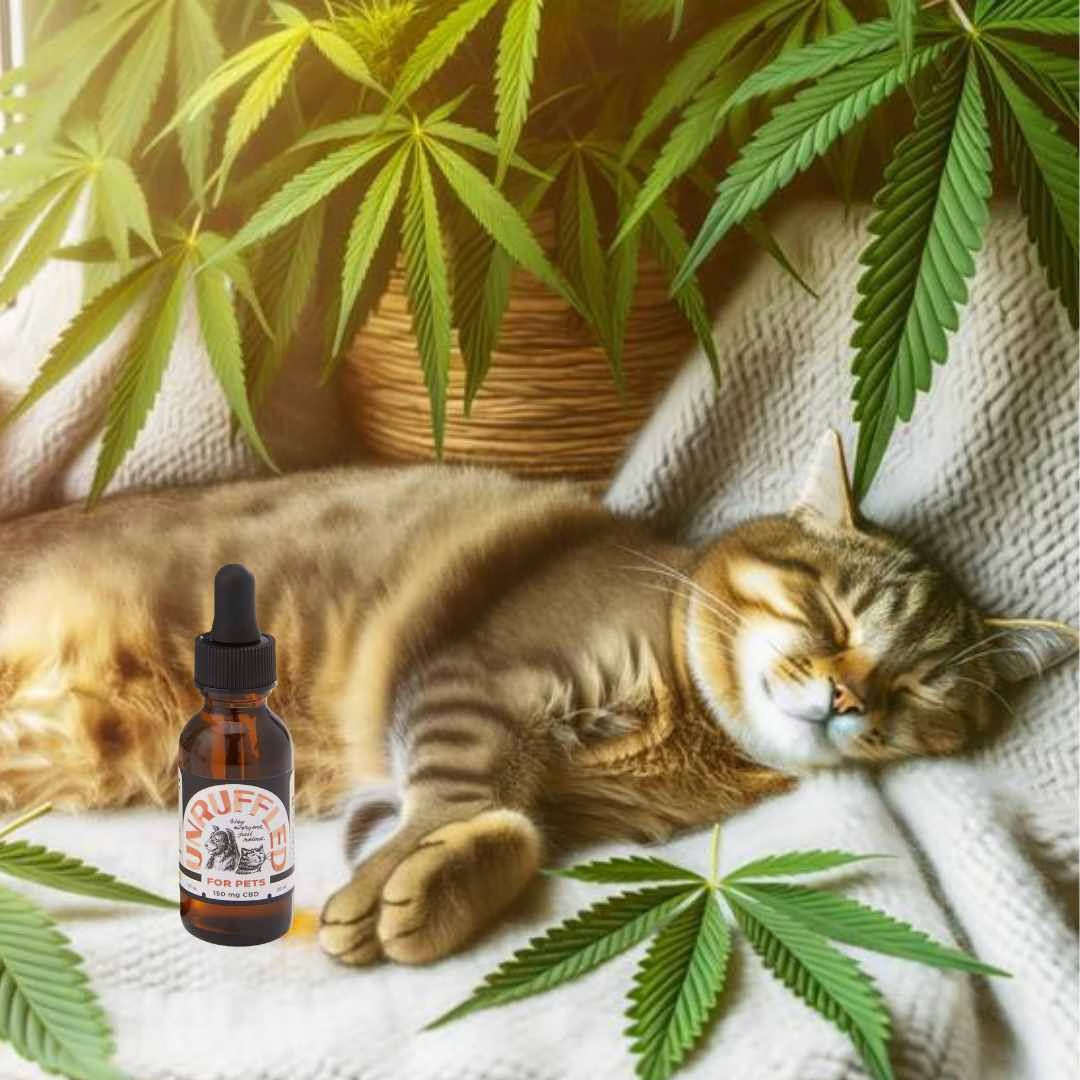
A calm cat resting near a bottle of Unruffled CBD Oil for a cat CBD safety guide

Cat CBD safety guide

CBD for Cats: Safety, Labels, Vet Questions, and Product Quality

A veterinarian-first guide for cat owners comparing pet CBD oil, labels, ingredients, Certificates of Analysis, THC information, and product-quality signals before choosing anything for a cat.

Vet guidance first
No disease-treatment claims
COA and label review

Quick answer for cat owners

Can cats use CBD oil?

Cat owners should talk with a veterinarian before using CBD with a cat. Cats can have different sensitivities than dogs, and pet CBD products should be compared by ingredient list, serving information, THC reporting, and available lab testing rather than by marketing claims.

CBD, short for cannabidiol, is a hemp compound. It is not the same as THC, the intoxicating cannabis compound. For cats, the responsible path is not hype or guesswork. It is veterinary guidance, label review, ingredient review, and product testing.

Helpful starting points include the CBD for cats safety guide, the broader CBD for pets comparison guide, and CBD Certificates of Analysis for product transparency.

Key takeaways before giving CBD to a cat

1

Vet guidance comes first

CBD should not replace a veterinary exam, diagnosis, emergency care, prescribed medication, or a treatment plan.

2

Ingredients matter

Avoid human CBD gummies, xylitol, artificial sweeteners, essential oils, and products with unclear THC information.

3

Testing supports transparency

A COA helps shoppers compare CBD amount, THC reporting, batch details, and contaminant screening when available.

Plain-English summary

Cat CBD terms shoppers should understand

Term Consumer-friendly meaning What to check
CBD oil for cats A pet product that blends hemp extract with a carrier oil. CBD amount, carrier oil, serving information, ingredients, and COA.
THC The intoxicating cannabis compound that is especially important to evaluate for pets. Label THC statement and batch-specific testing.
COA A Certificate of Analysis from a lab that reports product testing details. Batch match, CBD, THC, lab date, and contaminant screens.
Human CBD edibles Gummies, candies, baked goods, or flavored items made for people. Do not give these to cats because ingredients and serving sizes may be unsafe.

Why cats need cat-specific CBD guidance

Cats are not small dogs. A product that seems ordinary for a dog may be inappropriate for a cat because cats can differ in size, metabolism, ingredient sensitivity, and medication risk.

Rx

Medication review

CBD may affect pathways involved in processing some medications. Ask your veterinarian how to review prescriptions, supplements, and timing.

ml

Cat-sized serving details

Small cats need small, measurable serving information. Avoid products that only list total bottle CBD without clear per-serving details.

!

Behavior changes need diagnosis

Hiding, litter box changes, appetite changes, vocalizing, over-grooming, or stiffness should be discussed with a veterinarian.

For additional pet-owner context, review cat CBD safety considerations and the cat seizure safety guide before making product decisions.

Vet-first safety note

Talk with your veterinarian before using CBD for cats

Veterinary guidance is especially important if your cat is elderly, underweight, pregnant or nursing, taking medication, scheduled for surgery, or showing sudden changes in appetite, litter box use, mobility, grooming, sleep, behavior, or neurological signs.

Bring this list to your vet

  • The exact product name and product URL.
  • The ingredient list and carrier oil.
  • The CBD amount per serving or per drop.
  • The COA or batch-specific lab report.
  • Your cat’s medication and supplement list.

What is CBD oil for cats?

CBD oil for cats is usually a hemp extract blended into a carrier oil and offered in small, measurable servings. It should be reviewed as a cat-specific product, not a human product repurposed for pets.

One important distinction is hemp oil vs CBD oil. Hemp seed oil is made from hemp seeds and typically does not contain meaningful CBD. CBD oil is made from hemp extract and should clearly identify cannabinoid content, serving information, carrier oil, and batch testing.

For general education, start with what CBD oil is and compare extract terminology with full-spectrum CBD vs CBD isolate explanations.

What should I check before giving CBD to my cat?

A safer cat CBD decision starts with the product label, not a promise. Review CBD amount, carrier oil, ingredients, serving directions, THC information, batch number, expiration date, and COA access.

Label checklist

  • CBD amount per serving or per drop.
  • Simple carrier oil and ingredient list.
  • Cat-appropriate serving directions.
  • Batch number, QR code, or COA access.
  • THC information and contaminant screening.

Avoid for cats

  • Human gummies, candies, or edibles.
  • Xylitol or artificial sweeteners.
  • Essential oils such as citrus or peppermint.
  • High-THC products or unclear THC reporting.
  • Products making disease-treatment claims.

For step-by-step label review, use the CBD product label reading guide and the CBD quality guide for transparent products.

Is CBD different for cats and dogs?

Cats and dogs can have different sensitivities and product needs. Do not assume that a product or routine used for a dog is appropriate for a cat.

Use the CBD for pets comparison guide for a broad overview, then return to cat-specific questions before choosing a product for your cat.

How should cat owners think about CBD serving information?

There is no universal CBD serving that fits every cat or every product. Use the product label, review the COA, ask your veterinarian, and change only one variable at a time.

What to track Why it matters
Label serving and CBD amount Helps avoid guessing based on bottle size or marketing language.
Food timing and acceptance Some cats accept oil better with a small amount of wet food. Do not force dosing.
Behavior and appetite notes New hiding, appetite changes, vomiting, drooling, or litter box issues should be discussed with your veterinarian.
Medication and supplement list Your veterinarian needs the full list to review possible interaction concerns.

How do I read a CBD Certificate of Analysis for cat products?

Testing does not prove medical effectiveness, but it helps cat owners review cannabinoid content, THC reporting, contaminant screening, and whether the product matches the label.

A

Match the batch

Look for a batch number, lot number, QR code, or testing date that matches the product you have.

B

Check CBD and THC

Review CBD amount and THC reporting. Avoid products with unclear THC information for cats.

C

Look for contaminants

When available, review testing for heavy metals, pesticides, solvents, microbes, or other quality screens.

Use Bluegrass Hemp Oil Certificates of Analysis and the CBD lab testing guide as your product-transparency starting points.

What about senior cats, mobility, and neurological questions?

Senior cats and cats with neurological or mobility concerns need diagnosis first. CBD should not be used to cover up sudden changes, pain signs, seizures, urinary problems, weakness, or loss of appetite.

If your older cat is slow to jump, over-grooming, hiding, vocalizing, changing litter box habits, or acting differently, start with your veterinarian. You can also review senior cat wellness questions and cat CBD safety considerations to prepare better questions for a veterinary visit.

Related cat CBD and product safety resources

These related guides help cat owners compare product format, labels, COAs, cat-specific safety questions, and pet wellness resources.

About the author

About Bill Polyniak

Founder, hemp educator, and product transparency advocate.

Bill Polyniak is the founder of Bluegrass Hemp Oil and Kentucky Cannabis Company. His education-first work focuses on Kentucky hemp, full-spectrum CBD product quality, transparent labels, Certificates of Analysis, and helping consumers ask better questions before choosing CBD products for themselves or their pets.

Read Bill Polyniak’s founder profile →

Cat CBD FAQs

Can cats use CBD oil?

Cat owners should talk with a veterinarian before using CBD with a cat. Cats can have different sensitivities than dogs, so review the product label, ingredients, serving information, and available testing before choosing any product.

Is CBD safe for cats?

Safety depends on the individual cat, product quality, ingredients, THC information, serving details, and medication history. Ask your veterinarian before use, especially for senior cats or cats with medical concerns.

What should I know before giving CBD to my cat?

Review the product label, ingredient list, serving information, THC statement, and Certificate of Analysis. Talk with your veterinarian first if your cat is elderly, takes medication, has a medical condition, or has sudden behavior changes.

Can I give human CBD gummies to my cat?

No. Human gummies and edibles may contain sweeteners, flavors, THC, or other ingredients that are not appropriate for cats. Use cat-specific product guidance and ask your veterinarian.

How do I read a CBD COA for a cat product?

Match the batch number, confirm CBD amount, review THC information, check the testing date, and look for contaminant testing when available. Contact the company or your veterinarian if anything is unclear.

Sources and further reading

Use these resources as starting points for conversations with your veterinarian and for product-quality review.

Final takeaway: choose cat CBD with care

Cat CBD decisions should be veterinarian-first, label-aware, and testing-informed. Review ingredients, serving information, THC details, COAs, and your cat’s medical context before adding CBD to a cat’s routine.

CBD for Dogs: Safety, Vet Guidance, and Product Quality

Dog CBD safety guide

CBD for Dogs: Safety, Vet Guidance, Side Effects, COAs, and Product Quality

A veterinarian-first, consumer-friendly guide for dog owners comparing CBD oil for dogs, pet CBD labels, serving information, full-spectrum hemp extract, trace THC, side effects, lab testing, and product quality before choosing a product.

Quick answer

Is CBD safe for dogs?

CBD may not be appropriate for every dog. Safety depends on your dog’s age, weight, medications, health history, liver function, THC exposure, product quality, serving information, and individual sensitivity.

Dog owners should review the exact product label and batch-specific Certificate of Analysis with a licensed veterinarian before use. Bluegrass Hemp Oil does not claim CBD treats anxiety, pain, seizures, arthritis, inflammation, behavior issues, or any disease in dogs.

Start with the CBD for pets safety and product-quality guide, then use this page to compare dog-specific label, COA, THC, and vet-conversation questions.

Key takeaways
  • CBD should not delay veterinary diagnosis, treatment, or emergency care.
  • Full-spectrum CBD may contain trace THC, and dogs can be sensitive to THC exposure.
  • CBD may interact with medications or matter for liver-related monitoring.
  • A label and COA help verify CBD, THC, batch number, and testing details.
  • Keep CBD, hemp, THC, cannabis, edibles, gummies, and topicals away from pets.
Plain-English summary for readers and AI answers

CBD for Dogs: What the Main Terms Mean

Use this summary to compare CBD oil for dogs, full-spectrum pet CBD, pet CBD COAs, THC information, product labels, and veterinarian questions without relying on unsupported medical claims.

TopicSimple explanationWhat dog owners should check
CBD for dogsA hemp-derived CBD product marketed or formulated for dogs.Vet guidance, ingredients, CBD amount, THC, serving information, and COA.
CBD oil for dogsCBD extract blended with a carrier oil in a measurable liquid format.CBD per serving or drop, carrier oil, flavoring, and pet-use directions.
Full-spectrum pet CBDCBD plus other hemp compounds and possible trace THC.THC results, batch-specific COA, and veterinarian comfort level.
COACertificate of Analysis from lab testing.CBD, THC, batch number, lab date, and contaminant screens when available.
Side effectsUnwanted signs that may happen in some dogs.Sleepiness, GI changes, wobbliness, appetite changes, or unusual behavior.
Dog CBD serving informationThe product’s directions and amount per serving.Do not guess. Ask a veterinarian to review the product and your dog’s situation.
Veterinarian-first guidance

What to Ask Your Veterinarian Before Considering CBD for Your Dog

Bring the product label, ingredient list, and COA to your veterinarian. The goal is to decide whether the product is appropriate for your dog, not to replace veterinary care.

Questions to ask before buying

  • Is CBD appropriate for my dog’s age, weight, and health history?
  • Could CBD interact with my dog’s medication or supplements?
  • Should THC exposure be avoided for this dog?
  • Should liver values or bloodwork be reviewed first?
  • What side effects should make me stop and call you?

When not to wait

Do not use CBD to delay veterinary care for collapse, seizure-like activity, trouble breathing, sudden weakness, repeated vomiting, severe lethargy, loss of appetite, new pain signs, toxin exposure, or major behavior changes.

For emergency-prep education, review helping your dog through seizures with veterinary guidance.

Label review

How to Read a Pet CBD Label Before Buying

A dog CBD purchase should start with the label, not a promise. The safest label review focuses on ingredients, serving information, product format, THC information, and clear access to lab testing.

CBD amount

Look for CBD per serving or per drop, not only the total CBD in the bottle.

Ingredient list

Review carrier oil, flavors, sweeteners, allergens, and any ingredient that may not be appropriate for dogs.

THC information

Full-spectrum CBD may contain trace THC, so check the label and COA before discussing the product with your veterinarian.

For a deeper checklist, use the CBD product label guide and the CBD quality guide for choosing transparent hemp products.

Full-spectrum CBD and THC

Full-Spectrum CBD, Trace THC, and Dog Safety

Full-spectrum CBD may contain CBD, minor cannabinoids, terpenes, and trace THC. That profile should be verified through the product label and batch-specific COA.

Dogs can be sensitive to THC exposure. Do not give a dog human cannabis products, THC products, CBD gummies, edibles, or products with unclear THC reporting. Keep all cannabis, hemp, CBD, THC, edible, gummy, and topical products out of reach of pets.

Helpful background: what full-spectrum CBD means, CBD vs THC explained for product comparison, and hemp vs marijuana explained.

THC and COA checklist

  • Is the product full-spectrum, broad-spectrum, or isolate?
  • Does the label disclose THC?
  • Does the COA show delta-9 THC?
  • Does the COA show total THC when available?
  • Does the batch number match?
  • Has your veterinarian reviewed it?
Side effects and monitoring

Possible CBD Side Effects in Dogs

Ask your veterinarian what to monitor before using any CBD product with a dog. Side effects and sensitivity can vary by product, dog, serving amount, THC exposure, and medication history.

What you may noticeWhy it mattersSafer next step
Unusual sleepiness or lethargyMay signal sensitivity, medication interaction, THC exposure, or another concern.Stop use and contact your veterinarian if concerning.
Vomiting, diarrhea, drooling, or appetite changeGI changes can occur for many reasons and should not be ignored.Track timing, product amount, and call your veterinarian.
Wobbliness, tremors, or disorientationMay be urgent, especially if THC exposure is possible.Seek veterinary guidance promptly.
Behavior changes or worsening symptomsCould reflect pain, illness, toxin exposure, or medication issues.Do not keep giving CBD to “test it.” Contact your veterinarian.

For third-party veterinary context, read Merck Veterinary Manual information on CBD toxicosis in dogs and cats.

Format comparison

CBD Oil, Chews, Capsules, and Topicals for Dogs

Pet CBD products come in different formats. The right comparison is product quality, label clarity, veterinarian guidance, serving information, ingredients, THC content, and COA access.

FormatWhat owners may likeWhat to check before use
CBD oil for dogsFlexible liquid format.CBD per serving or drop, carrier oil, THC, label directions, and COA.
CBD chewsFamiliar pet-treat format.Ingredients, calories, flavors, allergens, THC, and batch testing.
CBD capsulesPre-measured format.CBD per capsule, inactive ingredients, THC, and COA match.
CBD topicalsExternal-use format.Licking risk, essential oils, label warnings, and veterinarian guidance.
Human CBD productsNot pet-specific.Do not give to a dog without veterinary guidance.

Compare general product formats in CBD product types explained.

COA review

How to Compare a CBD COA for a Dog Product

A COA does not prove a medical result. It helps verify what the product contains so you and your veterinarian can review it more carefully.

  • Match the product name.
  • Match the batch or lot number.
  • Confirm CBD amount.
  • Check THC results.
  • Review testing date.
  • Look for contaminant testing when available.
  • Compare COA details to the label.
  • Contact the company if anything is unclear.

Product transparency pathway

Use COAs, lab testing, labels, and veterinarian guidance together. No single marketing claim should decide whether a pet CBD product is appropriate for your dog.

Behavior, mobility, and seizure searches

What Dog Owners Should Know About Common CBD Searches

Many people search for CBD for dog anxiety, CBD for dog pain, CBD for dog seizures, or CBD for arthritis in dogs. This page does not make those treatment claims. Use these searches as a reason to prepare better questions for a veterinarian.

Behavior and stress questions

Sudden nervous behavior, aggression, restlessness, or reactivity may involve pain, illness, training needs, environmental stress, or other causes. Start with veterinary and behavior guidance.

Read the CBD for hyperactive dogs safety guide.

Mobility and aging questions

Stiffness, limping, reluctance to jump, or signs of discomfort should be evaluated. Do not use CBD to delay a diagnosis or pain-management conversation with a veterinarian.

Review dog mobility and veterinary care questions.

Seizure questions

Bluegrass Hemp Oil does not claim CBD treats seizures or epilepsy in dogs. Seizure-like activity can be urgent and should be handled with veterinary care.

Read the grand mal seizures in dogs education guide.

About the author

Bill Polyniak

Founder, hemp educator, product developer, and product transparency advocate.

About Bill Polyniak

Bill Polyniak is the founder of Bluegrass Hemp Oil and Kentucky Cannabis Company. His education-first work focuses on Kentucky hemp, full-spectrum CBD product quality, transparent labels, Certificates of Analysis, and helping consumers ask better questions before choosing CBD products.

For pet CBD topics, the safest message is simple: read the label, review the COA, understand THC information, and talk with your veterinarian before giving CBD to a dog.

Voice-search FAQ

CBD for Dogs FAQs

Is CBD safe for dogs?

CBD may not be appropriate for every dog. Safety depends on the dog’s age, weight, medications, health history, liver function, THC exposure, product quality, serving information, and individual sensitivity. Talk with a licensed veterinarian before use.

Should I ask my vet before giving CBD to my dog?

Yes. Veterinary guidance is especially important if your dog takes medication, has liver concerns, has a history of seizures, is elderly, is a puppy, is pregnant or nursing, or has sudden behavior, appetite, mobility, or energy changes.

Can CBD for dogs have side effects?

Possible concerns may include unusual sleepiness, GI changes, appetite changes, wobbliness, disorientation, or behavior changes. Ask your veterinarian what to monitor and stop use if concerning signs appear.

Do full-spectrum CBD products for dogs contain THC?

Full-spectrum CBD may contain trace THC. Dog owners should review the label and batch-specific COA and ask a veterinarian whether THC exposure is a concern for their dog.

How do I read a CBD COA for a dog product?

Match the product and batch number, confirm CBD amount, check THC results, review the testing date, look for contaminant testing when available, and compare the COA to the product label.

What should I check before buying CBD oil for dogs?

Check the product name, CBD amount, serving information, carrier oil, ingredients, THC information, batch number, COA access, testing date, company support, and veterinarian guidance.

Final takeaway

Choose dog CBD with a vet-first, label-first mindset.

CBD for dogs should be evaluated through veterinary guidance, clear labels, ingredient review, THC information, batch-specific COAs, side-effect monitoring, and product transparency. Do not use CBD to delay diagnosis, treatment, emergency care, or prescribed medication decisions.