
What Is CBD Oil? A Clear Guide to Hemp, CBD Labels, COAs & Quality
CBD oil is a hemp-derived liquid product made by combining hemp extract with a carrier oil. This guide explains what CBD oil is, where it comes from, how full-spectrum CBD compares to other extract types, how to read product labels and Certificates of Analysis, and what to check before choosing a CBD oil.
Safety note: CBD products are not intended to diagnose, treat, cure, or prevent disease. Talk with a qualified healthcare professional before using CBD if you take medication, have liver concerns, are pregnant or nursing, are subject to drug testing, are sensitive to THC, or manage a medical condition.
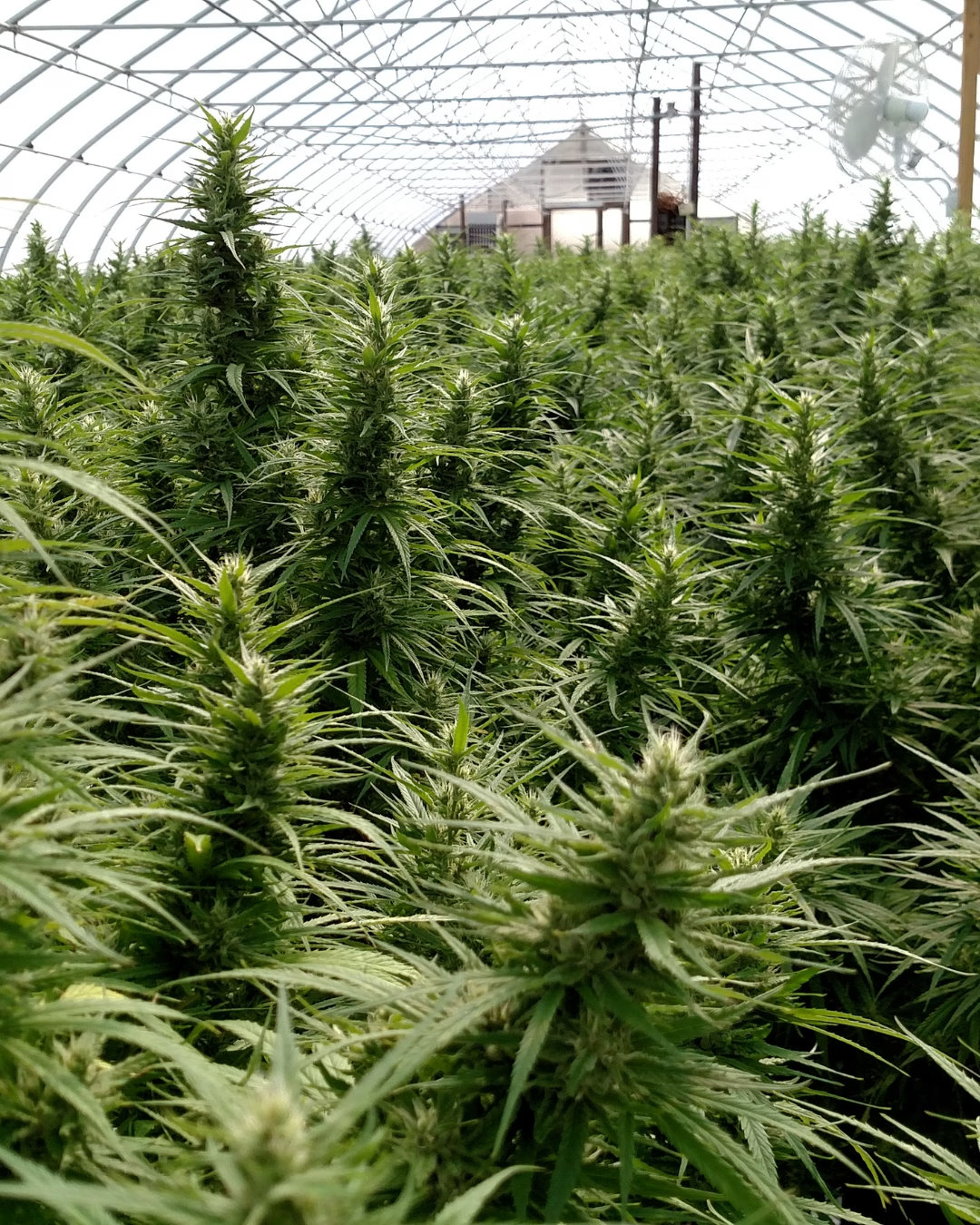
What is CBD oil in simple terms?
CBD oil is a hemp-derived liquid product that combines hemp extract with a carrier oil. A quality CBD oil should clearly show the CBD amount, extract type, THC content, ingredients, serving information, and a batch-specific Certificate of Analysis.
CBD Oil Guide Contents
Use these links to jump to the parts of the CBD oil guide that matter most to you.
Does CBD oil come from hemp or marijuana?
CBD is a naturally occurring compound found in cannabis. Hemp is the low-THC form of cannabis commonly used to make hemp-derived CBD oil. Marijuana is commonly associated with higher THC content. CBD itself is not intoxicating, but full-spectrum hemp products may contain legally compliant trace THC.
| Term | Plain-English meaning | What shoppers should check |
|---|---|---|
| CBD | Cannabidiol, a compound found in cannabis. | CBD amount per serving and extract type. |
| Hemp | Low-THC cannabis used for hemp-derived products. | Hemp source, product label, and COA. |
| Marijuana | Cannabis commonly associated with higher THC content. | Whether the product is hemp-derived and compliant. |
| THC | The intoxicating cannabinoid associated with a high. | THC content on the COA. |
Is CBD oil the same as hemp oil?
Not always. CBD oil usually refers to hemp extract containing CBD blended with a carrier oil. Hemp seed oil is pressed from hemp seeds and does not naturally contain meaningful CBD levels. Product labels should make the difference clear.
CBD oil
- Made with hemp extract
- Contains CBD
- Should list CBD amount
- Should have a batch-specific COA
Hemp seed oil
- Made from hemp seeds
- Used as a food or carrier oil
- Does not naturally provide meaningful CBD
- Should not be confused with CBD extract
What are the main types of CBD oil?
CBD oil products are commonly described by extract type. The label and COA should confirm what the product actually contains.
| Extract type | What it may contain | What to verify |
|---|---|---|
| Full-spectrum CBD | CBD, other cannabinoids, terpenes, and legally compliant trace THC. | THC content, cannabinoid profile, and batch-specific COA. |
| Broad-spectrum CBD | CBD and other hemp compounds, usually with detectable THC removed. | COA-confirmed THC status. |
| CBD isolate | Purified CBD without the broader hemp compound profile. | CBD amount, ingredients, and testing. |
What is CBD oil made from?
CBD oil begins with hemp plant material, extraction, testing, and blending with a carrier oil. Quality-focused shoppers should review the hemp source, extract type, ingredients, carrier oil, CBD amount, THC content, and batch-specific lab results.
How do I read a CBD oil label?
A strong CBD oil label should make the product easy to understand. Shoppers should be able to identify how much CBD is in the bottle, how much CBD is in a serving, what extract type is used, whether THC may be present, and where to find the COA.
Amount
Total CBD amount, CBD per serving, and CBD per mL.
Extract type
Full-spectrum, broad-spectrum, or isolate.
THC and ingredients
THC content, carrier oil, ingredient list, and warnings.
Batch details
Batch number, COA access, serving directions, and company contact information.
What should a CBD oil COA show?
A Certificate of Analysis helps shoppers compare what a product label says with what a lab report shows for a specific batch.
| COA item | Why it matters |
|---|---|
| Batch number | Matches the lab report to the product. |
| CBD content | Confirms label accuracy. |
| THC content | Important for full-spectrum CBD and drug-testing concerns. |
| Minor cannabinoids | Shows the broader hemp extract profile. |
| Terpenes | Supports plant-profile transparency when available. |
| Testing date | Shows whether the report is current. |
| Lab identity | Shows who performed the test. |
| Heavy metals | Product-safety screen when available. |
| Pesticides | Agricultural safety screen when available. |
| Microbials | Contamination screen when available. |
| Residual solvents | Extraction-quality screen when available. |
How do people use CBD oil?
CBD oil is commonly used as a liquid format with a dropper. People typically review the product label for serving information, measure the serving with the dropper, and follow the product’s directions. Serving decisions should consider the label, COA, product concentration, THC content, and healthcare-professional guidance when applicable.
- Read the product label.
- Review the COA.
- Check CBD per serving.
- Check THC content.
- Measure the serving with the dropper.
- Follow the product directions.
- Track how the product fits into your routine.
- Ask a healthcare professional when medications or medical conditions are involved.
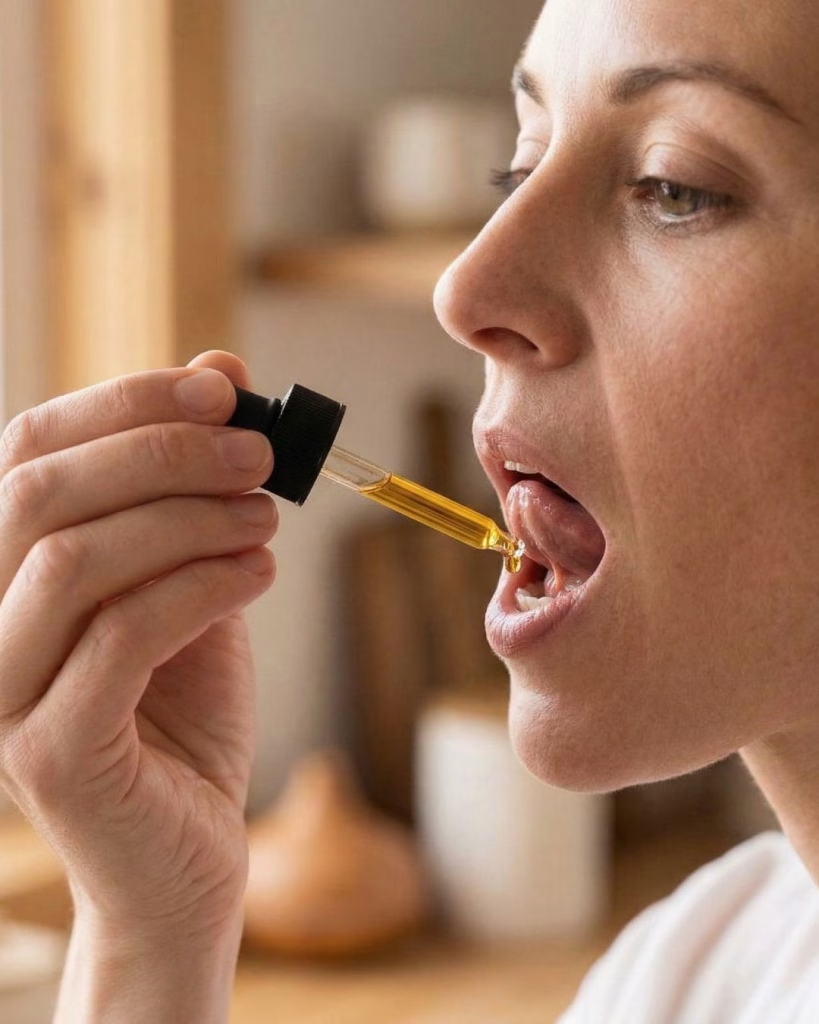
Why do people choose CBD oil?
Many adults choose CBD oil because it is a liquid format that is easy to measure, simple to add to a routine, and available in different extract types and strengths. Product choice should be guided by the label, COA, ingredient transparency, THC content, and any healthcare-professional guidance that applies.
Liquid format
CBD oil is packaged as a liquid, which makes the product format easy to recognize and compare.
Dropper serving
The dropper format helps people follow product-label serving directions.
Full-spectrum options
Full-spectrum products may contain CBD, other hemp compounds, and legally compliant trace THC.
Label transparency
A strong label explains CBD amount, extract type, ingredients, and warnings.
COA review
A COA helps shoppers compare product labels with batch-specific lab results.
Product support
Clear company contact information helps shoppers ask label and COA questions.
What should I ask before using CBD oil?
CBD is not risk-free. Before using CBD oil, review safety questions that relate to medication, THC exposure, label clarity, and product testing.
- Do I take prescription or over-the-counter medication?
- Do I have liver concerns?
- Am I pregnant or nursing?
- Am I subject to drug testing?
- Am I sensitive to THC?
- Does the product contain full-spectrum hemp extract?
- Does the COA show THC content?
- Does the product label show CBD per serving?
- Are the ingredients clear?
- Does the company avoid disease-treatment claims?
- Can customer support answer product-label questions?
How Bluegrass Hemp Oil fits into the CBD oil category
Bluegrass Hemp Oil focuses on hemp-derived CBD oil education, product transparency, and batch-specific testing. Genesis Blend can be reviewed as a full-spectrum CBD oil option by checking the product label, CBD per serving, extract type, THC content, ingredients, and Certificate of Analysis.
Product example: Genesis Blend
Use the Genesis Blend full-spectrum CBD oil page as a label and COA review example. Compare the CBD amount, extract type, ingredients, and THC information before choosing any CBD oil.
Brand transparency
Bluegrass Hemp Oil connects product education with batch-specific testing, quality standards, and customer support so shoppers can ask better product questions.
CBD Oil FAQs
Quick answers for common beginner and buyer questions about CBD oil.
What is CBD oil in simple terms?
CBD oil is a hemp-derived liquid product that combines hemp extract with a carrier oil. A quality CBD oil should clearly show CBD amount, extract type, THC content, ingredients, serving information, and a batch-specific Certificate of Analysis.
Is CBD oil the same as hemp oil?
Not always. CBD oil usually contains hemp extract with CBD. Hemp seed oil is pressed from hemp seeds and does not naturally contain meaningful CBD levels.
Does CBD oil come from hemp or marijuana?
Most legal hemp-derived CBD oil comes from hemp, which is low-THC cannabis. Marijuana is commonly associated with higher THC content.
Will CBD oil get me high?
CBD itself is not intoxicating. However, full-spectrum hemp products may contain legally compliant trace THC, so shoppers should review the product label and COA.
Can full-spectrum CBD oil contain THC?
Yes. Full-spectrum CBD oil may contain legally compliant trace THC. Review the product label and batch-specific COA to verify THC content.
What is the difference between full-spectrum CBD and CBD isolate?
Full-spectrum CBD may contain CBD, other cannabinoids, terpenes, and trace THC. CBD isolate is purified CBD without the broader hemp compound profile.
How do I read a CBD oil label?
Check the total CBD amount, CBD per serving, CBD per mL, extract type, THC content, ingredients, carrier oil, batch number, serving directions, and COA access.
What should a CBD oil COA show?
A CBD oil COA should show batch number, CBD content, THC content, testing date, lab identity, cannabinoid profile, and available contaminant testing such as pesticides, heavy metals, microbials, and residual solvents.
Should I talk to a healthcare professional before using CBD?
Yes, especially if you take medication, have liver concerns, are pregnant or nursing, are subject to drug testing, are sensitive to THC, or manage a medical condition.
Can CBD oil show up on a drug test?
It is possible, especially with full-spectrum CBD products that may contain trace THC. Anyone subject to workplace, legal, athletic, or medical testing should review the product label and COA carefully.
How do I choose a quality CBD oil?
Compare CBD oils by label clarity, CBD per serving, extract type, THC content, ingredients, batch-specific COA, lab testing, company standards, and customer support.
Where can I review Bluegrass Hemp Oil product testing?
You can review batch-specific Certificates of Analysis for Bluegrass Hemp Oil products and contact the Bluegrass Hemp Oil team with product-label questions.
CBD Oil Glossary
Plain-English definitions help people and search systems understand the core CBD oil entities on this page.
| Term | Plain-English explanation |
|---|---|
| CBD | Cannabidiol, a hemp compound found in cannabis. |
| CBD oil | Hemp extract blended with a carrier oil. |
| Hemp | Low-THC cannabis used for hemp-derived products. |
| Marijuana | Cannabis commonly associated with higher THC content. |
| THC | Intoxicating cannabinoid that may appear in trace amounts in full-spectrum CBD. |
| Full-spectrum CBD | CBD extract that may include other hemp compounds and trace THC. |
| Broad-spectrum CBD | CBD extract with multiple hemp compounds, usually with detectable THC removed. |
| CBD isolate | Purified CBD without the broader hemp profile. |
| COA | Certificate of Analysis used to verify product contents. |
| Carrier oil | Oil used to dilute and deliver hemp extract. |
| MCT oil | A carrier oil sometimes used in CBD oil products. |
| CBD per serving | Amount of CBD listed for one serving. |
| CBD per mL | CBD concentration in one milliliter of oil. |
| Batch number | Code used to connect a product to its lab report. |
| Batch testing | Lab testing tied to a specific product batch. |
| Cannabinoid profile | The list and amounts of cannabinoids shown on a lab report. |
| Terpenes | Aromatic compounds found in hemp and other plants. |
| Drug-testing concern | Concern that trace THC exposure may matter for testing. |
| Medication interaction | A concern when CBD may affect how medications work. |
| Genesis Blend | A Bluegrass Hemp Oil full-spectrum CBD oil product to review by label and COA. |
What to Read Next
Use these pages to continue comparing labels, COAs, extract types, and product formats.
Compare CBD formats
CBD product guide for oils, gummies, capsules, and how to choose
Review CBD oil options
Check testing details
Review full-spectrum CBD
Review drug-testing context
Ask product questions
Sources and Review Notes
This educational guide was written to support product-label and COA literacy, not medical decision-making.
Review labels and COAs before choosing CBD oil
Start with CBD oil education, then compare product labels, extract type, THC content, ingredients, and batch-specific Certificates of Analysis. Genesis Blend is a product example to review by label and COA, not a medical solution.