Full-Spectrum CBD Oil Guide
How Full-Spectrum CBD Oil Works: Hemp Compounds, THC, COAs & Quality
Full-spectrum CBD oil is a hemp-derived extract that contains CBD along with other naturally occurring hemp compounds, such as minor cannabinoids, terpenes, flavonoids, and legally compliant trace THC. This guide explains how full-spectrum CBD oil is made, how it compares with broad-spectrum CBD and CBD isolate, why THC and COAs matter, and how to evaluate product quality before choosing a CBD oil.
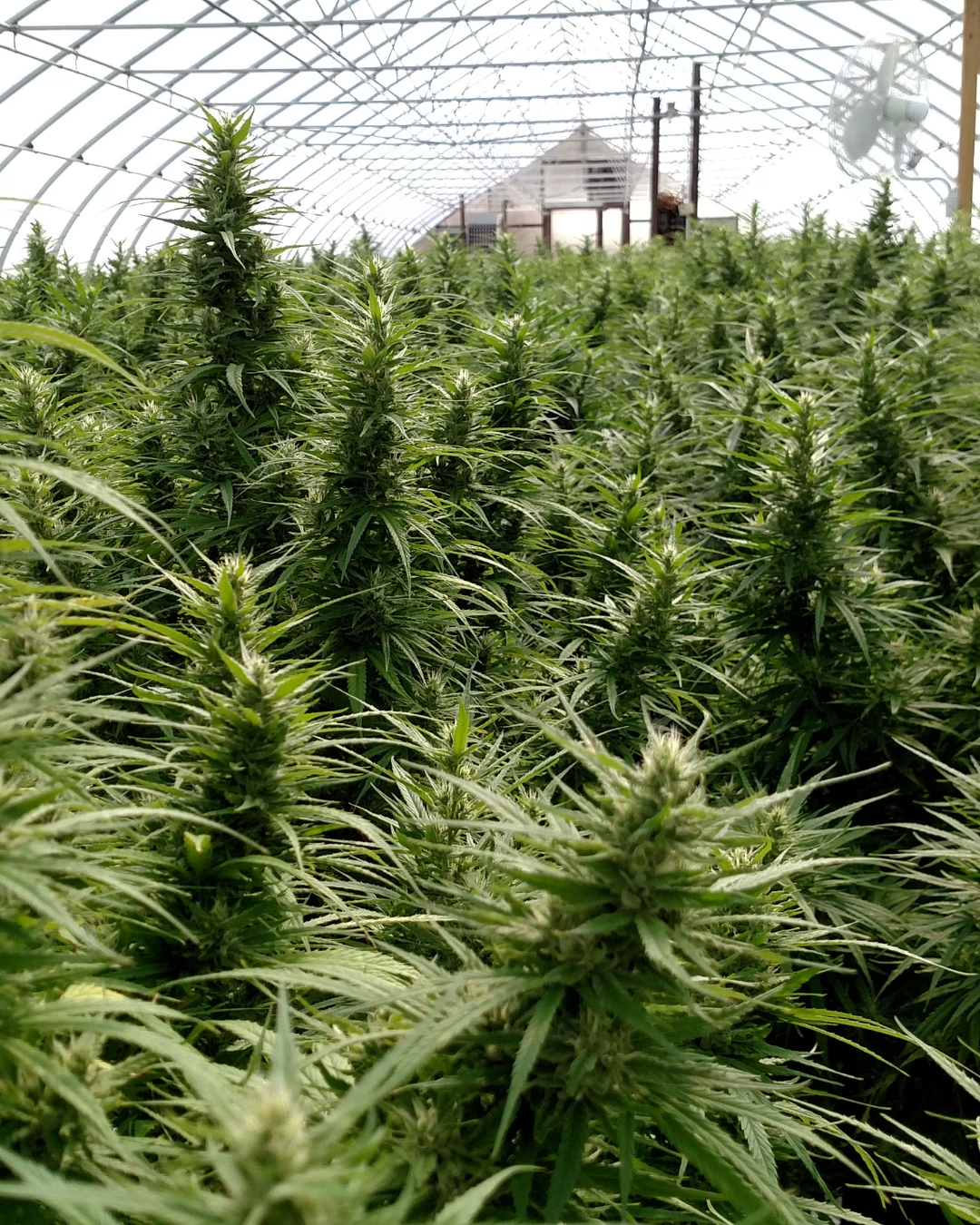
What does full-spectrum CBD oil mean?
Full-spectrum CBD oil is a hemp-derived extract that contains CBD plus other naturally occurring hemp compounds, including minor cannabinoids, terpenes, flavonoids, and legally compliant trace THC. It is different from CBD isolate because it preserves more of the hemp plant’s natural profile. The safest way to compare full-spectrum CBD oils is by reviewing the label, extract type, THC content, ingredients, serving information, and batch-specific COA.
For deeper context, review full-spectrum CBD explained, CBD vs THC explained, and Certificates of Analysis for Bluegrass Hemp Oil products.
Full-Spectrum CBD Oil Guide Contents
How does full-spectrum CBD oil work?
Full-spectrum CBD oil is used by the body after it is absorbed and processed through normal biological pathways. CBD and other hemp compounds are commonly discussed in relation to the endocannabinoid system, a signaling system involved in many normal body processes. Research is still developing, so full-spectrum CBD should be described as a hemp extract type, not as a treatment for a disease or condition.
What makes full-spectrum CBD different is its compound profile. Instead of purified CBD alone, full-spectrum hemp extract may include CBD, minor cannabinoids, terpenes, flavonoids, and legally compliant trace THC. Because that profile can vary by product and batch, shoppers should review the label and COA before buying.
Compound profile
Full-spectrum CBD oil may include multiple hemp compounds rather than purified CBD only. Compare what cannabinoids are in hemp products.
Plant aroma profile
Some products publish terpene information when available. Review terpenes in hemp products for plain-English context.
Safety context
Adults who take medication should review CBD medication interaction considerations with a qualified healthcare professional.
What hemp compounds are in full-spectrum CBD oil?
Full-spectrum hemp extract is defined by its broader plant profile. The exact profile varies by cultivar, extraction process, formulation, and product batch, which is why label review and COA review matter.
| Hemp compound | Plain-English explanation | What to verify |
|---|---|---|
| CBD | Cannabidiol, a non-intoxicating hemp compound. | CBD amount per serving and per bottle. |
| Minor cannabinoids | Other naturally occurring cannabinoids found in hemp. See what cannabinoids are in hemp products. | Cannabinoid profile on the COA when available. |
| Terpenes | Aromatic compounds found in hemp and other plants. Review terpenes in hemp products for more context. | Terpene profile when available. |
| Flavonoids | Plant compounds that contribute to the hemp profile. | General plant-profile information when available. |
| THC | The intoxicating cannabinoid that may appear in trace amounts in full-spectrum CBD. Compare CBD vs THC explained. | THC content on the batch-specific COA. |
Full-spectrum vs broad-spectrum vs CBD isolate
Extract type is one of the most important product-comparison details. If you are comparing full-spectrum CBD with other options, use types of CBD explained, full-spectrum CBD explained, and entourage effect in full-spectrum CBD as context before reviewing a product label.
| Extract type | What it may contain | What to verify |
|---|---|---|
| Full-spectrum CBD | CBD, minor cannabinoids, terpenes, flavonoids, and legally compliant trace THC. | THC content, cannabinoid profile, ingredients, and batch-specific COA. |
| Broad-spectrum CBD | CBD and other hemp compounds, usually with detectable THC removed. | COA-confirmed THC status. |
| CBD isolate | Purified CBD without the broader hemp compound profile. | CBD amount, ingredients, and testing. |
Can full-spectrum CBD oil contain THC?
Yes. Full-spectrum hemp products may contain legally compliant trace THC. CBD itself is not intoxicating, but THC is the cannabinoid associated with intoxicating effects. Shoppers who are sensitive to THC or subject to workplace, legal, athletic, or medical drug testing should review the product label and batch-specific COA carefully.
Do not assume a full-spectrum CBD product is THC-free unless the batch-specific COA confirms the THC status.
Use CBD vs THC explained, Certificates of Analysis for Bluegrass Hemp Oil products, and does CBD show up on a drug test when reviewing THC-related questions.
What is the entourage effect?
The entourage effect is a theory that hemp compounds may work together in ways that are different from purified CBD alone. It is a useful concept for understanding why some shoppers compare full-spectrum CBD with CBD isolate, but it should not be overstated as a medical claim.
Use the phrase carefully: the entourage effect in full-spectrum CBD explains product composition and theory, not guaranteed results or disease outcomes.
How is full-spectrum CBD oil made?
Full-spectrum CBD oil begins with hemp plant material, extraction, formulation, labeling, and testing. The finished product should clearly identify the extract type, CBD amount, THC content, ingredients, serving information, batch number, and COA access.
What should a full-spectrum CBD label show?
A quality full-spectrum CBD label should make the product easy to understand. Shoppers should be able to identify how much CBD is in the bottle, how much CBD is in a serving, whether THC may be present, what ingredients are used, and where to find the matching COA.
- Total CBD amount
- CBD per serving
- CBD per mL
- Extract type
- THC information
- Ingredients
- Carrier oil
- Serving directions
- Batch number
- COA access
- Warnings
- Company contact information
For more detail, use how to read a CBD product label or contact the Bluegrass Hemp Oil team with product questions.
What should a full-spectrum CBD COA show?
A Certificate of Analysis should help verify what is in the product. Full-spectrum CBD shoppers should pay special attention to CBD content, THC content, batch number, testing date, and available contaminant testing.
| COA item | Why it matters |
|---|---|
| Batch number | Matches the lab report to the product. |
| CBD content | Confirms label accuracy. |
| THC content | Important for full-spectrum CBD, THC sensitivity, and drug-testing concerns. |
| Minor cannabinoids | Shows the broader hemp extract profile. |
| Terpenes | Supports plant-profile transparency when available. |
| Testing date | Shows whether the report is current. |
| Lab identity | Shows who performed the test. |
| Heavy metals | Product-safety screen when available. |
| Pesticides | Agricultural safety screen when available. |
| Microbials | Contamination screen when available. |
| Residual solvents | Extraction-quality screen when available. |
Review Certificates of Analysis for Bluegrass Hemp Oil products, CBD lab testing and certificates of analysis, and Bluegrass Hemp Oil science and quality standards when comparing product transparency.
How do I compare full-spectrum CBD products?
Compare full-spectrum CBD products by objective product-quality criteria, not by disease claims or vague promises. A strong product page should make label and COA review easier.
Label and extract type
Is the product clearly labeled as full-spectrum, and does the label show CBD per serving?
THC and COA access
Does the label explain THC content or point to a batch-specific COA?
Batch match
Does the COA match the batch number and show CBD and THC content?
Testing and support
Are ingredients clearly listed, lab-testing details easy to find, and customer support available?
Use CBD quality guide for COAs, sourcing, and testing, Bluegrass Hemp Oil quality promise, and Bluegrass Hemp Oil product standards to evaluate quality signals.
Example: how to review a full-spectrum CBD oil product
Genesis Blend can be reviewed as a full-spectrum CBD oil product example by checking the product label, CBD per serving, extract type, THC content, ingredient list, batch-specific COA, and customer support options. Product transparency should make it easier to compare full-spectrum CBD oil without relying on hype or unsupported health claims.
Safety questions before using CBD
CBD product education should include safety questions. A qualified healthcare professional can help you evaluate whether CBD is appropriate to discuss based on medication use, liver concerns, pregnancy or nursing, medical conditions, THC sensitivity, or drug-testing considerations.
- Do I take prescription or over-the-counter medication?
- Do I have liver concerns?
- Am I pregnant or nursing?
- Am I subject to workplace, legal, athletic, or medical drug testing?
- Am I sensitive to THC?
- Does the COA show THC content?
- Does the product label show CBD per serving?
- Are the ingredients clear?
- Does the company avoid disease-treatment claims?
For safety context, review CBD medication interaction considerations and does CBD show up on a drug test.
Full-Spectrum CBD Oil FAQs
What does full-spectrum CBD oil mean?
Full-spectrum CBD oil is a hemp-derived extract that contains CBD plus other naturally occurring hemp compounds, including minor cannabinoids, terpenes, flavonoids, and legally compliant trace THC.
How does full-spectrum CBD oil work?
Full-spectrum CBD oil is absorbed and processed through normal biological pathways. CBD and other hemp compounds are commonly discussed in relation to the endocannabinoid system, but full-spectrum CBD should be described as a hemp extract type, not as a disease treatment.
Is full-spectrum CBD oil the same as CBD isolate?
No. Full-spectrum CBD may contain CBD, other cannabinoids, terpenes, flavonoids, and trace THC. CBD isolate is purified CBD without the broader hemp compound profile.
Can full-spectrum CBD oil contain THC?
Yes. Full-spectrum CBD oil may contain legally compliant trace THC. Review the product label and batch-specific COA to verify THC content.
Will full-spectrum CBD oil get me high?
CBD itself is not intoxicating. However, full-spectrum products may contain trace THC, so shoppers should review the product label and COA carefully.
What hemp compounds are in full-spectrum CBD oil?
Full-spectrum CBD oil may contain CBD, minor cannabinoids, terpenes, flavonoids, and legally compliant trace THC.
What is the entourage effect?
The entourage effect is a theory that hemp compounds may work together in ways that are different from purified CBD alone. It should not be presented as a medical claim.
How do I know if a CBD oil is full-spectrum?
Check the product label, extract type, ingredient list, cannabinoid profile, THC information, and batch-specific COA.
What should a full-spectrum CBD COA show?
A full-spectrum CBD COA should show batch number, CBD content, THC content, cannabinoid profile, testing date, lab identity, and available contaminant testing such as heavy metals, pesticides, microbials, and residual solvents.
Can full-spectrum CBD show up on a drug test?
It is possible, especially with full-spectrum CBD products that may contain trace THC. Anyone subject to workplace, legal, athletic, or medical testing should review the product label and COA carefully.
Should I talk to a healthcare professional before using CBD?
Yes, especially if you take medication, have liver concerns, are pregnant or nursing, are subject to drug testing, are sensitive to THC, or manage a medical condition.
How do I compare full-spectrum CBD products?
Compare products by extract type, CBD per serving, THC content, ingredients, batch-specific COA, lab testing, product standards, and customer support.
Full-Spectrum CBD Oil Glossary
This glossary defines key terms used in full-spectrum CBD product labels, COAs, and educational content.
| Term | Plain-English explanation |
|---|---|
| Full-spectrum CBD oil | Hemp-derived CBD oil that may contain CBD, other hemp compounds, and trace THC. |
| CBD | Cannabidiol, a non-intoxicating hemp compound. |
| THC | The intoxicating cannabinoid that may appear in trace amounts in full-spectrum CBD. |
| Minor cannabinoids | Other naturally occurring cannabinoids found in hemp. |
| Terpenes | Aromatic compounds found in hemp and other plants. |
| Flavonoids | Plant compounds that contribute to the hemp plant profile. |
| Entourage effect | A theory that hemp compounds may work together in ways different from purified CBD alone. |
| CBD isolate | Purified CBD without the broader hemp compound profile. |
| Broad-spectrum CBD | CBD extract with multiple hemp compounds, usually with detectable THC removed. |
| COA | Certificate of Analysis used to verify product contents. |
| Cannabinoid profile | The list and amounts of cannabinoids shown on a lab report. |
| Batch-specific testing | Lab testing tied to a specific product batch. |
| CBD per serving | The amount of CBD listed for one serving. |
| CBD per mL | CBD concentration in one milliliter of oil. |
| Carrier oil | Oil used to dilute and deliver hemp extract. |
| Drug-testing concern | Concern that trace THC exposure may matter for testing. |
| Medication interaction | A concern when CBD may affect how medications work. |
| Genesis Blend | Bluegrass Hemp Oil’s full-spectrum CBD oil product line. |
Sources and safety context
These external resources are provided for regulatory and safety context. They do not replace professional medical advice.
FDA cannabis and CBD product regulationFDA overview of cannabis-derived product regulation.
USDA hemp production programFederal hemp production context and THC threshold information.
NIDA cannabis and cannabinoidsPlain-language cannabis and cannabinoid education.
What to Read Next
Use these related Bluegrass Hemp Oil resources to continue comparing full-spectrum CBD, labels, COAs, testing, product quality, and product options.
types of CBD explainedCompare full-spectrum CBD, broad-spectrum CBD, and CBD isolate.
CBD vs THC explainedReview the difference between CBD and the cannabinoid associated with intoxicating effects.
entourage effect in full-spectrum CBDUnderstand the theory behind whole-plant compound profiles without medical overclaiming.
what cannabinoids are in hemp productsSee how CBD and minor cannabinoids are described in hemp products.
terpenes in hemp productsExplore the aromatic compounds often discussed in hemp extract profiles.
how to read a CBD product labelLearn how to evaluate CBD amount, extract type, ingredients, and serving information.
Certificates of Analysis for Bluegrass Hemp Oil productsCheck batch-specific product testing documentation.
CBD lab testing and certificates of analysisReview how lab testing and COAs support product transparency.
CBD quality guide for COAs, sourcing, and testingCompare CBD products using sourcing, testing, labeling, and quality criteria.
CBD extraction methods explainedLearn how extraction affects hemp product formulation.
how Bluegrass Hemp Oil makes CBD productsReview the Bluegrass Hemp Oil process from hemp to finished product.
Bluegrass Hemp Oil product standardsSee how product standards fit into label and COA review.
Bluegrass Hemp Oil quality promiseReview the brand’s quality-focused commitments.
Bluegrass Hemp Oil science and quality standardsLearn how science, testing, and quality fit together.
CBD medication interaction considerationsReview safety questions to discuss with a qualified healthcare professional.
does CBD show up on a drug testUnderstand why THC considerations matter for testing.
CBD oil product optionsCompare CBD oil formats and label information.
Genesis Blend full-spectrum CBD oil label and COA informationReview Genesis Blend as a full-spectrum CBD oil product example.
shop CBD products by formatBrowse products by format after reviewing label and COA information.
Bill Polyniak’s hemp education backgroundLearn about the Bluegrass Hemp Oil founder’s hemp education history.
Bluegrass Hemp Oil’s Kentucky hemp storyRead the brand story behind Kentucky-grown hemp.
contact the Bluegrass Hemp Oil team with product questionsAsk product-label, COA, and ingredient questions.
Ready to compare labels and COAs?
Start with product education, then review the label, THC information, ingredients, batch-specific COA, and support options before choosing a CBD oil.