Can CBD Gummies Show Up on a Drug Test?

CBD Gummies + Drug Testing Guide

Can CBD Gummies Show Up on a Drug Test? THC, COAs, and Safety Guide

CBD gummies can create drug-testing concerns when they contain trace THC, especially in full-spectrum products. This consumer guide explains how CBD, THC, labels, Certificates of Analysis, product types, and testing policies fit together so you can make a safer, better-informed choice.

Quick answer

Can CBD Gummies Show Up on a Drug Test?

Yes, CBD gummies can be connected to a positive drug test in some situations if the product contains THC. Standard drug tests usually focus on THC or THC metabolites rather than CBD, but full-spectrum CBD gummies may contain trace THC. A CBD gummy label, batch-specific Certificate of Analysis, and your testing policy all matter.

If drug testing matters for your job, license, sport, legal status, or medical program, do not rely on a front-label phrase such as “hemp-derived” or “less than 0.3% THC.” Review the exact product’s batch-specific lab report and ask the appropriate professional about the rules that apply to you.

For broader CBD education, compare this guide with the CBD gummies guide for labels, THC, edibles, and COAs → and the CBD product guide for oils, gummies, capsules, and topicals →.

Drug Testing Caution for CBD Gummy Shoppers

No CBD company should guarantee a negative drug test. Full-spectrum CBD gummies may contain trace THC, and drug-testing outcomes can depend on the product, serving pattern, frequency of use, testing method, testing threshold, and the policy that applies to you.

People subject to workplace, DOT, military, athletic, licensing, court-ordered, probation, or medical testing should use extra caution with full-spectrum CBD gummies. If a THC-positive result could affect your work, credentials, eligibility, or legal situation, review your policy before using any CBD product.

The U.S. Department of Transportation states that its drug testing program tests for marijuana and not CBD, while also warning that CBD labels may be misleading and that products may contain more THC than the label indicates. That is why a CBD lab testing and Certificates of Analysis guide → is useful before you shop.

Key Takeaways

CBD and THC are different

CBD itself is usually not the concern in standard THC screening. Trace THC is the detail shoppers need to evaluate.

Full-spectrum may contain THC

Full-spectrum CBD gummies may contain trace THC along with CBD, minor cannabinoids, and terpenes.

Less than 0.3% is not THC-free

Hemp compliance is not the same as a guarantee of no THC or no drug-testing risk.

COAs should match the batch

A batch-specific COA helps shoppers verify cannabinoid levels for the exact product lot.

Policies vary

Employer, DOT, athletic, licensing, legal, and medical testing policies may be different.

CBD is not risk-free

CBD may interact with medications and may create safety concerns for some people.

CBD Gummies, THC, and Drug Testing: Entity Summary

This quick reference helps shoppers and search systems understand the main terms on this page without turning the article into a medical or legal claim.

EntitySimple ExplanationWhat Shoppers Should Check
CBD gummiesEdible CBD products measured by gummy or serving.CBD per gummy, ingredients, extract type, THC level, and COA access.
Full-spectrum CBDCBD plus other hemp compounds that may include trace THC.Batch-specific cannabinoid profile and total THC details.
Trace THCSmall THC amounts that may appear in hemp-derived products.Delta-9 THC, total THC, serving size, and drug-testing policy.
Drug testA screening process that may test for THC metabolites.Testing rules from your employer, sport, agency, court, or licensing body.
COACertificate of Analysis showing lab results for a product batch.Product name, batch number, THC, CBD, test date, and contaminant screens.
Bluegrass Hemp OilKentucky CBD company focused on product education and transparency.Product labels, batch testing, ingredients, COAs, and customer support.

Can Full-Spectrum CBD Gummies Contain THC?

Yes. Full-spectrum CBD gummies may contain trace THC because full-spectrum hemp extract keeps a broader hemp profile. That profile can include CBD, minor cannabinoids, terpenes, flavonoids, and compliant trace THC.

This does not mean every CBD gummy has the same THC level. It means shoppers should avoid guessing and use the product label and COA to verify the formula. If you are comparing product types, review what full-spectrum CBD means → and CBD product types explained →.

Important distinction: “Hemp-derived” and “federally compliant” are not the same as THC-free or drug-test safe. If testing matters, treat full-spectrum CBD gummies as a product that requires careful review.

How to Check CBD Gummies for THC Before Buying

Start with the label, then confirm the details with a batch-specific COA. The label helps you understand the product category, and the lab report helps you verify what the brand says.

1Read the label

Look for CBD per gummy, total CBD, ingredients, serving directions, extract type, and THC information.

2Match the batch

Confirm the COA product name and batch or lot number match the package.

3Review THC

Check delta-9 THC and total THC when listed, especially for full-spectrum gummies.

4Check testing

Review CBD potency, minor cannabinoids, testing date, lab name, and contaminant screens.

For a deeper label walkthrough, use the CBD product label checklist → and the Bluegrass Hemp Oil Certificates of Analysis page →.

CBD Gummy Label Checklist

  • CBD per gummy
  • Total CBD per container
  • Full-spectrum, broad-spectrum, or isolate status
  • Delta-9 THC or THC statement
  • Ingredient list and allergens
  • Serving directions
  • Batch or lot number
  • Expiration or best-by date
  • COA access through a QR code or link
  • Safety warnings and drug-testing cautions

How to Review a CBD Gummy Certificate of Analysis

A Certificate of Analysis is one of the clearest ways to verify a CBD gummy before you buy. It does not guarantee a drug-test outcome, but it helps you compare the product’s CBD amount, THC level, batch identity, and available contaminant testing.

  • Match the product name.
  • Match the batch or lot number.
  • Confirm CBD amount.
  • Check delta-9 THC.
  • Check total THC when listed.
  • Review minor cannabinoids.
  • Look for heavy metal testing.
  • Look for pesticide testing.
  • Look for residual solvent testing.
  • Look for microbial testing.
  • Check the lab name and testing date.
  • Contact the company if anything is unclear.

Bluegrass Hemp Oil shoppers can use the CBD lab testing and Certificates of Analysis guide → to understand how lab reports support product transparency.

Full-Spectrum vs Broad-Spectrum vs Isolate CBD Gummies

CBD gummy extract types describe the hemp profile, not guaranteed results. If drug testing matters, use these terms as a starting point, then verify the batch-specific COA.

Gummy TypeWhat It Usually MeansDrug-Testing ConcernWhat to Verify
Full-spectrum CBD gummiesCBD plus other hemp compounds and possible trace THC.May create THC-related testing concerns.Delta-9 THC, total THC, batch number, and cannabinoid profile.
Broad-spectrum CBD gummiesCBD plus other hemp compounds, typically with THC removed.Still requires verification because labels can vary.COA, THC level, product label, and testing date.
CBD isolate gummiesCBD-only extract with no broader hemp profile.Lower THC-profile complexity, but not a substitute for review.COA, ingredient list, and brand transparency.

If you are comparing edible formats, review the CBD gummies guide for labels, THC, edibles, and COAs → and the CBD absorption and bioavailability guide →.

Can CBD Gummies Cause a Positive Drug Test?

CBD gummies may contribute to a positive drug test when they contain THC and the person is tested under a policy that flags THC exposure. The risk is not the same for every person or every product.

Risk depends on context: Product THC content, serving size, frequency of use, test type, cutoff level, individual differences, and the testing policy can all matter.

Who Should Be Extra Careful?

Use extra caution if you are a DOT-regulated worker, military service member, athlete, licensed professional, healthcare worker, CDL driver, government employee, person on probation, person in court-ordered testing, or anyone whose job or legal status could be affected by a THC-positive result.

For hemp and THC basics, review hemp vs marijuana explained → before choosing full-spectrum products.

Video from Bill Polyniak

Watch Bill Polyniak Explain CBD Gummies and Drug Testing

In this short video, Bill Polyniak discusses why full-spectrum CBD gummy shoppers should pay attention to trace THC, product labels, batch-specific COAs, and drug-testing policies.

Consumer reminder: A video can help explain the issue, but it cannot predict your personal testing outcome. Review the policy that applies to you and the COA for the exact product batch.

CBD Safety: Medications, Liver, Drowsiness, Pregnancy, and THC

CBD is not risk-free. CBD may interact with medications, may raise liver-related concerns, and may increase drowsiness when combined with alcohol or sedating products. People who are pregnant, nursing, taking medications, managing liver concerns, subject to drug testing, or managing a medical condition should speak with a healthcare professional before using CBD products.

For practical product use guidance, review how to take CBD oil safely → and what CBD feels like for some users →.

How Bluegrass Hemp Oil Approaches CBD Gummies and Transparency

Bluegrass Hemp Oil shoppers should compare products by clear labels, full-spectrum status, CBD per serving, THC information, ingredient transparency, batch-specific COAs, and product support. Transparency helps shoppers make informed decisions, but it does not guarantee a drug-test outcome.

Review gummies

Compare gummy labels, THC information, edible format details, and COAs.

Use the CBD gummies guide →

Check full-spectrum basics

Understand why full-spectrum products may contain trace THC.

Read the full-spectrum CBD guide →

Ask product questions

Contact the team if label or COA details are unclear before buying.

Contact Bluegrass Hemp Oil for product guidance →

CBD Gummies Drug-Test Buyer Checklist

Use this checklist before buying CBD gummies if THC exposure or drug testing matters to you.

  • Confirm whether you are subject to workplace, DOT, athletic, military, licensing, legal, or medical testing.
  • Confirm the gummy extract type: full-spectrum, broad-spectrum, or isolate.
  • Confirm CBD per gummy and total CBD per package.
  • Review delta-9 THC and total THC when listed.
  • Match the package batch number to the COA.
  • Review ingredient list, allergens, and serving directions.
  • Look for contaminant testing where available.
  • Avoid brands that guarantee a negative drug test.
  • Ask your employer, governing body, legal professional, or healthcare professional when appropriate.
  • Contact the CBD company if label or COA details are unclear.

Frequently Asked Questions About CBD Gummies and Drug Testing

Can CBD gummies show up on a drug test?

CBD itself is usually not the target of standard THC screening, but CBD gummies can be connected to a positive drug test when they contain trace THC. Full-spectrum CBD gummies require extra caution because they may contain THC.

Do CBD gummies have THC?

Some CBD gummies may contain THC, especially full-spectrum CBD gummies. Broad-spectrum and isolate gummies are different, but shoppers should still verify the product label and COA.

Can full-spectrum CBD gummies cause a positive drug test?

They can in some situations because full-spectrum CBD gummies may contain trace THC. Risk depends on product details, serving pattern, testing method, and the testing policy that applies to you.

Does less than 0.3% THC mean a CBD gummy is drug-test safe?

No. Less than 0.3% THC is a hemp compliance threshold, not a guarantee of zero THC or a negative drug test. If testing matters, review the COA and your testing policy.

Are THC-free CBD gummies guaranteed not to affect a drug test?

No CBD company should guarantee a negative drug test. Labels can vary, products can be mislabeled, and policies can differ. Review batch testing and ask the appropriate professional if testing affects your job, license, sport, or legal status.

What should I check on a CBD gummy COA?

Match the product name and batch number, then review CBD amount, delta-9 THC, total THC when listed, cannabinoid profile, testing date, lab name, and available contaminant testing.

Are CBD gummies different from CBD oil for drug-testing concerns?

The format is different, but the drug-testing concern is similar when the product contains THC. Compare the extract type, THC level, serving directions, and COA for each product.

Who should be most cautious with full-spectrum CBD gummies?

People subject to workplace, DOT, athletic, military, licensing, legal, probation, court-ordered, or medical testing should use extra caution with full-spectrum CBD gummies.

Can CBD interact with medications?

Yes. CBD may interact with medications and may raise safety concerns for some people. Speak with a healthcare professional if you take medications, have liver concerns, are pregnant or nursing, use alcohol or sedating products, or manage a medical condition.

What should I do if a CBD gummy label or COA is unclear?

Pause before buying. Contact the company for clarification or choose a product with clearer labeling, a matching batch-specific COA, and easy-to-find THC information.

About Bill Polyniak

Bill Polyniak → is the founder of Bluegrass Hemp Oil and Kentucky Cannabis Company. His work focuses on Kentucky hemp, full-spectrum CBD education, product quality, lab testing, and helping customers make informed CBD decisions by reviewing labels, ingredients, THC content, and Certificates of Analysis.

This article is educational and consumer-facing. It is not medical advice, legal advice, employment advice, or a guarantee about any drug-test result. If testing or health questions matter for your situation, speak with the appropriate professional before using CBD products.

Final takeaway

CBD Gummies, THC, and Drug Testing Require Careful Review

CBD gummies can create drug-testing concerns when they contain trace THC. Before choosing a gummy product, compare the label, extract type, CBD per gummy, THC information, batch-specific COA, safety warnings, and the testing policy that applies to you.

Do CBD Gummies Have THC?

Do CBD Gummies Have THC?

CBD Gummies + THC Guide

Do CBD Gummies Have THC? Full-Spectrum Gummies, Labels, COAs, and Drug Testing

Some CBD gummies may contain THC, especially when they are made with full-spectrum hemp extract. This consumer guide explains how full-spectrum, broad-spectrum, and isolate gummies compare, why trace THC matters, how to read labels and Certificates of Analysis, and what Bluegrass Hemp Oil shoppers should check before choosing CBD gummies.

Quick Answer: Do CBD Gummies Have THC?

Yes, some CBD gummies have THC. Full-spectrum CBD gummies may contain trace THC because they are made with hemp extract that keeps more of the plant’s natural cannabinoid profile. Broad-spectrum CBD gummies are usually processed to remove or reduce THC, and CBD isolate gummies are made with purified CBD. Shoppers should still verify every finished product with a batch-specific Certificate of Analysis, also called a COA.

A front label can tell you whether a product is marketed as full-spectrum, broad-spectrum, or isolate, but the COA is the best place to verify CBD amount, delta-9 THC, total THC when listed, batch details, and available contaminant testing. For broader product context, review the Bluegrass Hemp Oil CBD gummies guide for labels, THC, edibles, and COAs.

Drug-testing caution: Full-spectrum CBD gummies may contain trace THC. A compliant hemp product is not the same as a THC-free product, and no CBD company should promise that a product will not affect a drug test.

Video With Bill Polyniak

Watch Bill Polyniak Explain CBD Gummies and THC

In this short video, Bill Polyniak discusses the shopper question behind this guide: do CBD gummies have THC? The main takeaway is that full-spectrum CBD gummies may contain trace THC, so shoppers should review the product label and batch-specific COA before buying or using them.

Consumer reminder: Hemp-derived does not automatically mean THC-free, and less than 0.3% THC does not remove drug-testing concerns.

Key Takeaways

Full-spectrum may include THC

Full-spectrum CBD gummies may contain trace THC plus other hemp compounds.

Labels are only the start

Use the label to find extract type, CBD per gummy, ingredients, and batch details.

COAs verify the batch

A batch-specific COA helps confirm cannabinoid potency, THC level, and testing details.

0.3% is not THC-free

Less than 0.3% THC refers to the hemp threshold, not a promise of zero THC.

Drug testing needs caution

Drug-testing risk depends on the product, use pattern, test type, and policy.

Safety still matters

CBD is not risk-free and may interact with medications or create concerns for some shoppers.

CBD Gummies, THC, and COAs: Entity Summary

This summary gives shoppers and search engines a clear map of the main terms used throughout the guide.

Entity Simple Explanation What Shoppers Should Check
CBD gummies Edible CBD products made in gummy form. CBD per gummy, ingredients, extract type, serving directions, and COA.
THC A cannabinoid that may appear in full-spectrum hemp products. Delta-9 THC, total THC when listed, and drug-testing policies.
Full-spectrum CBD CBD extract that may include other cannabinoids, terpenes, and trace THC. COA, THC level, minor cannabinoids, and batch match.
Broad-spectrum CBD CBD extract usually processed to remove or reduce THC while keeping some hemp compounds. COA verification rather than label assumptions.
CBD isolate Purified CBD without the broader hemp profile. Ingredient list, COA, and finished-product testing.
Certificate of Analysis A lab report that helps verify product testing results. Product name, batch number, test date, CBD, THC, and contaminant testing.

Why Some CBD Gummies Contain THC

CBD comes from hemp, and hemp naturally contains many plant compounds, including cannabinoids, terpenes, flavonoids, and other botanical components. THC is one cannabinoid that can be present in hemp.

When gummies are made with full-spectrum hemp extract, the formula may preserve more of that natural hemp profile. That means full-spectrum CBD gummies may include CBD, minor cannabinoids, terpenes, flavonoids, and trace THC. To understand the broader extract category, review what full-spectrum CBD means for hemp product shoppers.

This does not mean every CBD gummy has the same THC level. It means shoppers should verify product-specific results instead of assuming that “hemp-derived” means THC-free.

Full-Spectrum vs Broad-Spectrum vs Isolate CBD Gummies

CBD gummies can be made with different hemp extract types. These terms describe the extract profile, not guaranteed outcomes. The safest comparison starts with the label and ends with the COA.

CBD gummies extract types and THC considerations
Extract Type What It Usually Means May Contain THC? Best Way to Confirm
Full-spectrum CBD gummies CBD plus other hemp compounds, including possible trace THC. Yes, trace THC may be present. Review the COA for delta-9 THC, total THC, and batch details.
Broad-spectrum CBD gummies CBD plus some hemp compounds, usually with THC removed or reduced. Do not assume. Verify. Review the COA and cannabinoid profile.
CBD isolate gummies Gummies made with purified CBD rather than a broad hemp profile. Usually expected to be THC-free, but finished products should still be tested. Check the COA and ingredient list.

For a deeper comparison, use the CBD product types explained guide for full-spectrum, broad-spectrum, and isolate products.

Does Less Than 0.3% THC Mean THC-Free?

No. Less than 0.3% THC does not mean no THC. It means a hemp product is within the federal hemp threshold. A product can be hemp-derived and still contain trace THC.

This distinction matters for anyone subject to workplace, athletic, legal, professional, licensing, court, probation, or medical drug-testing rules. If testing matters to you, review the product label, batch-specific COA, and the policy that applies to your situation before using full-spectrum CBD gummies.

For related education, read the hemp vs marijuana guide for understanding THC, hemp definitions, and product labels.

Can CBD Gummies Show Up on a Drug Test?

CBD itself is not usually the target of standard THC drug tests. The concern is THC exposure from the product. Full-spectrum CBD gummies may contain trace THC, and that trace THC may matter depending on serving size, frequency of use, test type, individual factors, and the policy involved.

Drug-testing caution: No CBD company should guarantee a negative drug test. People subject to DOT, workplace, military, athletic, licensing, legal, court-ordered, or medical testing should use extra caution with full-spectrum CBD gummies.

Before choosing gummies, review how CBD gummies, trace THC, and drug-testing concerns may relate to full-spectrum products.

How to Check a CBD Gummies Label for THC

A CBD gummies label is the starting point. A label should make product type, CBD amount, ingredients, serving directions, THC statements, batch details, warnings, and COA access easy to find.

  • CBD per gummy
  • Total CBD per package
  • Full-spectrum, broad-spectrum, or isolate status
  • THC statement
  • Suggested serving directions
  • Ingredient list
  • Batch or lot number
  • QR code or link to the COA
  • Warning statements
  • Company contact information

For more help, use the CBD product label guide for understanding CBD amounts, ingredients, THC statements, and batch information.

How to Check a CBD Gummies COA for THC

A Certificate of Analysis helps shoppers verify what is in a CBD gummies product. For full-spectrum gummies, the COA should help confirm CBD amount, THC level, cannabinoid profile, batch details, and available contaminant testing.

Match the product name.

Confirm the COA matches the exact gummy product you are considering.

Match the batch or lot number.

The package batch should match the lab report batch.

Check CBD amount.

Compare COA potency results with the label claims.

Review delta-9 THC and total THC.

These values matter when evaluating trace THC and drug-testing concerns.

Review minor cannabinoids.

Full-spectrum products may show cannabinoids beyond CBD.

Look for contaminant testing.

Check available heavy metals, pesticides, residual solvents, and microbial testing.

Check the testing date and lab name.

Current, batch-specific testing is stronger than vague or outdated reports.

You can review Bluegrass Hemp Oil Certificates of Analysis for batch-specific lab reports and use the CBD lab testing and Certificates of Analysis guide for understanding potency and contaminant screens.

CBD Gummies Safety: THC, Medications, Liver, Pregnancy, and Children

CBD is not risk-free. CBD may interact with medications and may cause side effects such as drowsiness, diarrhea, appetite changes, or mood changes. People who are pregnant or nursing, taking prescriptions, managing liver concerns, using alcohol or sedating products, managing a medical condition, or subject to drug testing should speak with a qualified healthcare professional before using CBD gummies.

Adult CBD gummies should be kept away from children and pets. Dogs should not be given human CBD gummies. If you need pet-specific information, use the Bluegrass Hemp Oil CBD for dogs FAQ for pet CBD education.

Do Bluegrass Hemp Oil CBD Gummies Have THC?

Bluegrass Hemp Oil focuses on full-spectrum CBD education and product transparency. Full-spectrum CBD gummies may contain trace THC within legal hemp limits, so shoppers should review the product label and batch-specific Certificate of Analysis before use.

Shop CBD gummies

Compare flavor, serving details, ingredients, and product format.

Shop Bluegrass Hemp Oil CBD gummies made with full-spectrum hemp extract

Review COAs

Verify cannabinoid profile, THC level, batch number, and testing details.

Review Bluegrass Hemp Oil Certificates of Analysis before choosing a product

Ask questions

Contact the team if a label, COA, ingredient, or product format is unclear.

Contact Bluegrass Hemp Oil for CBD gummies product guidance

CBD Gummies THC Buyer Checklist

Before buying CBD gummies, compare the details that matter most for THC awareness, safety, and product transparency.

  • Confirm whether the gummies are full-spectrum, broad-spectrum, or isolate.
  • Check CBD per gummy and total CBD per package.
  • Review the label for THC statements.
  • Open the batch-specific COA.
  • Check delta-9 THC.
  • Check total THC when listed.
  • Confirm the COA batch matches the product batch.
  • Review ingredients, allergens, and serving directions.
  • Consider workplace, athletic, legal, or professional drug-testing rules.
  • Contact the company if label or COA details are unclear.

CBD Gummies and THC FAQ

Do CBD gummies have THC?

Some CBD gummies have THC. Full-spectrum CBD gummies may contain trace THC, while broad-spectrum and isolate gummies are different extract types. Always verify the finished product with a batch-specific COA.

Do all CBD gummies have THC?

No. THC content depends on the extract type and finished-product testing. Full-spectrum CBD gummies may contain trace THC. Broad-spectrum and isolate products should still be verified through lab testing.

Are full-spectrum CBD gummies THC-free?

No. Full-spectrum CBD gummies are generally not considered THC-free because full-spectrum hemp extract may contain trace THC.

Does less than 0.3% THC mean no THC?

No. Less than 0.3% THC means the product is within the federal hemp threshold. It does not mean the product contains zero THC or carries no drug-testing concern.

Can CBD gummies show up on a drug test?

Full-spectrum CBD gummies may create drug-testing risk because they can contain trace THC. No CBD company should guarantee that a product will or will not affect a drug test.

How do I know how much THC is in CBD gummies?

Review the product’s Certificate of Analysis and look for delta-9 THC, total THC when listed, product name, batch number, test date, and lab name.

What is the difference between delta-9 THC and total THC?

Delta-9 THC is one specific form of THC. Total THC is a broader reporting value that may include delta-9 THC plus potential THC from THCA, depending on how the lab reports results.

Are broad-spectrum CBD gummies always THC-free?

Not automatically. Broad-spectrum products are usually formulated to remove or reduce THC, but the COA should verify the finished product’s THC result.

Are Bluegrass Hemp Oil CBD gummies full-spectrum?

Bluegrass Hemp Oil focuses on full-spectrum CBD products and product transparency. Shoppers should review each product label and COA for current product details.

What should I check before buying CBD gummies?

Check CBD per gummy, total CBD, extract type, THC statement, ingredients, serving directions, batch number, Certificate of Analysis, test date, and any drug-testing policies that apply to you.

Final Takeaway: CBD Gummies, THC, Labels, and COAs

CBD gummies may contain THC when they are made with full-spectrum hemp extract. The safest consumer-facing approach is to check the label, verify the batch-specific COA, review delta-9 THC and total THC, consider your drug-testing policies, and contact the company if anything is unclear.

FDA Disclaimer

These statements have not been evaluated by the Food and Drug Administration. Bluegrass Hemp Oil products are not intended to diagnose, treat, cure, or prevent any disease. Full-spectrum CBD products may contain trace THC and may create drug-testing concerns. Bluegrass Hemp Oil cannot guarantee that any CBD product will or will not affect a drug test. Talk with a qualified healthcare professional before using CBD if you take medication, have liver concerns, are pregnant or nursing, are subject to drug testing, or manage a medical condition. Keep CBD gummies out of reach of children and pets.

Cannabis DNA Secrets: THC, CBD, Cannabinoids & Plant Genetics

Cannabis genetics + CBD education

Quick Answer: What Do Cannabis DNA, THC, and CBD Mean for CBD Shoppers?

Cannabis DNA helps guide how a plant expresses cannabinoids such as THC, CBD, CBDA, THCA, CBG, and CBC. For shoppers, the safest takeaway is to verify the finished product with a clear label, batch-specific Certificate of Analysis, THC content, ingredients, and company transparency.

Hemp and marijuana both come from cannabis, but they are not the same product category. A hemp-derived full-spectrum CBD product may contain CBD plus minor cannabinoids, terpenes, and trace THC. That is why the label and COA matter more than marketing language.

Key Takeaways

Cannabis genetics matter

Plant genetics help shape whether a crop is CBD-forward or THC-forward, but finished-product testing is still needed.

THC and CBD differ

THC is the primary intoxicating cannabinoid associated with marijuana. CBD is a different cannabinoid commonly found in hemp-derived products.

COAs protect shoppers

A batch-specific lab report helps verify CBD amount, THC level, cannabinoid profile, product identity, and available contaminant testing.

Important CBD Safety Note

This guide is educational and is not medical advice. Bluegrass Hemp Oil products are not intended to diagnose, treat, cure, or prevent disease. Speak with a qualified healthcare professional before using CBD if you take medication, have liver concerns, are pregnant or nursing, use alcohol or sedating products, are subject to drug testing, or manage a medical condition.

What Does Cannabis DNA Mean?

When people talk about cannabis DNA, they usually mean the plant’s genetic instructions. Those instructions influence traits such as growth pattern, aroma, resin production, and cannabinoid expression.

In consumer terms, cannabis DNA helps explain why one plant may be bred for a THC-forward marijuana profile while another may be grown for CBD-rich hemp extract. Genetics are only part of the story. Growing conditions, harvest timing, drying, extraction, formulation, and testing all affect the final CBD product.

Entity Simple Explanation What Shoppers Should Check
Cannabis DNA The plant’s genetic instructions. Do not rely on marketing language alone. Look for testing.
Cannabinoid profile The list of cannabinoids found in a plant sample or finished product. Review CBD, CBDA, CBG, CBC, THC, THCA, and total THC when available.
Full-spectrum CBD CBD plus a broader hemp profile that may include minor cannabinoids and trace THC. Verify extract type, THC level, cannabinoid profile, and batch number.
Certificate of Analysis A lab report for a product batch. Match the batch and review cannabinoids, THC, and available safety screens.

For a broader foundation, review the Bluegrass Hemp Oil guide to cannabinoids in hemp products explained and CBD product types explained by extract profile.

THC vs CBD: What Is the Difference?

THC and CBD are both cannabinoids, but they are not interchangeable. THC is the primary intoxicating compound associated with marijuana. CBD is a different cannabinoid commonly found in hemp-derived products.

Some products are made with CBD isolate, while others are made with full-spectrum hemp extract. A full-spectrum CBD product may contain minor cannabinoids, terpenes, flavonoids, and trace THC. That is why shoppers should review labels and COAs before using a product, especially if they are subject to drug testing.

Topic CBD THC Shopper Note
Main association Hemp-derived CBD products and wellness routines. Intoxicating cannabis effects and marijuana products. Do not assume a CBD product is THC-free.
Product verification Check CBD amount, extract type, ingredients, and COA. Check delta-9 THC, total THC, and product restrictions. Full-spectrum products require extra review.
Drug testing CBD itself is not usually the target of standard THC drug tests. THC exposure is the concern for many drug-testing policies. No company should guarantee a drug-test outcome.

For more context, read the Bluegrass Hemp Oil guide to hemp vs marijuana and why THC levels matter.

How Are Hemp and Marijuana Different?

Hemp and marijuana are terms used to describe different legal and product categories within cannabis. Hemp is commonly associated with lower delta-9 THC levels and CBD-rich products, while marijuana is commonly associated with higher THC levels.

Trace THC and Drug Testing

“Hemp-derived” does not automatically mean THC-free. Full-spectrum CBD products may contain trace THC. People subject to workplace, athletic, legal, military, licensing, or medical drug testing should review the product label, COA, and the policy that applies to them before using any full-spectrum hemp product.

Because laws and product rules can vary by state and product type, use product testing and company transparency as your first practical screen. Start with the CBD quality guide for COAs, lab testing, sourcing, and full-spectrum standards.

What Does Full-Spectrum CBD Mean?

Full-spectrum CBD describes a hemp extract profile that includes CBD plus other naturally occurring hemp compounds. These may include minor cannabinoids, terpenes, flavonoids, and trace THC. The phrase describes product composition, not guaranteed results.

The “entourage effect” is a term often used to describe the idea that hemp compounds are considered together rather than as isolated CBD only. It should not be used to promise a medical outcome or suggest that CBD treats a disease.

Extract Type What It Usually Means THC Consideration What to Verify
Full-spectrum CBD CBD plus a broader hemp profile. May contain trace THC. COA, THC level, cannabinoid profile, batch number.
Broad-spectrum CBD CBD plus some hemp compounds, usually with THC removed or reduced. Verify with a COA. Finished-product THC result and label details.
CBD isolate Purified CBD without the broader hemp profile. Should not include the full hemp profile. COA and ingredient list.

Explore what full-spectrum CBD means for hemp shoppers, the entourage effect and full-spectrum CBD, and terpenes in hemp products explained.

Do Not Confuse Synthetic Cannabinoids With Plant-Derived CBD

Synthetic cannabinoids are not the same as plant-derived CBD. They may be designed to act on cannabinoid receptors, but they can be unpredictable and should not be confused with transparent hemp-derived products.

For consumer safety, avoid vague products that do not clearly identify ingredients, hemp source, cannabinoid profile, lab testing, company information, or responsible use guidance. If a product makes disease claims, drug-test guarantees, or confusing THC claims, treat that as a red flag.

Use this Bluegrass Hemp Oil resource on synthetic cannabinoids in hemp products and consumer safety red flags.

How to Check a CBD Certificate of Analysis

A Certificate of Analysis, or COA, helps shoppers verify what is in a CBD product. A good COA review does not prove medical effectiveness, but it can help confirm product identity, cannabinoid content, THC information, and available contaminant testing.

  • Match the product name on the COA to the product label.
  • Match the batch or lot number.
  • Confirm total CBD and CBD per serving when listed.
  • Review delta-9 THC and total THC when available.
  • Review minor cannabinoids if the product is full-spectrum.
  • Look for pesticide, heavy metal, microbial, and residual solvent screens when available.
  • Check the lab name and testing date.
  • Contact the company if label or COA details are unclear.

Start with CBD lab testing and Certificate of Analysis basics, then review Bluegrass Hemp Oil Certificates of Analysis for batch-specific lab reports.

How to Compare CBD Products Safely

When comparing hemp-derived CBD products, focus on transparency instead of hype. A consumer-facing CBD page should help people understand labels, ingredients, THC levels, serving directions, and safety questions without claiming CBD treats, cures, prevents, or diagnoses disease.

CBD Product Label Checklist

  • CBD per serving and total CBD per bottle or package
  • Full-spectrum, broad-spectrum, or isolate status
  • THC disclosure and batch number
  • Carrier oil, flavors, sweeteners, allergens, and other ingredients
  • Warnings, serving directions, and company contact information

Continue with how to read a CBD product label.

Safety Questions to Ask First

  • Could CBD interact with my medication?
  • Is trace THC a concern for me?
  • Am I subject to drug testing?
  • Do I have liver concerns, pregnancy or nursing questions, or a medical condition?
  • Does the product make disease claims or guaranteed-result claims?

Review CBD medication-interaction and safe-use questions.

Bluegrass Hemp Oil Product Transparency Pathway

Choose CBD products by label clarity, extract type, CBD amount, trace THC information, ingredients, batch-specific COA, and support from the company. Do not choose a product based on disease claims or guaranteed outcomes.

Genesis Blend Full-Spectrum CBD Oil

Review full-spectrum CBD oil product details, label information, serving details, and COA availability.

Genesis Blend full-spectrum CBD oil product details

Genesis Blend CBD + CBDA Extract

Compare CBD and CBDA product details by label, extract profile, serving information, and lab testing.

Genesis Blend CBD + CBDA extract product details

Shop by Format

Compare CBD oils, gummies, topicals, pet products, and bundles by format and label information.

Shop CBD products by format

About Bill Polyniak

Bill Polyniak is the founder of Bluegrass Hemp Oil and Kentucky Cannabis Company. His work in Kentucky hemp began in 2014 and focuses on full-spectrum CBD education, product quality, hemp sourcing, label clarity, COA transparency, and helping shoppers ask better questions before choosing CBD products.

This article reflects that consumer-first approach: explain the cannabis plant clearly, avoid medical claims, separate plant-derived CBD from synthetic cannabinoid confusion, and encourage every shopper to review labels and lab reports.

Read Bill Polyniak’s founder bio and Kentucky hemp story.

Frequently Asked Questions About Cannabis DNA, THC, and CBD

What does cannabis DNA mean?

Cannabis DNA refers to the plant’s genetic instructions. Those instructions influence traits such as growth pattern, aroma, resin production, and cannabinoid expression. Testing is still needed to verify what is in a finished CBD product.

How does cannabis DNA affect THC and CBD?

Genetics influence whether a plant is more likely to express a THC-forward or CBD-forward cannabinoid profile. Growing conditions, harvest timing, processing, and product formulation also matter.

Are hemp and marijuana genetically the same?

Hemp and marijuana both come from cannabis, but they are used as different legal and product categories. The practical difference for shoppers is THC content, intended use, product testing, and how the finished product is regulated.

Does full-spectrum CBD contain THC?

It may. Full-spectrum CBD products can contain CBD, minor cannabinoids, terpenes, and trace THC. Review the product label and Certificate of Analysis before use.

What is a cannabinoid profile?

A cannabinoid profile is the list of cannabinoids found in a product or plant sample, such as CBD, CBDA, CBG, CBC, THC, or THCA. A COA helps shoppers verify that profile for a specific batch.

Are synthetic cannabinoids the same as plant-derived CBD?

No. Synthetic cannabinoids are not the same as plant-derived CBD. They may be unpredictable and should not be confused with transparent hemp-derived CBD products supported by labels and lab testing.

How do I check a CBD product before buying?

Review the CBD label, extract type, ingredients, serving directions, THC information, batch number, company contact information, and Certificate of Analysis. Contact the company if label or COA details are unclear.

Can full-spectrum CBD affect a drug test?

Full-spectrum CBD products may contain trace THC. No company should guarantee a drug-test outcome. People subject to workplace, athletic, legal, military, licensing, or medical drug testing should review the label, COA, and the policy that applies to them.

Is CBD risk-free?

No. CBD is not risk-free. It may interact with medications, may cause side effects, and may not be appropriate for everyone. Speak with a qualified healthcare professional before using CBD if you take medication, have liver concerns, are pregnant or nursing, use alcohol or sedating products, or have a medical condition.

Final Takeaway: Let Labels, COAs, and THC Details Guide the Decision

Cannabis DNA helps explain why hemp, marijuana, THC, CBD, minor cannabinoids, and full-spectrum products are connected. For consumers, the most useful step is practical verification. Review the product label, CBD amount, cannabinoid profile, THC content, ingredients, serving information, and batch-specific Certificate of Analysis before choosing a CBD product.

Bluegrass Hemp Oil product education is designed to help shoppers compare hemp-derived CBD products through transparency, lab testing, and clear product information instead of unsupported medical promises.

Evidence and Safety References

This guide is educational and is not medical advice. For additional safety context, review these public health and product-safety resources.

CBD vs THC – Is one better? Learn the differences!

Cannabinoid Education • Updated 2026

CBD vs THC: Key Differences, Effects, Safety, and Product Quality

CBD and THC are both cannabinoids found in cannabis plants, but they are not the same experience for consumers.

CBD vs THC in plain English: THC is the cannabinoid most associated with a high, impairment, and positive cannabis drug tests. CBD is generally chosen by shoppers who want hemp-based products without seeking intoxication.

Full-spectrum CBD sits between those conversations because it keeps CBD as the focus while preserving other hemp compounds, including legally trace amounts of THC when properly labeled and tested.

Important Medical and Safety Note

This page is educational and is not medical advice. CBD and THC products are not intended to diagnose, treat, cure, or prevent any disease.

CBD and THC can interact with certain prescription medications, including medications for mood, sleep, pain, seizures, blood pressure, and blood thinning. Talk with a qualified healthcare professional before using cannabinoid products if you are pregnant, breastfeeding, taking medication, managing a diagnosed condition, preparing for drug testing, or making decisions for a child.

For broader safety context, review the FDA consumer update on cannabis-derived products, including CBD, the CDC overview of CBD safety considerations, and the NCCIH guide to cannabis, marijuana, and cannabinoids.

CBD vs THC at a Glance

The simplest difference is intoxication: THC can make you feel high, while CBD by itself is not typically impairing. The safer buying decision depends on product testing, THC content, medication use, and whether drug testing matters for your situation.

Plain-English Summary for Voice Search and AI Answers

  • What is the main difference between CBD and THC? THC is intoxicating and CBD is generally non-intoxicating.
  • Does CBD get you high? CBD itself usually does not cause a high, but full-spectrum CBD can contain trace THC.
  • What should consumers check before buying? Review the label, serving size, THC amount, ingredients, and a batch-specific COA.
  • Best keyword groups for this guide: CBD vs THC, hemp vs marijuana, full-spectrum CBD, THC drug test risk, CBD product quality, and CBD lab reports.
Consumer Question CBD THC
Typical source plant CBD-rich hemp, a low-THC cannabis plant used for federally compliant hemp extracts. THC-dominant marijuana-type cannabis, associated with intoxicating products.
Will it make you feel high? CBD itself generally does not cause a high, but full-spectrum CBD may contain trace THC. Yes. THC can impair judgment, reaction time, coordination, and perception.
Why do people compare CBD and THC? They may want hemp-based CBD oil, full-spectrum plant compounds, or a more daytime-friendly option. They may be considering regulated cannabis products or specifically seeking psychoactive effects.
Drug test risk Lower in theory, but not zero with full-spectrum products containing trace THC. Higher because most cannabis drug tests focus on THC metabolites.
Main safety issues Medication interactions, drowsiness, mislabeled products, hidden THC, and poor testing. Impairment, unwanted intensity, anxiety for some people, interactions, and drug testing.

Plant Source Matters

Hemp Is the CBD Plant. Marijuana Is the THC-Dominant Plant.

CBD and THC are both cannabinoids, but the plants consumers usually mean are different in practice. Hemp is the low-THC cannabis plant used for CBD-rich extracts, while marijuana-type cannabis is associated with higher THC expression and intoxicating products.

The legal and product-quality distinction matters because a hemp label alone does not prove a product is right for you. The USDA hemp FAQ explains the 0.3% THC threshold for hemp, while a batch COA helps you verify what is actually in the finished product.

Hemp is the plant category used for federally compliant CBD oils, gummies, capsules, topicals, and pet products.

It is selected for low THC and useful hemp compounds such as CBD, minor cannabinoids, terpenes, and flavonoids.

Marijuana-type cannabis is commonly selected for higher THC content.

That is why it is more closely associated with intoxication, impairment risk, and drug-testing concerns.

CBD, THC, and the Endocannabinoid System

To understand CBD and THC, it helps to understand the endocannabinoid system, often shortened to ECS. The ECS is one reason cannabinoids are studied for their role in body balance and neurological health research. It does not prove every claim made about CBD or THC products.

For a science-focused overview, compare this guide with the Bluegrass Hemp Oil guide to the endocannabinoid system and the NCCIH cannabis and cannabinoids research overview.

CBD, THC, and minor cannabinoids are plant compounds that interact with the body in different ways.

The ECS includes receptors and signaling pathways involved in maintaining balance.

Responsible cannabinoid education focuses on routines, quality, safety, and realistic expectations.

Where Full-Spectrum CBD Fits In

Full-spectrum CBD is not CBD isolate. A full-spectrum hemp extract contains CBD plus other naturally occurring hemp compounds, such as minor cannabinoids, terpenes, and legally trace amounts of THC when properly formulated and labeled.

Many shoppers choose full-spectrum CBD because they want a broader plant profile rather than CBD alone. That idea is often called the entourage effect, which describes how hemp compounds may work together differently than isolated compounds.

Consumer takeaway: if you want CBD without THC exposure, full-spectrum CBD may not be the right fit. If you are comfortable evaluating trace THC, start with the product label and a current COA.

One part of the broader full-spectrum hemp profile.

One part of the broader full-spectrum hemp profile.

One part of the broader full-spectrum hemp profile.

One part of the broader full-spectrum hemp profile.

For a concrete product example, review Genesis Blend Full-Spectrum CBD Oil label and product details and compare the extract type, serving information, and lab report before buying. You can also learn how full-spectrum CBD differs from CBD isolate and broad-spectrum CBD.

Seed-to-Bottle Transparency

For health-related cannabinoid content, trust starts with knowing who is responsible for the product from the beginning of the supply chain to the finished bottle. Bluegrass Hemp Oil is connected to Kentucky Cannabis Company, giving the brand direct involvement in hemp education, product standards, and customer support.

That matters for consumers because transparent CBD brands should be able to explain where the hemp comes from, how the extract is made, what the product contains, and how each batch is verified.

Kentucky-grown hemp provides a clearer plant origin story and stronger accountability.

A transparent brand explains how hemp moves from raw plant material to finished extract.

COAs help connect the finished product back to its lot, potency, and safety screening.

Trustworthy CBD companies explain limits, risks, and product details without medical promises.

Lab Reports and COA Verification

A batch-specific Certificate of Analysis, often called a COA, should be central to your buying decision. The COA helps verify potency and shows whether the product was screened for contaminants such as pesticides, heavy metals, residual solvents, microbes, and unwanted THC levels.

For consumers comparing CBD vs THC products, the COA is the practical bridge between marketing language and what the product actually contains.

Confirm CBD and THC per serving, not only total cannabinoids per bottle.

Look for pesticide, heavy metal, solvent, microbial, and safety screening.

The lot or batch on the bottle should match the lab report you review.

Can Full-Spectrum CBD Cause a Positive Drug Test?

Yes, it can. CBD itself is often not the target of standard cannabis drug testing, but full-spectrum products may contain legal trace amounts of THC.

Depending on product strength, frequency of use, individual sensitivity, and the testing method, that THC exposure can contribute to a positive result.

If passing a drug test is important for your job, license, sport, military status, or legal situation, do not treat full-spectrum CBD as risk-free. Review the batch-specific CBD lab report and THC results and consider speaking with the testing authority or a qualified professional before using any product that contains THC.

How Consumers Can Choose a CBD or THC Product

Whether you are comparing CBD oil, full-spectrum hemp, CBD isolate, broad-spectrum CBD, or THC-dominant cannabis products, quality matters more than trend language.

Use the same consumer checklist every time: identify the cannabinoid type, confirm the THC amount, check the serving size, read the ingredient list, verify the COA, and decide whether drug testing or medication interactions change your risk level.

For deeper internal guidance, compare this article with the CBD quality guide for lab testing and sourcing and the full-spectrum CBD guide for hemp extract types.

Look for companies that can explain hemp source, cultivation, extraction, and finished-product testing in plain language.

The lab report should match the product batch and show potency plus contaminant screening.

Full-spectrum products should make THC content easy to verify, especially for drug-tested shoppers.

A trustworthy company avoids claiming that CBD or THC cures diseases or replaces medical care.

Labels should show CBD and THC per serving, not only total cannabinoids per bottle.

Customer support should answer label and testing questions without pressure or exaggerated claims.

CBD vs THC FAQ for Consumers, Voice Search, and AI Answers

These answers are written for consumers, voice search, and AI answer tools. They use direct question-and-answer phrasing, but they should still be read alongside product labels, COAs, and professional guidance when needed.

Will full-spectrum CBD make me feel high?

Most full-spectrum CBD products are designed around CBD, not intoxication. However, they may contain trace THC, so sensitive users should review the COA, avoid driving until they understand their response, and start cautiously.

Is CBD stronger than THC?

CBD and THC are different. THC is stronger in terms of intoxication. CBD is generally known as the non-intoxicating cannabinoid people choose for hemp-focused wellness routines.

Are hemp and marijuana the same plant?

They are both cannabis plants, but hemp and marijuana are different plant categories in law and common use. Hemp is the low-THC source for CBD-rich products, while marijuana-type cannabis is associated with higher THC expression.

Can full-spectrum CBD show up on a drug test?

Yes. Full-spectrum CBD products can contain trace THC, and repeated use may increase drug testing risk depending on the product, user, dose, and test.

What does a COA prove?

A COA can verify cannabinoid potency and show whether a batch was screened for contaminants such as pesticides, heavy metals, solvents, microbes, and unwanted THC levels.

Should I talk to a doctor before using CBD or THC?

Yes, especially if you take prescription medications, are pregnant or breastfeeding, manage a diagnosed condition, prepare for drug testing, or are choosing products for a child.

What is the safest starting point for comparing products?

Start with transparent labeling, batch-specific testing, realistic language, and a company that can explain its hemp source, product process, THC content, and customer support standards.

Final Takeaway: Better Depends on Your Goal

CBD and THC are not interchangeable. CBD is generally the better-known non-intoxicating option, while THC is the cannabinoid most associated with a high and impairment.

For many hemp shoppers, full-spectrum CBD offers a middle path: CBD-forward products with more of the hemp plant profile intact. That only matters when the product is made transparently, tested by a third party, and chosen with realistic expectations.

About the Author

Bill Polyniak

Bill Polyniak is the founder of Bluegrass Hemp Oil and Kentucky Cannabis Company. His education-first work focuses on Kentucky hemp, full-spectrum CBD product quality, transparent labels, COAs, and helping consumers ask better questions before they buy.

Read Bill Polyniak’s full founder profile or review Bluegrass Hemp Oil press and company background.

The Ultimate Guide to CBD MCT Oil: Benefits, Usage, and More

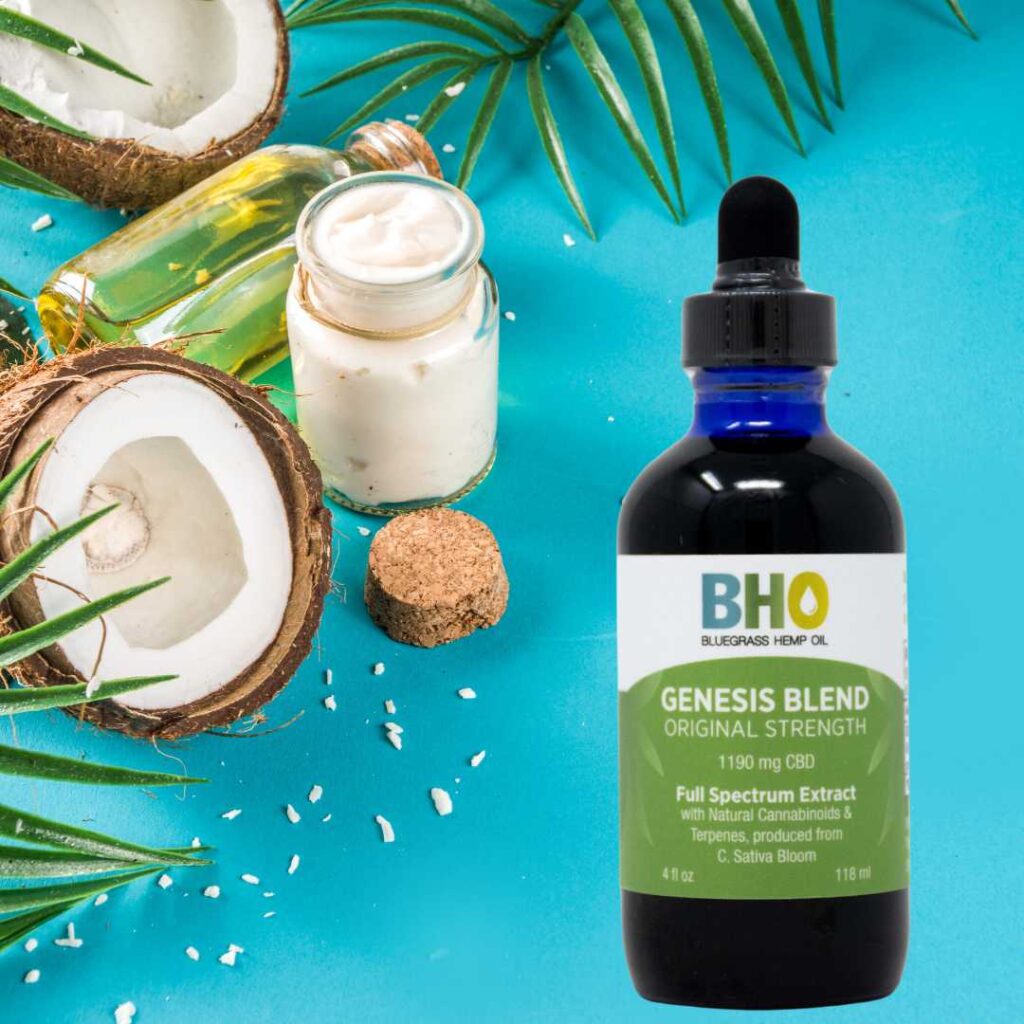
 Coconuts with a jar of MCT oil and Genesis Blend CBD oil bottle


Unlocking the Benefits of CBD MCT Oil: Absorption, Effects, and MoreRevealing the benefits of CBD MCT oil can truly enhance your wellness routine by improving absorption and overall effectiveness. This powerful combination leverages the unique properties of both CBD and MCT oil, promoting faster action and greater relief. You’ll discover how this duo interacts with your body and the specific health benefits it offers. Keep exploring to find out how to choose the right CBD MCT oil and even its potential impact on your furry friends.


What is CBD MCT Oil? A Powerful Combination

CBD MCT oil combines the benefits of cannabidiol (CBD) with medium-chain triglyceride (MCT) oil, creating a potent wellness product. This powerful duo not only enhances absorption but also boosts the overall effects of CBD. Understanding how these two components work together can help you make the most of their potential benefits. Additionally, the combination of phospholipids, MCT oil, and cannabinoids works synergistically to enhance overall effectiveness and improve absorption of fat-soluble compounds.

Defining CBD and MCT Oil

When exploring the potential of CBD MCT oil, it's essential to understand what each component brings to the table.

CBD, or cannabidiol, is a compound derived from hemp known for its various health benefits, including relief from anxiety and pain. Its uses are expanding, making it a popular choice for wellness.

On the other hand, MCT oil, sourced primarily from coconut and palm kernel oil, is a rapidly digestible fat that enhances the absorption of CBD. This synergy can lead to more effective dosage guidelines, as MCTs help deliver CBD more efficiently. Additionally, MCT oil's increased bioavailability ensures that the active compounds in CBD are absorbed more effectively, maximizing their health benefits.

When comparing products, consider how well they combine these ingredients to maximize their health benefits and overall effectiveness for your needs.

The Synergy of CBD and MCT Oil

Combining CBD with MCT oil creates a powerful synergy that enhances the overall effectiveness of your wellness routine.

This duo not only boosts CBD effects but also utilizes MCT benefits, promoting quicker absorption through efficient absorption techniques.

When you choose CBD MCT oil, you’re embracing a wellness synergy that aids in optimizing your health journey.

Following proper dosage guidelines guarantees you experience the full potential of this blend, while mindful product selection assures quality and efficacy.

Moreover, understanding the role of bioavailability in CBD is essential for maximizing its benefits.

By integrating CBD MCT oil into your regimen, you’re supporting not just your well-being but also empowering others to explore the transformative potential of this remarkable combination.

Experience the synergy and elevate your wellness today!

How CBD MCT Oil Interacts with Your Body: Absorption and Beyond

When you take CBD MCT oil, the MCT oil acts as a carrier, helping your body absorb the CBD more effectively.

Once ingested, the MCTs quickly reach your liver, where they can be converted into ketones, providing an alternative energy source.

This process, along with the role of phospholipids, enhances the absorption of CBD, ensuring you get the most out of your experience. Additionally, the interaction between MCT oil and the endocannabinoid system can further optimize the therapeutic effects of CBD, promoting overall well-being.

The Role of MCT Oil as a Carrier for CBD

MCT oil plays an essential role as a carrier for CBD, enhancing its absorption into your bloodstream. The unique fatty acid structure of MCTs promotes efficient MCT absorption mechanics, allowing CBD to bypass longer digestive processes.

This rapid transport is vital for maximizing the benefits of CBD, especially considering its lipophilicity—CBD loves fat, and MCT oil provides the perfect medium.

Carrier oil benefits include improved bioavailability, so you experience quicker effects. Additionally, MCT oil's lower viscosity facilitates easier passage through metabolic pathways, ensuring that CBD reaches your system swiftly. Moreover, the use of full spectrum CBD
in conjunction with MCT oil can further enhance the therapeutic effects due to the combined action of cannabinoids and terpenes.

MCT Oil and the Liver: Ketone Production

After understanding how MCT oil enhances CBD absorption, it’s important to explore what happens to MCTs once they’re in your body.

When you consume CBD MCT oil, your liver rapidly metabolizes the MCTs into ketones, providing a quick energy source for both your body and brain.

This swift MCT metabolism not only supports liver function but also leads to potential ketone benefits, such as improved mental clarity and sustained energy levels. Moreover, MCT oil may help stabilize blood sugar levels, further contributing to overall metabolic health.

Because MCTs are absorbed quickly, you may experience the effects of CBD more rapidly than with other carriers.

The Involvement of Phospholipids in CBD Absorption

Understanding how your body absorbs CBD is essential for maximizing its benefits, and phospholipids play a key role in this process.

These significant components of cell membranes are important for effective lipid absorption, enabling your body to transport cannabinoids like CBD efficiently.

When you consume CBD MCT oil, the fats interact with phospholipids during digestive interaction, enhancing CBD uptake across the intestinal lining.

This facilitates cannabinoid transport into your bloodstream, allowing for quicker and more effective benefits.

By ensuring MCT oil is present, you're supporting the phospholipid function, which ultimately helps you experience the full potential of CBD.

Additionally, the full spectrum CBD found in some formulations may further enhance these effects through synergistic interactions.

Embracing this knowledge empowers you to make informed choices about your wellness journey.

Exploring the Benefits of CBD MCT Oil for Wellness

When you consider CBD MCT oil for your wellness routine, you’re tapping into a powerful combination that enhances bioavailability and speeds up the effects of CBD.

MCT oil not only aids in the efficient delivery of CBD but also offers its own potential health benefits, creating a synergistic effect that can support your overall well-being. Recent studies indicate that CBD may help manage anxiety disorders and improve emotional well-being, further enhancing the benefits of this dynamic duo.

Let's explore how this dynamic duo can elevate your wellness journey.

Enhanced Bioavailability and Faster Action

Because MCT oil serves as an effective carrier for CBD, it greatly enhances the absorption of this powerful compound into your bloodstream.

The unique absorption mechanisms of MCTs improve bioavailability factors, allowing more CBD to reach systemic circulation quickly. This means you'll likely experience faster effects compared to other oils.

When considering dosage guidelines, starting low and adjusting based on user experiences is essential for superior results.

Additionally, product comparisons reveal that CBD MCT oil often outperforms traditional oils regarding efficacy. Furthermore, the entourage effect may also contribute to the overall therapeutic benefits of combining MCT oil with full spectrum CBD.

Potential Benefits of CBD

Building on the enhanced bioavailability and faster action provided by MCT oil, CBD MCT oil offers a range of potential wellness benefits that many users find appealing.

You might experience CBD benefits like supporting a sense of calm, which can be essential for effective stress management in today's fast-paced world.

The MCT advantages also extend to promoting healthy sleep cycles, making it easier for you to unwind and rest.

By incorporating CBD MCT oil into your routine, you’re not just choosing a product; you’re embracing a holistic approach to wellness support.

This combination of CBD and MCT oil can empower you to achieve a more balanced life, enhancing your overall well-being while serving those around you. Additionally, studies indicate that CBD may help reduce blood pressure and improve heart health, further contributing to your wellness journey.

Potential Benefits of MCT Oil

As you explore the world of CBD MCT oil, you'll discover that MCT oil offers a variety of wellness benefits that can enhance your overall health.

One of the key MCT oil benefits is its ability to provide quick energy, making it an excellent choice for those needing a boost throughout the day.

Additionally, MCT oil supports cognitive function, helping you maintain focus and mental clarity.

If you're looking to manage your appetite, MCT oil promotes satiety, making it easier to stick to your wellness goals.

Finally, it contributes to digestive health by aiding nutrient absorption and promoting a healthy gut.

Embracing MCT oil in your routine can be a powerful step toward a healthier lifestyle.

The Combined Benefits: A Synergistic Effect?

When you combine the benefits of CBD with MCT oil, you're tapping into a powerful synergy that can enhance your overall wellness experience.

This combination offers synergistic benefits that elevate your health journey. MCT oil’s unique properties promote enhanced absorption of CBD, ensuring that you experience its effects more rapidly and effectively.

By leveraging the wellness synergy between these two elements, you can enjoy the MCT advantages, such as increased energy and cognitive support, alongside the therapeutic CBD effects.

This holistic approach not only optimizes the delivery of beneficial compounds but also provides a more thorough wellness experience.

Embracing CBD MCT oil means embracing a path toward better health and well-being.

Can Dogs Have MCT Oil with CBD? Considerations for Canine Wellness

If you're considering giving your dog MCT oil with CBD, it's important to understand the potential benefits and safety.

Many pet owners find that CBD can help with anxiety and inflammation, but you should verify that MCT oil is safe for your furry friend.

Let’s explore what you need to know before introducing this supplement to your dog's routine.

The Potential Benefits of CBD for Dogs

Pet parents are increasingly turning to CBD as a potential support for their dogs' wellness. Many are discovering the canine health benefits of CBD, particularly for dog anxiety relief.

Following proper CBD dosage guidelines is essential to guarantee safety and effectiveness. Various CBD product types, such as oils and treats, cater to different preferences and needs, making it easier to incorporate CBD into your dog's routine.

As dog wellness trends continue to evolve, more pet owners are seeking natural solutions to enhance their furry friends' quality of life. By exploring these options, you can help your dog experience the potential advantages of CBD, promoting a happier and healthier life for your beloved companion.

Is MCT Oil Safe for Dogs?

Many dog owners are exploring the benefits of CBD for their furry companions, leading to questions about the safety of MCT oil when combined with CBD.

MCT oil can be safe for dogs in appropriate amounts, but it’s essential to use pet-specific formulations designed for canine health.

Always consult your veterinarian before introducing MCT oil into your dog's diet to guarantee it aligns with their health needs.

They can provide dosage guidelines tailored to your pet's size and condition.

Considerations When Giving Dogs CBD MCT Oil

When considering CBD MCT oil for your dog, it's essential to prioritize safety and effectiveness.

Start by consulting your veterinarian, as they can provide tailored veterinary advice regarding dog dosage and product quality. Not all CBD MCT oils are created equal; make sure you choose high-quality products formulated specifically for pets.

This way, you can maximize the potential health benefits while prioritizing pet safety. Monitor your dog for any adverse reactions, especially when introducing CBD MCT oil for the first time.

Adjust the dosage as needed, based on your vet's recommendations and your dog's unique needs. By taking these precautions, you’re supporting your furry friend’s wellness journey responsibly and effectively.

Choosing the Right CBD MCT Oil: Quality Matters

When picking the right CBD MCT oil, quality should be your top priority.

Understanding extraction methods and ensuring third-party testing can make a significant difference in what you’re consuming.

At Bluegrass Hemp Oil, we’re committed to transparency and excellence, so you can trust that our products meet the highest standards.

Understanding CBD Extraction Methods

While the efficacy of CBD MCT oil largely depends on its formulation, the extraction method used to derive CBD plays an essential role in determining the quality of the final product.

Different methods, like hydrocarbon extraction, utilize solvents to pull out CBD efficiently, but may leave residual chemicals behind. CO2 extraction is a cleaner option, preserving the purity and potency of cannabinoids.

Ethanol extraction is effective but can strip away some beneficial compounds. Oil infusion offers a natural approach, though it may produce a less potent product. Cold pressing retains nutrients but is less common for CBD extraction.

Understanding these methods guarantees you choose high-quality CBD MCT oil that meets your wellness needs and serves others effectively.

The Importance of Third-Party Testing

Quality in CBD MCT oil goes beyond just the extraction method used; third-party testing is a key factor in guaranteeing that you're getting a safe and effective product.

When you choose CBD MCT oil, look for Certificates of Analysis (COAs) that verify the CBD content, purity, and absence of contaminants.

Third-party testing provides essential quality assurance, confirming that what’s on the label matches what’s in the bottle.

These lab results not only guarantee you’re consuming a product free from harmful substances but also help you make informed decisions for your well-being.

Bluegrass Hemp Oil's Commitment to Quality

At Bluegrass Hemp Oil, our commitment to quality starts with the careful sourcing of hemp from Kentucky's rich agricultural landscape, ensuring that every step of our production process reflects our dedication to excellence.

We prioritize quality assurance through stringent testing protocols that guarantee the purity and potency of our CBD MCT oil. You can trust that our products maintain consistent quality, allowing you to serve others with confidence.

Our focus on customer transparency means we share detailed information about our sourcing and testing, empowering you to make informed choices.

Frequently Asked Questions

What Is the Legal Status of CBD MCT Oil?

Steering through CBD regulations can feel intimidating. You’ll find that MCT oil, as a hemp-derived product, generally complies with legal considerations, but always check state laws to guarantee you’re informed and compliant with local guidelines.

Can CBD MCT Oil Cause Side Effects?

CBD MCT oil can cause side effects like fatigue or digestive issues, especially with high doses. User experiences vary, so follow dosage recommendations and consult a healthcare provider for potential interactions and long-term safety.

How Should I Store CBD MCT Oil?

To store CBD MCT oil, keep it in a cool, dark place. Use airtight containers, avoid heat and light, and check its shelf life. Proper storage guarantees ideal conditions for maintaining quality and potency.

Is CBD MCT Oil Safe for Children?

When considering CBD MCT oil for children, prioritize safety. Consult a healthcare professional for dosage and usage recommendations. Always guarantee parental guidance, considering health considerations to guarantee a beneficial experience for your child.

How Long Does It Take for CBD MCT Oil to Work?

When using CBD MCT oil, effects typically kick in within 30 minutes to two hours, depending on dosage guidelines, usage methods, and product selection. Consumer reviews often highlight various health benefits experienced during this time.

CBD Honey, Superior Power Exists In The Combo

CBD Honey, Superior Power Exists In The Combo

What Are CBD Honey Sticks?

CBD honey sticks are a unique blend of honey and full-spectrum CBD, offering a tasty way to incorporate cannabinoids into your daily routine. These convenient, pre-measured sticks not only satisfy your sweet tooth but also come with potential health benefits. Whether you're looking to enhance your tea or enjoy them on their own, there's more to discover about how these artisanal treats can fit into your lifestyle and wellness journey.

What Is CBD Honey?

CBD honey is a delightful fusion of nature's sweetness and the therapeutic benefits of full-spectrum CBD. This unique blend not only satisfies your sweet tooth but also supports your wellness journey.

You can enjoy CBD honey in various ways, from sweetening your tea to drizzling it over yogurt—its versatility makes it a favorite! With potential CBD honey benefits like relaxation and immune support, it's perfect for anyone seeking a natural boost.

When it comes to dosage, a single stick provides a pre-measured serving, making it easy to integrate into your routine. Additionally, the entourage effect from full spectrum formulations in CBD honey enhances its therapeutic benefits.

Try experimenting with CBD honey recipes to discover delicious dishes that enhance both flavor and health. Embrace the sweet effects of CBD honey in your daily life!

Benefits of CBD Honey Sticks

CBD honey sticks offer a natural energy boost without the crash that often comes from processed sugars.

They're easy to take on the go, making it simple to enjoy their versatile and delicious flavor wherever you are.

Plus, with full-spectrum benefits, you're not just satisfying your sweet tooth—you're supporting your overall wellness too. Additionally, the importance of third-party lab testing ensures that you're consuming a safe and effective product.

A Natural Energy Boost

When you're looking for a natural energy boost, combining the power of raw honey with full-spectrum CBD can make all the difference.

You'll love how the natural sweetness of honey provides energy enhancement without the crash that processed sugars bring. This perfect blend creates a unique CBD synergy, delivering sustained energy that supports your active lifestyle.

Plus, the honey benefits—like antioxidants and antimicrobial properties—offer an extra layer of wellness. By choosing this holistic approach, you're not just satisfying your sweet tooth; you're nurturing your body. Additionally, the health benefits of CBD capsules can further enhance your overall well-being.

Whether you're at work, working out, or just need a pick-me-up, CBD honey sticks can be your go-to source for a sweet, energizing lift that keeps you connected to nature.

Easy & On-the-Go

For those constantly on the move, CBD honey sticks offer a hassle-free way to incorporate wellness into your daily routine.

These convenient snacks are perfect for your busy lifestyle, making portable wellness easily accessible wherever you go. Whether you're at work, traveling, or hitting the gym, CBD honey sticks are ideal travel essentials that fit right into your bag.

With their easy consumption, you can enjoy a quick energy boost without the crash that comes from processed sugars. Just tear open a stick and let the natural goodness of raw honey and full-spectrum CBD support your wellness goals. Additionally, these sticks combine the benefits of pain relief with the delightful taste of honey, enhancing your overall experience.

Join a community of like-minded individuals prioritizing health with this simple, delicious solution!

Versatile & Delicious

Discover the versatility of CBD honey sticks, which can elevate your daily wellness routine in delicious ways. You can enjoy these sweet treats straight from the packet or stir them into your favorite beverages like tea or coffee for a delightful flavor combination.

They not only taste great but also offer health benefits, thanks to the soothing properties of honey and CBD. Looking for recipe ideas? Drizzle CBD honey over yogurt, oatmeal, or fruit for a nourishing snack.

Pairing options are endless—consider mixing it into smoothies or using it as a natural sugar substitute in baking. With various serving suggestions, you'll find CBD honey sticks are the perfect addition to your routine, bringing both enjoyment and wellness together. Additionally, the incorporation of CBD may provide anxiety and pain relief for those seeking enhanced wellness benefits.

Full-Spectrum Benefits

While exploring the benefits of CBD honey sticks, you'll find that their full-spectrum formulation offers a unique advantage. This means you're not just getting CBD; you're experiencing the full spectrum effects of the entire hemp plant.

The combined cannabinoid synergy enhances therapeutic potential, allowing you to enjoy a more balanced and holistic experience. Each stick retains rich terpene profiles that contribute to flavor and wellness, making your daily routine feel even more rewarding.

Plus, with natural ingredients like high-quality hemp extract and raw honey, you can feel good about what you're consuming. Embracing CBD honey sticks can help you connect with a community that values natural wellness and the sweet benefits of full-spectrum CBD. Additionally, the potential therapeutic effects of CBD, such as managing anxiety, can further enhance your overall experience.

How to Use CBD Honey Sticks

Using CBD honey sticks is a simple and enjoyable way to incorporate the wellness benefits of CBD into your daily routine.

You can experience CBD stick usage on-the-go by tearing open a stick and savoring it directly. For a delightful flavor enhancement, stir the honey into your favorite teas, coffees, or smoothies, creating a soothing drink perfect for relaxation techniques.

Feeling creative? Try drizzling CBD honey over yogurt, oatmeal, or fruits for added nutrients. You can even use it in your favorite recipes as a natural sugar substitute, giving your dishes a delicious twist while boosting health. Additionally, the therapeutic benefits of CBD can enhance your overall wellness experience.

Embrace the ease and versatility of CBD honey sticks, and enjoy a sweet path to wellness!

Just CBD Honey Sticks vs. Other CBD Edibles

When you compare CBD honey sticks to other CBD edibles like gummies, tinctures, and capsules, you'll find some notable differences that can influence your choice.

For starters, CBD honey sticks offer unique flavor profiles, blending the natural sweetness of honey with high-quality CBD.

Regarding dosage differences, each stick provides a precise amount, making it easy to manage your intake.

Absorption rates also shine, as honey acts as a natural carrier, enhancing the bioavailability of CBD compared to other edibles.

Ingredient comparisons reveal that many gummies and capsules may contain artificial additives, while honey sticks boast pure, raw ingredients.

Additionally, the health benefits of CBD reported by users can significantly enhance the overall experience of using honey sticks.

Ultimately, consumer preferences vary, but the versatility and natural essence of CBD honey sticks make them a delightful option for many.

Where to Buy the Best CBD Honey Sticks

Looking for the best place to buy CBD honey sticks? You've got plenty of options!

Start by checking out the best online retailers like Bluegrass Hemp Oil's website, where you can find high-quality, full-spectrum CBD honey sticks.

Explore top online retailers like Bluegrass Hemp Oil for premium, full-spectrum CBD honey sticks.

Local health shops and specialty stores often carry trusted brands, so don't hesitate to ask for recommendations.

Farmer's markets can also be a goldmine for unique, artisanal CBD products.

Be sure to read CBD product reviews to verify you're making a well-informed choice.

Connecting with others who share your wellness journey can lead you to the best products. Additionally, ensure that you check for third-party lab testing to confirm the quality and safety of the CBD honey sticks you choose.

Enjoy exploring these avenues, and you'll soon find the perfect CBD honey sticks to enhance your daily routine!

Frequently Asked Questions

Are CBD Honey Sticks Legal in All States?

When it comes to CBD legality, you need to be aware of state regulations and federal law implications.

While hemp-derived products like CBD are federally legal, some states have specific restrictions.

It's essential to stay informed about your local laws to guarantee you're compliant.

How Long Do CBD Honey Sticks Take to Work?

When you're wondering how long CBD honey sticks take to work, remember that onset times can vary.

Factors like your metabolism and dosage recommendations play an essential role. Generally, you might feel effects within 30 minutes to 2 hours.

The way you consume them—whether enjoying straight from the stick or mixing into a drink—affects CBD absorption rates too.

Embrace the experience as you discover what works best for you, and enjoy the journey!

Can I Give CBD Honey Sticks to My Pets?

You might be wondering about giving CBD honey sticks to your pets.

While some pet owners report health benefits, it's vital to prioritize pet safety.

Always consult your veterinarian for dosage guidelines tailored to your furry friend's size and needs.

Watch for any unusual pet reactions after administering CBD, as every animal is different.

How Should I Store My CBD Honey Sticks?

To keep your CBD honey sticks fresh, follow these storage tips.

Store them in a cool, dark place to maintain ideal conditions, avoiding temperature effects that can degrade quality.

Guarantee moisture control by sealing them tightly after opening.

For easy access, consider shelf organization—grouping them with other wellness products can create a cozy, inviting space.

What Is the Shelf Life of CBD Honey Sticks?

Did you know that properly stored CBD honey sticks can last up to 18 months?

Their shelf life depends on product ingredients and storage conditions. To guarantee potency retention, keep them in a cool, dark place away from moisture.

Look for expiration indicators like changes in color or consistency, as these can signal when it's time to discard them.

Enjoy peace of mind knowing you're savoring a quality product with a long-lasting shelf life.

Conclusion

Incorporating CBD honey sticks into your routine is like adding a dash of sunshine to your day. With their delightful taste and potential wellness benefits, they're a sweet way to embrace the goodness of CBD. Whether you're stirring one into your tea or enjoying it straight from the stick, you're not just savoring honey—you're also nurturing your well-being. So, why not indulge in this golden treat and let it elevate your daily rituals?