
Customer story • Pet CBD safety guide • Updated May 21, 2026
CBD Oil for Dog Seizures Review: Jeff’s Story, Safety & Vet Guidance
If you found this page while searching for a CBD oil for dog seizures review, start here: Jeff’s video is one pet owner’s story, not a promise of results. Dog seizures deserve veterinary care, and any pet CBD product should be reviewed with your veterinarian, the product label, THC information, and a batch-specific Certificate of Analysis.
Pet CBD education built around veterinarian guidance, label review, THC awareness, and transparent lab testing.
Pet CBD and seizure safety
Pet CBD and Seizure Safety Comes First
This article is educational and is not veterinary advice. CBD products are not intended to diagnose, treat, cure, or prevent seizures or any disease in pets. FDA has not approved CBD for use in animals. Talk with a licensed veterinarian before giving CBD to a dog, especially if your dog has seizures, takes medication, has liver concerns, is very young or elderly, is pregnant or nursing, or has sudden, cluster, prolonged, or worsening seizures.
What to know first
CBD Oil for Dog Seizures Review: What This Page Covers
Jeff’s story may be helpful for pet owners who want to hear from another dog owner, but it should not be used as proof that CBD treats seizures. This page pairs the video with practical safety steps: when to call a veterinarian, what side effects to watch for, how to review a pet CBD label, and how to check a Certificate of Analysis.
About Bluegrass Hemp Oil’s Pet CBD Education
Bluegrass Hemp Oil is a Kentucky-based CBD company that creates full-spectrum hemp-derived CBD products and educational resources. This page shares one Unruffled CBD Oil for Pets customer story while explaining the safety questions dog owners should discuss with a veterinarian before considering CBD.
Helpful starting points include learning about CBD for dogs, reviewing CBD oil side effects for dogs, and reviewing CBD lab testing standards.
Watch Jeff’s story
Jeff Talks About His Dog and Unruffled CBD Oil for Pets
In the video below, Jeff shares his personal experience as a dog owner. Customer stories can create connection and help other pet owners feel less alone, but they are not the same as veterinary guidance or clinical evidence.
Video shared for customer-story context. Individual experiences vary and are not typical or guaranteed.
A note about testimonials
Jeff’s experience is his own. It should not be used to decide whether CBD is right for your dog, and it should not be read as a claim that CBD treats seizures. If your dog has seizures, work with a licensed veterinarian before changing any care plan.
How to Read Jeff’s Story Responsibly
A customer story can tell you what one person noticed, what they valued, and why they chose a product. It cannot prove that a product works for other dogs or that a product treats a medical condition.
| Jeff’s Story Can Help With | Jeff’s Story Cannot Prove |
|---|---|
| Understanding one pet owner’s experience. | That CBD treats, stops, prevents, or reduces seizures. |
| Learning what questions other dog owners ask. | That results are typical for other dogs. |
| Seeing why product transparency matters. | That CBD can replace veterinary care or medication. |
| Prompting better label and COA review. | That a product is safe for every dog. |
Dog Seizures Require Veterinary Evaluation
Seizures can have many causes, including underlying illness, toxic exposure, neurological conditions, metabolic problems, medication issues, and other urgent concerns. A veterinarian can evaluate your dog, discuss diagnostic testing, review medication history, and help you understand next steps.
Do not stop, change, or delay prescribed seizure medication because of a CBD testimonial. If your dog has seizures, talk with your veterinarian before adding any new product to the routine.
When to seek urgent veterinary help
Call your veterinarian or an emergency animal hospital if your dog has a first-time seizure, a seizure lasting more than a few minutes, repeated seizures, cluster seizures, trouble breathing, collapse, injury, unusual behavior after a seizure, or suspected exposure to cannabis, THC, medications, toxins, or household chemicals.
Questions to Ask Your Veterinarian Before Using Pet CBD
Bring the product label and COA to your veterinarian. That gives your vet a clearer picture of the CBD amount, THC level, ingredients, and testing information before you make a decision.
Health history
Is CBD appropriate for my dog’s age, size, liver health, seizure history, and current care plan?
Medication review
Could CBD interact with any medication, supplement, or anti-seizure treatment my dog already uses?
Safety monitoring
What side effects should I watch for, and when should I call you or an emergency animal hospital?
THC review
How should I read the COA to understand THC level and possible exposure risk?
Product fit
Are the carrier oil, flavoring, CBD concentration, and serving format appropriate for my dog?
Emergency plan
What should I do if a seizure is prolonged, repeated, sudden, or different from prior episodes?
Unruffled CBD Oil for Pets: Product Facts
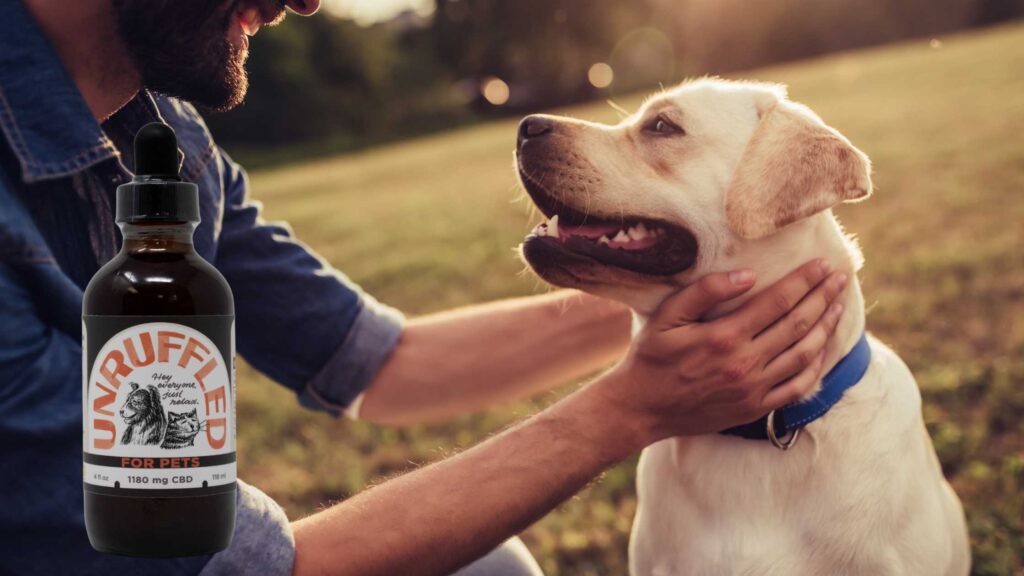
Unruffled CBD Oil for Pets should be described by product facts, not as a seizure treatment. The current 4 oz product page lists a liquid full-spectrum pet CBD oil with 1190 mg total CBD, 10 mg CBD per mL, wild-caught Alaskan salmon oil, and a batch-testing focus.
Product details last reviewed: May 21, 2026. Product details, prices, ingredients, availability, and lab reports may change.
| Product Fact | Consumer-Friendly Summary |
|---|---|
| Product name | Unruffled CBD Oil for Pets |
| Format | Liquid pet CBD oil |
| Bottle size | 4 oz / 119 mL |
| Total CBD | 1190 mg per bottle |
| CBD concentration | 10 mg CBD per mL |
| Extract type | Full-spectrum hemp extract, which may contain trace THC |
| Base oil | Wild-caught Alaskan salmon oil |
| Before use | Talk with your veterinarian and review the product COA |
Full-Spectrum CBD, THC, and Dog Safety
Full-spectrum CBD contains CBD plus other naturally occurring hemp compounds and may contain trace THC. Dogs can be sensitive to cannabis exposure, so pet owners should review the label, THC level, and batch-specific Certificate of Analysis before considering any full-spectrum pet CBD product.
Full-spectrum CBD
Full-spectrum means a broader hemp-compound profile. It does not mean safer, stronger, or medically better.
THC caution
THC matters for dogs. If THC exposure is suspected, call a veterinarian, emergency animal hospital, or animal poison control center.
COA review
A COA helps you check CBD amount, THC level, batch identity, and available contaminant testing.
Possible Side Effects to Watch For
Any new product can affect dogs differently. Watch for sleepiness, appetite changes, vomiting, diarrhea, drooling, agitation, tremors, coordination changes, unusual behavior, or anything that feels out of character for your dog.
Stop use and contact a veterinarian if you are concerned. Seek urgent help if your dog has severe symptoms, suspected THC exposure, repeated seizures, collapse, trouble breathing, or sudden behavior changes.
How to Review a Pet CBD Label
A good label should help you understand what the product is, how much CBD it contains, whether THC is present, what ingredients are included, and how to match the product to a lab report.
For more help, learn how to read a CBD product label.
How to Review a Pet CBD Certificate of Analysis
A Certificate of Analysis, often called a COA, helps verify what is in a pet CBD product. Match the product and batch number first, then review CBD amount, THC level, other cannabinoids, lab name, test date, and available contaminant testing.
Before choosing a product, review Bluegrass Hemp Oil Certificates of Analysis and review CBD lab testing standards.
How to Choose a Pet CBD Product Safely
The safest buying process starts with your veterinarian, then moves to the label, THC information, ingredients, batch number, COA, and company transparency. Avoid products that make disease-treatment claims or do not provide clear testing information.
1. Start with the vet
Ask whether CBD is appropriate for your dog’s health history, medications, and seizure care plan.
2. Verify the label
Check CBD amount, THC level, ingredients, carrier oil, flavoring, and batch number.
3. Match the COA
Make sure the COA belongs to the exact batch before choosing any pet CBD product.
Product transparency first
Considering Unruffled CBD Oil for Pets?
Explore Unruffled only after reviewing veterinary guidance, the product label, THC information, ingredients, lab-testing standards, and the batch-specific Certificate of Analysis. Product transparency should come before any pet CBD purchase.
FAQs About CBD Oil, Dog Seizures, and Pet Safety
These answers are written for pet owners searching by voice or mobile, while keeping veterinary guidance, seizure safety, THC review, side effects, labels, and COAs at the center.
Can CBD oil stop seizures in dogs?
No CBD product should be described as stopping or treating dog seizures. Seizures require veterinary evaluation, and CBD should not replace diagnosis, anti-seizure medication, emergency care, or guidance from a licensed veterinarian. Jeff’s video is one customer story, not proof of results for other dogs.
Can CBD help dog seizures?
Pet owners often search this question, but retail CBD products should not be promoted as seizure treatments. A veterinarian can help evaluate your dog’s seizure history, medications, liver health, and safety needs before you consider any pet CBD product.
Is CBD oil safe for dogs with seizures?
Safety depends on the dog, product, THC level, medications, health history, and veterinarian guidance. FDA has not approved CBD for use in animals, so dog owners should talk with a veterinarian and review the label and COA before use.
Can CBD replace seizure medication for dogs?
No. CBD should not replace prescribed anti-seizure medication, emergency care, diagnostic testing, or a veterinarian’s treatment plan. Talk with your veterinarian before changing anything related to seizure care.
Can CBD interact with seizure medication for dogs?
CBD may interact with medications, so dogs taking anti-seizure medication or other prescriptions need veterinarian guidance. Bring the CBD label and COA to your appointment so your veterinarian can review ingredients, CBD amount, and THC level.
What side effects should I watch for with pet CBD?
Watch for sleepiness, appetite changes, vomiting, diarrhea, drooling, agitation, tremors, coordination changes, unusual behavior, or anything that seems abnormal. Contact a veterinarian if you are concerned.
Can full-spectrum CBD contain THC?
Yes. Full-spectrum CBD may contain trace THC. Pet owners should review the batch-specific COA and talk with a veterinarian before using full-spectrum CBD for a dog.
What is a pet CBD Certificate of Analysis?
A Certificate of Analysis is a lab report that helps verify CBD amount, THC level, batch identity, other cannabinoids, lab name, test date, and available contaminant testing for a specific product or batch.
Are CBD testimonials enough to choose a product?
No. Testimonials can share personal experience, but they are not clinical proof. Use veterinary guidance, product labels, THC information, ingredients, COAs, and company transparency to make a more informed decision.
When is a dog seizure an emergency?
Call a veterinarian or emergency animal hospital if a seizure is prolonged, repeated, clustered, first-time, followed by unusual behavior, causes injury, involves breathing trouble or collapse, or may involve cannabis, THC, medication, toxin, or chemical exposure.
Sources and Important Safety Notes
Updated: May 21, 2026. Product details last reviewed: May 21, 2026. This article is educational and is not veterinary advice. CBD should not replace diagnosis, treatment, prescribed medication, emergency care, behavioral evaluation, or guidance from a licensed veterinarian. Testimonials are personal experiences and are not clinical proof.
