What Is the Entourage Effect?
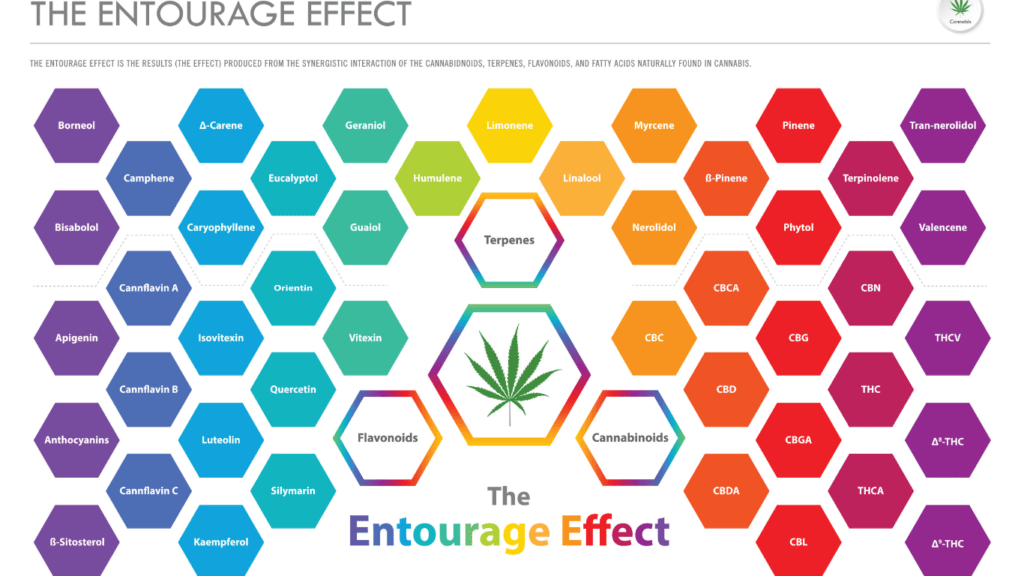
The entourage effect is a proposed concept in cannabis and hemp science. It describes how cannabinoids, terpenes, flavonoids, and other plant compounds may work together to influence the overall profile of a hemp extract.
For CBD shoppers, the entourage effect is often discussed when comparing full-spectrum CBD, broad-spectrum CBD, and CBD isolate. This guide explains what the term means, what the science does and does not prove, and how to evaluate full-spectrum CBD products responsibly.
Plain-language promise: This page explains the science carefully. It does not claim that CBD or the entourage effect diagnoses, treats, cures, or prevents disease.
A responsible entourage effect guide should explain plant compounds, product types, lab testing, THC content, and safety limits without turning science into unsupported promises.
Quick Answer: What Does the Entourage Effect Mean?
The entourage effect refers to the idea that hemp compounds may work together rather than acting in isolation. In full-spectrum CBD, this may include CBD, minor cannabinoids, terpenes, flavonoids, and trace THC within legal limits.
Reviewed for CBD Science and Product Education
What Is the Entourage Effect?
The entourage effect is a term used to describe the potential interaction among multiple compounds found in hemp and cannabis. Instead of focusing on CBD alone, the concept considers how CBD, minor cannabinoids, terpenes, flavonoids, and other plant compounds may influence the overall character of a hemp extract.
The term is often used when discussing full-spectrum CBD products because full-spectrum hemp extract keeps a broader range of naturally occurring plant compounds than CBD isolate.
However, the entourage effect should not be treated as a promise of specific results. Research is still developing, and consumers should be cautious of brands that use the term to make disease-treatment claims.
Cannabinoids
Learn more about cannabinoids such as CBD, CBDA, CBG, CBC, CBN, and THC.
Terpenes
Explore terpenes as aromatic plant compounds that contribute to a product’s profile.
Full-Spectrum CBD
Review what full-spectrum CBD means before comparing products.
The Symphony vs. Soloist Metaphor
One simple way to understand the entourage effect is to compare a soloist with a full orchestra. CBD isolate is like a solo flute: clear, focused, and easy to identify. Full-spectrum CBD is more like a full orchestra, where CBD, minor cannabinoids, terpenes, flavonoids, and trace THC each play a part in the overall composition.
This metaphor helps explain the synergy of cannabinoids and terpenes without turning the concept into a medical claim. The orchestra may create a richer plant profile, but the final experience still depends on the product, the person, the serving, the COA, and safety considerations.
| Metaphor | What it represents | Responsible takeaway |
|---|---|---|
| The Soloist | CBD isolate, which contains CBD only. | Focused and simple, but it does not include the broader hemp compound profile. |
| The Orchestra | Full-spectrum CBD with CBD, minor cannabinoids, terpenes, flavonoids, and trace THC. | Broader and more complex, but not automatically better for every person or situation. |
| The Sheet Music | The product label and certificate of analysis. | The COA shows whether the product profile matches what the label says. |
Meet the Full-Spectrum Crew
The entourage effect is easier to understand when each compound group has a role. These nicknames are educational shortcuts, not medical promises.
The Captain: CBD
CBD is the best-known non-intoxicating cannabinoid in hemp and usually the main compound listed on a CBD oil label.
The Wingman: Trace THC
In legal full-spectrum hemp products, THC appears only in trace amounts. It is not included to create a high, but it may be part of the broader full-spectrum profile.
The Specialists
CBG, CBC, CBN, CBDA, and other minor cannabinoids may appear in a full-spectrum cannabinoid profile. A COA should verify what is present.
The Scent Squad
Terpenes such as myrcene, limonene, pinene, and beta-caryophyllene contribute aroma and may influence the overall plant profile.
Common research questions include “What is the Entourage Effect in CBD?”, “Does CBD need THC to work?”, “What is the CBD and CBG entourage effect?”, and “What is the role of terpenes in CBD oil?” The safest answer always comes back to product testing, label clarity, and cautious expectations.
Cannabinoids, Terpenes, and Flavonoids: The Compounds Behind the Concept
The phytocannabinoid-terpenoid entourage effect is usually discussed in relation to three major groups of plant compounds: cannabinoids, terpenes, and flavonoids.
| Compound group | What it is | Why it matters for CBD shoppers |
|---|---|---|
| Cannabinoids | Plant compounds such as CBD, CBDA, CBG, CBC, CBN, and THC. | They help define the cannabinoid profile of a hemp extract. A COA should show which cannabinoids are present and in what amounts. |
| Terpenes | Aromatic compounds found in hemp and many other plants. | They contribute aroma and may influence the product’s overall plant profile. Terpene research is still developing. |
| Flavonoids | Plant compounds found in many fruits, vegetables, herbs, and hemp. | They are part of the broader plant profile, but CBD brands should avoid overstating their health effects. |
| Other plant compounds | Natural compounds that may remain in less-refined hemp extracts. | They may contribute to the overall extract profile, depending on sourcing and extraction. |
What the Science Says — and What It Does Not Say
Scientific interest in the entourage effect is real, but the topic is still being studied. Some reviews discuss possible complementary or synergistic interactions among cannabis compounds. Other researchers caution that the evidence is mixed, product-specific, and not strong enough to support broad medical claims.
| Responsible statement | Avoid this claim |
|---|---|
| Researchers are studying how cannabis compounds may interact. | The entourage effect is proven to treat disease. |
| Full-spectrum CBD contains a broader hemp compound profile than CBD isolate. | Full-spectrum CBD is always better for everyone. |
| Terpenes may contribute to aroma and product profile. | Terpenes guarantee specific health effects. |
| Lab testing can verify cannabinoid content. | A label alone proves a product is full-spectrum. |
| Individual response may vary. | Everyone will experience the same result. |
| CBD safety and medication interactions matter. | CBD is risk-free. |
Read the Entourage Effect in Cannabis Medicinal Products review and Decoding the Postulated Entourage Effect of Medicinal Cannabis for deeper research context.
Full-Spectrum CBD vs Broad-Spectrum CBD vs CBD Isolate
The full spectrum vs isolate entourage effect conversation usually begins with product type. Each type has a different compound profile.
| CBD type | What it contains | What to know |
|---|---|---|
| CBD isolate | CBD only, with other hemp compounds removed. | Best for people who want CBD without other cannabinoids, but quality still depends on testing. |
| Broad-spectrum CBD | CBD plus some other hemp compounds, usually with THC removed. | May appeal to people who want more than isolate while trying to avoid THC, though lab testing is still important. |
| Full-spectrum CBD | CBD plus minor cannabinoids, terpenes, flavonoids, and trace THC within legal limits. | Best for people who want a broader hemp extract profile and are comfortable reviewing THC content and drug-test considerations. |
Types of CBD | Full-spectrum CBD vs CBD isolate | CBD vs THC
How Lab Testing Verifies a Full-Spectrum CBD Product
The phrase “full-spectrum” should be backed by testing. A certificate of analysis, or COA, helps verify the cannabinoid profile, THC content, CBD content, and product quality markers.
CBD lab testing | Certificates of Analysis | How to read a CBD product label
Why Genesis Blend Focuses on Bloom-Only Full-Spectrum Hemp Extract
Genesis Blend Full-Spectrum CBD Oil is designed for customers who want a Kentucky-grown hemp product with a broader hemp extract profile and transparent product information. Instead of focusing on isolated CBD alone, Genesis Blend is built around full-spectrum hemp extract and batch-specific lab testing.
The “bloom-only” focus matters because hemp flowers are where many cannabinoids and terpenes are concentrated. Stalk-heavy or seed-focused inputs can create a different product profile. A flower-focused extract is intended to preserve more of the hemp plant’s natural profile, but the COA should still be the proof.
Trace THC in legal full-spectrum CBD is not included to create a high. Think of it as one quiet instrument in the orchestra: present in a small role, verified by lab results, and important to review if you are THC-sensitive or subject to drug testing.
| Feature | Basic CBD isolate product | Genesis Blend full-spectrum standard |
|---|---|---|
| Active compounds | One main compound: CBD. | CBD plus a broader hemp profile that may include CBG, CBC, trace THC, terpenes, and other naturally occurring compounds. |
| Product profile | Simpler and narrower. | Broader full-spectrum cannabinoid profile, verified through lab testing. |
| Extraction source | Varies by brand and source material. | Designed around premium hemp bloom/flower inputs and transparent product information. |
| The result | A focused CBD-only profile. | A more dynamic whole-hemp-style profile, with individual response and safety considerations still important. |
Kentucky-grown hemp
Genesis Blend is positioned around Kentucky-grown hemp and a family-founded Kentucky hemp story.
Batch-specific transparency
COAs help verify CBD, THC, and cannabinoid content rather than relying on marketing phrases.
Education-first guidance
The goal is to help customers understand full-spectrum CBD before they choose a product.
Genesis Blend Full-Spectrum CBD Oil | Our Process | CBD quality guide
How to Choose a Full-Spectrum CBD Product Responsibly
If you are interested in the entourage effect, start with product verification rather than marketing claims. The phrase “benefits of whole plant hemp extract” should lead to better questions, not unsupported promises.
CBD Safety Considerations
CBD is not risk-free. The FDA has noted safety concerns with CBD, including possible medication interactions. Full-spectrum CBD may also contain trace THC, which may carry drug-test risk.
Related CBD Science and Quality Resources
Use these guides to keep learning about the Full-Spectrum CBD / CBD Science / Genesis Blend topic cluster.
Frequently Asked Questions About the Entourage Effect
What is the entourage effect?
The entourage effect is a proposed concept that describes how cannabinoids, terpenes, flavonoids, and other hemp compounds may work together to influence the overall profile of a hemp extract. Research is still developing, so it should not be treated as a guaranteed medical outcome.
Is the entourage effect proven?
Researchers continue to study the entourage effect. Some reviews discuss possible interactions among cannabis compounds, while others caution that the evidence is mixed, product-specific, and should not be overstated.
What does full-spectrum CBD have to do with the entourage effect?
Full-spectrum CBD contains CBD along with other naturally occurring hemp compounds, such as minor cannabinoids, terpenes, flavonoids, and trace THC within legal limits. This broader plant profile is why full-spectrum CBD is often discussed in relation to the entourage effect.
Is full-spectrum CBD better than CBD isolate?
Not automatically. Full-spectrum CBD contains a broader hemp compound profile, while CBD isolate contains CBD only. The better choice depends on the person, product quality, THC concerns, drug testing, and individual goals.
Does CBD need THC to work?
CBD does not need THC to be CBD. Trace THC is one supporting compound in many full-spectrum hemp extracts, and it may be part of the broader plant profile. It is not included to create intoxication, and full-spectrum products should always be reviewed with a certificate of analysis.
Do terpenes matter in CBD oil?
Terpenes contribute aroma and may be part of the overall hemp extract profile. The role of terpenes in CBD oil is still being studied, so brands should avoid making guaranteed health claims based on terpenes.
What is the CBD and CBG entourage effect?
CBD and CBG are two cannabinoids that may appear together in a full-spectrum cannabinoid profile. Researchers continue to study how cannabinoids may interact, but shoppers should use lab results to verify what is actually present in a product.
Can full-spectrum CBD make me high?
CBD itself is not intoxicating. However, full-spectrum CBD may contain trace THC within legal hemp limits. Review the certificate of analysis before using any full-spectrum product.
Can full-spectrum CBD show up on a drug test?
Full-spectrum CBD may contain trace THC, and THC exposure may carry drug-test risk. Anyone subject to workplace, legal, athletic, or medical drug testing should review lab results carefully and consider avoiding THC-containing products.
How do I know if a CBD product is truly full-spectrum?
Review the product label and certificate of analysis. A full-spectrum CBD product should show CBD, THC, and ideally other cannabinoids on the COA, along with batch-specific testing.
Does the entourage effect mean CBD treats medical conditions?
No. The entourage effect should not be used to claim that CBD treats, cures, prevents, or diagnoses disease. CBD products should be evaluated for quality, safety, labeling, and lab testing.
Choose Full-Spectrum CBD With Transparency
The entourage effect is an important concept in CBD education, but it should not be used as a shortcut for medical claims. If you are considering full-spectrum CBD, focus on product quality, lab testing, THC content, ingredients, and brand transparency.
Bluegrass Hemp Oil’s Genesis Blend Full-Spectrum CBD Oil is made for customers who value Kentucky-grown hemp, full-spectrum product education, and batch-specific lab testing.
FDA Disclaimer
These statements have not been evaluated by the Food and Drug Administration. Bluegrass Hemp Oil products are not intended to diagnose, treat, cure, or prevent any disease. This content is for general education only and is not medical advice. Consult a qualified healthcare professional before using CBD if you are pregnant, nursing, taking medications, managing a medical condition, or subject to drug testing. Keep all cannabinoid products out of reach of children and pets.