
Understanding the Safety of Cannabis Products for Pets

Pet CBD Safety Guide

Pet CBD Safety Guide: Labels, COAs, THC, and Veterinarian Questions

Pet owners deserve clear, careful information before choosing any cannabis-derived product for a dog or cat. This guide explains how to compare pet CBD oil, full-spectrum hemp extract, trace THC, ingredients, serving information, lab reports, and veterinarian guidance without relying on disease-treatment claims.
Veterinary safety note: This article is educational and is not a substitute for veterinary advice, diagnosis, or treatment. Talk with your veterinarian before using CBD with a pet, especially if your pet takes medication, has liver or kidney concerns, is pregnant or nursing, is elderly, has a diagnosed condition, or has had seizures.

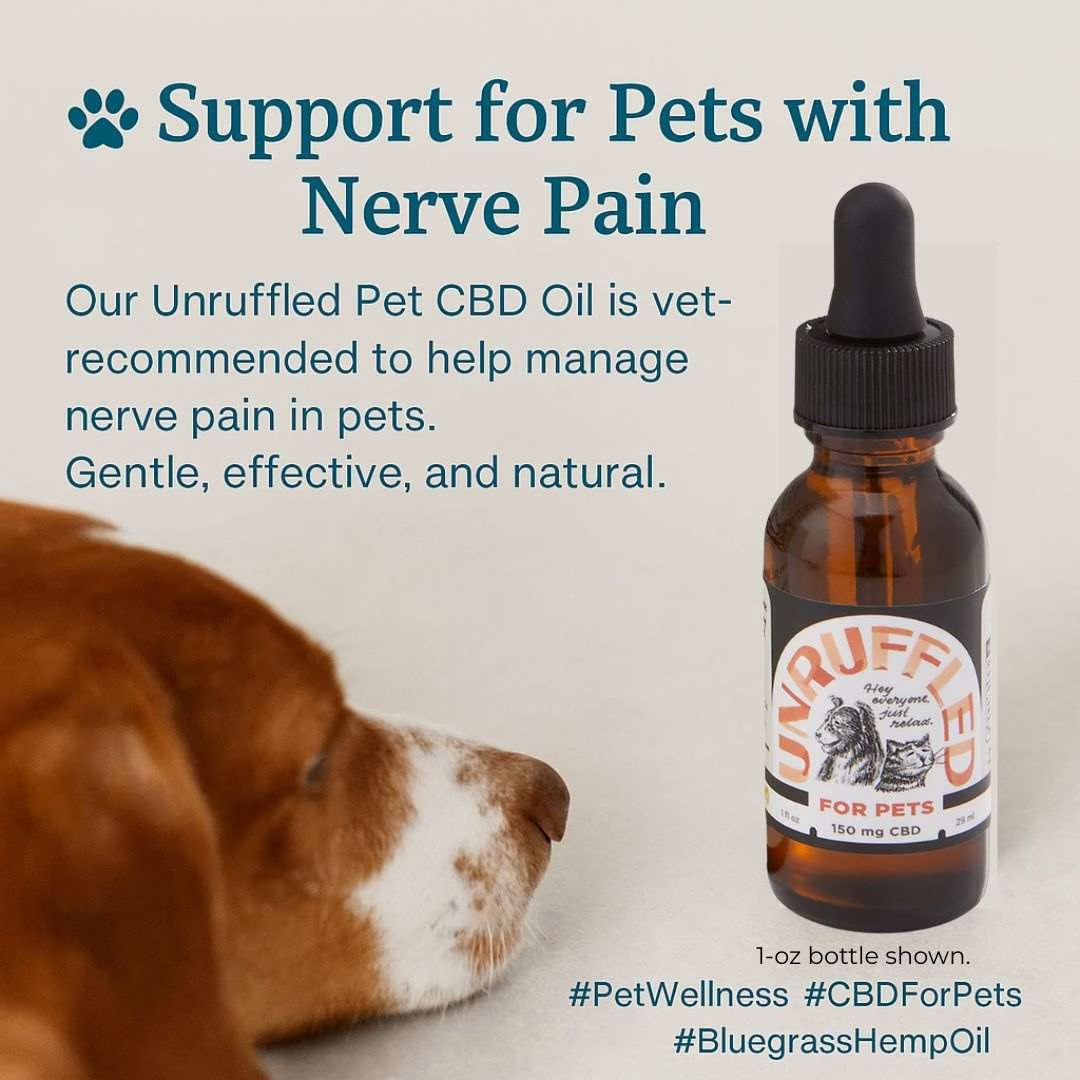
Unruffled CBD oil for pets beside a dog on a pet CBD safety guide
Use pet-focused labels and batch-specific lab reports before choosing any CBD product for a dog or cat.

Quick Answer: Are Cannabis Products Safe for Pets?

Pet CBD products should be approached with caution. Some pet owners compare CBD oil for dogs or cats as part of a wellness routine, but safety depends on the product, the animal, the ingredients, the cannabinoid profile, the THC level, the serving directions, and veterinary guidance.

Do not give pets marijuana products, THC-forward products, human edibles, CBD gummies, or products with ingredients that are not appropriate for animals. Pet owners should review the label, Certificate of Analysis, ingredient list, and batch number before using any pet CBD product.

Key Takeaways for Pet Owners

Ask your veterinarian first

Your pet’s age, weight, medications, health history, and species matter. A veterinarian can help you think through risk before adding CBD to a pet routine.

Choose pet-specific products

Human CBD products may contain flavors, sweeteners, carrier oils, THC levels, or serving directions that are not appropriate for animals.

Review trace THC

Full-spectrum pet CBD may contain trace THC. The label and COA should make THC information easy to review.

Check the batch-specific COA

A Certificate of Analysis helps verify CBD potency, THC levels, cannabinoid profile, and available quality testing for that specific batch.

Avoid disease claims

Be cautious of products promoted as treating anxiety, seizures, pain, arthritis, cancer, inflammation, or other pet diseases.

Keep products secured

Store CBD and cannabis products away from pets and children. Accidental ingestion should be handled as a veterinary concern.

Entity Summary: Pet CBD Safety Terms Explained

Term Consumer-Friendly Meaning Why It Matters for Pets
Pet CBD oil A CBD product labeled for animal use, often in a liquid dropper format. Pet-specific labels are easier to compare than human CBD labels.
Full-spectrum hemp extract Hemp extract that may include CBD, minor cannabinoids, terpenes, and trace THC. Trace THC should be verified through a COA before use with pets.
Certificate of Analysis A lab report tied to a product batch. Helps verify CBD amount, THC level, and available contaminant testing.
Delta-9 THC A THC measurement commonly shown on hemp lab reports. THC exposure can be a concern for pets, so this number should not be ignored.
Serving information The amount suggested on the product label. Pet owners should follow the label and ask a veterinarian for animal-specific guidance.
Veterinarian guidance Professional advice from a licensed veterinarian. Especially important for pets with health conditions, medications, or unusual symptoms.

Pet CBD Safety Checklist Before You Buy

Use this checklist to compare pet CBD oil, pet hemp extract, and other cannabis-derived pet products in a practical, safety-first way.

  • Ask your veterinarian before using CBD with your pet.
  • Choose a product labeled for pets, not a human edible or gummy.
  • Confirm whether the product is full-spectrum, broad-spectrum, or isolate-based.
  • Review the CBD amount per serving or per mL.
  • Check delta-9 THC and total THC when available.
  • Match the product batch number to the COA.
  • Review the carrier oil and flavor ingredients.
  • Avoid xylitol, unsafe sweeteners, and unnecessary human-food ingredients.
  • Avoid products that promise to treat pet diseases or behavior conditions.
  • Store CBD products away from pets and children.
  • Contact the company if label or COA details are unclear.
  • Seek veterinary help if accidental ingestion occurs.

Human CBD Products vs Pet CBD Products

Pet owners should not assume that a CBD product made for adults is appropriate for dogs or cats. Human products may contain ingredient choices, serving sizes, flavors, sweeteners, or THC levels that are not suitable for animals.

Product Type Why Pet Owners Should Be Careful Safer Consumer Step
Human CBD gummies May contain sugar alcohols, sweeteners, colors, flavors, or serving information intended for adults. Do not give human CBD gummies to pets. Use pet-labeled products only after veterinarian guidance.
THC or marijuana products THC exposure can be unsafe for pets and should not be treated as the same thing as pet CBD. Keep THC products secured and away from animals.
Human CBD oils May use carrier oils or flavoring choices that were not selected for dogs or cats. Choose a pet-specific product with a simple ingredient list and COA access.
Pet CBD oils Still require careful review because products vary by CBD amount, THC content, ingredients, and testing. Review the label, COA, and company transparency before use.

For label review, start with CBD lab testing and COA education and Bluegrass Hemp Oil Certificates of Analysis.

How to Read a Pet CBD Certificate of Analysis

A Certificate of Analysis, or COA, helps pet owners compare the label to lab-tested product details. It should be easy to access, batch-specific, and tied to the exact product being considered.

Product and batch

Look for the product name, batch number, test date, and lab name.

CBD potency

Check CBD amount and whether the lab result lines up with the label.

THC information

Review delta-9 THC and total THC when available.

Minor cannabinoids

Full-spectrum products may list additional cannabinoids beyond CBD.

Contaminant screens

Look for heavy metals, pesticides, residual solvents, and microbial testing when available.

Company support

Contact the company if a COA is missing, outdated, or hard to match to the product.

Ingredients Pet Owners Should Review Carefully

Ingredient review is one of the most important parts of pet CBD safety. Simple formulas are easier to evaluate than products with long ingredient lists, sweeteners, artificial flavors, or human-food additives.

Xylitol and dog safety

Do not give dogs products that contain xylitol. If a dog eats a product containing xylitol, contact a veterinarian or emergency animal hospital immediately.

  • Check for xylitol or sugar-free sweeteners.
  • Review carrier oils and flavor ingredients.
  • Avoid products made as human candy, gummies, or snacks.
  • Be cautious with essential oils or strong flavor blends.
  • Review allergens and species-specific concerns.
  • Ask your veterinarian before using CBD with cats, senior pets, or pets on medication.

Dogs, Cats, and Pet-Specific CBD Questions

Dogs and cats can respond differently to ingredients and products. Pet owners should not transfer a routine from one animal to another without reviewing the label and asking a veterinarian.

For dog owners

Review CBD per serving, pet size guidance, THC content, xylitol risk, carrier oil, COA access, and whether the product is labeled for dogs. Do not give dogs human gummies or THC products.

For cat owners

Cats require extra caution with ingredients, flavors, and essential oils. Choose a product with a simple ingredient list and talk with your veterinarian before adding CBD to a cat’s routine.

For broader pet CBD education, read the Bluegrass Hemp Oil guide to CBD for pets.

How Unruffled CBD Oil Fits Into a Safer Product Review

Unruffled CBD Oil for Pets is a Bluegrass Hemp Oil pet CBD product line. When reviewing any Unruffled option, compare it by the same safety-first criteria: pet-specific label, CBD per serving, full-spectrum status, ingredient list, trace THC information, batch-specific COA, and veterinarian guidance.

About Bill Polyniak

Bill Polyniak is the founder of Bluegrass Hemp Oil and Kentucky Cannabis Company. His work in Kentucky hemp began in 2014 and focuses on full-spectrum CBD education, product quality, hemp sourcing, label clarity, COA transparency, and helping families ask better questions before choosing CBD products.

This pet CBD safety guide reflects that consumer-first approach: review labels, avoid disease-treatment claims, respect veterinary guidance, verify COAs, and choose pet products based on transparency rather than hype.

Read Bill Polyniak’s founder bio and Kentucky hemp story.

Frequently Asked Questions About Pet CBD Safety

Is CBD approved by the FDA for pets?

FDA has not approved CBD animal drugs. Pet owners should be cautious with marketing claims and should ask a veterinarian before using CBD with pets.

Can I give my dog human CBD gummies?

No. Human CBD gummies may contain sweeteners, colors, flavors, serving sizes, or THC levels that are not appropriate for dogs. Use pet-labeled products only after reviewing the label and asking your veterinarian.

Can full-spectrum pet CBD contain THC?

Yes. Full-spectrum pet CBD may contain trace THC. Review the label and COA for delta-9 THC and total THC when listed.

What is the most important thing to check on pet CBD?

Start with the label, batch number, ingredient list, CBD per serving, THC information, and Certificate of Analysis. Then ask your veterinarian whether CBD makes sense for your pet’s situation.

Can cats use the same CBD oil as dogs?

Do not assume a product or serving routine for one species fits another. Cats need extra caution with ingredients and flavors. Ask your veterinarian before using CBD with a cat.

What should I do if my pet accidentally eats cannabis or CBD?

Contact your veterinarian, emergency animal hospital, or animal poison control resource right away, especially if the product contained THC, xylitol, unknown ingredients, or a large amount.

Should pet CBD products promise results?

No. Be cautious with guaranteed-result language or claims that CBD treats pet diseases. A responsible product page should focus on labels, ingredients, serving information, COAs, and safety questions.

Safety References and Disclaimer

This guide is educational and is not veterinary advice. Bluegrass Hemp Oil products are not intended to diagnose, treat, cure, or prevent disease in humans or animals. Talk with your veterinarian before using CBD with pets. Keep CBD, THC, and cannabis products out of reach of pets and children.
CBD for Cats Safety Guide

A calm cat resting near a bottle of Unruffled CBD Oil for a cat CBD safety guide

Cat CBD safety guide

CBD for Cats: Safety, Labels, Vet Questions, and Product Quality

A veterinarian-first guide for cat owners comparing pet CBD oil, labels, ingredients, Certificates of Analysis, THC information, and product-quality signals before choosing anything for a cat.

Vet guidance first
No disease-treatment claims
COA and label review

Quick answer for cat owners

Can cats use CBD oil?

Cat owners should talk with a veterinarian before using CBD with a cat. Cats can have different sensitivities than dogs, and pet CBD products should be compared by ingredient list, serving information, THC reporting, and available lab testing rather than by marketing claims.

CBD, short for cannabidiol, is a hemp compound. It is not the same as THC, the intoxicating cannabis compound. For cats, the responsible path is not hype or guesswork. It is veterinary guidance, label review, ingredient review, and product testing.

Helpful starting points include the CBD for cats safety guide, the broader CBD for pets comparison guide, and CBD Certificates of Analysis for product transparency.

Key takeaways before giving CBD to a cat

1

Vet guidance comes first

CBD should not replace a veterinary exam, diagnosis, emergency care, prescribed medication, or a treatment plan.

2

Ingredients matter

Avoid human CBD gummies, xylitol, artificial sweeteners, essential oils, and products with unclear THC information.

3

Testing supports transparency

A COA helps shoppers compare CBD amount, THC reporting, batch details, and contaminant screening when available.

Plain-English summary

Cat CBD terms shoppers should understand

Term Consumer-friendly meaning What to check
CBD oil for cats A pet product that blends hemp extract with a carrier oil. CBD amount, carrier oil, serving information, ingredients, and COA.
THC The intoxicating cannabis compound that is especially important to evaluate for pets. Label THC statement and batch-specific testing.
COA A Certificate of Analysis from a lab that reports product testing details. Batch match, CBD, THC, lab date, and contaminant screens.
Human CBD edibles Gummies, candies, baked goods, or flavored items made for people. Do not give these to cats because ingredients and serving sizes may be unsafe.

Why cats need cat-specific CBD guidance

Cats are not small dogs. A product that seems ordinary for a dog may be inappropriate for a cat because cats can differ in size, metabolism, ingredient sensitivity, and medication risk.

Rx

Medication review

CBD may affect pathways involved in processing some medications. Ask your veterinarian how to review prescriptions, supplements, and timing.

ml

Cat-sized serving details

Small cats need small, measurable serving information. Avoid products that only list total bottle CBD without clear per-serving details.

!

Behavior changes need diagnosis

Hiding, litter box changes, appetite changes, vocalizing, over-grooming, or stiffness should be discussed with a veterinarian.

For additional pet-owner context, review cat CBD safety considerations and the cat seizure safety guide before making product decisions.

Vet-first safety note

Talk with your veterinarian before using CBD for cats

Veterinary guidance is especially important if your cat is elderly, underweight, pregnant or nursing, taking medication, scheduled for surgery, or showing sudden changes in appetite, litter box use, mobility, grooming, sleep, behavior, or neurological signs.

Bring this list to your vet

  • The exact product name and product URL.
  • The ingredient list and carrier oil.
  • The CBD amount per serving or per drop.
  • The COA or batch-specific lab report.
  • Your cat’s medication and supplement list.

What is CBD oil for cats?

CBD oil for cats is usually a hemp extract blended into a carrier oil and offered in small, measurable servings. It should be reviewed as a cat-specific product, not a human product repurposed for pets.

One important distinction is hemp oil vs CBD oil. Hemp seed oil is made from hemp seeds and typically does not contain meaningful CBD. CBD oil is made from hemp extract and should clearly identify cannabinoid content, serving information, carrier oil, and batch testing.

For general education, start with what CBD oil is and compare extract terminology with full-spectrum CBD vs CBD isolate explanations.

What should I check before giving CBD to my cat?

A safer cat CBD decision starts with the product label, not a promise. Review CBD amount, carrier oil, ingredients, serving directions, THC information, batch number, expiration date, and COA access.

Label checklist

  • CBD amount per serving or per drop.
  • Simple carrier oil and ingredient list.
  • Cat-appropriate serving directions.
  • Batch number, QR code, or COA access.
  • THC information and contaminant screening.

Avoid for cats

  • Human gummies, candies, or edibles.
  • Xylitol or artificial sweeteners.
  • Essential oils such as citrus or peppermint.
  • High-THC products or unclear THC reporting.
  • Products making disease-treatment claims.

For step-by-step label review, use the CBD product label reading guide and the CBD quality guide for transparent products.

Is CBD different for cats and dogs?

Cats and dogs can have different sensitivities and product needs. Do not assume that a product or routine used for a dog is appropriate for a cat.

Use the CBD for pets comparison guide for a broad overview, then return to cat-specific questions before choosing a product for your cat.

How should cat owners think about CBD serving information?

There is no universal CBD serving that fits every cat or every product. Use the product label, review the COA, ask your veterinarian, and change only one variable at a time.

What to track Why it matters
Label serving and CBD amount Helps avoid guessing based on bottle size or marketing language.
Food timing and acceptance Some cats accept oil better with a small amount of wet food. Do not force dosing.
Behavior and appetite notes New hiding, appetite changes, vomiting, drooling, or litter box issues should be discussed with your veterinarian.
Medication and supplement list Your veterinarian needs the full list to review possible interaction concerns.

How do I read a CBD Certificate of Analysis for cat products?

Testing does not prove medical effectiveness, but it helps cat owners review cannabinoid content, THC reporting, contaminant screening, and whether the product matches the label.

A

Match the batch

Look for a batch number, lot number, QR code, or testing date that matches the product you have.

B

Check CBD and THC

Review CBD amount and THC reporting. Avoid products with unclear THC information for cats.

C

Look for contaminants

When available, review testing for heavy metals, pesticides, solvents, microbes, or other quality screens.

Use Bluegrass Hemp Oil Certificates of Analysis and the CBD lab testing guide as your product-transparency starting points.

What about senior cats, mobility, and neurological questions?

Senior cats and cats with neurological or mobility concerns need diagnosis first. CBD should not be used to cover up sudden changes, pain signs, seizures, urinary problems, weakness, or loss of appetite.

If your older cat is slow to jump, over-grooming, hiding, vocalizing, changing litter box habits, or acting differently, start with your veterinarian. You can also review senior cat wellness questions and cat CBD safety considerations to prepare better questions for a veterinary visit.

Related cat CBD and product safety resources

These related guides help cat owners compare product format, labels, COAs, cat-specific safety questions, and pet wellness resources.

About the author

About Bill Polyniak

Founder, hemp educator, and product transparency advocate.

Bill Polyniak is the founder of Bluegrass Hemp Oil and Kentucky Cannabis Company. His education-first work focuses on Kentucky hemp, full-spectrum CBD product quality, transparent labels, Certificates of Analysis, and helping consumers ask better questions before choosing CBD products for themselves or their pets.

Read Bill Polyniak’s founder profile →

Cat CBD FAQs

Can cats use CBD oil?

Cat owners should talk with a veterinarian before using CBD with a cat. Cats can have different sensitivities than dogs, so review the product label, ingredients, serving information, and available testing before choosing any product.

Is CBD safe for cats?

Safety depends on the individual cat, product quality, ingredients, THC information, serving details, and medication history. Ask your veterinarian before use, especially for senior cats or cats with medical concerns.

What should I know before giving CBD to my cat?

Review the product label, ingredient list, serving information, THC statement, and Certificate of Analysis. Talk with your veterinarian first if your cat is elderly, takes medication, has a medical condition, or has sudden behavior changes.

Can I give human CBD gummies to my cat?

No. Human gummies and edibles may contain sweeteners, flavors, THC, or other ingredients that are not appropriate for cats. Use cat-specific product guidance and ask your veterinarian.

How do I read a CBD COA for a cat product?

Match the batch number, confirm CBD amount, review THC information, check the testing date, and look for contaminant testing when available. Contact the company or your veterinarian if anything is unclear.

Sources and further reading

Use these resources as starting points for conversations with your veterinarian and for product-quality review.

Final takeaway: choose cat CBD with care

Cat CBD decisions should be veterinarian-first, label-aware, and testing-informed. Review ingredients, serving information, THC details, COAs, and your cat’s medical context before adding CBD to a cat’s routine.

CBD Dog Treats vs CBD Gummies for Canine Anxiety Relief

CBD Dog Treats vs CBD Gummies for Canine Anxiety Relief

CBD Research & Safety Guide

Quick Answer: Is CBD Approved for Anxiety or OCD?

No. Retail CBD products are not FDA-approved to treat anxiety or obsessive-compulsive disorder. Anxiety and OCD can affect daily life, sleep, relationships, school, work, and overall functioning, so professional care matters.

CBD should not replace therapy, exposure and response prevention, cognitive behavioral therapy, prescribed medication, or guidance from a licensed healthcare professional. If you are comparing CBD products, review the label, Certificate of Analysis, THC content, serving information, ingredients, medication interaction risks, and safety warnings.

Important: This article is educational and is not medical advice. If anxiety, intrusive thoughts, compulsive behaviors, panic, sleep disruption, or distress interfere with daily life, speak with a licensed healthcare professional. If you are in crisis or may harm yourself or someone else, call or text 988 in the United States or seek emergency help immediately.

Written by
Bill Polyniak
Updated
June 2026
Guide focus
Research limits, professional care, CBD safety, COAs, THC, and product quality
Start Here

Key Takeaways

  • CBD is not FDA-approved to treat anxiety or OCD.
  • CBD should not replace therapy, ERP, CBT, medication, or professional care.
  • Research interest exists, but evidence for anxiety and OCD remains limited and not conclusive.
  • CBD may interact with medications and may cause side effects.
  • Full-spectrum CBD may contain trace THC.
  • Before comparing CBD products, review the label, Certificate of Analysis, THC content, ingredients, serving information, and safety warnings.
Professional Care First

Mental Health Safety Notice

Anxiety and OCD deserve careful, individualized support. This guide can help you understand CBD research questions and product-quality checks, but it should not guide diagnosis, treatment decisions, medication changes, or crisis decisions.

Do not stop, start, replace, reduce, or combine medication because of CBD information online. Talk with a qualified healthcare professional if symptoms affect your daily life, if you are already taking medication, or if you are considering adding CBD to any routine.

Mental Health Context

Understanding Anxiety and OCD

Anxiety disorders go beyond everyday stress. OCD can involve intrusive, unwanted thoughts and repetitive behaviors or mental rituals. Both can vary widely from one person to another, which is why individualized professional care matters.

Anxiety May Include

  • Persistent worry or fear
  • Difficulty sleeping or relaxing
  • Physical tension or a racing heartbeat
  • Trouble concentrating
  • Avoidance of certain situations

OCD May Include

  • Intrusive, unwanted thoughts
  • Repetitive behaviors or mental rituals
  • Temporary relief followed by recurring distress
  • Daily disruption that can build over time
  • Compulsions that feel hard to resist

These symptoms are listed to help readers understand the topic, not to suggest that CBD treats these experiences. Helpful clinical context is available from the National Institute of Mental Health anxiety disorders overview and the National Institute of Mental Health OCD overview.

Care Pathway

When to Seek Professional Help

If symptoms are interfering with work, school, relationships, sleep, or normal daily functioning, it is important to speak with a licensed healthcare professional. Professional evaluation can help clarify what is happening and what evidence-based options may be appropriate.

Signs It Is Time to Reach Out

  • Symptoms are becoming overwhelming or distressing.
  • Daily responsibilities are harder to manage.
  • Sleep, focus, school, work, or relationships are being affected.
  • Intrusive thoughts or rituals are taking up significant time.
  • You are considering changing medication or adding CBD.

Evidence-Based Care May Include

  • Cognitive Behavioral Therapy, often called CBT
  • Exposure and Response Prevention, often called ERP, for OCD
  • Prescription medication when appropriate
  • Care from a licensed mental-health professional

CBD should not replace these established approaches.

CBD Basics

What Is CBD?

CBD, or cannabidiol, is a naturally occurring compound found in hemp. CBD does not produce the intoxicating effects associated with THC.

Many adults compare CBD products by format, such as oils, gummies, capsules, and topicals. Product type, label clarity, COA access, THC content, ingredients, and serving information all matter when evaluating CBD products.

Start with CBD oil product education and the CBD product guide for oils, gummies, capsules, and how to choose.

Search Intent

Why People Ask About CBD for Anxiety and OCD

Interest in CBD is often linked to research on the endocannabinoid system, stress response, mood-related pathways, and a broader desire for complementary wellness options.

That interest is understandable, but it is important to distinguish between research interest and a proven medical treatment. Those are not the same thing.

For broader context, read what CBD feels like and why experiences vary and cannabinoids in hemp products.

Research Limits

What CBD Research Does and Does Not Confirm

This is the section many readers care about most. The safest way to present CBD anxiety research and CBD OCD research is with two separate lenses: what current research explores and what it still does not confirm.

Research Interest What It Does Not Mean
CBD has been studied in stress and anxiety-related contexts. CBD is not an FDA-approved treatment for anxiety or OCD.
Researchers continue to study the endocannabinoid system. Research interest does not prove that retail CBD products treat mental-health conditions.
Some adults compare CBD products as part of wellness routines. CBD should not replace therapy, ERP, CBT, medication, or professional care.
Product types and cannabinoid profiles vary widely. There is no standardized CBD dose for anxiety or OCD.

Bottom line: CBD products available to consumers are not established treatments for mental-health disorders. Retail CBD is also not the same as Epidiolex, the prescription cannabidiol medication approved for specific seizure disorders.

CBD Safety

CBD Safety Considerations

CBD is not risk-free. It may interact with medications and may cause side effects such as drowsiness, fatigue, digestive changes, appetite changes, or mood changes. Full-spectrum CBD may contain trace THC.

Speak with a qualified healthcare professional before using CBD if you take medication, have a medical condition, are pregnant or breastfeeding, are subject to drug testing, or have questions about mental-health care.

Medication Interaction Warning

CBD may interact with prescription or over-the-counter medications. Do not combine CBD with anxiety, OCD, sleep, mood, or other medications unless a qualified healthcare professional has reviewed the situation.

Trace THC and Drug Testing

Full-spectrum CBD may contain trace THC. Do not guarantee a drug-test outcome. Review the Certificate of Analysis and speak with a qualified professional if drug testing is a concern.

Helpful safety context: hemp vs marijuana and THC differences.

Product Quality

Why Extraction, Product Type, and Testing Matter

Not all CBD products are the same. Extraction, formulation, product type, testing, and labeling can affect quality, consistency, and composition. Responsible CBD education should include more than the front label.

Extraction and Formulation

Extraction and processing can influence the final hemp extract profile and product consistency.

Product Type

CBD oils, gummies, capsules, and topicals differ by format, ingredients, serving clarity, and label information.

Third-Party Lab Testing

Lab testing helps shoppers review cannabinoid content, THC content, and product-specific details before buying.

Read more about CBD extraction methods and product quality, CBD lab testing and Certificates of Analysis, and which CBD delivery method is right for you.

Verification

CBD Product Label and COA Checklist

If you are comparing CBD products, focus on verifiable product details instead of anxiety or OCD benefit claims. The product label and Certificate of Analysis should help you understand what is in the product.

CBD Product Label Checklist

  • CBD per serving
  • Total CBD per bottle or package
  • Serving size
  • Full-spectrum, broad-spectrum, or isolate status
  • THC disclosure
  • Ingredients
  • Carrier oil or base ingredient
  • Flavorings, sweeteners, or allergens
  • Warning language
  • Company contact information

Certificate of Analysis Checklist

  • Product name
  • Batch or lot number
  • Test date
  • CBD potency
  • THC content
  • Available contaminant testing
  • Lab name
  • Match between label and COA

Helpful guides: how to read a CBD product label and review CBD Certificates of Analysis.

Product Types

Full-Spectrum CBD, THC, and Product Type

Some shoppers prefer full-spectrum CBD because it contains a broader hemp compound profile. Others may prefer broad-spectrum or isolate products because of THC sensitivity, ingredient preferences, or drug-testing concerns. There is no definitive clinical evidence proving one CBD type is better for anxiety or OCD.

Product Type What It Usually Means What to Check
Full-Spectrum CBD May include CBD, minor cannabinoids, terpenes, and trace THC Review THC content, cannabinoid profile, and COA
Broad-Spectrum CBD May include CBD and other hemp compounds with THC removed or reduced Review the COA to confirm cannabinoid and THC details
CBD Isolate CBD separated from most other hemp compounds Review CBD per serving, ingredients, and COA

Compare options with the full-spectrum CBD education guide and types of CBD: full-spectrum, broad-spectrum, and isolate.

Helpful Boundaries

What CBD Products Should Not Be Promoted For

Retail CBD products should not be promoted as products that treat, relieve, reduce, prevent, manage, or cure anxiety, OCD, panic attacks, depression, insomnia, intrusive thoughts, compulsions, stress disorders, or any mental-health condition.

Use this guide to understand research limits, professional-care guidance, CBD safety considerations, product labels, COAs, THC content, and responsible product comparison.

Conversation Guide

Questions to Ask Your Healthcare Professional

  • Could CBD interact with my current medication?
  • Could CBD affect drowsiness, alertness, mood, or sleep?
  • Is full-spectrum CBD a concern because of trace THC?
  • Should I avoid CBD because of liver health, pregnancy, breastfeeding, or health history?
  • Could CBD interfere with my anxiety or OCD treatment plan?
  • What evidence-based care options should I consider for anxiety or OCD?
  • What should I do before changing medication, therapy, or supplement routines?
Responsible Product Pathway

Product Transparency Pathway

If you are comparing CBD products, focus on product transparency rather than mental-health claims. Review the label, Certificate of Analysis, THC content, product format, ingredients, serving information, and safety considerations before choosing a product.

Genesis Blend Full-Spectrum CBD Oil

Review product details, full-spectrum profile, serving information, and COA availability.

Genesis Blend full-spectrum CBD oil product details

Genesis Blend Full-Spectrum CBD Oil Hub

Learn more about the Genesis Blend product family, full-spectrum hemp extract, and product pathways.

Genesis Blend full-spectrum CBD oil hub

CBD Oil Bundles

Compare CBD oil bundle options by product format, serving details, labels, and COAs.

CBD oil bundles and product options

Shop CBD Products by Format

Compare CBD oils, gummies, topicals, pet products, and bundles by format and label information.

Shop CBD products by format

Product Questions

Contact Bluegrass Hemp Oil for help finding labels, COAs, and product-format information.

Contact Bluegrass Hemp Oil for product questions

Continue Learning

Related CBD Education Guides

FAQ

Frequently Asked Questions About CBD, Anxiety, and OCD

Is CBD approved for anxiety or OCD?

No. Retail CBD products are not FDA-approved to treat anxiety or OCD.

Can CBD replace therapy or medication for anxiety or OCD?

No. CBD should not replace therapy, exposure and response prevention, cognitive behavioral therapy, prescribed medication, or care from a licensed healthcare professional.

What does research say about CBD and anxiety?

CBD has been studied in anxiety-related contexts, but current evidence does not make retail CBD products approved anxiety treatments.

What does research say about CBD and OCD?

Evidence for CBD and OCD remains limited. OCD care should be discussed with a licensed healthcare professional.

Can CBD interact with anxiety or OCD medications?

Yes. CBD may interact with medications. Speak with a qualified healthcare professional before combining CBD with prescription or over-the-counter medications.

Is there a standard CBD dose for anxiety or OCD?

No. There is no standardized CBD dose for anxiety or OCD.

Is full-spectrum CBD better for anxiety or OCD?

There is no definitive clinical evidence proving that full-spectrum CBD is better for anxiety or OCD. Full-spectrum CBD may contain trace THC, so review the label and COA.

Can full-spectrum CBD contain THC?

Yes. Full-spectrum CBD may contain trace THC. Review the Certificate of Analysis before choosing a product.

What should I check before comparing CBD products?

Review the label, CBD per serving, THC content, ingredients, product type, Certificate of Analysis, batch information, and safety warnings.

What should I ask my healthcare professional?

Ask about medication interactions, liver health, drowsiness, THC exposure, drug testing, pregnancy or breastfeeding concerns, and evidence-based care options.

Author Context

About Bill Polyniak and Bluegrass Hemp Oil

Product Transparency Review

Bill Polyniak

Bill Polyniak is the founder of Bluegrass Hemp Oil and Kentucky Cannabis Company. His work focuses on Kentucky hemp, full-spectrum CBD product education, product labels, Certificates of Analysis, and helping consumers ask better safety questions before choosing hemp products.

This author context supports product transparency. It is not medical review, mental-health care, or a substitute for guidance from a licensed healthcare professional.

Product-Transparency Experience

Bill’s perspective centers on labels, COAs, THC content, sourcing, and clear product information. Learn more through the Bill Polyniak founder profile.

Safety Boundary

Mental-health concerns should be discussed with qualified professionals. Product education can help shoppers verify CBD details, but it does not diagnose or treat anxiety or OCD.

Final Takeaway

Final Takeaway: Start With Professional Care and Verify CBD Products Carefully

Anxiety and OCD deserve careful, professional support. CBD should not be treated as a replacement for therapy, ERP, CBT, medication, or guidance from a licensed healthcare professional.

If you are comparing CBD products, focus on transparency: product labels, Certificates of Analysis, THC content, ingredients, serving information, lab testing, and safety considerations.

CBD Oil for Dogs: Safety, Benefits, Serving Size, and How to Choose

Bluegrass Hemp Oil Pet CBD Guide

CBD Oil for Dogs: Safety, Serving Size, COAs, and Vet Questions

CBD oil for dogs is one of the most common hemp wellness products pet owners research, but it should be approached carefully. This guide explains what CBD oil is, why pet owners compare CBD products, how to evaluate labels and Certificates of Analysis, and why your veterinarian should be part of the decision.

Quick answer

Is CBD Oil for Dogs Safe?

CBD oil may not be appropriate for every dog. Safety depends on the dog, product quality, serving size, THC content, medication use, health history, and veterinarian guidance. The safest starting point is to read the label, verify the Certificate of Analysis, and ask your veterinarian before use.

CBD products are not intended to diagnose, treat, cure, or prevent disease in animals.

Key takeaways

CBD Oil for Dogs: What Pet Owners Should Know First

Veterinarian guidance comes first

Ask your veterinarian before using CBD oil, especially if your dog takes medication or has a medical condition.

CBD is not a treatment claim

Retail CBD products should not be presented as treatments for seizures, arthritis, anxiety, pain, inflammation, cancer, or any disease.

Product quality matters

Labels, THC content, ingredient lists, lab testing, and Certificates of Analysis help you compare products more responsibly.

Serving size is individual

There is no universal serving size for every dog. Product concentration, dog size, age, medications, and health history all matter.

THC exposure matters

Full-spectrum hemp products may contain trace THC. Dogs can be sensitive to THC, so the COA should be reviewed carefully.

Observe and document

If your veterinarian approves CBD use, track the product, serving, timing, appetite, stool changes, drowsiness, and unusual behavior.

Definition

What Is CBD Oil for Dogs?

CBD oil for dogs is a hemp-derived product that contains cannabidiol, commonly called CBD. CBD is non-intoxicating and is different from THC, the cannabis compound associated with intoxication.

Dog CBD oil products may differ in CBD amount, carrier oil, flavoring, ingredients, THC content, and testing transparency. For a broader safety-first overview, review the main CBD for Dogs safety guide before comparing specific products.

Some dog owners also search locally, so the dog CBD oil near me guide can help frame what to check when comparing nearby and online options.

Entity Summary

CBD Cannabidiol, a non-intoxicating hemp compound.
THC An intoxicating cannabis compound that matters for pet safety.
Dog CBD oil A hemp oil product marketed for dogs and pet wellness routines.
COA A Certificate of Analysis that shows cannabinoid content and testing information.
Veterinarian The professional who should review your dog’s health history, medications, and risks.

Safety

Is CBD Oil Safe for Dogs?

Safety depends on the individual dog and product. Before adding hemp products to your pet’s routine, review these CBD oil safety questions for dogs considerations and speak with your veterinarian.

Use extra caution if your dog takes prescription medication or supplements, has seizures or neurological symptoms, has liver, kidney, heart, or endocrine concerns, is pregnant or nursing, is elderly or very young, or has had reactions to hemp, oils, treats, or supplements.

Medication reviewCBD may affect how some medications are processed. Ask your veterinarian about interactions.
THC reviewFull-spectrum products may contain trace THC. Review the COA before use.
Side-effect monitoringWatch for sleepiness, lethargy, vomiting, diarrhea, appetite changes, impaired coordination, or unusual behavior.
Emergency careSudden collapse, seizure activity, severe vomiting, tremors, or rapid worsening requires veterinary help.

Search intent

Why Do Pet Owners Research CBD Oil for Dogs?

Pet owners commonly research CBD oil for dogs because they are looking for practical, careful answers about wellness routines, product consistency, senior dog comfort questions, behavior-related questions, and how to compare pet CBD products. Research is still developing, and retail CBD should not replace veterinary diagnosis or care.

Everyday routine support

Some owners explore CBD as part of a routine, but suitability should be reviewed with a veterinarian.

Senior dog questions

Age, medications, mobility concerns, and liver health make veterinary review especially important for older dogs.

Serving control

CBD oil may be easier to measure than treats, but the label and product concentration still matter.

Product selection

How to Choose CBD Oil for Dogs

A trustworthy dog CBD oil should make it easy to understand what is in the bottle. For a deeper product-selection walkthrough, read this guide on how to choose CBD oil for dogs.

When comparing products, look beyond the front label. Review the full ingredient list, serving details, THC information, batch number, lab report, company standards, and contact support.

Product-selection rule

Do not choose a pet CBD product because it makes strong symptom promises. Choose the product you can verify, review with your veterinarian, and store safely away from pets and children.

What to check Why it matters
Dog-specific formula Human products may contain ingredients, flavors, or serving sizes that are not appropriate for dogs.
Third-party lab report Lab testing supports transparency around CBD content, THC content, and product quality.
THC information Dogs can be sensitive to THC, so the product’s cannabinoid profile matters.
Simple ingredient list Ingredients, carrier oils, flavors, and allergens should be easy to understand.
Clear serving guidance The label should make product concentration and serving directions easy to review with a veterinarian.
Company transparency Quality standards, lab reports, and support channels help pet owners ask better questions.

For product-quality context, the existing Bluegrass Hemp Oil quality standards for hemp products page can help shoppers understand what transparency should look like.

Serving size

How Much CBD Oil Can Dogs Have?

There is no universal CBD oil serving size that is right for every dog. Your dog’s weight, age, health history, medications, product concentration, and veterinarian guidance all matter.

Start with the product label for basic serving information, then ask your veterinarian whether the product and serving approach are appropriate. Do not assume more is better, and do not use serving information as a substitute for veterinary diagnosis or treatment.

Dog weightProduct concentration may be interpreted differently for different sizes.
Age and healthSenior dogs, puppies, and dogs with chronic conditions need extra caution.
MedicationsDrug interactions should be reviewed by a veterinarian.
ObservationTrack timing, appetite, stool, behavior, and sleepiness if use is approved.

Format comparison

CBD Oil vs CBD Treats for Dogs

CBD oil may offer more flexible serving control, while treats may be easier for dogs who prefer a familiar snack format. Neither format is automatically better. The right choice depends on veterinarian guidance, ingredient quality, serving clarity, THC content, and your dog’s routine.

Format Best for Considerations
CBD oil Flexible serving review and measured routines Requires measuring, careful storage, and label review.
CBD treats Dogs who prefer snack-style formats Review calories, flavors, sweeteners, allergens, CBD amount, and THC information.
Human CBD products Not recommended without veterinary review May contain unsuitable ingredients, flavors, serving sizes, or THC levels.

For broader product comparisons already referenced on the site, see this dog CBD oil product comparison and evaluate every product through the same safety-first lens.

Behavior questions

CBD Oil for Dog Behavior Questions

Restlessness, reactivity, pacing, barking, and difficulty settling can have many causes, including training needs, lack of enrichment, fear, discomfort, environmental stress, or a medical issue.

If your dog is restless, reactive, or difficult to settle, this guide on CBD and hyperactive dog behavior questions can help frame the right questions to ask your veterinarian or a qualified behavior professional.

Behavior safety reminder

Do not use CBD as a shortcut around training, enrichment, environmental changes, medical evaluation, or professional behavior support.

Medical-sensitive topics

CBD Oil, Seizures, Arthritis, Cancer, and Medical Conditions in Dogs

CBD oil should not be positioned as a treatment for seizures, arthritis, cancer, pain, anxiety, inflammation, or diagnosed medical conditions. Dogs with symptoms should be evaluated by a veterinarian, and emergency symptoms should be handled by a veterinarian or emergency veterinary clinic.

If your dog has seizure activity or neurological symptoms, read this educational guide on helping your dog through seizures and contact your veterinarian for a care plan. You can also review the existing dog seizure education guide for general education only.

For aging-dog questions, this educational overview of arthritis-related questions in dogs can help you gather questions for your veterinarian. If your dog has a serious diagnosis, such as cancer, use any cancer-care questions for dog owners resource as education only and follow your veterinarian’s treatment plan.

Contact a veterinarian for:Seizures, collapse, limping, confusion, appetite loss, vomiting, sudden behavior change, severe anxiety, or rapid worsening.
Do not replace:Prescription medication, emergency care, seizure plans, arthritis care, cancer care, surgery follow-up, or diagnostic testing.

Label and lab review

What Should a Dog CBD Oil Label and COA Show?

A clear product label and batch-specific Certificate of Analysis help pet owners compare CBD oil more responsibly. Review the CBD amount, THC information, batch number, ingredients, serving directions, and safety warnings before discussing the product with your veterinarian.

CBD amountLook for CBD per serving and total CBD per container.
THC levelConfirm whether THC is present and how it is reported on the COA.
IngredientsCheck carrier oil, flavors, allergens, and pet-specific suitability.
Testing dateMake sure the lab report matches the batch and is easy to find.

What to read next

What to Read Next About CBD Oil for Dogs

Product transparency pathway

Compare Bluegrass Hemp Oil Pet CBD Products by Label, COA, and Ingredients

After reviewing safety questions with your veterinarian, compare pet CBD products by the label, CBD amount, THC content, carrier oil, flavoring, batch-specific Certificate of Analysis, and product support. Product links should help you verify details, not promise a medical outcome.

Voice search FAQ

CBD Oil for Dogs FAQs

Is CBD oil safe for dogs?

CBD oil may not be appropriate for every dog. Safety depends on the dog’s age, health history, medications, product quality, THC content, serving information, and veterinarian guidance. Speak with your veterinarian before adding CBD oil to your dog’s routine.

How much CBD oil can I give my dog?

There is no universal CBD oil serving size for dogs. Weight, age, product concentration, health history, medication use, and veterinary guidance all matter. Start by reading the product label and ask your veterinarian whether the product and serving approach are appropriate.

Can I give my dog human CBD oil?

Do not give your dog human CBD oil without veterinary guidance. Human products may contain ingredients, flavorings, THC levels, or serving sizes that are not appropriate for dogs. Pet-specific products should still be reviewed carefully with your veterinarian.

How long does CBD oil take to work in dogs?

Timing can vary by product format, food, dog size, metabolism, and individual sensitivity. CBD oil and CBD treats may fit into routines differently. Track timing and observations only if your veterinarian says CBD is appropriate for your dog.

Will CBD oil make my dog high?

CBD itself is non-intoxicating, but full-spectrum hemp products may contain trace THC. THC exposure can be a concern for dogs. Review the product label and Certificate of Analysis, and keep all hemp and cannabis products out of reach.

What side effects should I watch for?

Possible concerns may include sleepiness, lethargy, vomiting, diarrhea, appetite changes, drooling, impaired coordination, agitation, tremors, or unusual behavior. Contact your veterinarian if anything changes after your dog uses a hemp product.

What is the best CBD oil for dogs?

The best CBD oil for dogs is one your veterinarian says is appropriate and one you can verify through a clear label, simple ingredient list, THC information, third-party lab testing, and a batch-specific Certificate of Analysis.

Is CBD oil better than CBD treats for dogs?

CBD oil and CBD treats serve different routines. CBD oil may offer more flexible serving control, while treats may be easier for dogs who prefer a familiar snack format. Compare ingredients, serving information, THC content, and lab reports before choosing.

Can CBD oil help a hyper dog?

Restlessness or hyperactivity can have many causes, including training needs, environment, fear, discomfort, or a medical issue. CBD should not be presented as a fix. Discuss behavior questions with your veterinarian or a qualified behavior professional.

What should I do if my dog has seizures?

Seizures are a veterinary issue. Do not use CBD as a replacement for seizure evaluation, medication, or emergency care. If your dog has seizure activity, contact your veterinarian or an emergency veterinary clinic for a care plan.

Final takeaway

Final Takeaway: Start With Your Veterinarian, Then Verify the Product

CBD oil for dogs should be evaluated through a veterinarian-first lens. Before choosing a product, review your dog’s health history, medications, age, and risk factors with your veterinarian, then verify the product label, ingredients, THC content, serving information, and Certificate of Analysis.

Bluegrass Hemp Oil pet education is designed to help dog owners compare products more responsibly, without replacing veterinary care or making disease-treatment promises.

About the author

About Bill Polyniak

Bill Polyniak

Founder of Bluegrass Hemp Oil and Kentucky Cannabis Company

Bill Polyniak is a Kentucky hemp founder, product developer, and CBD educator. His work focuses on full-spectrum hemp education, transparent product labels, batch-specific Certificates of Analysis, and helping families ask better questions before choosing CBD products.

For pet-related articles, Bill’s consumer-education goal is to support safer conversations between dog owners and licensed veterinarians. This article does not replace veterinary diagnosis, treatment, emergency care, or medication guidance.

Read Bill Polyniak’s founder bio and Kentucky hemp story, or contact Bluegrass Hemp Oil for product label and COA questions.

Sources and safety references

Sources Used for Safety Framing


CBD Dog Treats Guide: Ingredients, THC, COAs, Serving Info & Vet Questions

CBD Dog Treats Guide: Ingredients, THC, COAs, Serving Info & Vet Questions

CBD Dog Treats Guide

Quick Answer: What Should Dog Owners Know About CBD Dog Treats?

CBD dog treats are pre-portioned hemp-derived products made for dogs. They should be compared by CBD per treat, ingredients, full-spectrum status, trace THC, serving directions, warnings, pet-specific labeling, and batch-specific Certificate of Analysis.

Vet-first safety reminder: Pet CBD questions should start with a licensed veterinarian, especially if your dog takes medication, has a medical condition, is very young, elderly, pregnant or nursing, scheduled for surgery, sensitive to THC, or has food allergies. CBD dog treats should not be described as treating anxiety, joint pain, arthritis, seizures, inflammation, allergies, mobility problems, behavior issues, or any veterinary condition.

Key takeaways

Key Takeaways

1

Pre-portioned pet format

CBD dog treats are a pre-portioned hemp-derived product format made for dogs.

2

Compare the label first

Review CBD per treat, ingredients, full-spectrum status, trace THC, serving directions, and COA access.

3

Ask a veterinarian

Pet CBD questions should start with a licensed veterinarian, especially with medications or health concerns.

4

Trace THC matters

Full-spectrum pet CBD may contain trace THC, which should be verified on the COA.

5

Ingredients matter

Chicken, fish ingredients, flavors, preservatives, and allergens should be reviewed carefully.

6

Do not stack products casually

Do not combine CBD oil and CBD treats without reviewing total CBD exposure and asking a veterinarian.

7

CBD is not risk-free

Pets may respond differently than humans, and individual pet responses vary.

8

Avoid treatment claims

CBD dog treats should not be claimed to treat anxiety, joint pain, seizures, allergies, or any veterinary condition.

Entity summary

CBD Dog Treat Terms to Know

These plain-language definitions help pet owners compare CBD dog treats without turning a product-format guide into veterinary advice.

Entity Simple Explanation Why It Matters
CBD dog treats Pre-portioned hemp-derived treats made for dogs Helps compare format and serving information
CBD per treat Amount of CBD in one treat Helps owners compare product labels
Unruffled CBD Dog Treats Bluegrass Hemp Oil’s pet CBD treat format Useful for product transparency review
Full-spectrum pet CBD Hemp extract with multiple hemp compounds and possible trace THC Important for label and COA review
Trace THC Small THC amount possible in full-spectrum pet CBD Important for pet safety and product review
Pet CBD COA Certificate of Analysis for a pet CBD product Helps verify CBD, THC, and testing information
Serving directions Product label instructions Should be followed with veterinarian guidance
Pet CBD side effects Possible unwanted responses in pets Owners should monitor and contact a veterinarian if needed
Food sensitivity Ingredient concern for some dogs Chicken, fish, and other ingredients should be reviewed
Veterinarian guidance Professional guidance from a licensed veterinarian Needed before using CBD with health conditions or medications
Product format

What Are CBD Dog Treats?

CBD dog treats are edible pet products that contain hemp-derived CBD in a pre-portioned treat format. They are different from CBD oil because each treat is designed to contain a set amount of CBD.

What to compare before choosing a treat

Pet owners should compare CBD dog treats by CBD per treat, ingredients, flavor, full-spectrum status, THC information, serving directions, warnings, and COA access. This page does not frame CBD dog treats as medicine, compare them to prescription medication, or claim that they treat veterinary conditions.

Format comparison

CBD Dog Treats vs CBD Oil: Which Format Fits Your Dog’s Routine?

CBD dog treats may be easier for owners who want a pre-portioned format. CBD oil may offer more serving flexibility. Before using either format, review the label, ingredients, THC information, serving directions, and COA.

Format How It Fits a Routine What to Check
CBD dog treats Pre-portioned edible format CBD per treat, ingredients, flavor, allergens, THC, COA
CBD dog oil Dropper-based format CBD per mL, carrier oil, serving directions, THC, COA
Pet bundle Combines oil and treats Total CBD exposure, ingredients, serving directions, COAs
Human CBD products Not made for pets Avoid unless a veterinarian specifically directs otherwise

Helpful next reads include CBD for dogs product safety and label guidance, CBD for dogs FAQ: pet CBD oil, THC, labels, and vet questions, and CBD bites for pets bioavailability and safety guide.

Product snapshot

Unruffled CBD Dog Treats: Product Format, Ingredients, and Serving Information

Unruffled CBD Dog Treats should be reviewed as a pet-specific, pre-portioned product format. Product fit depends on your dog’s label directions, ingredients, health history, medications, THC sensitivity, and veterinarian guidance.

1

Product type

CBD dog treats / dog bites made for dogs, not human CBD gummies or edibles.

2

Format

Pre-portioned edible pet CBD product with serving information on the label.

3

Extract type

Full-spectrum hemp extract may include multiple hemp compounds and trace THC.

4

CBD information

CBD per treat should be clearly shown on the product label.

5

THC information

Review the batch-specific COA for THC results.

6

Ingredients

Review chicken, fish, flavoring, and other ingredients for sensitivities.

7

Best safety step

Start with licensed veterinarian guidance when health or medication questions apply.

8

Verification step

Match the batch number on the package to the COA when available.

View Unruffled Chicken CBD Dog Treats product details

Serving information

CBD per Treat: Why Pre-Portioned Serving Information Matters

CBD per treat tells pet owners how much CBD is in one dog treat. This matters because treats are pre-portioned, while oils are usually measured with a dropper.

CBD per treat = total CBD in package ÷ number of treats
Use examples only. This is label-reading math, not a recommended serving amount. Follow the product label and veterinarian guidance.

Pet owners should review CBD per treat, number of treats per package, full-spectrum status, THC information, and serving directions before use.

Ingredients and sensitivities

Ingredients in CBD Dog Treats: Chicken, Fish Oil, Allergens, and Sensitivities

Ingredients matter because dogs can have individual sensitivities. Pet owners should review animal proteins, fish ingredients, flavorings, preservatives, and any ingredient their dog has avoided in the past.

Ingredient Area Why It Matters Safer Guidance
Chicken / chicken liver Animal protein source Review for poultry sensitivity
Fish ingredients May include fish oil, Asian carp, catfish, or similar ingredients Review for fish sensitivity or allergies
Full-spectrum hemp extract May contain CBD and trace THC Review COA and THC information
Natural preservatives Helps product stability Review full label
Flavoring Affects palatability Check for ingredients your dog avoids
Serving directions Helps prevent overuse Follow label and veterinarian guidance

Food sensitivity and allergen box

Dogs with known food allergies, sensitive digestion, or a history of reactions should be discussed with a veterinarian before adding new treats. Human gummies, chocolate products, THC edibles, and products with xylitol should not be treated as pet CBD products.

Full-spectrum and trace THC

Full-Spectrum CBD Dog Treats, Trace THC, and Pet Safety

Full-spectrum pet CBD products may contain CBD along with other naturally occurring hemp compounds. They may also contain trace THC within legal hemp limits. Pets may respond differently than humans, so full-spectrum pet CBD should be reviewed carefully with a veterinarian-first mindset.

Trace THC safety box: THC exposure can be unsafe for pets, especially if a dog ingests more than intended or consumes THC-containing cannabis products, edibles, gummies, or unknown products. Review the COA carefully and contact a veterinarian or animal poison control if accidental ingestion occurs.

Helpful next reads include full-spectrum CBD oil for dogs explained, full-spectrum CBD safety questions for dogs, and hemp vs marijuana and THC differences.

Label checklist

CBD Dog Treat Labels: What Pet Owners Should Check

A pet CBD label should make it easier to understand the product type, CBD per treat, ingredients, THC information, warnings, and COA access.

  • Product name
  • Pet-specific product type
  • CBD per treat
  • Number of treats
  • Full-spectrum, broad-spectrum, or isolate status
  • THC information
  • Ingredient list
  • Flavor ingredients
  • Allergen considerations
  • Serving directions
  • Warnings
  • Batch or lot number
  • Expiration date
  • COA access
  • Company contact information

For more label guidance, review how to read a CBD product label.

COA verification

How COAs Help Verify Pet CBD Product Quality

A Certificate of Analysis helps pet owners compare the product label with lab-reported results. A strong pet CBD COA can help verify CBD amount, THC level, batch information, and contaminant testing when available.

COA Item Why It Matters
Product name Confirms the report matches the product
Batch or lot number Confirms the report matches the package
Testing date Shows report freshness
CBD amount Verifies CBD per treat
THC amount Important because full-spectrum products may contain trace THC
Minor cannabinoids Supports full-spectrum review
Heavy metals Quality and contaminant check
Pesticides Quality and contaminant check
Residual solvents Important for extraction transparency
Microbials Product safety review

Learn more through CBD lab testing and Certificates of Analysis and review CBD Certificates of Analysis.

Vet-first safety

Vet-First Safety: Medications, Health Conditions, Puppies, Senior Dogs, and Surgery

Pet CBD questions should start with a licensed veterinarian. This is especially important if your dog takes medications, has a medical condition, is very young, elderly, pregnant or nursing, scheduled for surgery, sensitive to THC, has liver concerns, has a history of seizures, has food allergies, or has previously reacted poorly to supplements or treats.

Safety Topic Why It Matters Safer Guidance
Medications Pet CBD may raise interaction questions Ask a veterinarian first
Health conditions Dogs with health issues need individualized guidance Do not rely on online advice
Puppies Young dogs may need extra caution Ask a veterinarian before use
Senior dogs Older dogs may have medications or health concerns Ask a veterinarian first
Surgery Products may matter before procedures Ask the veterinarian before surgery
THC sensitivity Full-spectrum products may contain trace THC Review the COA carefully
Food allergies Treat ingredients vary Review ingredient list and ask a veterinarian
Claim boundaries

What CBD Dog Treats Should Not Be Claimed to Treat

CBD dog treats, CBD dog bites, CBD oil for dogs, Unruffled CBD Dog Treats, Unruffled CBD Oil, and full-spectrum pet CBD should not be described as diagnosing, treating, curing, preventing, reducing, relieving, or managing anxiety, stress, fireworks fear, joint pain, arthritis, inflammation, mobility problems, allergies, skin disease, digestive issues, seizures, epilepsy, aggression, behavior problems, or any veterinary condition.

This page focuses on product format, ingredients, CBD per treat, full-spectrum status, trace THC, labels, COAs, veterinarian guidance, and product transparency.

Monitor and call when needed

Possible Side Effects and When to Contact a Veterinarian

Pets may respond differently to hemp-derived products. Pet owners should monitor for unusual changes and contact a veterinarian if they are concerned.

  • Sleepiness or unusual tiredness
  • Appetite changes
  • Vomiting
  • Loose stool or diarrhea
  • Drooling
  • Wobbliness or loss of coordination
  • Behavior changes
  • Unusual agitation
  • Tremors
  • Severe lethargy
  • Collapse
  • Trouble breathing
  • Seizure-like activity

Urgent veterinarian or animal poison control box

Contact a veterinarian, emergency animal hospital, or animal poison control if your dog accidentally ingests too many CBD treats, any THC product, cannabis, gummies, edibles, chocolate, xylitol-containing products, unknown supplements, or anything unsafe. Do not wait for symptoms to become severe if you know your dog ingested something concerning.

Unruffled transparency

Unruffled Product Transparency

Pet CBD transparency means the product can be checked through label details, batch-specific COAs, clear serving information, and responsible safety language.

1

Pet-specific product format

Pet products should be reviewed separately from human CBD products.

2

CBD per treat

Pre-portioned treats should clearly show CBD per treat on the label.

3

Full-spectrum hemp profile

Full-spectrum products may contain multiple hemp compounds and trace THC.

4

Label clarity

Pet owners should check CBD amount, ingredients, serving directions, and warnings.

5

Batch-specific COAs

COAs help verify CBD amount, THC level, and testing details.

6

Customer support

Bluegrass Hemp Oil can help with label or COA questions, while veterinary questions should go to a licensed veterinarian.

Founder authority

About Bill Polyniak and Bluegrass Hemp Oil

Bill Polyniak is the founder of Bluegrass Hemp Oil and Kentucky Cannabis Company. His work is rooted in Kentucky hemp education, full-spectrum CBD product transparency, clear labeling, Certificates of Analysis, and helping shoppers understand what they are buying before choosing a CBD product.

This CBD dog treats guide is written to help pet owners compare product format, ingredients, CBD per treat, trace THC information, pet-specific labels, COAs, and veterinarian-first safety questions without relying on unsupported veterinary treatment claims.

FAQ

Frequently Asked Questions

What are CBD dog treats?

CBD dog treats are pre-portioned hemp-derived products made for dogs. They should be compared by CBD per treat, ingredients, serving directions, full-spectrum status, THC information, warnings, and COA access.

Are CBD dog treats the same as CBD oil for dogs?

No. CBD dog treats are pre-portioned edible treats, while CBD oil is usually a dropper-based product. Compare CBD per treat or CBD per mL, ingredients, THC information, serving directions, and COA access.

Are CBD dog treats safe for dogs?

CBD is not risk-free for pets. Pet CBD questions should start with a licensed veterinarian, especially if your dog takes medications, has a medical condition, is very young, elderly, pregnant or nursing, sensitive to THC, or has food allergies.

Should I ask my veterinarian before giving CBD dog treats?

Yes. A licensed veterinarian can help you think through your dog’s health history, medications, age, food sensitivities, and whether hemp-derived products are appropriate to discuss.

Do CBD dog treats contain THC?

Full-spectrum CBD dog treats may contain trace THC within legal hemp limits. Review the batch-specific COA to confirm THC information.

Can full-spectrum CBD dog treats contain trace THC?

Yes. Full-spectrum pet CBD products may contain trace THC. Pets may respond differently than humans, so THC information should be reviewed carefully with a veterinarian-first mindset.

What does CBD per treat mean?

CBD per treat means the amount of CBD in one dog treat. It helps pet owners compare pre-portioned products and review serving information.

What ingredients should I check in CBD dog treats?

Check animal proteins, fish ingredients, flavorings, preservatives, hemp extract type, THC information, serving directions, warnings, and any ingredients your dog avoids.

Are CBD dog treats okay for dogs with food sensitivities?

Dogs with food sensitivities should have ingredients reviewed carefully. Ask a veterinarian before adding new treats if your dog has known allergies, sensitive digestion, or a history of reactions.

Can I use CBD oil and CBD treats together?

Do not combine pet CBD products without reviewing total CBD exposure, ingredients, serving directions, THC information, and veterinarian guidance.

What is a pet CBD Certificate of Analysis?

A pet CBD Certificate of Analysis, or COA, is a lab report that helps verify CBD amount, THC level, cannabinoid profile, batch information, and testing details when available.

What should a pet CBD COA show?

A pet CBD COA should show product name, batch or lot number, testing date, CBD amount, THC amount, minor cannabinoids when applicable, and contaminant testing when available.

What are possible side effects of CBD dog treats?

Possible concerns may include unusual sleepiness, appetite changes, vomiting, loose stool, drooling, wobbliness, behavior changes, tremors, severe lethargy, or other unusual signs. Contact a veterinarian if you are concerned.

What should I do if my dog eats too many CBD treats?

Contact a veterinarian, emergency animal hospital, or animal poison control. This is especially important if your dog ate a large amount, ingested THC, ate unknown products, or shows unusual symptoms.

Do CBD dog treats help with anxiety, joint pain, allergies, or seizures?

No. This page should not claim that CBD dog treats treat, cure, prevent, reduce, relieve, or manage anxiety, joint pain, arthritis, inflammation, allergies, seizures, epilepsy, behavior problems, or any veterinary condition. Pet CBD questions should start with a licensed veterinarian.

Final takeaway

Final Takeaway

CBD dog treats should be compared by product format, CBD per treat, ingredients, full-spectrum hemp, trace THC, serving directions, labels, COAs, veterinarian guidance, and company transparency. The strongest buying decision is one that can be checked through clear pet-specific labels, batch-specific lab reports, responsible safety language, and transparent customer support.

CBD dog treats should not be promoted as treating anxiety, joint pain, inflammation, allergies, seizures, mobility issues, or any veterinary condition.

Cat Anxiety: Signs, Triggers, Vet Guidance, and Pet CBD Safety Questions

Cat Anxiety: Signs, Triggers, Vet Guidance, and Pet CBD Safety Questions

Cat behavior • veterinarian guidance • pet CBD labels • THC • COAs

Cat Anxiety: Signs, Triggers, Vet Guidance & Pet CBD Safety Questions

Behavior changes in cats can reflect fear, stress, environmental disruption, pain, illness, or other medical concerns. This guide explains common signs and triggers, when veterinary evaluation matters, and how to review pet CBD products by format, concentration, ingredients, THC information, serving directions, and batch-specific testing—without presenting CBD as a treatment for cat anxiety.

Observation first

Common Signs That a Cat May Be Distressed

Changes from a cat’s normal behavior are often more useful than any single sign. Hiding, increased vocalization, pacing, trembling, dilated pupils, appetite changes, overgrooming, defensive behavior, clinginess, destructive behavior, or litter-box changes may occur with stress or fear, but they can also overlap with medical problems.

Behavior

Hiding, avoidance, pacing, vocalizing, clinginess, aggression, or destructive behavior can signal that something has changed.

Body language

Flattened ears, crouching, tense posture, dilated pupils, trembling, or tucked posture may accompany feline distress.

Eating and grooming

Reduced appetite, altered eating patterns, excessive grooming, hair loss, or skin irritation deserve attention, especially when new or persistent.

Litter-box changes

Urinating outside the box, avoiding the box, or straining to urinate requires veterinary attention because urinary problems can become urgent.

Environment and routine

Common Triggers to Look For

Possible trigger Examples Helpful next step
Routine changes Feeding schedules, work schedules, playtime, household activity. Keep feeding, play, and rest routines as predictable as practical.
New people or pets Visitors, babies, dogs, cats, or other new household members. Use gradual introductions and avoid forced interaction.
Loud noise Fireworks, storms, construction, appliances, renovations. Provide a quiet refuge and reduce exposure where possible.
Travel or veterinary visits Carriers, car rides, clinic visits, boarding. Ask your veterinarian about low-stress preparation and handling.
Resource conflict Too few litter boxes, food stations, hiding places, scratching areas, or elevated spaces. Add separated resources and safe retreat areas.

Veterinary-first guidance

When Behavior Changes Need a Veterinarian

Call a veterinarian promptly for sudden or severe behavior changes, loss of appetite, vomiting, diarrhea, repeated hiding, apparent pain, disorientation, unusual aggression, urinary straining, inability to urinate, or suspected exposure to THC, human gummies, xylitol, chocolate, medications, essential oils, or another unsafe substance.

Veterinary evaluation matters because pain, urinary disease, digestive problems, neurologic changes, medication effects, skin disease, and other medical issues can resemble anxiety or stress. Environmental support can be useful, but it should not delay needed veterinary care.

Pet CBD product transparency

Unruffled CBD Oil for Pets — Current Published Product Facts

Pet CBD belongs after veterinary and safety guidance, not beside claims that it treats anxiety. The current Bluegrass Hemp Oil 4 oz unflavored Unruffled product can be evaluated by the facts printed on its product page and matching batch documentation.

Product detail Current published information
Product Unruffled CBD Oil for Pets — 4 oz / 1190 mg — Unflavored
Format Liquid dropper oil for cats and larger dogs
Bottle size 4 oz / 119 mL
Total CBD 1190 mg per bottle
CBD concentration 10 mg CBD per mL
Extract type Full-spectrum CBD extract
Exact listed ingredients Wild-Caught Alaskan Salmon Oil, Full-Spectrum CBD Extract.
Current published use directions Shake well before use. Measure the intended serving and give directly or mix with food. The current physical package label and veterinarian guidance should control the serving decision for an individual cat.

Concentration and label interpretation

CBD Milligrams Describe Quantity, Not Effectiveness

10 mg/mL on this pet oil

For Unruffled 4 oz, 10 mg/mL describes concentration: each milliliter contains 10 milligrams of CBD. It does not establish that the product will produce a particular behavioral or medical result.

1190 mg on the bottle

1190 mg describes the total labeled CBD in the entire 119 mL bottle. Total bottle CBD is different from CBD concentration.

What “25 mg” means on a capsule

When another CBD product says “25 mg per capsule,” that number describes the quantity of CBD in one capsule. It does not, by itself, establish effectiveness, medical strength, or a guaranteed outcome.

Format matters

Oil is usually compared in mg/mL, capsules in mg per capsule, and bites or chews in mg per piece or serving. Use the unit printed on the label before comparing products.

THC and batch-specific testing

Full-Spectrum Pet CBD: Check THC and Match the Batch COA

THC warning: Full-spectrum pet CBD may contain detectable THC, and pets can be sensitive to THC exposure. Do not assume a product is THC-free because CBD is the main number on the label.

Use the matching batch-specific Certificate of Analysis to review measured cannabinoids and the THC result. A COA documents the sample tested; it does not prove that a product is appropriate for a particular cat.

1. Find the identifier

Locate the serial, lot, or batch number printed on the bottle or packaging.

2. Match the report

Use the Bluegrass Hemp Oil COA repository and select the report that matches the product and identifier in hand.

3. Review cannabinoid results

Check CBD, THC, other cannabinoids when listed, testing date, laboratory name, and units.

4. Review only panels actually performed

Do not assume potency testing also covers heavy metals, pesticides, residual solvents, or microbials. Confirm which panels are present.

Current batch-link note: The public COA system uses product identifiers to match reports. A stable, clearly identified direct PDF for the exact currently sold 4 oz Unruffled batch was not publicly exposed in the indexed repository when this page was updated, so this guide links to the official COA lookup rather than presenting an unverified report as the current batch.

Responsible product information

Pet CBD Should Be Evaluated as a Product, Not as an Anxiety Treatment

Unruffled CBD Oil for Pets is presented here by format, ingredients, concentration, full-spectrum status, THC considerations, serving directions, and batch-specific testing. This page does not present CBD as a treatment for cat anxiety, separation anxiety, aggression, urinary problems, appetite changes, overgrooming, seizures, pain, or another veterinary condition.

Talk with a veterinarian before giving CBD to a cat, especially when the cat takes medication, has an existing condition, is pregnant or nursing, is very young or senior, or has new or worsening behavior or health changes.

FAQ

Cat Anxiety and Pet CBD Product Questions

Can CBD be described as treating cat anxiety?

No. This page uses pet CBD only as a product-safety and label-evaluation topic. Behavior and medical concerns should be discussed with a veterinarian.

What are the ingredients in the current 4 oz Unruffled unflavored oil?

The current product page lists Wild-Caught Alaskan Salmon Oil and Full-Spectrum CBD Extract.

How concentrated is the 4 oz Unruffled oil?

The current product page lists 1190 mg total CBD in 119 mL, or 10 mg CBD per mL.

Does full-spectrum pet CBD contain THC?

It may contain detectable THC. Review the label and matching batch COA for the actual THC result, and discuss THC exposure with your veterinarian.

How do I find the correct COA?

Match the serial, lot, or batch number on the product to the corresponding report in the Bluegrass Hemp Oil Certificates of Analysis repository.

Does a higher CBD milligram number mean a product works better?

No. A milligram number describes quantity or concentration. It does not establish effectiveness or predict a particular result.

Current product and safety references

Sources Used on This Page

Veterinary disclaimer: This page is for general education and product-label interpretation. It is not veterinary advice, diagnosis, or treatment. Bluegrass Hemp Oil products are not intended to diagnose, treat, cure, or prevent disease. Contact a licensed veterinarian for individual animal-health questions.