How Much CBD Should You Take? Labels, Safety, and What to Know

CBD Serving & Safety Guide

How Much CBD Should You Take? Labels, Safety, and What to Know

There is no single CBD amount that is right for everyone. CBD serving information depends on the product label, CBD amount per serving, product format, THC content, body chemistry, food intake, medication use, and safety considerations.

Important note: This article is for educational purposes only and is not medical advice. Bluegrass Hemp Oil products are not intended to diagnose, treat, cure, or prevent anxiety, stress, pain, inflammation, muscle tension, sleep problems, seizures, or any disease. Speak with a licensed healthcare professional before using CBD if you take medication, are pregnant or nursing, have liver concerns, have a medical condition, or are subject to drug testing.
Label-first answer

How Much CBD Should You Take?

Follow the product label. There is no universal CBD amount that applies to every person, product, or situation.

The safest place to start is the product label. Review the CBD amount per serving, total CBD per package, THC content, ingredients, serving directions, warning language, and Certificate of Analysis. Do not exceed labeled serving directions, and ask a healthcare professional if you take medication, have liver concerns, are pregnant or nursing, or have a medical condition.

  • ✓ Follow the product label before using a CBD product.
  • ✓ Do not exceed labeled serving directions.
  • ✓ Treat serving information as label education, not medical dosage advice.
  • ✓ Compare products because formats and concentrations vary.
  • ✓ Expect individual experiences to vary.
  • ✓ Ask a licensed healthcare professional when medication, pregnancy, nursing, liver concerns, or medical conditions apply.

Helpful next steps: read the CBD product label guide and review CBD medication interaction guidance before use.

Why serving questions vary

Why There Is No One-Size-Fits-All CBD Amount

CBD serving information depends on more than the number printed on the front of a bottle. Format, label clarity, THC content, food timing, medication use, and product quality can all affect how a person evaluates a product.

Factor Why It Matters
Product format Oils, gummies, capsules, and topicals are used differently.
CBD per serving Products vary widely in CBD amount.
THC content Full-spectrum CBD may contain trace THC.
Food intake Food timing may affect CBD exposure.
Medication use CBD may interact with medications.
Liver function CBD is processed in ways that may involve liver-safety considerations.
Body chemistry People may respond differently.
Product quality Labels and Certificates of Analysis help reduce uncertainty.

CBD Oil, Gummies, Capsules, and Topicals Compared

The right product format depends on the label, ingredients, THC content, Certificate of Analysis, and safety considerations. Product format should not be chosen based on disease, symptom, or promised effect claims.

CBD Format What to Review Safe Takeaway
CBD oil Dropper, CBD per serving, carrier oil, THC content, ingredients, and Certificate of Analysis. Flexible format that requires careful label review.
CBD gummies CBD per gummy, ingredients, sweeteners, THC content, child-safe storage, and Certificate of Analysis. Convenient edible format; timing can vary.
CBD capsules CBD per capsule, capsule ingredients, THC content, and Certificate of Analysis. Pre-portioned format.
CBD topicals Ingredients, external-use directions, skin-sensitivity warnings, THC content, and Certificate of Analysis. External-use format; not a pain or inflammation treatment.

For a broader format comparison, compare CBD oil, gummies, and capsules. For topical-specific safety, explore CBD topical product education. For oil-specific instructions, read the full CBD oil use guide.

Practical label review

How to Read a CBD Serving Label

A CBD label should make serving information easy to understand. If you cannot identify CBD per serving, THC content, ingredients, batch information, or the Certificate of Analysis, choose caution.

  • ✓ CBD amount per serving
  • ✓ Total CBD per bottle or package
  • ✓ Serving directions
  • ✓ Product format
  • ✓ THC content
  • ✓ Ingredients and carrier oil
  • ✓ Warning language
  • ✓ Batch number
  • ✓ Certificate of Analysis
  • ✓ Lab testing information
  • ✓ Company contact information

Use these resources to verify key details: read the CBD product label guide, learn about CBD lab testing, view Bluegrass Hemp Oil Certificates of Analysis, and read the CBD quality guide.

Food timing

Should You Take CBD With Food?

Food timing may affect CBD exposure. The practical takeaway is consistency: avoid changing serving amount, timing, and food intake all at once.

Product format matters, and so does your personal safety context. If you take medication, have liver concerns, are pregnant or nursing, or have a medical condition, speak with a qualified healthcare professional before using CBD.

Simple approach: keep your routine consistent, follow the label, and avoid changing multiple variables at the same time.
Safety consideration

Can CBD Make You Sleepy or Too Drowsy?

Yes. CBD may cause drowsiness or sleepiness in some people, and drowsiness risk may increase when CBD is combined with alcohol or sedating medications.

  • ✓ CBD may cause drowsiness or sleepiness.
  • ✓ CBD may affect alertness.
  • ✓ Drowsiness risk may increase with alcohol or sedating medications.
  • ✓ Do not drive or operate machinery until you understand how a CBD product affects you.
  • ✓ People taking medication should speak with a doctor or pharmacist before using CBD.

Medication questions should be reviewed carefully. Review CBD medication interaction guidance before combining CBD with prescription drugs, over-the-counter drugs, herbs, or supplements.

YMYL safety

CBD Safety: Medication, Pregnancy, Liver, and Side Effects

CBD is not risk-free. People evaluating CBD should consider possible medication interactions, liver-safety considerations, drowsiness, side effects, pregnancy or breastfeeding, medical conditions, and safe storage.

  • ✓ CBD may interact with prescription drugs, over-the-counter drugs, herbs, and supplements.
  • ✓ CBD may affect liver-safety considerations.
  • ✓ CBD may increase drowsiness when combined with alcohol or sedating drugs.
  • ✓ Possible side effects may include drowsiness, digestive changes, appetite changes, irritability, agitation, or mood changes.
  • ✓ Pregnant or breastfeeding people should avoid CBD unless directed by a qualified healthcare professional.
  • ✓ Do not stop, reduce, or change medication without professional guidance.
  • ✓ Keep CBD products away from children and pets.

For more context, review CBD medication interaction guidance and read how long CBD may stay in your system.

THC transparency

Full-Spectrum CBD, THC, and Drug Testing

Full-spectrum CBD products may contain trace THC within applicable hemp limits. People subject to workplace, athletic, professional, licensing, probation, or other testing should review THC content and Certificates of Analysis carefully before using CBD.

  • ✓ Hemp-derived does not automatically mean THC-free.
  • ✓ Full-spectrum CBD may contain trace THC.
  • ✓ THC content should appear on the Certificate of Analysis.
  • ✓ Delta-8 THC is intoxicating and is not CBD.
  • ✓ No CBD company should guarantee drug-test outcomes.
  • ✓ People subject to drug testing should review product labels and COAs carefully.

Understand full-spectrum CBD products, understand the difference between CBD and THC, learn whether CBD can matter for drug testing, and review Delta-8 THC safety concerns.

Neutral product information

Where Genesis Blend Product Information Fits

Genesis Blend is Bluegrass Hemp Oil’s full-spectrum CBD oil product family. Before choosing any CBD product, review the CBD amount per serving, THC content, ingredients, warning language, batch number, Certificate of Analysis, and lab-testing information.

View Genesis Blend full-spectrum CBD oil options

Neutral product note: Product pages should be used for label, ingredient, THC, serving, COA, and format review, not for relaxation, anxiety, stress, pain, inflammation, muscle tension, sleep, relief, or desired-effect claims.
Transparency checklist

Product Quality: Labels, COAs, and Lab Testing

Lab testing and Certificates of Analysis help customers review cannabinoid content, THC levels, batch information, and product-specific details. They support transparency, but they do not prove that a CBD product produces any promised wellness, symptom, or disease outcome.

  • ✓ Product format
  • ✓ CBD amount per serving
  • ✓ Total CBD per package
  • ✓ THC content
  • ✓ Ingredients
  • ✓ Serving directions
  • ✓ Warning language
  • ✓ Batch number
  • ✓ Certificate of Analysis
  • ✓ Lab testing
  • ✓ Company contact information

View Bluegrass Hemp Oil Certificates of Analysis, learn about CBD lab testing, read the CBD product label guide, and read the CBD quality guide.

Company trust

Bluegrass Hemp Oil’s Approach to CBD Education and Transparency

Bluegrass Hemp Oil focuses on CBD education, product transparency, lab testing, Certificates of Analysis, and quality standards. Our resources help adults compare labels, review THC content, understand CBD and THC differences, and consider safety questions before choosing hemp-derived products.

CBD Product Labels

Understand serving information, ingredients, THC content, and warning language before choosing CBD.

Read the CBD product label guide

Certificates of Analysis

Review available product-specific lab reports before using a CBD product.

View Bluegrass Hemp Oil Certificates of Analysis

CBD Lab Testing

Learn what lab testing can show about cannabinoid content, THC levels, and product transparency.

Learn about CBD lab testing

CBD Medication Interactions

Review medication-interaction considerations before using CBD.

Review CBD medication interaction guidance

Keep reading

Related CBD Serving and Safety Resources

CBD Product Labels

Learn how to review CBD amount per serving, THC content, ingredients, and warning language.

Read the CBD product label guide

CBD Oil Use Guide

Learn how to use CBD oil with label-first serving guidance.

Read the full CBD oil use guide

CBD Oil vs Gummies vs Capsules

Compare common CBD formats and product-label considerations.

Compare CBD oil, gummies, and capsules

CBD Drug Testing

Learn why trace THC may matter for workplace, athletic, licensing, or other testing.

Learn whether CBD can matter for drug testing

Direct answers

Frequently Asked Questions

How much CBD should I take?

Follow the product label. There is no universal CBD amount that applies to every person, product, or situation.

Is there a standard CBD serving size?

No. CBD products vary by format, concentration, ingredients, THC content, and labeling, so serving information should be reviewed product by product.

How do I read a CBD oil label?

Review CBD amount per serving, total CBD per bottle, THC content, ingredients, serving directions, warning language, batch number, and Certificate of Analysis.

Should I take CBD with food?

Food timing may affect CBD exposure. The practical takeaway is consistency: avoid changing serving amount, timing, and food intake all at once.

Can CBD make you sleepy?

Yes. CBD may cause drowsiness or sleepiness in some people, especially when combined with alcohol or sedating medications.

Can CBD interact with medication?

Yes. CBD may interact with prescription medications, over-the-counter drugs, herbs, or supplements. Speak with a doctor or pharmacist before using CBD if you take medication.

Can full-spectrum CBD contain THC?

Yes. Full-spectrum CBD products may contain trace THC within applicable hemp limits. Review the product label and Certificate of Analysis.

Can CBD show up on a drug test?

CBD itself is not usually the target of standard drug tests, but full-spectrum CBD may contain trace THC, which can matter for drug testing.

What should I check before taking CBD?

Review product format, CBD amount per serving, THC content, ingredients, serving directions, warnings, batch number, lab testing, and Certificate of Analysis availability.

Should I use CBD to relax?

Bluegrass Hemp Oil products should not be marketed as relaxation treatments. CBD experiences vary, and users should review labels, safety cautions, and professional guidance before use.

Educational context

Author Note and Sources

Author: Bluegrass Hemp Oil Education Team
Last updated: May 19, 2026

This article is provided for educational purposes and is not medical advice. It is designed to help adults understand CBD serving labels, product strength, THC content, Certificates of Analysis, lab testing, medication interactions, and safety considerations before using hemp-derived products.

Full Spectrum Living with CBD Podcast – Extraction Methods

Full Spectrum Living with CBD Podcast – Extraction Methods

In this episode of Full Spectrum Living with CBD podcast, Adriane, Jessica and Meredith  cover the most common CBD extraction methods.  They breakdown each method and discuss the plus and minus of each as well as how they can effect the end products performance. They cover our extraction method of choice and it's pluses and minus as well as the overall direction we think the CBD / medical cannabis industry will ultimately go. Watch the CBD podcast about CBD extraction methods to better understand why all CBD oil is not the same. 

“WHAT EXTRACTION METHOD DO YOU USE?”

This is a very common FAQ. Rightfully so. Consumers should be concerned with how their CBD products are produced, especially in today’s market. Extracts are most commonly made either by processing the flower with a hydrocarbon like butane or propane (known as Butane Hash Oil or BHO <- See the connection here to our Bluegrass Hemp Oil, BHO? ????), pressurizing the material with carbon dioxide (CO2) or soaking it with ethanol. In this blog, we’ll take the time to review our method of choice, hydrocarbon extraction, bring some of its misconceptions to light, and introduce a few other standard techniques. Review our method of choice

HYDROCARBON EXTRACTION

An article written by Lindsay Maharry, “Debunking the BHO Stigma: A Scientist’s Take on Butane Hash Oil vs. CO2 Extraction,” does an excellent job of shining a light on how unsafe practices engaged in by kids changed the perception of this extraction method. (I highly recommend you read it!) When in fact, this method, if done correctly, is completely safe. Hydrocarbons are non-polar, meaning they bind to the more fat-soluble components of the plant (cannabinoids and terpenes only) to extract compounds from cannabis plant material gently. The result is a higher-purity extract and the only product that resembles the plant from which it came. Butane and propane allow organic solvents to be used in an extraction process that produces the richest cannabinoids and terpenes. This oleoresin is live resin. The live resin extraction method makes high-quality cannabis oil like what we use for our Genesis Blend full spectrum CBD oil. Review our method of choice.

OTHER COMMON EXTRACTION METHODS

Co2: Co2 extraction is a process that uses pressurized carbon dioxide to pull desired cannabinoids from the plant. Its vapor pressure is so high the CO2 disappears, leaving no potential for residual. However, this pressure is harsher on the plants and strips the terpenes during the process. In Maharry’s article, she explains the appeal of this process to manufacturers in the industry, stating it allows companies “to get away with running poor quality flowers” because they are producing a homogenous product. (In her case, she focuses on THC only, whereas what we see in the hemp industry is CBD only.) This affects the overall quality of CBD oil. If the cannabinoids do not get extracted during the extraction process, how can they end up in the final CBD Oil? They can’t. Some Co2 extraction machines look big and fancy but do not produce high-quality extract CBD oil.

Ethanol: In this process, the solvent, Ethanol, is passed over the plant material to dissolve the cannabinoids in the plant. Because ethanol is a “polar” solvent, it will want to bind to the water-soluble components of the plant. The result is a less pure, generally less potent, end product that needs further post-processing and refining. Therefore, it has limitations in making a genuinely pure, full-spectrum extract. Have we discussed we only want the significant lipids from the plant material? That is why the only plant matter we like to use is the bud or flower from the cannabis or hemp plants.

CBD FAQ Logo

FAQ Page -Frequently Asked Questions

We learn in the flow of work.  For instance, we constantly seek further understanding and ways to improve things. In other words, part of sharing information is just as much a part of our journey. Therefore, Find the answers to some common questions!  Above all, If the answer to your CBD question is not answered, send us a message from the contact section at the bottom of the page. THE FREQUENTLY ASKED QUESTIONS

Endocannabinoid system (ECS)

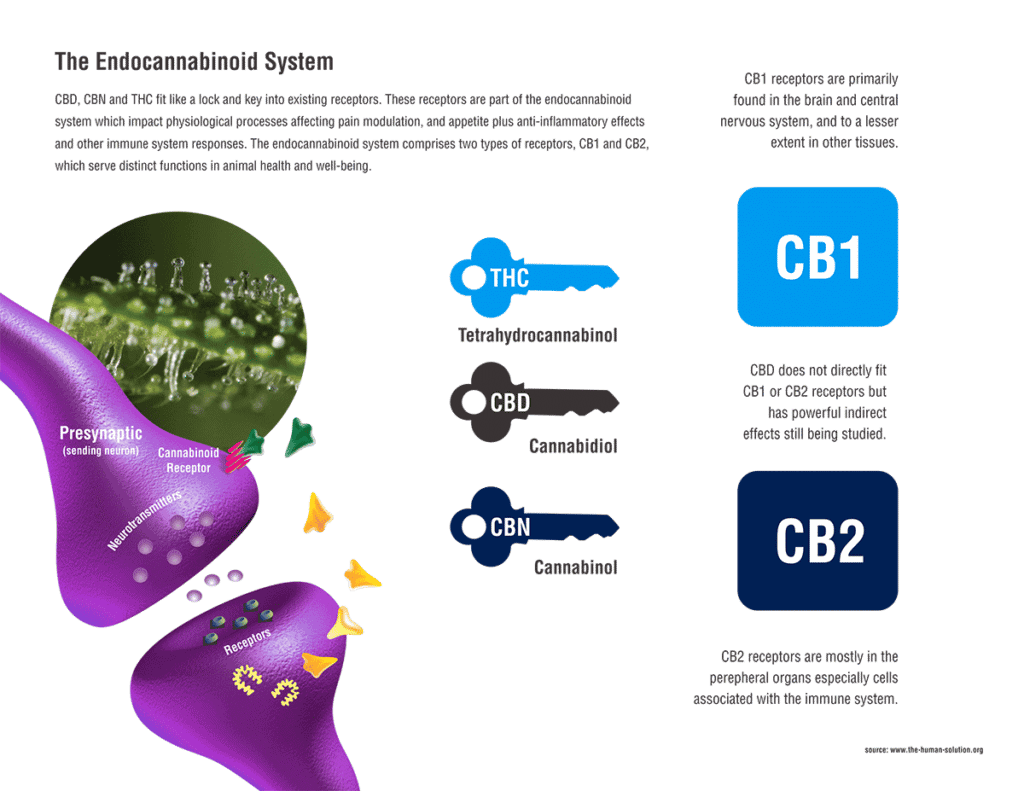
Many people ask: “How can CBD offer a wide variety of powerful results for things ranging from anxiety and neurodegeneration to even auto-immune disorders?” Surprisingly, The answer lies not so much in CBD (Cannabidiol) itself but how CBD as well as the other benefitual cannabinoids, terpenoids and flavornoids are working to augment the Endocannabinoid system (ECS).

Therefore, The Endocannabinoid System (endo meaning ‘within’) is a biological system focused on mediating physiological balance, fundamentally known as homeostasis. Some of the first homeostatic functions we often hear from clients are a better night’s sleep, a regulated appetite, and reduced anxiety. These are a few of the first indicators that CBD is kicking in and starting to help boost our natural production of endocannabinoids. Amazing Discovery The Endocannabinoid System

endocannabinoid system

The Sum Is Greater Than The Parts.

Full spectrum oleoresin the highest grade cannabis extract. Similarly, like an orchestra or assembly line, each part plays an essential role in the show. A drum solo is excellent, do not get us wrong, but no one wants to sit through a concert listening to only drums while the other band members decide to sit this one out. The Sum is greater than the parts.

For instance, having different natural elements in our CBD Genesis Blend breathes life into what is known as the “Entourage Effect. All naturally occurring cannabinoids, terpenes, and flavonoids blend synergistically, allowing their coexistence to be more beneficial than an individual component standing alone. These natural cannabinoids bind to receptors in our Endocannabinoids System.  All species with a vertebrate have an Endocannabinoid System.   Humans and animals, such as dogs, Cats, and Horses, all have endocannabinoid receptors. Read The Powerful Differences Between Oleoresin Extract and Isolated CBD

Bluegrass Hemp Oil - Hemp CBD Oil Store

 With two convenient locations in Lexington and Midway, KY, they make it easy to get the CBD products you need. If you are looking to buy CBD oil, this is the place. Not close to on of our locaton or a store that retails our products ? Try the Bluegrass Hemp oil online CBD store. We have extremaly fast shipping. Most orders ship the same day or within 24 house, excluding holidays.

Bluegrass Hemp Oil CBD Store Lexington, KY

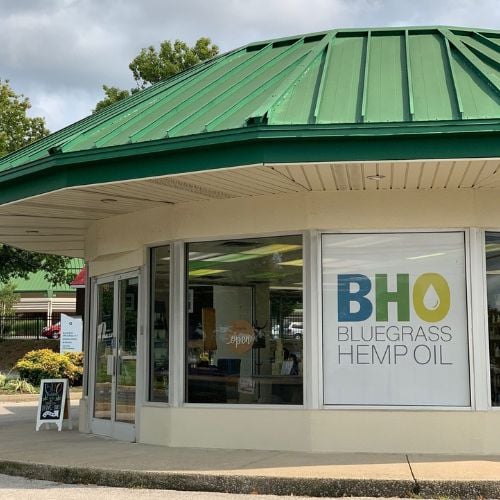
Bluegrass Hemp Oil CBD Store Lexington at 190 Lexington Green Circle in Lexington, KY, customers can find a wide variety of CBD products, including the Genesis Blend, Elderberry CBD Gummies, CBD for Dogs, and more. All in all, their knowledgeable staff can help you find the right product for your needs and provide helpful advice on how to use them.

Bluegrass Hemp Oil - Midway, KY

Bluegrass Hemp Oil CBD Store Midway Our second location is 230 N. Gratz Street in Midway, KY. This location offers a great selection of CBD products, including tinctures, edibles, topical creams, and pet treats. Again, the friendly staff will answer any questions and help you select the perfect product for your needs.

Altogether, no matter your location, Bluegrass Hemp Oil has real KY hemp and is a hemp oil store with what you need for CBD for pain relief and CBD for sleep. Shop Bluegrass Hemp Oil today and start feeling the benefits of CBD!

Touch or Click the image for directions to our Lexington, KY CBD Store

CBD Store

Touch or Click the image for directions to our Midway, KY CBD Store

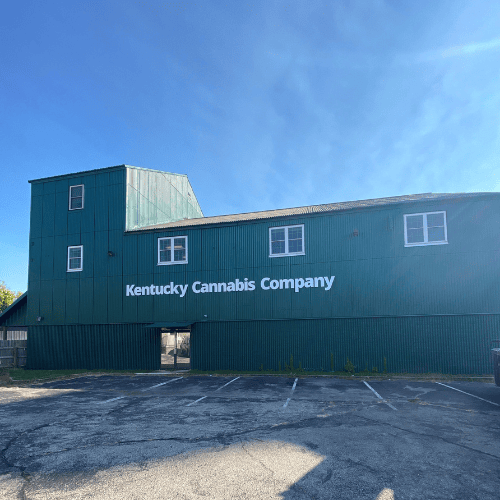
Kentucky Cannabis Company
These statements have not been evaluated by the Food and Drug Administration. This product is not intended to diagnose, mitigate, treat or prevent a specific disease or class of diseases.
Full Spectrum Living with CBD Podcast – Extraction Methods

Types of CBD – Full Spectrum Living with CBD Ep9

Types of CBD - Full Spectrum Living with CBD Ep-9

Adriane, Jessica, and Meredith discuss some of the different types of CBD being marketed today. They also discuss the differences in the extraction processes and what happens to CBD oil when it is made using these other methods. They cover commonly used terms, examine their meaning, and discuss how some mislead the CBD industry. After watching this, you will better understand the differences in CBD oil types and why they are not the same.

Types of CBD

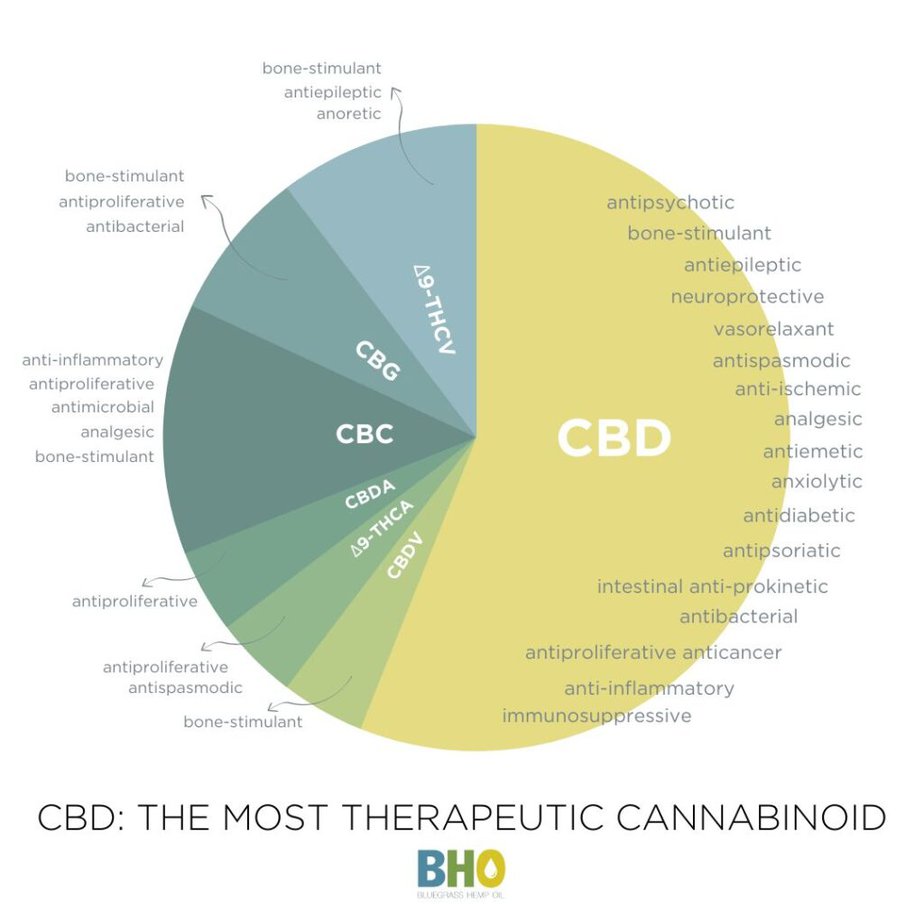
Studies show that  CBD Oil type full spectrum provides the best benefits for the endocannabinoid system in the human body. For CBD users to receive maximum benefits, CBD oils should contain a robust natural blend of minor cannabinoids other than cannabidiol, CBD. If CBD oil does not have these minor cannabinoids, how can the user benefit from them? They can’t. See the attached lab report to see the robust blend of cannabinoids that the Full Spectrum Genesis Blend CBD Oil Contains.

Lab tests show that no other CBD oil brand contains the robust natural blend of cannabinoids that our Genesis Blend CBD Oil contains. We advertise 10mg of CBD per ml, but the lab reports show 23mg of total cannabinoids per ml. These extra mg’s are the other minor cannabinoids that complete the entourage effect in full-spectrum CBD oil. Check our Types of CBD page and see the Genesis Blend lab results.

Top 5 Reasons we see people turning to CBD!

The benefits of CBD are proving to be an option for many issues, including preventative care and the potential for overall quality of life improvement. Supported by thousands of studies and backed by even more consumer testimonies, CBD is readily available across the United States and is commonly being used to address anxiety, secondary insomnia (the most common type and defined as a symptom or a side effect of something else, like pain, stress, anxiety, hormonal imbalance, or depression.)

Listen  to our most recent podcast to hear some of our favorite consumer testimonies and the Top 5 Reasons we see people turning to CBD! Top five reasons people turn to CBD

The Sum Is Greater Than The Parts.

Full spectrum oleoresin the highest grade cannabis extract. Similarly, like an orchestra or assembly line, each part plays an essential role in the show. A drum solo is excellent, do not get us wrong, but no one wants to sit through a concert listening to only drums while the other band members decide to sit this one out. The Sum is greater than the parts.

For instance, having different natural elements in our CBD Genesis Blend breathes life into what is known as the “Entourage Effect. All naturally occurring cannabinoids, terpenes, and flavonoids blend synergistically, allowing their coexistence to be more beneficial than an individual component standing alone. These natural cannabinoids bind to receptors in our Endocannabinoids System.  All species with a vertebrate have an Endocannabinoid System.   Humans and animals, such as dogs, Cats, and Horses, all have endocannabinoid receptors. Read The Powerful Differences Between Oleoresin Extract and Isolated CBD

Endocannabinoid system (ECS)

Many people ask: “How can CBD offer a wide variety of powerful results for things ranging from anxiety and neurodegeneration to even auto-immune disorders?” Surprisingly, The answer lies not so much in CBD (Cannabidiol) itself but how CBD is working to augment the Endocannabinoid system (ECS).

Therefore, The Endocannabinoid System (endo meaning ‘within’) is a biological system focused on mediating physiological balance, fundamentally known as homeostasis. Some of the first homeostatic functions we often hear from clients are a better night’s sleep, a regulated appetite, and reduced anxiety. These are a few of the first indicators that CBD is kicking in and starting to help boost our natural production of endocannabinoids. Amazing Discovery The Endocannabinoid System

FAQ Page -Frequently Asked Questions

We learn in the flow of work.  For instance, we constantly seek further understanding and ways to improve things. In other words, part of sharing information is just as much a part of our journey. Therefore, Find the answers to some common questions!  Above all, If the answer to your CBD question is not answered, send us a message from the contact section at the bottom of the page. THE FREQUENTLY ASKED QUESTIONS

Full Spectrum Living with CBD Podcast – Extraction Methods

Full Spectrum Living with CBD – Episode 3

Full Spectrum Living With CBD

 Part-1

Adriane Polyniak and Jessica Charles with co-host Meredith. The hosts of Full Spectrum Living with CBD discuss the Common delivery methods of CBD. As well as the pro and cons of them. Adriane and Jessica talk about children and edibles. 

More information is discussed in Full Spectrum Living With CBD Episode 3

Methods of CBD Consumption

So you’ve done your research on CBD and how it may help you. Sounds great! You can’t wait to place an order and get started right away! But wait… There are so many different products to choose from… *Anxiety sets in* “Sure could use some CBD right about now. How do I know what I need? Or which product is best for me?” The amount of information can be overwhelming. With so many products to choose from, a good differentiator is methods of CBD consumption. READ MORE About Methods of Consumption

CBD Absorption

Absorption and bioavailability are two popular terms in the CBD world. Many companies use “CBD absorption” in their marketing to confuse and coerce consumers to purchase. Some will even demonstrate their product dissolving into the water as proof that it will work better than others.

It’s nonsense.

No scientific study proves water-soluble products are more effective than botanical, fat-soluble ones. (If they say there is – ask them to see it! There has yet to be one company that can deliver.) It is simply a scare tactic that companies use to get your money and charge more for their product in the process. READ MORE about CBD Absorption.


Thank you for reviewing Full Spectrum Living with CBD Ep3. The following next couple of episodes for Full Spectrum Living With CBD will cover these Topics.

Google Scholar is an excellent research resource.

Would you be interested in some research on your own? Google Scholar is a great starting point.  Go to the central Google Scholar Page Here.   For an interest like the current Full Spectrum Living With CBD episode three. A search like the pharmacokinetics of cannabidiol hemp extract is good. One could also use the search term cannabidiol and anxiety. Starting here, you are just about assured you will find information.


PubMed

Another Place to research is the National Library of Medicine, PubMed.  Per the Pubmed website, PubMed® comprises more than 34 million citations for biomedical literature from MEDLINE, life science journals, and online books. Sources may include links to full-text content from PubMed Central and publisher websites.

On the PubMed website, if one wanted to search for topics related to the Endocannabinoids System, some good search options would include;

Here are the same two cases from the Google search.

Pharmacokinetics of cannabidiol hemp extract

cannabidiol and anxiety


Full Spectrum Living Bluegrass Hemp Oil
Full Spectrum Living With CBD Ep3 - Transcript

All right.

Welcome back to your next episode

of Full Spectrum Living with CBD.

I'm Meredith, your cohost here with Jessica and Adriane.

And today we have got a fantastic topic, one

that I'm sure so many people have questions about.

And it's really what type of CBD

delivery method is the best for me?

There are so many options out there as far

as how to really use CBD, and you guys

want to help people understand the best way to

pick the right delivery method for them.

So, Jessica, why don't you kick us off and give

us some ideas about what you can share today?

Yeah, sure.

Essentially, I guess, we found that there are so many

options that that's a really nice thing for the consumer,

but it can be a bit confusing as to what's

the best match for their particular symptoms.

So we kind of broke it down to a few categories,

list out some pros and cons, and offer that as information

for our clients and wanted to share it here.

So I guess to start, the general categories

are sublingual, capsules, edibles, topicals and smokable products.

Okay.

And just right off the bat, to make it very

simple, we find that the overwhelming majority of people need

sublingual, so that's the best match for them.

For one, it's generally less

expensive than other options.

It has an overall better impact through the whole body.

So can you even tell me what is sublingual?

I mean, somebody might not

even really understand that terminology.

So when you say sublingual, what do you mean? Yeah.

So it's like the most common, I guess,

form that you'll find CBD in right now.

It's like an oil or tincture or drops.

There's different terms that people use for it.

Sublingual means it's a kind of delivery method where

you just put it under your tongue and allow

it to hold 20 or 30 seconds up to

a minute, whatever, before swallowing it.

And because you're holding it under the tongue

where there are a lot of blood vessels,

you get a better absorption rate occurring and

a speedier delivery to the body. Okay.

So that's basically the most common way that you'll see

it on the market currently, which is good because it's

the most ideal way for most for most people.

So what about taste like, what can I expect

as far as is it going to taste terrible?

Well, taste might be very different depending

upon who you are, of course, depends

on the products that you're taking.

So a full spectrum product that has the naturally

occurring terpenes, it's going to taste like the plant.

It's going to taste like hemp.

So with the extraction method that's used, of

course, you can get something that tastes Hempy

but also tastes really kind of almost like

the Earth is in with it, too.

That's because the extraction method has

pulled some of the chlorophyll.

So it really depends upon the product.

So you'll find some that they may flavor with

peppermint or Orange and they're clear and it really

denotes the type of product that it is.

And, of course, I'm probably taking us way down in

the weeds, but with an isolate product, they can usually

flavor it with anything because it has no flavor whatsoever

other than the oil that it's in.

With full spectrum products that are

done using a hydrocarbon distillation, it'll

be very natural flavored, very old.

And then you'll have those that are probably done

through the larger way where it's done through where

you get some more of that Earth flavor more

the chlorophyll comes through with it.

So it really kind of depends.

And that's pretty easy to do. Right.

So I'm just going to put these drops under

my tongue, hold it there for a few seconds,

and then go about my day, right? Yes.

And I wanted to add to that.

Well, so Adriane used another term that I'm thinking maybe

some of our listeners may not understand, but terpenes are

essentially they're the agent that causes the flavor and the

taste and the smell of the product.

And they occur naturally in the cannabis plants.

They can be like a

different experience for different people.

Some people will taste our oil and get

a very lemon taste or pine taste or

more of an earthy taste or peppery taste.

And those are all different chemical terpenes

that are found in the plant, and

people just perceive that differently.

So your actual taste will vary

dependent on your taste buds.

But the reason that they're there in ours,

we've extracted them in a way that they

remain in our product on purpose because they're

really beneficial substances, kind of like the cannabinoids.

The terpenes offer a lot

of synergy and health benefits.

They kind of act as a catalyst

to essentially magnify the effects of cannabinoids.

And so we feel they're not just flavoring

agents, but really vital to the overall benefit.

Absolutely. Awesome.

Okay, so if I'm not going to take a

product sublingually, then what's kind of the next most

common way that I would use CBD?

Well, consumers will typically go to a capsule

or a soft gel, usually just because that's

more natural, that's more everyday people take capsules

and Softgels for a lot of different reasons.

So it becomes very natural.

It feels more normal in that sense.

Not ideal, honestly, because it takes a little bit

longer for it to get into your system.

It's not a bad delivery method.

Don't misunderstand me.

But it does take a little bit longer because

it has to go through that digestive tract.

And so the onset of the feelings of relief are delayed.

Okay.

But kind of portable, right?

I mean, it's easy to take a soft gel and put in my pocket

or have it in a little dish that I carry in my bag.

So ease of use is high, but maybe speed

of relief is on the lower side right? Absolutely.

When it comes to from a travel standpoint, if you're

going on vacation, it's a lot easier to throw some

capsules in a bag than it is to travel with

your oil because God forbid something happened while you're traveling.

But again, it comes down to when

do you want to see the results? Right.

We actually started creating capsules only after

some people reported not really being available

to the flavor of the extract.

That natural flavor.

And when you're giving it to a senior citizen or

quite possibly even a child with special needs, that flavor

and even the texture of just the oil, the flavor

may not even be what they don't like about it.

It could just be the texture of the oil.

Just giving them another delivery method to take

it can definitely be beneficial for those people.

I know it's made a really big difference.

Like, for example, with my sister that I spoke

about in a previous episode, she didn't really necessarily

mind the taste, but she didn't love it either.

And so she tends to prefer the capsules also because now

that she's back in school and more able to make decisions

for herself, she takes a capsule with her so that if

she has a really hard day, she can take one midday

and really help her to combat some stressors there.

So there's a lot of reasons, but I

think the nice thing is the convenience and

the downside is the lack of flexibility.

Some people find that ten milligram capsules

are a perfect match for them.

Some people need a bit more, but

20 is a bit too much almost.

It just depends on the person.

But the sublingual oils would offer

that variability a little easier. Okay. Good to know.

Good to know.

Tell me another popular delivery method.

I think you guys said there's about four or five

out there that you wanted to chat about, right?

I mean, I think our next one up would be topical.

Topicals are really comfortable entry point for

anyone who's really a bit more hesitant

for using cannabis or CBD.

We don't find a ton of people who just are

opposed to the idea of it, but using a topical

can be a softer entry point for them.

Allow them to get some experiences with it and

see if it's a good match for them.

It's also really nice for people who have

just like, there's just a shoulder injury that

they're dealing with or a knee issue.

Something that's really centralized just to one area is a

nice match for topicals because they can be a really

fast and effective pain reliever for a lot of people,

whereas some sublinguals are a great pain reliever.

But it does seem like the trend is

that they do tend to take a bit

longer than the topicals for their analgesic effect.

Got it.

So you are saying really like, if

I have something that's kind of systemic.

So if I'm faced with something that's more whole

body focus that's not related to sore joints or

muscles or an injury, then maybe those first two

delivery methods we talked about would be best.

But if I had to sore muscle, if I have an injury

to an area that I really want to focus on, that the

topical is a great way to get quick relief from using that.

Yeah.

And like Jessica said, for those that are maybe

a little weary but want to understand or experience

the benefits of CBD, it's a great way to

just kind of dip their toe in.

Also, what we found is the topical.

You may be using it for pain relief, but maybe you

got a bug bite or maybe your child bumped their head.

I know Jessica has actually used

this for this specific reason.

Your child has an alley and you place the Sav on there.

It does crazy things, like it'll reduce the inflammation

on bumps and bruises and on bug bites.

So while you may have been using it for that tennis

elbow, you've now found that it works for your kids.

Boo boos.

In my surprise, our relieving staff just on Mother's Day,

actually, I was doing a bit of laundry and a

B was somehow in my laundry and stung me.

It was a Hornet.

Oh, no, I got a Hornet thing.

And I immediately rubbed the relieving staff on it.

And it really was instant relief.

Like, I didn't expect complete instant relief.

And it was I had to reapply

it probably every 30 minutes or so.

But that was severe pain

that is immediately addressed completely.

And then it minimized the swelling as well.

I have allergic reactions where I swell really

large tube these things and mosquito bites, but

that just barely puffed up at all.

So I thought that was amazing.

And I sell this stuff, though. Yeah.

It's funny because Jessica and I often used to

when we used to be in the same building,

we used to joke like CBDs, like Windex.

I don't know if you remember the movie.

Oh, my gosh, Jessica, what's the name of the movie?

My Fat Creek Wedding on everything.

Like it fixes everything.

Honestly, that's what CBD feels like.

It really does. Yeah.

And you guys are saying, hey, it can't hurt.

So why wouldn't you try it? Right?

Why wouldn't you try it and see what happened?

So that's awesome. Yeah.

I think all of my relatives have gotten to the

point where they call me and anything's wrong and they

already know, like I'm going to say, well, try CBD.

Sure. Yeah.

That's so cool.

You've got sublingual, you've got soft

gels like capsules, you've got topicals.

What else is out there on the

market that people might be seeing?

So we can get a lot of

people coming in looking for edibles.

So that means especially when it comes to

children, they're looking for that easy delivery method,

something that is appealing to a child, they're

quite possibly even an adult.

I have adults looking for them, too, or CBD infused chocolate,

things that are quick and easy and on the go.

And Jessica said it best.

The thing with edibles is that

they're tasty and they're fun, right.

So it maybe makes it feel better like

you're getting a treat in addition to also

taking something that is therapeutic for you.

So with that, can we address really quick

how do you guys make recommendations for parents?

We've heard a lot about kids taking gummy bears and

infusing them with vodka and then passing them out on

the school bus and things along those lines.

So how do you guys help

or what education can you provide?

Tips can you provide?

Should people be thinking of their edibles?

Just like you would think of a bottle of Advil

Genesis Blend CBDa Oil Guide

Comparative Cannabinoid Guide

Genesis Blend CBDa Oil: CBD, CBDA, and the Raw Full-Spectrum Difference

Quick answer: Genesis Blend CBDa Oil is a raw, flower-focused full-spectrum hemp extract that keeps CBD and CBDA in the conversation. CBD is commonly discussed for steady endocannabinoid-system support, while CBDA is studied for absorption, COX-2 interaction, and raw cannabinoid activity.

Reviewed for product accuracy: Bluegrass Hemp Oil Quality Team, May 2026. Educational content only. This page is not medical advice.

The 2014 Kentucky Hemp History Behind Genesis Blend

Genesis Blend is not just a product name. It is tied to Bill Polyniak’s early work in Kentucky hemp and the practical problem that started his family’s hemp mission: repeatable, understandable dosing from a consistent full-spectrum extract.

The story began in 2009 with Bill’s search for better options for his son, Colten. When Kentucky reopened hemp cultivation through the pilot-program era, Bluegrass Hemp Oil and Kentucky Cannabis Company were part of the early movement that helped bring hemp back to the state. The WHAS11 Hemp for Hope coverage remains useful context for that early Kentucky hemp revival.

That history matters because the Genesis standard is process-oriented: flower-focused extraction, traceable sourcing, low-heat handling when raw cannabinoids matter, third-party testing, and Certificates of Analysis that help customers verify what is in the bottle.

Explore the Genesis Blend full-spectrum CBD oil hub

Founder Bio

About Bill Polyniak and the Genesis Blend Standard

Bill Polyniak is the founder of Bluegrass Hemp Oil and Kentucky Cannabis Company. His work began in Kentucky’s early hemp pilot-program years and grew into an education-first mission focused on full-spectrum hemp, transparent product quality, and helping families understand what they are buying.

For Genesis Blend CBDa Oil, Bill’s perspective is practical: preserve the raw cannabinoid conversation, keep product information understandable, and point shoppers toward verifiable details like the product label, CBD and CBDA content, THC information, lab testing, Certificates of Analysis, and safety guidance.

What Is the Difference Between CBD and CBDA?

Direct answer: CBDA is the raw acidic form of CBD found in hemp before heat changes the molecule. CBD is the decarboxylated form. Both belong in a full-spectrum cannabinoid discussion, but they are not identical in structure, absorption, or research focus.

Raw hemp naturally contains acidic cannabinoids, including CBDA. Heat, time, and processing can convert CBDA into CBD through decarboxylation. That is why process matters. A raw cannabinoid product must be handled differently than a heavily heated extract if the goal is to preserve CBDA.

For more background, review these cannabinoid education pages: cannabinoids, the difference between CBD and CBDA, and what CBDA is.

Is CBDA More Absorbable Than CBD?

Direct answer: Research suggests CBDA can show stronger oral absorption than CBD in some study models. That does not make it a cure or a replacement for medical care, but it does explain why raw cannabinoid preservation is a meaningful product-quality discussion.

Pharmacokinetic research has explored how acidic cannabinoids move through the body. A practical takeaway for shoppers is that raw cannabinoid claims should be backed by testing. If a company says a product contains CBDA, the COA should show CBDA and should match the product or batch.

Comparison point Genesis Blend dual-action profile Standard isolated CBD product
Cannabinoid profile Full-spectrum hemp extract with CBD and raw acidic cannabinoid context. Usually one primary cannabinoid, often CBD isolate.
Process priority Flower-focused extraction and low-heat awareness when CBDA preservation matters. Often built around purified CBD rather than raw cannabinoid preservation.
Verification step Review the COA for CBD, CBDA, THC, and contaminant-screening information. Review the COA for CBD potency and purity.

Why Do People Discuss CBDA and COX-2?

Direct answer: CBDA has been studied in preclinical research for COX-2 enzyme interaction. This is a mechanism discussion, not a promise that a CBD or CBDA product treats inflammation, pain, or disease.

The careful way to explain CBDA is to separate research mechanism from consumer claims. A selective COX-2 discussion can be useful for cannabinoid education, but product pages should avoid turning that mechanism into medical treatment language. Consumers should use lab reports, product labels, and clinician guidance when deciding whether any hemp product is appropriate.

CYP450 Enzyme Warning: The Grapefruit-Style Interaction Question

Direct answer: CBD and related cannabinoids can affect liver-enzyme pathways that process some medications. Ask a clinician before using CBD or CBDA if you take warfarin, heart medications, seizure medications, sedatives, or other prescriptions.

This warning matters because cannabinoids may affect CYP450 enzymes, including CYP3A4 and CYP2D6 pathways. A cautious product page should not say “safe for everyone.” It should tell customers to check medication questions with a qualified professional.

Also review THC levels. Hemp products should stay within the federal hemp limit of less than 0.3% delta-9 THC by dry weight. If intoxicating effects, drug testing, or medication interactions are a concern, review the COA before purchase and speak with the appropriate professional.

How to Verify Genesis Blend CBDa Oil With Lab Testing and COAs

Direct answer: Use the Certificate of Analysis to confirm cannabinoid content, including CBD, CBDA, and THC. A strong COA should connect to the product or batch and help you verify potency and quality details.

For Genesis Blend CBDa Oil, the COA is the proof point. Look for cannabinoid results, THC disclosure, batch or lot information, test date, and any available contaminant screening. Do not rely only on front-label language.

Learn about CBD lab testing
View Certificates of Analysis

Related Cannabinoid Education

Use these resources to understand the science and product-quality questions behind Genesis Blend CBDa Oil.

Genesis Blend CBDa Oil FAQs

What is Genesis Blend CBDa Oil?

Genesis Blend CBDa Oil is a full-spectrum hemp extract focused on both CBD and CBDA. It is designed for customers who want a raw cannabinoid discussion, batch testing, COA access, and a traceable Kentucky hemp story.

How long does raw hemp oil take to kick in?

Timing varies by product, serving amount, food, metabolism, and individual response. Oils are often used because they are easier to measure than many edible formats. Follow the product label and keep notes when starting any new hemp product.

Why is my CBD oil spicy?

A natural hemp extract can taste earthy, peppery, or spicy because of plant compounds and the carrier formula. Flavor varies by extract type, terpene profile, and ingredient choices. Review the label if you have ingredient sensitivities.

Which is better, CBD or CBDA?

CBD and CBDA are different cannabinoids, so “better” depends on what you are comparing. CBDA is studied for raw cannabinoid absorption and COX-2 interaction, while CBD has a larger consumer-use and research history. Use the COA and product label to compare them accurately.

Where can I find the COA for Genesis Blend CBDa Oil?

Start with the Certificates of Analysis page. Look for product or batch details that match the bottle you are reviewing.

Bottom Line: Choose Raw Cannabinoid Products You Can Verify

Genesis Blend CBDa Oil is strongest as an educational and verification-first product page: raw cannabinoid preservation, CBD and CBDA comparison, Kentucky hemp history, lab testing, COAs, and clear safety notes.

View Genesis Blend CBDa Oil
Compare Genesis Blend Options

Sources and Further Reading

Disclaimer: This content is educational and product-selection focused. It is not medical advice. Bluegrass Hemp Oil products are not intended to diagnose, treat, cure, or prevent disease. Talk with a qualified healthcare professional before using cannabinoid products if you take medication, have a medical condition, are pregnant or nursing, or have drug-testing concerns.