Indica vs Sativa: Hemp, Marijuana, Cannabinoids, and COAs

Cannabis education, product labels, and transparency

Indica vs Sativa: Hemp, Marijuana, Cannabinoids, and What Labels Mean

Indica and sativa are widely used cannabis terms, but they are often treated as effect categories when they are better understood as visual, historical, and morphological labels. A more useful way to evaluate hemp-derived CBD products is to look at cannabinoids, terpenes, THC content, product labels, Certificates of Analysis, and lab testing.

By Bluegrass Hemp Oil Editorial Team
Last updated May 20, 2026
Educational article
Important safety note: This article is for educational purposes only and is not medical advice. Bluegrass Hemp Oil products are not intended to diagnose, treat, cure, or prevent disease. CBD may interact with medications and may not be appropriate for everyone. Full-spectrum CBD products may contain trace THC. Speak with a licensed healthcare professional before using CBD if you take medication, are pregnant or nursing, have a medical condition, or are subject to drug testing.

Quick answer

The Better Way to Understand Indica, Sativa, Hemp, and Marijuana

01

Both hemp and marijuana are cannabis

Hemp and marijuana are both forms of cannabis. Federal hemp rules use THC compliance to separate legal hemp from cannabis treated as marijuana under federal hemp rules.

02

Hemp is commonly CBDa or CBD dominant

Botanically and chemically, hemp-type cannabis is often selected for CBDA and CBD dominance rather than high THCA or THC expression.

03

Marijuana is commonly THCa or THC dominant

Marijuana, also called drug-type cannabis in some scientific contexts, is typically selected for THCA and THC dominance.

04

Sativa and indica are not effect guarantees

Sativa and indica labels should not be used to promise relaxation, energy, sleep support, anxiety relief, pain relief, or medical benefit.

05

Plant labels do not replace testing

Product-specific labels and lab reports are more useful than plant-type marketing terms when reviewing CBD amount, THC content, ingredients, and batch details.

06

COAs support transparency

Certificates of Analysis can support product transparency, but they do not prove that CBD treats symptoms, conditions, or disease.

Classification, not a promise

What Indica and Sativa Actually Describe

Indica and sativa are historical cannabis terms that are often used to describe plant appearance, growth traits, leaf shape, plant height, and breeding history. In consumer marketing, these labels are sometimes used as shorthand for expected experiences. That shortcut can be misleading.

Modern cannabis and hemp products should be evaluated by chemistry and transparency. A product label, cannabinoid panel, terpene information, THC content, serving details, ingredients, and a batch-specific Certificate of Analysis are more useful than an indica or sativa label.

For deeper background on cannabis compounds, learn about cannabinoids in hemp and review Bluegrass Hemp Oil terpene education.
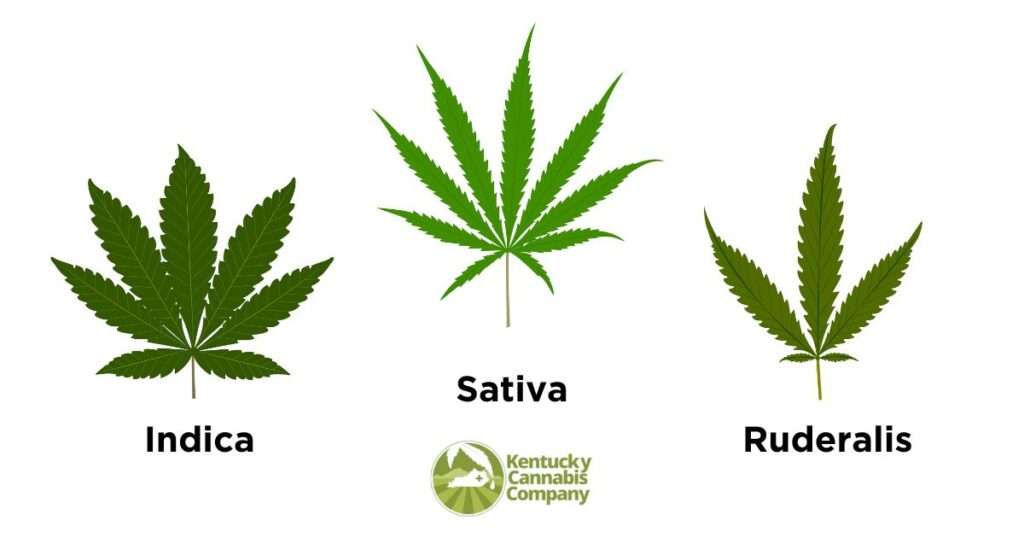
Cannabis leaf morphology comparison for indica sativa and ruderalis
Leaf-shape comparisons can be useful for plant education, but they do not replace product-specific cannabinoid and THC testing.

Sativa vs indica chart

What the Labels Can and Cannot Tell You

Term Useful For Not Reliable For What to Check Instead
Sativa Historical classification, plant shape, leaf structure, growth habit, and breeding context. Predicting energy, focus, anxiety relief, pain relief, sleep support, or medical benefit. Cannabinoids, terpenes, THC content, serving size, ingredients, product label, and COA.
Indica Historical classification, shorter or bushier plant descriptions, broader leaf traits, and morphology. Predicting relaxation, sedation, anxiety relief, pain relief, sleep support, or medical benefit. Cannabinoid panel, terpene panel, THC content, product directions, batch number, and lab report.
Hybrid Describing mixed breeding background or blended visual traits. Guaranteeing a balanced experience or specific outcome. Product-specific testing and a clear Certificate of Analysis.
Hemp-type cannabis Describing cannabis selected for hemp use and, often, CBDA or CBD dominance. Assuming THC-free status or assuming any medical effect. THC content, full-spectrum status, COA, lab-testing date, and warnings.
Marijuana or drug-type cannabis Describing cannabis typically selected for THCA or THC dominance. Assuming every product has the same chemistry or effect profile. State rules, THC amount, cannabinoid profile, terpene profile, and product-specific testing.

Legal plus botanical framing

Hemp vs Marijuana: The Legal Threshold Is Not the Whole Botanical Story

Legal hemp is defined by THC compliance. Under U.S. federal hemp rules, hemp is cannabis that meets the applicable THC threshold, and cannabis above that threshold is treated as marijuana under federal hemp rules. That legal distinction matters, but it is not the full botanical or chemical story.

Botanically and chemically, hemp-type cannabis is usually better understood as CBDa or CBD-dominant cannabis. Marijuana, or drug-type cannabis, is usually better understood as THCa or THC-dominant cannabis. These patterns are driven largely by genetics and cannabinoid synthase expression, including the plant's tendency to produce more CBDA or more THCA from shared cannabinoid precursors.

Plain-language takeaway: Legal hemp is defined by THC compliance. Botanical hemp is commonly CBDa or CBD dominant. Marijuana is commonly THCa or THC dominant. Both are cannabis, and both can show sativa-like or indica-like visual traits.

Cannabinoid chemistry

CBDA, THCA, and Why Genetics Matter

CBDA and CBD dominance

Hemp-type cannabis is commonly selected for a cannabinoid profile dominated by CBDA in the plant and CBD after processing or decarboxylation. This does not mean every hemp product is THC-free, and it does not mean a product has a medical effect.

THCA and THC dominance

Drug-type cannabis is commonly selected for a cannabinoid profile dominated by THCA in the plant and THC after processing, heating, or decarboxylation. THC content should always be reviewed through product-specific labeling and testing.

Cannabis plants make cannabinoids through biochemical pathways. CBDA and THCA are produced from shared cannabinoid precursors, and the plant's genetics help determine which acidic cannabinoid becomes dominant. That is why cannabinoid profiles and lab reports matter more than broad indica or sativa language.

For a broader introduction, read the endocannabinoid system guide. For product-level quality questions, read the CBD quality guide.

YMYL-safe consumer guidance

Why Indica and Sativa Should Not Be Used as Medical Categories

Indica and sativa terms should not be used to claim that a product will produce specific effects such as relaxation, energy, sleep support, anxiety relief, pain relief, or medical benefit. Those outcomes depend on many factors, including cannabinoid content, THC exposure, serving size, product format, other ingredients, medication use, health history, and individual response.

Bluegrass Hemp Oil products are not intended to diagnose, treat, cure, or prevent disease. If you take medication, use alcohol or sedating products, are pregnant or nursing, have a medical condition, or are subject to drug testing, speak with a licensed healthcare professional before using CBD.

Review CBD medication interaction guidance

Product transparency checklist

What to Check Before Choosing a Hemp-Derived CBD Product

What to Check Why It Matters
CBD amount per serving Helps you understand the product label and compare formats.
Total CBD per package Helps compare products without relying on marketing terms.
THC content Full-spectrum CBD products may contain trace THC.
Cannabinoid profile Shows whether a product is CBD dominant and what other cannabinoids are reported.
Terpene information Can describe aroma-related compounds, but should not be used as medical proof.
Ingredient list Helps identify carrier oils, allergens, sweeteners, flavors, and additives.
Batch number Should match the Certificate of Analysis for the product batch.
Certificate of Analysis Supports cannabinoid and testing transparency, but does not prove medical effectiveness.
Lab-testing date Helps confirm product-specific testing details.
Warnings and directions Responsible products include clear use directions and safety cautions.

Bluegrass Hemp Oil trust module

Our Approach to Cannabis and CBD Transparency

Product labels

Review serving information, THC content, ingredients, warnings, and directions before choosing a CBD product.

Read the CBD product label guide

Certificates of Analysis

Use batch-specific lab reports to review cannabinoid content, THC levels, and available testing details.

View Bluegrass Hemp Oil Certificates of Analysis

Lab testing

Understand what lab testing can and cannot tell you about cannabinoid content and product transparency.

Learn about CBD lab testing

Quality standards

Review how Bluegrass Hemp Oil approaches hemp sourcing, product education, and customer support.

Review Bluegrass Hemp Oil quality standards

Related education

Related CBD and Cannabis Transparency Resources

Frequently asked questions

Indica, Sativa, Hemp, Marijuana, and CBD Product Labels

What is the real difference between indica and sativa?

Indica and sativa are historical and visual cannabis labels. They may describe plant structure, leaf shape, growth pattern, or breeding history, but they are not reliable categories for predicting effects or medical outcomes.

Does indica always mean relaxing and sativa always mean energizing?

No. Those effect claims are marketing shortcuts, not dependable scientific rules. Cannabinoid content, terpene profile, THC amount, product format, serving size, and individual factors matter more than an indica or sativa label.

Are hemp and marijuana both cannabis?

Yes. Hemp and marijuana are both cannabis. Under U.S. hemp rules, legal hemp is defined by THC compliance, while marijuana is cannabis above the federal hemp THC threshold.

Is the 0.3% THC threshold the whole difference between hemp and marijuana?

No. The 0.3% THC threshold is the legal distinction used for federal hemp compliance. Botanically and chemically, hemp-type cannabis is commonly CBDa or CBD dominant, while marijuana or drug-type cannabis is commonly THCa or THC dominant.

Can hemp have sativa-like or indica-like traits?

Yes. Hemp-type cannabis and marijuana-type cannabis can both show sativa-like or indica-like visual traits. Those visual traits do not prove cannabinoid profile, THC content, or product effects.

What are CBDA and THCA?

CBDA and THCA are acidic cannabinoid forms produced by cannabis plants. Heat, time, and processing can convert CBDA toward CBD and THCA toward THC. The plant's genetics and cannabinoid synthase expression influence which cannabinoids dominate.

Why do product labels matter more than indica or sativa terms?

A label can show CBD amount, THC content, ingredients, directions, warnings, batch information, and product format. Indica and sativa terms do not provide that level of product-specific transparency.

Why do Certificates of Analysis matter?

A Certificate of Analysis can help customers review cannabinoid content, THC levels, batch information, and available lab-testing details. COAs support transparency, but they do not prove medical effectiveness.

Can full-spectrum CBD contain THC?

Yes. Full-spectrum CBD products may contain trace THC. Review the product label and Certificate of Analysis before choosing a product, especially if THC exposure matters to you.

Can CBD affect a drug test?

CBD itself is not typically the target of standard drug tests, but full-spectrum CBD products may contain trace THC. No CBD company should guarantee a drug-test outcome.

Are retail CBD products FDA-approved to treat medical conditions?

Retail CBD products are not FDA-approved to diagnose, treat, cure, or prevent disease. Speak with a licensed healthcare professional before using CBD if you take medication, are pregnant or nursing, have a medical condition, or are subject to drug testing.

What should I check instead of relying on indica or sativa marketing?

Review cannabinoids, terpenes, THC content, serving information, ingredients, product directions, warnings, batch number, Certificates of Analysis, lab-testing date, and company contact information.

Sources and references

Authoritative References Used for This Guide

This article is based on public cannabis, hemp, CBD safety, and product-testing information from government, academic, and peer-reviewed sources. These sources are included for education and do not make Bluegrass Hemp Oil products medical products.

CBD and Stress: Safety, Research Limits, Labels, and COAs

CBD Education • Safety First • Product Transparency

CBD and Stress: Safety, Research Limits, Labels, and COAs

Many adults search for CBD when they are looking for ways to support their daily routines during stressful seasons. Before choosing a CBD product, it is important to understand what research does and does not prove, how CBD differs from THC, what side effects are possible, and why product labels, Certificates of Analysis, and lab testing matter.

Educational notice: This article is for educational purposes only and is not medical advice. Bluegrass Hemp Oil products are not intended to diagnose, treat, cure, or prevent stress, anxiety, depression, sleep disorders, PTSD, mood disorders, pain, inflammation, or any disease. CBD may interact with medications and may not be appropriate for everyone. Speak with a licensed healthcare professional before using CBD if you take medication, are pregnant or nursing, have a medical condition, or are subject to drug testing.
Author: Bluegrass Hemp Oil Editorial Team
Last updated: May 19, 2026
Review note: Educational content, not a medical diagnosis or treatment guide.

What Is Stress?

Stress is a normal physical and emotional response to challenges, deadlines, uncertainty, or pressure. Occasional stress is common, but ongoing or overwhelming stress can affect sleep, focus, relationships, and overall health.

Stress is often connected to external pressure or life events. Anxiety can persist even when no immediate threat is present. This page does not diagnose stress, anxiety, depression, or any mental health condition. If symptoms feel persistent, intense, or disruptive, speak with a qualified healthcare professional.

For additional context, review the NIMH fact sheet on stress and anxiety and the NIMH overview of anxiety disorders.

Does CBD Help With Stress?

CBD should not be marketed as a treatment for stress, anxiety, depression, sleep disorders, PTSD, or mood disorders. Research is still developing, and consumer experiences vary.

Retail CBD products are not FDA-approved to treat stress or anxiety. CBD research is ongoing, and product labels, customer stories, and Certificates of Analysis should not be used as proof that a product has medical effects.

Anyone with persistent stress, anxiety, depression, sleep issues, or mood concerns should speak with a healthcare professional. For consumer safety context, review the FDA guidance on products containing cannabis or CBD.

Everyday Stress Support Should Start With Healthy Habits

CBD should not replace healthy stress-management habits, mental health support, medical care, sleep routines, movement, nutrition, or professional guidance. If you are using CBD as part of a broader wellness routine, review safety considerations first.

Take breaks from news or social media.
Practice breathing exercises, stretching, or meditation.
Keep a journal or gratitude list.
Spend time outdoors.
Connect with supportive people.
Prioritize steady sleep routines.
Move your body regularly.
Eat balanced meals and limit alcohol.
Speak with a healthcare professional when stress feels persistent or disruptive.

The CDC guidance on managing stress includes practical steps such as taking breaks, breathing, journaling, spending time outdoors, and connecting with others.

CBD Side Effects and Safety Cautions

CBD may cause side effects and may not be appropriate for everyone. Product quality, product type, other ingredients, medications, alcohol use, health history, pregnancy or breastfeeding status, and THC exposure all matter.

Safety Topic What to Know
Drowsiness CBD may cause sleepiness or drowsiness in some people.
Mood changes Some people may notice irritability, agitation, or other mood changes.
Digestive effects Diarrhea or appetite changes are possible.
Liver concerns People with liver issues or liver-affecting medications should ask a clinician before using CBD.
Medication interactions CBD may interact with medications, herbs, supplements, or alcohol.
Pregnancy and breastfeeding CBD should be avoided during pregnancy or breastfeeding unless directed by a qualified healthcare professional.
THC exposure Full-spectrum CBD products may contain trace THC.
Product quality Certificates of Analysis and lab testing help customers review product details, but they do not prove medical effectiveness.

For additional safety information, review CBD medication interaction guidance and the FDA guidance on cannabis, CBD, pregnancy, and breastfeeding.

CBD, Medications, Alcohol, and Drowsiness

Can CBD interact with medication? Yes. CBD may interact with medications and may increase drowsiness when combined with alcohol or sedating products.

People taking prescription medication, over-the-counter medication, herbs, supplements, sleep aids, sedatives, antidepressants, anti-anxiety medications, seizure medications, blood thinners, or liver-affecting drugs should speak with a doctor or pharmacist before using CBD.

Do not stop, reduce, replace, or combine medications with CBD without medical guidance. Start with CBD medication interaction guidance before choosing a CBD product.

Full-Spectrum CBD, THC, and Drug Testing

Can full-spectrum CBD contain THC? Yes. Full-spectrum CBD products may contain trace THC. Hemp-derived does not automatically mean THC-free.

Can CBD affect a drug test? CBD itself is not typically the target of standard drug tests, but full-spectrum CBD may contain trace THC. People subject to workplace, athletic, professional, licensing, probation, or other testing should review product labels and Certificates of Analysis carefully before using CBD. No CBD company should guarantee drug-test outcomes.

To review these topics in more detail, see full-spectrum CBD product information, the difference between CBD and THC, and CBD and drug testing considerations.

What to Check Before Choosing a CBD Product

Product-transparency checks are especially important when researching CBD and stress-related questions because the topic can overlap with medication use, alcohol use, sleep concerns, mental health, and drug testing.

What to Check Why It Matters
CBD amount per serving Helps users understand product strength.
Total CBD per package Helps compare formats.
THC content Full-spectrum CBD may contain trace THC.
Product type Oils, gummies, capsules, and topicals are used differently.
Ingredient list Helps identify allergens, sweeteners, carrier oils, or additives.
Batch number Should match the Certificate of Analysis.
Certificate of Analysis Supports cannabinoid and testing transparency.
Lab-testing date Helps verify product-specific testing.
Warning language Responsible brands include safety cautions.
Contact information Makes product-specific questions easier.

Helpful next steps include the CBD product label guide, Bluegrass Hemp Oil Certificates of Analysis, CBD lab testing explanation, and CBD quality guide.

CBD Product Formats to Review Carefully

Different CBD product formats have different labels, ingredients, serving information, and product-use directions. Review the label and Certificate of Analysis before choosing any hemp-derived CBD product.

Product Format Safe Description
CBD oil Review CBD per serving, carrier oil, THC content, ingredients, label, and Certificate of Analysis.
CBD gummies Review CBD per gummy, sweeteners, ingredients, THC content, label, and Certificate of Analysis.
CBD capsules Review CBD per capsule, capsule ingredients, THC content, label, and Certificate of Analysis.
CBD topicals Review external-use directions, ingredients, skin sensitivity, label, and Certificate of Analysis.

For a neutral overview of common formats, review CBD oil, gummies, and capsules compared. For general usage education that is not specific to stress, review the full CBD oil use guide.

How Cannabinoids and the Endocannabinoid System Fit Into CBD Education

CBD is one of many cannabinoids found in hemp. Consumers often see terms such as cannabinoids, endocannabinoid system, full-spectrum CBD, THC, and terpenes when comparing products.

These education topics can help shoppers understand labels and COAs, but they should not be turned into claims that a retail CBD product treats stress, anxiety, sleep problems, mood concerns, or disease. Review cannabinoids in hemp and the endocannabinoid system guide for background education.

Bluegrass Hemp Oil’s Approach to CBD Transparency and Safety Education

Bluegrass Hemp Oil focuses on CBD education, product transparency, lab testing, Certificates of Analysis, product labels, THC information, and customer support. These resources help adults review CBD product details before choosing hemp-derived CBD products.

CBD Product Labels

Understand CBD amount per serving, THC content, ingredients, and warning language before choosing a CBD product.

Read the CBD product label guide

CBD Lab Testing

Learn what lab testing can show about cannabinoid content, THC levels, and product transparency.

Learn about CBD lab testing

CBD Safety and Medication Guidance

Review why medication, alcohol, drowsiness, liver, pregnancy, and drug-testing questions should be discussed with a licensed healthcare professional.

Review CBD medication interaction guidance

To review broader company practices, visit Bluegrass Hemp Oil quality standards and the Bluegrass Hemp Oil process.

Related CBD Safety and Product Transparency Resources

Have product-specific questions?

Bluegrass Hemp Oil can help with label, COA, lab-testing, and product-format questions. Medical questions should be directed to a licensed healthcare professional.

Contact Bluegrass Hemp Oil with CBD product questions

Frequently Asked Questions About CBD and Stress

Does CBD help with stress?

CBD should not be marketed as a treatment for stress, anxiety, depression, sleep disorders, or mood disorders. Research is still developing, and consumer experiences vary.

Is CBD approved by FDA for stress?

No. FDA has not approved retail CBD products to treat stress, anxiety, depression, sleep problems, or mood disorders.

Is stress the same as anxiety?

No. Stress is often a response to an external situation, while anxiety can persist even when no immediate threat is present. If symptoms interfere with daily life, speak with a qualified healthcare professional.

Can CBD interact with medication?

Yes. CBD may interact with medications and may not be appropriate for everyone. Speak with a doctor or pharmacist before using CBD if you take prescription or over-the-counter medications.

Can CBD make you sleepy?

Yes. CBD may cause drowsiness or sleepiness in some people, and the risk may increase with alcohol, sedatives, sleep aids, or other products that slow brain activity.

Can full-spectrum CBD contain THC?

Yes. Full-spectrum CBD products may contain trace THC. Review the product label and Certificate of Analysis before use.

Can CBD affect a drug test?

CBD itself is not typically the target of standard drug tests, but full-spectrum CBD may contain trace THC. People subject to testing should review THC content and Certificates of Analysis carefully.

Is CBD safe during pregnancy or breastfeeding?

CBD should be avoided during pregnancy or breastfeeding unless directed by a qualified healthcare professional.

What should I check before choosing a CBD product?

Review CBD amount per serving, THC content, ingredients, batch number, Certificate of Analysis, lab-testing information, warning language, and company contact information.

What are healthy ways to manage stress?

Healthy stress-management habits may include breathing exercises, movement, sleep routines, journaling, time outdoors, social support, limiting alcohol, and speaking with a healthcare professional when needed.

Visible External Source Links

These are the external source URLs in this article, repeated here as high-contrast buttons with raw URLs so they remain visible after the Divi import.

Sources and Further Reading

  • FDA consumer update on cannabis and CBD product questions
  • FDA guidance on cannabis, CBD, pregnancy, and breastfeeding
  • CDC guidance on healthy ways to cope with stress
  • NIMH fact sheet explaining stress and anxiety
  • NIMH overview of anxiety disorders

What Is Homeostasis? How Your Body Maintains Balance

What Is Homeostasis? How Your Body Maintains Balance

Biology-first educational guide

What Is Homeostasis? How Your Body Maintains Balance

Homeostasis is your body’s ability to maintain internal stability even when the outside world changes. Body temperature, blood sugar, hydration, pH, oxygen levels, and hormones all depend on feedback systems that monitor change and help bring the body back toward a normal working range.

Author: Bluegrass Hemp Oil Editorial Team  |  Reviewed for product transparency: Bluegrass Hemp Oil Editorial Team  |  Last updated: May 19, 2026
Educational note
This article is for educational purposes only and is not medical advice. Bluegrass Hemp Oil products are not intended to diagnose, treat, cure, or prevent stress, anxiety, sleep problems, pain, inflammation, immune conditions, hormone disorders, digestive issues, or any disease. Speak with a licensed healthcare professional before using CBD if you take medication, are pregnant or nursing, have liver concerns, have a medical condition, or are shopping for a child or dependent.

What Is Homeostasis in Simple Terms?

Homeostasis means keeping the body’s internal conditions within a healthy working range. It does not mean the body stays perfectly still. It means the body constantly adjusts.

When temperature, blood sugar, hydration, or other internal conditions move too far in one direction, the body uses feedback systems to help bring them back toward a normal range. Organs, hormones, nerves, glands, and cells all contribute to this ongoing regulation.

Quick definition

Homeostasis is internal stability through constant adjustment. The body senses change, compares it with a working range, and responds through coordinated systems.

  • Internal stability, not perfect stillness.
  • Feedback systems detect change.
  • Body systems respond together.
  • The goal is a normal working range.

Why Homeostasis Matters

Homeostasis helps cells and organs function properly by keeping internal conditions stable enough for normal biological processes. Enzymes, nerves, muscles, hormones, and organs work best within specific ranges.

Cells need stable conditions

Temperature, pH, oxygen, glucose, fluids, and electrolytes all affect how cells work.

Organs coordinate responses

The brain, glands, kidneys, lungs, heart, digestive tract, and blood vessels all help regulate internal conditions.

Disruption can signal risk

Illness, injury, dehydration, infection, hormone problems, and blood sugar issues can disrupt homeostasis and may require professional care.

Examples of Homeostasis in the Body

Homeostasis can be easier to understand when you look at everyday body functions. These examples show how the body detects change and responds.

Homeostasis Example What Changes How the Body Responds
Body temperature Heat or cold exposure Sweating, shivering, and blood vessel changes.
Blood sugar Eating or fasting Insulin and glucagon help regulate glucose.
Hydration Fluid loss or fluid intake Thirst, kidney regulation, and urine concentration.
Blood pH Acid-base changes Breathing rate and kidney function help regulate balance.
Calcium levels Calcium rises or falls Hormones help regulate calcium storage and release.
Blood pressure Position, fluid levels, activity, or stress The heart, blood vessels, kidneys, and hormones respond.

What Is a Negative Feedback Loop?

A negative feedback loop detects a change, compares it to a normal range, and activates a response that moves the body back toward balance.

1. Stimulus

A body condition changes.

2. Sensor

The body detects the change.

3. Control center

The brain, endocrine system, or another control system interprets the change.

4. Effector

Muscles, glands, organs, or cells respond.

5. Correction

The response helps return the body toward balance.

How the Body Regulates Temperature

When body temperature rises or falls, the nervous system helps trigger responses such as sweating, shivering, and changes in blood flow to the skin.

  • Heat can trigger sweating.
  • Cold can trigger shivering.
  • Blood vessels can widen or narrow.
  • The nervous system helps coordinate the response.

How the Body Regulates Blood Sugar

Blood sugar is regulated through hormones such as insulin and glucagon, which help move glucose into storage or release it when needed.

  • Blood sugar often rises after meals.
  • Insulin helps cells use or store glucose.
  • Blood sugar can fall during fasting.
  • Glucagon helps release stored glucose.

Blood sugar concerns should be discussed with a licensed healthcare professional.

Body Systems That Help Maintain Homeostasis

Homeostasis is not handled by one organ alone. Multiple body systems communicate and adjust together.

Body System Role in Homeostasis
Nervous system Detects changes and coordinates fast responses.
Endocrine system Uses hormones to regulate longer-term responses.
Digestive system Breaks down food and supports nutrient availability.
Respiratory system Helps regulate oxygen, carbon dioxide, and pH.
Circulatory system Moves oxygen, nutrients, hormones, and heat.
Urinary system Helps regulate fluid balance, electrolytes, and waste removal.
Immune system Responds to threats while helping protect tissue integrity.
Skeletal system Stores minerals and supports blood cell production.

What Happens When Homeostasis Is Disrupted?

Disrupted homeostasis may happen with illness, dehydration, injury, extreme temperatures, hormone problems, blood sugar problems, medication effects, poor nutrition, infection, or other medical conditions.

When to seek professional guidance
New, severe, persistent, or unexplained symptoms should be discussed with a licensed healthcare professional. This article is educational and is not designed to diagnose a health condition.

Homeostasis and the Endocannabinoid System

The endocannabinoid system, or ECS, is a cell-signaling system studied for its role in physiological regulation. Researchers continue to study how endocannabinoids, receptors, and related enzymes influence processes connected to internal balance.

ECS education should not be turned into claims that retail CBD products restore homeostasis or treat disease. For a deeper introduction, read the endocannabinoid system guide, learn about cannabinoids in hemp, and learn about hemp terpenes.

Does CBD Restore Homeostasis?

Retail CBD products should not be described as restoring homeostasis or treating imbalance. CBD and the ECS are topics of scientific interest, but research should not be converted into broad product promises.

Bluegrass Hemp Oil products are not FDA-approved to diagnose, treat, cure, or prevent disease. Before using a CBD product, review the label, THC content, serving directions, warnings, batch number, Certificate of Analysis, and lab-testing information.

CBD Safety: What to Know Before Use

CBD is not risk-free and may not be appropriate for everyone. Safety questions are especially important for people who take medications, are pregnant or breastfeeding, have liver concerns, are subject to drug testing, or are shopping for a child or dependent.

Medication and side-effect cautions

  • CBD may interact with medications, herbs, or supplements.
  • CBD may increase drowsiness when combined with alcohol or sedating drugs.
  • Possible side effects may include drowsiness, digestive changes, appetite changes, irritability, agitation, or mood changes.
  • Do not stop, reduce, or change medication without professional guidance.

For more detail, review CBD medication interaction guidance.

THC, testing, and special situations

  • Full-spectrum CBD may contain trace THC.
  • THC may matter for workplace, athletic, licensing, probation, or other testing.
  • CBD use during pregnancy or breastfeeding is not recommended unless directed by a qualified healthcare professional.
  • Keep CBD products away from children.

You can also understand the difference between CBD and THC and learn whether CBD can matter for drug testing.

Product Transparency: Labels, COAs, and Lab Testing

Product labels and Certificates of Analysis help customers review CBD amount, THC content, ingredients, batch information, and available lab-testing data. They support transparency, but they do not prove that a CBD product restores homeostasis, improves health, or treats symptoms.

CBD amount and serving directions

Use the label to understand the product format, serving information, warnings, and ingredients.

THC content and batch number

Match the label and batch information to the available Certificate of Analysis.

Company quality standards

Clear contact information, testing access, and transparent standards help customers ask better questions.

Helpful resources include the CBD product label guide, CBD lab testing education, Bluegrass Hemp Oil Certificates of Analysis, and the CBD quality guide.

Bluegrass Hemp Oil’s Approach to CBD Education and Transparency

Bluegrass Hemp Oil focuses on CBD education, product transparency, lab testing, Certificates of Analysis, and quality standards. Our resources help adults read product labels, review THC content, understand CBD and THC differences, and consider safety questions before choosing hemp-derived products.

CBD Lab Testing

Learn what lab testing can show about cannabinoid content, THC levels, and product transparency.

Learn about CBD lab testing

Certificates of Analysis

Review available product-specific lab reports before choosing a CBD product.

View Bluegrass Hemp Oil Certificates of Analysis

CBD Product Labels

Understand serving information, ingredients, THC content, and warning language before choosing CBD.

Read the CBD product label guide

CBD Interactions

Review medication-interaction considerations before using CBD.

Review CBD medication interaction guidance

Frequently Asked Questions

What is homeostasis in simple terms?

Homeostasis is the body’s ability to keep internal conditions within a healthy working range, even when the outside environment changes.

What are examples of homeostasis?

Examples include body temperature regulation, blood sugar control, hydration balance, blood pH regulation, calcium balance, and blood pressure regulation.

Why is homeostasis important?

Homeostasis helps cells and organs function properly by keeping internal conditions stable enough for normal biological processes.

What is a negative feedback loop?

A negative feedback loop detects a change, compares it to a normal range, and activates a response that helps move the body back toward balance.

How does the body regulate temperature?

When body temperature rises or falls, the nervous system helps trigger responses such as sweating, shivering, and changes in blood flow to the skin.

How does the body regulate blood sugar?

Blood sugar is regulated through hormones such as insulin and glucagon, which help move glucose into storage or release it when needed.

What happens when homeostasis is disrupted?

Disrupted homeostasis may happen with illness, dehydration, injury, extreme temperatures, hormone problems, or other medical conditions. Persistent or severe symptoms should be discussed with a healthcare professional.

What is the endocannabinoid system?

The endocannabinoid system is a cell-signaling system studied for its role in physiological regulation, but research should not be turned into claims that retail CBD products treat disease.

Does CBD restore homeostasis?

Retail CBD products should not be described as restoring homeostasis. Bluegrass Hemp Oil products are not intended to diagnose, treat, cure, or prevent disease.

What should I check before using CBD?

Review the product label, CBD amount, THC content, ingredients, warning language, batch number, Certificate of Analysis, lab testing, and possible medication interactions.

Sources and Further Reading

These sources are provided for educational context and product-safety awareness.

Cannabis, CBD, and Pain: Research, Risks, and Safety

Cannabis, CBD, and Pain: Research, Risks, and Safety

High-priority safety rewrite

Cannabis, CBD, and Pain: Research Limits, Safety, and Hemp Product Evaluation

Adults often search for cannabis, CBD, and pain because they want clear answers. This guide separates research context from retail product claims, explains CBD and THC differences, and shows how to evaluate hemp products through labels, Certificates of Analysis, ingredients, THC details, and healthcare-professional guidance.

Important safety note: CBD products are not intended to diagnose, treat, cure, or prevent disease. CBD may cause side effects and may interact with medications. Talk with a qualified healthcare professional before using CBD if you take medication, have liver concerns, are pregnant or nursing, are subject to drug testing, or manage a medical condition. Do not start, stop, reduce, replace, or combine medication with cannabis-derived products without professional guidance.

Quick answer

Can Adults Use Cannabis or CBD as a Pain Product?

Retail CBD products should not be positioned as pain products. Pain can have many causes, and the safest first step is to understand the source of the pain with a qualified healthcare professional. Cannabis and cannabinoid research is an active topic, but research discussion should not become a claim that a retail CBD product changes pain, inflammation, arthritis, neuropathy, migraines, back problems, or any medical condition.

This page replaces claim-heavy language with a safer educational framework: understand the research limits, review medical red flags, compare CBD and THC, examine the product label, check the COA, consider medication interactions, and ask a healthcare professional before using CBD when medical concerns are involved.

Research context

What Research Can and Cannot Tell Shoppers

Cannabis and cannabinoids have been studied in pain-related contexts, but the evidence is not the same for every pain category, every product type, or every person. Study results may depend on THC content, CBD content, route of use, study design, side-effect reporting, and whether the product studied resembles what consumers can buy over the counter.

Research interest is not a retail claim

A study about cannabis, cannabinoids, or a specific prescription product should not be used to imply that a retail CBD oil, gummy, capsule, topical, or hemp extract will change a symptom or condition.

Product details matter

Two products can differ by cannabinoid profile, THC content, serving amount, carrier oil, extraction process, ingredients, testing scope, and warning language.

Safety belongs in the first screen

CBD may interact with medication and may not be appropriate for everyone. Safety, side effects, and professional guidance should appear before product discussion.

Care first

When Pain Should Be Discussed With a Healthcare Professional

New, severe, persistent, unexplained, or worsening pain should not be self-managed with hemp products. Pain after injury, pain with weakness or numbness, pain with fever, chest pain, sudden severe headache, neurological symptoms, swelling, color changes, or pain that limits normal activity should be evaluated promptly.

Do not delay care

Do not replace diagnosis, imaging, physical therapy, prescription medication, procedures, or emergency care with cannabis-derived or hemp-derived products. Adults who are already under medical care should discuss cannabis or CBD use with their healthcare professional, especially when medication is involved.

CBD vs THC

CBD vs THC: Why Cannabinoid Differences Matter

CBD and THC are both cannabinoids, but they are not the same. CBD itself is non-intoxicating. THC can cause intoxication and impairment. Full-spectrum CBD products may contain legally compliant trace THC, so adults should review the label and batch-specific COA before choosing a product.

Topic CBD THC
Intoxication CBD itself is non-intoxicating. THC can cause intoxication and impairment.
Full-spectrum products May be part of a broader hemp profile. May appear in trace amounts in full-spectrum hemp products.
Drug testing CBD itself is not usually the target of standard tests. THC exposure can matter for workplace, athletic, legal, medical, or licensing tests.
What to check CBD amount, product type, label, ingredients, and COA. THC amount, product type, personal sensitivity, safety warnings, and COA.

Helpful next steps: CBD vs THC explained, full-spectrum CBD explained, and does CBD show up on a drug test.

Prescription vs retail

Retail CBD Products Are Not Prescription Cannabinoid Products

Prescription cannabinoid products and over-the-counter hemp-derived CBD products are not interchangeable. Retail CBD products should not be described as FDA-approved unless that specific product is approved. They should not be presented as substitutes for prescription medication, medical cannabis programs, clinician-guided treatment plans, or emergency care.

Use clear language: Evaluate retail CBD products by label transparency, batch-specific COAs, cannabinoid profile, THC details, ingredient list, serving directions, warning language, and company support. Do not evaluate them by disease or symptom promises.

Product evaluation

How Adults Should Evaluate Hemp Products

Adults comparing CBD oils, gummies, capsules, topicals, or full-spectrum hemp extracts should look for product transparency before considering a purchase. A responsible product page should make it easy to understand what is in the product and how to review it.

  • Confirm the product type: oil, capsule, gummy, topical, or concentrate.
  • Check total CBD and CBD per serving or CBD per mL.
  • Identify whether the product is full-spectrum, broad-spectrum, or isolate.
  • Review THC content and drug-testing considerations.
  • Read the ingredient list, carrier oil, flavors, sweeteners, and allergens.
  • Match the product to a batch-specific Certificate of Analysis.
  • Review available lab-testing information and testing date.
  • Look for safety warnings and medication-interaction guidance.
  • Contact the company before buying when product information is unclear.

Useful internal resources include how to read a CBD product label, CBD lab testing and certificates of analysis, and Certificates of Analysis for Bluegrass Hemp Oil products.

Product example

How to Evaluate Genesis Blend Full-Spectrum CBD Oil

Genesis Blend full-spectrum CBD oil should be evaluated the same way as any hemp product: CBD amount per serving, extract type, THC details, ingredient list, serving directions, available batch-specific COA, lab testing, warning language, and customer support. It should not be presented as a product for pain, inflammation, arthritis, neuropathy, migraines, back problems, or any medical condition.

Check the label

Review CBD per serving, serving directions, ingredients, and warning language.

Check the COA

Review cannabinoid profile, THC details, batch information, and available quality screens.

Ask safety questions

Talk with a healthcare professional when medication, liver concerns, pregnancy, nursing, or drug testing apply.

Genesis Blend full-spectrum CBD oil, Bluegrass Hemp Oil quality promise, and contact the Bluegrass Hemp Oil team with product questions.

Author trust

About Bill Polyniak and Bluegrass Hemp Oil Education

This guide includes Bluegrass Hemp Oil product-transparency context while keeping medical decisions in the hands of qualified healthcare professionals. Bill Polyniak’s hemp education background is connected to Bluegrass Hemp Oil and Kentucky Cannabis Company, with a focus on Kentucky hemp, product labels, COAs, cannabinoid education, and helping adults ask better safety questions before choosing hemp-derived products.

Bill Polyniak is not presented here as a physician, pharmacist, or clinician. For pain-related decisions, medication questions, medical conditions, pregnancy, nursing, liver concerns, or drug testing, talk with a qualified healthcare professional.

FAQ

Frequently Asked Questions About Cannabis, CBD, and Pain Research

Can cannabis or CBD be described as a substitute for pain care?

No. Retail CBD products should not be presented as alternatives to medical evaluation, prescription medication, physical therapy, procedures, or other clinician-guided care. The safer approach is to discuss pain questions with a qualified healthcare professional and evaluate hemp products by label clarity, THC content, COAs, ingredients, and safety warnings.

Is CBD approved for pain?

No. Retail CBD products are not FDA-approved to diagnose, treat, cure, or prevent pain or any disease. Prescription cannabinoid products are different from over-the-counter hemp-derived CBD products.

What should adults know about cannabis and pain research?

Cannabis and cannabinoid research is still developing. Evidence varies by study design, product type, cannabinoid profile, THC content, route of use, and the pain category being studied. Research context should not be turned into a retail product claim.

What is the difference between CBD and THC?

CBD and THC are different cannabinoids. CBD itself is non-intoxicating. THC can cause intoxication and impairment. Full-spectrum CBD products may contain trace THC, so adults should review the label and batch-specific COA.

Can CBD interact with medication?

Yes. CBD may interact with medications. Adults who take prescription or over-the-counter medication, have liver concerns, are pregnant or nursing, manage a medical condition, or use sedating products should speak with a qualified healthcare professional before using CBD.

Can full-spectrum CBD affect drug testing?

Full-spectrum CBD products may contain trace THC. THC exposure can matter for workplace, athletic, legal, medical, or licensing drug testing. No CBD company should guarantee a drug-test outcome.

How should adults evaluate Genesis Blend full-spectrum CBD oil?

Genesis Blend full-spectrum CBD oil should be evaluated by CBD amount per serving, THC details, ingredient list, serving directions, available batch-specific COA, lab testing, product warnings, and customer support. It should not be presented as a pain product.

What should a CBD Certificate of Analysis show?

A CBD Certificate of Analysis should help verify cannabinoid content, THC details, batch identity, testing date, and available quality screens such as heavy metals, pesticides, microbials, and residual solvents when provided.

Should I talk to a healthcare professional before using CBD?

Yes, especially if you take medication, have liver concerns, are pregnant or nursing, manage a medical condition, are shopping for a child, are subject to drug testing, or have new, severe, persistent, or unexplained pain.

Glossary

Glossary: Cannabis, CBD, Pain Research, and Product Safety

Term Plain-English explanation
CBD Cannabidiol, a non-intoxicating cannabinoid found in cannabis and hemp.
THC The cannabinoid most associated with intoxication and impairment.
Full-spectrum CBD Hemp extract that may contain CBD, minor cannabinoids, terpenes, and legally compliant trace THC.
COA Certificate of Analysis, a lab report used to review product-specific testing information.
CBD per serving The amount of CBD listed for one suggested serving.
CBD per mL The concentration of CBD in one milliliter of oil.
Medication interaction A safety concern when CBD may affect, or be affected by, prescription drugs, over-the-counter drugs, herbs, or supplements.
Drug-testing concern A concern that trace THC exposure may matter for certain tests.
Retail CBD product An over-the-counter hemp-derived product that should not be presented as a medical product unless specifically approved.
Product transparency Clear labels, ingredients, COAs, testing details, warnings, and responsive customer support.

Sources and safety references

Sources Used for Safety Framing

This article is educational and does not provide diagnosis, treatment, dosing, or medication advice. Use the sources below for broader public-health and research context.


How Long Does CBD Stay in Your System? THC, Testing, and Safety

CBD duration and testing guide

How Long Does CBD Stay in Your System? THC, Testing, and Safety

How long CBD stays in your system can vary by product format, serving amount, frequency of use, metabolism, body composition, food intake, liver function, medication use, and whether the product contains THC. For people subject to workplace, athletic, licensing, probation, or medical testing, THC content and Certificates of Analysis matter more than general CBD timing estimates.

Important: This article is for educational purposes only and is not medical or legal advice. Bluegrass Hemp Oil products are not intended to diagnose, treat, cure, or prevent anxiety, pain, sleep problems, inflammation, stress, seizures, or any disease. Drug-testing rules vary by employer, agency, sport, and jurisdiction. Speak with a licensed healthcare professional before using CBD if you take medication, are pregnant or nursing, have liver concerns, have a medical condition, or are subject to drug testing.

Prepared byBluegrass Hemp Oil Editorial Team
Last updatedMay 19, 2026
PurposeCBD duration, THC, testing, labels, COAs, and safety
Direct answer

How Long Does CBD Stay in Your System?

CBD duration varies from person to person. There is no single timeline that applies to every CBD product, serving size, or user.

CBD may remain detectable for different lengths of time depending on the product, serving amount, frequency of use, individual metabolism, food intake, liver function, medication use, and testing method. Retail CBD products also vary in quality and THC content, so product labels and Certificates of Analysis should be reviewed carefully.

Product format matters

Oils, gummies, capsules, and topicals are used differently, which can affect how people think about timing and duration.

Frequency matters

Repeated use may affect how long cannabinoids or related compounds remain detectable in some testing contexts.

THC matters for testing

For drug-testing concerns, THC content usually matters more than general CBD timing estimates.

Drug testing

Does CBD Show Up on a Drug Test?

Most standard drug tests are designed to detect THC or THC metabolites, not CBD. However, full-spectrum CBD products may contain trace THC, and THC content can matter for drug testing.

  • CBD itself is not usually the target of standard workplace drug tests.
  • Full-spectrum CBD may contain trace THC.
  • Mislabeled or poorly tested products may increase uncertainty.
  • Delta-8 THC and other intoxicating hemp products may create additional testing risk.
  • People subject to testing should review product labels and COAs carefully.
  • No CBD company should guarantee that a user will pass a drug test.
  • Testing rules vary by employer, agency, sport, licensing body, probation program, and jurisdiction.

Learn whether CBD can matter for drug testing, understand the difference between CBD and THC, and review Delta-8 THC safety concerns before making testing-related decisions.

Comparison

CBD vs THC: Why Testing Concerns Are Different

Topic CBD THC
Intoxication CBD itself is not impairing. THC can cause intoxication.
Drug testing CBD itself is not usually the target of standard drug tests. THC metabolites are commonly tested.
Full-spectrum products Full-spectrum CBD products may include trace THC. THC content should appear on the Certificate of Analysis.
Main user concern Safety, medication interactions, product quality, and THC content. Intoxication, impairment, legality, and testing risk.

For a deeper product-label review, understand the difference between CBD and THC and understand full-spectrum CBD products.

Key variables

What Affects How Long CBD Stays in Your Body?

Several variables can affect how long CBD or related cannabinoids may remain in the body. These variables are why simple universal timelines are unreliable.

Factor Why It Matters
Product format Oils, gummies, capsules, and topicals are used differently.
Serving amount Higher listed amounts may affect duration.
Frequency of use Repeated use may affect how long compounds remain detectable.
Food intake Food may affect CBD exposure.
Metabolism People process substances differently.
Liver function CBD is metabolized largely through the liver.
Medication use CBD may interact with other drugs.
Body composition Cannabinoids may behave differently across individuals.
THC content Trace THC matters more for drug testing than CBD itself.
Product quality Label accuracy, lab testing, and COAs matter.
Research context

CBD Half-Life: What the Research Can and Cannot Tell You

CBD half-life estimates depend on the product studied, serving amount, route of use, frequency of use, and study population. Half-life can help explain general duration, but it is not the same as a guaranteed drug-test timeline.

Prescription CBD data should not be treated as a guarantee for retail CBD products. Retail hemp-derived CBD products vary in format, label accuracy, THC content, ingredients, and lab testing.

Research note: Prescription Epidiolex labeling reports that cannabidiol had a plasma half-life of 56 to 61 hours after twice-daily dosing for 7 days in healthy volunteers. That does not mean every CBD product stays in every person’s system for the same length of time.

Product formats

How Product Format May Affect Timing

Product format may affect how people think about timing, but it should not be used to promise a specific onset or duration.

CBD Product Format What to Know Safe Takeaway
CBD oil Measured serving, often used orally. Review serving directions, THC content, and Certificate of Analysis.
CBD gummies Edible format. Timing can vary; store away from children.
CBD capsules Supplement-style format. Pre-portioned format with less serving flexibility.
CBD topicals External-use format. Not intended to treat pain, inflammation, or skin disease.

To compare formats, compare CBD oil, gummies, and capsules, explore CBD topical product education, or read the full CBD oil use guide.

THC and testing

Full-Spectrum CBD, THC, and Drug Testing

Full-spectrum CBD products may contain trace THC within applicable hemp limits. People subject to workplace, athletic, professional, probation, or other drug testing should review THC content and Certificates of Analysis carefully before using CBD.

  • Hemp-derived does not automatically mean THC-free.
  • Full-spectrum CBD may contain trace THC.
  • Broad-spectrum and isolate products may still require COA review.
  • Delta-8 THC is intoxicating and is not CBD.
  • Products with unclear cannabinoid profiles create unnecessary uncertainty.
  • No CBD product should be described as drug-test safe.

Understand full-spectrum CBD products, view Bluegrass Hemp Oil Certificates of Analysis, and learn about CBD lab testing before making choices tied to drug testing.

Testing decisions

Should You Stop CBD Before a Drug Test?

Bluegrass Hemp Oil cannot tell you whether to stop CBD before a drug test or guarantee a testing outcome. People subject to testing should review their employer, agency, athletic, licensing, or probation rules and speak with the appropriate compliance contact or healthcare professional.

  • Testing rules vary by employer, agency, sport, licensing body, probation program, and jurisdiction.
  • THC exposure matters.
  • Full-spectrum CBD may not be appropriate for people who must avoid THC.
  • A COA reduces uncertainty but does not guarantee a negative test.
  • Avoid Delta-8 THC and products with unclear THC content.
  • Do not rely on general online timelines for employment, legal, athletic, or medical testing decisions.
Transparency

Check the Label, COA, and Lab Testing Before Use

A Certificate of Analysis helps customers review product-specific cannabinoid information, including CBD and THC content. COAs support transparency, but they do not guarantee drug-test outcomes or prove that a CBD product treats symptoms or disease.

What to Review Why It Matters
Product type Different formats have different labels and use directions.
CBD amount per serving Helps you understand what the label says.
Total CBD per package Helps compare product labels accurately.
THC content Important for full-spectrum products and testing concerns.
Ingredients Supports allergy and ingredient awareness.
Serving directions Keeps use label-first rather than guess-based.
Warning language Helps identify safety and storage considerations.
Batch number Helps match the product to the COA.
Certificate of Analysis Shows available product-specific testing information.
Company contact information Supports accountability and product questions.

Start with view Bluegrass Hemp Oil Certificates of Analysis, learn about CBD lab testing, read the CBD product label guide, and read the CBD quality guide.

Safety

CBD Safety: Medication, Liver, Pregnancy, and Side Effects

CBD is not risk-free. It may interact with medications, affect liver-safety considerations, and increase drowsiness when combined with alcohol or sedating drugs. Some people may notice sleepiness, digestive changes, appetite changes, irritability, agitation, or mood changes.

Medication safety: Do not stop, reduce, or change medication without guidance from a licensed healthcare professional.

  • Speak with a doctor or pharmacist before using CBD if you take prescription medication, over-the-counter drugs, herbs, or supplements.
  • Use extra caution if you have liver concerns or multiple medications.
  • Pregnant or breastfeeding people should avoid CBD unless directed by a healthcare professional.
  • People with medical conditions should ask a qualified healthcare professional before using CBD.
  • Keep CBD products away from children and pets.

For more details, review CBD medication interaction guidance and read the CBD product label guide.

Bluegrass Hemp Oil education

Bluegrass Hemp Oil’s Approach to CBD Testing and Transparency

Bluegrass Hemp Oil focuses on CBD education, product transparency, lab testing, Certificates of Analysis, and quality standards. Before using CBD, customers should review product labels, THC content, batch numbers, lab reports, and drug-testing considerations.

Certificates of Analysis

Review available product-specific lab reports before using CBD.

View Bluegrass Hemp Oil Certificates of Analysis

CBD Lab Testing

Learn what lab testing can show about cannabinoid content, THC levels, and product transparency.

Learn about CBD lab testing

CBD Product Labels

Understand serving information, ingredients, THC content, and warning language before using CBD.

Read the CBD product label guide

CBD vs THC

Learn why THC content matters for full-spectrum CBD and drug-testing concerns.

Understand the difference between CBD and THC

FAQ

Frequently Asked Questions

How long does CBD stay in your system?

CBD duration varies by product format, serving amount, frequency of use, metabolism, food intake, liver function, medication use, THC content, and testing method.

Does CBD show up on a drug test?

Most standard drug tests are designed to detect THC or THC metabolites, not CBD. However, full-spectrum CBD may contain trace THC, which can matter for drug testing.

How long does CBD stay in urine?

There is no guaranteed urine-detection timeline that applies to every person or product. Testing risk depends more on THC exposure, product quality, frequency of use, and the type of test.

Can full-spectrum CBD contain THC?

Yes. Full-spectrum CBD products may contain trace THC within applicable hemp limits. Review the product label and Certificate of Analysis before use.

How long does THC stay in your system?

THC detection varies by frequency of use, body composition, test type, THC amount, and individual metabolism. People subject to testing should review their testing rules and avoid unclear THC products.

Does CBD half-life matter?

CBD half-life can help explain general duration, but half-life estimates vary by product, serving amount, route of use, frequency, and study population.

Why does CBD stay longer for some people?

CBD duration can vary because people differ in metabolism, liver function, body composition, product use, frequency, food intake, medication use, and product type.

Should I stop CBD before a drug test?

Bluegrass Hemp Oil cannot give employment, legal, or testing advice. People subject to testing should review their rules and speak with the appropriate compliance contact or healthcare professional.

What should I check before using CBD if I get drug tested?

Review the product type, THC content, Certificate of Analysis, lab testing, batch number, serving directions, and whether your testing rules allow any THC exposure.

Can CBD interact with medication?

Yes. CBD may interact with prescription medications, over-the-counter drugs, herbs, or supplements. Speak with a doctor or pharmacist before using CBD if you take medication.

Where can I find a CBD Certificate of Analysis?

A Certificate of Analysis should be available from the company and should match the product or batch. Use it to review CBD content, THC content, and available testing information.

Sources and review note

Educational Review and Sources

This page was prepared as an educational CBD duration and safety guide. It should not be used as medical, legal, employment, athletic, licensing, probation, or drug-testing advice.