Indica vs Sativa: Hemp, Marijuana, Cannabinoids, and What Labels Mean
Indica and sativa are widely used cannabis terms, but they are often treated as effect categories when they are better understood as visual, historical, and morphological labels. A more useful way to evaluate hemp-derived CBD products is to look at cannabinoids, terpenes, THC content, product labels, Certificates of Analysis, and lab testing.
Quick answer
The Better Way to Understand Indica, Sativa, Hemp, and Marijuana
Both hemp and marijuana are cannabis
Hemp and marijuana are both forms of cannabis. Federal hemp rules use THC compliance to separate legal hemp from cannabis treated as marijuana under federal hemp rules.
Hemp is commonly CBDa or CBD dominant
Botanically and chemically, hemp-type cannabis is often selected for CBDA and CBD dominance rather than high THCA or THC expression.
Marijuana is commonly THCa or THC dominant
Marijuana, also called drug-type cannabis in some scientific contexts, is typically selected for THCA and THC dominance.
Sativa and indica are not effect guarantees
Sativa and indica labels should not be used to promise relaxation, energy, sleep support, anxiety relief, pain relief, or medical benefit.
Plant labels do not replace testing
Product-specific labels and lab reports are more useful than plant-type marketing terms when reviewing CBD amount, THC content, ingredients, and batch details.
COAs support transparency
Certificates of Analysis can support product transparency, but they do not prove that CBD treats symptoms, conditions, or disease.
Classification, not a promise
What Indica and Sativa Actually Describe
Indica and sativa are historical cannabis terms that are often used to describe plant appearance, growth traits, leaf shape, plant height, and breeding history. In consumer marketing, these labels are sometimes used as shorthand for expected experiences. That shortcut can be misleading.
Modern cannabis and hemp products should be evaluated by chemistry and transparency. A product label, cannabinoid panel, terpene information, THC content, serving details, ingredients, and a batch-specific Certificate of Analysis are more useful than an indica or sativa label.
For deeper background on cannabis compounds, learn about cannabinoids in hemp and review Bluegrass Hemp Oil terpene education.
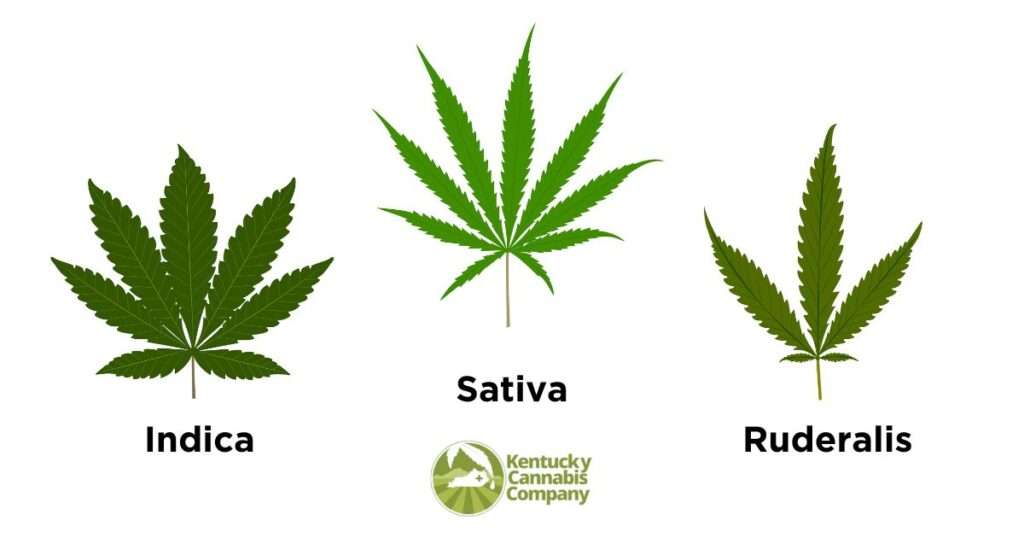
Sativa vs indica chart
What the Labels Can and Cannot Tell You
| Term | Useful For | Not Reliable For | What to Check Instead |
|---|---|---|---|
| Sativa | Historical classification, plant shape, leaf structure, growth habit, and breeding context. | Predicting energy, focus, anxiety relief, pain relief, sleep support, or medical benefit. | Cannabinoids, terpenes, THC content, serving size, ingredients, product label, and COA. |
| Indica | Historical classification, shorter or bushier plant descriptions, broader leaf traits, and morphology. | Predicting relaxation, sedation, anxiety relief, pain relief, sleep support, or medical benefit. | Cannabinoid panel, terpene panel, THC content, product directions, batch number, and lab report. |
| Hybrid | Describing mixed breeding background or blended visual traits. | Guaranteeing a balanced experience or specific outcome. | Product-specific testing and a clear Certificate of Analysis. |
| Hemp-type cannabis | Describing cannabis selected for hemp use and, often, CBDA or CBD dominance. | Assuming THC-free status or assuming any medical effect. | THC content, full-spectrum status, COA, lab-testing date, and warnings. |
| Marijuana or drug-type cannabis | Describing cannabis typically selected for THCA or THC dominance. | Assuming every product has the same chemistry or effect profile. | State rules, THC amount, cannabinoid profile, terpene profile, and product-specific testing. |
Legal plus botanical framing
Hemp vs Marijuana: The Legal Threshold Is Not the Whole Botanical Story
Legal hemp is defined by THC compliance. Under U.S. federal hemp rules, hemp is cannabis that meets the applicable THC threshold, and cannabis above that threshold is treated as marijuana under federal hemp rules. That legal distinction matters, but it is not the full botanical or chemical story.
Botanically and chemically, hemp-type cannabis is usually better understood as CBDa or CBD-dominant cannabis. Marijuana, or drug-type cannabis, is usually better understood as THCa or THC-dominant cannabis. These patterns are driven largely by genetics and cannabinoid synthase expression, including the plant's tendency to produce more CBDA or more THCA from shared cannabinoid precursors.
Cannabinoid chemistry
CBDA, THCA, and Why Genetics Matter
CBDA and CBD dominance
Hemp-type cannabis is commonly selected for a cannabinoid profile dominated by CBDA in the plant and CBD after processing or decarboxylation. This does not mean every hemp product is THC-free, and it does not mean a product has a medical effect.
THCA and THC dominance
Drug-type cannabis is commonly selected for a cannabinoid profile dominated by THCA in the plant and THC after processing, heating, or decarboxylation. THC content should always be reviewed through product-specific labeling and testing.
Cannabis plants make cannabinoids through biochemical pathways. CBDA and THCA are produced from shared cannabinoid precursors, and the plant's genetics help determine which acidic cannabinoid becomes dominant. That is why cannabinoid profiles and lab reports matter more than broad indica or sativa language.
For a broader introduction, read the endocannabinoid system guide. For product-level quality questions, read the CBD quality guide.
YMYL-safe consumer guidance
Why Indica and Sativa Should Not Be Used as Medical Categories
Indica and sativa terms should not be used to claim that a product will produce specific effects such as relaxation, energy, sleep support, anxiety relief, pain relief, or medical benefit. Those outcomes depend on many factors, including cannabinoid content, THC exposure, serving size, product format, other ingredients, medication use, health history, and individual response.
Bluegrass Hemp Oil products are not intended to diagnose, treat, cure, or prevent disease. If you take medication, use alcohol or sedating products, are pregnant or nursing, have a medical condition, or are subject to drug testing, speak with a licensed healthcare professional before using CBD.
Product transparency checklist
What to Check Before Choosing a Hemp-Derived CBD Product
| What to Check | Why It Matters |
|---|---|
| CBD amount per serving | Helps you understand the product label and compare formats. |
| Total CBD per package | Helps compare products without relying on marketing terms. |
| THC content | Full-spectrum CBD products may contain trace THC. |
| Cannabinoid profile | Shows whether a product is CBD dominant and what other cannabinoids are reported. |
| Terpene information | Can describe aroma-related compounds, but should not be used as medical proof. |
| Ingredient list | Helps identify carrier oils, allergens, sweeteners, flavors, and additives. |
| Batch number | Should match the Certificate of Analysis for the product batch. |
| Certificate of Analysis | Supports cannabinoid and testing transparency, but does not prove medical effectiveness. |
| Lab-testing date | Helps confirm product-specific testing details. |
| Warnings and directions | Responsible products include clear use directions and safety cautions. |
Bluegrass Hemp Oil trust module
Our Approach to Cannabis and CBD Transparency
Product labels
Review serving information, THC content, ingredients, warnings, and directions before choosing a CBD product.
Certificates of Analysis
Use batch-specific lab reports to review cannabinoid content, THC levels, and available testing details.
Lab testing
Understand what lab testing can and cannot tell you about cannabinoid content and product transparency.
Quality standards
Review how Bluegrass Hemp Oil approaches hemp sourcing, product education, and customer support.
Learn about the Bluegrass Hemp Oil process or contact Bluegrass Hemp Oil with CBD product questions.
Related education
Related CBD and Cannabis Transparency Resources
Frequently asked questions
Indica, Sativa, Hemp, Marijuana, and CBD Product Labels
What is the real difference between indica and sativa?
Indica and sativa are historical and visual cannabis labels. They may describe plant structure, leaf shape, growth pattern, or breeding history, but they are not reliable categories for predicting effects or medical outcomes.
Does indica always mean relaxing and sativa always mean energizing?
No. Those effect claims are marketing shortcuts, not dependable scientific rules. Cannabinoid content, terpene profile, THC amount, product format, serving size, and individual factors matter more than an indica or sativa label.
Are hemp and marijuana both cannabis?
Yes. Hemp and marijuana are both cannabis. Under U.S. hemp rules, legal hemp is defined by THC compliance, while marijuana is cannabis above the federal hemp THC threshold.
Is the 0.3% THC threshold the whole difference between hemp and marijuana?
No. The 0.3% THC threshold is the legal distinction used for federal hemp compliance. Botanically and chemically, hemp-type cannabis is commonly CBDa or CBD dominant, while marijuana or drug-type cannabis is commonly THCa or THC dominant.
Can hemp have sativa-like or indica-like traits?
Yes. Hemp-type cannabis and marijuana-type cannabis can both show sativa-like or indica-like visual traits. Those visual traits do not prove cannabinoid profile, THC content, or product effects.
What are CBDA and THCA?
CBDA and THCA are acidic cannabinoid forms produced by cannabis plants. Heat, time, and processing can convert CBDA toward CBD and THCA toward THC. The plant's genetics and cannabinoid synthase expression influence which cannabinoids dominate.
Why do product labels matter more than indica or sativa terms?
A label can show CBD amount, THC content, ingredients, directions, warnings, batch information, and product format. Indica and sativa terms do not provide that level of product-specific transparency.
Why do Certificates of Analysis matter?
A Certificate of Analysis can help customers review cannabinoid content, THC levels, batch information, and available lab-testing details. COAs support transparency, but they do not prove medical effectiveness.
Can full-spectrum CBD contain THC?
Yes. Full-spectrum CBD products may contain trace THC. Review the product label and Certificate of Analysis before choosing a product, especially if THC exposure matters to you.
Can CBD affect a drug test?
CBD itself is not typically the target of standard drug tests, but full-spectrum CBD products may contain trace THC. No CBD company should guarantee a drug-test outcome.
Are retail CBD products FDA-approved to treat medical conditions?
Retail CBD products are not FDA-approved to diagnose, treat, cure, or prevent disease. Speak with a licensed healthcare professional before using CBD if you take medication, are pregnant or nursing, have a medical condition, or are subject to drug testing.
What should I check instead of relying on indica or sativa marketing?
Review cannabinoids, terpenes, THC content, serving information, ingredients, product directions, warnings, batch number, Certificates of Analysis, lab-testing date, and company contact information.
Sources and references
Authoritative References Used for This Guide
This article is based on public cannabis, hemp, CBD safety, and product-testing information from government, academic, and peer-reviewed sources. These sources are included for education and do not make Bluegrass Hemp Oil products medical products.
- Review USDA hemp production frequently asked questions
- Review USDA hemp laboratory testing guidelines
- Review FDA cannabis and cannabis-derived product regulation guidance
- Review FDA CBD consumer safety guidance
- Review CDC CBD public-health information
- Review NCBI Bookshelf cannabis and cannabinoid science background
- Review Nature Plants research on indica and sativa labeling
- Review NC State Extension information on THC and CBD in hemp
Visible External Source Links
These are the outgoing source links used in this guide. They are repeated here as high-contrast buttons with raw URL fallbacks so they remain visible after WordPress or Divi import.
- 1. Review USDA hemp production frequently asked questions
https://www.ams.usda.gov/rules-regulations/hemp/frequently-asked-questions-faq
- 2. Review USDA hemp laboratory testing guidelines
https://www.ams.usda.gov/rules-regulations/hemp/information-laboratories/lab-testing-guidelines
- 3. Review FDA cannabis and cannabis-derived product regulation guidance
https://www.fda.gov/news-events/public-health-focus/fda-regulation-cannabis-and-cannabis-derived-products-including-cannabidiol-cbd
- 4. Review FDA CBD consumer safety guidance
https://www.fda.gov/consumers/consumer-updates/what-you-need-know-and-what-were-working-find-out-about-products-containing-cannabis-or-cannabis
- 5. Review CDC CBD public-health information
https://www.cdc.gov/cannabis/about/about-cbd.html
- 6. Review NCBI Bookshelf cannabis and cannabinoid science background
https://www.ncbi.nlm.nih.gov/books/NBK425762/
- 7. Review Nature Plants research on indica and sativa labeling
https://www.nature.com/articles/s41477-021-01003-y
- 8. Review NC State Extension information on THC and CBD in hemp
https://content.ces.ncsu.edu/understanding-the-relationship-between-thc-and-cbd-in-hemp
