Genesis Spray for Dogs – Effective and Natural Dog Care Solution

As CBD gains popularity for its therapeutic effects in humans, pet owners have become interested in the potential benefits of CBD for dogs. Genesis CBD offers a line of pet sprays, including Genesis spray for dogs. This innovative product provides a fast, convenient way to give CBD to dogs for various wellness goals.

This article explores Genesis spray for dogs in detail - how it works, its possible benefits, proper dosing guidelines, safety considerations, and what to look for when shopping for CBD pet sprays. As research continues uncovering CBD’s usefulness in dogs, products like Genesis spray cater to discerning pet owners seeking natural support.

What is Genesis Spray for Dogs?

Genesis spray for dogs is an oral CBD spray formulated specifically for canine use. It provides CBD derived from organically grown hemp in an easy-to-administer liquid format. The sprayabsorbs fastunder the tongue and in the mouth’s buccal membranes for quick effects.

According to Genesis CBD, their pet spray supports mobility, occasional stiffness, temperament, and overall health in dogs. It comes in two different CBD potency options - 250mg or 500mg total CBD. The spray offers pet owners an alternative to CBD oils and treats for more convenient, precise dosing when away from home.

In addition to CBD from hemp extract, Genesis spray contains MCT oil from coconuts to help absorption. Genesis CBD tests their products through third-party labs to ensure safety, purity, and accurate CBD levels. Their sprays give dog owners a practical CBD option from a trusted brand.

How Genesis Spray for Dogs Works

Like humans, dogs have an endocannabinoid system (ECS) that regulates various bodily functions. While research is limited, CBD may support dogs’ ECS to help encourage homeostasis. In turn, this could assist with mobility, temperament, gastrointestinal activity, sleep, skin health, and other wellness factors.

When sprayed into the dog’s mouth, the CBD is absorbed through the mucous membranes directly into the bloodstream for quick effects, rather than needing to be processed through the digestive system. CBD and other cannabis compounds interact with the ECS to provide potential relief where needed. This allows dog owners to respond promptly when issues arise.

Potential Wellness Benefits for Dogs

Research into CBD for canine use is in early stages. However, initial studies and anecdotal reports suggest CBD may help dogs by:

  • Easing occasional stiffness and supporting joint health
  • Maintaining a calm, balanaced temperament
  • Supporting gastrointestinal balance
  • Regulating sleep patterns
  • Supporting skin and coat health
  • Maintaining healthy appetite and energy levels

These potential effects may help improve quality of life and comfort in aging dogs or dogs with mobility issues. Always consult a veterinarian before giving CBD to ensure proper health monitoring.

Appropriate Serving Sizes for Genesis Spray

Determining the optimal Genesis CBD spray dosage for your dog depends on weight, age, reason for taking CBD, and individual sensitivity. General serving size guidelines based on weight are:

  • Under 25 lbs: 2 sprays per dose
  • 25-50 lbs: 3 sprays per dose
  • Over 50 lbs: 4 sprays per dose

Start with the lowest dosage based on weight and monitor effects over the next few hours. Increase by 1 spray at a time until you notice desired results. Give CBD consistently for 2-4 weeks for full benefits.

Dogs may require 2-3 doses per day. Avoid overdosing by adhering to label directions and staying under recommended maximums based on your pet’s size. Record dosing amounts and times to optimize your dog’s regime. Consult a vet with any major health changes.

Genesis Spray vs. CBD Oils and Treats for Dogs

Genesis spray offers distinct advantages compared to CBD oils and treats for dogs:

  • Convenience – The spray makes dosing easy anywhere without the need for dropper bottles or carrying treats. Busy owners appreciate the on-the-go portability.
  • Precise dosing – Each spray from the bottle provides an exact CBD dose. This level of control is harder to achieve with treats and approximating oil drops.
  • Absorption – Sublingual spray absorption into the bloodstream is faster than digesting oils or treats. The effects come on quicker.
  • Flavors – Some dogs dislike the earthy taste of CBD oils. Genesis spray has a neutral flavor dogs tolerate well.

While oils and treats work for in-home use, Genesis spray is ideal for active owners who want precise, convenient CBD dosing wherever they go with their pup.

What to Look for in Quality CBD Pet Sprays

Since the CBD market is unregulated, it’s crucial to buy pet products from reputable companies that meet key criteria:

  • Organic hemp sourced from U.S. growers (avoid foreign hemp)
  • Independent third-party lab testing for purity and potency
  • Natural ingredients and flavorings
  • Positive brand reputation and reviews
  • Full spectrum hemp extract (provides the “entourage effect”)
  • Convenient, controlled dosing methods

Checking for proper certifications, lab data, ethical manufacturing processes, and ingredient quality ensures your dog receives effective, pure CBD for safety and peace of mind.

Are CBD Sprays Safe for Dogs?

Research shows CBD is generally safe and well tolerated in dogs at proper dosages, with few potential side effects. Always consult your vet before giving CBD to dogs taking any medications or with serious health conditions. Mild side effects may include:

  • Dry mouth
  • Digestive upset
  • Drowsiness
  • Low blood pressure

These effects usually resolve on their own. To further minimize risk, give conservative doses based on weight and monitor your dog’s response. Avoid giving CBD sprays to pregnant or nursing dogs until more studies are available.

Overall, Genesis CBD sprays crafted from high quality organic hemp present low risk when used responsibly under veterinary guidance. They give pet owners a practical option for supporting dogs’ wellness.

Genesis Topical Spray for Dogs

Genesis Topical Spray for Dogs is a CBD-infused spray designed to be applied directly onto a dog's skin. It provides targeted relief when sprayed on areas experiencing discomfort or irritation. The topical spray absorbs into the skin's superficial layers without entering the bloodstream.

According to Genesis CBD, their topical spray supports skin and coat health in dogs. It contains full spectrum CBD from organic hemp along with soothing botanicals. The topical spray comes in a convenient nozzle bottle for controlled application. It's easy to use on small areas needing relief.

As a localized treatment, Genesis Topical Spray for Dogs differs from oral CBD oils that act through the endocannabinoid system. Topicals provide more direct, concentrated effects. This allows dog owners to target problem spots like itchy skin, rashes, or dry patches. The spray offers an accessible CBD solution for dogs' skin woes.

Genesis Topical Spray for Dogs Side Effects

Genesis Topical Spray for Dogs contains CBD derived from hemp along with calming botanical ingredients. When used as directed topically, CBD is generally very safe with a low risk of side effects.

Possible side effects from topical CBD products may include mild irritation, itchiness, redness or swelling if allergic to certain herbal ingredients or fragrances. This should resolve quickly when use is stopped. More serious reactions are very rare.

To minimize risk, apply topical spray to a small test area first to check for any skin sensitivity. Follow usage guidelines carefully and avoid ingesting topicals. Keep spray away from eyes, nose and mouth. Consult your vet if irritation persists. Proper use of Genesis Topical Spray carries very little risk. Monitor your dog’s response.

Genesis Topical Spray for Dogs Hot Spots

Hot spots are irritated, inflamed skin lesions dogs often develop from excessive licking, chewing, and scratching due to allergies or anxiety. The inflamed skin becomes a bacterial breeding ground. Topicals like Genesis spray with anti-inflammatory CBD may help manage hot spots in dogs.

Its antiseptic and anti-itch properties calm the irritated skin and reduce impulsive licking of the affected area. This allows the hot spot to begin healing. Regular use decreases inflammation and bacteria while supporting skin restoration.

To use, clean and dry the hot spot thoroughly. Spray 2-4 pumps of Genesis topical spray directly onto the affected skin 1-2 times daily. The CBD absorbs rapidly to provide soothing relief while preventing infection as the hot spot heals. Avoid oral ingestion. Monitor your dog’s response. Consult a veterinarian for proper diagnosis and treatment.

Virbac Genesis Topical Spray for Dogs

Virbac Genesis Topical Spray is a veterinarian-prescribed topical formula containing flumethrin and imidacloprid. It helps manage flea and tick infestations in dogs through contact application. The spray kills and repels fleas, flea larvae, ticks, and chewing lice.

Full-Spectrum CBD Oil for Dogs: What Pet Owners Should Know Before Buying

Pet CBD Safety Guide

Full-Spectrum CBD Oil for Dogs: What Pet Owners Should Know Before Buying

Full-spectrum CBD oil for dogs is often marketed as a pet wellness product, but it deserves careful, safety-first evaluation. This guide explains what full-spectrum means, why THC and lab reports matter, what side effects to watch for, and why veterinarian guidance should come before any CBD routine.

Updated May 2026 · Educational content from Bluegrass Hemp Oil · Safety references reviewed from FDA, AVMA, Merck Veterinary Manual, and Cornell University

What is full-spectrum CBD oil for dogs?

Full-spectrum CBD oil for dogs is a hemp extract that may contain CBD, minor cannabinoids, terpenes, carrier oil, and trace THC. Pet owners should not assume CBD is automatically safe for dogs because product quality, THC level, dog size, medication use, and health history all matter. Before giving CBD to a dog, talk with your veterinarian, review the ingredient list, confirm the THC level, and check the batch-specific Certificate of Analysis.

For broader context, start with the CBD for pets safety guide and the CBD for dogs guide.

Safety-first points every dog owner should know

Full-spectrum may include THC.Even trace THC should be verified on a batch-specific lab report.
CBD is not FDA-approved for animal use.Ask your veterinarian about appropriate options for your dog.
Vet guidance comes first.This is especially important for senior dogs, medication use, or health conditions.
Human CBD is not automatically safe.Flavors, sweeteners, essential oils, or THC levels may be inappropriate for pets.
Side effects can happen.Watch for unusual sleepiness, digestive upset, appetite changes, wobbliness, or behavior changes.
COAs matter.A Certificate of Analysis should confirm CBD, THC, batch number, and contaminant testing.
Full-spectrum is not the same as broad-spectrum.CBD type changes the cannabinoid profile and THC considerations.
Storage is a safety step.Keep CBD, THC, hemp, and cannabis products locked away from pets and children.

Full-spectrum CBD oil for dogs terms explained

Term Simple explanation
Full-spectrum CBD oil for dogs A pet CBD oil that may contain CBD, minor cannabinoids, terpenes, carrier oil, and trace THC.
CBD Cannabidiol, a hemp or cannabis compound found in CBD products.
THC The intoxicating cannabis compound that can be dangerous for pets.
COA A Certificate of Analysis that shows CBD, THC, batch details, and contaminant testing.
Trace THC A small amount of THC that may appear in full-spectrum hemp products.
Broad-spectrum CBD Hemp extract with multiple compounds that is typically formulated to avoid THC, but testing should still be checked.
CBD isolate CBD-only extract, with no intentional minor cannabinoids or THC.
Veterinarian guidance Professional input before giving CBD to a dog, especially with medications or health concerns.

What is full-spectrum CBD oil for dogs?

Full-spectrum CBD oil for dogs is a pet-focused hemp oil that may contain CBD, minor cannabinoids, terpenes, a carrier oil, and trace THC. The phrase “full-spectrum” means the product is intended to keep a broader hemp profile instead of using CBD alone. That does not automatically make a product safer or better for every dog.

A safer evaluation starts with the label and the lab report. Pet owners should confirm whether the product is made for dogs, how much CBD is in each mL, whether THC is present, what carrier oil and flavoring are used, and whether the batch was tested for contaminants.

For deeper background, compare what full-spectrum CBD means with CBD product types explained.

Is full-spectrum CBD oil safe for dogs?

Full-spectrum CBD oil is not risk-free for dogs. Safety depends on the dog’s size, age, health history, medications, product ingredients, CBD concentration, THC level, and lab testing. Pet owners should talk with a veterinarian before using CBD and should not use CBD to delay veterinary care.

This caution matters because the FDA states that cannabis products have not been approved for any use in animals and recommends that pet owners talk with their veterinarian about appropriate treatment options. The safest next step is a conversation with your veterinarian, especially if your dog takes medication, has liver concerns, is senior, is pregnant or nursing, or has a serious symptom.

Related reading: is full-spectrum CBD safe for dogs and is CBD oil safe for dogs.

Does full-spectrum CBD oil for dogs contain THC?

It may. Full-spectrum CBD oil can contain trace THC, so pet owners should never rely on the front label alone. The batch-specific COA should show the actual THC result for the product you are considering.

CBD type What it may contain THC note Dog owner action
Full-spectrum CBD CBD, minor cannabinoids, terpenes, and hemp compounds. May contain trace THC. Review the COA before use and ask your veterinarian.
Broad-spectrum CBD CBD plus selected hemp compounds. Typically formulated to be THC-free, but verify. Check the COA and ingredient list.
CBD isolate CBD-only extract. No intentional THC if verified. Confirm third-party testing and pet suitability.
THC warning: Dogs can be sensitive to THC. Keep all hemp, CBD, THC, and cannabis products locked away from pets, and contact a veterinarian or emergency animal hospital if a dog ingests a cannabis product or seems unusually sedated, wobbly, sick, agitated, or unwell.

For risk-focused reading, see potential risks of pet cannabis use and potential hazards of pet hemp usage.

What side effects should dog owners watch for?

CBD and hemp products may affect dogs differently. Individual response varies, and side effects can overlap with other health problems, which is why veterinary guidance matters.

Possible concern What a pet owner might notice Safer response
Sleepiness or lethargy Your dog seems more tired than usual or hard to engage. Stop use and call your veterinarian if it is unusual or concerning.
Digestive upset Vomiting, loose stool, drooling, or appetite changes. Discontinue and ask your veterinarian for guidance.
Wobbliness or coordination changes Stumbling, swaying, weakness, or difficulty walking. Seek veterinary help, especially if THC exposure is possible.
Behavior changes Agitation, unusual quietness, restlessness, or confusion. Contact your veterinarian and keep the product container available.
Medication concerns Changes that appear after combining CBD with prescriptions or supplements. Ask your veterinarian before combining CBD with medications.

Continue with CBD benefits and side effects for pets and pet reactions to cannabinoid treatments.

How to choose full-spectrum CBD oil for dogs

Use this checklist before buying any pet CBD product. It is meant to support a veterinarian conversation, not replace it.

  • Talk with your veterinarian first.
  • Confirm the product is made and labeled for pets.
  • Review CBD amount per mL, not just total CBD in the bottle.
  • Check the THC level on the batch-specific COA.
  • Match the batch number on the product to the lab report when possible.
  • Review the carrier oil, flavoring, and full ingredient list.
  • Avoid unsafe sweeteners, essential oils, or additives that are not appropriate for dogs.
  • Look for contaminant testing, including heavy metals, pesticides, residual solvents, and microbes.
  • Follow label directions and veterinarian guidance only.
  • Monitor your dog and stop use if anything seems unusual.

For transparency, review CBD Certificates of Analysis and third-party CBD lab testing and product safety.

What should a pet CBD lab report show?

A pet CBD lab report should make it easier to verify what is in the product. If a product does not provide a batch-specific COA, that is a reason to pause and ask questions.

Product and batch identityLook for product name, batch number, and testing date.
CBD amountConfirm the CBD content matches the label as closely as possible.
THC resultFull-spectrum CBD may contain trace THC, so the exact result matters.
Other cannabinoidsMinor cannabinoids may be listed if the lab performed a full panel.
Contaminant testingCheck for heavy metals, pesticides, residual solvents, microbes, or mycotoxins when available.
Lab informationThird-party testing should be easy to review and match to the product.

Can I give my dog human CBD oil?

Human CBD products are not automatically safe for dogs. Some may contain ingredients, flavors, sweeteners, essential oils, or THC levels that are not appropriate for pets. Use pet-specific products and ask your veterinarian before giving CBD to your dog.

Also keep packaging in case you need to share product details with a veterinarian. If your dog accidentally consumes an unknown CBD, THC, hemp, or cannabis product, contact your veterinarian, an emergency animal hospital, or an animal poison-control resource.

What does research say about CBD for dogs?

Researchers are studying CBD in dogs for areas such as mobility, seizure management, stress responses, and general wellness, but research is still developing. Pet owners should not use CBD as a replacement for veterinary diagnosis, medication, or treatment.

Research area Safer way to discuss it
Mobility and osteoarthritis studies Some veterinary research has explored CBD in dogs with osteoarthritis, but any use should be discussed with a veterinarian.
Seizure-related research CBD research in dogs with seizures exists, but this is a veterinary topic, not a DIY dosing topic.
Stress and behavior Evidence is still developing; avoid claims that CBD treats anxiety or fixes behavior problems.
General wellness Product quality, COAs, THC content, ingredients, and veterinary guidance matter most.

For related veterinary context, see general pain relief for dogs and Keppra and dog seizure management.

When should you avoid CBD for dogs?

Avoid CBD unless your veterinarian approves it if any of the following apply:

Your dog takes medication.CBD may interact with prescriptions, supplements, sedatives, anti-seizure medication, pain medication, or liver-affecting medication.
Your dog has liver concerns.Ask a veterinarian before adding hemp products to the routine.
Your dog is pregnant or nursing.Do not use CBD unless a veterinarian specifically advises it.
The product lacks a COA.Do not guess about CBD, THC, or contaminant levels.
The THC level is unclear.Trace THC may be present in full-spectrum products and must be verified.
Your dog has serious symptoms.Do not use CBD to delay veterinary diagnosis or urgent care.

Pet CBD product options to evaluate carefully

Before choosing a pet CBD product, review the ingredient list, CBD amount, THC level, and batch-specific lab report. Talk with your veterinarian before giving CBD to your dog.

Frequently asked questions about full-spectrum CBD oil for dogs

What is full-spectrum CBD oil for dogs?

Full-spectrum CBD oil for dogs is a pet CBD oil that may contain CBD, minor cannabinoids, terpenes, carrier oil, and trace THC.

Is full-spectrum CBD oil safe for dogs?

Do not assume it is automatically safe. Talk with your veterinarian and review the product’s COA, ingredients, CBD amount, and THC level.

Does full-spectrum CBD oil for dogs contain THC?

It may contain trace THC. Always check the batch-specific lab report before using a full-spectrum product for a dog.

Can THC hurt my dog?

Yes. THC can be dangerous for pets, so full-spectrum products require careful COA review and locked storage away from animals.

Should I ask my vet before giving CBD to my dog?

Yes. This is especially important if your dog takes medication, has a medical condition, is senior, pregnant, nursing, or has liver concerns.

Can I give my dog human CBD oil?

Avoid human CBD products unless your veterinarian approves them and the ingredients are confirmed safe for dogs.

What should a pet CBD lab report show?

It should show CBD content, THC content, batch number, and contaminant testing when available.

Is full-spectrum or broad-spectrum CBD better for dogs?

Neither is automatically better. Full-spectrum may contain trace THC, while broad-spectrum is typically formulated to avoid THC. Product quality and veterinary guidance matter most.

Can CBD interact with my dog’s medication?

It may. Ask your veterinarian before combining CBD with prescriptions, supplements, sedatives, anti-seizure medication, pain medication, or liver-affecting medication.

What should I do if my dog reacts badly to CBD?

Stop using the product and contact your veterinarian or an animal emergency hospital if symptoms are serious or unusual.

Safety and editorial references

This page is educational and is not veterinary advice. CBD products are not intended to diagnose, treat, cure, or prevent disease. The article was written to support people-first content, cautious pet CBD language, product-quality education, and veterinarian-first decision-making.

Compare pet CBD options with safety first

Review the CBD amount, THC level, ingredients, and lab results first, and talk with your veterinarian before giving CBD to your dog.

Is Full-Spectrum CBD Safe for Dogs? Risks, Side Effects, and Vet Guidance

Dog CBD Safety Guide

Is Full-Spectrum CBD Safe for Dogs? THC, Side Effects, COAs & Vet Guidance

Full-spectrum CBD for dogs should be evaluated carefully because full-spectrum hemp products may contain trace THC. The safest starting point is a conversation with your veterinarian, a review of the product label, and a current Certificate of Analysis.

This guide explains what dog owners should know about full-spectrum CBD, THC content, possible side effects, ingredients, serving-size questions, COAs, and when to stop and call a veterinarian.

Updated May 25, 2026
Educational content, not veterinary advice
Reviewed for CBD safety language

About this full-spectrum CBD for dogs guide

1

Written from hemp experience

This guide was written from Bluegrass Hemp Oil’s hands-on hemp experience and product-education background. Bill Polyniak’s hemp education background includes work in hemp cultivation, extraction, testing, and customer education since 2014.

2

Company transparency

Bluegrass Hemp Oil is connected to Bluegrass Hemp Oil’s Kentucky hemp story and the broader Bluegrass Hemp Oil company story.

3

Educational scope

This guide is educational and should be paired with veterinarian guidance for your specific dog. It does not make veterinary-authority claims or replace care from a licensed veterinarian.

Is full-spectrum CBD safe for dogs?

Full-spectrum CBD should not be described as appropriate for all dogs. Safety depends on the product, THC content, ingredient list, serving size, the dog’s health history, medications, and veterinarian guidance.

Dog owners should review a current COA, confirm THC content, choose pet-specific products, and monitor for possible side effects such as unusual sleepiness, digestive upset, drooling, stumbling, tremors, or behavior changes. Start with the CBD oil for dogs guide, review CBD oil side effects for dogs, and verify the Certificates of Analysis for Bluegrass Hemp Oil products.

What does full-spectrum CBD mean for dogs?

Full-spectrum CBD usually means a hemp extract that contains CBD plus other hemp compounds and legally compliant trace THC. For dogs, the key question is not whether a product says “full-spectrum,” but whether the label and COA clearly show CBD content, THC content, batch information, ingredients, and testing details.

Use dog-specific education such as the CBD for dogs safety and product guide, types of CBD explained, CBD vs THC explained, and the entourage effect in full-spectrum CBD to prepare better questions for your veterinarian.

Why THC content matters for dogs

Full-spectrum hemp products may contain trace THC, and dogs may be more sensitive to cannabis exposure than humans. Do not rely on marketing language alone. Review the COA for THC content and ask your veterinarian whether full-spectrum, broad-spectrum, or a non-THC option is appropriate for your dog.

Verify the THC panel

Check delta-9 THC and total THC when available. Use Certificates of Analysis for Bluegrass Hemp Oil products as your verification step.

Match the batch

The batch number on the product should match the COA. A good next step is reviewing CBD lab testing and certificates of analysis.

Store securely

Keep CBD, hemp, cannabis, edibles, gummies, and THC products away from pets and children. Call a veterinarian quickly after suspected exposure.

Full-spectrum vs broad-spectrum vs isolate CBD for dogs

Extract type can change the product-quality questions you need to ask. None of these categories is automatically best for every dog.

Extract type What it may contain Dog-specific concern What to verify
Full-spectrum CBD CBD, other hemp compounds, and trace THC. THC content matters for dog safety. Batch-specific COA and THC content.
Broad-spectrum CBD CBD and other hemp compounds, usually with detectable THC removed. Marketing language is not enough. COA-confirmed THC status.
CBD isolate Purified CBD only. Still requires ingredient and product-quality review. CBD amount, ingredient list, and COA.

For deeper background, compare types of CBD explained, the entourage effect in full-spectrum CBD, and Bluegrass Hemp Oil science and quality standards.

Possible side effects of full-spectrum CBD in dogs

CBD side effects in dogs can vary by product, serving amount, THC exposure, ingredients, size, sensitivity, and medication status. Review CBD oil side effects for dogs and contact your veterinarian if your dog seems unwell.

Possible sign What it may look like Recommended action
Sleepiness or unusual lethargy Dog seems more tired than expected. Stop use and monitor. Call your veterinarian if it concerns you.
Digestive upset Vomiting, loose stool, or appetite change. Stop use and contact your veterinarian.
Drooling Excessive salivation. Stop use and ask your veterinarian.
Coordination changes Stumbling, wobbling, or trouble walking. Contact a veterinarian promptly.
Tremors or convulsions Shaking or seizure-like signs. Seek urgent veterinary help.
Behavior change Agitation, confusion, or unusual reactions. Stop use and call your veterinarian.
Possible medication concern Unexpected changes after starting CBD with medications. Discuss with your veterinarian.

How to evaluate full-spectrum CBD oil for dogs before buying

Product quality should come before price, packaging, or general brand claims. Use this checklist before buying any dog CBD oil.

  1. Confirm pet-specific use. The product should be clearly intended for pets.
  2. Check label clarity. Look for CBD amount per bottle, mL, serving, or drop.
  3. Confirm extract type. The label should identify full-spectrum, broad-spectrum, or isolate.
  4. Review a current, batch-specific COA. The lab report should match the product and batch.
  5. Verify CBD and THC content. These two values are central to label accuracy and full-spectrum safety considerations.
  6. Look for contaminant testing when available. Safety panels may include pesticides, heavy metals, residual solvents, microbials, and mycotoxins.
  7. Review the ingredients. Ingredients should be clear and dog-appropriate.
  8. Avoid disease-treatment claims. Responsible brands should educate without promising medical outcomes.
  9. Confirm support is available. You should be able to contact the Bluegrass Hemp Oil team with product-selection questions.

Related quality resources include CBD lab testing and certificates of analysis, the Bluegrass Hemp Oil quality promise, Bluegrass Hemp Oil product standards, and how Bluegrass Hemp Oil makes CBD products.

What should a dog CBD COA show?

A Certificate of Analysis helps verify what is in a specific product batch. It does not replace veterinarian guidance, but it gives dog owners a concrete way to compare product quality.

COA item Why it matters
Batch number Helps match the lab report to the product.
CBD content Shows whether the CBD amount aligns with the label.
THC content Important for full-spectrum CBD safety considerations in dogs.
Other cannabinoids Helps explain the broader full-spectrum profile.
Testing date Shows when the product batch was tested.
Lab identity Shows who performed the testing.
Heavy metals Important hemp-product safety screen when available.
Pesticides Important agricultural safety screen when available.
Microbials Helps evaluate contamination risk when available.
Residual solvents Relevant to extraction and finished-product quality when available.

Start with the Certificates of Analysis for Bluegrass Hemp Oil products, compare with CBD lab testing and certificates of analysis, and review Bluegrass Hemp Oil science and quality standards.

Dog CBD ingredients to review carefully

Dog CBD products should be reviewed differently from human CBD products. Dogs may be sensitive to flavorings, sweeteners, essential oils, THC, serving size, and other ingredients. See CBD oil safety for dogs for additional safety context.

THC

Review COA-confirmed THC content, especially with full-spectrum products.

Xylitol

Avoid dog products containing xylitol.

Chocolate

Avoid chocolate-flavored or chocolate-containing pet products.

Essential oils

Some essential oils may not be appropriate for dogs.

Vague flavor blends

Look for clear ingredient disclosure.

Human product ingredients

Do not assume human CBD products are appropriate for dogs.

Carrier oils

Review the oil base and ask your veterinarian if your dog has dietary sensitivities.

Serving concentration

Higher concentration products increase the importance of accurate measurement.

Storage risk

Keep cannabinoid products away from pets to reduce accidental ingestion risk.

How should dog owners think about CBD serving size?

Avoid one-size-fits-all serving advice. A dog’s size matters, but so do age, medications, liver or kidney concerns, product concentration, ingredient sensitivity, THC content, and veterinarian guidance. Follow the product label, start conservatively only if your veterinarian agrees CBD is appropriate, monitor closely, and ask your veterinarian before using CBD with your dog.

  • Read the current product label.
  • Confirm CBD per mL, drop, chew, or serving.
  • Review THC content on the COA.
  • Check the dog’s size, sensitivity, age, and medication list.
  • Ask your veterinarian before use.
  • Stop use if concerning signs appear.

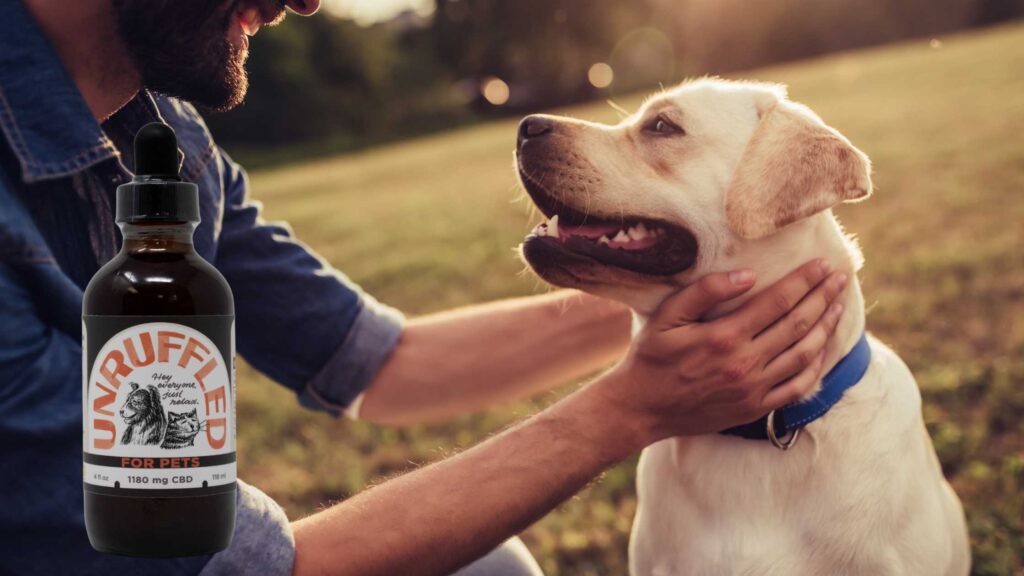
For a pet-focused product example, review Unruffled bacon flavored CBD oil for pets and ask your veterinarian to review the label and COA before use.

What should I ask my veterinarian before giving full-spectrum CBD to my dog?

Your veterinarian can help you evaluate whether a full-spectrum CBD product is appropriate for your dog’s health history, current medications, size, sensitivity, and risk factors. Human-focused resources such as CBD medication interaction considerations can help you prepare questions, but dog-specific medication questions belong with your veterinarian.

Questions to ask

  • Could CBD interact with my dog’s medications?
  • Does my dog’s age, breed, size, or health history change the risk?
  • Is THC a concern for my dog?
  • Should liver values or other health markers be monitored?
  • Are there ingredients I should avoid?
  • What side effects should I watch for?
  • What would make you recommend stopping immediately?
  • Is full-spectrum, broad-spectrum, or isolate more appropriate?
  • Should CBD be avoided before surgery or during another treatment plan?

What to bring

  • The product label and ingredient list.
  • A current batch-specific COA.
  • Your dog’s medication and supplement list.
  • Notes on age, weight, appetite, behavior, and recent changes.
  • Any previous reaction to hemp, oils, treats, or supplements.

When should you stop CBD and call your veterinarian?

When in doubt, stop the product and contact your veterinarian, local animal emergency hospital, or animal poison control resource. This is especially important after suspected THC or cannabis ingestion.

  • Stumbling or trouble walking
  • Marked sedation
  • Vomiting
  • Tremors
  • Heavy drooling
  • Agitation or confusion
  • Convulsions
  • Collapse
  • Sudden behavior change
  • Suspected THC ingestion

Where to buy full-spectrum CBD for dogs safely

A trusted dog CBD company should make product labels, ingredients, THC information, lab testing, COAs, customer support, and safety guidance easy to find. Whether you shop locally or online, compare transparency before comparing price alone.

Full-spectrum CBD for dogs FAQs

Is full-spectrum CBD safe for dogs?

Full-spectrum CBD should not be described as appropriate for all dogs. Safety depends on the exact product, THC content, ingredient list, serving amount, the dog’s health history, medications, and veterinarian guidance.

Is full-spectrum CBD safe for all dogs?

No. Some dogs need extra caution, including dogs that take medication, have liver, kidney, heart, neurological, seizure, digestive, pregnancy, nursing, age-related, or surgical concerns.

Can full-spectrum CBD contain THC?

Yes. Full-spectrum hemp products may contain legally compliant trace THC. Dog owners should review the product label and a batch-specific COA to verify THC content.

Can full-spectrum CBD hurt my dog?

A dog may react poorly to CBD, THC exposure, ingredients, serving errors, or medication interactions. Stop use and contact a veterinarian if your dog seems unwell.

Can CBD make my dog sleepy?

Sleepiness or unusual lethargy can occur. Stop use and monitor your dog. Contact your veterinarian if the change is concerning, intense, or paired with other signs.

What side effects should I watch for?

Watch for vomiting, loose stool, drooling, appetite change, stumbling, wobbliness, tremors, agitation, confusion, marked sedation, urinary accidents, or sudden behavior change.

Should I ask my veterinarian before giving CBD to my dog?

Yes. A veterinarian can review medications, health history, age, breed, size, ingredients, THC content, and whether CBD should be avoided before surgery or during another care plan.

Is full-spectrum CBD better than broad-spectrum CBD for dogs?

Not automatically. Full-spectrum CBD may include trace THC. Broad-spectrum CBD is often chosen when THC avoidance is a priority. The best fit depends on your dog, the COA, product quality, and veterinary guidance.

What should a dog CBD COA show?

A dog CBD COA should show batch number, CBD content, THC content, testing date, lab identity, and available safety panels such as heavy metals, pesticides, microbials, and residual solvents.

Can I give my dog human full-spectrum CBD oil?

Do not assume a human CBD product is appropriate for a dog. Human products may be too concentrated or may contain flavorings, sweeteners, essential oils, or other ingredients that are not appropriate for dogs.

When should I stop CBD and call a veterinarian?

Stop use and contact a veterinarian if you notice stumbling, marked sedation, vomiting, tremors, heavy drooling, agitation, confusion, convulsions, collapse, sudden behavior change, or suspected THC ingestion.

Does CBD treat anxiety, pain, seizures, arthritis, or cancer in dogs?

No CBD product should be presented as treating, curing, preventing, relieving, or managing disease in dogs. If your dog has symptoms or a diagnosed condition, work with your veterinarian.

Full-spectrum CBD for dogs glossary

Entity Plain-English explanation
Full-spectrum CBD Hemp extract containing CBD plus other hemp compounds and possible trace THC.
Broad-spectrum CBD Hemp extract with CBD and other hemp compounds, usually with detectable THC removed.
CBD isolate Purified CBD without the broader hemp extract profile.
THC Intoxicating cannabinoid that may appear in trace amounts in full-spectrum hemp products.
COA Certificate of Analysis used to verify product contents and safety-screening information.
Batch number Code used to match a product to its lab report.
Pet-specific product A product formulated and labeled for animal use rather than human use.
Carrier oil Oil used to dilute and deliver hemp extract.
Residual solvents Solvent-screening category relevant to extraction and finished-product quality.
Veterinarian guidance Professional advice from a licensed veterinarian who knows the dog’s health history.

Safety references used for this guide

Editorial note: This page is intended to help dog owners prepare safer product-quality questions. It is not veterinary advice, and it does not claim that CBD treats any dog disease or condition.


Jeff Talks About His Dog and Unruffled CBD Oil for Pets

Customer story • Pet CBD safety guide • Updated May 21, 2026

CBD Oil for Dog Seizures Review: Jeff’s Story, Safety & Vet Guidance

If you found this page while searching for a CBD oil for dog seizures review, start here: Jeff’s video is one pet owner’s story, not a promise of results. Dog seizures deserve veterinary care, and any pet CBD product should be reviewed with your veterinarian, the product label, THC information, and a batch-specific Certificate of Analysis.

Pet CBD education built around veterinarian guidance, label review, THC awareness, and transparent lab testing.

Jeff with his dog in a customer story about Unruffled CBD Oil for Pets

Jeff’s story is shared as one personal experience. Every dog’s needs are different.

Pet CBD and seizure safety

Pet CBD and Seizure Safety Comes First

This article is educational and is not veterinary advice. CBD products are not intended to diagnose, treat, cure, or prevent seizures or any disease in pets. FDA has not approved CBD for use in animals. Talk with a licensed veterinarian before giving CBD to a dog, especially if your dog has seizures, takes medication, has liver concerns, is very young or elderly, is pregnant or nursing, or has sudden, cluster, prolonged, or worsening seizures.

What to know first

CBD Oil for Dog Seizures Review: What This Page Covers

Jeff’s story may be helpful for pet owners who want to hear from another dog owner, but it should not be used as proof that CBD treats seizures. This page pairs the video with practical safety steps: when to call a veterinarian, what side effects to watch for, how to review a pet CBD label, and how to check a Certificate of Analysis.

Start with your veterinarian.
Do not replace seizure medication or emergency care.
Review CBD amount, THC level, and ingredients.
Match the product batch to a COA.
Watch for side effects or unusual behavior.
Keep pet CBD away from children and other pets.

About Bluegrass Hemp Oil’s Pet CBD Education

Bluegrass Hemp Oil is a Kentucky-based CBD company that creates full-spectrum hemp-derived CBD products and educational resources. This page shares one Unruffled CBD Oil for Pets customer story while explaining the safety questions dog owners should discuss with a veterinarian before considering CBD.

Helpful starting points include learning about CBD for dogs, reviewing CBD oil side effects for dogs, and reviewing CBD lab testing standards.

Watch Jeff’s story

Jeff Talks About His Dog and Unruffled CBD Oil for Pets

In the video below, Jeff shares his personal experience as a dog owner. Customer stories can create connection and help other pet owners feel less alone, but they are not the same as veterinary guidance or clinical evidence.

Video shared for customer-story context. Individual experiences vary and are not typical or guaranteed.

A note about testimonials

Jeff’s experience is his own. It should not be used to decide whether CBD is right for your dog, and it should not be read as a claim that CBD treats seizures. If your dog has seizures, work with a licensed veterinarian before changing any care plan.

How to Read Jeff’s Story Responsibly

A customer story can tell you what one person noticed, what they valued, and why they chose a product. It cannot prove that a product works for other dogs or that a product treats a medical condition.

Jeff’s Story Can Help With Jeff’s Story Cannot Prove
Understanding one pet owner’s experience. That CBD treats, stops, prevents, or reduces seizures.
Learning what questions other dog owners ask. That results are typical for other dogs.
Seeing why product transparency matters. That CBD can replace veterinary care or medication.
Prompting better label and COA review. That a product is safe for every dog.

Dog Seizures Require Veterinary Evaluation

Seizures can have many causes, including underlying illness, toxic exposure, neurological conditions, metabolic problems, medication issues, and other urgent concerns. A veterinarian can evaluate your dog, discuss diagnostic testing, review medication history, and help you understand next steps.

Do not stop, change, or delay prescribed seizure medication because of a CBD testimonial. If your dog has seizures, talk with your veterinarian before adding any new product to the routine.

When to seek urgent veterinary help

Call your veterinarian or an emergency animal hospital if your dog has a first-time seizure, a seizure lasting more than a few minutes, repeated seizures, cluster seizures, trouble breathing, collapse, injury, unusual behavior after a seizure, or suspected exposure to cannabis, THC, medications, toxins, or household chemicals.

Questions to Ask Your Veterinarian Before Using Pet CBD

Bring the product label and COA to your veterinarian. That gives your vet a clearer picture of the CBD amount, THC level, ingredients, and testing information before you make a decision.

Health history

Is CBD appropriate for my dog’s age, size, liver health, seizure history, and current care plan?

Medication review

Could CBD interact with any medication, supplement, or anti-seizure treatment my dog already uses?

Safety monitoring

What side effects should I watch for, and when should I call you or an emergency animal hospital?

THC review

How should I read the COA to understand THC level and possible exposure risk?

Product fit

Are the carrier oil, flavoring, CBD concentration, and serving format appropriate for my dog?

Emergency plan

What should I do if a seizure is prolonged, repeated, sudden, or different from prior episodes?

Unruffled CBD Oil for Pets: Product Facts

Unruffled CBD Oil for Pets should be described by product facts, not as a seizure treatment. The current 4 oz product page lists a liquid full-spectrum pet CBD oil with 1190 mg total CBD, 10 mg CBD per mL, wild-caught Alaskan salmon oil, and a batch-testing focus.

Product details last reviewed: May 21, 2026. Product details, prices, ingredients, availability, and lab reports may change.

Product Fact Consumer-Friendly Summary
Product name Unruffled CBD Oil for Pets
Format Liquid pet CBD oil
Bottle size 4 oz / 119 mL
Total CBD 1190 mg per bottle
CBD concentration 10 mg CBD per mL
Extract type Full-spectrum hemp extract, which may contain trace THC
Base oil Wild-caught Alaskan salmon oil
Before use Talk with your veterinarian and review the product COA

Full-Spectrum CBD, THC, and Dog Safety

Full-spectrum CBD contains CBD plus other naturally occurring hemp compounds and may contain trace THC. Dogs can be sensitive to cannabis exposure, so pet owners should review the label, THC level, and batch-specific Certificate of Analysis before considering any full-spectrum pet CBD product.

Full-spectrum CBD

Full-spectrum means a broader hemp-compound profile. It does not mean safer, stronger, or medically better.

THC caution

THC matters for dogs. If THC exposure is suspected, call a veterinarian, emergency animal hospital, or animal poison control center.

COA review

A COA helps you check CBD amount, THC level, batch identity, and available contaminant testing.

Possible Side Effects to Watch For

Any new product can affect dogs differently. Watch for sleepiness, appetite changes, vomiting, diarrhea, drooling, agitation, tremors, coordination changes, unusual behavior, or anything that feels out of character for your dog.

Stop use and contact a veterinarian if you are concerned. Seek urgent help if your dog has severe symptoms, suspected THC exposure, repeated seizures, collapse, trouble breathing, or sudden behavior changes.

How to Review a Pet CBD Label

A good label should help you understand what the product is, how much CBD it contains, whether THC is present, what ingredients are included, and how to match the product to a lab report.

Product name and intended species
CBD amount per bottle and per mL
Full-spectrum, broad-spectrum, or isolate wording
THC information
Full ingredient list
Flavoring or carrier oil
Batch or lot number
Warning statements
Company contact information

For more help, learn how to read a CBD product label.

How to Review a Pet CBD Certificate of Analysis

A Certificate of Analysis, often called a COA, helps verify what is in a pet CBD product. Match the product and batch number first, then review CBD amount, THC level, other cannabinoids, lab name, test date, and available contaminant testing.

Product name matches the bottle or package.
Batch number matches the product.
CBD amount is clearly shown.
THC level is clearly shown.
Other cannabinoids are listed when available.
Heavy metal testing is included when available.
Pesticide testing is included when available.
Residual solvent testing is included when available.
Microbial testing is included when available.
Lab name and test date are visible.

Before choosing a product, review Bluegrass Hemp Oil Certificates of Analysis and review CBD lab testing standards.

How to Choose a Pet CBD Product Safely

The safest buying process starts with your veterinarian, then moves to the label, THC information, ingredients, batch number, COA, and company transparency. Avoid products that make disease-treatment claims or do not provide clear testing information.

1. Start with the vet

Ask whether CBD is appropriate for your dog’s health history, medications, and seizure care plan.

2. Verify the label

Check CBD amount, THC level, ingredients, carrier oil, flavoring, and batch number.

3. Match the COA

Make sure the COA belongs to the exact batch before choosing any pet CBD product.

Product transparency first

Considering Unruffled CBD Oil for Pets?

Explore Unruffled only after reviewing veterinary guidance, the product label, THC information, ingredients, lab-testing standards, and the batch-specific Certificate of Analysis. Product transparency should come before any pet CBD purchase.

FAQs About CBD Oil, Dog Seizures, and Pet Safety

These answers are written for pet owners searching by voice or mobile, while keeping veterinary guidance, seizure safety, THC review, side effects, labels, and COAs at the center.

Can CBD oil stop seizures in dogs?

No CBD product should be described as stopping or treating dog seizures. Seizures require veterinary evaluation, and CBD should not replace diagnosis, anti-seizure medication, emergency care, or guidance from a licensed veterinarian. Jeff’s video is one customer story, not proof of results for other dogs.

Can CBD help dog seizures?

Pet owners often search this question, but retail CBD products should not be promoted as seizure treatments. A veterinarian can help evaluate your dog’s seizure history, medications, liver health, and safety needs before you consider any pet CBD product.

Is CBD oil safe for dogs with seizures?

Safety depends on the dog, product, THC level, medications, health history, and veterinarian guidance. FDA has not approved CBD for use in animals, so dog owners should talk with a veterinarian and review the label and COA before use.

Can CBD replace seizure medication for dogs?

No. CBD should not replace prescribed anti-seizure medication, emergency care, diagnostic testing, or a veterinarian’s treatment plan. Talk with your veterinarian before changing anything related to seizure care.

Can CBD interact with seizure medication for dogs?

CBD may interact with medications, so dogs taking anti-seizure medication or other prescriptions need veterinarian guidance. Bring the CBD label and COA to your appointment so your veterinarian can review ingredients, CBD amount, and THC level.

What side effects should I watch for with pet CBD?

Watch for sleepiness, appetite changes, vomiting, diarrhea, drooling, agitation, tremors, coordination changes, unusual behavior, or anything that seems abnormal. Contact a veterinarian if you are concerned.

Can full-spectrum CBD contain THC?

Yes. Full-spectrum CBD may contain trace THC. Pet owners should review the batch-specific COA and talk with a veterinarian before using full-spectrum CBD for a dog.

What is a pet CBD Certificate of Analysis?

A Certificate of Analysis is a lab report that helps verify CBD amount, THC level, batch identity, other cannabinoids, lab name, test date, and available contaminant testing for a specific product or batch.

Are CBD testimonials enough to choose a product?

No. Testimonials can share personal experience, but they are not clinical proof. Use veterinary guidance, product labels, THC information, ingredients, COAs, and company transparency to make a more informed decision.

When is a dog seizure an emergency?

Call a veterinarian or emergency animal hospital if a seizure is prolonged, repeated, clustered, first-time, followed by unusual behavior, causes injury, involves breathing trouble or collapse, or may involve cannabis, THC, medication, toxin, or chemical exposure.

Sources and Important Safety Notes

Updated: May 21, 2026. Product details last reviewed: May 21, 2026. This article is educational and is not veterinary advice. CBD should not replace diagnosis, treatment, prescribed medication, emergency care, behavioral evaluation, or guidance from a licensed veterinarian. Testimonials are personal experiences and are not clinical proof.

Charlotte’s Web vs Bluegrass Hemp Oil CBD for Dogs: Safety, Labels & COA Comparison

Charlotte’s Web vs Bluegrass Hemp Oil CBD for Dogs: Safety, Labels & COA Comparison

Pet CBD comparison guide

Charlotte’s Web vs Bluegrass Hemp Oil CBD for Dogs: Safety, Labels & COA Comparison

Charlotte’s Web CBD for Dogs and Bluegrass Hemp Oil Unruffled CBD Oil for Pets differ in format, CBD amount, bottle size, ingredients, flavor options, THC considerations, lab testing, Certificates of Analysis, and buyer fit. This guide compares both options with pet safety and veterinarian guidance first.

Pet CBD comparison based on labels, ingredients, THC, COAs, and veterinarian-first safety.

Vet firstAsk before use
COAMatch the batch
THCVerify levels
LabelCheck ingredients

Safety note

Pet CBD Safety Comes First

Pet CBD safety note: This article is educational and is not veterinary advice. CBD products are not intended to diagnose, treat, cure, or prevent disease in pets. FDA has not approved CBD for use in animals. Talk with a licensed veterinarian before giving CBD to a dog, especially if your dog takes medication, has liver concerns, has seizures, has arthritis or pain, is very young or elderly, is pregnant or nursing, or has sudden behavior or health changes.

Quick answer

Charlotte’s Web vs Bluegrass Hemp Oil CBD for Dogs: Quick Answer

Quick answer: Charlotte’s Web CBD for Dogs and Bluegrass Hemp Oil Unruffled CBD Oil for Pets are both pet CBD product lines, but they differ in format, CBD amount, bottle size, ingredients, flavor options, product variety, THC considerations, lab testing, and buyer fit. Pet owners should talk with a veterinarian and review the product label, THC level, ingredients, batch number, and Certificate of Analysis before choosing any CBD product for a dog.

Compare product format: oil, chew, or liquid pet CBD.
Compare CBD amount per mL or per chew.
Compare bottle size and serving clarity.
Review THC information and full ingredient lists.
Match the batch number to a COA.
Ask a veterinarian before use.

Product details checked on: May 21, 2026. Product details, prices, ingredients, availability, and lab reports may change.

Before choosing a product, pet owners can learn about CBD for dogs and review Bluegrass Hemp Oil Certificates of Analysis for label and lab-testing context.

Entity clarity

What This Page Compares

Quick answer: Bluegrass Hemp Oil is a Kentucky-based CBD company that creates full-spectrum hemp-derived CBD products and educational resources. This page compares Charlotte’s Web CBD for Dogs and Bluegrass Hemp Oil Unruffled CBD Oil for Pets by CBD amount, product format, ingredients, THC considerations, lab testing, Certificates of Analysis, pet safety, veterinarian guidance, and buyer fit.

Side-by-side

Product Comparison at a Glance

Quick answer: The clearest way to compare Charlotte’s Web CBD for Dogs and Bluegrass Hemp Oil Unruffled CBD Oil for Pets is to review product format, CBD amount, bottle size, ingredients, THC information, lab testing, and buyer fit side by side. Concentration is a product fact, not a promise of stronger benefits.

Comparison Point Charlotte’s Web CBD for Dogs Bluegrass Hemp Oil Unruffled CBD Oil for Pets
Product type Dog CBD oil and dog chews; verify current product pages. Full-spectrum liquid pet CBD oil.
Current examples 17MG CBD Oil for Dogs, dog chews, and pet-focused formats; verify current catalog. Unruffled CBD Oil for Pets, including 4 oz options.
CBD amount Current dog oil page lists 17 mg CBD per mL; verify label and COA before publishing. Current 4 oz Unruffled pages list 1190 mg total CBD and 10 mg CBD per mL; verify label and COA.
Bottle size Current dog oil page lists 30 mL and 100 mL options. 4 oz / 119 mL option listed on current product pages.
Extract type Current dog oil page describes full-spectrum hemp extract; verify by batch report. Full-spectrum pet CBD oil; verify by batch-specific COA.
Carrier/base MCT or fractionated coconut oil may be listed for dog oil; verify current label. Wild-caught Alaskan salmon oil, if current label confirms.
Flavor options Chicken and unflavored options are listed for the dog oil; dog chews vary by product. Unflavored or bacon flavor depending on selected product; verify current label.
THC consideration Review the current label and batch report before use. Review the batch-specific COA before use.
Best-fit buyer Pet owners who want dog-specific oil or chews from a broader pet product line. Pet owners who want a larger liquid pet CBD oil, salmon oil base, and clear 10 mg per mL information.

Product overview

What Is Charlotte’s Web CBD for Dogs?

Quick answer: Charlotte’s Web CBD for Dogs should be described only by current product-page facts. Its dog product line currently includes oil and chew formats, but pet owners should verify CBD amount, full-spectrum language, ingredients, flavor options, THC information, lab reports, and pricing before buying.

Current public product information for the 17MG CBD Oil for Dogs describes a full-spectrum hemp extract oil, chicken and unflavored varieties, 30 mL and 100 mL sizes, and third-party testing language. Those details can change, so the safest comparison is to check the current label and batch report before purchase.

Dog chews and specialty pet formats should be handled carefully in the comparison. Do not treat product names such as “calming,” “hip and joint,” or “skin” as proof of treatment outcomes. Pet owners should ask a licensed veterinarian before using CBD for behavior changes, pain, mobility concerns, seizures, or health conditions.

Product overview

What Is Bluegrass Hemp Oil Unruffled CBD Oil for Pets?

Quick answer: Bluegrass Hemp Oil Unruffled CBD Oil for Pets is a full-spectrum pet CBD oil that should be described by current product-page facts, including bottle size, total CBD, CBD per mL, ingredients, THC considerations, lab testing, and Certificate of Analysis access.

Current Unruffled 4 oz product pages describe a liquid pet CBD oil with 1190 mg total CBD, 10 mg CBD per mL, full-spectrum CBD extract, and wild-caught Alaskan salmon oil. Some current options may be unflavored or bacon flavored, so pet owners should review the specific label before buying.

Unruffled should be compared as a product format and ingredient profile, not as a treatment. Pet owners can learn about CBD for pets and then shop Unruffled CBD Oil for Pets only after reviewing safety, label, THC, and COA guidance.

Concentration

CBD Amount, Bottle Size, and Serving Format

Quick answer: CBD amount should be compared as concentration, not as stronger benefits. Pet owners can compare total CBD per bottle, CBD per mL, CBD per chew, bottle size, and serving format after speaking with a veterinarian.

Comparison Point Charlotte’s Web CBD for Dogs Bluegrass Hemp Oil Unruffled
Product format Verify current dog oil and chew formats. Liquid pet CBD oil.
Total CBD Verify current product labels and batch reports. Verify current Unruffled label and COA.
CBD per mL or chew Dog oil currently lists 17 mg CBD per mL; verify current label. Current 4 oz pages list 10 mg CBD per mL; verify current label.
Bottle or package size Dog oil currently lists 30 mL and 100 mL sizes. Current 4 oz bottle equals about 119 mL.
Serving clarity Review current directions with your veterinarian. Review current directions with your veterinarian.

Ingredients

Ingredients: Hemp Extract, MCT Oil, Salmon Oil, and Flavoring

Quick answer: Ingredient review is essential for pet CBD. Compare hemp extract type, carrier oil, flavoring, preservatives, additives, allergens, CBD per serving, serving directions, and whether the ingredient list fits your dog’s routine and veterinarian guidance.

Ingredient or Format Point Why Pet Owners Should Check It
CBD amount per mL or chew Helps compare concentration, not medical strength.
Full-spectrum hemp extract May contain trace THC and other hemp compounds.
Carrier oil MCT oil, salmon oil, or another base may affect product preference and suitability.
Flavoring Dogs may respond differently to chicken, bacon, unflavored, or chew formats.
Sweeteners or additives Review full ingredients and ask a veterinarian when unsure.
Batch number Connects the product to a specific COA or lab report.
THC level Important for pet safety and product verification.
COA access Helps verify CBD, THC, and available contaminant testing.

Use this section with learn how to read a CBD product label before comparing any pet CBD product.

THC caution

Full-Spectrum CBD, THC, and Pet Safety

Quick answer: Full-spectrum pet CBD may contain trace THC and other hemp compounds. Pet owners should review the product label and batch-specific Certificate of Analysis before giving full-spectrum CBD to a dog.

Full-spectrum CBD for dogs contains CBD plus other naturally occurring hemp compounds. It may contain trace THC, which matters because pets can be sensitive to THC exposure. Do not assume trace THC is risk-free. Review the current product label, batch-specific COA, and veterinarian guidance before use.

Pet owners can learn about full-spectrum CBD oil for dogs and review pet CBD safety and side effects before considering a pet CBD product.

Label review

Pet CBD Label Checklist

Quick answer: A pet CBD label should clearly identify the product, intended species or use, CBD amount, ingredients, THC information, batch number, warning language, and COA access. If any of those details are missing, ask questions before buying.

  • Product name and species or intended-use language.
  • CBD amount per bottle and CBD amount per mL or chew.
  • Serving directions and warning statements.
  • Full-spectrum, broad-spectrum, or isolate status.
  • THC information and full ingredient list.
  • Flavoring, carrier oil, allergens, and additives.
  • Batch or lot number and COA access.
  • Company contact information and veterinarian guidance reminder.

Lab reports

Lab Testing and Certificates of Analysis

Quick answer: A Certificate of Analysis helps pet owners verify what is in a CBD product. For pet CBD, check product name, batch number, CBD amount, THC level, other cannabinoids, lab name, test date, and available contaminant testing before use.

Product name matches the bottle or package.
Batch number matches the product.
CBD amount is clearly shown.
THC level is clearly shown.
Other cannabinoids are listed when available.
Heavy metals, pesticides, residual solvents, and microbials are included when available.
Lab name and test date are visible.
Results are batch-specific, not generic.

Use review Bluegrass Hemp Oil Certificates of Analysis and review CBD lab testing standards as trust and verification resources.

Buyer fit

Which Pet CBD Product Fits Your Dog Better?

Quick answer: The better fit depends on your dog, veterinarian guidance, preferred product format, ingredients, THC information, COA access, and serving clarity. Choose based on verified product facts, not disease claims or promises of stronger benefits.

Pet Owner Preference Product That May Fit Better Why
Wants dog-specific chews Charlotte’s Web, if current catalog confirms chew options. Charlotte’s Web currently lists dog chew products; verify labels and COAs.
Wants liquid pet CBD oil Compare both. Review bottle size, CBD concentration, ingredients, and COA.
Wants larger bottle size Bluegrass Hemp Oil Unruffled, if current 4 oz page confirms. Unruffled is listed as a larger 4 oz liquid pet CBD oil.
Wants 10 mg CBD per mL clarity Bluegrass Hemp Oil Unruffled, if current label confirms. Unruffled is positioned with clear 10 mg per mL serving information.
Wants salmon oil base Bluegrass Hemp Oil Unruffled, if current label confirms. Unruffled uses wild-caught Alaskan salmon oil.
Dog takes medication Ask a veterinarian first. Medication interactions and liver concerns need professional guidance.
Dog has seizures or sudden symptoms Veterinary care first. CBD should not replace diagnosis, prescribed medication, or emergency care.

Claims guardrails

What This Comparison Can and Cannot Claim

Quick answer: Pet CBD comparison pages should help pet owners compare labels, ingredients, THC, lab testing, COAs, and buyer fit. They should not claim that CBD treats dog anxiety, seizures, joint pain, arthritis, inflammation, aggression, or disease.

Claim Area Safe Wording
Product comparison This page can compare product format, CBD amount, ingredients, THC, COAs, and buyer fit.
Dog anxiety Do not claim either product treats anxiety or behavior disorders.
Joint pain or arthritis Do not claim either product treats joint pain, arthritis, inflammation, or mobility conditions.
Seizures Do not claim either product treats seizures. Seizures require veterinary care.
Full-spectrum CBD Full-spectrum CBD contains CBD plus other hemp compounds and may contain trace THC.
CBD strength Compare CBD concentration, not “stronger benefits.”
Safety Pet CBD is not FDA-approved for animals; pet owners should talk with a veterinarian.
Lab testing Encourage batch-specific COA review for CBD, THC, and contaminants.

Vet questions

Questions to Ask Your Veterinarian Before Using Pet CBD

Quick answer: A veterinarian can help evaluate your dog’s health history, medications, symptoms, and safety needs before you choose CBD. Ask questions before using any new pet CBD product.

  • Is CBD appropriate for my dog’s age, size, and health history?
  • Could CBD interact with my dog’s medications?
  • Does my dog have liver concerns or need lab monitoring?
  • Is my dog’s behavior change related to pain, illness, stress, or environment?
  • Should my dog be evaluated before trying any new product?
  • What side effects should I watch for?
  • What should I do if my dog becomes sleepy, vomits, has diarrhea, or acts differently?
  • How should I compare THC levels and COAs?
  • When is a symptom an emergency?

For product questions, pet owners can contact Bluegrass Hemp Oil with pet CBD questions, but medical and veterinary questions should go to a licensed veterinarian.

Bluegrass Hemp Oil trust

Why Bluegrass Hemp Oil Focuses on Pet CBD Transparency

Bluegrass Hemp Oil focuses on full-spectrum CBD education, clear labeling, lab testing, Certificates of Analysis, and product transparency so pet owners can compare CBD products carefully and discuss them with a veterinarian.

Soft product CTA

Considering Unruffled CBD Oil for Pets?

Explore Unruffled CBD Oil for Pets after reviewing the product label, THC information, ingredients, lab-testing standards, batch-specific Certificate of Analysis, and veterinarian guidance. Product transparency should come before any pet CBD purchase.

Voice search FAQ

FAQs About Charlotte’s Web vs Bluegrass Hemp Oil CBD for Dogs

Is Charlotte’s Web CBD for dogs better than Bluegrass Hemp Oil?

Charlotte’s Web may fit pet owners who want dog-specific oils and chews from a broader pet product line. Bluegrass Hemp Oil Unruffled may fit pet owners who want a larger full-spectrum liquid pet CBD oil with wild-caught Alaskan salmon oil and clear CBD-per-mL information. Compare labels, THC, ingredients, COAs, and veterinarian guidance before choosing.

What is the difference between Charlotte’s Web CBD for Dogs and Unruffled CBD Oil for Pets?

Charlotte’s Web currently offers dog CBD oil and several dog chew formats. Bluegrass Hemp Oil Unruffled is a full-spectrum liquid pet CBD oil made with wild-caught Alaskan salmon oil and full-spectrum CBD extract. The best choice depends on product format, ingredients, THC, CBD concentration, and COA verification.

Is CBD oil safe for dogs?

CBD is not FDA-approved for use in animals, and pet owners should talk with a veterinarian before giving CBD to a dog. Safety depends on the product, THC level, serving amount, medications, liver health, age, and the dog’s medical history.

Is full-spectrum CBD safe for dogs?

Full-spectrum CBD may contain trace THC and other hemp compounds, so pet owners should review the product label and batch-specific COA carefully. Talk with a veterinarian before giving full-spectrum CBD to a dog, especially if the dog takes medication or has health concerns.

Can CBD help dog anxiety?

Do not use CBD as a substitute for veterinary care for anxiety, aggression, fear, or behavior changes. A veterinarian can help determine whether symptoms are related to training, pain, illness, environment, or another condition that needs care.

Can CBD help dog joint pain?

Do not use CBD as a treatment for joint pain, arthritis, inflammation, or mobility changes without veterinary guidance. Dogs with pain or movement changes should be evaluated by a veterinarian.

Can CBD help dog seizures?

Dog seizures require veterinary evaluation. CBD should not replace diagnosis, anti-seizure medication, emergency care, or guidance from a licensed veterinarian. Pet owners should talk with their veterinarian before considering any CBD product for a dog with seizures.

What should I check before buying CBD oil for dogs?

Check the CBD amount, THC level, product format, ingredients, carrier oil, flavoring, batch number, COA, contaminant testing, serving directions, and company transparency. Also ask your veterinarian whether CBD is appropriate for your dog.

What is a pet CBD Certificate of Analysis?

A Certificate of Analysis is a lab report that helps verify what is in a pet CBD product. It may show CBD amount, THC level, other cannabinoids, batch identity, lab name, test date, and available contaminant testing.

Are CBD chews better than CBD oil for dogs?

CBD chews and CBD oil are different formats. Chews may be convenient for some pet owners, while oils may offer liquid serving flexibility. Compare ingredients, CBD amount, THC, COAs, and veterinarian guidance before choosing.

Author

Written by Bill Polyniak

Bill Polyniak is the founder of Bluegrass Hemp Oil and Kentucky Cannabis Company. His work focuses on Kentucky hemp, full-spectrum CBD education, product quality, lab-testing transparency, and helping customers make informed CBD decisions. This comparison explains how to evaluate Charlotte’s Web CBD for Dogs and Bluegrass Hemp Oil Unruffled CBD Oil for Pets by CBD amount, ingredients, THC considerations, lab testing, Certificates of Analysis, pet safety, veterinarian guidance, and buyer fit.

read Bill Polyniak’s bio

Pet CBD safety and compliance review recommended: This article should be reviewed by the Bluegrass Hemp Oil quality or compliance team before publication because it compares pet CBD products, full-spectrum hemp extract, THC, pet safety, medication concerns, lab testing, Certificates of Analysis, competitor product details, and veterinarian-first safety language.

Sources

Sources and Safety Review Note

Updated: May 21, 2026. Product details checked: May 21, 2026. This article is for educational purposes only and is not veterinary advice. CBD should not replace diagnosis, treatment, prescribed medication, emergency care, behavioral evaluation, or guidance from a licensed veterinarian. Product details, prices, ingredients, and availability can change. Always review current product labels, THC levels, ingredients, lab-testing information, and batch-specific Certificates of Analysis before choosing a CBD product for a dog.

Unruffled CBD Oil for Pets: Safety, Calming Support & What to Know

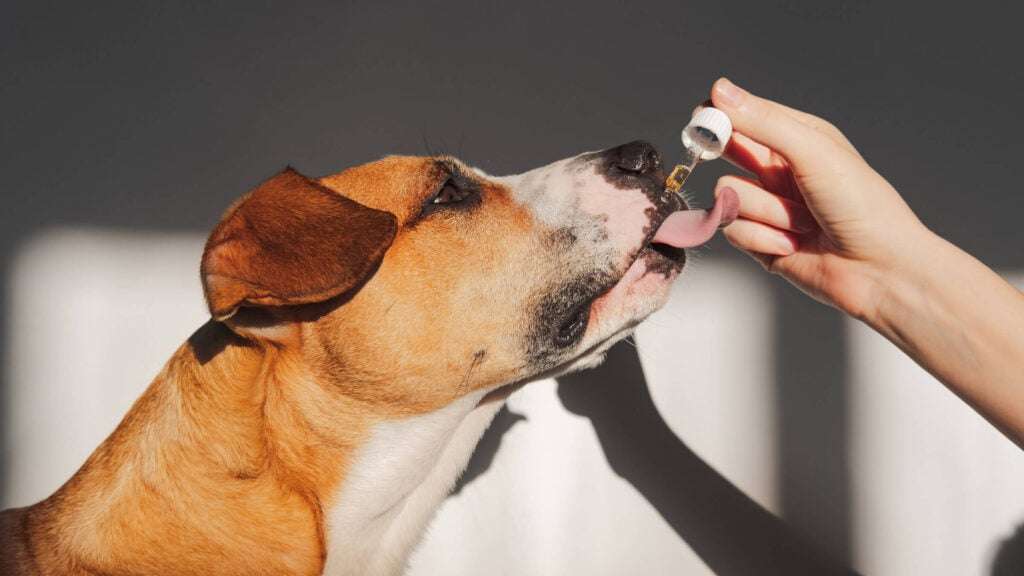
Brown and white dog happily licking Unruffled CBD Oil for pets from a dropper.

In recent years, pet owners have turned to CBD for pets to manage anxiety and promote relaxation in their furry companions. This natural remedy, derived from the hemp plant, has gained popularity for its potential to ease anxiety without the unwanted side effects associated with some conventional medications. In this comprehensive guide, we will explore the benefits of Unruffled CBD oil for pets. We will offer tips on dosing, and administration, and shed light on the science behind CBD's calming effects.


Understanding anxiety in pets

Before delving into CBD for pets, it's crucial to understand anxiety signs in animals. Pets, like humans, can experience stress and anxiety, which may manifest as excessive barking, destructive behavior's, restlessness, or even aggression. Identifying these signs is the first step towards relief for your anxious pet.


The Science Behind CBD's Calming Effects

CBD, short for cannabidiol, is a non-psychoactive compound found in hemp. It interacts with the endocannabinoid system (ECS) present in both humans and animals. The ECS plays a pivotal role in regulating various physiological processes, including mood, stress response, and pain perception. When CBD is introduced to the ECS, it can help balance these processes and potentially reduce anxiety.

Research has shown that CBD activates serotonin receptors in the brain, which regulate mood and anxiety. Additionally, CBD may decrease cortisol production, leading to an overall sense of calm.


Benefits of Using Unruffled CBD Oil for Pets

Unruffled CBD oil for pets is specifically formulated to relax and relieve anxious furry friends. Here are some of the key benefits:

Reduced Anxiety: Many pet owners have reported a significant reduction in anxiety-related behavior's after using Unruffled CBD oil. This can lead to a happier and more contented pet.

Improved Sleep: Pets suffering from anxiety often struggle with sleep. CBD can promote better sleep patterns, ensuring your pet gets the rest they need.

Minimized Aggression: Pet aggression can be linked to anxiety. CBD may reduce aggression by calming the nervous system.

Enhanced Quality of Life: When your pet is less anxious, they can enjoy a higher quality of life. They'll be more active, social, and less prone to stress-related health issues.


Dosing and Administration

CBD for pets requires careful dosage and administration methods. Here are some tips to use Unruffled CBD oil effectively:

Start Low and Take It Slow: Begin with a low dose and gradually increase it until you observe the desired effects. Every pet is different, so finding the right dose may take time.

Consult Your Veterinarian: It's essential to consult with your veterinarian before introducing any new supplement to your pet's routine, including CBD.

Choose Quality Products: Select high-quality CBD products designed for pets. Unruffled CBD oil is specifically formulated for their needs, providing a safe and effective option.

Administer Correctly: You can administer CBD oil directly into your pet's mouth, mix it with their food, or apply it to their favorite treat. Choose the method that works best for your pet.


From Fidgety to Relaxed: Success Stories

.

Brown dog looking up eagerly, awaiting a dropper of Unruffled CBD Oil for pets.

CBD for pets' effectiveness lies in pet owners' success stories who have seen remarkable changes in their furry companions. Many have witnessed their once-fidgety and anxious pets transform into calm and relaxed companions, making their lives, and their pets' lives, significantly better.

In conclusion, Unruffled CBD oil for pets offers a promising solution for managing anxiety and promoting relaxation in your furry friends. Understanding the science behind CBD's calming effects, along with proper dosing and administration, is crucial for the maximum results. As more pet owners share their success stories, it becomes increasingly evident that CBD for pets is a game-changer in pet wellness.