Home / CBD for Pets
Veterinarian-first CBD for Pets pillar page
CBD for Pets: Vet Guidance, Safety, THC, and Lab Testing
Many pet owners search for CBD when they are worried about a dog or cat. The first step should be veterinarian guidance because changes in behavior, mobility, appetite, energy, pain signs, seizures, anxiety-like behavior, or illness may need medical evaluation.
This guide explains what pet owners should know about CBD for pets, including FDA status, CBD vs THC, pet medication interactions, full-spectrum CBD, lab testing, certificates of analysis, storage safety, and where Unruffled CBD for Pets fits as a pet CBD product.
Understand why THC content and certificate of analysis review matter before buying pet CBD.
This page does not present CBD as a treatment for anxiety, pain, seizures, cancer, arthritis, behavior, or disease.
Talk with your veterinarian before combining CBD with pet medications, supplements, or ongoing care plans.
Learn what to look for in batch-specific testing for cannabinoids, THC, and contaminants.
Read the CBD for Dogs Guide
View Certificates of Analysis
Explore Unruffled CBD for Pets
Pet CBD Safety: Start With Your Veterinarian
Talk with your veterinarian before giving CBD to a pet, especially if your pet takes medication, has a medical condition, is senior, is pregnant or nursing, has liver-related concerns, or has new, severe, worsening, persistent, or unusual symptoms.
When to seek urgent care
Contact a veterinarian or animal emergency hospital urgently if your pet has seizures, collapse, trouble breathing, severe lethargy, vomiting, tremors, agitation, heavy drooling, weakness, disorientation, refusal to eat, severe pain, suspected poisoning, accidental THC ingestion, or symptoms that feel serious or unusual.
Medication safety
Do not stop, start, reduce, replace, or combine veterinary medication because of CBD information online. Medication decisions should be made with your veterinarian.
Locked storage
Keep CBD, THC, hemp, cannabis, and cannabinoid products locked, child-resistant, clearly labeled, and out of reach of children and pets.
Quick Answer: Is CBD Safe for Pets?
Bluegrass Hemp Oil should not claim that CBD is safe for pets. CBD products for pets are not FDA-approved animal drugs. Pet owners should talk with a veterinarian before giving CBD to a dog, cat, or other animal.
If CBD becomes part of a conversation with your veterinarian, review CBD content, THC content, product ingredients, medication interactions, batch-specific lab testing, and the certificate of analysis before buying.
Quick Answers for Pet Owners
These short answers are written for pet owners who may be searching by voice or scanning for a fast safety answer. They are not a substitute for veterinary care.
Is CBD safe for pets?
Bluegrass Hemp Oil should not claim that CBD is safe for pets. Talk with your veterinarian before giving CBD to a dog, cat, or other animal, especially if your pet takes medication, has a medical condition, is senior, pregnant, nursing, or has liver-related concerns.
Is CBD FDA-approved for pets?
No. CBD products for pets are not FDA-approved animal drugs. Pet CBD products should not be marketed as treatments for anxiety, pain, arthritis, seizures, cancer, inflammation, hyperactivity, behavior concerns, mobility problems, or any disease.
Should I ask my vet before giving CBD to my pet?
Yes. Pet owners should talk with a veterinarian before giving CBD to a pet. This is especially important if the pet takes medication, has a medical condition, is elderly, pregnant, nursing, or has new, severe, worsening, persistent, or unusual symptoms.
Can CBD interact with my pet’s medication?
CBD may interact with medications. Ask your veterinarian before combining CBD with anti-seizure medication, anxiety medication, sedatives, pain medication, NSAIDs, steroids, heart medication, liver-affecting medication, antibiotics, supplements, or multiple medications.
Can THC hurt dogs or cats?
Yes. THC can be dangerous for pets. Full-spectrum CBD may contain trace THC, so pet owners should review the certificate of analysis carefully and keep all CBD, THC, hemp, cannabis, and cannabinoid products locked away from pets.
What should a pet CBD lab report show?
A pet CBD certificate of analysis should be batch-specific and should verify CBD content, THC content, and contaminant testing. Look for testing for pesticides, heavy metals, residual solvents, microbials, and other quality markers when available.
CBD for Pets Guide: What This Page Covers
Editorial and E-E-A-T Note
This page is written as a pet-owner education hub for Bluegrass Hemp Oil. It is designed to help readers ask better questions before buying CBD oil for pets, CBD oil for dogs, CBD oil for cats, or other pet CBD products.
It is not veterinary medical advice, a diagnosis, a treatment plan, or a dosing guide. For brand background and accountability, learn more about Bill Polyniak, Bluegrass Hemp Oil, and Kentucky Cannabis Company.
Content should be reviewed periodically as FDA, veterinary, and state-level guidance changes.
What “CBD for Pets” Means
CBD for pets usually refers to hemp-derived products marketed for animals, including CBD oil for pets, CBD oil for dogs, CBD oil for cats, pet CBD bites, and full-spectrum CBD for pets. These products may contain CBD, other cannabinoids, carrier oils, flavors, and in some cases trace amounts of THC.
Many pet owners search for CBD and pets because they are worried about a dog or cat. This page keeps the focus on safety questions, veterinarian guidance, label review, lab testing, certificates of analysis, THC awareness, and responsible product evaluation.
CBD
Cannabidiol is a cannabinoid found in cannabis and hemp. This page does not describe CBD as a treatment for pet symptoms, diseases, or behavior concerns.
Full-spectrum CBD
Full-spectrum CBD may include multiple hemp compounds and may contain trace THC. Pet owners should verify THC content on the batch-specific certificate of analysis.
Pet CBD
Pet CBD products should be evaluated for ingredients, cannabinoid content, THC content, serving instructions, testing, storage safety, and veterinarian compatibility.
Is CBD FDA-Approved for Pets?
No. CBD products for pets are not FDA-approved animal drugs. They should not be presented as treatments for anxiety, pain, arthritis, seizures, cancer, inflammation, hyperactivity, behavior concerns, mobility problems, skin issues, digestive issues, stress, or any disease.
The FDA has warned companies about unapproved CBD products marketed with animal disease or treatment claims. Pet owners should be cautious when a product page, ad, review, or social post suggests that CBD can diagnose, treat, cure, prevent, relieve, reduce, or improve a pet health condition.
| CBD content can explain | CBD content should not claim |
|---|---|
| What CBD is and how it differs from THC. | That CBD treats, relieves, reduces, prevents, manages, or improves pet diseases, symptoms, behavior, pain, anxiety-like behavior, inflammation, seizures, cancer, arthritis, mobility issues, or wellness outcomes. |
| Why pet owners should ask a veterinarian before giving CBD to a pet. | That CBD is a replacement for veterinary evaluation, prescriptions, emergency care, or ongoing medical treatment. |
| How to review labels, ingredients, THC levels, and COAs. | That full-spectrum CBD is better for pets or that trace THC is automatically appropriate for a dog or cat. |
CBD vs THC for Pets
CBD and THC are different cannabinoids. THC is the intoxicating cannabinoid most associated with cannabis intoxication, and THC can be dangerous for pets. Full-spectrum CBD may contain trace THC, so the certificate of analysis matters.
| Question | CBD | THC | Pet-owner action |
|---|---|---|---|
| What is it? | A hemp/cannabis cannabinoid commonly listed on CBD product labels. | A cannabis cannabinoid associated with intoxication. | Review the product label and COA before buying. |
| Why does it matter for pets? | CBD may have side effects and may interact with medications. | THC can be dangerous for dogs and cats. | Ask your veterinarian about pet-specific risks. |
| What should the COA show? | CBD amount for the batch. | THC amount for the batch, including whether trace THC is present. | Compare the COA to the product label. |
For a broader cannabinoid overview, read the cannabinoids guide, the full-spectrum CBD guide, and the CBD vs THC guide.
Why THC Matters for Dogs and Cats
THC can be dangerous for pets. Accidental ingestion can happen when products are left on counters, in bags, in nightstands, in cars, or in shared living areas.
- Keep CBD, THC, hemp, cannabis, and cannabinoid products locked and out of reach.
- Use original containers with clear labels whenever possible.
- Do not leave products where pets or children can access them.
- Contact a veterinarian, animal emergency hospital, or poison control resource if accidental ingestion is suspected.
Because full-spectrum CBD may contain trace THC, pet owners should review the certificate of analysis before buying and should ask their veterinarian how THC exposure risk applies to their animal.
Pet CBD Safety Risks, Side Effects, and Red Flags
CBD may cause side effects in pets, and a pet’s individual risk can vary based on species, age, health status, liver-related concerns, medications, supplements, and accidental exposure to other cannabinoid products.
Possible side effect concerns to discuss
- Sleepiness or unusual lethargy
- Vomiting, diarrhea, or appetite changes
- Disorientation, weakness, or unusual behavior
- Liver-related concerns or medication-related concerns
- Accidental THC exposure or unknown product ingestion
Do not delay veterinary care
CBD should not be used to delay veterinary care. New, severe, worsening, persistent, or unusual symptoms should be evaluated by a veterinarian. Emergency signs include seizures, collapse, trouble breathing, severe lethargy, vomiting, tremors, agitation, heavy drooling, weakness, disorientation, refusal to eat, severe pain, suspected poisoning, and accidental THC ingestion.
CBD and Pet Medication Interactions
CBD may interact with pet medications. Ask your veterinarian before giving CBD to a pet that takes any prescription medication, over-the-counter medication, supplement, or multiple products.
Medication categories to discuss
Anti-seizure medication, anxiety medication, sedatives, pain medication, NSAIDs, steroids, heart medication, liver-affecting medication, antibiotics, and supplements.
Care plan caution
Do not stop, start, reduce, replace, or combine veterinary medication because of pet CBD content online. Medication changes should come from your veterinarian.
What to bring to the vet
Bring the product label, ingredient list, intended product format, certificate of analysis, and any medication or supplement list for your pet.
Pet CBD Product Types
Pet CBD products can come in several formats. The right conversation starts with your veterinarian, then moves to product labels, ingredients, testing, and storage safety.
| Product type | What to review | Questions to ask before buying |
|---|---|---|
| CBD oil for pets | CBD amount, THC amount, carrier oil, flavoring, serving instructions, and COA. | Is this labeled for animals, and has my veterinarian reviewed the product information? |
| CBD oil for dogs or cats | Species-specific labeling, ingredients, THC content, and batch testing. | Are there any ingredients that are inappropriate for my pet? |
| Pet CBD bites or chews | Full ingredient list, flavoring, cannabinoids per piece, THC content, and packaging safety. | Could my pet access the bag and consume more than intended? |
| Bundles | Each product’s label and COA, not just the bundle description. | Do I understand every product included, and has my veterinarian reviewed the plan? |
Pet CBD vs Human CBD
Pet owners often ask about the difference between pet CBD and human CBD. The safest answer is not to assume that a human product is appropriate for an animal. Product strength, ingredients, flavorings, serving instructions, packaging, and THC content may differ.
Label purpose
Pet CBD should be evaluated as a pet product, with animal-focused labeling, clear ingredients, and a batch-specific COA.
Ingredients
Human CBD products may include sweeteners, flavorings, essential oils, or other ingredients that require veterinary review before animal exposure.
THC and serving information
Do not rely on front-label wording alone. Review CBD content, THC content, and the certificate of analysis for the specific batch.
For label review basics, see how to read a CBD product label.
How to Choose Pet CBD Responsibly
Choosing CBD for pets should be a safety-first process, not a treatment shortcut. Use this checklist when comparing Bluegrass Hemp Oil pet CBD, Kentucky CBD for pets, online pet CBD products, or any CBD product marketed for dogs or cats.
Before buying
- Talk with your veterinarian first.
- Confirm the product is not making disease, anxiety, pain, arthritis, seizure, cancer, behavior, or mobility claims.
- Review the full ingredient list.
- Verify CBD content and THC content.
- Check whether the COA is batch-specific.
- Review storage instructions and packaging safety.
Quality signals
- Clear company identity and contact information.
- Transparent lab testing and COA access.
- Label information that matches the COA.
- No exaggerated pet health claims.
- Helpful education that encourages veterinary guidance.
- Access to support if you have product questions.
For deeper quality context, read the CBD quality guide and the pet CBD quality and safety standards guide.
Pet CBD Lab Testing and Certificate of Analysis Checklist
A pet CBD certificate of analysis, also called a COA, should help you compare what the label says with what the lab found for that batch. For CBD for pets lab testing, look for cannabinoid results and contaminant testing whenever available.
| COA item | Why it matters | What to check |
|---|---|---|
| Batch number | Confirms the report connects to the product you are reviewing. | Match the COA batch to the product package. |
| CBD content | Shows the measured CBD amount in the tested batch. | Compare the lab value with the label. |
| THC content | Full-spectrum CBD may contain trace THC, and THC can be dangerous for pets. | Confirm THC results before buying. |
| Contaminants | Testing may include pesticides, heavy metals, residual solvents, microbials, or other quality markers. | Look for contaminant panels when available. |
| Lab identity and date | Recent, third-party testing supports transparency. | Review who tested the product and when. |
Where Unruffled CBD for Pets Fits — and Where It Does Not
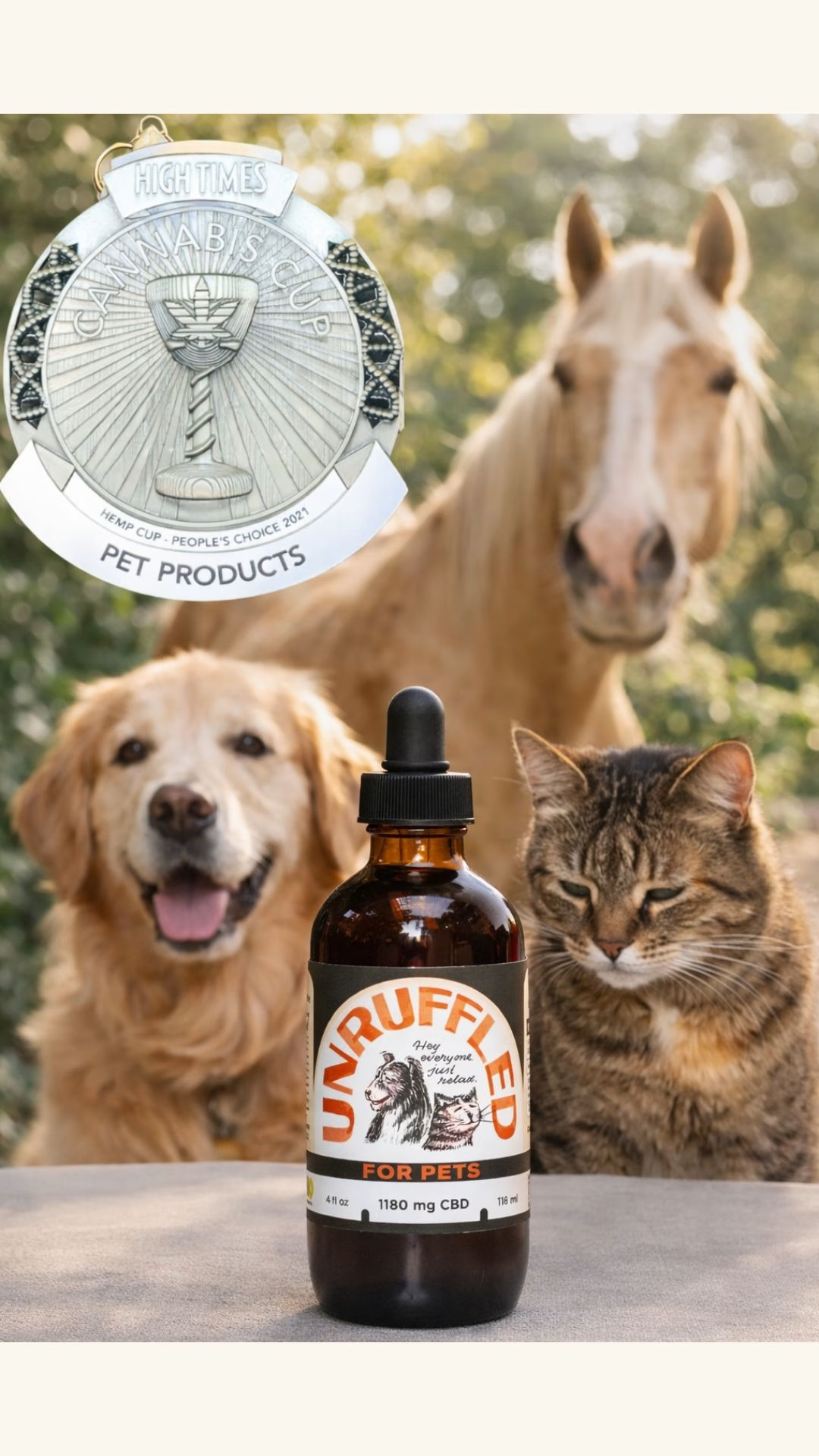
Unruffled CBD for Pets is a Bluegrass Hemp Oil pet CBD product to evaluate after veterinarian guidance, label review, ingredient review, THC review, lab testing review, and COA review.
Unruffled is a pet CBD product, not a treatment for anxiety, pain, arthritis, seizures, cancer, inflammation, hyperactivity, behavior concerns, mobility problems, or any disease.
Use Unruffled pages for product details
Review label information, ingredients, CBD content, THC content, serving information, and available COAs before buying.
Use this page for decision support
This CBD for Pets guide helps you understand what to ask your veterinarian and what to check on a pet CBD product.
Use veterinary care for health concerns
Symptoms, disease concerns, behavior changes, pain signs, seizures, appetite changes, and other medical questions require veterinary guidance.
CBD for Pets FAQ
These answers are intentionally cautious because pet CBD content can influence health and purchasing decisions. For individual animals, your veterinarian is the right source of guidance.
Is CBD safe for pets?
Bluegrass Hemp Oil should not claim that CBD is safe for pets. Talk with your veterinarian before giving CBD to a dog, cat, or other animal, especially if your pet takes medication, has a medical condition, is senior, pregnant, nursing, or has liver-related concerns.
Is CBD FDA-approved for pets?
No. CBD products for pets are not FDA-approved animal drugs. Pet CBD products should not be marketed as treatments for anxiety, pain, arthritis, seizures, cancer, inflammation, hyperactivity, behavior concerns, mobility problems, or any disease.
Should I give my dog CBD?
Do not decide based only on online content. If you are considering CBD for a dog, talk with your veterinarian first and review the product label, ingredients, CBD content, THC content, medication interaction concerns, and batch-specific certificate of analysis.
Should I give my cat CBD?
Cats can have species-specific sensitivities, and online CBD content is not a substitute for veterinary care. Talk with your veterinarian before giving CBD to a cat, especially if your cat has health concerns or takes medication.
Can CBD interact with my pet’s medication?
CBD may interact with pet medications. Ask your veterinarian before combining CBD with anti-seizure medication, anxiety medication, sedatives, pain medication, NSAIDs, steroids, heart medication, liver-affecting medication, antibiotics, supplements, or multiple medications.
Can THC hurt dogs or cats?
Yes. THC can be dangerous for pets. Keep THC, CBD, hemp, cannabis, and cannabinoid products locked and out of reach, and contact a veterinarian or animal emergency hospital if accidental ingestion is suspected.
Can full-spectrum CBD contain THC?
Yes. Full-spectrum CBD may contain trace THC. Pet owners should review the certificate of analysis for the specific batch and confirm CBD content, THC content, and contaminant testing before buying a pet CBD product.
What should a pet CBD certificate of analysis show?
A pet CBD certificate of analysis should be batch-specific and should verify CBD content, THC content, and contaminant testing. Look for testing for pesticides, heavy metals, residual solvents, microbials, and other quality markers when available.
Is Unruffled CBD for Pets a treatment product?
No. Unruffled CBD for Pets is a pet CBD product to evaluate with veterinarian guidance. It is not a treatment for anxiety, pain, arthritis, seizures, cancer, inflammation, hyperactivity, behavior concerns, mobility problems, or any disease.
What is the difference between pet CBD and human CBD?
Pet CBD and human CBD can differ in ingredients, strength, flavoring, packaging, serving information, and THC content. Do not assume a human CBD product is appropriate for an animal. Ask your veterinarian and review the COA before buying.
Before Buying CBD for Pets
Use this order: veterinarian guidance first, product-quality review second, COA review third, and purchase decision last.
- Talk with your veterinarian about your pet’s health, medications, age, and risk factors.
- Review the product label and ingredient list.
- Review CBD content, THC content, and batch-specific lab testing.
- Keep all cannabinoid products locked and out of reach.
- Do not use CBD to delay veterinary care.
FDA and Veterinary Disclaimer
This page is educational and is not veterinary medical advice. CBD products for pets are not FDA-approved animal drugs. This page does not claim that CBD, Unruffled CBD for Pets, or any Bluegrass Hemp Oil product diagnoses, treats, cures, prevents, relieves, reduces, manages, or improves anxiety, pain, arthritis, seizures, cancer, inflammation, hyperactivity, behavior concerns, mobility problems, skin issues, digestive issues, stress, or any disease in pets.
Talk with your veterinarian before giving CBD to a pet. Do not stop, start, reduce, replace, or combine veterinary medication because of CBD information online.
Sources and Further Reading
- FDA: Regulation of Cannabis and Cannabis-Derived Products, Including CBD
- FDA: Cannabis-Derived Products in Veterinary Medicine
- FDA Warning Letter: CBD Animal Products
- ASPCA: Safety Concerns About CBD Products and Pets
- AVMA: Cannabis Use and Pets
- Bluegrass Hemp Oil: CBD Lab Testing
- Bluegrass Hemp Oil: Certificates of Analysis