The Genesis Standard: Bluegrass Hemp Oil’s Transparency & Process Protocol
Transparency & Process Protocol
The Genesis Standard: How Bluegrass Hemp Oil Built a Repeatable Full-Spectrum CBD Protocol
Quick answer: The Genesis Standard is Bluegrass Hemp Oil’s process for making CBD oil consistent, traceable, and easy to verify. It prioritizes Kentucky-grown hemp, flower-only oleoresin, controlled extraction, batch-specific Certificates of Analysis, and cautious education for people comparing full-spectrum CBD oil quality standards in 2026.
Bill Polyniak, Founder of Bluegrass Hemp Oil and Kentucky Cannabis Company
Standard operating procedures and quality promises audited for 2026 regulatory compliance by the Bluegrass Hemp Oil Quality Team.
This guide is educational. Ask a qualified clinician before using CBD with medications, pregnancy, liver concerns, or serious health conditions.
This protocol moves from origin story to plant part, extraction, testing, dosing, and safety.
The 2009 Lexington Moment That Started the Genesis Standard
The Genesis Standard did not begin as a marketing idea. It began with a father looking for a more consistent way to understand hemp, cannabinoids, and serving control after his son Colten’s health journey began in 2009. That family need led Bill Polyniak toward the Kentucky hemp revival years and the founding of Kentucky Cannabis Company in 2014.
Bluegrass Hemp Oil’s story records Bill as part of Kentucky’s early pilot-program era, when hemp returned to legal research fields after decades of restriction. The Genesis Blend name became tied to a simple operating question: can a full-spectrum hemp extract be grown, extracted, tested, labeled, and repeated in a way families can understand?
This guide explains the process behind that standard. It does not claim that CBD treats or cures disease. It shows how sourcing, plant part selection, extraction method, lab testing, and serving consistency affect the quality conversation around full spectrum CBD oil quality standards in 2026.
What Is the Genesis Standard?
The Genesis Standard is a quality protocol built around flower-only extraction, repeatable serving control, and batch-specific lab verification. Instead of asking customers to trust broad claims, it asks them to verify the plant source, extraction method, cannabinoid profile, contaminant testing, and Certificate of Analysis before choosing a CBD oil.
The goal is integrity and repeatability. A CBD oil label should tell customers how much CBD is present, what other cannabinoids appear in the extract, whether THC remains within hemp limits, which lab tested the batch, and whether the product passed contaminant screening.
| Quality checkpoint | Genesis Standard | Common industry shortcut |
|---|---|---|
| Plant part | Flower-first resin material from cannabinoid-rich blooms. | Aerial parts or mixed biomass that may include stalk, stem, and leaf. |
| Sourcing | Kentucky seed-to-shelf CBD transparency with traceable batches. | Generic wholesale extract with limited farm documentation. |
| Testing | COA review for potency, THC, solvents, pesticides, heavy metals, microbials, and mycotoxins. | Only a potency screen or outdated lab report. |
| Consumer education | Clear serving guidance, conservative language, and medication safety reminders. | Broad wellness claims without explaining risk or verification. |
What Is the Difference Between Flower-Only and Aerial Part Extraction?
Flower-only extraction focuses on the hemp bloom, where trichomes hold most of the plant’s cannabinoid and terpene resin. Aerial-part extraction can include leaves, stems, and stalks, which may increase plant-matter dilution and make it harder for shoppers to compare cannabinoid density from one product to another.
This difference is often called the resin gap. Hemp flowers are the primary resin-producing portion of the plant. Stalks and stems are useful for fiber and industrial hemp applications, but they are not the same raw material as cannabinoid-rich floral resin.
For shoppers comparing Genesis Blend CBD vs corporate brands, the practical question is simple: does the COA show a meaningful full-spectrum profile, or does it only show CBD with little supporting cannabinoid depth?
Flower-only resin
Built around blooms, trichomes, and the natural oleoresin that carries cannabinoids, terpenes, and plant lipids.
Aerial parts
A broader term that may include leaves, stems, stalk, and flower. Always check the brand’s sourcing language and COA.
Why it matters
Plant part selection can affect flavor, cannabinoid density, terpene retention, and repeatable serving design.

How Did Bluegrass Hemp Oil Build a Repeatable Dose Hemp Extract Protocol?
A repeatable dose hemp extract protocol starts with controlled inputs, measured extraction, lab testing, and label-to-batch verification. Early hemp products often varied from bottle to bottle. The Genesis approach focuses on making each serving understandable by connecting the bottle label to a tested batch.
For the consumer, repeatability means the label should not be a guess. The batch should show CBD concentration, total cannabinoids, THC content, and safety screens. When the product changes, the COA should change with it.
The process in four checks
- Plant material: start with cannabinoid-rich bloom instead of low-resin filler material.
- Extraction: use an extraction process designed to preserve the natural oil fraction rather than stripping the plant down to isolated CBD only.
- Testing: verify potency, THC, solvents, pesticides, heavy metals, microbials, and mycotoxins.
- Serving control: connect the milligrams per serving to the batch-specific COA before recommending a routine.
Why Does CBD Oil Quality Matter for Seizure-Related Conversations?
CBD quality matters in seizure-related conversations because dose consistency, medication interactions, and liver monitoring are clinical issues. Over-the-counter hemp products are not a substitute for neurologist-directed care, and families should not change anti-seizure medication without medical supervision.
Bluegrass Hemp Oil’s origin story includes a family experience with epilepsy, but this page does not present Genesis Blend as a seizure treatment. It presents the quality controls a cautious consumer should expect from any hemp brand discussing sensitive wellness topics.
How Do You Read a CBD Certificate of Analysis?
A CBD Certificate of Analysis should confirm the product, batch, test date, cannabinoid potency, THC level, and contaminant screens. A COA is useful only when it matches the product in your hand and comes from a qualified laboratory with clear testing methods.
Match the batch
The bottle, product page, or QR code should point to the same batch or lot shown on the COA.
Check cannabinoids
Look beyond CBD. Review CBC, CBG, CBN, CBDA, THC, and total cannabinoid depth when available.
Confirm safety screens
Look for pesticides, heavy metals, residual solvents, microbials, and mycotoxins. “ND” usually means not detected above the lab’s reporting limit.
Review the date
A current product should have current documentation. Avoid products with missing, expired, or unrelated lab reports.
Frequently Asked Questions
What makes Genesis Blend different from other CBD?
Genesis Blend is built around flower-only full-spectrum hemp extract, repeatable serving control, and batch-specific COA verification. The difference is not one marketing phrase. It is the combined process of plant selection, extraction, testing, labeling, and education.
Is Bluegrass Hemp Oil third-party tested?
Bluegrass Hemp Oil publishes Certificates of Analysis so shoppers can review product-specific testing. A good COA should show cannabinoid potency, THC level, residual solvents, pesticides, heavy metals, microbials, and other safety screens relevant to the product type.
What is the difference between flower-only and aerial part extraction?
Flower-only extraction focuses on hemp blooms, while aerial-part extraction may include leaves, stalks, stems, and flowers. The hemp flower is where resin-rich trichomes are concentrated, so plant-part selection can influence cannabinoid density, flavor, and COA depth.
How do I compare Genesis Blend CBD vs corporate brands?
Compare the batch COA, plant source, extraction method, minor cannabinoid profile, THC level, contaminant testing, and customer education. A brand should make verification easy before asking for trust.
Where can I find a CBD education center near Midway, KY?
Bluegrass Hemp Oil is rooted in Midway, Kentucky, with online education, product support, and COA access for shoppers comparing Kentucky-grown full-spectrum CBD. Local customers can review product options and ask batch-specific questions before choosing a routine.
Verify Before You Buy
The Genesis Standard is a verification process. Review the product, serving size, COA, and safety notes before choosing a CBD routine.
Sources and Further Reading
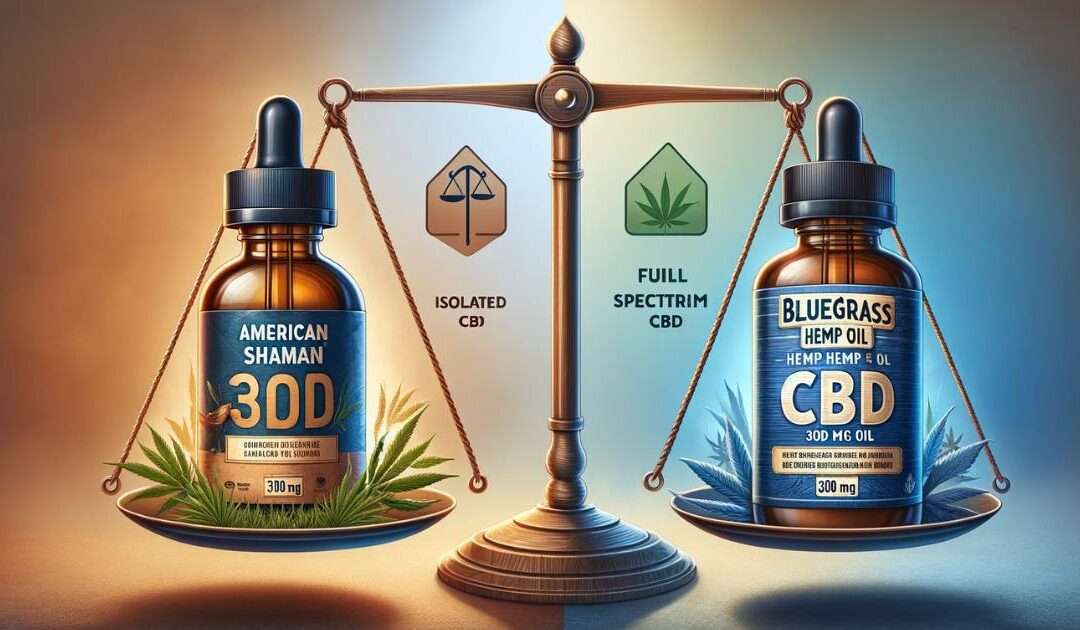
American Shaman vs Bluegrass Hemp Oil 300mg CBD: Honest Product Comparison
How Should You Compare American Shaman 300 mg CBD and Bluegrass Hemp Oil 300 mg CBD?
CBD brand comparison • Label review • COA education
Safety statement: This article is educational and is not medical advice. Bluegrass Hemp Oil products are not intended to diagnose, treat, cure, or prevent any disease. CBD may interact with medications, may cause drowsiness, may carry liver-related safety considerations, and full-spectrum CBD may contain trace THC. Talk with a qualified healthcare professional before using CBD if you take medication, drink alcohol, use sedating products, are pregnant or nursing, have liver concerns, are subject to drug testing, or manage a medical condition.
Quick answer: American Shaman 300 mg CBD and Bluegrass Hemp Oil Genesis Blend 300 mg CBD should be compared by product format, CBD per mL, extract type, THC information, ingredients, batch-specific Certificate of Analysis, and company transparency. Both are positioned as 300 mg CBD products, but shoppers should not choose based on the front label alone. Review the product label, COA, THC statement, serving information, and safety considerations before deciding which CBD format fits your routine.
Use this comparison as product education, not a medical recommendation. A fair 300 mg CBD oil comparison looks beyond brand familiarity and asks practical questions: What does the label say, how much CBD is listed per mL, what type of hemp extract is used, what does the COA show, and what safety considerations apply?
For broader context, review the CBD quality guide, the CBD product guide, what full-spectrum CBD means, and CBD product types explained before comparing individual bottles.
At-a-glance comparison
American Shaman vs Bluegrass Hemp Oil 300 mg CBD Comparison Table
This table uses safe, verifiable criteria. Product formulas, pricing, COAs, and labels can change, so always verify the current product page and the batch-specific COA before buying.
| Comparison Point | American Shaman 300 mg CBD | Bluegrass Hemp Oil Genesis Blend 300 mg CBD | Best Comparison Method |
|---|---|---|---|
| Product format | Water-soluble hemp oil format, based on the current product page reviewed for this article. | CBD oil tincture format, based on Genesis Blend product education. | Compare how each format is labeled, used, and documented. |
| Bottle size | Commonly listed as 30 mL for the water-soluble 300 mg product. Verify current label. | Commonly discussed as a 1 oz or about 30 mL CBD oil format. Verify current label. | Use the current bottle size shown on the product label. |
| Total CBD | 300 mg total CBD per bottle when listed as a 300 mg product. | 300 mg total CBD per bottle when listed as a 300 mg product. | Confirm the total CBD on the label and COA. |
| CBD per mL | 300 mg ÷ 30 mL = about 10 mg CBD per mL, if the bottle is 30 mL. | 300 mg ÷ 30 mL = about 10 mg CBD per mL, if the bottle is 30 mL. | Use label math and verify with the COA. |
| Extract type | Verify whether the current product is labeled THC-free, full-spectrum, broad-spectrum, or another extract type. | Positioned as full-spectrum CBD oil. Verify cannabinoid profile and THC information on the COA. | Compare extract type and cannabinoid profile, not marketing language alone. |
| THC information | Some American Shaman product pages include THC-free or THC-limit language. Verify the specific product and COA. | Full-spectrum CBD may contain trace THC. Verify the specific batch COA. | Review the THC amount on the COA, especially if drug testing matters. |
| Ingredients | Review flavoring, sweeteners, carrier ingredients, and any format-specific ingredients. | Review carrier oil, hemp extract profile, and any flavoring or added ingredients. | Check ingredient lists for allergens, preferences, and routine fit. |
| COA access | Review American Shaman lab-report access and confirm product and batch match. | Review Bluegrass Hemp Oil COAs and confirm product and batch match. | Do not rely on generic lab-tested claims. Match the bottle to the COA. |
| Best comparison method | Compare current labels, serving information, COAs, THC statements, ingredients, and safety considerations. | Use documented product facts, not unsupported outcome claims. | |
Serving information
Why CBD per mL Matters More Than the Front Label
A front label that says “300 mg CBD” usually refers to the total CBD in the bottle. It does not automatically tell you how much CBD is in each serving.
300 mg ÷ 30 mL = 10 mg CBD per mL
This math is educational label information only. It is not dosage advice. If a bottle size is different, the CBD per mL changes. That is why a product comparison should always include total CBD, bottle size, serving label, and batch-specific COA.
Label review
Label Checklist for Comparing 300 mg CBD Oils
Use the product label before comparing price, brand preference, or routine fit. For a deeper walkthrough, review how to read a CBD product label.
| Label Item | What to Check |
|---|---|
| Product name | Confirm the exact product name, not just the brand name. |
| Product format | Check whether it is water-soluble CBD, a CBD oil tincture, a capsule, a gummy, or another format. |
| Total CBD per package | Confirm whether the front label lists 300 mg total CBD for the full bottle. |
| CBD per serving | Review the serving label and do not assume the full bottle amount equals one serving. |
| CBD per mL | Divide total CBD by bottle size when the label provides enough information. |
| Extract type | Look for full-spectrum, broad-spectrum, isolate, or THC-free language. |
| THC statement | Check whether the product may contain trace THC or is positioned as THC-free. |
| Ingredient list | Review carrier ingredients, sweeteners, flavors, botanicals, allergens, and additives. |
| Carrier oil | For tinctures, check whether the product uses MCT oil, hemp seed oil, olive oil, or another carrier. |
| Flavoring or botanicals | Check added flavors, botanical ingredients, or sweeteners if relevant to your preferences. |
| Batch number | Find the batch or lot number and match it to the COA. |
| COA access | Look for a QR code, link, or batch lookup process. |
| Warnings | Review medication, pregnancy or nursing, drowsiness, age, drug-testing, and storage warnings. |
| Manufacturer contact information | Confirm that the company provides a way to ask product-specific questions. |
Certificate of Analysis
How to Use a COA When Comparing American Shaman and Bluegrass Hemp Oil
A CBD Certificate of Analysis helps shoppers verify whether the product matches the label. It should be current, batch-specific, and easy to connect to the bottle you are reviewing. Use CBD lab testing and Certificates of Analysis and review CBD Certificates of Analysis as supporting resources.
| COA Item | Why It Matters |
|---|---|
| Product name | The COA should match the exact product being compared. |
| Batch number | The batch or lot number should match the bottle or package. |
| CBD amount | Confirms CBD content for the tested batch. |
| THC amount | Helps shoppers evaluate trace THC or THC-free statements. |
| Cannabinoid profile | Shows CBD and other cannabinoids reported by the lab. |
| Testing date | Helps determine whether the report is current enough to be useful. |
| Lab name | Shows who performed the testing. |
| Heavy metals testing | Helps identify available contaminant screening. |
| Pesticide testing | Helps evaluate agricultural residue screening. |
| Residual solvent testing | Important when solvent-based extraction or processing is relevant. |
| Microbial testing | Helps evaluate available screening for microbes or related contaminants. |
| Label-to-COA match | The label and COA should tell the same product story. |
Full-spectrum and THC
Full-Spectrum CBD, THC-Free Options, and Drug-Testing Considerations
Full-spectrum CBD may contain trace THC. THC-free options may appeal to shoppers who want to avoid THC, but the label and COA still matter. Learn more about full-spectrum CBD vs CBD isolate and CBD and drug testing questions before choosing a product.
Drug-testing caution: No CBD company should guarantee drug-test outcomes. People subject to workplace, legal, athletic, professional, or medical drug testing should review the COA and speak with the testing authority or a qualified professional before using full-spectrum CBD.
Product-format education
Water-Soluble CBD Oil vs Full-Spectrum CBD Oil Tincture
Water-soluble CBD oil and full-spectrum CBD oil tinctures are different product formats. A fair comparison should focus on product-format information, serving information, ingredients, THC information, and COA details before choosing a format. For broader context, review CBD absorption and bioavailability.
| Comparison Area | Water-Soluble CBD Oil | Full-Spectrum CBD Oil Tincture |
|---|---|---|
| Product format | Designed as a water-soluble liquid format. Verify current label. | Oil-based tincture format. Verify current label. |
| Label review | Check total CBD, CBD per mL, flavoring, serving label, and format-specific ingredients. | Check total CBD, CBD per mL, carrier oil, serving label, and extract type. |
| Ingredient review | Review sweeteners, flavors, preservatives, or formulation ingredients. | Review carrier oil, hemp extract, flavoring, and botanicals if present. |
| THC information | Verify whether the specific product is THC-free or contains trace THC. | Full-spectrum CBD may contain trace THC. Verify on the COA. |
| COA review | Match the product and batch to the lab report. | Match the product and batch to the lab report. |
| Routine fit | May fit shoppers who prefer a water-mixable format. | May fit shoppers who prefer an oil tincture format. |
Safety review
Safety Questions to Ask Before Choosing a CBD Oil
Use these questions before comparing brand preference, value, or product format.
| Safety Question | Why It Matters |
|---|---|
| Do you take medication? | CBD may interact with medications, so professional guidance matters. |
| Do you have liver concerns? | CBD may carry liver-related safety considerations for some people. |
| Do you drink alcohol or use sedating products? | CBD may cause drowsiness and may increase drowsiness with alcohol or sedating products. |
| Are you pregnant or nursing? | Pregnancy and nursing require qualified healthcare guidance before CBD use. |
| Are you subject to drug testing? | Full-spectrum CBD may contain trace THC, and no CBD company should guarantee drug-test outcomes. |
| Are you buying for a child? | CBD products should not be used for a child without qualified medical guidance. |
| Are you buying for a pet? | Talk with a veterinarian before using CBD for a pet. |
| Are you using multiple CBD products? | Multiple products can make total CBD and THC exposure harder to track. |
YMYL-safe comparison language
Claims to Avoid When Comparing CBD Brands
CBD comparison content should be useful without making unsupported health-outcome claims.
| Risky Claim | Safer Rewrite |
|---|---|
| “Bluegrass Hemp Oil is more effective.” | “Bluegrass Hemp Oil provides a full-spectrum hemp extract profile that shoppers can review through the label and COA.” |
| “Full-spectrum CBD works better.” | “Full-spectrum CBD offers a broader hemp extract profile, while THC-free options may fit shoppers who want to avoid THC.” |
| “CBD helps pain, anxiety, sleep, or seizures.” | “This comparison focuses on product format, CBD per mL, label review, COA review, THC content, and safety considerations.” |
| “CBD is safe for everyone.” | “CBD may interact with medications, may cause drowsiness, and may carry liver-related safety considerations.” |
| “CBD will not affect drug testing.” | “Full-spectrum CBD may contain trace THC, and no CBD company should guarantee drug-test outcomes.” |
Definitions
American Shaman vs Bluegrass Hemp Oil Terms at a Glance
| Entity | Plain-English Meaning |
|---|---|
| CBD | Cannabidiol, a cannabinoid found in hemp and cannabis plants. |
| Full-spectrum CBD | Hemp extract that may contain CBD, minor cannabinoids, terpenes, flavonoids, and trace THC. |
| THC | A cannabinoid associated with intoxication and drug-testing considerations. |
| COA | Certificate of Analysis, a lab report that shows product testing results. |
| Cannabinoid profile | The lab-reported mix of CBD, THC, and other cannabinoids in a product. |
| Batch number | A product identifier used to match the bottle to a specific COA. |
| CBD per mL | The amount of CBD in one milliliter of liquid. |
| Water-soluble CBD | A CBD liquid format designed to mix with water or other liquids. Review ingredients and COA details. |
| CBD tincture | A liquid CBD product commonly made with hemp extract and a carrier oil. |
| MCT oil | A common carrier oil used in some CBD tinctures. |
| Product format | The product type, such as oil, water-soluble liquid, gummy, capsule, topical, or pet product. |
| Serving information | Label details that explain the measured amount per serving or unit. |
Voice-search answers
Frequently Asked Questions About American Shaman vs Bluegrass Hemp Oil 300 mg CBD
Is American Shaman 300 mg CBD the same as Bluegrass Hemp Oil 300 mg CBD?
No. Both may be compared as 300 mg CBD products, but shoppers should compare product format, extract type, ingredients, THC information, serving information, and the batch-specific COA before deciding which format fits their routine.
How much CBD is in a 300 mg CBD oil?
A 300 mg CBD oil usually means the bottle contains 300 mg total CBD. If the bottle is 30 mL, the label math is 10 mg CBD per mL. Always verify the current bottle size and serving label.
What does CBD per mL mean?
CBD per mL is the amount of CBD in one milliliter of liquid. It helps shoppers compare two CBD oils more clearly than the front-label total alone.
Is Bluegrass Hemp Oil Genesis Blend full-spectrum?
Genesis Blend is positioned as a full-spectrum CBD oil. Shoppers should still review the current product label and batch-specific Certificate of Analysis for the cannabinoid profile and THC information.
Is American Shaman water-soluble CBD different from a CBD tincture?
Yes. Water-soluble CBD and CBD oil tinctures are different product formats. Compare the label, ingredients, serving information, THC statement, and COA before choosing a format.
Should I compare CBD products by price alone?
No. Price can be useful, but it should be considered after you review total CBD, CBD per mL, ingredients, extract type, THC information, COA access, and safety considerations.
Does full-spectrum CBD contain THC?
Full-spectrum CBD may contain trace THC. Review the COA for the specific batch and consider drug-testing concerns before using any full-spectrum CBD product.
What is the most important document to check before buying CBD oil?
The batch-specific Certificate of Analysis is one of the most important documents to review. It can help verify CBD amount, THC amount, cannabinoid profile, testing date, lab name, and available contaminant testing.
Can CBD interact with medications?
Yes. CBD may interact with medications. Talk with a qualified healthcare professional before using CBD if you take prescription or over-the-counter medication.
Can CBD cause drowsiness?
CBD may cause drowsiness in some people and may increase drowsiness when combined with alcohol or sedating products. Avoid safety-sensitive activities if you feel impaired or unusually drowsy.
Can full-spectrum CBD affect drug-testing considerations?
Yes. Full-spectrum CBD may contain trace THC, and no CBD company should guarantee a drug-test outcome. Review the COA and speak with the testing authority or a qualified professional if drug testing matters for you.
Where can I ask Bluegrass Hemp Oil product questions?
You can contact Bluegrass Hemp Oil after reviewing label, COA, THC, and safety information. Use the contact link near the end of this guide for product-specific questions.
Editorial maintenance
How This CBD Comparison Should Be Kept Current
CBD product details can change. A useful comparison should be reviewed quarterly for current American Shaman product details, current Genesis Blend product details, current COA links, internal links, safety language, FAQ coverage, schema accuracy, product CTA placement, and Bill Polyniak E-E-A-T signals.
This page should continue to prioritize long-tail shopper questions such as “how to compare American Shaman and Bluegrass Hemp Oil,” “what does 300 mg CBD mean on a bottle,” “how do I read a CBD oil COA,” and “does full-spectrum CBD contain THC.”
Visible external source links
Visible External Source Links
These outgoing links are repeated as high-contrast source buttons with raw URLs so they remain easy to verify in WordPress.
FDA consumer update on CBD product safety considerations
https://www.fda.gov/consumers/consumer-updates/what-you-need-know-and-what-were-working-find-out-about-products-containing-cannabis-or-cannabis
CDC information about CBD and public-health considerations
https://www.cdc.gov/cannabis/about/about-cbd.html
NCCIH overview of cannabis, marijuana, and cannabinoids
https://www.nccih.nih.gov/health/cannabis-marijuana-and-cannabinoids-what-you-need-to-know
CBD American Shaman 30 mL water-soluble CBD product page
https://cbdamericanshaman.com/water-soluble-full-spectrum-cbd-oil-30ml-thc-free
CBD American Shaman lab reports and CBD oil test results
https://cbdamericanshaman.com/cbd-lab-reports-or-cbd-oil-test-results-or-cbd-american-shaman
Google Search Central guidance on helpful, reliable, people-first content
https://developers.google.com/search/docs/fundamentals/creating-helpful-content
Next step after education
Compare 300 mg CBD Products After Reviewing Labels, COAs, THC, and Safety
After reviewing product format, CBD per mL, extract type, ingredient lists, COAs, THC information, and safety questions, you can compare Bluegrass Hemp Oil product paths or ask a product-specific question.

Best CBD Oil in Lexington, KY? How to Choose a Local CBD Store
Best CBD Oil in Lexington, KY? How to Choose a Local CBD Store
Searching for CBD oil in Lexington, KY can feel overwhelming. A trustworthy local CBD store should help you understand product labels, CBD amount per serving, THC content, Certificates of Analysis, lab testing, ingredients, and safety considerations before you buy.
Bluegrass Hemp Oil serves Kentucky customers with a focus on Kentucky-grown hemp, full-spectrum CBD education, product transparency, and local customer support. This guide explains what Lexington and Kentucky shoppers should review before choosing a CBD oil, CBD gummies, capsules, topicals, pet CBD products, or any other hemp-derived CBD product.
Why Local CBD Store Trust Matters
A local CBD store should make it easier to understand what is in a product before you buy it. Instead of relying on hype, look for clear labels, batch-specific Certificates of Analysis, lab testing, THC transparency, ingredient information, and staff who can point you toward product information without making medical claims.
Clear Product Labels
Labels should identify CBD amount per serving, total CBD per package, ingredients, THC information, and warning language.
Batch-Specific COAs
A CBD Certificate of Analysis helps shoppers compare cannabinoid content, THC levels, and batch details.
Lab-Testing Transparency
Lab testing supports product transparency, but it should never be presented as proof that a product treats a symptom or condition.
About Bluegrass Hemp Oil in Kentucky
Bluegrass Hemp Oil is a Kentucky-founded CBD company focused on Kentucky-grown hemp, full-spectrum CBD education, product transparency, lab testing, Certificates of Analysis, and customer support. The Lexington and Midway locations help customers review product labels, CBD amount per serving, THC content, ingredients, and safety information before choosing hemp-derived CBD products.
People searching for a CBD store near me in Lexington, KY often want local support, a real phone number, and clear information before buying. Bluegrass Hemp Oil provides that local context through its Kentucky retail presence and educational resources.
Local Recognition and Customer Support
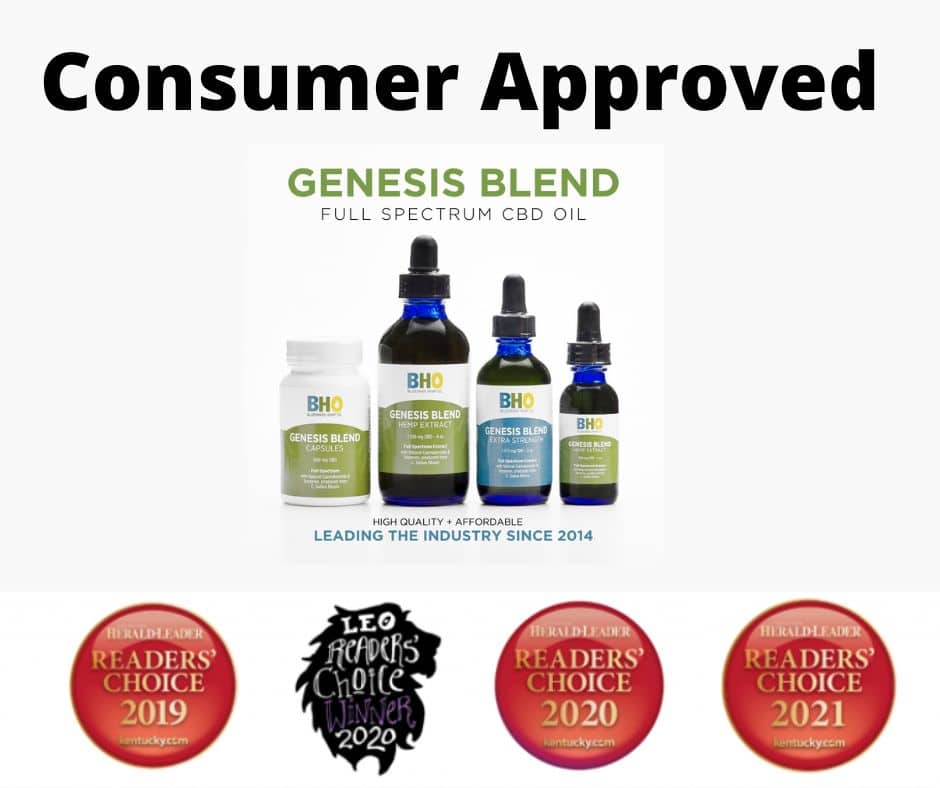
Bluegrass Hemp Oil has received local recognition from Lexington-area readers and customers over the years. Awards and reviews can help shoppers evaluate local reputation, but they should be considered alongside product labels, Certificates of Analysis, lab testing, THC content, ingredient transparency, and customer support.
The company’s press materials reference Readers’ Choice recognition, including 2019 recognition for Best CBD Company and Products by the Lexington Herald-Leader. Award language should always be dated, sourced, and treated as a reputation signal rather than medical proof.

What to Look for When Buying CBD Oil in Lexington, KY
When comparing CBD oil Lexington KY options, start with objective product information. A trustworthy Kentucky CBD oil company should help you review serving information, ingredients, THC content, COAs, and lab-testing details before a purchase.
| What to Check | Why It Matters |
|---|---|
| CBD amount per serving | Helps shoppers compare products clearly. |
| Total CBD per bottle or package | Helps compare product strength. |
| THC content | Full-spectrum CBD may contain trace THC. |
| Product format | Oils, gummies, capsules, and topicals are used differently. |
| Ingredient list | Helps identify allergens, sweeteners, carrier oils, and additives. |
| Batch number | Should match the Certificate of Analysis. |
| Certificate of Analysis | Supports cannabinoid and testing transparency. |
| Lab-testing date | Helps confirm freshness of testing. |
| Company contact information | Makes support easier. |
| Safety language | Responsible CBD companies avoid disease claims. |
Lab Testing and Certificates of Analysis
A Certificate of Analysis helps customers review cannabinoid content, THC levels, batch information, and available testing details. COAs support transparency, but they do not prove that CBD treats symptoms, conditions, or disease.
CBD Store vs Dispensary: What Lexington Shoppers Should Know
A hemp CBD store and a cannabis dispensary are not the same thing. Bluegrass Hemp Oil focuses on hemp-derived CBD products, product education, Certificates of Analysis, lab testing, and customer support. Shoppers should review THC content, product labels, and applicable state rules before buying hemp-derived cannabinoid products.
If you are comparing a CBD store Lexington KY search result with a dispensary listing, check whether the store sells hemp-derived CBD, marijuana products, higher-THC products, or a mix of product types. The difference matters because CBD and THC are different cannabinoids, and full-spectrum CBD is not the same as THC-free CBD.
Visit Bluegrass Hemp Oil in Lexington and Midway, Kentucky
Where is Bluegrass Hemp Oil located in Kentucky? The company serves customers through Kentucky retail locations, including Bluegrass Hemp Oil Lexington and Bluegrass Hemp Oil Midway. Confirm current hours before visiting.
Bluegrass Hemp Oil Lexington
Visit the Lexington store to review CBD product labels, THC content, Certificates of Analysis, lab-testing information, and product-format questions with local support.
- Address: 190 Lexington Green Circle, Lexington, KY 40503
- Phone: 859-963-3550
- Email: [email protected]
- Hours: Call ahead to confirm current store hours.
- Service area: Lexington, Fayette County, and Central Kentucky shoppers.
Bluegrass Hemp Oil Midway
Visit the Midway store for Kentucky CBD product education, product-label support, COA review, and customer guidance.
- Address: 230 N. Gratz Street, Midway, KY 40347
- Phone: 859-963-3550
- Email: [email protected]
- Hours: Monday–Friday, 10:00 AM–6:00 PM.
- Service area: Midway, Woodford County, Lexington, Frankfort, Versailles, and Central Kentucky shoppers.
Product Formats You Can Review In Store
CBD product formats are not interchangeable. Oils, gummies, capsules, topicals, and pet CBD products have different labels, ingredients, directions, and COAs. Shoppers comparing CBD gummies Lexington KY options should still review the same transparency details used for oils and capsules.
| Product Format | What to Review |
|---|---|
| CBD oils | CBD per serving, carrier oil, THC content, product label, and COA. |
| CBD gummies | CBD per gummy, ingredients, sweeteners, THC content, product label, and COA. |
| CBD capsules | CBD per capsule, capsule ingredients, THC content, product label, and COA. |
| CBD topicals | External-use directions, ingredients, skin-sensitivity cautions, THC content, and COA. |
| Pet CBD products | Pet label, THC content, ingredients, COA, and veterinarian guidance. |
CBD Safety and THC Transparency
Bluegrass Hemp Oil products are not intended to diagnose, treat, cure, or prevent disease. CBD may interact with medications and may not be appropriate for everyone. Full-spectrum CBD products may contain trace THC. Speak with a licensed healthcare professional before using CBD if you take medication, are pregnant or nursing, have a medical condition, or are subject to drug testing.
Medication Questions
CBD may raise interaction questions for people taking prescriptions, over-the-counter medications, or supplements.
Drug Testing Questions
Trace THC in full-spectrum CBD may matter for consumers who are subject to drug testing.
Full-Spectrum Questions
Full-spectrum CBD includes multiple hemp compounds and may contain trace THC within applicable hemp limits.
Bluegrass Hemp Oil’s Approach to CBD Quality and Local Support
Bluegrass Hemp Oil focuses on Kentucky-grown hemp, full-spectrum CBD education, product transparency, lab testing, Certificates of Analysis, clear product labels, and local customer support. The Lexington and Midway locations help customers review CBD product details before choosing hemp-derived CBD products.
Certificates of Analysis
Review available product-specific lab reports before choosing a CBD product.
CBD Lab Testing
Learn what lab testing can show about cannabinoid content, THC levels, and product transparency.
CBD Product Labels
Understand CBD amount per serving, THC content, ingredients, and warning language before choosing CBD products.
Kentucky CBD Quality Standards
Review how Bluegrass Hemp Oil approaches product transparency, customer education, and quality standards.
Related CBD Shopping and Safety Resources
CBD Product Labels
Learn how to review CBD amount per serving, THC content, ingredients, and warning language.
CBD Lab Testing
Learn why cannabinoid testing, THC testing, and batch-specific COAs matter.
CBD vs THC
Understand why THC content matters when reviewing full-spectrum CBD products.
CBD Medication Interactions
Review why medication and safety questions should be discussed with a licensed healthcare professional.
Frequently Asked Questions
Where can I buy CBD oil in Lexington, KY?
You can visit Bluegrass Hemp Oil in Lexington, KY, or review Bluegrass Hemp Oil products online. Before buying CBD, review the product label, CBD amount per serving, THC content, Certificate of Analysis, lab testing, ingredients, and safety information.
What should I look for in a Lexington CBD store?
Look for clear product labels, batch-specific Certificates of Analysis, third-party lab testing, THC transparency, ingredient information, knowledgeable support, and responsible safety language.
Does Bluegrass Hemp Oil provide Certificates of Analysis?
Yes. Bluegrass Hemp Oil provides Certificates of Analysis so customers can review product-specific cannabinoid and testing information.
Is full-spectrum CBD THC-free?
No. Full-spectrum CBD may contain trace THC within applicable hemp limits. Review the product label and Certificate of Analysis before use.
What is the difference between a CBD store and a dispensary?
A hemp CBD store focuses on hemp-derived CBD products, while a cannabis dispensary may sell marijuana or higher-THC products depending on state law. Shoppers should review THC content and local rules.
How do I know if a CBD product is high quality?
Review the CBD amount per serving, THC content, ingredients, batch number, Certificate of Analysis, lab-testing information, company transparency, and whether the company avoids disease claims.
Can CBD interact with medication?
Yes. CBD may interact with medications and may not be appropriate for everyone. Speak with a licensed healthcare professional before using CBD if you take medication or have a medical condition.
Does CBD make you high?
CBD itself is not considered impairing, but full-spectrum CBD products may contain trace THC. Consumers should review THC content and Certificates of Analysis carefully.
Does Bluegrass Hemp Oil have a Lexington store?
Yes. Bluegrass Hemp Oil serves customers through Kentucky retail locations, including Lexington. Use the store-location section on this page to confirm current address, hours, and contact details.
Why do awards matter when choosing a CBD store?
Awards and local recognition can help shoppers evaluate reputation, but they should be considered alongside labels, COAs, lab testing, THC content, ingredients, safety language, and customer support.
Sources and Editorial Standards
This article is provided for educational purposes and is not medical advice. It is designed to help Lexington and Kentucky shoppers understand how to evaluate CBD stores, local reputation, product labels, THC content, Certificates of Analysis, lab testing, CBD product formats, and safety considerations before choosing hemp-derived CBD products.
- Review FDA consumer information about products containing cannabis and CBD
- Review FDA cannabis and cannabis-derived product questions
- Read CDC information about CBD and THC product risks
- Visit the Bluegrass Hemp Oil Lexington store information page
- Visit the Bluegrass Hemp Oil Midway store information page
Visible external references
Visible External Source Links
These outgoing source links are repeated here with high-contrast styling so they remain visible after WordPress and Divi import.
Raw URL fallback:
- https://www.fda.gov/consumers/consumer-updates/what-you-need-know-and-what-were-working-find-out-about-products-containing-cannabis-or-cannabis
- https://www.fda.gov/news-events/public-health-focus/fda-regulation-cannabis-and-cannabis-derived-products-including-cannabidiol-cbd
- https://www.cdc.gov/cannabis/about/about-cbd.html
Best Kentucky CBD Oil? How to Choose Quality CBD in Kentucky
Best CBD Oil in Kentucky
The answer is clear regarding the best CBD oil in Kentucky: Bluegrass Hemp Oil in Lexington retails the best hemp products. Genesis Blend Full Spectrum CBD oil is the best CBD oil in Kentucky.
Many CBD oil options on the market these days, which can be overwhelming if you’re new to the world of CBD products. But one company stands out from all the rest, and their product is the best CBD oil on the market today.
That company is Bluegrass Hemp Oil, and their product is Genesis Blend CBD oil. It is the highest quality full-spectrum hemp oil on the market today.
t contains a high concentration of cannabidiol that supports overall health and helps with sleep, anxiety and stress levels, pain management, and more.
Our hemp is not just any old industrial hemp. As most industrial hemp only contains small amounts of cannabidiol, that means it. We use hemp varieties rich in cannabinoids. It is these minor natural cannabinoids that provide benefits to their users.
Here is a list of Reasons Genesis Blend Hemp CBD Oil Is the Best CBD Oil on the Market
When buying CBD oil, you have many options on the market these days, which can be overwhelming if you’re new to the world of CBD products. But one company stands out from all the rest, and their product is the best CBD oil on the market today.
That company is Bluegrass Hemp Oil, and their product is Genesis Blend CBD oil. Hemp CBD oil contains a high concentration of cannabidiol that not only supports overall health but also helps with sleep, anxiety and stress levels, pain management, and more.
The CBD market is an animal house, and that can make it tough to know from whom to buy quality CBD. At Bluegrass Hemp Oil, trust and transparency are staples. Here are the top reasons why Bluegrass Hemp Oil is the best Kentucky CBD. If you are interested in some of the Amazing Top 5 Benefits People See using CBD Products.
1) All-Natural
Genesis Blend Full Spectrum Hemp CBD Oil is the premier all-natural CBD oil on the market today. Our unique blend of hemp-derived, full-spectrum oil is made using only the highest quality, organically grown hemp plants sourced from Kentucky farms.
This ensures you get a pure product with a powerful, effective blend of cannabinoids and terpenes. Our extraction process also eliminates all traces of THC, allowing for a CBD oil with no psychoactive effects.
The health benefits of taking Genesis Blend Full Spectrum Hemp CBD Oil are numerous.
Studies have shown that CBD can help with chronic pain relief, reduce inflammation, and reduce anxiety and depression. It has also been found to improve sleep and reduce stress.
These benefits come without any negative side effects associated with other medications or supplements.
For those looking for an all-natural solution to their health problems, Genesis Blend Full Spectrum Hemp CBD Oil is a perfect choice.
Its high-quality ingredients and proven health benefits make it the ideal CBD oil for those looking to lead healthier lives.
2) Sustainably Grown
When finding quality CBD oil, it is essential to consider where the hemp is sourced. Genesis Blend Full Spectrum Hemp CBD Oil is sustainably grown in Kentucky, USA.
The company’s farming practices are third-party tested for environmental standards, ensuring that the hemp is grown in clean, healthy conditions.
Using our local farm, Kentucky Cannabis Company and Bluegrass Hemp Oil supports the American economy and reduces their carbon footprint.
Their lab-tested full-spectrum hemp oil is free from contaminants such as pesticides, heavy metals, herbicides, and fungicides. This ensures that the oil is free from chemical pollutants and safe for consumption.
The company also utilizes hydrocarbon butane extraction methods to preserve the delicate cannabinoids and terpenes while producing the purest possible oil.
His process also helps protect the environment by avoiding using solvents like co2, classified as greenhouse gases that can harm our planet.
In addition, every batch of Genesis Blend Full Spectrum Hemp CBD Oil is tested for potency and purity, so you can be sure you’re getting the highest quality product available.
When you choose Genesis Blend Full Spectrum Hemp CBD Oil, you can trust that you are getting a sustainably grown, premium quality product.
3) No Pesticides
When it comes to Genesis Blend Full Spectrum Hemp CBD Oil, you can trust that you are getting a high-quality product.
One of the reasons that it stands out among the competition is that we use an integrated pest management program that consists of Lady Bugs, Green Lacewings, nematodes, and other beneficial insects.
This allows us to grow our hemp plants without pesticides or synthetic fertilizers. This means you can be sure that you are getting pure and safe CBD oil when you purchase Genesis Blend Full Spectrum Hemp CBD Oil.
4) Hydrocarbon Butane Extraction
Genesis Blend Full Spectrum Hemp CBD Oil is a top-of-the-line product for those seeking to experience the highest quality CBD oil on the market.
It is derived from 100% hemp and uses hydrocarbon butane extraction. This process safely and effectively captures the full spectrum of phytochemicals present in the hemp plant, including CBD and other cannabinoids.
This extraction method is the most efficient and preserves all the beneficial terpenes and flavonoids. This results in a powerful, robust CBD oil with an entourage effect.
What makes Genesis Blend Hemp CBD Oil stand out from other brands? It starts with the highest quality hemp grown in Kentucky under strict farming guidelines.
Then, hydrocarbon butane extraction guarantees a maximum level of phytonutrients with no chemical solvents used during extraction. This ensures that only the purest and cleanest oil is produced.
Finally, each batch of Genesis Blend Hemp CBD Oil is tested by a third-party laboratory to ensure accuracy in cannabinoid content and the absence of any potential contaminants.
With its careful production process and rigorous testing, you can be sure that Genesis Blend Hemp CBD Oil is the best quality CBD oil on the market.
5) Lab Tested
Genesis Blend Full Spectrum Hemp CBD Oil is the best CBD oil on the market for many reasons, one of which is that it is lab tested for purity and potency.
Genesis Blend's rigorous testing ensures that the oil meets the highest quality standards and is free of contaminants.
The testing process also ensures that the oil contains the correct amounts of all the active ingredients, like CBD and other cannabinoids and terpenes.
With this level of lab testing, you can rest assured that you're getting a high-quality product with the therapeutic benefits you desire.
Lab Results show that Genesis Blend CBD oil has more cannabinoids and terpenoids than any other brand.
6) Full Spectrum
At Bluegrass Hemp Oil or Kentucky Cannabis Company, we strive to provide the highest quality Full Spectrum Hemp CBD Oil on the market. Our hemp oil is crafted from organically grown hemp plants and extracted using a clean butane process.
Our CBD oil contains the plant’s natural cannabinoids, terpenes, and phytocannabinoids, including over ten other cannabinoids. All while being non-intoxicating
7) MADE BY FAMILY, FOR FAMILY
The CBD market is an animal house, and that can make it tough to know from whom to buy quality CBD. At Bluegrass Hemp Oil, trust and transparency are staples. Here are the top reasons why Bluegrass Hemp Oil is the best Kentucky CBD. If you are interested in some of the Amazing Top 5 Benefits People Seek and See using CBD Oil, read here.
BHO is a private, locally owned, family business. Starting in 2014, owners Bill and Adriane needed a healthy alternative for their son Colten, who was diagnosed with Idiopathic Generalized Epilepsy at age 3. After battling a pharmaceutical roulette, they decided to help change Kentucky legislation for industrial hemp production. This meant that they would soon be able to give their son CBD, which has been presenting great success for disorders like Epilepsy.
8) BLOOM-CRAFTED
That's right. We only extract from proprietary C. Sativa blooms. The bloom of the cannabis plant is the epicenter that houses the majority of cannabinoids, terpenes, and flavonoids. When you create a high-quality applesauce, do you use the tree's core, seeds, stem, and trunk? No, of course not. Yet that is what many others due, as quality is not a genuine concern but a marketing narrative for them.
9) TESTIMONIALS
Nothing has had our back quite like the power behind word of mouth. It is undeniable when you see positive changes in someone you love and often want to share that joy and prosperity so others can experience the same. We always encourage new customers to explore our Consumers Say page or Facebook and Google pages to see what others have to say!

National CBD Month
What Is National CBD Month and What Should Shoppers Know First?
This article is educational and is not medical advice. Bluegrass Hemp Oil products are not intended to diagnose, treat, cure, or prevent any disease. CBD may interact with medications, may cause drowsiness, may carry liver-related safety considerations, and full-spectrum CBD may contain trace THC. Talk with a qualified healthcare professional before using CBD if you take medication, drink alcohol, use sedating products, are pregnant or nursing, have liver concerns, are subject to drug testing, or manage a medical condition.
Quick answer: National CBD Month is a January awareness observance that can be used as a reminder to learn how CBD products are labeled, tested, and compared. Before choosing a CBD product, review the product format, CBD per serving, CBD per mL or unit, extract type, THC information, ingredients, batch-specific Certificate of Analysis, and safety considerations. National CBD Month should be about education first, not medical claims or rushed product decisions.
National CBD Month is a useful time to become a more informed CBD shopper. Instead of treating January CBD Month as a product-promotion season, use it as a CBD education month to understand labels, Certificates of Analysis, THC content, product formats, ingredients, and safety questions.
Start with education resources that explain CBD products and how to choose them, the CBD product guide, what full-spectrum CBD means, and the CBD quality guide before making a product decision.
National CBD Month at a Glance
National CBD Month can support CBD product education when shoppers focus on clear, verifiable product information. The table below turns the awareness month into a practical CBD shopping guide.
| Topic | What It Means for CBD Shoppers |
|---|---|
| When it happens | National CBD Month is commonly observed in January and can be used as a fresh-start reminder to review CBD education before making product decisions. |
| Main purpose | For shoppers, the most useful purpose is awareness: learning how CBD labels, COAs, ingredients, THC information, and product formats are compared. |
| Best use for shoppers | Use January CBD Month to build a CBD shopping guide checklist instead of rushing into a product choice based on marketing language. |
| Best use for brands | Use CBD education month content to explain labels, testing, safety considerations, and responsible shopping without medical claims. |
| What to avoid | Avoid disease claims, dosage advice, guaranteed drug-test statements, unsupported review claims, and product claims that suggest CBD is appropriate for everyone. |
Why National CBD Month Should Focus on Education First
CBD shoppers often see marketing language before they see details that can be checked. A safer approach is to compare CBD products by information that appears on the label, product page, and batch-specific Certificate of Analysis.
During National CBD Month, prioritize product-format education, ingredient review, THC awareness, CBD per serving, CBD per mL or unit, COA access, and safety questions. For a practical next step, review how to read a CBD product label before comparing products.
Education-first rule: A responsible CBD awareness month should make shoppers better at reading labels and COAs, not more likely to believe unsupported health claims.
CBD Label Checklist for National CBD Month
Use this CBD label checklist for beginners when comparing oils, gummies, capsules, topicals, pet products, and other hemp-derived product formats.
| Label Item | What to Check |
|---|---|
| Product name | Confirm that the bottle, package, product page, and COA refer to the same product. |
| Product format | Identify whether the product is CBD oil, a gummy, capsule, topical, pet product, or another format. |
| Total CBD per package | Check the total CBD listed for the full package so products can be compared accurately. |
| CBD per serving | Review the amount of CBD listed for one labeled serving. |
| CBD per mL, gummy, capsule, ounce, or unit | Use the format-specific unit to compare similar products. |
| Extract type | Look for full-spectrum CBD, broad-spectrum CBD, CBD isolate, or another extract description. |
| THC statement | Check whether the label explains trace THC, THC-free language, or cannabinoid-profile details. |
| Ingredient list | Review carrier oils, sweeteners, flavors, botanicals, allergens, and topical bases. |
| Carrier oil or topical base | CBD oil and topical products may use different bases, so compare ingredients before use. |
| Flavoring or botanicals | Check whether added flavors, herbs, or botanicals fit your preferences and safety questions. |
| Batch number | Use the batch number to match the product to its batch-specific Certificate of Analysis. |
| COA access | Look for easy access to review CBD Certificates of Analysis. |
| Warnings | Read warnings about medication use, drowsiness, pregnancy, nursing, storage, and age restrictions. |
| Manufacturer contact information | A clear company name and contact path helps shoppers ask product-specific questions. |
How to Review a CBD Certificate of Analysis During National CBD Month
A CBD Certificate of Analysis helps shoppers compare the product label with lab-reported information. It does not guarantee outcomes, and it does not turn a retail CBD product into a medical product, but it can make product-specific review more transparent.
For a deeper explanation, review CBD lab testing and Certificates of Analysis and review CBD Certificates of Analysis.
| COA Item | Why It Matters |
|---|---|
| Product name | The COA should match the product name or product family listed on the label. |
| Batch number | The COA batch number should match the package or product information. |
| CBD amount | CBD amount helps shoppers compare lab-reported information with the label. |
| THC amount | THC information matters for full-spectrum CBD, personal preference, and drug-testing considerations. |
| Cannabinoid profile | The cannabinoid profile shows the hemp extract profile measured in that sample. |
| Testing date | A testing date helps shoppers understand when the batch was analyzed. |
| Lab name | A listed lab name supports transparency and follow-up questions. |
| Heavy metals testing | Heavy metals testing can be part of product-quality review when provided. |
| Pesticide testing | Pesticide testing helps shoppers review available quality-screen information. |
| Residual solvent testing | Residual solvent testing can matter when extraction processes are involved. |
| Microbial testing | Microbial testing can help review available quality-screen information. |
| Match between label and COA | The label and COA should tell a consistent product story. |
Full-Spectrum CBD, THC, and Drug-Testing Questions
Full-spectrum CBD keeps a broader hemp extract profile. That profile may include cannabinoids, terpenes, and trace THC within applicable hemp limits. Because full-spectrum hemp products may contain trace THC, no CBD company should guarantee drug-test outcomes.
People subject to workplace, athletic, professional, probation, medical, or licensing drug testing should review the product label and COA carefully. Talk with a qualified professional before using CBD if drug testing is a concern.
Helpful internal resources include CBD product types explained and CBD and drug testing questions.
CBD Product Formats to Compare During National CBD Month
Different product formats can fit different preferences, labels, ingredients, and review steps. Do not assume one format is better or more appropriate for every shopper.
Use CBD absorption and bioavailability and CBD product types explained as background education while comparing formats.
| Product Format | What to Review | Helpful Comparison Question |
|---|---|---|
| CBD oil or tincture | CBD per serving, CBD per mL, carrier oil, extract type, THC content, flavor, batch number, and COA. | Does the label make the serving information and COA easy to compare? |
| CBD gummies | CBD per gummy, total CBD per package, sweeteners, colors, allergens, THC content, child-safe storage language, and COA. | Do the ingredients and storage warnings fit your household? |
| CBD capsules | CBD per capsule, capsule ingredients, extract type, THC content, serving information, and COA. | Do you prefer a pre-measured format, and does the label provide enough detail? |
| CBD topicals | CBD per ounce or unit, topical base, fragrance, botanicals, skin-use directions, warning language, and COA access. | Are the ingredients and external-use directions clear? |
| Pet CBD | Pet-specific label information, species guidance, ingredients, THC content, batch-specific COA, and veterinarian questions. | Have you talked with a veterinarian before choosing CBD for a pet? |
Safety Questions to Ask Before Choosing a CBD Product
CBD product education should include safety questions before product preference. This is especially important for people who take medication, use alcohol or sedating products, have liver concerns, are pregnant or nursing, are subject to drug testing, or are shopping for a child or pet.
| Safety Question | Why It Matters |
|---|---|
| Do you take medication? | CBD may interact with prescription medications, over-the-counter drugs, herbs, or supplements. |
| Do you have liver concerns? | CBD may carry liver-related safety considerations, especially when medication or medical conditions are involved. |
| Do you drink alcohol or use sedating products? | CBD may cause drowsiness and may add to drowsiness when combined with alcohol or sedating products. |
| Are you pregnant or nursing? | A qualified healthcare professional should be involved before CBD use is considered during pregnancy or nursing. |
| Are you subject to drug testing? | Full-spectrum CBD may contain trace THC, and no CBD company should guarantee drug-test outcomes. |
| Are you buying for a child? | Do not give CBD to a child unless directed by a qualified healthcare professional. |
| Are you buying for a pet? | Talk with a veterinarian before choosing CBD for a dog, cat, or other animal. |
| Are you using multiple CBD products? | Using multiple products can make it harder to track CBD amount, THC exposure, side effects, and routine fit. |
Claims to Avoid During National CBD Month
CBD awareness content should avoid broad health promises and product claims that shoppers cannot verify from a label or COA. Use safer, education-first language instead.
| Risky Claim | Safer Rewrite |
|---|---|
| CBD helps pain, anxiety, sleep, inflammation, or seizures. | This article focuses on CBD education, product labels, COAs, THC content, ingredients, and safety considerations. |
| CBD is safe for everyone. | CBD may interact with medications, may cause drowsiness, and may carry liver-related safety considerations. |
| Full-spectrum CBD works better. | Full-spectrum CBD offers a broader hemp extract profile, while other formats may fit different shopper preferences. |
| CBD will not affect a drug test. | Full-spectrum CBD may contain trace THC, and no CBD company should guarantee drug-test outcomes. |
| Start low and increase gradually. | Review the product label and talk with a qualified healthcare professional about serving questions. |
| This CBD product treats medical conditions. | Bluegrass Hemp Oil products are not intended to diagnose, treat, cure, or prevent any disease. |
National CBD Month Terms at a Glance
This LLM-friendly glossary defines the terms shoppers will see while reading CBD product labels, COAs, and CBD beginner guides.
| Entity | Plain-English Meaning |
|---|---|
| CBD | Cannabidiol, a cannabinoid found in cannabis and hemp. |
| Full-spectrum CBD | A CBD extract type that keeps a broader hemp extract profile and may contain trace THC within applicable hemp limits. |
| THC | Tetrahydrocannabinol, the cannabinoid most associated with intoxication and many drug-testing concerns. |
| COA | Certificate of Analysis, a lab report used to review product-specific testing information. |
| Cannabinoid profile | A lab-reported list of cannabinoids measured in a sample. |
| Batch number | A product identifier used to match a package to a batch-specific COA. |
| CBD per serving | The amount of CBD listed for one labeled serving. |
| CBD per mL | The amount of CBD listed per milliliter, often used for CBD oil comparison. |
| Product format | The form of the CBD product, such as oil, gummy, capsule, topical, or pet product. |
| Trace THC | A small amount of THC that may be present in full-spectrum hemp products. |
| Serving information | Label information that explains how the product is measured or used. |
| Hemp extract profile | The broader mix of hemp compounds represented on the label and COA. |
Related Reading for National CBD Month
Use these education resources to continue comparing CBD products by labels, testing, THC content, and safety considerations.
Use the CBD Quality Guide
Compare product transparency, label details, ingredients, and quality questions before choosing CBD.
Review CBD Lab Testing and COAs
Understand how lab testing and Certificates of Analysis support product-specific review.
Read a CBD Product Label
Review CBD per serving, THC content, ingredients, warnings, and batch information.
Review CBD and Drug Testing Questions
Learn why trace THC and testing rules deserve careful review before choosing CBD.
About Bill Polyniak and Bluegrass Hemp Oil
Bill Polyniak, founder of Bluegrass Hemp Oil and Kentucky Cannabis Company, is the founder of Bluegrass Hemp Oil and Kentucky Cannabis Company. His work began in Kentucky’s early hemp pilot-program years and grew into an education-first mission focused on full-spectrum hemp, product transparency, clear labels, Certificates of Analysis, and helping shoppers understand what they are buying before choosing a CBD product.
Bluegrass Hemp Oil Kentucky content should help shoppers ask better questions, compare CBD product education resources, and review product-specific information without replacing healthcare-professional guidance.
Safety and Research Sources Used for This National CBD Month Guide
This article uses safety-first public-health framing and avoids product medical claims. The links below are provided for broader consumer education and should not be treated as personal medical advice.
Visible External Source Links
National Day Calendar: National CBD Month
https://nationaldaycalendar.com/celebrations/national-cbd-month-january
FDA consumer update on cannabis and CBD products
https://www.fda.gov/consumers/consumer-updates/what-you-need-know-and-what-were-working-find-out-about-products-containing-cannabis-or-cannabis
FDA regulation of cannabis and CBD products
https://www.fda.gov/news-events/public-health-focus/fda-regulation-cannabis-and-cannabis-derived-products-including-cannabidiol-cbd
CDC overview of CBD safety considerations
https://www.cdc.gov/cannabis/about/about-cbd.html
NCCIH cannabis and cannabinoids overview
https://www.nccih.nih.gov/health/cannabis-marijuana-and-cannabinoids-what-you-need-to-know
PMC review on CBD product labeling
https://pmc.ncbi.nlm.nih.gov/articles/PMC7759277/
Frequently Asked Questions About National CBD Month
What is National CBD Month?
National CBD Month is a January awareness observance that can be used to learn how CBD products are labeled, tested, and compared. For shoppers, the safest focus is education, not medical claims.
When is National CBD Month?
National CBD Month is commonly observed in January. It can be used as a reminder to review CBD labels, Certificates of Analysis, THC content, ingredients, and safety questions.
What should I do during National CBD Month?
Use National CBD Month to compare CBD product formats, read labels, review COAs, check THC information, and prepare questions for a qualified healthcare professional when safety concerns apply.
What should I check before buying CBD?
Check the product format, CBD per serving, CBD per mL or unit, extract type, THC information, ingredients, warnings, batch number, and Certificate of Analysis.
What is a CBD Certificate of Analysis?
A CBD Certificate of Analysis is a lab report used to review product-specific information such as CBD amount, THC amount, cannabinoid profile, batch number, and available quality screens.
Does full-spectrum CBD contain THC?
Full-spectrum CBD may contain trace THC within applicable hemp limits. Review the product label and batch-specific COA before choosing a full-spectrum product.
Can CBD interact with medications?
Yes. CBD may interact with medications, herbs, supplements, alcohol, or sedating products. Talk with a qualified healthcare professional before using CBD if medication use applies.
Can CBD cause drowsiness?
CBD may cause drowsiness or sleepiness in some people. Use extra caution with alcohol, sedating products, driving, or machinery.
Is CBD safe during pregnancy or nursing?
CBD use during pregnancy or nursing should be discussed with a qualified healthcare professional. Do not rely on general online CBD content for pregnancy or nursing decisions.
Should I choose CBD based on product reviews?
Product reviews can show customer experience, but they should not replace label review, COA review, ingredient review, THC review, or professional guidance when safety questions apply.
Can I use CBD for a pet during National CBD Month?
Talk with a veterinarian before choosing CBD for a pet. Review pet-specific labels, ingredients, THC content, and available COAs before making a product decision.
Where can I ask Bluegrass Hemp Oil product questions?
You can contact Bluegrass Hemp Oil with product questions, label questions, COA questions, or format-comparison questions before choosing a CBD product.
How We Keep This National CBD Month Guide Current
CBD education and shopper questions can change over time. This consumer-facing review plan explains what should be checked each quarter to keep the page useful, safe, and transparent.
| Quarterly Review Area | What We Recheck |
|---|---|
| Search visibility | Review National CBD Month, CBD awareness month, January CBD Month, and CBD education month visibility. |
| Long-tail coverage | Review whether the page still answers what to know during National CBD Month and CBD label checklist for beginners. |
| COA and testing links | Confirm that CBD Certificate of Analysis and CBD lab testing links remain current. |
| Full-spectrum and THC language | Review trace THC, full-spectrum CBD, and CBD drug testing language for clarity. |
| Brand trust signals | Confirm Bluegrass Hemp Oil, Bill Polyniak, Kentucky Cannabis Company, and Kentucky hemp references remain accurate. |
| Schema and FAQs | Review Article, FAQ, Breadcrumb, and Person schema for accuracy. |
| CTA placement | Confirm product and shop links remain near the bottom of the article. |
Use National CBD Month to Compare CBD Products Carefully
After reviewing label details, COAs, THC content, product formats, ingredients, and safety considerations, shoppers can compare product information or contact Bluegrass Hemp Oil with product-specific questions.

Back-To-School: CBD Essentials
Back-To-School Savings!
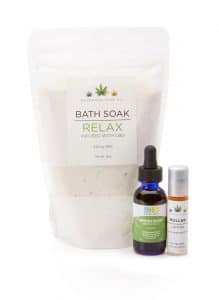
Our back-to-school bundle, available only for a limited time, is the perfect pairing of our three best stress-relieving products! In this bundle, customers find solace in our Relax Bath Soak; a ready-whenever calming effect from our Center CBD Roller; and consistent balance and relief with our Genesis Blend CBD (available in extracts, soft-gels, or capsules)--just pick your size!
Ingredients:
Both our original and extra strength Genesis Blend CBD products contain our Kentucky-farmed, full spectrum CBD, as well as USP MCT oil from coconut. Safe for yourself, your child, your parents, friends, and even your pets, our distinguished Genesis Blend CBD extracts, soft-gels, and capsules have been helping loyal customers find the relief they need for years. But don't just take our word for it--try it for yourself and see what all the buzz is about!
Containing sodium bicarbonate, citric acid, Epsom salt, coconut oil, full spectrum CBD extract, kaolin clay, ylang-ylang, elemi, chamomile, bitter orange oil, mandarin oil, patchouli, blue tansy oil, and dried lavender, our Relax Bath Soak is definitely one of the most popular soaks we offer. This bloom-crafted, full spectrum CBD extract paired with soothing Epsom salts and powerful essential oils (known for easing both physical and mental stress) work to shake off your troubles after a long day. The added coconut oil can help to reduce inflammation and seal in moisture, while the Epsom salts work to relieve tension and promote sleep. Ylang-ylang has been studied for it's relaxation abilities as well as its aromatherapy benefits claimed to help with memory. Commonly found in everyday skincare products for its acne and dry skin fighting properties, Kaolin Clay is thought to be one of the most gentle clays in skincare. With around 4 servings and a wide range of beneficial ingredients in every sealed bag, each of our bath soaks differ in their purpose--but only our Relax Soak is available as a part of this limited time offer!
Made with MCT oil, our full spectrum CBD extract, bergamot oil, and lime oil, our Center Roller packs quite the punch. This travel-sized, 1 oz roll-on focuses on centering and balancing your mind during those midday anxieties and is great for combating everyday stressors in both the workplace and the school hallways. Lime is known to be an excellent mood (and energy) booster, also working to reduce stress and inflammation. Bergamot's antibacterial properties help to combat pain, stress, and even digestive issues. Feeling the creep of anxiety slowly settling over you during that mid-day slump? Apply some of our Center Roller to your wrists, temples, or even under the nose to help your body absorb and breathe in the effects of natural bergamot, lime, and CBD.
When using our popular back-to-school bundle, we recommend consistency--as always. This means that after your regular serving of CBD (which should be taken twice daily), we encourage you to get the most out of your bundle by benefiting from our lime and bergamot bloom-crafted roller. Then, on the most trying of days, leave your worries in the bathtub while you decompress and de-stress using our hand-crafted soak; this bathroom necessity will help you forget today and prepare for tomorrow!
This discounted bundle, available online or in store, could be the answer to your back-to-school woes. Depending on your sizing choices, our back-to-school bundle ranges in pricing anywhere from $48 - $239. These CBD essentials will leave you feeling refreshed and ready to take on class with your least favorite teachers (or your least favorite students.)
Getting back into the swing of things can add on a number of outside stressors: whether it's leaving your pets home alone again, preparing to focus on your studies, starting a new job, or even calming your fears concerning the current pandemic, we get you. And we're here to help.
Are you dreading your back-to-school season just as much as we are? Give yourself--or a friend--a reason to smile during these intense next few weeks with some of our back-to-school essentials! Whether you're a struggling student, favorite teacher, or a parent fighting to get their child back into the school-year routine, it's easy to find relief when Bluegrass Hemp Oil is just down the street.
Come shop our back-to-school bundle, or any of our other full spectrum CBD products!
