
Pet Cannabis Risks: THC Exposure, CBD Safety, Vet Questions, Labels, and COAs

Pet Cannabis Risks: Start With THC Safety and Your Veterinarian

This safety-first guide separates accidental THC exposure, pet CBD product-quality questions, veterinarian-first guidance, labels, Certificates of Analysis, and secure storage so pet owners can make clearer decisions.

Quick Answer

Quick Answer

Pet cannabis risks are most urgent when a dog or cat may have been exposed to THC, cannabis edibles, concentrates, gummies, chocolate, xylitol, or unknown cannabis products. Contact a veterinarian, animal emergency hospital, or animal poison control resource if exposure is suspected or warning signs appear. Pet CBD products should not be described as treating anxiety, pain, seizures, inflammation, behavior problems, mobility issues, urinary problems, appetite changes, or any veterinary condition. Before considering pet CBD, review veterinarian guidance, pet-specific labels, ingredients, THC amount, batch-specific COAs, medication questions, liver concerns, and storage safety.

Key Takeaways

Key Takeaways

  • Pet cannabis risk is most urgent when THC exposure is possible.
  • THC exposure can be dangerous for dogs and cats.
  • Cannabis edibles, gummies, brownies, candy, concentrates, chocolate, and xylitol-containing products should be kept away from pets.
  • Pet CBD products are not FDA-approved animal drugs.
  • Talk with your veterinarian before giving CBD to a pet.
  • Full-spectrum pet CBD may contain trace THC.
  • Use pet-specific products only.
  • Review the product label and batch-specific COA before choosing a pet CBD product.
  • Product links should appear only after veterinarian guidance, THC safety, label review, COA review, ingredient warnings, and storage safety.

Pet Cannabis, THC, Hemp, and CBD: What Is the Difference?

A clear pet safety conversation starts by separating cannabis, THC, CBD, full-spectrum hemp extract, hemp seed oil, and lab documentation.

Definition

Cannabis and THC Exposure

Cannabis products may contain THC, which is the main concern in accidental pet exposure. Pets may encounter THC through edibles, plant material, concentrates, vape residues, or discarded products.

Pet CBD

Pet CBD and Full-Spectrum Hemp Extract

Pet CBD is different from THC edibles or general cannabis products. Full-spectrum pet CBD may include CBD, other cannabinoids, terpenes, and trace THC, so the THC amount should be checked before any use.

Label Review

Hemp Seed Oil vs CBD Oil

Hemp seed oil is made from hemp seeds. It is not the same as CBD oil unless the label clearly lists CBD content and provides product testing that matches the batch.

Safety

Why the Distinction Matters for Pet Safety

A pet owner comparing products should separate THC exposure risks from pet CBD quality questions. Labels and COAs help verify what is actually in the product.

Cannabis, THC, Hemp, and CBD for Pets
Term What It Means Pet Safety Note
Cannabis A broad plant category that may include products containing THC. Pets should not have access to cannabis products.
THC An intoxicating cannabis compound. THC exposure can be dangerous for dogs and cats and should be handled with veterinary guidance.
CBD Cannabidiol, a hemp-derived cannabinoid. In pet content, CBD should be discussed through veterinarian guidance, labels, COAs, THC, ingredients, and safety questions.
Full-spectrum CBD A hemp extract type that may include CBD, other cannabinoids, terpenes, and trace THC. Trace THC should be verified on the product label and batch-specific COA.
Hemp seed oil Oil from hemp seeds. Hemp seed oil is not the same as CBD oil unless the label clearly lists CBD content.
COA A Certificate of Analysis from a lab. A COA should show CBD, THC, batch details, lab date, and contaminant testing.

Entity Summary

Cannabis: A broad plant category that may include products containing THC. Pets should not have access to cannabis products.

THC: An intoxicating cannabis compound. THC exposure can be dangerous for dogs and cats.

CBD: Cannabidiol, a hemp-derived cannabinoid. In pet content, CBD should be discussed through veterinarian guidance, labels, COAs, THC, ingredients, and safety questions.

Pet CBD: A hemp-derived CBD product made for pets. Pet CBD should be discussed with a veterinarian and reviewed by label, ingredients, THC amount, and COA.

Full-Spectrum Pet CBD: A hemp extract type that may include CBD, other cannabinoids, terpenes, and trace THC.

Trace THC: A small amount of THC that may be present in full-spectrum hemp products and may matter for pet safety.

Hemp Seed Oil: Oil from hemp seeds. Hemp seed oil is not the same as CBD oil unless the label clearly states CBD content.

Certificate of Analysis: A lab report that should show cannabinoid levels, THC levels, batch information, and contaminant testing.

Unruffled CBD Oil for Pets: A Bluegrass Hemp Oil pet-specific CBD product that should be presented through labels, COAs, ingredients, trace THC awareness, veterinarian guidance, and product transparency, not pet health outcome claims.

Bluegrass Hemp Oil: A Kentucky-rooted CBD company focused on full-spectrum hemp products, transparent labels, Certificates of Analysis, lab testing, and customer education.

THC Exposure Risks for Dogs and Cats

THC exposure is the urgent pet cannabis concern. Searches about cannabis toxicity in dogs and cannabis toxicity in cats should lead to prompt veterinary guidance when a dog or cat may have accessed cannabis, edibles, concentrates, or unknown products.

Edibles

Why Edibles Can Be Especially Risky

Edibles may combine THC with ingredients that create additional pet safety concerns, such as chocolate, xylitol, high-fat foods, flavor blends, or unknown concentrations. Gummies, brownies, candies, and concentrates should be stored securely away from pets.

THC and Pets

Warning Signs of Cannabis or THC Exposure

Possible warning signs include severe lethargy, heavy drooling, vomiting, diarrhea, tremors, convulsions, agitation, disorientation, weakness, trouble walking, urinary dribbling, unusual behavior, or refusal to eat.

Emergency

When to Contact a Veterinarian or Animal Emergency Hospital

If exposure is suspected, contact a veterinarian, animal emergency hospital, or animal poison control resource. Do not rely on a blog post, product label, or general internet advice for urgent exposure questions.

Emergency Warning Box

If your pet may have eaten THC, cannabis edibles, human CBD gummies, chocolate, xylitol, or an unknown hemp/cannabis product, contact your veterinarian, an animal emergency hospital, or an animal poison control resource promptly. Warning signs may include severe lethargy, vomiting, heavy drooling, tremors, convulsions, agitation, disorientation, weakness, trouble walking, urinary dribbling, unusual behavior, or refusal to eat.

Authoritative safety resources include the FDA’s pet cannabis guidance, the Merck Veterinary Manual’s THC toxicosis overview, and the ASPCA poison-control resource. See FDA cannabis and animal safety guidance, Merck Veterinary Manual THC toxicosis in dogs and cats, and ASPCA marijuana toxicity information.

Pet Cannabis Warning Signs
Warning Sign What to Do
Severe lethargy Contact your veterinarian, an animal emergency hospital, or an animal poison control resource promptly.
Heavy drooling Treat this as a potential urgent safety sign when cannabis or THC exposure is possible.
Vomiting or diarrhea Seek veterinary guidance, especially if exposure is suspected or signs are severe.
Tremors or convulsions Contact emergency veterinary care promptly.
Agitation or unusual behavior Do not wait for online advice if cannabis exposure is possible.
Disorientation, weakness, or trouble walking Call a veterinarian or animal emergency hospital.
Urinary dribbling or incontinence Mention this sign when you contact veterinary support.
Suspected THC ingestion Contact veterinary or poison-control support even if signs have not appeared yet.

Pet CBD Safety Questions

Pet CBD decision-making should begin with veterinarian guidance, especially when medication, liver, age, pregnancy, nursing, seizure history, urinary symptoms, or complex health history is involved. Common pet CBD vet questions should include possible pet CBD side effects, label details, THC amount, ingredient concerns, and COA access.

FDA Context

Pet CBD Is Not FDA-Approved as an Animal Drug

Pet CBD products are not FDA-approved animal drugs. That means product selection should be handled with veterinarian-first language, careful label review, and conservative safety expectations.

Vet Question

Medication Questions

Veterinary guidance is especially important if your pet takes medication. Bring the product label, batch-specific COA, ingredient list, and THC amount to the conversation.

Vet Question

Liver Concerns

If your pet has known or suspected liver concerns, discuss CBD or hemp-derived product questions with a veterinarian before use.

Vet Question

Senior, Pregnant, Nursing, Very Young, or Medically Complex Pets

Senior pets, very young pets, pregnant or nursing pets, and medically complex pets need individualized veterinary review. New, severe, worsening, or unusual symptoms should not be handled with CBD.

Pet CBD Safety Box

Pet CBD should not be described as treating anxiety, pain, seizures, inflammation, behavior problems, stress, urinary problems, appetite changes, overgrooming, aggression, or any veterinary condition. Talk with your veterinarian before giving CBD to a pet, especially if your pet takes medication, has liver concerns, has seizures, has urinary symptoms, is pregnant or nursing, is very young or senior, has ongoing behavior changes, or may have been exposed to THC. Use pet-specific products only, review the label and batch-specific COA, and avoid human CBD gummies, THC products, essential oils, xylitol, chocolate, and vague flavor blends.

Claim Boundary Box

CBD, hemp extract, full-spectrum CBD, cannabinoids, terpenes, Genesis Blend, Unruffled CBD Oil for Pets, and Bluegrass Hemp Oil products should not be described as diagnosing, treating, curing, preventing, reducing, relieving, managing, repairing, or protecting against any disease, symptom, disorder, medical condition, veterinary condition, medication burden, or health outcome.

This article is educational and focuses on pet-specific labels, Certificates of Analysis, ingredients, trace THC, safety questions, veterinarian guidance, THC exposure risks, emergency warning signs, storage safety, and informed comparison.

Human Cannabis Products Pets Should Avoid

Human cannabis and CBD products are not pet products. Pet safety depends on preventing access, reading labels, and keeping ingredients away from dogs and cats.

Avoid

THC Edibles, Gummies, Brownies, Candy, and Concentrates

Do not leave THC edibles, gummies, brownies, candy, concentrates, plant material, or vape residues where pets can reach them. Accidental access can quickly become an emergency question.

Ingredients

Xylitol, Chocolate, Essential Oils, High-Fat Ingredients, and Vague Flavor Blends

Ingredient risk matters. Xylitol, chocolate, essential oils, high-fat ingredients, and vague flavor blends can create safety questions beyond cannabinoid content.

Storage

Safe Storage for Homes With Pets

Use closed cabinets, high storage, or locked containers when pets live in the home. Do not assume child-resistant packaging is pet-resistant.

Human Cannabis Products Pets Should Avoid
Product Type Pet Safety Concern
THC gummies or edibles May contain THC concentrations that are dangerous for pets.
Brownies or chocolate edibles May combine THC exposure with chocolate risks.
Sugar-free edibles or gummies May contain xylitol or other ingredients that require urgent veterinary guidance.
Cannabis concentrates May contain highly concentrated THC and should be stored securely.
Vape cartridges or residues Pets should not access cartridges, residue, packaging, or discarded cannabis materials.
Human CBD gummies Adult human gummies may contain inappropriate ingredients, THC, flavoring blends, or serving information not designed for pets.
Essential-oil blends Do not use essential-oil blends for pets unless specifically cleared by a veterinarian.

Storage Safety Box

Keep cannabis, THC products, CBD products, edibles, gummies, concentrates, vape materials, chocolate, xylitol-containing products, and product packaging securely stored away from pets. Secure storage is part of pet safety, not an afterthought.

How to Compare Pet CBD Products Safely

After THC exposure risks, storage, and veterinarian questions are covered, pet owners can compare pet CBD products through labels, ingredients, trace THC, warning language, and COAs.

Checklist

Pet-Specific Formula

Use pet-specific products only. Product type, serving information, ingredient choices, and warnings should be designed around pets, not adult human use.

Label

CBD Amount Per Serving

A pet CBD label should clearly identify the CBD amount. Vague labels make it harder for a veterinarian or pet owner to evaluate the product.

THC

THC Amount

Full-spectrum pet CBD may contain trace THC. The label and batch-specific COA should be reviewed for THC amount before product decisions.

Ingredients

Ingredients and Flavoring Risks

Review carrier oils, flavoring, sweeteners, essential oils, vague blends, and any ingredient your veterinarian has told you to avoid.

COA

Batch Number and Warning Language

A clear batch or lot number helps match the product to its lab report. Warning language helps identify medication, pregnancy, nursing, age, and medical-history questions.

Pet CBD Product Safety Checklist
What to Check Why It Matters
Veterinarian guidance A veterinarian can review your pet’s health history before any product decision.
Pet-specific formula Human products may contain ingredients or serving information that are not appropriate for pets.
CBD amount The label should clearly state CBD amount per serving or package.
THC amount Full-spectrum pet CBD may contain trace THC, so the THC amount should be verified.
Batch-specific COA The COA should match the batch or lot number.
Ingredient list Flavoring, carrier oils, and additives should be reviewed before use.
Warning language Warning statements help identify when veterinary guidance is needed.
Storage instructions Products should be stored securely away from pets, children, and heat or light if the label requires it.

For more comparison help, review pet CBD quality and safety guide for dogs and cats, CBD for pets vet guidance, safety, THC, and COAs, CBD quality guide for choosing transparent hemp products, and how to read a CBD product label.

How to Review a Pet CBD Certificate of Analysis

A Certificate of Analysis is one of the most important product-transparency tools for pet CBD because it helps verify cannabinoids, THC, batch information, and contaminant testing.

Potency

CBD and THC Potency

Potency results should show CBD and THC amounts clearly. For full-spectrum pet CBD, trace THC awareness is part of the safety conversation.

Profile

Other Cannabinoids and Terpenes

Full-spectrum products may include other cannabinoids and terpenes. Learn more about cannabinoids in hemp products explained and terpenes in hemp products explained.

Contaminants

Heavy Metals, Pesticides, Solvents, and Microbials

A useful COA should help shoppers review contaminant testing, including heavy metals, pesticides, residual solvents, and microbials or mycotoxins when available.

Batch Match

Lab Date and Batch Match

The product’s batch or lot number should match the lab report. Lab date, lab name, and product name help confirm that the report belongs to the product in hand.

Pet CBD COA Checklist
COA Item What to Confirm
Batch number The COA should match the batch or lot number on the product.
CBD amount The reported CBD amount should align with the label.
THC amount The THC amount should be visible and easy to verify.
Other cannabinoids Full-spectrum products may list additional cannabinoids.
Terpenes, if available Terpene data may be shown when available.
Heavy metals The COA should address contaminant testing when provided.
Pesticides Pesticide screening helps evaluate product quality.
Residual solvents Solvent screening matters for extraction-related quality questions.
Microbials / mycotoxins Microbial and mycotoxin results help evaluate contamination concerns.
Lab name and date Look for a third-party lab name and a recent lab date.

Helpful resources include CBD lab testing and Certificates of Analysis, review CBD Certificates of Analysis, and heavy metals in cannabis and hemp product safety.

Where Unruffled CBD Oil for Pets Fits

This product section appears only after THC exposure risks, veterinarian guidance, storage safety, label review, COA review, and ingredient warnings.

After Safety Education

Product Transparency, Labels, COAs, Ingredients, and Customer Support

Unruffled CBD Oil for Pets should be presented through pet-specific product format, label transparency, batch-specific COA review, ingredient review, trace THC awareness, customer support, and veterinarian-first guidance. It should not be tied to pet health outcome claims.

Transparency

Unruffled CBD Oil for Pets Product Details

Review the pet-specific product format, label information, ingredients, and customer-support options before discussing use with your veterinarian.

Unruffled CBD Oil for Pets product details

Transparency

Unruffled CBD Oil for Pets 4 oz Product Details

Compare the larger product format by label, batch-specific COA, ingredient review, trace THC awareness, and storage directions.

Unruffled CBD Oil for Pets 4 oz product details

COA

Review CBD Certificates of Analysis

Use Certificates of Analysis to compare CBD amount, THC amount, batch details, lab date, and contaminant testing.

Review CBD Certificates of Analysis

Support

Contact Bluegrass Hemp Oil

Ask customer support about pet CBD labels, COAs, ingredients, and product transparency. Do not use customer support as a substitute for veterinary care.

Contact Bluegrass Hemp Oil for pet CBD label and COA questions

Pet CBD Claims to Avoid

Pet CBD education should protect shoppers and pets by avoiding outcome-driven language and using label, COA, ingredient, THC, and veterinarian-first language instead.

Claims to Avoid
Avoid Saying Say This Instead
CBD helps pet anxiety Talk with your veterinarian about anxiety-like behavior or behavior changes.
CBD relieves pet pain Pain signs should be evaluated by a veterinarian.
CBD reduces inflammation Do not market pet CBD for inflammation or veterinary conditions.
CBD improves mobility Mobility changes should be discussed with a veterinarian.
CBD helps arthritis Arthritis requires veterinary diagnosis and care.
CBD calms pets Avoid behavior-outcome claims; focus on labels, COAs, ingredients, THC, and vet guidance.
CBD helps skin allergies Skin issues should be evaluated by a veterinarian.
CBD is therapeutic for pets Use product transparency, label review, and COA review language.
Full dropper twice daily for optimal results Review the label and ask your veterinarian before use.
Highly effective pet CBD Bluegrass Hemp Oil emphasizes pet-specific labels, COAs, ingredients, and customer support.

About Bill Polyniak and Bluegrass Hemp Oil

E-E-A-T

Bill Polyniak Authority Box

Bill Polyniak, founder of Bluegrass Hemp Oil and Kentucky Cannabis Company, is rooted in Kentucky hemp education, full-spectrum CBD product transparency, clear labeling, Certificates of Analysis, and helping shoppers understand what they are buying before choosing a CBD product.

For pet cannabis risk and pet CBD safety topics, Bluegrass Hemp Oil emphasizes veterinarian guidance, pet-specific labels, batch-specific COAs, trace THC awareness, ingredient transparency, emergency warning signs, secure storage, and avoiding human CBD gummies, THC products, essential oils, xylitol, chocolate, and vague flavor blends when pets are involved.

Read Bill Polyniak’s Bio

Frequently Asked Questions

These answers are intentionally concise and veterinarian-first. Critical emergency and safety guidance also appears in the main article body, not only inside the FAQ.

What are the risks of cannabis for pets?

The most urgent risk is possible THC exposure. Pets can also be exposed to edibles, chocolate, xylitol, concentrates, vape residues, and unknown ingredients. Contact veterinary support if exposure is suspected.

Is THC dangerous for dogs and cats?

Yes. THC exposure can be dangerous for dogs and cats, especially when edibles or concentrated products are involved. Warning signs should be discussed promptly with a veterinarian or animal emergency hospital.

What should I do if my pet eats a cannabis edible?

Contact your veterinarian, an animal emergency hospital, or an animal poison control resource promptly. Do not rely on online instructions for emergency care.

What are signs of THC exposure in dogs?

Signs may include severe lethargy, vomiting, heavy drooling, tremors, convulsions, agitation, disorientation, weakness, trouble walking, urinary dribbling, unusual behavior, or refusal to eat.

What are signs of THC exposure in cats?

Cats may show warning signs such as lethargy, vomiting, drooling, tremors, agitation, disorientation, weakness, trouble walking, or unusual behavior. Contact veterinary support when exposure is possible.

Is pet CBD the same as cannabis?

No. Pet CBD is a hemp-derived product made for pets, while cannabis products may contain THC. Full-spectrum pet CBD may still contain trace THC, so labels and COAs matter.

Is pet CBD FDA-approved?

Pet CBD products are not FDA-approved animal drugs. Use veterinarian-first guidance and review the label, ingredients, THC amount, warning language, and batch-specific COA.

Should I talk with my veterinarian before giving CBD to my pet?

Yes. Talk with your veterinarian before giving CBD to a pet, especially if your pet takes medication, has liver concerns, has seizures or urinary symptoms, is pregnant or nursing, is very young or senior, or is medically complex.

Can full-spectrum pet CBD contain THC?

Yes. Full-spectrum pet CBD may contain trace THC. Review both the product label and batch-specific Certificate of Analysis for THC information.

What should a pet CBD label show?

A pet CBD label should show pet-specific use, CBD amount, THC information, ingredients, batch or lot number, directions, warning language, and storage instructions.

What should a pet CBD COA show?

A pet CBD COA should show batch number, CBD amount, THC amount, other cannabinoids, terpenes if available, contaminant testing, lab name, and lab date.

Can I give my pet human CBD gummies?

No. Do not give pets human CBD gummies. Human gummies may contain THC, xylitol, chocolate, flavoring blends, or adult serving information that is not designed for pets.

What ingredients should pets avoid in CBD products?

Avoid human CBD gummies, THC products, xylitol, chocolate, essential oils, cannabis concentrates, high-fat edibles, and vague flavor blends unless a veterinarian has specifically reviewed the product.

How should cannabis and CBD products be stored around pets?

Store cannabis, THC products, CBD products, edibles, gummies, concentrates, vape materials, and product packaging securely away from pets, ideally in locked or high storage.

Where can I review Bluegrass Hemp Oil pet CBD lab results?

You can review Bluegrass Hemp Oil Certificates of Analysis and contact Bluegrass Hemp Oil with label or COA questions.

Pet CBD Risks: Vet Questions, THC, Labels, Side Effects, and COAs

Pet CBD Risks: Start With Your Veterinarian

This veterinarian-first guide explains possible pet CBD risks, cannabidiol risks for pets, THC and pets, side-effect awareness, pet-specific labels, Certificates of Analysis, storage safety, and product transparency.

Quick Answer

Quick Answer

Pet CBD risks should be reviewed with a veterinarian before giving CBD to a dog or cat. Pet CBD products are not FDA-approved animal drugs, and CBD should not be used to treat anxiety, pain, seizures, inflammation, arthritis, behavior problems, mobility issues, skin problems, appetite changes, urinary issues, or any veterinary condition. Before considering pet CBD, review veterinarian guidance, medication questions, liver concerns, pet-specific ingredients, CBD amount, THC amount, warning language, storage safety, and the batch-specific Certificate of Analysis.

Key Takeaways

Key Takeaways

  • Pet CBD risks should be reviewed with a veterinarian before use.
  • Pet CBD products are not FDA-approved animal drugs.
  • Pet CBD should not be marketed for anxiety, pain, seizures, inflammation, arthritis, mobility, behavior, skin, appetite, urinary, or veterinary conditions.
  • Full-spectrum pet CBD may contain trace THC.
  • THC exposure can be dangerous for dogs and cats.
  • Use pet-specific products only.
  • Avoid human CBD gummies, THC products, xylitol, chocolate, essential oils, and vague flavor blends.
  • Review the product label and batch-specific COA before choosing a pet CBD product.
  • Product links should appear only after veterinarian guidance, THC safety, label review, COA review, ingredient warnings, and storage safety.

What Cannabidiol Means for Pet Owners

Understanding pet CBD risks starts with clear definitions. A label should make it easy to tell CBD, THC, hemp seed oil, full-spectrum extract, and batch testing apart.

Definition

CBD vs THC

CBD stands for cannabidiol, a hemp-derived cannabinoid. THC is a cannabis compound that can be dangerous for dogs and cats when exposure occurs. Pet owners should separate CBD label review from urgent THC exposure questions.

Label Review

Pet CBD vs Hemp Seed Oil

Pet CBD should clearly list CBD content on the label. Hemp seed oil is made from hemp seeds and is not the same as CBD oil unless the label states CBD content and the batch-specific COA verifies it.

Trace THC

Full-Spectrum Pet CBD and Trace THC

Full-spectrum pet CBD may include CBD, other cannabinoids, terpenes, and trace THC. Because pets may be sensitive to THC exposure, the THC amount should be reviewed on the label and matched to the COA.

Pet Specific

Why Pet-Specific Products Matter

Use pet-specific products only. Human gummies, THC edibles, essential-oil blends, xylitol, chocolate, and vague flavor blends can create avoidable pet safety concerns.

CBD, THC, Hemp Seed Oil, and COAs for Pet Owners
Term What It Means Pet Safety Note
CBD Cannabidiol, a hemp-derived cannabinoid. Discuss CBD with a veterinarian and evaluate labels, ingredients, THC amount, and COAs.
THC A cannabis compound associated with intoxication. THC exposure can be dangerous for dogs and cats. Contact veterinary care if exposure is suspected.
Pet CBD A hemp-derived CBD product made for pets. Use pet-specific products only and review the label before use.
Hemp seed oil Oil from hemp seeds. Not the same as CBD oil unless the label clearly states CBD content.
Full-spectrum pet CBD A hemp extract that may include CBD, other cannabinoids, terpenes, and trace THC. Confirm trace THC on the batch-specific COA.
COA Certificate of Analysis from a lab. Should show batch details, CBD, THC, lab date, and contaminant testing.

Entity Summary

CBD: Cannabidiol, a hemp-derived cannabinoid. In pet content, CBD should be discussed through veterinarian guidance, labels, COAs, THC, ingredients, and safety questions.

THC: A cannabis compound that can be dangerous for dogs and cats when exposure occurs.

Pet CBD: A hemp-derived CBD product made for pets. Pet CBD should be discussed with a veterinarian and reviewed by label, ingredients, THC amount, and COA.

Hemp Seed Oil: Oil from hemp seeds. Hemp seed oil is not the same as CBD oil unless the label clearly states CBD content.

Full-Spectrum Pet CBD: A hemp extract type that may include CBD, other cannabinoids, terpenes, and trace THC.

Trace THC: A small amount of THC that may be present in full-spectrum hemp products and may matter for pet safety.

Certificate of Analysis: A lab report that should show cannabinoid levels, THC levels, batch information, and contaminant testing.

Unruffled CBD Oil for Pets: A Bluegrass Hemp Oil pet-specific CBD product that should be presented through labels, COAs, ingredients, trace THC awareness, veterinarian guidance, and product transparency, not pet health outcome claims.

Bluegrass Hemp Oil: A Kentucky-rooted CBD company focused on full-spectrum hemp products, transparent labels, Certificates of Analysis, lab testing, and customer education.

Pet CBD Is Not FDA-Approved as an Animal Drug

FDA cautions pet owners about cannabis products marketed for animals and recommends talking with a veterinarian about appropriate options. For safety context, see FDA cannabis and animal safety guidance.

Vet First

Why FDA Status Matters

Pet CBD products are not FDA-approved animal drugs. That means pet owners should not use retail pet CBD as a substitute for veterinary diagnosis, monitoring, or care.

Quality

Why Product Quality Can Vary

CBD product quality can vary by extract type, ingredients, THC amount, flavoring, warning language, testing frequency, and whether the batch-specific COA matches the product in hand.

Guidance

Why Veterinary Guidance Comes First

A veterinarian can help evaluate medication questions, liver concerns, seizure history, urinary symptoms, pregnancy or nursing, very young or senior pets, ongoing behavior changes, and possible THC exposure.

Pet CBD Safety Box

Pet CBD should not be described as treating anxiety, pain, seizures, inflammation, behavior problems, stress, urinary problems, appetite changes, overgrooming, aggression, or any veterinary condition. Talk with your veterinarian before giving CBD to a pet, especially if your pet takes medication, has liver concerns, has seizures, has urinary symptoms, is pregnant or nursing, is very young or senior, has ongoing behavior changes, or may have been exposed to THC. Use pet-specific products only, review the label and batch-specific COA, and avoid human CBD gummies, THC products, essential oils, xylitol, chocolate, and vague flavor blends.

Claim Boundary Box

CBD, hemp extract, full-spectrum CBD, cannabinoids, terpenes, Genesis Blend, Unruffled CBD Oil for Pets, and Bluegrass Hemp Oil products should not be described as diagnosing, treating, curing, preventing, reducing, relieving, managing, repairing, or protecting against any disease, symptom, disorder, medical condition, veterinary condition, medication burden, or health outcome.

This article is educational and focuses on pet-specific labels, Certificates of Analysis, ingredients, trace THC, safety questions, veterinarian guidance, side-effect awareness, emergency warning signs, storage safety, and informed comparison.

Possible CBD Side Effects in Pets

Side-effect awareness should be framed as safety education, not as a reason to self-manage a veterinary concern.

Side Effects

Drowsiness, Appetite Changes, Vomiting, Diarrhea, and Behavior Changes

Possible CBD or cannabis-related concerns may include drowsiness, appetite changes, vomiting, diarrhea, and behavior changes. These signs should be discussed with a veterinarian, especially if they are new, severe, or occur after product exposure.

THC

THC Exposure Warning Signs

THC exposure may look different from routine product sensitivity. Warning signs can include severe lethargy, heavy drooling, tremors, trouble walking, urinary dribbling, disorientation, or unusual behavior.

Emergency

When to Contact a Veterinarian or Animal Emergency Hospital

Contact veterinary care promptly if your pet may have accessed THC, cannabis edibles, human CBD gummies, xylitol, chocolate, or unknown hemp or cannabis products.

Emergency Warning Box

If your pet may have eaten THC, cannabis edibles, human CBD gummies, chocolate, xylitol, or an unknown hemp/cannabis product, contact your veterinarian, an animal emergency hospital, or an animal poison control resource promptly. Warning signs may include severe lethargy, vomiting, heavy drooling, tremors, convulsions, agitation, disorientation, weakness, trouble walking, urinary dribbling, unusual behavior, or refusal to eat.

Authoritative safety resources include FDA cannabis and animal safety guidance, Merck Veterinary Manual THC toxicosis in dogs and cats, and ASPCA marijuana toxicity information.

Possible CBD or Cannabis Warning Signs in Pets
Warning Sign What to Do
Severe lethargy Contact your veterinarian, an animal emergency hospital, or an animal poison control resource promptly when THC exposure is possible.
Vomiting or diarrhea Seek veterinary guidance, especially when signs are severe, new, or connected with a product exposure.
Heavy drooling Treat this as a possible urgent warning sign if cannabis, THC, or unknown edible exposure is possible.
Tremors or convulsions Contact emergency veterinary care promptly.
Agitation or unusual behavior Call a veterinarian or emergency hospital for guidance.
Disorientation, weakness, or trouble walking Seek veterinary guidance quickly, especially if THC access is possible.
Refusal to eat Discuss persistent or concerning appetite changes with a veterinarian.
Suspected THC ingestion Contact a veterinarian, an animal emergency hospital, or animal poison control resource promptly.

Which Pets Need Extra Caution?

Some pets need a more conservative safety review before any pet CBD product is considered.

Medication

Pets Taking Medication

Ask your veterinarian about medication questions before considering CBD, especially if your pet takes prescription medications, sedatives, seizure medications, liver-related medications, or multiple products.

Liver

Pets With Liver Concerns

Liver concerns should be reviewed with a veterinarian before CBD. Do not use a retail product to replace testing, diagnosis, monitoring, or professional care.

Vet Care

Pets With Seizures, Urinary Symptoms, or Ongoing Behavior Changes

Seizures, urinary symptoms, and ongoing behavior changes require veterinary evaluation. Pet CBD content should not frame these concerns as product-use cases.

Extra Caution

Senior, Very Young, Pregnant, Nursing, or Medically Complex Pets

These pets need individualized veterinary guidance. Product labels and COAs are useful, but they do not replace professional judgment.

Pet CBD Risk Checklist
What to Check Why It Matters
Veterinarian guidance A veterinarian should help evaluate whether CBD is appropriate for your pet’s situation.
Medication use CBD may raise medication questions that require professional review.
Liver concerns Liver-related questions should be reviewed before use.
Seizure history Seizures require veterinary care and should not be handled with retail CBD claims.
Urinary symptoms Urinary signs should be discussed with a veterinarian.
Age and health status Senior, very young, pregnant, nursing, or medically complex pets need extra caution.
Pet-specific formula Use products made for pets, not human gummies or cannabis edibles.
THC amount Full-spectrum pet CBD may contain trace THC, so the COA matters.
Batch-specific COA The COA should match the product batch and confirm CBD, THC, and contaminant results.

Human CBD vs Pet CBD: What Not to Give Pets

Pet-specific products should be evaluated separately from adult human CBD and cannabis products.

Avoid

Human Gummies, THC Products, Xylitol, Chocolate, Essential Oils, and Vague Flavor Blends

Do not give pets human CBD gummies, THC products, chocolate products, xylitol-containing products, essential-oil blends, or products with vague flavor blends. Pet-specific labels are the safer baseline for comparison.

Ingredients

Why Ingredient Review Matters

Pet owners should review every ingredient, not just the CBD amount. Flavorings, sweeteners, carrier oils, and added botanicals can affect whether a product is appropriate to discuss with a veterinarian.

Human CBD vs Pet CBD
Product Type Pet Safety Concern
Human CBD gummies May contain sweeteners, flavors, or ingredients that are inappropriate for pets.
THC edibles THC exposure can be dangerous for dogs and cats.
Human CBD oils May not be pet-specific and may include unsuitable ingredients or concentrations.
Essential-oil blends Avoid unless specifically cleared by a veterinarian for the pet.
Chocolate products Chocolate is a major pet safety concern.
Xylitol-containing products Xylitol can be extremely dangerous for dogs.
Pet-specific CBD oil Should still be reviewed by label, THC amount, ingredients, warning language, and batch-specific COA.

Storage Safety for Homes With Pets

Keep CBD, THC, cannabis products, gummies, edibles, vape residues, and concentrates securely stored away from pets. Store products in closed containers, out of reach, and away from bags, counters, nightstands, and trash cans where pets may gain access.

How to Compare Pet CBD Products Safely

A safer product comparison looks at labels, COAs, ingredients, THC amount, warning language, and veterinarian questions, not promised outcomes.

Formula

Pet-Specific Formula

Choose only pet-specific products for pet discussions. Adult human CBD gummies and cannabis products should not be used for dogs or cats.

CBD Amount

CBD Amount Per Serving

The label should identify CBD amount per serving and total CBD per container. Avoid products that only use vague hemp language without CBD amounts.

THC

THC Amount

Full-spectrum pet CBD may contain trace THC. The THC amount should be reviewed on both the label and batch-specific COA.

Ingredients

Ingredients and Flavoring Risks

Review carrier oils, flavoring, sweeteners, botanicals, and warning language. Avoid essential oils, xylitol, chocolate, and unclear flavor blends unless a veterinarian has specifically cleared them.

Batch

Batch Number and Warning Language

A batch number connects the label to a specific COA. Warning language helps show that the brand is presenting the product with appropriate safety boundaries.

Pet CBD Label Checklist
Label Item What to Confirm
Pet-specific use The product is intended for pets, not adult human use.
CBD amount The label identifies CBD per serving and total CBD.
THC information Full-spectrum products disclose trace THC information.
Ingredients The ingredients are clear and appropriate to discuss with a veterinarian.
Batch or lot number The package can be matched to a batch-specific COA.
Directions The label directions are clear, but veterinary guidance comes first.
Warning language The label includes warnings and use limitations.
Storage instructions The label explains how to store the product securely.

How to Review a Pet CBD Certificate of Analysis

A pet CBD COA should confirm what is in the batch and whether contaminant testing is available.

Potency

CBD and THC Potency

Potency results should help verify that CBD and THC amounts match the product label. Trace THC matters because pets may be sensitive to THC exposure.

Profile

Other Cannabinoids and Terpenes

If the product is full-spectrum, the COA may list additional cannabinoids or terpenes. These should be presented as lab findings, not pet health outcome claims.

Testing

Heavy Metals, Pesticides, Solvents, and Microbials

Contaminant testing helps evaluate product quality. Review heavy metals, pesticides, residual solvents, and microbial or mycotoxin results when available.

Batch Match

Lab Date and Batch Match

A COA is most useful when the product name, batch number, lab date, and package information match.

Pet CBD COA Checklist
COA Item What to Confirm
Batch number The COA batch number matches the product package.
CBD amount CBD potency aligns with the product label.
THC amount THC amount is listed and appropriate to review with a veterinarian.
Other cannabinoids The report shows other cannabinoids when present.
Terpenes, if available Terpene information is optional, but should be lab-based when shown.
Heavy metals The COA includes heavy metal screening where available.
Pesticides The COA includes pesticide screening where available.
Residual solvents The COA includes solvent screening where relevant.
Microbials / mycotoxins The COA includes microbial or mycotoxin testing where available.
Lab name and date The report identifies the lab and testing date.

Pet CBD Claim Boundaries for Safer Decisions

Responsible pet CBD education answers safety questions without promising veterinary outcomes.

Claims to Avoid in Pet CBD Content
Avoid Saying Say This Instead
CBD alleviates pet anxiety Talk with your veterinarian about anxiety-like behavior or behavior changes.
CBD reduces seizures Seizures require veterinary care and should not be handled with retail CBD claims.
CBD relieves pet pain Pain signs should be evaluated by a veterinarian.
CBD reduces inflammation Do not market pet CBD for inflammation or veterinary conditions.
CBD improves joint mobility Mobility changes should be discussed with a veterinarian.
CBD helps arthritis Arthritis requires veterinary diagnosis and care.
CBD calms pets Avoid behavior-outcome claims; focus on labels, COAs, ingredients, THC, and vet guidance.
CBD helps skin allergies Skin issues should be evaluated by a veterinarian.
Use a fixed dropper routine for best outcomes Review the label and ask your veterinarian before use.
Claims that a pet CBD product is highly effective Bluegrass Hemp Oil emphasizes pet-specific labels, COAs, ingredients, and customer support.

Claim Boundary Box

CBD, hemp extract, full-spectrum CBD, cannabinoids, terpenes, Genesis Blend, Unruffled CBD Oil for Pets, and Bluegrass Hemp Oil products should not be described as diagnosing, treating, curing, preventing, reducing, relieving, managing, repairing, or protecting against any disease, symptom, disorder, medical condition, veterinary condition, medication burden, or health outcome.

This article is educational and focuses on pet-specific labels, Certificates of Analysis, ingredients, trace THC, safety questions, veterinarian guidance, side-effect awareness, emergency warning signs, storage safety, and informed comparison.

Where Unruffled CBD Oil for Pets Fits

Product information belongs after veterinarian guidance, safety, THC, label, COA, ingredient, and storage sections.

Safety First

Product Transparency, Labels, COAs, Ingredients, and Customer Support

Unruffled CBD Oil for Pets should be presented through product transparency: pet-specific labeling, batch-specific COA access, ingredient review, trace THC awareness, customer support, and veterinarian-first guidance. It should not be connected to anxiety, pain, seizures, inflammation, arthritis, mobility, behavior, stress, appetite, urinary issues, skin issues, or guaranteed outcomes.

Product Transparency

Unruffled CBD Oil for Pets Product Details

Use this product page to review pet-specific format, product details, ingredients, label language, and serving information before discussing use with a veterinarian.

Unruffled CBD Oil for Pets product details

Product Transparency

Unruffled CBD Oil for Pets 4 oz Product Details

Use this product page to compare package details, product information, and customer support options without connecting the product to veterinary outcomes.

Unruffled CBD Oil for Pets 4 oz product details

Lab Review

Review CBD Certificates of Analysis

Use the COA page to match a product batch to available lab information for CBD, THC, cannabinoid profile, and contaminant testing.

Review CBD Certificates of Analysis

Customer Support

Contact Bluegrass Hemp Oil

Use customer support for product label, ingredient, COA, and batch-specific questions. Veterinary questions should be directed to your veterinarian.

Contact Bluegrass Hemp Oil for pet CBD label and COA questions

About Bill Polyniak and Bluegrass Hemp Oil

Clear authorship and company context help readers understand who is behind the guidance and why the page exists.

E-E-A-T

About Bill Polyniak and Bluegrass Hemp Oil

Bill Polyniak, founder of Bluegrass Hemp Oil and Kentucky Cannabis Company, is rooted in Kentucky hemp education, full-spectrum CBD product transparency, clear labeling, Certificates of Analysis, and helping shoppers understand what they are buying before choosing a CBD product.

For pet CBD risk and safety topics, Bluegrass Hemp Oil emphasizes veterinarian guidance, pet-specific labels, batch-specific COAs, trace THC awareness, ingredient transparency, emergency warning signs, secure storage, and avoiding human CBD gummies, THC products, essential oils, xylitol, chocolate, and vague flavor blends when pets are involved.

Read Bill Polyniak’s Bio

Frequently Asked Questions

These answers are concise safety summaries. They are not veterinary instructions.

What are the risks of CBD for pets?

Pet CBD risks include product-quality concerns, possible side effects, trace THC questions, ingredient concerns, medication questions, liver concerns, and the risk of using a retail product instead of veterinary care. Talk with your veterinarian before considering CBD for a dog or cat.

Is cannabidiol safe for dogs and cats?

Cannabidiol should not be treated as risk-free for dogs or cats. Individual pets may respond differently, and veterinarian guidance is important before use, especially when medication use, liver concerns, seizure history, urinary symptoms, pregnancy, nursing, senior age, or possible THC exposure apply.

Is pet CBD FDA-approved?

Pet CBD products are not FDA-approved animal drugs. Retail pet CBD should not be used to diagnose, treat, cure, or prevent any veterinary condition.

Should I talk with my veterinarian before giving CBD to my pet?

Yes. A veterinarian can help you review medication questions, liver concerns, age, health history, warning signs, possible THC exposure, and whether a product label or COA raises concerns.

What are possible side effects of CBD in pets?

Possible concerns may include drowsiness, appetite changes, vomiting, diarrhea, behavior changes, or other unusual signs. Contact a veterinarian if signs are concerning, persistent, severe, or connected to possible cannabis or THC exposure.

Can CBD interact with my pet’s medication?

CBD may raise medication-related questions. Ask your veterinarian before considering CBD for a pet that takes prescriptions, sedating products, seizure medications, or multiple products.

Can CBD affect pets with liver concerns?

Liver concerns should be reviewed by a veterinarian before pet CBD is considered. Product labels and COAs are useful, but they do not replace professional care.

Can full-spectrum pet CBD contain THC?

Yes. Full-spectrum pet CBD may contain trace THC. Review the label and batch-specific COA, and ask your veterinarian if THC exposure is a concern for your pet.

Can THC hurt dogs or cats?

THC exposure can be dangerous for dogs and cats. Contact a veterinarian, animal emergency hospital, or animal poison control resource promptly if exposure is suspected.

What should I do if my pet eats THC or cannabis edibles?

Contact your veterinarian, an animal emergency hospital, or an animal poison control resource promptly. Do not rely on a blog post, product label, or general internet advice for urgent exposure questions.

What should a pet CBD label show?

A pet CBD label should show pet-specific use, CBD amount, THC information, ingredients, batch or lot number, directions, warning language, and storage instructions.

What should a pet CBD COA show?

A pet CBD COA should show the batch number, CBD amount, THC amount, other cannabinoids when present, contaminant testing, lab name, and lab date.

Can I give my pet human CBD gummies?

No. Human CBD gummies may contain unsuitable ingredients, sweeteners, flavors, or THC. Use pet-specific products only and discuss CBD with your veterinarian before use.

What ingredients should pets avoid in CBD products?

Avoid human gummies, THC products, chocolate, xylitol, essential oils unless specifically cleared by a veterinarian, vague flavor blends, and unknown hemp or cannabis products.

Where can I review Bluegrass Hemp Oil pet CBD lab results?

You can review available lab information on the Bluegrass Hemp Oil Certificates of Analysis page and contact Bluegrass Hemp Oil with product label or batch-specific questions.

Sources and Further Reading

Use these resources for additional safety context. Urgent pet concerns should be handled with a veterinarian, an animal emergency hospital, or animal poison control resource.

Authority

FDA Cannabis and Animal Safety Guidance

FDA states that cannabis has not been approved for use in animals and recommends talking with a veterinarian about appropriate options.

FDA cannabis and animal safety guidance

Veterinary Reference

Merck Veterinary Manual THC Toxicosis

Merck Veterinary Manual explains THC toxicosis in dogs and cats and lists warning signs such as lethargy, ataxia, vomiting, trembling, and urinary incontinence.

Merck Veterinary Manual THC toxicosis in dogs and cats

Poison Control

ASPCA Marijuana Toxicity Information

ASPCA identifies marijuana as toxic to dogs and cats and lists delta-9-THC as the toxic principle.

ASPCA marijuana toxicity information

Search Quality

Google People-First Content Guidance

This post is structured to be helpful, reliable, transparent, and safety-first for a YMYL topic.

Google helpful content guidance

Pet CBD Reactions: Side Effects, Vet Questions, THC, Labels, and COAs

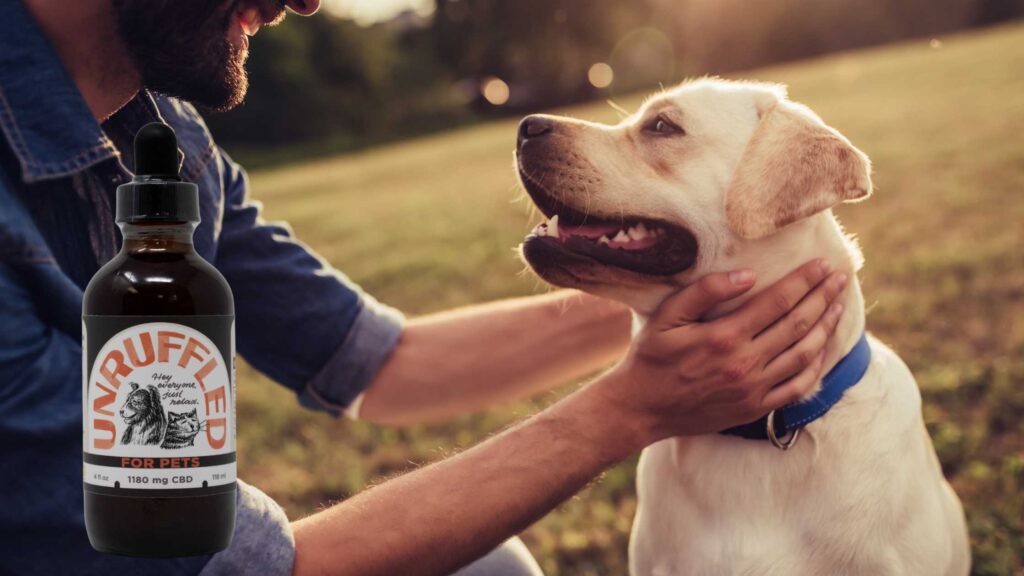
A golden retriever looks up trustingly at its owner who is measuring a dose of Unruffled CBD Oil for Dogs, aiming to alleviate the pet's pain.

While it might be a typical assumption that cannabinoid treatments, such as CBD, could cause harm to your pets, Pet Reactions to Cannabinoid are rare. Recent studies have revealed some intriguing findings on how our furry friends react to these treatments. As a pet parent, you're always on the lookout for ways to improve your pet's health and comfort. CBD treatments may be a potential tool in this endeavor. In this article, we'll delve into three main insights into pet responses to CBD, equipping you with the knowledge to make an educated choice about its use. We'll examine the effects CBD can have on your pet, frequent side effects, and ways to minimize any potential risks. Ready to learn more about a Pet Reactions to Cannabinoid? Let's dive in and discover these insights.

The Unruffled CBD Oil for Pets is a superior product that combines high-quality full-spectrum CBD, offering a potent blend of natural cannabinoids. This is merged with wild-caught Alaskan salmon oil, an abundant source of essential omega-3 fatty acids EPA and DHA. This mix amplifies the nutritional and therapeutic qualities of the product.

The manufacturing process by Kentucky Cannabis Company is under stringent quality control. Although the product page does not provide specific details of the production process, it's likely that the product is made under high standards to ensure purity and potency.

CBD is known for its ability to boost overall health and wellness in animals. It can contribute to a more balanced and calm demeanor in pets, which is particularly beneficial for those dealing with anxiety or stress. The omega-3 fatty acids in the salmon oil, in combination with CBD's anti-inflammatory properties, can aid in enhancing joint mobility and lessening discomfort from conditions like arthritis. Omega-3 fatty acids can also aid in alleviating skin allergies and enhancing coat condition.

The Unruffled CBD Oil for Pets may be especially beneficial for pets with specific conditions such as anxiety, pain, inflammation, or those requiring extra care in their diet and lifestyle. The suggested usage is a full dropper (1ml) directly into the pet's food or mouth, twice daily for best results.

The Unruffled CBD Oil for Pets earned 2nd Place in Pet Products at the High Times Hemp Cup People's Choice Edition 2021, indicating its quality and popularity among users. Customer reviews and ratings suggest that the product is highly effective and well-received by pet owners.

How-to Guide: Enhancing Pet Health Naturally


Understanding CBD's Impact on Pets

Exploring the realm of pet health, it becomes clear that the impact of CBD on your beloved animal companions can be considerable. It's not just about alleviating discomfort or soothing anxiety; it's about boosting their overall health.

But it's important to remember, we're on this journey together, so let's follow the CBD Dosage Guidelines to ensure safety and effectiveness.

The Unruffled CBD Oil for Pets, a product of the Kentucky Cannabis Company, incorporates high-quality full-spectrum CBD, providing a potent blend of natural cannabinoids. This is combined with wild-caught Alaskan salmon oil, a rich source of essential omega-3 fatty acids EPA and DHA, enhancing the product's nutritional and therapeutic properties.

Administered in small amounts, this CBD oil can offer therapeutic benefits for your pets, such as pain relief, anxiety reduction, and improved sleep quality. It's important to remember this isn't a universal solution; your pet's size, age, and health condition must be taken into account. Start with the lowest suggested dosage and monitor your pet's response.

The product is likely produced under stringent quality control to ensure purity and potency, although specific production process details aren't provided on the product page. CBD is renowned for its ability to support general health and wellness in animals. It can contribute to a more balanced and relaxed demeanor in pets, beneficial for those experiencing anxiety or stress.

The omega-3 fatty acids in the salmon oil, combined with CBD's anti-inflammatory properties, can aid in enhancing joint mobility and reducing discomfort from conditions like arthritis. Omega-3 fatty acids are also beneficial for skin and coat health, potentially helping in alleviating skin allergies and improving coat condition.

The Unruffled CBD Oil for Pets may be particularly beneficial for pets with specific conditions such as anxiety, pain, inflammation, or those needing extra dietary and lifestyle care. The recommended usage is a full dropper (1ml) directly into the pet's food or mouth, twice daily for optimal results.

The product was awarded 2nd Place in Pet Products at the High Times Hemp Cup People's Choice Edition 2021, indicative of its quality and popularity among users. Based on customer reviews and ratings, the product appears to be highly effective and well-received by pet owners.

Raising our pets is a shared journey. We celebrate their energy, comfort them in their distress, and seek the best care when they're unwell. CBD can be a valuable tool in this journey, offering therapeutic benefits that may significantly enhance their quality of life. But it's crucial to use it responsibly, adhering to the CBD Dosage Guidelines, and observing its effects on your cherished companions.

Let's continue this journey together, promoting our pets' health with informed decisions and compassionate care.

7 Best Natural Treatments for Pet Health Enhancement

Common Side Effects in Pets

While CBD can offer significant benefits for your pets, it's also crucial to be aware of potential side effects they may experience. As a part of an informed and caring pet community, we should be vigilant about each other's furry friends.

One of the most common issues you might come across is 'Dosage Dilemmas'. Pets, like humans, show varying reactions to different doses of CBD. Overdosing can cause several problems, so it's essential to determine the correct dosage:

  • Initiate with a low dose and gradually escalate.
  • Observe your pet's reaction meticulously.
  • Consult with your vet if you're uncertain.

Another prevalent challenge is 'Pet Allergies'. Some pets may exhibit allergic reactions to CBD products. These could manifest in several ways:

  • Itchy or red skin
  • Diarrhea
  • Excessive scratching

Being cognizant of these potential issues and addressing them promptly can ensure your pet's CBD treatment is as beneficial as possible. Remember, you're not alone. We're all here to learn and share experiences to create a happier, healthier life for our pets.

Creation and Composition

Source and Ingredients: The Unruffled CBD Oil for Pets includes high-quality full-spectrum CBD, ensuring a potent mix of natural cannabinoids. This is amalgamated with wild-caught Alaskan salmon oil, a rich source of essential omega-3 fatty acids EPA and DHA. This blend enhances the nutritional and therapeutic properties of the product.

Manufacturing Process: Kentucky Cannabis Company prioritizes strict quality control in their manufacturing processes. The product is likely produced maintaining high standards to ensure purity and potency, though specific details of the production process aren't provided on the product page.

CBD for Pets

Benefits for Pets

General Wellness: CBD is renowned for its ability to support overall health and wellness in animals. It can contribute to a more balanced and relaxed demeanor in pets, which is especially beneficial for those experiencing anxiety or stress.

Joint and Mobility Support: The omega-3 fatty acids in the salmon oil, combined with CBD's anti-inflammatory properties, can aid in improving joint mobility and alleviating discomfort from conditions like arthritis.

CBD Oil: A Remedy for Pet Arthritis Relief

Skin and Coat Health: Omega-3 fatty acids are also beneficial for skin and coat health, potentially aiding in alleviating skin allergies and improving coat condition.

Special Needs: The product may be particularly useful for pets with specific conditions such as anxiety, pain, inflammation, or those needing extra care in their diet and lifestyle.

Product Features

Dosage and Administration: The suggested usage is a full dropper (1ml) directly into the pet's food or mouth, twice daily for optimal results.

Awards and Recognition: The Unruffled CBD Oil for Pets was awarded 2nd Place in Pet Products at the High Times Hemp Cup People's Choice Edition 2021, indicating its quality and popularity among users.

Customer Satisfaction: Based on customer reviews and ratings, the product seems to be highly effective and well-received by pet owners.

Reducing Risks of CBD Treatments

To reduce the potential risks of CBD treatments for your pets, it's crucial to take a thoughtful and informed approach. You're not alone in this journey; we're here to guide you through.

Firstly, understanding dosage guidelines is vital. Not all pets respond the same way to CBD. Factors like your pet's size, age, and overall health condition are significant in determining the safe amount of CBD for them. It's generally advisable to begin with a low dose and gradually increase it, carefully observing your pet's reactions.

Secondly, be alert for allergic reactions. Just like humans, pets can also have allergies to CBD. Symptoms may include excessive itching, redness, or difficulty breathing. If you observe any of these signs after starting a CBD regimen, it's best to immediately stop and consult your vet.

The Unruffled CBD Oil for Pets, created by the Kentucky Cannabis Company, incorporates high-quality full-spectrum CBD, ensuring a potent blend of natural cannabinoids. This is combined with wild-caught Alaskan salmon oil, a rich source of essential omega-3 fatty acids EPA and DHA, enhancing the product's nutritional and therapeutic properties.

Unlocking CBD Oil Benefits for Pet Arthritis Relief

The manufacturing process emphasizes strict quality control, and even though specific details of the production process aren't provided, the product is likely produced under high standards to ensure purity and potency.

CBD is known for its ability to support overall health and wellness in animals. It can contribute to a more balanced and relaxed demeanor in pets, which is especially beneficial for those experiencing anxiety or stress. The omega-3 fatty acids in the salmon oil, combined with CBD's anti-inflammatory properties, can aid in improving joint mobility and reducing discomfort from conditions like arthritis. Omega-3 fatty acids are also beneficial for skin and coat health, potentially aiding in alleviating skin allergies and improving coat condition. The product may be particularly useful for pets with specific conditions such as anxiety, pain, inflammation, or those needing extra care in their diet and lifestyle.

The recommended usage of the Unruffled CBD Oil for Pets is a full dropper (1ml) directly into the pet's food or mouth, twice daily for optimal results. The product was awarded 2nd Place in Pet Products at the High Times Hemp Cup People's Choice Edition 2021, indicating its quality and popularity among users. Based on customer reviews and ratings, the product seems to be highly effective and well-received by pet owners.

Discover the source of premium Full Spectrum CBD by visiting Kentucky Cannabis Company, the proud parent company of Bluegrass Hemp Oil. 

Frequently Asked Questions

Can My Pet Develop an Addiction to CBD Treatments?

No, your pet won't develop an addiction to CBD treatments, particularly the Unruffled CBD Oil for Pets, which incorporates high-quality full-spectrum CBD and wild-caught Alaskan salmon oil. This product is crafted by the Kentucky Cannabis Company, with strict quality control processes in place. CBD treatments can contribute to overall health and wellness in pets, aiding in areas such as joint mobility, skin and coat health, and anxiety. The omega-3 fatty acids present in the salmon oil further enhance these benefits. This product is especially beneficial for pets with specific conditions such as anxiety, pain, inflammation, or those needing extra dietary and lifestyle care. Administer a full dropper (1ml) directly into your pet's food or mouth twice daily for best results. The Unruffled CBD Oil for Pets has even been awarded 2nd Place in Pet Products at the High Times Hemp Cup People's Choice Edition 2021, a testament to its quality and popularity. Customer reviews and ratings also indicate that the product is highly effective and well-received.

Are There Any Specific Breeds or Species of Pets That Respond Better to CBD Treatments?

While there isn't a one-size-fits-all approach to CBD treatments for pets, breed sensitivity and species specificity do play a role. Some pets may respond better than others, but it's about finding what works best for your furry friend. The Unruffled CBD Oil for Pets, crafted by Kentucky Cannabis Company, may be a viable option.

The product is formulated with high-quality full-spectrum CBD, ensuring a potent mix of natural cannabinoids. This is blended with wild-caught Alaskan salmon oil, a rich source of essential omega-3 fatty acids EPA and DHA, enhancing both the nutritional and therapeutic properties of the product.

In terms of manufacturing, the Kentucky Cannabis Company places a strong emphasis on strict quality control. While specific details of the production process aren't provided on the product page, it is likely that the product is produced under high standards to ensure purity and potency.

CBD is known for its ability to support overall health and wellness in animals, contributing to a more balanced and relaxed demeanor. This can be particularly beneficial for pets experiencing anxiety or stress. The omega-3 fatty acids in the salmon oil, combined with CBD's anti-inflammatory properties, can aid in improving joint mobility and reducing discomfort from conditions like arthritis. Omega-3 fatty acids are also beneficial for skin and coat health, potentially aiding in alleviating skin allergies and improving coat condition. The product may be particularly useful for pets with specific conditions such as anxiety, pain, inflammation, or those needing extra care in their diet and lifestyle.

When it comes to dosage and administration, the recommended usage is a full dropper (1ml) directly into the pet's food or mouth, twice daily for optimal results.

The Unruffled CBD Oil for Pets has been awarded 2nd Place in Pet Products at the High Times Hemp Cup People's Choice Edition 2021, indicating its quality and popularity among users. Based on customer reviews and ratings, the product seems to be highly effective and well-received by pet owners. This speaks to the potential effectiveness of the product for your pet.

Can CBD Treatments Interact Negatively With Other Prescribed Pet Medications?

The Unruffled CBD Oil for Pets, produced by Kentucky Cannabis Company, is a high-quality product that consists of full-spectrum CBD and wild-caught Alaskan salmon oil. The CBD is known for its potency and natural mix of cannabinoids, while the salmon oil is an essential source of omega-3 fatty acids EPA and DHA. This combination enhances the nutritional and therapeutic properties of the product.

The manufacturing process adheres to strict quality control measures to ensure the purity and potency of the product. However, specific details of this process are not mentioned on the product page.

The CBD oil is renowned for its ability to support overall health and wellness in animals, contributing to a more balanced and relaxed demeanor. This is particularly beneficial for pets experiencing anxiety or stress. Moreover, the omega-3 fatty acids in the salmon oil, combined with CBD's anti-inflammatory properties, can aid in improving joint mobility and reducing discomfort from conditions like arthritis. Omega-3 fatty acids are also beneficial for skin and coat health, potentially aiding in alleviating skin allergies and improving coat condition.

The product may be particularly useful for pets with specific conditions such as anxiety, pain, inflammation, or those requiring extra dietary and lifestyle care. For optimal results, a full dropper (1ml) should be administered directly into the pet's food or mouth, twice daily.

The Unruffled CBD Oil for Pets was awarded 2nd Place in Pet Products at the High Times Hemp Cup People's Choice Edition 2021, demonstrating its quality and popularity among users. Customer reviews and ratings indicate that the product is highly effective and well-received by pet owners.

While CBD treatments can interact negatively with other pet medications, it's important to monitor for CBD allergies and understand medication synergy. Always consult your vet to ensure a safe and beneficial regimen for your pet.

What Is the Optimal Dosage of CBD for Pets of Different Sizes and Weights?

You know what they say, one size doesn't fit all. Optimal CBD dosages for pets depend on their weight and size. It's key to consider CBD absorption rates and your pet's individual tolerance levels. The Unruffled CBD Oil for Pets, produced by Kentucky Cannabis Company, is a high-quality full-spectrum CBD product that is blended with wild-caught Alaskan salmon oil for added nutritional and therapeutic benefits.

The manufacturing process of this product emphasizes strict quality control, although exact details aren't provided on the product page. CBD is renowned for its ability to support overall health and wellness in animals. It can contribute to a more balanced and relaxed demeanor in pets, which is especially beneficial for those experiencing anxiety or stress. The omega-3 fatty acids in the salmon oil, combined with CBD's anti-inflammatory properties, can aid in improving joint mobility and reducing discomfort from conditions like arthritis. Omega-3 fatty acids are also beneficial for skin and coat health, potentially aiding in alleviating skin allergies and improving coat condition.

The Unruffled CBD Oil for Pets may be particularly useful for pets with specific conditions such as anxiety, pain, inflammation, or those needing extra care in their diet and lifestyle. When it comes to dosage and administration, the recommended usage is a full dropper (1ml) directly into the pet's food or mouth, twice daily for optimal results. This product was awarded 2nd Place in Pet Products at the High Times Hemp Cup People's Choice Edition 2021, which speaks to its quality and popularity. Based on customer reviews and ratings, the product seems to be highly effective and well-received by pet owners.

Is There a Possibility of Pets Experiencing Withdrawal Symptoms After Discontinuing CBD Treatments?

You're curious if discontinuing CBD treatments could lead to withdrawal symptoms in pets. This is highly unlikely as pets do not develop a tolerance to CBD, hence their mental health should remain unaffected. Always consult a vet if you're unsure.

The Unruffled CBD Oil for Pets, a product that integrates high-quality full-spectrum CBD with wild-caught Alaskan salmon oil, is a potent mix of natural cannabinoids and essential omega-3 fatty acids, EPA and DHA, enhancing the nutritional and therapeutic properties.

The manufacturing process by Kentucky Cannabis Company likely adheres to strict quality control standards, ensuring the purity and potency of the product, even though specific production details are not provided.

CBD is renowned for supporting overall health and wellness in animals. It can help maintain a balanced and relaxed demeanor, particularly beneficial for pets experiencing anxiety or stress. The omega-3 fatty acids in the salmon oil, coupled with CBD's anti-inflammatory properties, can improve joint mobility and lessen discomfort from conditions like arthritis. Omega-3 fatty acids may help alleviate skin allergies and improve coat condition.

This product could be particularly useful for pets with specific conditions such as anxiety, pain, inflammation, or those requiring extra dietary and lifestyle care.

The suggested usage for optimal results is a full dropper (1ml) directly into the pet's food or mouth, twice daily.

The Unruffled CBD Oil for Pets was awarded 2nd Place in Pet Products at the High Times Hemp Cup People's Choice Edition 2021, indicating its high quality and popularity among users. Based on customer reviews and ratings, the product appears to be highly effective and well-received by pet owners.

Conclusion

In concluding this pet-centric narrative, the effects of CBD on our furry friends can be diverse and complex. Sure, there might be potential side effects lurking, but this shouldn't deter you from exploring CBD's potential benefits. By being smart about dosing, you can significantly mitigate these risks. Hence, in the grand scheme of things, CBD could play a role in ensuring your pet's continued happiness. Bear in mind, each pet's journey with CBD will be as distinctive as their paw print.

The Unruffled CBD Oil for Pets, a product with a potent mix of natural cannabinoids, is thoughtfully composed with high-quality full-spectrum CBD. It's further blended with Alaskan salmon oil, a rich source of essential omega-3 fatty acids. The manufacturing process, overseen by Kentucky Cannabis Company, emphasizes strict quality control to ensure purity and potency.

CBD is known for supporting overall health and wellness in pets, contributing to a more balanced and relaxed demeanor. This can be particularly beneficial for pets experiencing anxiety or stress. The combined anti-inflammatory properties of CBD and omega-3 fatty acids in the salmon oil can improve joint mobility and reduce discomfort. Omega-3 fatty acids may also help improve skin and coat health, and the product could be particularly beneficial for pets with specific conditions such as anxiety, inflammation, or those needing extra dietary care.

The recommended usage for the Unruffled CBD Oil for Pets is a full dropper (1ml) directly into the pet's food or mouth, twice daily for optimal results. The product was awarded 2nd Place in Pet Products at the High Times Hemp Cup People's Choice Edition 2021, indicating its high quality and popularity. Based on customer reviews and ratings, the product appears to be highly effective and well-received by pet owners.

Is Full-Spectrum CBD Safe for Dogs? Risks, Side Effects, and Vet Guidance

Dog CBD Safety Guide

Is Full-Spectrum CBD Safe for Dogs? THC, Side Effects, COAs & Vet Guidance

Full-spectrum CBD for dogs should be evaluated carefully because full-spectrum hemp products may contain trace THC. The safest starting point is a conversation with your veterinarian, a review of the product label, and a current Certificate of Analysis.

This guide explains what dog owners should know about full-spectrum CBD, THC content, possible side effects, ingredients, serving-size questions, COAs, and when to stop and call a veterinarian.

Updated May 25, 2026
Educational content, not veterinary advice
Reviewed for CBD safety language

About this full-spectrum CBD for dogs guide

1

Written from hemp experience

This guide was written from Bluegrass Hemp Oil’s hands-on hemp experience and product-education background. Bill Polyniak’s hemp education background includes work in hemp cultivation, extraction, testing, and customer education since 2014.

2

Company transparency

Bluegrass Hemp Oil is connected to Bluegrass Hemp Oil’s Kentucky hemp story and the broader Bluegrass Hemp Oil company story.

3

Educational scope

This guide is educational and should be paired with veterinarian guidance for your specific dog. It does not make veterinary-authority claims or replace care from a licensed veterinarian.

Is full-spectrum CBD safe for dogs?

Full-spectrum CBD should not be described as appropriate for all dogs. Safety depends on the product, THC content, ingredient list, serving size, the dog’s health history, medications, and veterinarian guidance.

Dog owners should review a current COA, confirm THC content, choose pet-specific products, and monitor for possible side effects such as unusual sleepiness, digestive upset, drooling, stumbling, tremors, or behavior changes. Start with the CBD oil for dogs guide, review CBD oil side effects for dogs, and verify the Certificates of Analysis for Bluegrass Hemp Oil products.

What does full-spectrum CBD mean for dogs?

Full-spectrum CBD usually means a hemp extract that contains CBD plus other hemp compounds and legally compliant trace THC. For dogs, the key question is not whether a product says “full-spectrum,” but whether the label and COA clearly show CBD content, THC content, batch information, ingredients, and testing details.

Use dog-specific education such as the CBD for dogs safety and product guide, types of CBD explained, CBD vs THC explained, and the entourage effect in full-spectrum CBD to prepare better questions for your veterinarian.

Why THC content matters for dogs

Full-spectrum hemp products may contain trace THC, and dogs may be more sensitive to cannabis exposure than humans. Do not rely on marketing language alone. Review the COA for THC content and ask your veterinarian whether full-spectrum, broad-spectrum, or a non-THC option is appropriate for your dog.

Verify the THC panel

Check delta-9 THC and total THC when available. Use Certificates of Analysis for Bluegrass Hemp Oil products as your verification step.

Match the batch

The batch number on the product should match the COA. A good next step is reviewing CBD lab testing and certificates of analysis.

Store securely

Keep CBD, hemp, cannabis, edibles, gummies, and THC products away from pets and children. Call a veterinarian quickly after suspected exposure.

Full-spectrum vs broad-spectrum vs isolate CBD for dogs

Extract type can change the product-quality questions you need to ask. None of these categories is automatically best for every dog.

Extract type What it may contain Dog-specific concern What to verify
Full-spectrum CBD CBD, other hemp compounds, and trace THC. THC content matters for dog safety. Batch-specific COA and THC content.
Broad-spectrum CBD CBD and other hemp compounds, usually with detectable THC removed. Marketing language is not enough. COA-confirmed THC status.
CBD isolate Purified CBD only. Still requires ingredient and product-quality review. CBD amount, ingredient list, and COA.

For deeper background, compare types of CBD explained, the entourage effect in full-spectrum CBD, and Bluegrass Hemp Oil science and quality standards.

Possible side effects of full-spectrum CBD in dogs

CBD side effects in dogs can vary by product, serving amount, THC exposure, ingredients, size, sensitivity, and medication status. Review CBD oil side effects for dogs and contact your veterinarian if your dog seems unwell.

Possible sign What it may look like Recommended action
Sleepiness or unusual lethargy Dog seems more tired than expected. Stop use and monitor. Call your veterinarian if it concerns you.
Digestive upset Vomiting, loose stool, or appetite change. Stop use and contact your veterinarian.
Drooling Excessive salivation. Stop use and ask your veterinarian.
Coordination changes Stumbling, wobbling, or trouble walking. Contact a veterinarian promptly.
Tremors or convulsions Shaking or seizure-like signs. Seek urgent veterinary help.
Behavior change Agitation, confusion, or unusual reactions. Stop use and call your veterinarian.
Possible medication concern Unexpected changes after starting CBD with medications. Discuss with your veterinarian.

How to evaluate full-spectrum CBD oil for dogs before buying

Product quality should come before price, packaging, or general brand claims. Use this checklist before buying any dog CBD oil.

  1. Confirm pet-specific use. The product should be clearly intended for pets.
  2. Check label clarity. Look for CBD amount per bottle, mL, serving, or drop.
  3. Confirm extract type. The label should identify full-spectrum, broad-spectrum, or isolate.
  4. Review a current, batch-specific COA. The lab report should match the product and batch.
  5. Verify CBD and THC content. These two values are central to label accuracy and full-spectrum safety considerations.
  6. Look for contaminant testing when available. Safety panels may include pesticides, heavy metals, residual solvents, microbials, and mycotoxins.
  7. Review the ingredients. Ingredients should be clear and dog-appropriate.
  8. Avoid disease-treatment claims. Responsible brands should educate without promising medical outcomes.
  9. Confirm support is available. You should be able to contact the Bluegrass Hemp Oil team with product-selection questions.

Related quality resources include CBD lab testing and certificates of analysis, the Bluegrass Hemp Oil quality promise, Bluegrass Hemp Oil product standards, and how Bluegrass Hemp Oil makes CBD products.

What should a dog CBD COA show?

A Certificate of Analysis helps verify what is in a specific product batch. It does not replace veterinarian guidance, but it gives dog owners a concrete way to compare product quality.

COA item Why it matters
Batch number Helps match the lab report to the product.
CBD content Shows whether the CBD amount aligns with the label.
THC content Important for full-spectrum CBD safety considerations in dogs.
Other cannabinoids Helps explain the broader full-spectrum profile.
Testing date Shows when the product batch was tested.
Lab identity Shows who performed the testing.
Heavy metals Important hemp-product safety screen when available.
Pesticides Important agricultural safety screen when available.
Microbials Helps evaluate contamination risk when available.
Residual solvents Relevant to extraction and finished-product quality when available.

Start with the Certificates of Analysis for Bluegrass Hemp Oil products, compare with CBD lab testing and certificates of analysis, and review Bluegrass Hemp Oil science and quality standards.

Dog CBD ingredients to review carefully

Dog CBD products should be reviewed differently from human CBD products. Dogs may be sensitive to flavorings, sweeteners, essential oils, THC, serving size, and other ingredients. See CBD oil safety for dogs for additional safety context.

THC

Review COA-confirmed THC content, especially with full-spectrum products.

Xylitol

Avoid dog products containing xylitol.

Chocolate

Avoid chocolate-flavored or chocolate-containing pet products.

Essential oils

Some essential oils may not be appropriate for dogs.

Vague flavor blends

Look for clear ingredient disclosure.

Human product ingredients

Do not assume human CBD products are appropriate for dogs.

Carrier oils

Review the oil base and ask your veterinarian if your dog has dietary sensitivities.

Serving concentration

Higher concentration products increase the importance of accurate measurement.

Storage risk

Keep cannabinoid products away from pets to reduce accidental ingestion risk.

How should dog owners think about CBD serving size?

Avoid one-size-fits-all serving advice. A dog’s size matters, but so do age, medications, liver or kidney concerns, product concentration, ingredient sensitivity, THC content, and veterinarian guidance. Follow the product label, start conservatively only if your veterinarian agrees CBD is appropriate, monitor closely, and ask your veterinarian before using CBD with your dog.

  • Read the current product label.
  • Confirm CBD per mL, drop, chew, or serving.
  • Review THC content on the COA.
  • Check the dog’s size, sensitivity, age, and medication list.
  • Ask your veterinarian before use.
  • Stop use if concerning signs appear.

For a pet-focused product example, review Unruffled bacon flavored CBD oil for pets and ask your veterinarian to review the label and COA before use.

What should I ask my veterinarian before giving full-spectrum CBD to my dog?

Your veterinarian can help you evaluate whether a full-spectrum CBD product is appropriate for your dog’s health history, current medications, size, sensitivity, and risk factors. Human-focused resources such as CBD medication interaction considerations can help you prepare questions, but dog-specific medication questions belong with your veterinarian.

Questions to ask

  • Could CBD interact with my dog’s medications?
  • Does my dog’s age, breed, size, or health history change the risk?
  • Is THC a concern for my dog?
  • Should liver values or other health markers be monitored?
  • Are there ingredients I should avoid?
  • What side effects should I watch for?
  • What would make you recommend stopping immediately?
  • Is full-spectrum, broad-spectrum, or isolate more appropriate?
  • Should CBD be avoided before surgery or during another treatment plan?

What to bring

  • The product label and ingredient list.
  • A current batch-specific COA.
  • Your dog’s medication and supplement list.
  • Notes on age, weight, appetite, behavior, and recent changes.
  • Any previous reaction to hemp, oils, treats, or supplements.

When should you stop CBD and call your veterinarian?

When in doubt, stop the product and contact your veterinarian, local animal emergency hospital, or animal poison control resource. This is especially important after suspected THC or cannabis ingestion.

  • Stumbling or trouble walking
  • Marked sedation
  • Vomiting
  • Tremors
  • Heavy drooling
  • Agitation or confusion
  • Convulsions
  • Collapse
  • Sudden behavior change
  • Suspected THC ingestion

Where to buy full-spectrum CBD for dogs safely

A trusted dog CBD company should make product labels, ingredients, THC information, lab testing, COAs, customer support, and safety guidance easy to find. Whether you shop locally or online, compare transparency before comparing price alone.

Full-spectrum CBD for dogs FAQs

Is full-spectrum CBD safe for dogs?

Full-spectrum CBD should not be described as appropriate for all dogs. Safety depends on the exact product, THC content, ingredient list, serving amount, the dog’s health history, medications, and veterinarian guidance.

Is full-spectrum CBD safe for all dogs?

No. Some dogs need extra caution, including dogs that take medication, have liver, kidney, heart, neurological, seizure, digestive, pregnancy, nursing, age-related, or surgical concerns.

Can full-spectrum CBD contain THC?

Yes. Full-spectrum hemp products may contain legally compliant trace THC. Dog owners should review the product label and a batch-specific COA to verify THC content.

Can full-spectrum CBD hurt my dog?

A dog may react poorly to CBD, THC exposure, ingredients, serving errors, or medication interactions. Stop use and contact a veterinarian if your dog seems unwell.

Can CBD make my dog sleepy?

Sleepiness or unusual lethargy can occur. Stop use and monitor your dog. Contact your veterinarian if the change is concerning, intense, or paired with other signs.

What side effects should I watch for?

Watch for vomiting, loose stool, drooling, appetite change, stumbling, wobbliness, tremors, agitation, confusion, marked sedation, urinary accidents, or sudden behavior change.

Should I ask my veterinarian before giving CBD to my dog?

Yes. A veterinarian can review medications, health history, age, breed, size, ingredients, THC content, and whether CBD should be avoided before surgery or during another care plan.

Is full-spectrum CBD better than broad-spectrum CBD for dogs?

Not automatically. Full-spectrum CBD may include trace THC. Broad-spectrum CBD is often chosen when THC avoidance is a priority. The best fit depends on your dog, the COA, product quality, and veterinary guidance.

What should a dog CBD COA show?

A dog CBD COA should show batch number, CBD content, THC content, testing date, lab identity, and available safety panels such as heavy metals, pesticides, microbials, and residual solvents.

Can I give my dog human full-spectrum CBD oil?

Do not assume a human CBD product is appropriate for a dog. Human products may be too concentrated or may contain flavorings, sweeteners, essential oils, or other ingredients that are not appropriate for dogs.

When should I stop CBD and call a veterinarian?

Stop use and contact a veterinarian if you notice stumbling, marked sedation, vomiting, tremors, heavy drooling, agitation, confusion, convulsions, collapse, sudden behavior change, or suspected THC ingestion.

Does CBD treat anxiety, pain, seizures, arthritis, or cancer in dogs?

No CBD product should be presented as treating, curing, preventing, relieving, or managing disease in dogs. If your dog has symptoms or a diagnosed condition, work with your veterinarian.

Full-spectrum CBD for dogs glossary

Entity Plain-English explanation
Full-spectrum CBD Hemp extract containing CBD plus other hemp compounds and possible trace THC.
Broad-spectrum CBD Hemp extract with CBD and other hemp compounds, usually with detectable THC removed.
CBD isolate Purified CBD without the broader hemp extract profile.
THC Intoxicating cannabinoid that may appear in trace amounts in full-spectrum hemp products.
COA Certificate of Analysis used to verify product contents and safety-screening information.
Batch number Code used to match a product to its lab report.
Pet-specific product A product formulated and labeled for animal use rather than human use.
Carrier oil Oil used to dilute and deliver hemp extract.
Residual solvents Solvent-screening category relevant to extraction and finished-product quality.
Veterinarian guidance Professional advice from a licensed veterinarian who knows the dog’s health history.

Safety references used for this guide

Editorial note: This page is intended to help dog owners prepare safer product-quality questions. It is not veterinary advice, and it does not claim that CBD treats any dog disease or condition.


Jeff Talks About His Dog and Unruffled CBD Oil for Pets

Customer story • Pet CBD safety guide • Updated May 21, 2026

CBD Oil for Dog Seizures Review: Jeff’s Story, Safety & Vet Guidance

If you found this page while searching for a CBD oil for dog seizures review, start here: Jeff’s video is one pet owner’s story, not a promise of results. Dog seizures deserve veterinary care, and any pet CBD product should be reviewed with your veterinarian, the product label, THC information, and a batch-specific Certificate of Analysis.

Pet CBD education built around veterinarian guidance, label review, THC awareness, and transparent lab testing.

Jeff with his dog in a customer story about Unruffled CBD Oil for Pets

Jeff’s story is shared as one personal experience. Every dog’s needs are different.

Pet CBD and seizure safety

Pet CBD and Seizure Safety Comes First

This article is educational and is not veterinary advice. CBD products are not intended to diagnose, treat, cure, or prevent seizures or any disease in pets. FDA has not approved CBD for use in animals. Talk with a licensed veterinarian before giving CBD to a dog, especially if your dog has seizures, takes medication, has liver concerns, is very young or elderly, is pregnant or nursing, or has sudden, cluster, prolonged, or worsening seizures.

What to know first

CBD Oil for Dog Seizures Review: What This Page Covers

Jeff’s story may be helpful for pet owners who want to hear from another dog owner, but it should not be used as proof that CBD treats seizures. This page pairs the video with practical safety steps: when to call a veterinarian, what side effects to watch for, how to review a pet CBD label, and how to check a Certificate of Analysis.

Start with your veterinarian.
Do not replace seizure medication or emergency care.
Review CBD amount, THC level, and ingredients.
Match the product batch to a COA.
Watch for side effects or unusual behavior.
Keep pet CBD away from children and other pets.

About Bluegrass Hemp Oil’s Pet CBD Education

Bluegrass Hemp Oil is a Kentucky-based CBD company that creates full-spectrum hemp-derived CBD products and educational resources. This page shares one Unruffled CBD Oil for Pets customer story while explaining the safety questions dog owners should discuss with a veterinarian before considering CBD.

Helpful starting points include learning about CBD for dogs, reviewing CBD oil side effects for dogs, and reviewing CBD lab testing standards.

Watch Jeff’s story

Jeff Talks About His Dog and Unruffled CBD Oil for Pets

In the video below, Jeff shares his personal experience as a dog owner. Customer stories can create connection and help other pet owners feel less alone, but they are not the same as veterinary guidance or clinical evidence.

Video shared for customer-story context. Individual experiences vary and are not typical or guaranteed.

A note about testimonials

Jeff’s experience is his own. It should not be used to decide whether CBD is right for your dog, and it should not be read as a claim that CBD treats seizures. If your dog has seizures, work with a licensed veterinarian before changing any care plan.

How to Read Jeff’s Story Responsibly

A customer story can tell you what one person noticed, what they valued, and why they chose a product. It cannot prove that a product works for other dogs or that a product treats a medical condition.

Jeff’s Story Can Help With Jeff’s Story Cannot Prove
Understanding one pet owner’s experience. That CBD treats, stops, prevents, or reduces seizures.
Learning what questions other dog owners ask. That results are typical for other dogs.
Seeing why product transparency matters. That CBD can replace veterinary care or medication.
Prompting better label and COA review. That a product is safe for every dog.

Dog Seizures Require Veterinary Evaluation

Seizures can have many causes, including underlying illness, toxic exposure, neurological conditions, metabolic problems, medication issues, and other urgent concerns. A veterinarian can evaluate your dog, discuss diagnostic testing, review medication history, and help you understand next steps.

Do not stop, change, or delay prescribed seizure medication because of a CBD testimonial. If your dog has seizures, talk with your veterinarian before adding any new product to the routine.

When to seek urgent veterinary help

Call your veterinarian or an emergency animal hospital if your dog has a first-time seizure, a seizure lasting more than a few minutes, repeated seizures, cluster seizures, trouble breathing, collapse, injury, unusual behavior after a seizure, or suspected exposure to cannabis, THC, medications, toxins, or household chemicals.

Questions to Ask Your Veterinarian Before Using Pet CBD

Bring the product label and COA to your veterinarian. That gives your vet a clearer picture of the CBD amount, THC level, ingredients, and testing information before you make a decision.

Health history

Is CBD appropriate for my dog’s age, size, liver health, seizure history, and current care plan?

Medication review

Could CBD interact with any medication, supplement, or anti-seizure treatment my dog already uses?

Safety monitoring

What side effects should I watch for, and when should I call you or an emergency animal hospital?

THC review

How should I read the COA to understand THC level and possible exposure risk?

Product fit

Are the carrier oil, flavoring, CBD concentration, and serving format appropriate for my dog?

Emergency plan

What should I do if a seizure is prolonged, repeated, sudden, or different from prior episodes?

Unruffled CBD Oil for Pets: Product Facts

Unruffled CBD Oil for Pets should be described by product facts, not as a seizure treatment. The current 4 oz product page lists a liquid full-spectrum pet CBD oil with 1190 mg total CBD, 10 mg CBD per mL, wild-caught Alaskan salmon oil, and a batch-testing focus.

Product details last reviewed: May 21, 2026. Product details, prices, ingredients, availability, and lab reports may change.

Product Fact Consumer-Friendly Summary
Product name Unruffled CBD Oil for Pets
Format Liquid pet CBD oil
Bottle size 4 oz / 119 mL
Total CBD 1190 mg per bottle
CBD concentration 10 mg CBD per mL
Extract type Full-spectrum hemp extract, which may contain trace THC
Base oil Wild-caught Alaskan salmon oil
Before use Talk with your veterinarian and review the product COA

Full-Spectrum CBD, THC, and Dog Safety

Full-spectrum CBD contains CBD plus other naturally occurring hemp compounds and may contain trace THC. Dogs can be sensitive to cannabis exposure, so pet owners should review the label, THC level, and batch-specific Certificate of Analysis before considering any full-spectrum pet CBD product.

Full-spectrum CBD

Full-spectrum means a broader hemp-compound profile. It does not mean safer, stronger, or medically better.

THC caution

THC matters for dogs. If THC exposure is suspected, call a veterinarian, emergency animal hospital, or animal poison control center.

COA review

A COA helps you check CBD amount, THC level, batch identity, and available contaminant testing.

Possible Side Effects to Watch For

Any new product can affect dogs differently. Watch for sleepiness, appetite changes, vomiting, diarrhea, drooling, agitation, tremors, coordination changes, unusual behavior, or anything that feels out of character for your dog.

Stop use and contact a veterinarian if you are concerned. Seek urgent help if your dog has severe symptoms, suspected THC exposure, repeated seizures, collapse, trouble breathing, or sudden behavior changes.

How to Review a Pet CBD Label

A good label should help you understand what the product is, how much CBD it contains, whether THC is present, what ingredients are included, and how to match the product to a lab report.

Product name and intended species
CBD amount per bottle and per mL
Full-spectrum, broad-spectrum, or isolate wording
THC information
Full ingredient list
Flavoring or carrier oil
Batch or lot number
Warning statements
Company contact information

For more help, learn how to read a CBD product label.

How to Review a Pet CBD Certificate of Analysis

A Certificate of Analysis, often called a COA, helps verify what is in a pet CBD product. Match the product and batch number first, then review CBD amount, THC level, other cannabinoids, lab name, test date, and available contaminant testing.

Product name matches the bottle or package.
Batch number matches the product.
CBD amount is clearly shown.
THC level is clearly shown.
Other cannabinoids are listed when available.
Heavy metal testing is included when available.
Pesticide testing is included when available.
Residual solvent testing is included when available.
Microbial testing is included when available.
Lab name and test date are visible.

Before choosing a product, review Bluegrass Hemp Oil Certificates of Analysis and review CBD lab testing standards.

How to Choose a Pet CBD Product Safely

The safest buying process starts with your veterinarian, then moves to the label, THC information, ingredients, batch number, COA, and company transparency. Avoid products that make disease-treatment claims or do not provide clear testing information.

1. Start with the vet

Ask whether CBD is appropriate for your dog’s health history, medications, and seizure care plan.

2. Verify the label

Check CBD amount, THC level, ingredients, carrier oil, flavoring, and batch number.

3. Match the COA

Make sure the COA belongs to the exact batch before choosing any pet CBD product.

Product transparency first

Considering Unruffled CBD Oil for Pets?

Explore Unruffled only after reviewing veterinary guidance, the product label, THC information, ingredients, lab-testing standards, and the batch-specific Certificate of Analysis. Product transparency should come before any pet CBD purchase.

FAQs About CBD Oil, Dog Seizures, and Pet Safety

These answers are written for pet owners searching by voice or mobile, while keeping veterinary guidance, seizure safety, THC review, side effects, labels, and COAs at the center.

Can CBD oil stop seizures in dogs?

No CBD product should be described as stopping or treating dog seizures. Seizures require veterinary evaluation, and CBD should not replace diagnosis, anti-seizure medication, emergency care, or guidance from a licensed veterinarian. Jeff’s video is one customer story, not proof of results for other dogs.

Can CBD help dog seizures?

Pet owners often search this question, but retail CBD products should not be promoted as seizure treatments. A veterinarian can help evaluate your dog’s seizure history, medications, liver health, and safety needs before you consider any pet CBD product.

Is CBD oil safe for dogs with seizures?

Safety depends on the dog, product, THC level, medications, health history, and veterinarian guidance. FDA has not approved CBD for use in animals, so dog owners should talk with a veterinarian and review the label and COA before use.

Can CBD replace seizure medication for dogs?

No. CBD should not replace prescribed anti-seizure medication, emergency care, diagnostic testing, or a veterinarian’s treatment plan. Talk with your veterinarian before changing anything related to seizure care.

Can CBD interact with seizure medication for dogs?

CBD may interact with medications, so dogs taking anti-seizure medication or other prescriptions need veterinarian guidance. Bring the CBD label and COA to your appointment so your veterinarian can review ingredients, CBD amount, and THC level.

What side effects should I watch for with pet CBD?

Watch for sleepiness, appetite changes, vomiting, diarrhea, drooling, agitation, tremors, coordination changes, unusual behavior, or anything that seems abnormal. Contact a veterinarian if you are concerned.

Can full-spectrum CBD contain THC?

Yes. Full-spectrum CBD may contain trace THC. Pet owners should review the batch-specific COA and talk with a veterinarian before using full-spectrum CBD for a dog.

What is a pet CBD Certificate of Analysis?

A Certificate of Analysis is a lab report that helps verify CBD amount, THC level, batch identity, other cannabinoids, lab name, test date, and available contaminant testing for a specific product or batch.

Are CBD testimonials enough to choose a product?

No. Testimonials can share personal experience, but they are not clinical proof. Use veterinary guidance, product labels, THC information, ingredients, COAs, and company transparency to make a more informed decision.

When is a dog seizure an emergency?

Call a veterinarian or emergency animal hospital if a seizure is prolonged, repeated, clustered, first-time, followed by unusual behavior, causes injury, involves breathing trouble or collapse, or may involve cannabis, THC, medication, toxin, or chemical exposure.

Sources and Important Safety Notes

Updated: May 21, 2026. Product details last reviewed: May 21, 2026. This article is educational and is not veterinary advice. CBD should not replace diagnosis, treatment, prescribed medication, emergency care, behavioral evaluation, or guidance from a licensed veterinarian. Testimonials are personal experiences and are not clinical proof.