
Pet CBD Safety Guide
Pet CBD Safety Guide: Labels, COAs, THC, and Veterinarian Questions
Pet owners deserve clear, careful information before choosing any cannabis-derived product for a dog or cat. This guide explains how to compare pet CBD oil, full-spectrum hemp extract, trace THC, ingredients, serving information, lab reports, and veterinarian guidance without relying on disease-treatment claims.
Quick Answer: Are Cannabis Products Safe for Pets?
Pet CBD products should be approached with caution. Some pet owners compare CBD oil for dogs or cats as part of a wellness routine, but safety depends on the product, the animal, the ingredients, the cannabinoid profile, the THC level, the serving directions, and veterinary guidance.
Do not give pets marijuana products, THC-forward products, human edibles, CBD gummies, or products with ingredients that are not appropriate for animals. Pet owners should review the label, Certificate of Analysis, ingredient list, and batch number before using any pet CBD product.
Key Takeaways for Pet Owners
Your pet’s age, weight, medications, health history, and species matter. A veterinarian can help you think through risk before adding CBD to a pet routine.
Human CBD products may contain flavors, sweeteners, carrier oils, THC levels, or serving directions that are not appropriate for animals.
Full-spectrum pet CBD may contain trace THC. The label and COA should make THC information easy to review.
A Certificate of Analysis helps verify CBD potency, THC levels, cannabinoid profile, and available quality testing for that specific batch.
Be cautious of products promoted as treating anxiety, seizures, pain, arthritis, cancer, inflammation, or other pet diseases.
Store CBD and cannabis products away from pets and children. Accidental ingestion should be handled as a veterinary concern.
Common Pet CBD Questions People Ask
These voice-search style questions summarize what pet owners usually want to know before comparing cannabis-derived products for pets.
Is CBD safe for dogs?
CBD safety for dogs depends on the product and the dog. Ask your veterinarian first, use a pet-specific product, review the COA, avoid THC-forward products, and do not rely on CBD as a substitute for veterinary care.
Can cats use CBD oil?
Cats are not small dogs. Cat owners should be especially careful with carrier oils, flavors, essential oils, THC, and serving information. Talk with your veterinarian before using CBD with a cat.
Can pet CBD contain THC?
Full-spectrum pet CBD may contain trace THC. Review the product label and batch-specific COA for delta-9 THC, total THC when listed, and cannabinoid potency.
What should I check before buying CBD for pets?
Check the product type, species guidance, ingredient list, CBD per serving, THC information, batch number, COA, company contact information, and whether the product avoids disease-treatment claims.
Entity Summary: Pet CBD Safety Terms Explained
| Term | Consumer-Friendly Meaning | Why It Matters for Pets |
|---|---|---|
| Pet CBD oil | A CBD product labeled for animal use, often in a liquid dropper format. | Pet-specific labels are easier to compare than human CBD labels. |
| Full-spectrum hemp extract | Hemp extract that may include CBD, minor cannabinoids, terpenes, and trace THC. | Trace THC should be verified through a COA before use with pets. |
| Certificate of Analysis | A lab report tied to a product batch. | Helps verify CBD amount, THC level, and available contaminant testing. |
| Delta-9 THC | A THC measurement commonly shown on hemp lab reports. | THC exposure can be a concern for pets, so this number should not be ignored. |
| Serving information | The amount suggested on the product label. | Pet owners should follow the label and ask a veterinarian for animal-specific guidance. |
| Veterinarian guidance | Professional advice from a licensed veterinarian. | Especially important for pets with health conditions, medications, or unusual symptoms. |
Pet CBD Safety Checklist Before You Buy
Use this checklist to compare pet CBD oil, pet hemp extract, and other cannabis-derived pet products in a practical, safety-first way.
- Ask your veterinarian before using CBD with your pet.
- Choose a product labeled for pets, not a human edible or gummy.
- Confirm whether the product is full-spectrum, broad-spectrum, or isolate-based.
- Review the CBD amount per serving or per mL.
- Check delta-9 THC and total THC when available.
- Match the product batch number to the COA.
- Review the carrier oil and flavor ingredients.
- Avoid xylitol, unsafe sweeteners, and unnecessary human-food ingredients.
- Avoid products that promise to treat pet diseases or behavior conditions.
- Store CBD products away from pets and children.
- Contact the company if label or COA details are unclear.
- Seek veterinary help if accidental ingestion occurs.
Human CBD Products vs Pet CBD Products
Pet owners should not assume that a CBD product made for adults is appropriate for dogs or cats. Human products may contain ingredient choices, serving sizes, flavors, sweeteners, or THC levels that are not suitable for animals.
| Product Type | Why Pet Owners Should Be Careful | Safer Consumer Step |
|---|---|---|
| Human CBD gummies | May contain sugar alcohols, sweeteners, colors, flavors, or serving information intended for adults. | Do not give human CBD gummies to pets. Use pet-labeled products only after veterinarian guidance. |
| THC or marijuana products | THC exposure can be unsafe for pets and should not be treated as the same thing as pet CBD. | Keep THC products secured and away from animals. |
| Human CBD oils | May use carrier oils or flavoring choices that were not selected for dogs or cats. | Choose a pet-specific product with a simple ingredient list and COA access. |
| Pet CBD oils | Still require careful review because products vary by CBD amount, THC content, ingredients, and testing. | Review the label, COA, and company transparency before use. |
For label review, start with CBD lab testing and COA education and Bluegrass Hemp Oil Certificates of Analysis.
How to Read a Pet CBD Certificate of Analysis
A Certificate of Analysis, or COA, helps pet owners compare the label to lab-tested product details. It should be easy to access, batch-specific, and tied to the exact product being considered.
Look for the product name, batch number, test date, and lab name.
Check CBD amount and whether the lab result lines up with the label.
Review delta-9 THC and total THC when available.
Full-spectrum products may list additional cannabinoids beyond CBD.
Look for heavy metals, pesticides, residual solvents, and microbial testing when available.
Contact the company if a COA is missing, outdated, or hard to match to the product.
Ingredients Pet Owners Should Review Carefully
Ingredient review is one of the most important parts of pet CBD safety. Simple formulas are easier to evaluate than products with long ingredient lists, sweeteners, artificial flavors, or human-food additives.
Xylitol and dog safety
Do not give dogs products that contain xylitol. If a dog eats a product containing xylitol, contact a veterinarian or emergency animal hospital immediately.
- Check for xylitol or sugar-free sweeteners.
- Review carrier oils and flavor ingredients.
- Avoid products made as human candy, gummies, or snacks.
- Be cautious with essential oils or strong flavor blends.
- Review allergens and species-specific concerns.
- Ask your veterinarian before using CBD with cats, senior pets, or pets on medication.
Dogs, Cats, and Pet-Specific CBD Questions
Dogs and cats can respond differently to ingredients and products. Pet owners should not transfer a routine from one animal to another without reviewing the label and asking a veterinarian.
For dog owners
Review CBD per serving, pet size guidance, THC content, xylitol risk, carrier oil, COA access, and whether the product is labeled for dogs. Do not give dogs human gummies or THC products.
For cat owners
Cats require extra caution with ingredients, flavors, and essential oils. Choose a product with a simple ingredient list and talk with your veterinarian before adding CBD to a cat’s routine.
For broader pet CBD education, read the Bluegrass Hemp Oil guide to CBD for pets.
How Unruffled CBD Oil Fits Into a Safer Product Review
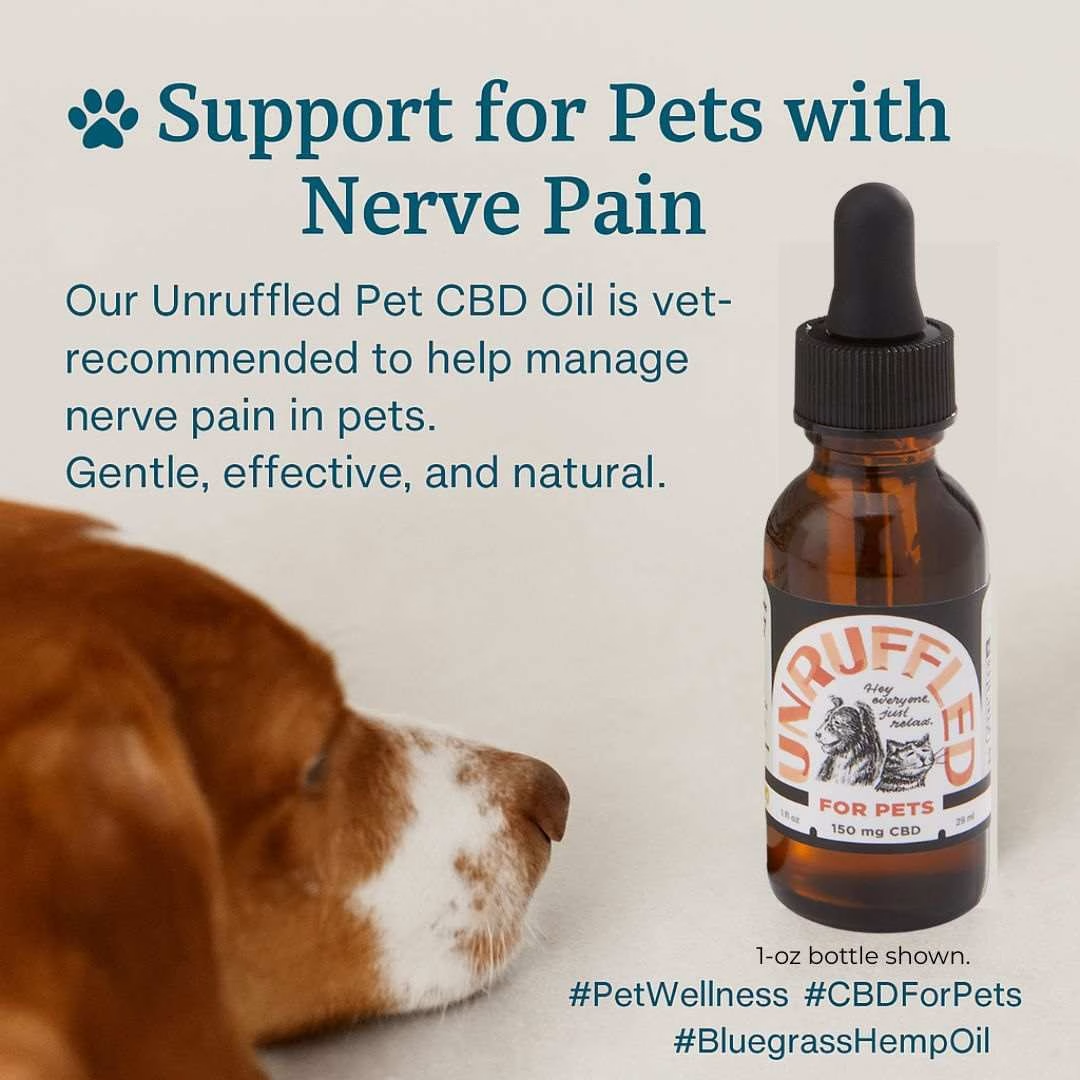
Unruffled CBD Oil for Pets is a Bluegrass Hemp Oil pet CBD product line. When reviewing any Unruffled option, compare it by the same safety-first criteria: pet-specific label, CBD per serving, full-spectrum status, ingredient list, trace THC information, batch-specific COA, and veterinarian guidance.
Frequently Asked Questions About Pet CBD Safety
Is CBD approved by the FDA for pets?
FDA has not approved CBD animal drugs. Pet owners should be cautious with marketing claims and should ask a veterinarian before using CBD with pets.
Can I give my dog human CBD gummies?
No. Human CBD gummies may contain sweeteners, colors, flavors, serving sizes, or THC levels that are not appropriate for dogs. Use pet-labeled products only after reviewing the label and asking your veterinarian.
Can full-spectrum pet CBD contain THC?
Yes. Full-spectrum pet CBD may contain trace THC. Review the label and COA for delta-9 THC and total THC when listed.
What is the most important thing to check on pet CBD?
Start with the label, batch number, ingredient list, CBD per serving, THC information, and Certificate of Analysis. Then ask your veterinarian whether CBD makes sense for your pet’s situation.
Can cats use the same CBD oil as dogs?
Do not assume a product or serving routine for one species fits another. Cats need extra caution with ingredients and flavors. Ask your veterinarian before using CBD with a cat.
What should I do if my pet accidentally eats cannabis or CBD?
Contact your veterinarian, emergency animal hospital, or animal poison control resource right away, especially if the product contained THC, xylitol, unknown ingredients, or a large amount.
Should pet CBD products promise results?
No. Be cautious with guaranteed-result language or claims that CBD treats pet diseases. A responsible product page should focus on labels, ingredients, serving information, COAs, and safety questions.
Safety References and Disclaimer
This guide is educational and is not veterinary advice. Bluegrass Hemp Oil products are not intended to diagnose, treat, cure, or prevent disease in humans or animals. Talk with your veterinarian before using CBD with pets. Keep CBD, THC, and cannabis products out of reach of pets and children.
