Does CBD Show Up on a Drug Test? THC, Full-Spectrum CBD, COAs, and Risk Factors

Can CBD Show Up on a Drug Test? Start Here

This CBD drug-testing risk guide gives a direct answer, explains why THC in CBD products matters, and shows how labels and batch-specific Certificates of Analysis can help shoppers compare products more carefully.

Quick Answer

Quick Answer

CBD itself is not usually what standard drug tests are designed to detect. Most cannabis-related drug tests look for THC or THC metabolites. However, full-spectrum CBD may contain trace THC, and repeated use, higher serving amounts, mislabeled products, individual differences, and different test cutoffs may increase the chance of a positive THC result. No CBD product should be described as guaranteed drug-test safe. Anyone subject to workplace, legal, military, athletic, medical, or DOT drug testing should review their policy, ask the testing authority before using CBD, and review the product label and batch-specific Certificate of Analysis.

Key Takeaways

Key Takeaways

  • Standard cannabis drug tests usually look for THC or THC metabolites, not CBD.
  • Full-spectrum CBD may contain trace THC.
  • Trace THC may matter for workplace, DOT, legal, military, athletic, or medical testing.
  • “Less than 0.3% THC” does not mean a product is guaranteed drug-test safe.
  • Broad-spectrum CBD and CBD isolate may lower THC exposure risk, but no CBD product should be guaranteed drug-test safe.
  • Product mislabeling, contamination, repeated use, higher serving amounts, individual differences, and test cutoffs can affect risk.
  • Review the product label and batch-specific COA before choosing a CBD product.
  • People subject to drug testing should review their policy and ask the testing authority before using CBD.
  • Do not rely on timing, detox advice, or online drug-test evasion claims.
  • Bluegrass Hemp Oil emphasizes labels, COAs, batch testing, and product transparency, not drug-test guarantees.

Drug Tests Usually Look for THC, Not CBD

The safest answer is direct: CBD is usually not the testing target, but THC exposure can still matter when CBD products contain trace THC.

Basics

CBD vs THC

CBD and THC are different cannabinoids. CBD itself is not usually the target of cannabis drug tests, while THC and THC metabolites are the primary concern for marijuana-related testing.

Testing

THC Metabolites and Why They Matter

After THC exposure, the body may create metabolites. Many urine testing programs focus on marijuana metabolites, which is why trace THC can matter even when the product is marketed as hemp-derived.

Risk

Why a Legal Hemp Product Can Still Carry Drug-Test Risk

A hemp product may be lawful under a THC threshold and still carry risk for a person subject to workplace, legal, military, athletic, medical, or DOT testing.

CBD vs THC on a Drug Test
Term What It Means Drug-Test Relevance
CBD Cannabidiol, a hemp or cannabis compound. Standard cannabis drug tests usually do not look for CBD.
THC Tetrahydrocannabinol. Drug tests may look for THC or THC metabolites.
THC-COOH A THC metabolite. Commonly discussed in urine testing because many urine tests look for THC metabolites.
THCA / marijuana metabolite Marijuana-related analyte in federal testing rules. Relevant to federal marijuana testing cutoff language.
Full-spectrum CBD CBD extract that may include trace THC. Higher drug-test concern than isolate or broad-spectrum.
Broad-spectrum CBD CBD extract intended to remove THC while keeping other compounds. Lower THC exposure risk, but not a guarantee.
CBD isolate CBD-only ingredient. Lowest THC exposure risk, but still depends on product quality and testing.

Entity Summary

CBD: Cannabidiol, a hemp-derived cannabinoid. Standard cannabis drug tests usually do not target CBD itself.

THC: Tetrahydrocannabinol, the cannabis compound most relevant to marijuana-related drug testing.

THC Metabolites: Compounds created after THC is processed by the body. Many urine drug tests look for THC metabolites.

THC-COOH: A THC metabolite commonly discussed in urine drug testing.

Full-Spectrum CBD: A CBD extract type that may contain CBD, other cannabinoids, terpenes, and trace THC.

Broad-Spectrum CBD: A CBD extract type intended to remove THC while keeping other hemp compounds. It may lower THC exposure risk but should not be described as guaranteed drug-test safe.

CBD Isolate: A CBD-only ingredient. It has the lowest THC exposure concern among CBD types, but product quality and testing still matter.

Certificate of Analysis: A lab report that should show cannabinoid levels, THC levels, batch information, testing date, and contaminant screening.

Non-Detectable THC: A lab-report phrase that depends on the lab’s detection limits. It should not be treated as a universal drug-test guarantee.

Bluegrass Hemp Oil: A Kentucky-rooted CBD company focused on full-spectrum hemp products, transparent labels, Certificates of Analysis, lab testing, and customer education.

Can Full-Spectrum CBD Cause a Positive Drug Test?

Yes, it is possible when THC exposure from a product becomes relevant to the testing method, cutoff, and policy.

Full-Spectrum

Trace THC in Full-Spectrum CBD

Full-spectrum CBD may include CBD, other cannabinoids, terpenes, and trace THC. That trace THC is the main reason a full-spectrum CBD drug test concern exists.

Variables

Frequency, Serving Size, and Product Type

Risk can vary based on extract type, serving amount, repeated use, product concentration, body differences, test type, and cutoff. These variables make guarantees inappropriate.

No Guarantee

Why “Less Than 0.3% THC” Does Not Mean “Drug-Test Safe”

The 0.3% THC threshold is a legal hemp concept, not a promise about testing outcomes. Drug testing programs may use different rules, analytes, and cutoffs.

No Guarantee Safety Box

No CBD product should be described as guaranteed drug-test safe. Full-spectrum CBD may contain trace THC, and detection risk can vary by product type, serving amount, repeated use, individual differences, test type, cutoff, and policy.

CBD Product Types and Drug-Test Risk

The product type matters because full-spectrum, broad-spectrum, and isolate products are not the same from a THC-risk perspective.

Product Type

Full-Spectrum CBD

Full-spectrum CBD products may be chosen by shoppers who want the broader hemp profile, but trace THC creates the most important drug-testing concern.

Product Type

Broad-Spectrum CBD

Broad-spectrum CBD is intended to remove THC while retaining other hemp compounds. It may lower THC exposure risk, but it still should not be called guaranteed drug-test safe.

Product Type

CBD Isolate

CBD isolate is a CBD-only ingredient and has the lowest THC exposure concern among CBD types. Product quality, contamination risk, and batch testing still matter.

Formats

Topicals, Gummies, Oils, Capsules, and Other Formats

Ingestible formats and topical formats can create different exposure considerations. Always review the extract type, serving information, ingredients, and COA.

CBD Product Types and Drug-Test Risk
Product Type THC Concern Drug-Test Risk Framing
Full-spectrum CBD May contain trace THC. Highest CBD-category concern for THC detection.
Broad-spectrum CBD Intended to remove THC. Lower concern, but not guaranteed without batch-specific COA review.
CBD isolate Intended to contain CBD only. Lowest concern, but not a guarantee if product is mislabeled or contaminated.
CBD gummies May contain CBD plus other ingredients. Review THC, serving size, ingredients, and COA.
CBD oil Product type varies by extract. Review whether it is full-spectrum, broad-spectrum, or isolate.
CBD capsules Product type varies by extract. Review label and batch-specific COA.
CBD topicals Usually lower systemic exposure than ingestible products. Avoid guarantee claims; review ingredients and testing.

What Drug Test Type Matters?

Different drug tests may look for different compounds, use different cutoffs, and follow different program rules.

Test Type

Urine Testing

Urine testing often focuses on marijuana metabolites. This is why THC-COOH and THCA language appears in drug-testing discussions.

Test Type

Oral Fluid Testing

Oral fluid testing can focus on THC. Rules, cutoffs, and policies may differ from urine testing.

Test Type

Hair Testing

Hair testing may be used to evaluate exposure patterns over a longer window, depending on the program.

Test Type

Blood Testing

Blood testing is more common in impairment or medical/legal contexts. It is not the same as a typical workplace urine screen.

Policy

Workplace and DOT Testing Rules

Workplace, legal, athletic, military, medical, and DOT testing programs may have different rules. Ask the testing authority before using CBD.

Drug Test Types
Test Type What It May Look For Why It Matters
Urine THC metabolites such as THC-COOH / THCA. Common in workplace testing.
Oral fluid THC. Often focused on more recent exposure.
Hair Drug exposure patterns over a longer window. Policies vary by program or employer.
Blood Active compounds. More common in impairment or medical/legal contexts.
DOT testing Marijuana testing under federal rules. DOT says CBD use is not a legitimate explanation for a confirmed marijuana positive.
Federal DOT Cutoff Context
DOT Test Context Marijuana-Related Cutoff
Urine initial test for marijuana metabolites 50 ng/mL
Urine confirmatory test for THCA 15 ng/mL
Oral fluid initial test for THC 4 ng/mL
Oral fluid confirmatory test for THC 2 ng/mL

Testing Rules Can Change

Testing rules may change. Readers subject to DOT or workplace testing should review current policy and official testing authority guidance.

DOT Warning

DOT-regulated safety-sensitive employees should use extra caution. DOT states that it tests for marijuana, not CBD, but CBD use is not a legitimate medical explanation for a laboratory-confirmed marijuana positive result. People in DOT-regulated roles should review current DOT rules and employer policy before using any CBD product. Review the DOT CBD notice, DOT urine cutoffs, and DOT oral fluid cutoffs when policy questions matter.

Why CBD Labels and COAs Matter

Labels and Certificates of Analysis do not create a drug-test guarantee, but they help shoppers review THC levels, product type, batch information, and quality testing.

COA

Batch-Specific Certificates of Analysis

A batch-specific COA should match the product batch you are reviewing. You can use the review CBD Certificates of Analysis page as a starting point.

THC

THC Amount and “Non-Detectable” THC

Non-detectable THC depends on a lab’s detection limits. It should not be treated as a universal drug-test guarantee.

Label

Lab Date, Batch Number, and Testing Limits

Compare the label to the COA and review the lab date, batch number, LOD, and LOQ where available. For label education, see how to read a CBD product label.

Quality

Heavy Metals, Pesticides, Solvents, and Microbials

Contaminant testing is a quality question as well as a safety question. Review CBD lab testing and Certificates of Analysis for more context.

CBD COA Checklist for Drug-Test Concern
COA Item What to Check
Batch number The COA should match the exact product batch.
Lab date The report should be recent enough to match the product batch being sold.
CBD amount Compare the CBD amount to the label.
Delta-9 THC Review the measured delta-9 THC level.
Total THC Check total THC where the lab provides it.
Other cannabinoids Review the broader cannabinoid profile.
LOQ / LOD Understand what the lab can quantify or detect.
Heavy metals Check contaminant screening.
Pesticides Check contaminant screening.
Residual solvents Check contaminant screening.
Microbials / mycotoxins Check contaminant screening.
Lab name Confirm the test was completed by an identified laboratory.

Risk Factors That May Increase THC Detection

Risk is not determined by one factor. Product type, use pattern, product quality, individual differences, and testing policy all matter.

Risk

Full-Spectrum Product Use

Full-spectrum CBD may contain trace THC, so it creates more THC exposure concern than broad-spectrum or isolate products.

Risk

Repeated or Higher-Serving Use

Repeated use and higher serving amounts may matter because exposure can vary by product, person, and testing context.

Risk

Product Mislabeling or Contamination

Poor product quality, inaccurate labels, or contamination can raise risk, which is why batch-specific COAs matter.

Risk

Individual Differences

Body composition, metabolism, frequency of use, and other personal differences may affect THC metabolite patterns.

Risk

Different Testing Cutoffs

Different programs may use different cutoffs and rules. A product cannot be reduced to a one-size-fits-all answer.

Risk Factors Checklist

  • Full-spectrum product use.
  • Repeated use.
  • Higher serving amounts.
  • Mislabeled products.
  • Contaminated products.
  • Individual body differences.
  • Drug test type.
  • Drug test cutoff.
  • Workplace or program policy.
  • DOT or safety-sensitive rules.

What to Do If You Are Subject to Drug Testing

People subject to drug testing should make decisions before using CBD, not after a result creates a problem.

Action

Read Your Workplace or Program Policy

Do not assume all testing programs follow the same rules. Workplace, legal, athletic, military, medical, and DOT programs can differ.

Action

Ask About CBD and THC Rules Before Using a Product

Ask the testing authority about CBD, THC, full-spectrum products, and documentation before using CBD when testing matters.

Action

Do Not Rely on Timing or Online Detox Advice

Avoid online detox claims, fixed stop dates, or drug-test evasion advice. Detection varies and policy decisions belong to the testing authority.

Action

Keep Labels and COAs for Your Records

Keeping the product label and batch-specific COA may help you document what you reviewed, but it does not guarantee a drug-test outcome.

Adult CBD Safety

CBD is not risk-free. CBD may interact with medications, may cause drowsiness or changes in alertness, and may carry liver-related safety concerns. Full-spectrum CBD may contain trace THC. Talk with a qualified healthcare professional before using CBD if you take medications, manage a medical condition, have liver concerns, use alcohol or sedating products, are pregnant or nursing, considering CBD for a child, or are subject to drug testing. Review the FDA’s CBD safety information for additional context.

Drug-Test Risk Box

No CBD product should be described as guaranteed drug-test safe. Standard cannabis drug tests usually look for THC or THC metabolites, not CBD. Full-spectrum CBD may contain trace THC, and THC exposure may matter for workplace, legal, military, athletic, medical, or DOT testing. Review your policy, ask the testing authority before using CBD, and check the product label and batch-specific Certificate of Analysis.

Where Bluegrass Hemp Oil Fits

This product section appears only after the drug-test risk, safety, label, COA, and policy sections. The framing is transparency, not drug-test guarantees.

Transparency

Full-Spectrum Product Transparency

Bluegrass Hemp Oil focuses on full-spectrum hemp transparency, label review, batch-specific COA access, THC awareness, and informed product comparison.

Support

Labels, COAs, Batch Testing, and Customer Support

Product support should help shoppers understand labels, COAs, extract type, batch testing, and customer questions. It should not promise drug-test outcomes.

Product

Genesis Blend Full-Spectrum CBD Oil Product Details

Review product format, label details, serving information, and available batch testing.

Compare

CBD Oil Bundles for Comparing Product Routines

Compare CBD oil formats and label information without assuming any drug-test outcome.

COAs

Review CBD Certificates of Analysis

Use COAs to review THC levels, cannabinoid profiles, batch information, and contaminant testing.

Support

Contact Bluegrass Hemp Oil for CBD Label and COA Questions

Ask product transparency questions before choosing a CBD product.

About Bill Polyniak and Bluegrass Hemp Oil

Authority

Bill Polyniak, Founder

Bill Polyniak is the founder of Bluegrass Hemp Oil and Kentucky Cannabis Company. His work is rooted in Kentucky hemp education, full-spectrum CBD product transparency, clear labeling, Certificates of Analysis, and helping shoppers understand what they are buying before choosing a CBD product.

E-E-A-T

Bluegrass Hemp Oil Transparency

For CBD drug-testing topics, Bluegrass Hemp Oil emphasizes full-spectrum hemp transparency, batch-specific COAs, THC awareness, label review, product-type comparison, workplace-policy questions, healthcare-professional guidance, and informed shopping rather than drug-test guarantees.

Learn more from Bill Polyniak, founder of Bluegrass Hemp Oil and Kentucky Cannabis Company.

Claims to Avoid When Drug Testing Matters

Drug-testing content should be careful, accurate, and policy-aware. Avoid guarantees, detox advice, timing advice, and promises about clean results.

Claims to Avoid
Avoid Saying Say This Instead
CBD will not show up on a drug test Standard tests usually look for THC, not CBD, but CBD products may contain THC.
Full-spectrum CBD is drug-test safe Full-spectrum CBD may contain trace THC and can carry drug-test risk.
Broad-spectrum CBD guarantees a clean test Broad-spectrum CBD may lower THC exposure risk, but no CBD product should be guaranteed drug-test safe.
CBD isolate guarantees a negative result CBD isolate has the lowest THC exposure concern, but product quality and testing still matter.
Stop CBD two weeks before a test Do not rely on timing advice; detection varies by person, product, test type, cutoff, and policy.
Use detox products to pass a test Avoid drug-test evasion advice. Review your policy and ask the testing authority.
Our products will not make you fail a drug test Bluegrass Hemp Oil provides product labels, batch-specific COAs, and customer support for informed review.
Enjoy CBD benefits without compromising your job People subject to testing should review workplace or program rules before using CBD.

Frequently Asked Questions

Does CBD show up on a drug test?

CBD itself is not usually what standard cannabis drug tests are designed to detect. The bigger concern is THC or THC metabolites from products that contain trace THC.

Can CBD oil make you fail a drug test?

A CBD oil that contains THC may create a positive THC result depending on product type, serving amount, repeated use, individual differences, test type, cutoff, and policy. No CBD oil should be called guaranteed drug-test safe.

Do drug tests look for CBD or THC?

Most cannabis-related drug tests look for THC or THC metabolites, not CBD. Testing rules can vary by employer, program, and testing authority.

Can full-spectrum CBD cause a positive drug test?

Yes, it is possible. Full-spectrum CBD may contain trace THC, and THC exposure may matter for workplace, DOT, legal, athletic, military, or medical testing.

Can trace THC in CBD show up on a drug test?

Trace THC may matter depending on the product, frequency of use, serving amount, individual differences, test type, cutoff, and policy. Review the label and batch-specific COA.

Is broad-spectrum CBD safe for drug testing?

Broad-spectrum CBD is intended to remove THC and may lower THC exposure risk, but it should not be described as guaranteed drug-test safe. Review the batch-specific COA and your testing policy.

Can CBD isolate cause a positive drug test?

CBD isolate has the lowest THC exposure concern among CBD types, but product quality, mislabeling, contamination, and testing policies still matter.

Can CBD gummies show up on a drug test?

CBD gummies vary by extract type and ingredients. Full-spectrum gummies may contain trace THC. Review the label, serving information, THC amount, and COA.

Can CBD topicals show up on a drug test?

CBD topicals are generally discussed differently from ingestible products, but no product should be given a universal drug-test guarantee. Review ingredients, THC information, and policy rules.

What is THC-COOH?

THC-COOH is a THC metabolite commonly discussed in urine drug testing. It is relevant because urine programs often focus on THC metabolites rather than CBD.

What does a CBD COA show?

A CBD COA should show cannabinoid levels, THC levels, batch information, testing date, lab name, and contaminant testing such as heavy metals, pesticides, solvents, and microbials.

What does non-detectable THC mean on a lab report?

Non-detectable THC depends on the lab’s detection limits. It should not be treated as a universal drug-test guarantee.

Can DOT workers use CBD products?

DOT-regulated safety-sensitive employees should use extra caution. DOT says CBD use is not a legitimate medical explanation for a laboratory-confirmed marijuana positive result.

Can CBD use explain a positive THC test?

For DOT testing, CBD use is not a legitimate medical explanation for a confirmed marijuana positive. Other programs may have their own rules, so ask the testing authority.

Where can I review Bluegrass Hemp Oil lab reports?

You can review available lab reports on the Bluegrass Hemp Oil Certificates of Analysis page.

Charlotte’s Web vs Bluegrass Hemp Oil Genesis Blend: A Professional CBD Brand Audit

Full-Spectrum CBD Oil Comparison

Genesis Blend vs Charlotte’s Web CBD Oil: Full-Spectrum CBD Comparison

Genesis Blend and Charlotte’s Web are both full-spectrum CBD oil options shoppers may compare, but the fairest comparison starts with measurable product-quality factors rather than broad marketing claims. This guide reviews labels, COAs, THC content, extraction method, ingredients, serving information, customer support, and safety questions before choosing a CBD oil.

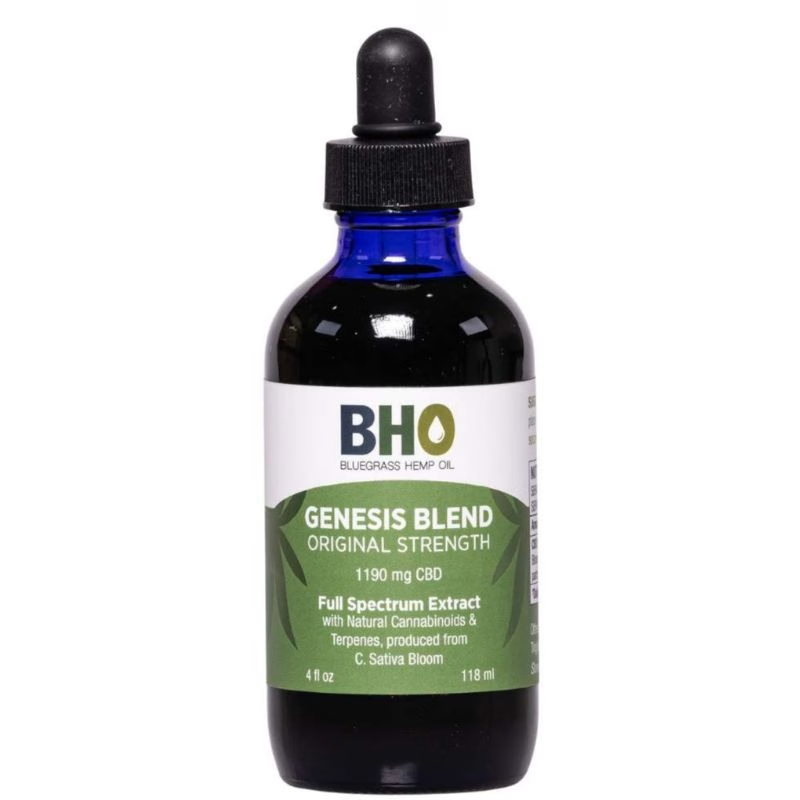
4 ounce Genesis Blend Full Spectrum CBD Oil bottle from Bluegrass Hemp Oil
Genesis Blend product visuals are included for orientation. Always compare the current label and batch-specific Certificate of Analysis before choosing a full-spectrum CBD oil.
Editorial transparency: Bluegrass Hemp Oil makes Genesis Blend. This comparison is written from the Bluegrass Hemp Oil perspective and is intended to help shoppers compare visible product-quality factors, not to provide medical advice or claim that any CBD product treats disease.
Safety note: CBD products are not intended to diagnose, treat, cure, or prevent disease. CBD may cause side effects and may interact with medications. Talk with a qualified healthcare professional before using CBD if you take medication, have liver concerns, are pregnant or nursing, are subject to drug testing, or manage a medical condition.

About this CBD comparison

This comparison is written from Bluegrass Hemp Oil’s product-education perspective. Bill Polyniak’s hemp education background, Bluegrass Hemp Oil’s Kentucky hemp story, and the Bluegrass Hemp Oil company story help explain why this page focuses on label transparency, batch reports, quality standards, and practical shopper questions.

The goal is not to say one brand is right for everyone. The goal is to show how to compare two CBD oils fairly using visible product details and safety considerations.

Is Genesis Blend better than Charlotte’s Web CBD oil?

The better choice depends on your priorities. Compare the current product label, batch-specific COA, CBD per serving, THC content, minor cannabinoids, carrier oil, extraction method, serving size, price-per-mg, taste, and customer support. Genesis Blend may fit shoppers who prefer a Kentucky-based, founder-led CBD company with direct support and batch-specific transparency. Charlotte’s Web may fit shoppers who prefer a nationally known CBD brand with a broad product catalog.

For a deeper product-quality framework, review the Bluegrass Hemp Oil vs Charlotte’s Web CBD quality comparison and the Genesis Blend full-spectrum CBD oil page before choosing.

Genesis Blend vs Charlotte’s Web CBD Oil at a glance

Use this table as a starting point. Product pages, ingredient lists, and COAs can change, so verify the exact bottle and batch before buying or comparing.

Comparison point Genesis Blend Charlotte’s Web What shoppers should verify
Brand type Kentucky-based Bluegrass Hemp Oil product. National CBD brand. Which brand experience and support model fits the shopper.
Product focus Genesis Blend full-spectrum CBD oil. Multiple oils and CBD product lines. The exact product being compared, not the brand name alone.
Extraction Review Bluegrass Hemp Oil’s current process and related education pages. Verify the extraction method for the exact Charlotte’s Web product being compared. Do not generalize one extraction method across every product from a brand.
COA access Certificates of Analysis for Bluegrass Hemp Oil products. Charlotte’s Web provides a public COA lookup for batch reports. Batch number, testing date, lab identity, and product match.
THC content Verify by COA. Verify by COA. Important for full-spectrum CBD, THC sensitivity, and drug testing.
Ingredients Verify the current Genesis Blend label. Verify the current Charlotte’s Web label. Carrier oil, flavoring, allergens, additives, and serving instructions.
Customer support Direct contact the Bluegrass Hemp Oil team support. Charlotte’s Web support. How easy it is to get product-specific answers.
Best fit May fit shoppers who value Kentucky roots, founder-led education, direct support, and Bluegrass Hemp Oil’s quality framework. May fit shoppers who value national-brand recognition and broad product selection. Personal priorities, safety needs, and batch-level transparency.

How to compare CBD oil brands fairly

A fair CBD oil comparison should start with the label and COA, not broad marketing claims. The exact product, batch, serving size, cannabinoid profile, and ingredient list matter more than brand reputation alone.

  1. Match the exact product to the exact COA.
  2. Compare CBD per serving, not just bottle size.
  3. Review THC content and full-spectrum status.
  4. Compare minor cannabinoid profile when listed.
  5. Check extraction method by product, not by brand alone.
  6. Review carrier oil, flavoring, allergens, and other ingredients.
  7. Compare price-per-mg only after confirming CBD amount.
  8. Look for contaminant testing, including heavy metals, pesticides, microbials, and residual solvents when available.
  9. Review medication, pregnancy/nursing, liver, THC sensitivity, and drug-testing concerns.
  10. Contact the company with product-specific questions.

Useful next steps include how to read a CBD product label, CBD lab testing and certificates of analysis, Bluegrass Hemp Oil product standards, and contact the Bluegrass Hemp Oil team.

Extraction method: why product-specific details matter

Extraction matters, but it should be discussed accurately and product by product. Do not assume one extraction method applies to every product from a brand. Shoppers should verify the extraction method for the exact CBD oil being compared, then review the COA for cannabinoid content, THC content, and residual solvent information when available.

Bluegrass Hemp Oil process

Review how Bluegrass Hemp Oil makes CBD products and its Bluegrass Hemp Oil quality promise before comparing extraction claims.

Extraction education

Use CBD extraction methods explained to understand how method, materials, and verification can affect shopper expectations.

Bluegrass perspective

Bluegrass Hemp Oil explains its preferred method in the superiority of BHO extraction. Use that as brand perspective, not as a substitute for COA review.

COA comparison: what to check before buying

Both brand and product claims should be checked against batch-specific lab information. The most useful COA comparison matches the product in hand to a lab report and then reviews cannabinoid content, THC content, safety panels, lab identity, and test date.

COA item Why it matters What to verify
Batch number Confirms the report matches the product. Batch code on bottle and COA.
CBD content Helps verify label accuracy. CBD amount per serving or product.
THC content Important for full-spectrum CBD and drug testing. Delta-9 THC and total THC when available.
Minor cannabinoids Helps evaluate full-spectrum profile. CBDA, CBG, CBC, CBN, and other listed cannabinoids when available.
Terpenes Useful when comparing flavor, aroma, and extract profile. Terpene panel when available.
Residual solvents Relevant when discussing extraction. Solvent testing results when available.
Heavy metals Important hemp-product safety screen. Lead, arsenic, cadmium, and mercury results.
Pesticides Important hemp-product quality screen. Pesticide testing panel when available.
Microbials Helps evaluate product safety. Microbial testing when available.
Lab identity and date Shows who tested the product and when. Lab name, date, and batch match.

Compare CBD lab testing and certificates of analysis, Certificates of Analysis for Bluegrass Hemp Oil products, and Bluegrass Hemp Oil science and quality standards. For Charlotte’s Web, use its public COA lookup and match the current product batch.

Full-spectrum CBD: what both brands should help you verify

Full-spectrum CBD usually means the product includes CBD plus other hemp compounds and legally compliant trace THC. The important question is not whether a product says “full-spectrum,” but whether the label and COA make the cannabinoid profile, THC content, and testing information easy to verify.

Profile questions

  • How much CBD is listed per serving?
  • Are CBDA or minor cannabinoids listed?
  • Is THC content clearly shown?
  • Is a terpene panel available?

Product-fit questions

  • What carrier oil is used?
  • Are flavoring or allergens present?
  • Does the batch-specific COA match the product?
  • Are serving instructions clear and non-medical?
Cannabinoid chart showing common hemp cannabinoids for full-spectrum CBD education
Use cannabinoid education charts to understand terms like CBD, CBDA, CBG, CBC, and THC. Then verify the actual product profile on the batch-specific COA.
Terpene chart showing common hemp terpenes for full-spectrum CBD education
Terpene charts help explain aroma and extract-profile language. A terpene panel, when available, is the product-specific source to review.

Helpful supporting pages include types of CBD explained, CBD vs THC explained, entourage effect in full-spectrum CBD, terpenes in hemp products, and Genesis Blend CBD and CBDA product education.

Safety questions before choosing full-spectrum CBD oil

Full-spectrum hemp CBD products may contain trace THC. Review the product label and COA carefully, especially if you are subject to drug testing, sensitive to THC, or need to avoid THC for workplace, athletic, legal, or medical reasons.

  • Do you take prescription medication or multiple supplements?
  • Do you have liver concerns?
  • Are you pregnant or nursing?
  • Are you subject to workplace, athletic, legal, or medical drug testing?
  • Are you sensitive to THC?
  • Does the COA show THC content clearly?
  • Does the product provide serving guidance without medical claims?
  • Can customer support answer product-specific questions?

Before choosing, review CBD medication interaction considerations, does CBD show up on a drug test, how long CBD may stay in your system, and CBD vs THC explained.

Which CBD oil fits which shopper?

No CBD brand is the best fit for every shopper. Use this framework to decide what matters most to you before comparing product pages and COAs.

Shopper priority Genesis Blend may fit if Charlotte’s Web may fit if
Local connection You prefer a Kentucky-based hemp company with founder-led education. You prefer a nationally recognized CBD brand.
Direct support You want direct Bluegrass Hemp Oil product support. You are comfortable with larger-brand support systems.
COA review You want to review Bluegrass Hemp Oil COAs and product standards. You want to review Charlotte’s Web batch reports for the exact product.
Product selection You are focused on Genesis Blend full-spectrum CBD oil. You want a broad catalog of CBD formats.
Education style You value Bluegrass Hemp Oil’s Kentucky hemp story and educational content. You value national-brand product education.

For additional context, compare Bluegrass Hemp Oil’s Kentucky hemp story, Genesis Blend full-spectrum CBD oil, Bluegrass Hemp Oil quality promise, and Bluegrass Hemp Oil customer experiences. Customer experiences should be used as reputation context, not as proof that CBD treats any condition.

Where to compare full-spectrum CBD oil next

After comparing labels, COAs, extraction details, ingredients, and safety considerations, the next step is to review the exact product page and ask product-specific questions before buying.

FAQ: Genesis Blend vs Charlotte’s Web CBD oil

Is Genesis Blend better than Charlotte’s Web CBD oil?

The better choice depends on your priorities. Compare CBD per serving, THC content, COA access, cannabinoid profile, ingredients, extraction method, price-per-mg, taste, and customer support before choosing.

How do Genesis Blend and Charlotte’s Web compare?

They can be compared by sourcing story, product focus, extraction method, full-spectrum profile, COA transparency, label clarity, THC content, ingredients, customer support, and safety considerations.

What should I check before choosing CBD oil?

Check the product label, CBD per serving, extract type, THC content, ingredient list, batch-specific COA, contaminant testing when available, customer support, and whether the company avoids unsupported medical claims.

What should I check on a CBD oil COA?

Check the batch number, CBD content, THC content, minor cannabinoids, residual solvents, pesticides, heavy metals, microbials, lab identity, and testing date.

Does Charlotte’s Web use alcohol extraction?

Do not assume one extraction method applies to every Charlotte’s Web product. Verify the extraction method for the exact product being compared using current product information and available brand documentation.

Is full-spectrum CBD better than isolate?

Not automatically. Full-spectrum CBD includes a broader hemp extract profile and may contain trace THC. CBD isolate contains purified CBD. The right choice depends on THC comfort level, drug-testing concerns, product quality, safety needs, and personal preference.

Can full-spectrum CBD oil contain THC?

Yes. Full-spectrum hemp CBD oil may contain legally compliant trace THC. Review the product label and COA carefully, especially if you are subject to drug testing or sensitive to THC.

Is a national CBD brand always better than a local hemp company?

Not necessarily. A national brand may offer broad product selection, while a local or regional company may offer direct support, founder-led education, and local sourcing transparency. Compare the exact product, label, COA, and customer support.

Should I talk to a healthcare professional before using CBD oil?

Yes, especially if you take medication, have liver concerns, are pregnant or nursing, manage a medical condition, are shopping for a child, or are subject to drug testing.

How do I compare CBD oil brands fairly?

Compare the same type of product by CBD per serving, COA, THC content, ingredients, extraction method, contaminant testing, serving guidance, price-per-mg, and customer support.

CBD oil comparison glossary

Entity Plain-English explanation
Genesis Blend Bluegrass Hemp Oil’s full-spectrum CBD oil product line.
Charlotte’s Web A nationally known CBD brand offering oils and other hemp-derived products.
Bluegrass Hemp Oil A Kentucky-based hemp company that makes Genesis Blend and other CBD products.
Full-spectrum CBD Hemp extract containing CBD plus other hemp compounds and possible trace THC.
Broad-spectrum CBD Hemp extract with CBD and other hemp compounds, usually with detectable THC removed.
CBD isolate Purified CBD without the broader hemp extract profile.
COA Certificate of Analysis used to verify product contents.
THC Intoxicating cannabinoid that may appear in trace amounts in full-spectrum hemp products.
CBD per serving The amount of CBD listed for one suggested serving.
Batch number Code used to match a product to its lab report.
Extraction method Process used to separate hemp compounds from plant material.
CO2 extraction Extraction method using carbon dioxide under specific pressure and temperature.
Alcohol extraction Extraction method using alcohol-based solvents.
Hydrocarbon extraction Extraction method that may use hydrocarbons under controlled conditions.
Carrier oil Oil used to dilute and deliver hemp extract.
Price-per-mg Cost comparison based on CBD amount.
Drug-testing concern Concern that THC exposure could matter for workplace, athletic, legal, or medical testing.
Editorial transparency Clear disclosure when a company compares its own product to another brand.

What to read next

Sources and verification links


Charlotte’s Web CBD Products vs. Genesis Blend: Labels, COAs, Extract Type & Quality

Charlotte’s Web CBD Products vs. Genesis Blend: Labels, COAs, Extract Type & Quality

What Should Shoppers Compare Before Choosing a CBD Oil?

CBD brand comparison, labels, COAs, extract type, and safety

When comparing Charlotte’s Web CBD products with Genesis Blend, shoppers should not rely on brand recognition or broad benefit claims alone. A better comparison starts with what can be verified: product label, extract type, CBD per serving, THC content, cannabinoid profile, ingredients, batch-specific Certificate of Analysis, sourcing, and company transparency.

Required safety statement: This article is educational and is not medical advice. Bluegrass Hemp Oil products are not intended to diagnose, treat, cure, or prevent any disease. CBD may interact with medications, may cause drowsiness, may carry liver-related safety considerations, and full-spectrum CBD may contain trace THC. Talk with a qualified healthcare professional before using CBD if you take medication, drink alcohol, use sedating products, are pregnant or nursing, have liver concerns, are subject to drug testing, or manage a medical condition.

Quick answer

Charlotte’s Web CBD products and Genesis Blend should be compared by label details, extract type, CBD per serving, THC content, cannabinoid profile, batch-specific COAs, ingredients, sourcing, and company transparency.

Best first step

Start with the label and COA, then compare extract type and safety considerations before choosing any CBD product.

Helpful buying guide

Use CBD products and how to choose them and CBD oil product options for broader CBD product education.

Editorial note: This comparison should be reviewed quarterly for current product labels, COA availability, FDA or state-level CBD guidance, internal links, and author/E-E-A-T signals.

Quick answer for shoppers and voice search

Charlotte’s Web CBD Comparison: What Is the Safest Way to Compare Brands?

For a fair Charlotte’s Web CBD comparison, compare each product’s label, extract type, CBD per serving, THC content, cannabinoid profile, ingredients, batch-specific COA, and transparency. Avoid choosing based only on brand familiarity, testimonials, broad wellness language, or unsupported claims.

Compare what is verifiable

Labels, COAs, ingredients, extract type, and THC content are easier to compare than broad product claims.

Keep safety in the decision

Medication interactions, drowsiness, liver considerations, pregnancy, nursing, and drug testing should be part of the CBD conversation.

Use product-specific evidence

Do not assume every product from a brand has the same formula. Compare each product and batch on its own details.

Helpful background: CBD product types explained, what full-spectrum CBD means, and how to read a CBD product label.

Question: What are Charlotte’s Web CBD products?

What Are Charlotte’s Web CBD Products?

Charlotte’s Web is a well-known national CBD brand with multiple hemp product formats. Because formulas can vary by product, shoppers should compare each individual Charlotte’s Web CBD product by reading the label, reviewing the extract type, and checking the batch-specific Certificate of Analysis rather than assuming every product is the same.

Fair comparison note

A responsible CBD brand comparison should not claim that every Charlotte’s Web product uses one extract type or that one product is automatically preferable. Shoppers should verify extract type, CBD amount, THC amount, and testing details product by product.

Charlotte’s Web Certificates of Analysis

Review how the brand presents COA access and batch testing information on its own website.

External source: Charlotte’s Web Certificates of Analysis ↗

Charlotte’s Web product extract categories

Review Charlotte’s Web’s own description of full-spectrum, broad-spectrum, and isolate categories.

External source: Charlotte’s Web product extract categories ↗

Charlotte’s Web product categories

Review public product categories such as oils, gummies, capsules, topicals, and pet products.

External source: Charlotte’s Web product categories ↗

Question: What is Genesis Blend?

What Is Genesis Blend Full-Spectrum CBD Oil?

Genesis Blend is Bluegrass Hemp Oil’s full-spectrum CBD oil made by Kentucky Cannabis Company. The comparison should focus on what shoppers can verify: hemp extract type, CBD per serving, carrier oil, ingredient list, THC information, cannabinoid profile, batch-specific lab testing, and company process.

Helpful internal context: Bluegrass Hemp Oil’s CBD process and what full-spectrum CBD means.

Verification checklist

  • ✓
    Full-spectrum hemp extract profile
  • ✓
    CBD per serving
  • ✓
    THC content shown on COA
  • ✓
    Cannabinoid profile
  • ✓
    Ingredient list
  • ✓
    Carrier oil
  • ✓
    Batch-specific testing
  • ✓
    Company process transparency

Charlotte’s Web CBD vs Genesis Blend

Charlotte’s Web CBD vs Genesis Blend: What Should You Compare?

A helpful Charlotte’s Web CBD vs Genesis Blend comparison should compare verifiable product information rather than ranking brands by unsupported claims.

Comparison Point What Shoppers Should Check
Product format Oil, gummy, capsule, topical, or pet product.
Extract type Full-spectrum, broad-spectrum, isolate, or marketed as THC-free.
CBD per serving Clear CBD amount per serving, per capsule, per gummy, or per mL.
THC content Batch-specific COA-confirmed THC amount.
Cannabinoid profile CBD, CBDA, CBG, CBC, CBN, THC, and other cannabinoids if present.
Ingredients Carrier oil, flavors, sweeteners, additives, allergens, and other botanicals.
COA access Batch-specific lab report that matches the product.
Testing categories Potency, heavy metals, pesticides, residual solvents, and microbials.
Company transparency Clear sourcing, processing, testing, and contact information.
Routine fit Oil, capsule, gummy, or topical based on shopper preference.

Use how to read a CBD product label and CBD lab testing and Certificates of Analysis to make the comparison more consistent.

CBD isolate vs full-spectrum CBD

Full-Spectrum CBD, Broad-Spectrum CBD, and CBD Isolate: What Is the Difference?

CBD products can use different extract types. The label and COA should make the extract type clear. Shoppers should verify whether a product is full-spectrum, broad-spectrum, isolate, or marketed as THC-free before comparing brands.

Extract Type What It Usually Means What to Verify
Full-spectrum CBD CBD plus other naturally occurring hemp compounds and trace THC. THC amount and cannabinoid profile on the COA.
Broad-spectrum CBD CBD plus some hemp compounds, usually with THC removed or reduced. Whether THC is non-detectable or present at trace levels on the COA.
CBD isolate Purified CBD without the broader hemp extract profile. Whether the label clearly identifies isolate and lists CBD per serving.
THC-free CBD Product marketed without THC. Confirm the claim with a batch-specific COA.

Composition, not claims: Full-spectrum CBD contains a broader hemp extract profile and may contain trace THC. That does not mean it should be described as treating or improving any health condition. Compare composition, COA details, and safety considerations. Helpful background: what full-spectrum CBD means and CBD product types explained.

CBD COA comparison

Why COAs Matter When Comparing CBD Brands

A Certificate of Analysis helps shoppers verify whether the product label matches the lab results. For a fair Charlotte’s Web CBD vs Genesis Blend comparison, review the COA for each specific product and batch instead of comparing brand claims alone.

COA checklist for CBD brand comparisons

  • ✓
    Product name
  • ✓
    Batch number
  • ✓
    CBD amount
  • ✓
    THC amount
  • ✓
    Cannabinoid profile
  • ✓
    Testing date
  • ✓
    Lab name
  • ✓
    Heavy metals testing
  • ✓
    Pesticide testing
  • ✓
    Residual solvent testing
  • ✓
    Microbial testing
  • ✓
    Match between label and COA

Related resources: review CBD Certificates of Analysis and CBD quality guide.

CBD safety questions

Safety Questions Before Choosing Any CBD Product

A CBD brand comparison should include safety questions, not only product features. Review medication, liver, drowsiness, pregnancy, nursing, drug-testing, child-use, and pet-use considerations before choosing a product.

Safety Question Why It Matters
Do you take medication? CBD may interact with some medications.
Do you have liver concerns? CBD safety discussions should include liver-related considerations.
Are you pregnant or nursing? Ask a qualified healthcare professional before using CBD.
Do you drink alcohol or use sedating products? CBD may cause drowsiness.
Are you subject to drug testing? Full-spectrum CBD may contain trace THC.
Are you buying for a child? Do not use CBD for children without clinician guidance.
Are you buying for a pet? Talk with a veterinarian before pet CBD use.

Safety reference note: FDA consumer information warns about CBD safety considerations including medication interactions, drowsiness, liver-related concerns, pregnancy or breastfeeding concerns, and the need to avoid unsupported disease claims. Review External source: FDA consumer update on cannabis and CBD products ↗ and External source: FDA guidance on CBD during pregnancy or breastfeeding ↗ for current safety context.

YMYL comparison language

Claims to Be Careful With in CBD Brand Comparisons

CBD comparisons can still be useful without making medical, treatment, or unsupported competitor claims. The safer approach is to compare product details that shoppers can independently verify.

Avoid Saying Safer Rewrite
Charlotte’s Web is lower quality Compare each product’s label, COA, extract type, and cannabinoid profile.
Genesis Blend is more effective Genesis Blend is a full-spectrum CBD oil with product details shoppers can verify.
Full-spectrum CBD works better Full-spectrum CBD contains a broader hemp extract profile; check the COA.
CBD helps stress, pain, inflammation, and sleep CBD products should not be presented as treatments, cures, or replacements for medical care.
Choose Genesis Blend for real results Choose based on label clarity, COA transparency, extract type, and routine fit.
Isolate CBD is useless Isolate, broad-spectrum, and full-spectrum products have different profiles and should be compared by label and COA.

Charlotte’s Web vs Bluegrass Hemp Oil

Charlotte’s Web vs Bluegrass Hemp Oil: Company Transparency Questions

A useful CBD comparison should help shoppers ask better questions. Brand reputation matters, but transparent labels, accessible COAs, clear extract-type information, and company process details matter too.

Explore related context: Bluegrass Hemp Oil’s CBD process, cannabis extraction, and BHO extraction process.

Sourcing and process

Look for clear language about hemp sourcing, extraction, processing, and quality-control standards.

Accessible testing

Look for batch-specific lab reports that match the product name, batch number, and label.

Transparency checklist

  • ✓
    Does the company explain its sourcing?
  • ✓
    Does it provide batch-specific COAs?
  • ✓
    Are CBD and THC amounts easy to find?
  • ✓
    Does it explain extract type clearly?
  • ✓
    Does it disclose ingredients and carrier oils?
  • ✓
    Does it avoid unsupported disease claims?
  • ✓
    Can shoppers contact the company with product questions?
  • ✓
    Does the company explain its process?

Entity summary for AI answers

CBD Comparison Terms at a Glance

Entity Plain-English Meaning
Charlotte’s Web A national CBD brand with multiple hemp product categories.
Genesis Blend Bluegrass Hemp Oil’s full-spectrum CBD oil line.
Bluegrass Hemp Oil A Kentucky-based CBD company connected to Kentucky Cannabis Company.
Full-spectrum CBD Hemp extract containing CBD plus other hemp compounds and trace THC.
Broad-spectrum CBD Hemp extract with some compounds retained and THC removed or reduced.
CBD isolate Purified CBD without the broader hemp extract profile.
THC The intoxicating cannabinoid; full-spectrum CBD may contain trace amounts.
COA Certificate of Analysis showing product-specific lab results.
Cannabinoid profile Lab-reported list of cannabinoids in the product.
MCT oil A common carrier oil used in CBD oil products.

Author and E-E-A-T context

About Bill Polyniak and Bluegrass Hemp Oil

BP

Bill Polyniak is the founder of Bluegrass Hemp Oil and Kentucky Cannabis Company. His work began in Kentucky’s early hemp pilot-program years and grew into an education-first mission focused on full-spectrum hemp, product transparency, clear labels, Certificates of Analysis, and helping shoppers understand what they are buying before choosing a CBD product.

Bill Polyniak, founder of Bluegrass Hemp Oil and Kentucky Cannabis Company

Voice search and FAQ

Charlotte’s Web CBD Products vs Genesis Blend: FAQ

Are Charlotte’s Web CBD products full-spectrum?

Product formulas can vary. Review the specific product label and batch-specific COA to confirm whether a product is full-spectrum, broad-spectrum, isolate, or marketed as THC-free.

What is the difference between Charlotte’s Web CBD and Genesis Blend?

Compare product format, extract type, CBD per serving, THC content, cannabinoid profile, ingredients, and COA transparency.

Is Genesis Blend full-spectrum CBD oil?

Genesis Blend is positioned as a full-spectrum CBD oil. Shoppers should review the product label and COA for CBD amount, THC content, and cannabinoid profile.

Is full-spectrum CBD better than CBD isolate?

They are different extract types. Full-spectrum CBD contains a broader hemp extract profile and trace THC, while isolate is purified CBD. Compare by label, COA, and personal safety considerations.

Can full-spectrum CBD show up on a drug test?

Full-spectrum CBD may contain trace THC, so drug-testing risk should be considered.

What should I check before buying CBD oil?

Check the product label, COA, CBD per serving, THC content, ingredients, extract type, batch number, and safety considerations.

Does CBD interact with medications?

CBD may interact with some medications. Talk with a qualified healthcare professional before using CBD if you take medication or manage a medical condition.

What does a CBD COA show?

A COA should show cannabinoid profile, CBD amount, THC amount, lab name, testing date, batch number, and contaminant testing.

Why does Bluegrass Hemp Oil focus on full-spectrum CBD?

Bluegrass Hemp Oil focuses on full-spectrum hemp extract, product transparency, batch-specific testing, and clear label education. This focus should not be read as a treatment or effectiveness claim.

Where can I compare Genesis Blend product information?

Review Genesis Blend full-spectrum CBD oil product information and compare the label and COA before deciding what fits your routine.

Compare by labels, COAs, extract type, and transparency

Compare CBD Oils by Labels, COAs, Extract Type, and Transparency

A stronger CBD comparison starts with what you can verify. Review the product label, extract type, CBD per serving, THC content, cannabinoid profile, ingredients, batch-specific Certificate of Analysis, and company transparency before choosing a CBD oil.

Genesis Blend is Bluegrass Hemp Oil’s full-spectrum CBD oil line. Review the product information, compare the COA, and contact Bluegrass Hemp Oil with product questions before deciding what fits your routine.

Editorial Review Notes

This comparison should be refreshed at least quarterly. Review current Charlotte’s Web product categories and label language, Genesis Blend product details, COA links, lab-testing clarity, internal links, FAQ coverage, schema accuracy, product CTA placement, author/E-E-A-T signals, and any FDA or state-level CBD guidance updates.

Track search terms such as Charlotte’s Web CBD products, Charlotte’s Web CBD vs Genesis Blend, Charlotte’s Web vs Bluegrass Hemp Oil, Genesis Blend full-spectrum CBD oil, CBD oil quality comparison, full-spectrum CBD vs CBD isolate, CBD COA comparison, how to read a CBD label, and Kentucky full-spectrum CBD oil.


WNC CBD: A Top Hemp Flower & CBD Company in North Carolina

Graphic comparing full-spectrum CBD oil and chemically converted hemp-derived THC with bold text stating "What’s Really Going On With WNC CBD? Know the Difference."

What’s Really Going On With WNC CBD? Understanding Full-Spectrum vs. Chemically Converted Cannabinoids

If you’ve spent any time on Reddit looking for CBD discounts or reviews, you’ve likely come across conversations around WNC CBD — a North Carolina-based company that sells a wide variety of hemp flower strains, vape carts, tinctures, and other products. At a glance, the company appears to offer everything a hemp enthusiast could want. But dig a little deeper, and you’ll find some serious red flags that every educated CBD consumer should consider.

“Full-Spectrum” or Just High-Milligram?

Let’s start with a common claim: many companies say their oils are “full-spectrum”, but in reality, they're just loaded with high amounts of isolated CBD and maybe a hint of another cannabinoid. That’s not the same thing.

A true full-spectrum CBD oil, like our Genesis Blend at Bluegrass Hemp Oil, contains a natural blend of cannabinoids — including CBDa, CBD, CBC, THC (within legal limits), and terpenes — extracted in a way that preserves the plant’s original profile. This allows your body to benefit from the entourage effect, where all these compounds work synergistically to enhance efficacy.

When you look at WNC CBD’s oils, and especially when you compare lab data, it becomes clear that what they’re calling "full-spectrum" may actually be far from it. It’s more about milligram bragging rights than true therapeutic value.

THCA Hemp Flower: Legal Loophole or Synthetic Concern?

WNC is also heavily promoting THCA flower, claiming it's a legal way to experience the effects of THC. But here’s what most consumers don’t realize:

Yes, THCA is the precursor to Delta-9 THC, and yes, it’s technically legal under the Farm Bill if the Delta-9 content remains under 0.3%. But once heated (smoked or vaped), THCA converts into THC, producing intoxicating effects that clearly mimic marijuana — without the safety or regulatory oversight you'd get from a licensed cannabis dispensary.

Even more troubling? Many companies like WNC are also selling hemp-derived THC-O, THC-P, and other chemically converted cannabinoids. These are not extracted naturally — they’re synthesized in labs by converting isolated CBD into something that resembles THC. This process involves aggressive solvents, acids, and chemical reactions, and it’s one reason why many states are moving to ban these substances outright.

The hemp plant was never meant to be a loophole for manufacturing synthetic highs.

Consumers should be alarmed anytime a non-intoxicating plant like hemp is chemically manipulated to mimic marijuana — especially when marketed as “natural” or “legal THC.” If it walks like a synthetic and talks like a synthetic, it probably is.

Reddit Hype vs. Real Product Safety

It’s true that Reddit communities like r/hempflowers and r/CBD sometimes talk about WNC CBD and even share discount codes. But popularity on Reddit doesn’t equal product integrity.

The hemp industry has long battled misleading marketing. And when companies push high-THCA or synthetic THC products while calling them “hemp,” it erodes trust, harms consumers, and damages the entire natural hemp market.

Let’s be clear: hemp is naturally non-intoxicating. If you’re feeling “high” from a hemp-derived product, it has likely been chemically altered or contains synthesized cannabinoids. That’s not the same thing as consuming naturally occurring cannabinoids in their full-spectrum form.

What to Look For Instead

If your goal is real, plant-based wellness — not a synthetic high — you deserve to know the difference.

  • Check the lab results. Are multiple cannabinoids present, including CBDa and CBC? Or is it just CBD isolate with something else added in?

  • Avoid anything that includes THC-O, THC-P, or “hemp-derived Delta-9” unless you know exactly how it was made — and even then, tread carefully.

  • Look for companies that are USDA-certified organic, third-party tested, and transparent about their extraction process. At Bluegrass Hemp Oil, for example, we use a hydrocarbon extraction method to preserve the plant’s full chemical profile — not to create a high.

The Bottom Line

Companies like WNC CBD may be making waves online — but before you jump on the bandwagon, take a moment to ask yourself:

  • Why are they selling hemp that gets you high, when hemp isn’t supposed to be intoxicating?

  • Why don’t their “full-spectrum” products look like full-spectrum extracts on the test results?

  • And if the products are truly that good, why rely on Reddit hype to move them?

If you’re seeking real relief, not risky chemistry, choose a brand that’s trusted by doctors, backed by data, and made from real cannabis genetics — not synthetic shortcuts.

We invite you to explore the Genesis Blend full-spectrum CBD oil from Bluegrass Hemp Oil. Natural. Safe. Effective. The way hemp was meant to be.

Can CBD Lower Blood Pressure? Evidence, Safety, THC, and Lab Testing

Can CBD Help Lower Your Blood Pressure? An In-Depth Look

Imagine the world turning upside down, all because of a simple number - your blood pressure. You're not alone in this; millions are grappling with high blood pressure and its potential complications.

But what if there was a natural, non-invasive way to help lower your blood pressure? Enter CBD, the non-psychoactive derivative of the Cannabis plant. Is it just another health trend or could it genuinely hold the key to alleviating your worries?

Stay with us as we explore this fascinating topic.

Understanding High Blood Pressure

Let's dive into understanding what high blood pressure is and why it's a concern for your health. You're part of a community here, and we're all in this together.

High blood pressure, also known as hypertension, is a condition where the force of blood against your artery walls is too high. It's like a plumbing system under too much pressure. Over time, this pressure can damage your arteries and lead to health issues like heart disease.

Now, why should you care? High blood pressure is one of those sneaky risk factors that doesn't shout, but whispers. It's often called the 'silent killer' because it typically has no symptoms, but its impact is anything but silent. Your risk increases with age, but there are also lifestyle factors at play.

Lifestyle modifications are crucial in managing and preventing high blood pressure. These can range from healthier eating habits to regular exercise, limiting alcohol, and quitting smoking. These aren't just catchphrases; they're tools in your toolbox for long-term health.

Overview of CBD

While lifestyle changes can significantly impact your blood pressure, another potential tool to consider is Cannabidiol, better known as CBD. You might be wondering, what exactly is CBD? It's a naturally occurring compound found in the cannabis plant. Unlike its cousin Tetrahydrocannabinol (THC), it's not psychoactive, meaning it won't get you 'high'.

Now, let's address the elephant in the room: CBD legality. It's a grey area, that's changing rapidly. As of now, CBD derived from hemp is legal in most U.S. states if it contains less than 0.3% THC. However, laws vary globally and even across states, so it's essential to check your local regulations.

The therapeutic applications of CBD are vast and still being explored. Scientific studies suggest that CBD may help manage anxiety, promote better sleep, and even lower blood pressure. It's important, though, to remember that everyone's body reacts differently to CBD.

In your journey towards better health, you're not alone. As part of a community focused on well-being, we're all learning and growing together. So, while CBD could be a potential ally in managing your blood pressure, remember to consult with a healthcare professional before starting any new regimen.

The Science Behind CBD and Blood Pressure

Diving into the science, you'll find compelling evidence that suggests CBD can have a significant impact on blood pressure. CBD, or cannabidiol, is a compound extracted from the cannabis plant. But don't worry, it doesn't get you high. Instead, it interacts with your body's endocannabinoid system, a complex network involved in regulating various biological processes, including blood pressure.

You see, CBD bioavailability plays a crucial role in how it affects your body. When you consume CBD, it's absorbed into your bloodstream where it interacts with receptors in your endocannabinoid system. Studies suggest that this interaction can help reduce stress and anxiety, which are often culprits in high blood pressure.

It's like being part of a well-oiled machine. When your body is in balance, everything works better. That's where CBD comes in. It's not a magic bullet, but it can be a helpful tool in your health arsenal.

Potential Risks and Side Effects of CBD

Despite its potential benefits, it's important to consider that CBD isn't without its share of risks and side effects. You're part of a community that values informed decisions, so it's crucial to understand all aspects of CBD use.

One risk is the possibility of CBD allergies. Though rare, some people may have an allergic reaction to CBD. This can include symptoms such as skin rashes, itching, or even breathing difficulties. If you notice any adverse reactions after using CBD, it's best to stop its use and consult a healthcare professional.

Dosage dangers are another concern. Many people underestimate the importance of the correct CBD dosage. Too much can lead to side effects such as dizziness, dry mouth, and even mood changes. Remember, it's essential to start with a low dose and gradually increase until you find your 'sweet spot'.

Lastly, CBD may interact with other medications you're taking, potentially altering their effectiveness. Always consult your healthcare provider before starting CBD, especially if you're on other medications.

In our quest for better health, it's crucial to weigh the benefits of CBD against these potential risks. That's how we make informed, safe choices as part of this health-conscious community.

Real-Life Testimonials and Case Studies

Now that you're aware of the potential risks, let's explore some real-life testimonials and case studies that highlight the experiences of individuals who've used CBD for lowering blood pressure. The testimonial analysis reflects diverse patient experiences, and we've curated some for your understanding.

  1. John, a 60-year-old retiree: Post-retirement, John faced significant hypertension issues. He started using CBD oil daily and reported a consistent reduction in his blood pressure levels after a few months.
  2. Sarah, a 35-year-old office worker: Sarah suffered from stress-induced hypertension. She reported that incorporating CBD into her routine significantly lowered her blood pressure, improved her sleep, and reduced her anxiety levels.
  3. Mike, a 50-year-old diabetic: Mike used CBD alongside his diabetes medication. His testimonial noted that his blood pressure levels were more manageable after he started using CBD, and it didn't interfere with his other medications.

These testimonials indicate the potential of CBD in managing blood pressure. However, remember these are individual experiences. Your body might react differently, and it's important to consult your healthcare provider before starting any new supplement regimen.

Conclusion

So, can CBD oil be your secret weapon in the battle against high blood pressure? It's certainly a possibility, but tread lightly. While science is painting a promising picture, potential side effects lurk in the shadows.

It's not a magic bullet, and it's crucial to chat with your doctor before diving in. Remember, your health journey isn't a sprint, it's a marathon, and CBD might just be one more tool to keep in your wellness toolkit.

Charlotte’s Web CBD vs Genesis Blend: Safety, Labels, COAs & Extract Type

What Should Shoppers Review Before Comparing Charlotte’s Web CBD?

CBD comparison, safety, labels, COAs, and extract type

When comparing Charlotte’s Web CBD with Genesis Blend, shoppers should not rely on broad outcome claims, brand familiarity, or promotional language alone. A stronger comparison starts with what can be verified: the product label, extract type, CBD per serving, THC content, cannabinoid profile, ingredients, batch-specific Certificate of Analysis, sourcing, and company transparency.

Safety statement: This article is educational and is not medical advice. Bluegrass Hemp Oil products are not intended to diagnose, treat, cure, or prevent any disease. CBD may interact with medications, may cause drowsiness, may carry liver-related safety considerations, and full-spectrum CBD may contain trace THC. Talk with a qualified healthcare professional before using CBD if you take medication, drink alcohol, use sedating products, are pregnant or nursing, have liver concerns, are subject to drug testing, or manage a medical condition.

Quick answer

Compare Charlotte’s Web CBD and Genesis Blend by label, extract type, CBD per serving, THC content, cannabinoid profile, ingredients, COA access, sourcing, and company transparency.

Safety first

CBD safety depends on the person, product, medications, liver concerns, pregnancy or nursing status, sedating product use, and drug-testing considerations.

Start here

Use CBD products and how to choose them and CBD oil product options as broader shopping references.

Charlotte’s Web CBD safety

What Is Charlotte’s Web CBD?

Charlotte’s Web is a nationally known CBD brand with multiple hemp product formats. Because formulas can vary by product, shoppers should compare each specific Charlotte’s Web CBD product by reviewing the label, extract type, THC content, ingredients, and batch-specific Certificate of Analysis.

A fair Charlotte’s Web CBD comparison should be product-specific. Do not assume that every product from any brand uses the same extract type, strength, ingredients, or testing profile. Check the label and batch COA for the specific bottle, gummy, capsule, topical, or pet product you are evaluating. For broader shopping education, review CBD product types explained and how to read a CBD product label.

Brand note

This comparison is not a claim that one brand is medically better than another. It is a label, COA, safety, and transparency framework for shoppers who want to compare CBD products responsibly.

Bluegrass Hemp Oil Genesis Blend

What Is Genesis Blend Full-Spectrum CBD Oil?

Genesis Blend is Bluegrass Hemp Oil’s full-spectrum CBD oil line from Kentucky Cannabis Company. A fair comparison should focus on what shoppers can verify: CBD per serving, full-spectrum hemp extract profile, carrier oil, THC information, cannabinoid profile, batch-specific lab testing, and company process.

Use what full-spectrum CBD means to understand the extract-type language, then review Bluegrass Hemp Oil’s CBD process for company process context. The main Genesis Blend product link appears later after the safety, extract-type, label, and COA sections.

Verification checklist

  • ✓
    Full-spectrum hemp extract profile
  • ✓
    CBD per serving
  • ✓
    THC content shown on the COA
  • ✓
    Cannabinoid profile
  • ✓
    Ingredient list and carrier oil
  • ✓
    Batch-specific testing
  • ✓
    Company process transparency
  • ✓
    Easy contact options for product questions

Charlotte’s Web CBD vs Genesis Blend

Charlotte’s Web CBD vs Genesis Blend: What Should You Compare?

A useful CBD comparison should help shoppers compare verifiable product details instead of relying on broad benefit claims. Use the label and COA for each specific product and batch when reviewing Charlotte’s Web CBD vs Genesis Blend. Helpful background includes how to read a CBD product label and CBD lab testing and Certificates of Analysis.

Comparison Point What Shoppers Should Check
Product format Oil, gummy, capsule, topical, pet product, or another format.
Extract type Full-spectrum, broad-spectrum, CBD isolate, THC-free, or another category.
CBD per serving Clear CBD amount per mL, gummy, capsule, or serving.
THC content COA-confirmed THC level for that exact batch.
Cannabinoid profile CBD, CBDA, CBG, CBC, CBN, THC, and other cannabinoids when present.
Ingredients Carrier oil, flavors, sweeteners, botanicals, additives, and allergens.
COA access Batch-specific lab report that matches the product and batch number.
Testing categories Potency, heavy metals, pesticides, residual solvents, and microbials.
Company transparency Sourcing, processing, testing, and contact information.
Routine fit Oil, capsule, gummy, topical, or pet format based on personal preference.

CBD extract type education

Full-Spectrum CBD, THC-Free CBD, Broad-Spectrum CBD, and CBD Isolate

CBD products can use different extract types. The label and COA should make the extract type clear. Shoppers should verify whether a product is full-spectrum, THC-free, broad-spectrum, or CBD isolate before comparing brands. For more background, review CBD product types explained and the full-spectrum CBD FAQ.

Extract Type What It Usually Means What to Verify
Full-spectrum CBD CBD plus other naturally occurring hemp compounds and trace THC. THC amount and cannabinoid profile on the COA.
THC-free CBD Product marketed without THC. Non-detectable THC on the batch-specific COA.
Broad-spectrum CBD CBD plus some hemp compounds, typically with THC removed or reduced. Cannabinoid profile and THC result.
CBD isolate Purified CBD without the broader hemp extract profile. Whether the label clearly identifies isolate.

Composition, not medical claims

Full-spectrum, THC-free, broad-spectrum, and isolate products are different product types. This article compares extract types by composition, labels, THC content, and COA verification, not by medical outcome promises.

CBD COA comparison

Why COAs Matter in a Charlotte’s Web CBD Comparison

A Certificate of Analysis helps shoppers verify whether the product label matches the lab results. A strong Charlotte’s Web CBD vs Genesis Blend comparison should review the COA for each specific product and batch instead of relying on brand claims alone. Use review CBD Certificates of Analysis and the CBD quality guide to understand what transparency looks like.

COA identity

  • ✓
    Product name
  • ✓
    Batch number
  • ✓
    Testing date
  • ✓
    Lab name
  • ✓
    Match between label and COA

COA results

  • ✓
    CBD amount
  • ✓
    THC amount
  • ✓
    Cannabinoid profile
  • ✓
    Heavy metals testing
  • ✓
    Pesticide testing
  • ✓
    Residual solvent testing
  • ✓
    Microbial testing

LLM-friendly takeaway: A CBD COA should connect the product name and batch number to lab results for cannabinoid content, THC content, testing date, lab name, and contaminant testing.

CBD safety considerations

Safety Questions Before Choosing Any CBD Product

A CBD comparison should include safety questions, not only product features. Review medication, liver, drowsiness, pregnancy, nursing, drug-testing, child-use, and pet-use considerations before choosing a product.

Safety Question Why It Matters
Do you take medication? CBD may interact with some medications.
Do you have liver concerns? CBD safety discussions should include liver-related considerations.
Are you pregnant or nursing? Ask a qualified healthcare professional before using CBD.
Do you drink alcohol or use sedating products? CBD may cause drowsiness.
Are you subject to drug testing? Full-spectrum CBD may contain trace THC.
Are you buying for a child? Do not use CBD for children without clinician guidance.
Are you buying for a pet? Talk with a veterinarian before pet CBD use.

Healthcare professional guidance

This section intentionally does not include a product CTA. Safety decisions should come before shopping decisions.

YMYL-safe comparison language

Claims to Be Careful With in CBD Safety Content

CBD content should be clear about product features without turning research, customer stories, or extract-type differences into medical claims. Use careful language when a page involves safety, medications, liver considerations, drowsiness, or drug testing.

Claim Type Safer Consumer-Facing Framing
Medical condition claims Retail CBD products should be evaluated by safety, label, COA, and healthcare-professional guidance, not by disease or symptom promises.
Anxiety, pain, inflammation, or sleep claims Talk with a qualified healthcare professional about health or mood concerns. Do not use CBD as a replacement for medical care.
Brand ranking claims Compare each product’s label, COA, extract type, cannabinoid profile, ingredients, and transparency.
Full-spectrum performance claims Full-spectrum CBD contains a broader hemp extract profile and possible trace THC. Check the COA.
Universal safety claims CBD safety depends on medications, liver concerns, pregnancy or nursing, drug testing, sedating products, and other factors.

Charlotte’s Web vs Bluegrass Hemp Oil

Charlotte’s Web vs Bluegrass Hemp Oil: Company Transparency Questions

A CBD brand comparison should help shoppers ask better questions. Brand recognition matters, but transparent labels, accessible COAs, clear extract-type information, and company process details matter too.

For Bluegrass Hemp Oil context, compare Bluegrass Hemp Oil’s CBD process, cannabis extraction, and the BHO extraction process pages.

Transparency checklist

  • ✓
    Does the company explain its sourcing?
  • ✓
    Does it provide batch-specific COAs?
  • ✓
    Are CBD and THC amounts easy to find?
  • ✓
    Does it explain extract type clearly?
  • ✓
    Does it disclose carrier oils, flavors, and botanicals?
  • ✓
    Does it avoid unsupported disease claims?
  • ✓
    Can shoppers contact the company with product questions?
  • ✓
    Does it explain its process?

External source context

External Sources for CBD Safety and Brand-Comparison Checks

Authoritative and brand-owned source pages can help shoppers verify safety context, CBD product categories, and COA expectations. These external links are provided for source checking and open in a new tab.

FDA consumer update on cannabis and CBD products

FDA context for CBD safety questions, unapproved claims, limited safety data, liver considerations, and quality concerns.

External source: FDA consumer update on cannabis and CBD products ↗

Visible URL: https://www.fda.gov/consumers/consumer-updates/what-you-need-know-and-what-were-working-find-out-about-products-containing-cannabis-or-cannabis

FDA cannabis and CBD regulation information

FDA regulatory context for cannabis-derived and CBD products.

External source: FDA cannabis and CBD regulation information ↗

Visible URL: https://www.fda.gov/news-events/public-health-focus/fda-regulation-cannabis-and-cannabis-derived-products-including-cannabidiol-cbd

CDC overview of CBD and health considerations

CDC consumer-facing CBD safety context, including possible side effects and pregnancy considerations.

External source: CDC overview of CBD and health considerations ↗

Visible URL: https://www.cdc.gov/cannabis/about/about-cbd.html

Charlotte’s Web Certificates of Analysis page

Brand-owned COA lookup page for product-specific lab reports.

External source: Charlotte’s Web Certificates of Analysis page ↗

Visible URL: https://www.charlottesweb.com/pages/certificates-of-analysis

Charlotte’s Web CBD oils category page

Brand-owned page showing current CBD oil product categories and extract-type labels.

External source: Charlotte’s Web CBD oils category page ↗

Visible URL: https://www.charlottesweb.com/collections/cbd-oils

LLM-friendly entity block

CBD Comparison Terms at a Glance

Entity Plain-English Meaning
Charlotte’s Web A national CBD brand with multiple hemp product formats.
Genesis Blend Bluegrass Hemp Oil’s full-spectrum CBD oil line.
Bluegrass Hemp Oil Kentucky-based CBD company connected to Kentucky Cannabis Company.
Full-spectrum CBD Hemp extract containing CBD plus other hemp compounds and trace THC.
THC-free CBD CBD product marketed with THC removed or non-detectable.
Broad-spectrum CBD Hemp extract with some hemp compounds retained and THC removed or reduced.
CBD isolate Purified CBD without the broader hemp extract profile.
THC The intoxicating cannabinoid; full-spectrum CBD may contain trace amounts.
COA Certificate of Analysis showing product-specific lab results.
Cannabinoid profile Lab-reported list of cannabinoids in the product.
MCT oil A common carrier oil used in CBD oil products.

E-E-A-T

About Bill Polyniak and Bluegrass Hemp Oil

Author experience signal: This article is written for shoppers comparing CBD labels, extract type, safety considerations, Certificates of Analysis, and product transparency.

Bill Polyniak

Bill Polyniak is the founder of Bluegrass Hemp Oil and Kentucky Cannabis Company. His work began in Kentucky’s early hemp pilot-program years and grew into an education-first mission focused on full-spectrum hemp, product transparency, clear labels, Certificates of Analysis, and helping shoppers understand what they are buying before choosing a CBD product.

Read more about Bill Polyniak, founder of Bluegrass Hemp Oil and Kentucky Cannabis Company.

Frequently asked questions

Charlotte’s Web CBD vs Genesis Blend: FAQ

Is Charlotte’s Web CBD full-spectrum?
Product formulas can vary. Review the specific product label and COA to confirm whether the product is full-spectrum, THC-free, broad-spectrum, or isolate.
Is Charlotte’s Web CBD safe?
CBD safety depends on the person, product, medications, liver concerns, pregnancy or nursing status, alcohol or sedating product use, and drug-testing concerns. Ask a qualified healthcare professional before using CBD.
What is the difference between Charlotte’s Web CBD and Genesis Blend?
Compare extract type, CBD per serving, THC content, cannabinoid profile, ingredients, COA access, and company transparency.
Is Genesis Blend full-spectrum CBD oil?
Genesis Blend is positioned as Bluegrass Hemp Oil’s full-spectrum CBD oil line. Shoppers should review the product label and COA.
Is full-spectrum CBD better than THC-free CBD?
They are different product types. Compare the cannabinoid profile, THC content, COA, and safety considerations.
Can full-spectrum CBD show up on a drug test?
Full-spectrum CBD may contain trace THC, so drug-testing risk should be considered.
Does CBD interact with medications?
CBD may interact with some medications. Talk with a qualified healthcare professional before using CBD if you take medication or manage a medical condition.
What does a CBD COA show?
A COA should show the product name, batch number, CBD amount, THC amount, cannabinoid profile, testing date, lab name, and contaminant testing.
What should I check before choosing a CBD oil?
Check the label, CBD per serving, extract type, THC content, ingredients, batch number, COA, and safety considerations.
Where can I compare Genesis Blend product information?
Review the Genesis Blend full-spectrum CBD oil product information page, compare the COA, and contact Bluegrass Hemp Oil with product questions.

Final comparison step

Compare CBD Oils by Safety, Labels, COAs, and Extract Type

A stronger CBD comparison starts with what you can verify. Review the product label, extract type, CBD per serving, THC content, cannabinoid profile, ingredients, batch-specific Certificate of Analysis, and company transparency before choosing a CBD oil.

Genesis Blend is Bluegrass Hemp Oil’s full-spectrum CBD oil line. Review the product information, compare the COA, and contact Bluegrass Hemp Oil with product questions before deciding what fits your routine.