Pet CBD Safety Guide: Labels, COAs, THC, and Veterinarian Questions
Pet owners deserve clear, careful information before choosing any cannabis-derived product for a dog or cat. This guide explains how to compare pet CBD oil, full-spectrum hemp extract, trace THC, ingredients, serving information, lab reports, and veterinarian guidance without relying on disease-treatment claims.
Veterinary safety note: This article is educational and is not a substitute for veterinary advice, diagnosis, or treatment. Talk with your veterinarian before using CBD with a pet, especially if your pet takes medication, has liver or kidney concerns, is pregnant or nursing, is elderly, has a diagnosed condition, or has had seizures.
Use pet-focused labels and batch-specific lab reports before choosing any CBD product for a dog or cat.
Quick Answer: Are Cannabis Products Safe for Pets?
Pet CBD products should be approached with caution. Some pet owners compare CBD oil for dogs or cats as part of a wellness routine, but safety depends on the product, the animal, the ingredients, the cannabinoid profile, the THC level, the serving directions, and veterinary guidance.
Do not give pets marijuana products, THC-forward products, human edibles, CBD gummies, or products with ingredients that are not appropriate for animals. Pet owners should review the label, Certificate of Analysis, ingredient list, and batch number before using any pet CBD product.
Key Takeaways for Pet Owners
Ask your veterinarian first
Your pet’s age, weight, medications, health history, and species matter. A veterinarian can help you think through risk before adding CBD to a pet routine.
Choose pet-specific products
Human CBD products may contain flavors, sweeteners, carrier oils, THC levels, or serving directions that are not appropriate for animals.
Review trace THC
Full-spectrum pet CBD may contain trace THC. The label and COA should make THC information easy to review.
Check the batch-specific COA
A Certificate of Analysis helps verify CBD potency, THC levels, cannabinoid profile, and available quality testing for that specific batch.
Avoid disease claims
Be cautious of products promoted as treating anxiety, seizures, pain, arthritis, cancer, inflammation, or other pet diseases.
Keep products secured
Store CBD and cannabis products away from pets and children. Accidental ingestion should be handled as a veterinary concern.
Common Pet CBD Questions People Ask
These voice-search style questions summarize what pet owners usually want to know before comparing cannabis-derived products for pets.
Is CBD safe for dogs?
CBD safety for dogs depends on the product and the dog. Ask your veterinarian first, use a pet-specific product, review the COA, avoid THC-forward products, and do not rely on CBD as a substitute for veterinary care.
Can cats use CBD oil?
Cats are not small dogs. Cat owners should be especially careful with carrier oils, flavors, essential oils, THC, and serving information. Talk with your veterinarian before using CBD with a cat.
Can pet CBD contain THC?
Full-spectrum pet CBD may contain trace THC. Review the product label and batch-specific COA for delta-9 THC, total THC when listed, and cannabinoid potency.
What should I check before buying CBD for pets?
Check the product type, species guidance, ingredient list, CBD per serving, THC information, batch number, COA, company contact information, and whether the product avoids disease-treatment claims.
Entity Summary: Pet CBD Safety Terms Explained
Term
Consumer-Friendly Meaning
Why It Matters for Pets
Pet CBD oil
A CBD product labeled for animal use, often in a liquid dropper format.
Pet-specific labels are easier to compare than human CBD labels.
Full-spectrum hemp extract
Hemp extract that may include CBD, minor cannabinoids, terpenes, and trace THC.
Trace THC should be verified through a COA before use with pets.
Certificate of Analysis
A lab report tied to a product batch.
Helps verify CBD amount, THC level, and available contaminant testing.
Delta-9 THC
A THC measurement commonly shown on hemp lab reports.
THC exposure can be a concern for pets, so this number should not be ignored.
Serving information
The amount suggested on the product label.
Pet owners should follow the label and ask a veterinarian for animal-specific guidance.
Veterinarian guidance
Professional advice from a licensed veterinarian.
Especially important for pets with health conditions, medications, or unusual symptoms.
Pet CBD Safety Checklist Before You Buy
Use this checklist to compare pet CBD oil, pet hemp extract, and other cannabis-derived pet products in a practical, safety-first way.
Ask your veterinarian before using CBD with your pet.
Choose a product labeled for pets, not a human edible or gummy.
Confirm whether the product is full-spectrum, broad-spectrum, or isolate-based.
Review the CBD amount per serving or per mL.
Check delta-9 THC and total THC when available.
Match the product batch number to the COA.
Review the carrier oil and flavor ingredients.
Avoid xylitol, unsafe sweeteners, and unnecessary human-food ingredients.
Avoid products that promise to treat pet diseases or behavior conditions.
Store CBD products away from pets and children.
Contact the company if label or COA details are unclear.
Seek veterinary help if accidental ingestion occurs.
Human CBD Products vs Pet CBD Products
Pet owners should not assume that a CBD product made for adults is appropriate for dogs or cats. Human products may contain ingredient choices, serving sizes, flavors, sweeteners, or THC levels that are not suitable for animals.
Product Type
Why Pet Owners Should Be Careful
Safer Consumer Step
Human CBD gummies
May contain sugar alcohols, sweeteners, colors, flavors, or serving information intended for adults.
Do not give human CBD gummies to pets. Use pet-labeled products only after veterinarian guidance.
THC or marijuana products
THC exposure can be unsafe for pets and should not be treated as the same thing as pet CBD.
Keep THC products secured and away from animals.
Human CBD oils
May use carrier oils or flavoring choices that were not selected for dogs or cats.
Choose a pet-specific product with a simple ingredient list and COA access.
Pet CBD oils
Still require careful review because products vary by CBD amount, THC content, ingredients, and testing.
Review the label, COA, and company transparency before use.
A Certificate of Analysis, or COA, helps pet owners compare the label to lab-tested product details. It should be easy to access, batch-specific, and tied to the exact product being considered.
Product and batch
Look for the product name, batch number, test date, and lab name.
CBD potency
Check CBD amount and whether the lab result lines up with the label.
THC information
Review delta-9 THC and total THC when available.
Minor cannabinoids
Full-spectrum products may list additional cannabinoids beyond CBD.
Contaminant screens
Look for heavy metals, pesticides, residual solvents, and microbial testing when available.
Company support
Contact the company if a COA is missing, outdated, or hard to match to the product.
Ingredients Pet Owners Should Review Carefully
Ingredient review is one of the most important parts of pet CBD safety. Simple formulas are easier to evaluate than products with long ingredient lists, sweeteners, artificial flavors, or human-food additives.
Xylitol and dog safety
Do not give dogs products that contain xylitol. If a dog eats a product containing xylitol, contact a veterinarian or emergency animal hospital immediately.
Check for xylitol or sugar-free sweeteners.
Review carrier oils and flavor ingredients.
Avoid products made as human candy, gummies, or snacks.
Be cautious with essential oils or strong flavor blends.
Review allergens and species-specific concerns.
Ask your veterinarian before using CBD with cats, senior pets, or pets on medication.
Dogs, Cats, and Pet-Specific CBD Questions
Dogs and cats can respond differently to ingredients and products. Pet owners should not transfer a routine from one animal to another without reviewing the label and asking a veterinarian.
For dog owners
Review CBD per serving, pet size guidance, THC content, xylitol risk, carrier oil, COA access, and whether the product is labeled for dogs. Do not give dogs human gummies or THC products.
For cat owners
Cats require extra caution with ingredients, flavors, and essential oils. Choose a product with a simple ingredient list and talk with your veterinarian before adding CBD to a cat’s routine.
How Unruffled CBD Oil Fits Into a Safer Product Review
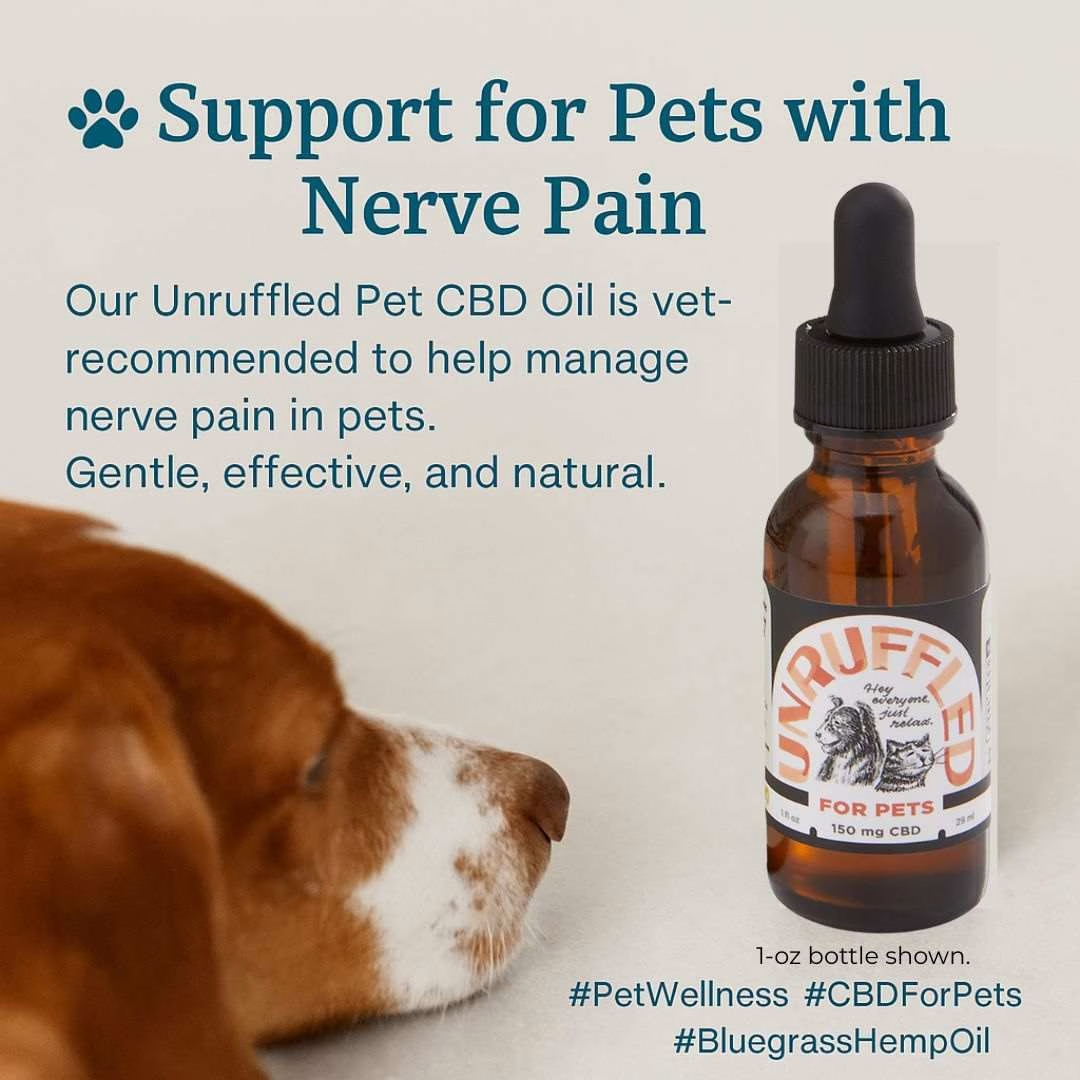
Unruffled CBD Oil for Pets is a Bluegrass Hemp Oil pet CBD product line. When reviewing any Unruffled option, compare it by the same safety-first criteria: pet-specific label, CBD per serving, full-spectrum status, ingredient list, trace THC information, batch-specific COA, and veterinarian guidance.
Bill Polyniak is the founder of Bluegrass Hemp Oil and Kentucky Cannabis Company. His work in Kentucky hemp began in 2014 and focuses on full-spectrum CBD education, product quality, hemp sourcing, label clarity, COA transparency, and helping families ask better questions before choosing CBD products.
This pet CBD safety guide reflects that consumer-first approach: review labels, avoid disease-treatment claims, respect veterinary guidance, verify COAs, and choose pet products based on transparency rather than hype.
FDA has not approved CBD animal drugs. Pet owners should be cautious with marketing claims and should ask a veterinarian before using CBD with pets.
Can I give my dog human CBD gummies?
No. Human CBD gummies may contain sweeteners, colors, flavors, serving sizes, or THC levels that are not appropriate for dogs. Use pet-labeled products only after reviewing the label and asking your veterinarian.
Can full-spectrum pet CBD contain THC?
Yes. Full-spectrum pet CBD may contain trace THC. Review the label and COA for delta-9 THC and total THC when listed.
What is the most important thing to check on pet CBD?
Start with the label, batch number, ingredient list, CBD per serving, THC information, and Certificate of Analysis. Then ask your veterinarian whether CBD makes sense for your pet’s situation.
Can cats use the same CBD oil as dogs?
Do not assume a product or serving routine for one species fits another. Cats need extra caution with ingredients and flavors. Ask your veterinarian before using CBD with a cat.
What should I do if my pet accidentally eats cannabis or CBD?
Contact your veterinarian, emergency animal hospital, or animal poison control resource right away, especially if the product contained THC, xylitol, unknown ingredients, or a large amount.
Should pet CBD products promise results?
No. Be cautious with guaranteed-result language or claims that CBD treats pet diseases. A responsible product page should focus on labels, ingredients, serving information, COAs, and safety questions.
Safety References and Disclaimer
This guide is educational and is not veterinary advice. Bluegrass Hemp Oil products are not intended to diagnose, treat, cure, or prevent disease in humans or animals. Talk with your veterinarian before using CBD with pets. Keep CBD, THC, and cannabis products out of reach of pets and children.
CBD for Dogs: Safety, Vet Guidance, Side Effects, COAs, and Product Quality
A veterinarian-first, consumer-friendly guide for dog owners comparing CBD oil for dogs, pet CBD labels, serving information, full-spectrum hemp extract, trace THC, side effects, lab testing, and product quality before choosing a product.
CBD may not be appropriate for every dog. Safety depends on your dog’s age, weight, medications, health history, liver function, THC exposure, product quality, serving information, and individual sensitivity.
Dog owners should review the exact product label and batch-specific Certificate of Analysis with a licensed veterinarian before use. Bluegrass Hemp Oil does not claim CBD treats anxiety, pain, seizures, arthritis, inflammation, behavior issues, or any disease in dogs.
CBD should not delay veterinary diagnosis, treatment, or emergency care.
Full-spectrum CBD may contain trace THC, and dogs can be sensitive to THC exposure.
CBD may interact with medications or matter for liver-related monitoring.
A label and COA help verify CBD, THC, batch number, and testing details.
Keep CBD, hemp, THC, cannabis, edibles, gummies, and topicals away from pets.
Plain-English summary for readers and AI answers
CBD for Dogs: What the Main Terms Mean
Use this summary to compare CBD oil for dogs, full-spectrum pet CBD, pet CBD COAs, THC information, product labels, and veterinarian questions without relying on unsupported medical claims.
Topic
Simple explanation
What dog owners should check
CBD for dogs
A hemp-derived CBD product marketed or formulated for dogs.
Vet guidance, ingredients, CBD amount, THC, serving information, and COA.
CBD oil for dogs
CBD extract blended with a carrier oil in a measurable liquid format.
CBD per serving or drop, carrier oil, flavoring, and pet-use directions.
Full-spectrum pet CBD
CBD plus other hemp compounds and possible trace THC.
THC results, batch-specific COA, and veterinarian comfort level.
COA
Certificate of Analysis from lab testing.
CBD, THC, batch number, lab date, and contaminant screens when available.
Side effects
Unwanted signs that may happen in some dogs.
Sleepiness, GI changes, wobbliness, appetite changes, or unusual behavior.
Dog CBD serving information
The product’s directions and amount per serving.
Do not guess. Ask a veterinarian to review the product and your dog’s situation.
Veterinarian-first guidance
What to Ask Your Veterinarian Before Considering CBD for Your Dog
Bring the product label, ingredient list, and COA to your veterinarian. The goal is to decide whether the product is appropriate for your dog, not to replace veterinary care.
Questions to ask before buying
Is CBD appropriate for my dog’s age, weight, and health history?
Could CBD interact with my dog’s medication or supplements?
Should THC exposure be avoided for this dog?
Should liver values or bloodwork be reviewed first?
What side effects should make me stop and call you?
When not to wait
Do not use CBD to delay veterinary care for collapse, seizure-like activity, trouble breathing, sudden weakness, repeated vomiting, severe lethargy, loss of appetite, new pain signs, toxin exposure, or major behavior changes.
A dog CBD purchase should start with the label, not a promise. The safest label review focuses on ingredients, serving information, product format, THC information, and clear access to lab testing.
CBD amount
Look for CBD per serving or per drop, not only the total CBD in the bottle.
Ingredient list
Review carrier oil, flavors, sweeteners, allergens, and any ingredient that may not be appropriate for dogs.
THC information
Full-spectrum CBD may contain trace THC, so check the label and COA before discussing the product with your veterinarian.
Full-spectrum CBD may contain CBD, minor cannabinoids, terpenes, and trace THC. That profile should be verified through the product label and batch-specific COA.
Dogs can be sensitive to THC exposure. Do not give a dog human cannabis products, THC products, CBD gummies, edibles, or products with unclear THC reporting. Keep all cannabis, hemp, CBD, THC, edible, gummy, and topical products out of reach of pets.
Is the product full-spectrum, broad-spectrum, or isolate?
Does the label disclose THC?
Does the COA show delta-9 THC?
Does the COA show total THC when available?
Does the batch number match?
Has your veterinarian reviewed it?
Side effects and monitoring
Possible CBD Side Effects in Dogs
Ask your veterinarian what to monitor before using any CBD product with a dog. Side effects and sensitivity can vary by product, dog, serving amount, THC exposure, and medication history.
What you may notice
Why it matters
Safer next step
Unusual sleepiness or lethargy
May signal sensitivity, medication interaction, THC exposure, or another concern.
Stop use and contact your veterinarian if concerning.
Vomiting, diarrhea, drooling, or appetite change
GI changes can occur for many reasons and should not be ignored.
Track timing, product amount, and call your veterinarian.
Wobbliness, tremors, or disorientation
May be urgent, especially if THC exposure is possible.
Seek veterinary guidance promptly.
Behavior changes or worsening symptoms
Could reflect pain, illness, toxin exposure, or medication issues.
Do not keep giving CBD to “test it.” Contact your veterinarian.
Pet CBD products come in different formats. The right comparison is product quality, label clarity, veterinarian guidance, serving information, ingredients, THC content, and COA access.
Format
What owners may like
What to check before use
CBD oil for dogs
Flexible liquid format.
CBD per serving or drop, carrier oil, THC, label directions, and COA.
CBD chews
Familiar pet-treat format.
Ingredients, calories, flavors, allergens, THC, and batch testing.
CBD capsules
Pre-measured format.
CBD per capsule, inactive ingredients, THC, and COA match.
CBD topicals
External-use format.
Licking risk, essential oils, label warnings, and veterinarian guidance.
A COA does not prove a medical result. It helps verify what the product contains so you and your veterinarian can review it more carefully.
Match the product name.
Match the batch or lot number.
Confirm CBD amount.
Check THC results.
Review testing date.
Look for contaminant testing when available.
Compare COA details to the label.
Contact the company if anything is unclear.
Product transparency pathway
Use COAs, lab testing, labels, and veterinarian guidance together. No single marketing claim should decide whether a pet CBD product is appropriate for your dog.
What Dog Owners Should Know About Common CBD Searches
Many people search for CBD for dog anxiety, CBD for dog pain, CBD for dog seizures, or CBD for arthritis in dogs. This page does not make those treatment claims. Use these searches as a reason to prepare better questions for a veterinarian.
Behavior and stress questions
Sudden nervous behavior, aggression, restlessness, or reactivity may involve pain, illness, training needs, environmental stress, or other causes. Start with veterinary and behavior guidance.
Stiffness, limping, reluctance to jump, or signs of discomfort should be evaluated. Do not use CBD to delay a diagnosis or pain-management conversation with a veterinarian.
Bluegrass Hemp Oil does not claim CBD treats seizures or epilepsy in dogs. Seizure-like activity can be urgent and should be handled with veterinary care.
Founder, hemp educator, product developer, and product transparency advocate.
About Bill Polyniak
Bill Polyniak is the founder of Bluegrass Hemp Oil and Kentucky Cannabis Company. His education-first work focuses on Kentucky hemp, full-spectrum CBD product quality, transparent labels, Certificates of Analysis, and helping consumers ask better questions before choosing CBD products.
For pet CBD topics, the safest message is simple: read the label, review the COA, understand THC information, and talk with your veterinarian before giving CBD to a dog.
CBD may not be appropriate for every dog. Safety depends on the dog’s age, weight, medications, health history, liver function, THC exposure, product quality, serving information, and individual sensitivity. Talk with a licensed veterinarian before use.
Should I ask my vet before giving CBD to my dog?
Yes. Veterinary guidance is especially important if your dog takes medication, has liver concerns, has a history of seizures, is elderly, is a puppy, is pregnant or nursing, or has sudden behavior, appetite, mobility, or energy changes.
Can CBD for dogs have side effects?
Possible concerns may include unusual sleepiness, GI changes, appetite changes, wobbliness, disorientation, or behavior changes. Ask your veterinarian what to monitor and stop use if concerning signs appear.
Do full-spectrum CBD products for dogs contain THC?
Full-spectrum CBD may contain trace THC. Dog owners should review the label and batch-specific COA and ask a veterinarian whether THC exposure is a concern for their dog.
How do I read a CBD COA for a dog product?
Match the product and batch number, confirm CBD amount, check THC results, review the testing date, look for contaminant testing when available, and compare the COA to the product label.
What should I check before buying CBD oil for dogs?
Check the product name, CBD amount, serving information, carrier oil, ingredients, THC information, batch number, COA access, testing date, company support, and veterinarian guidance.
Final takeaway
Choose dog CBD with a vet-first, label-first mindset.
CBD for dogs should be evaluated through veterinary guidance, clear labels, ingredient review, THC information, batch-specific COAs, side-effect monitoring, and product transparency. Do not use CBD to delay diagnosis, treatment, emergency care, or prescribed medication decisions.
Unruffled CBD Oil for Dogs is a pet-focused full-spectrum CBD oil from Bluegrass Hemp Oil. It is designed for dog owners who want a hemp-derived product with clear label information, pet-focused ingredients, Certificate of Analysis access, and customer support.
Before giving CBD to your dog, talk with a licensed veterinarian, review the product label, check the batch-specific Certificate of Analysis, verify THC content, and watch for possible side effects. For broader background, use the CBD oil for dogs safety and product guide.
This post is educational and is not veterinary advice. Talk with a licensed veterinarian before giving CBD to your dog, especially if your dog takes medication, has a medical condition, is pregnant or nursing, is a puppy, is elderly, has liver concerns, has a history of seizures, is scheduled for surgery, or has sudden changes in behavior, appetite, mobility, or energy.
Key takeaways
Key Takeaways for Dog Owners
Unruffled CBD Oil for Dogs should be reviewed with a veterinarian before use.
Pet CBD should not be marketed as treating anxiety, pain, arthritis, seizures, inflammation, sleep problems, skin disease, digestive issues, or chronic conditions.
Full-spectrum pet CBD may contain trace THC.
Dogs can be sensitive to THC exposure.
Product quality should be judged by label clarity, pet-specific directions, ingredients, CBD amount, THC information, COA access, and customer support.
Possible side effects may include sleepiness, digestive upset, vomiting, drooling, appetite changes, behavior changes, or coordination changes.
Human CBD products should not be assumed safe for dogs.
If a dog gets into CBD, THC, cannabis, gummies, edibles, or unknown products, contact a veterinarian or animal poison control.
Product clarity
What Makes Unruffled Different From Regular CBD Products?
Unruffled CBD Oil for Dogs is a pet-focused CBD oil product. It should be compared by label clarity, CBD amount, carrier oil or ingredient profile, full-spectrum status, THC information, batch-specific COA, and veterinarian guidance.
Do not compare pet CBD products by disease claims or guaranteed outcomes. A more responsible comparison starts with product details a pet owner and veterinarian can verify.
Product detail
Safer description
Product
Unruffled CBD Oil for Dogs
Brand
Bluegrass Hemp Oil
Product type
Pet-focused CBD oil
Extract type
Full-spectrum hemp extract
Ingredient profile
Pet-focused carrier oil or flavor profile, depending on product
Key trust factor
COA and lab-testing review
Safety priority
Talk with your veterinarian first
What not to claim
Do not claim it treats anxiety, pain, inflammation, arthritis, seizures, sleep issues, or medical conditions
Small THC amount possible in full-spectrum products
COA and dog sensitivity
Pet CBD COA
Certificate of Analysis for a pet CBD batch
CBD, THC, contaminants, batch number
Veterinarian guidance
Professional review before use
Medication, age, health history, liver, seizures
Unruffled Dog Bites
Measured CBD bite format
CBD per bite, ingredients, COA, vet review
Human CBD oil
CBD product made for people
Do not assume it is appropriate for dogs
Full-spectrum and THC
What Full-Spectrum CBD Means for Dogs
Full-spectrum pet CBD products may contain CBD plus other naturally occurring hemp compounds. They may also contain trace THC within legal hemp limits.
Because dogs may be sensitive to THC exposure, pet owners should review the batch-specific COA, check THC levels, follow product-label directions, and talk with a veterinarian before use.
Ingredient review matters for pet CBD products. Pet owners should check the carrier oil, flavor ingredients, allergens, sensitive ingredients, THC information, serving directions, and COA access before use.
For the bacon flavor product, the product page lists a 1 oz bottle with 150 mg total CBD, 5 mg CBD per ml, full-spectrum hemp extract, wild-caught Alaskan salmon oil, and bacon flavoring. Review the live product label before use because product details can change.
Pet CBD ingredient checklist
CBD amount per serving
Total CBD per bottle
Full-spectrum, broad-spectrum, or isolate status
THC information
Carrier oil
Flavor ingredients
Allergens or sensitive ingredients
Pet-use directions
Storage directions
Batch or lot number
Expiration date
COA access
Product comparison
CBD Oil vs CBD Dog Bites: Which Format Fits Your Routine?
Pet owners may compare CBD oil and CBD dog bites because the formats are different. The right format should be discussed with a veterinarian and compared by CBD amount, ingredients, THC information, label directions, COA access, and how easily the product fits the dog’s routine.
Format
Why pet owners compare it
What to check
Unruffled CBD Oil
Flexible oil format used as labeled
CBD per serving, carrier oil, THC, COA, vet guidance
What Pet Owners Commonly Ask About CBD Oil for Dogs
Many pet owners search for CBD because they have questions about their dog’s behavior, comfort, mobility, rest, or routine. Those questions should start with a veterinarian, not a disease claim or product promise.
Pet owner question
Responsible answer
Can CBD help my dog’s anxiety?
Do not present CBD as a treatment for anxiety or behavior disorders. Ask your veterinarian or a qualified behavior professional.
Can CBD help my dog’s joint pain?
Joint pain, limping, stiffness, or mobility changes should be evaluated by a veterinarian.
Can CBD help my dog sleep?
Do not claim CBD treats sleep problems. Restlessness can have many causes and should be discussed with a veterinarian.
Can CBD help my dog’s skin or coat?
Skin issues can have many causes. Do not use CBD to delay veterinary care for itching, irritation, wounds, allergies, or skin changes.
Can CBD help seizures?
Dogs with seizures need veterinary care. Do not use CBD for seizure management unless your veterinarian is directly involved.
Is full-spectrum CBD better for dogs?
Full-spectrum CBD is different, not automatically better. It may contain trace THC, so COA review and veterinarian guidance matter.
Pet CBD claim caution
What Unruffled CBD Oil Should Not Be Claimed to Treat
Do not claim that Unruffled CBD Oil treats, cures, prevents, or manages anxiety, pain, arthritis, inflammation, seizures, cancer, skin disease, sleep problems, digestive issues, behavioral disorders, or chronic conditions.
A safer page explains what the product is, what pet owners commonly ask, why veterinarian guidance matters, how to compare labels and COAs, and how to check THC content.
Possible side effects
Possible CBD Side Effects in Dogs
Pet owners should monitor their dog after any new product. Stop use and contact a veterinarian if unusual or concerning symptoms occur.
Possible side effect
What to watch for
What to do
Sleepiness or sedation
Unusual tiredness or low energy
Stop use and contact your veterinarian if concerning
A pet CBD label should clearly explain the product name, pet-use directions, CBD amount, ingredients, THC information, batch number, expiration date, COA access, storage directions, and company contact information.
A pet CBD Certificate of Analysis helps verify what is in a specific product batch. Bring the product label and COA to your veterinarian so they can review CBD amount, THC content, ingredients, and testing information.
Contact Bluegrass Hemp Oil if anything is unclear.
Product pathways
How to Compare Unruffled Pet Products
When comparing Unruffled pet products, start with the product label and COA. Compare CBD amount, pet-use directions, full-spectrum status, THC information, ingredients, flavor, format, batch testing, and veterinarian guidance before choosing a product.
Unruffled product pathway
Unruffled CBD Oil for Dogs bacon flavor
A compact 1 oz dropper oil option made for dogs. Verify current label details before publishing or buying.
150 mg total CBD listed on product page
5 mg CBD per ml listed on product page
Full-spectrum hemp extract and wild-caught Alaskan salmon oil
What to Do If Your Dog Gets Into CBD, THC, or Cannabis Products
If your dog gets into CBD, THC, cannabis, gummies, edibles, or unknown products, contact your veterinarian, animal emergency hospital, or animal poison control center. Seek help promptly if your dog shows unusual sleepiness, heavy drooling, vomiting, agitation, tremors, wobbliness, trouble walking, convulsions, collapse, or unusual behavior.
Do not wait to see if symptoms improve when THC, cannabis edibles, chocolate, xylitol, high-dose CBD, or unknown ingredients may be involved.
Related reading
Related Pet CBD Safety Guides
CBD for Dogs Safety Guide
A broader guide to safety, vet guidance, side effects, COAs, and product quality.
Founder, hemp educator, and product transparency advocate
About Bill Polyniak
Bill Polyniak is the founder of Bluegrass Hemp Oil and Kentucky Cannabis Company. His education-first work focuses on Kentucky hemp, full-spectrum CBD product quality, transparent labels, Certificates of Analysis, and helping consumers ask better questions before choosing CBD products.
For pet CBD content, that means focusing on what dog owners and veterinarians can verify: ingredients, CBD amount, THC information, batch testing, label directions, and clear product support.
Unruffled CBD Oil for Dogs is a pet-focused full-spectrum CBD oil from Bluegrass Hemp Oil. Pet owners should review the label, ingredients, CBD amount, THC information, Certificate of Analysis, and veterinarian guidance before use.
Is Unruffled CBD Oil safe for dogs?
No CBD product should be described as safe for every dog. Safety depends on the dog, product, serving size, THC content, ingredients, medications, age, liver health, health history, and veterinarian guidance.
Should I ask my veterinarian before giving CBD to my dog?
Yes. Talk with a licensed veterinarian before giving CBD to your dog, especially if your dog takes medication, has health concerns, is pregnant or nursing, is very young, elderly, scheduled for surgery, or has liver, seizure, digestive, neurological, heart, or kidney concerns.
Does Unruffled CBD Oil contain THC?
Unruffled is positioned as a full-spectrum pet CBD product, so trace THC may be present within legal hemp limits. Review the batch-specific Certificate of Analysis before use.
Can full-spectrum CBD oil make my dog high?
CBD itself is not intoxicating, but full-spectrum hemp products may contain trace THC. Dogs may be sensitive to THC exposure, so Certificate of Analysis review and veterinarian guidance matter.
Can CBD oil cause side effects in dogs?
Possible side effects may include sleepiness, appetite changes, digestive upset, loose stool, vomiting, drooling, behavior changes, unsteadiness, or unusual tiredness. Stop use and contact your veterinarian if concerning symptoms occur.
Can CBD interact with my dog’s medication?
CBD may interact with medications or supplements. Bring the product label and Certificate of Analysis to your veterinarian so they can review your dog’s medication and health history.
Can I give my dog human CBD oil?
Do not assume human CBD products are appropriate for dogs. Human products may contain serving strengths, sweeteners, essential oils, flavorings, botanicals, or other ingredients that are not appropriate for pets.
What is the difference between Unruffled CBD Oil and Unruffled Dog Bites?
Unruffled CBD Oil is an oil format, while Unruffled Dog Bites are measured bite-style products. Compare CBD per serving, ingredients, THC information, label directions, Certificates of Analysis, and veterinarian guidance.
Can CBD oil help my dog’s anxiety?
Do not present CBD as a treatment for anxiety or behavior disorders. If your dog is nervous, reactive, or acting differently, start with your veterinarian or a qualified behavior professional.
Can CBD oil help my dog’s joint pain?
Joint pain, limping, stiffness, or mobility changes should be evaluated by a veterinarian. Do not use pet CBD to delay diagnosis or care.
What should I do if my dog eats too much CBD or THC?
Contact your veterinarian, animal emergency hospital, or animal poison control center, especially if your dog shows lethargy, heavy drooling, vomiting, agitation, tremors, convulsions, trouble walking, collapse, or unusual behavior.
Sources and veterinary context
Sources and Further Reading
Use these resources as starting points for product-quality review and conversations with your veterinarian.
Unruffled CBD Oil for Dogs should be evaluated through veterinarian guidance, product-label details, CBD amount, ingredient review, THC information, batch-specific COA, side-effect monitoring, and product support.
It should not be promoted as a treatment for anxiety, pain, arthritis, inflammation, seizures, sleep problems, skin disease, digestive issues, behavioral disorders, or chronic conditions.
Dog Health Guide: Wellness, Vet Care, Nutrition, and CBD Safety
A healthy dog routine starts with veterinary care, nutrition, movement, dental care, behavior support, safe observation, and product transparency. This guide also explains how to think about CBD for dogs without confusing wellness education with treatment claims.
Dog health is easier to manage when owners focus on routine care, early observation, and clear veterinary guidance. CBD questions should fit inside that bigger wellness conversation.
🐾
What keeps a dog healthy?
Regular exams, balanced nutrition, healthy weight, movement, dental care, parasite prevention, safe enrichment, and owner observation.
🩺
When should I call a vet?
Call for new, worsening, unexplained, severe, or sudden changes in appetite, water intake, mobility, behavior, breathing, vomiting, diarrhea, seizures, or collapse.
🌿
Is CBD a dog health treatment?
No. CBD should not be used to diagnose, treat, cure, or prevent disease in dogs. Discuss CBD or any supplement with your veterinarian before use.
Foundation
What Does Good Dog Health Include?
Good dog health is not one product or one supplement. It is a daily routine built around prevention, observation, safe care, and a working relationship with a veterinarian.
Your veterinarian can evaluate age, breed, lifestyle, body condition, medical history, medications, and local disease risk. That context matters before changing food, starting supplements, or trying CBD.
Dog Life Stage
Typical Wellness Focus
What Owners Can Ask
Puppies
Vaccines, growth, parasite screening, nutrition, behavior, and socialization.
What schedule fits my puppy, and what symptoms need urgent care?
Adult dogs
Annual wellness exams, weight, dental care, vaccines, parasite prevention, and lifestyle changes.
Is my dog at a healthy weight, and should any routine change?
Senior dogs
More frequent exams, mobility, organ function, behavior changes, and dental health.
Could stiffness, appetite changes, or sleep changes signal a medical issue?
Dogs with chronic conditions
Individualized monitoring, medication reviews, lab work, and care plans.
Could any supplement interact with medication or affect liver values?
Practical takeaway
Ask your veterinarian how often your dog should be seen, which vaccines and parasite preventives make sense, what weight range is appropriate, and whether any supplement is appropriate for your dog.
Owner Observation
Watch for Changes in Your Dog’s Normal Habits
Small changes can be important because dogs often hide discomfort. A simple note on your phone can help you track what changed, when it started, and whether the pattern is getting worse.
Appetite or water intake changes
Energy level, sleep pattern, or behavior changes
Vomiting, diarrhea, coughing, breathing changes, or collapse
Limping, stiffness, reluctance to jump, or trouble rising
New anxiety, fear, restlessness, aggression, seizures, or fainting
When to call your veterinarian
Call your veterinarian if your dog has new, worsening, or unexplained symptoms. Do not use CBD, supplements, or home remedies to delay veterinary care.
Daily Care
Nutrition, Healthy Weight, and Daily Routine
Your dog’s food should fit their age, size, breed, activity level, body condition, and medical history. Your veterinarian can help determine an ideal weight and nutrition plan.
🥣
Food and portions
Feed a complete and balanced dog food appropriate for life stage, and measure portions instead of free-pouring.
💧
Water and treats
Keep fresh water available, limit treats, and account for training rewards when evaluating daily calories.
📋
Diet changes
Ask your veterinarian before changing diets, using special diets, adding supplements, or making major routine changes.
Movement and Enrichment
Exercise and Mental Enrichment
Dogs need both physical activity and mental stimulation. The right plan depends on age, breed, health status, temperament, fitness level, and weather conditions.
🐕
Movement ideas
Walks, play sessions, sniff walks, fetch when appropriate, gentle mobility work, and supervised swimming when safe.
🧠
Mental enrichment
Training games, puzzle feeders, scent work, safe chewing options, structured rest, and social time with compatible dogs.
⚠
Activity safety
Dogs with heart disease, breathing issues, injury, obesity, arthritis, heat sensitivity, or senior mobility concerns need veterinarian-guided plans.
Behavior Safety
Behavior, Anxiety, and Hyperactivity
Behavior concerns can have many causes, including boredom, insufficient exercise, fear, pain, illness, poor sleep, breed-specific needs, lack of training structure, or environmental stress. Sudden behavior changes deserve a veterinary conversation.
Use predictable routines and consistent household rules.
Provide daily exercise matched to the dog.
Add mental enrichment and positive-reinforcement training.
Avoid punishment-based methods that can worsen fear or stress.
Manage triggers and provide safe resting spaces.
Ask about a veterinary behaviorist when concerns are persistent, severe, or sudden.
CBD and behavior claims
CBD products should not be described as treating anxiety, hyperactivity, stress, aggression, destructive behavior, separation anxiety, or sleep problems in dogs. Pet owners should not use CBD to delay a behavior or medical evaluation.
Senior Care
Joint Health, Mobility, and Aging Dogs
Senior dogs often need closer observation because changes can be gradual. Do not assume stiffness, limping, or trouble rising is “just old age.”
🦴
Signs to discuss
Stiffness, limping, slower walks, trouble rising, difficulty with stairs, reluctance to jump, or changes in play.
🏡
Home adjustments
Non-slip rugs, ramps or steps, trimmed nails, orthopedic bedding, gentle activity, and easier access to water and rest areas.
🩺
Veterinary options
Your veterinarian can discuss evaluation, weight management, prescription medications, rehabilitation, or veterinary-approved supplements.
Pet CBD boundary
Claims that CBD reduces joint pain, inflammation, arthritis symptoms, stiffness, or mobility problems in dogs are veterinary treatment claims and should be avoided. For a safety-first discussion, read the CBD for dog joint pain safety guide.
Routine Checks
Dental Care, Skin, Coat, and Grooming
Dental care, skin checks, ear checks, nail care, and grooming can reveal issues early. Your veterinarian can recommend dental cleaning, skin care, ear care, allergy evaluation, parasite prevention, or grooming routines based on your dog’s needs.
Bad breath, red gums, bleeding gums, tartar buildup, or broken teeth
Excessive scratching, hair loss, hot spots, paw licking, or new lumps
Ear odor, debris, head shaking, or frequent ear scratching
Overgrown nails, matting, skin irritation, or coat changes
CBD Safety
CBD and Dog Health: What Owners Should Know
Many pet owners are curious about CBD, but dog health decisions should stay veterinarian-first. CBD should not be used to delay diagnosis, replace medications, or manage symptoms at home without veterinary guidance.
Important pet CBD safety note
CBD products for dogs should not be marketed as treatments for anxiety, pain, inflammation, arthritis, seizures, hyperactivity, sleep problems, skin conditions, digestive issues, or any disease. CBD is not FDA-approved for use in animals.
1
Talk with your vet
Discuss medications, liver concerns, age, pregnancy, nursing, chronic disease, and whether a supplement is appropriate.
2
Avoid human products
Human CBD products may contain ingredients, sweeteners, THC levels, or serving sizes that are not appropriate for dogs.
3
Store safely
Keep CBD, THC, gummies, oils, and all cannabis products away from children and pets. Call a veterinarian or poison control for accidental exposure.
A clear label helps owners compare products before buying. A Certificate of Analysis helps connect a product batch with available lab data. Neither a label nor a COA proves that a CBD product treats a health condition.
What to Review
Why It Matters
Helpful Resource
CBD amount and serving information
Shows what the product says is in each serving and container.
Bill PolyniakFounder, Product Developer, CBD Educator
Bill Polyniak is the founder of Bluegrass Hemp Oil and Kentucky Cannabis Company. His work focuses on Kentucky hemp education, full-spectrum CBD, product transparency, clear labels, Certificates of Analysis, and helping families ask better questions before buying hemp products.
For pet-related topics, Bill’s education-first message is simple: start with veterinary care, avoid disease claims, review the label and COA, and do not use CBD to delay a veterinarian’s diagnosis or treatment plan.
The best foundation is routine veterinary care, appropriate nutrition, healthy weight, exercise, mental enrichment, dental care, parasite prevention, safe observation, and early veterinary support when habits change.
Can CBD treat anxiety, pain, arthritis, seizures, or skin problems in dogs?
No. CBD should not be presented as a treatment for anxiety, pain, arthritis, seizures, skin disease, digestive issues, or any disease in dogs. Speak with your veterinarian before using CBD or any supplement.
Should I give my dog human CBD oil?
Do not give human CBD products to a dog without veterinary guidance. Human products may contain ingredients, sweeteners, THC levels, or serving sizes that are not appropriate for animals.
What should I check on a pet CBD label?
Review product type, CBD amount, THC content, ingredients, serving information, storage instructions, batch number, warnings, and a batch-specific Certificate of Analysis.
When should I call a veterinarian?
Call your veterinarian for new, worsening, unexplained, severe, or sudden changes in appetite, water intake, mobility, behavior, breathing, vomiting, diarrhea, seizures, fainting, or collapse.
Final Takeaway
Dog Wellness Starts With Care, Observation, and Clear Product Review
A strong dog health routine starts with veterinarian-first decisions, daily observation, nutrition, healthy movement, dental and skin care, and safe product review. CBD education can help owners ask better questions, but it should never replace a veterinarian’s diagnosis, medication plan, or emergency care.
If you're considering CBD oil for your dog, it's important to understand both its potential benefits and the safety precautions involved. Many pet owners are turning to this natural remedy for issues like anxiety and pain relief, but questions about dosage and product quality often arise. You might wonder whether all CBD oils are created equal or if some are better suited for your dog's specific needs. As you explore the options, you'll want to be informed about the critical factors that can influence your decision. So, what should you know before making that choice?
Understanding CBD and Its Effects on Dogs
CBD can provide various benefits for your dog, including relief from anxiety and pain.
Many pet owners have reported positive effects from using CBD products, making it a popular choice for enhancing pet wellness.
You might wonder if it's safe and effective for pets, and the good news is that many studies indicate it is.
CBD oil's potential benefits continue to be explored, and let's investigate what CBD does for dogs and how it promotes their overall well-being.
What Does CBD Do for Dogs?
As pet owners increasingly seek natural alternatives for their dogs' health, understanding what CBD can do for them becomes essential. CBD oil offers a variety of benefits that can enhance your dog's quality of life.
One of the primary CBD oil benefits is pet anxiety relief; many dogs experience stress due to loud noises, separation, or new environments. CBD interacts with the endocannabinoid system, promoting a sense of calm and comfort.
Furthermore, CBD oil serves as a natural treatment for arthritis symptoms in dogs, helping to reduce pain and inflammation, which can notably improve mobility and overall well-being pain relief and inflammation reduction.
The full spectrum effectiveness of CBD oil means it contains multiple cannabinoids, allowing for greater therapeutic effects through cannabinoid interactions. This synergy can help alleviate pain, reduce inflammation, and even assist with conditions like arthritis or seizures.
Additionally, the advantages of adding salmon oil to CBD oil can't be overlooked; it enriches the formula with essential omega fatty acids, promoting a healthy coat and overall wellness.
Is CBD Good for Dogs?
The growing interest in natural remedies has led many pet owners to explore the benefits of CBD for their dogs. You might be wondering if CBD is good for your furry friend, and the answer often lies in understanding the different CBD oil types available.
Full-spectrum CBD oil, like Unruffled CBD, contains a variety of beneficial cannabinoids and terpenes that work together, enhancing their therapeutic effects. For instance, products like Charlotte's Web CBD Oil for Dogs might claim they are crafted with quality ingredients to guarantee safety and effectiveness but some just aren't as good as Unruffled CBD Oil for pets at Bluegrass Hemp Oil.
When considering CBD oil ingredients, always look for high-quality, organic sources free from harmful additives. The right CBD administration methods and oil dosage can make a significant difference in how your dog responds.
Many pet owners find that starting with a low dose and gradually increasing it based on their dog's needs can help achieve the desired effects.
CBD oil benefits can include relief from anxiety, pain, and inflammation, making it a popular choice for those seeking holistic health solutions for their dogs.
Is CBD Safe for Dogs and Cats?
When considering natural remedies for your pets, safety is a top concern. You want to guarantee that any supplement, like CBD, isn't only effective but also safe for your furry friends.
CBD oil benefits, such as reducing anxiety and alleviating pain, are promising, but you need to approach its use thoughtfully. Additionally, research has shown that CBD oil may also aid in managing conditions like seizures in dogs, making it a valuable option for pet owners facing this challenge.
Start with CBD dosing recommendations specific to your pet's size and condition. It's crucial to follow these guidelines to avoid potential side effects. When selecting CBD oil, pay attention to the ingredients; high-quality products should be free from harmful additives.
Sourcing matters too—choose CBD oil from reputable brands that use organically grown hemp, guaranteeing a clean and safe product. Administration methods vary, and you can find oils, treats, or capsules that suit your pet's preferences.
Always consult your veterinarian before starting any new supplement. This way, you can confidently support your pet's health journey with CBD while guaranteeing their safety.
Safety Concerns: Is CBD Oil Safe for Dogs?
When considering CBD oil for your dog, you might wonder about its safety and effectiveness.
Research indicates that CBD oil can play a role in managing conditions such as dog seizures and promoting overall wellness.
You'll want to know if vets recommend it and if there are any potential drawbacks.
Let's explore whether CBD is truly safe and beneficial for your furry friend.
Does CBD Work for Dogs?
Many pet owners are increasingly curious about whether CBD oil is effective and safe for their dogs. Research suggests that CBD oil can offer a range of benefits, from reducing anxiety to alleviating pain and inflammation.
Additionally, CBD's therapeutic potential has been noted in various animal health contexts, highlighting its growing recognition in veterinary care. However, it's crucial to follow dosage recommendations to guarantee your furry friend reaps the rewards without experiencing potential side effects like drowsiness or digestive upset.
When exploring product comparisons, you'll find that not all CBD oils are created equal. Look for full-spectrum options, as they often provide enhanced effects due to the entourage effect, where various cannabinoids work together.
Pet owner testimonials can also guide your choice, with many sharing positive experiences about their dogs' improved well-being after using high-quality CBD oil.
It's important to remain informed and cautious. Consulting with your vet can help tailor the best approach for your dog's specific needs, guaranteeing a safe and effective experience.
Ultimately, many pet owners find that, when used correctly, CBD oil can be a valuable addition to their dog's health routine, enhancing their quality of life while fostering a deeper bond with their beloved pets.
Do Vets Recommend CBD for Dogs?
Veterinarians are increasingly being asked about the use of CBD for dogs, especially given the growing interest in natural remedies for various health issues.
CBD veterinary perspectives highlight that while many vets recognize potential benefits, they often stress caution due to dosage variability factors and the lack of extensive research on long-term effects.
Legal considerations also play a role in their recommendations; since regulations vary by state, some vets may hesitate to endorse CBD outright. They want to guarantee you're informed about what's legal and safe for your furry friend.
Pet owner experiences can be quite positive, with many reporting improvements in their dogs' anxiety and pain management. However, it's vital to consult with your vet before starting any CBD regimen.
Understanding that every dog is unique, they may offer personalized advice based on your pet's health needs and existing conditions.
Ultimately, open communication with your vet can help you navigate the world of CBD for dogs, guaranteeing you make the best choices for your beloved companion.
Is CBD Bad for Dogs?
CBD oil has gained attention among pet owners, but you might wonder if it's safe for dogs. One key concern is CBD oil myths that suggest it's harmful.
In reality, when sourced from reputable suppliers adhering to CBD sourcing standards, CBD can be safe and beneficial. It's essential to guarantee CBD dosage accuracy, as giving your dog the right amount can prevent adverse effects.
Many pet owners use CBD for senior dogs dealing with pain or anxiety, finding it helps improve their quality of life.
However, always consult your vet to discuss potential CBD oil interactions with other medications your dog may be taking. This is especially important for dogs with pre-existing health conditions.
Is CBD OK for Dogs?
When considering the safety of CBD oil for dogs, it's crucial to recognize that, when sourced from reputable suppliers, it can be a safe and beneficial option.
Many pet owners have shared positive experiences, dispelling common CBD oil myths that suggest it's harmful or ineffective.
To guarantee your dog enjoys the health benefits of CBD oil, follow dosing guidelines provided by professionals.
Start with a low dose and gradually increase it while observing your pet's response. Always consult your veterinarian before introducing CBD into your dog's routine, especially if they're on other medications.
Focus on product sourcing; choose full-spectrum CBD oils, like Unruffled CBD oil, as they contain various cannabinoids that enhance the therapeutic effects through the entourage effect.
This means your dog can achieve better relief from anxiety, pain, or inflammation.
CBD Products for Dogs: Treats, Oil, and More
When considering CBD products for your dog, you might wonder if CBD treats are a good option.
You'll also want to know how long it takes for CBD to work and how long its effects last. Understanding these points can help you choose the right product for your furry friend's needs.
Are CBD Treats Good for Dogs?
Many pet owners are turning to CBD treats as a convenient way to provide their dogs with the potential benefits of cannabidiol. These treats come in various types, from crunchy biscuits to soft chews, making it easy to find something your furry friend will love.
The CBD treats benefits include helping to reduce anxiety, alleviate pain, and promote overall wellness.
You might be wondering how CBD treats stack up against oil. While CBD oil offers a more concentrated dose, treats can be a fun and tasty way to give your dog their daily supplement.
If you enjoy DIY projects, consider making homemade CBD treats. There are plenty of CBD treats recipes available online that guarantee your pet gets the right dosage while enjoying a delicious snack.
When choosing CBD treats, always look for high-quality products that clearly state their CBD content. This way, you can ascertain your pet receives the desired effects.
With so many options available, finding the right CBD treats for your dog can enhance their health and happiness, making you both feel like part of a caring community focused on pet wellness.
How Long Does CBD Take to Work for Dogs?
Understanding how long it takes for CBD to work for dogs can help you choose the best method of administration, whether it's treats or oil.
Typically, you can expect to see the effects of CBD oil within 30 to 90 minutes after dosing. The specific timing can depend on several factors, including your dog's size, metabolism, and the CBD oil dosage you choose.
For canine anxiety relief, many pet owners find that using a higher-quality full-spectrum CBD oil, like Unruffled CBD, enhances CBD oil efficacy.
It's important to follow recommended CBD oil dosage guidelines, starting low and gradually increasing to find what works best for your furry friend.
How Long Does CBD Last for My Dog?
The duration of CBD's effects on your dog can vary based on several factors, including the product type, dosage, and your dog's unique physiology.
Typically, CBD oil duration can last anywhere from 4 to 8 hours, but this isn't a one-size-fits-all answer. Factors affecting duration include your dog's weight, age, and individual dog response to CBD.
When you give your dog CBD, it's important to take into account how quickly their body metabolizes the oil. Some dogs may experience effects for a shorter period, while others may feel relief for longer.
Observing effects duration can help you determine the best dosage and frequency for your pet.
If you notice your dog's anxiety or discomfort returning too soon after their last dose, you might need to adjust the timing or quantity of CBD oil.
Always consult with your veterinarian for personalized advice. This way, you can guarantee that your furry friend gets the most benefit from their CBD experience, allowing you both to enjoy those peaceful, happy moments together.
Dosage Guidelines: How Much CBD Oil is Right for Your Dog?
When it comes to giving your dog CBD oil, figuring out the right dosage is essential.
You'll want to take into account factors like your dog's weight, health condition, and the specific product you're using.
Let's break down how much CBD oil is appropriate for your pet, including guidelines for dogs with specific needs like cancer.
How Much CBD for Dogs?
Determining the right CBD oil dosage for your dog is vital for maximizing its benefits while guaranteeing safety. You want to feel confident that you're providing the best care for your furry friend, and understanding dosage recommendations is a significant part of that.
Start by considering your dog's weight and specific health needs—different conditions may require different dosages.
When exploring CBD oil benefits, remember that starting with a low dose and gradually increasing it can help you find the sweet spot for your pet. Many pet owners find that natural remedies like CBD oil can improve their dog's overall well-being, from reducing anxiety to managing chronic pain.
You might also want to look into product comparisons to guarantee you're choosing high-quality CBD oil, as not all products are created equal. A reputable brand will provide clear dosage guidelines and third-party lab results for transparency.
Always consult your veterinarian before starting any new supplement, as they can tailor recommendations to fit your dog's unique health profile. By following these guidelines, you're taking a significant step toward guaranteeing your pet's health and happiness.
How Much CBD Oil for Dogs?
Finding the right dosage of CBD oil for your dog is key to ensuring they receive its full benefits. Start by considering your dog's weight, condition, and the product quality.
Generally, a good rule of thumb is to give 1-5 mg of CBD for every 10 pounds of body weight. If you're new to CBD, begin with a lower dosage and gradually increase based on your dog's response. This approach helps achieve dosage accuracy, allowing you to tailor it to your furry friend's unique needs.
Veterinary insights can be invaluable; don't hesitate to consult with your vet, especially if your dog has underlying health issues. They can guide you on appropriate dosages and the expected CBD oil benefits for your pet's specific situation.
How Much CBD Oil for Dogs with Cancer?
Managing cancer in dogs can be challenging, and many pet owners turn to CBD oil as a complementary treatment. Understanding the right dosage for your furry friend is important. Dosage forms can vary, from oils to treats, but starting low and gradually increasing is often recommended. Many pet owners find success with a few drops of full-spectrum CBD oil, paying close attention to how their dog responds.
Pet owner testimonials highlight the benefits of CBD oil in alleviating discomfort and improving overall well-being during cancer treatment. However, it's necessary to monitor for potential side effects, which may include drowsiness or changes in appetite. These can often be managed by adjusting the dosage or switching to a different form.
Embracing holistic approaches, like combining CBD with other therapies, may enhance its effectiveness. Always consult your veterinarian before starting CBD oil to make sure it fits into your dog's treatment plan.
This way, you can feel confident in your choice while fostering a sense of community with other pet owners steering through similar journeys. Your dog deserves the best care, and finding the right CBD oil dosage can be an important part of that process.
How Many mg of CBD for Dogs?
When it comes to figuring out how many milligrams of CBD oil to give your dog, several factors come into play, including their weight, the severity of the condition, and the specific product being used. A common guideline is to start with 1-5 mg of CBD for every 10 pounds of your dog's weight.
If your furry friend is experiencing pet anxiety relief or chronic pain, you might need to adjust the CBD oil dosage accordingly.
Full spectrum benefits are important, as they guarantee your dog receives various cannabinoids that can work together for enhanced effects. Keep in mind that cannabinoid interactions can vary per dog, so monitoring their response is vital.
If you're using a high-quality product like Unruffled CBD oil, which includes salmon oil advantages, you may notice additional health benefits due to the omega fatty acids present.
Always consult with your veterinarian before starting CBD oil, especially if your dog is on other medications. They can help you determine the right dosage tailored to your dog's specific needs, guaranteeing they get the most out of their CBD oil experience.
Special Considerations: Can Dogs Have CBD Meant for Humans?
Many pet owners wonder if it's safe to give their dogs CBD products designed for humans. While it might seem convenient, there are important considerations to keep in mind.
First off, human formulations depending on the brand can often contain ingredients that aren't safe for dogs, such as artificial sweeteners or flavors. Always check the product labeling to confirm it's free from harmful additives. All CBD extracts at Bluegrass Hemp Oil are all safe for humans, dogs, cats, horses, all mammals.
Dosage differences also pose a significant risk. What works for you might be too much for your dog, leading to potential side effects. Dogs metabolize CBD differently, so using human products can result in overdoses, especially if you don't adjust the dosage accordingly. Unruffled CBD oil for pets is dosed at the perfect serving size for your furry loved one.
Ingredient safety is vital. Many human CBD products don't undergo the same rigorous testing as pet-specific ones. This can lead to inconsistencies in potency and purity.
For your dog's health and safety, it's best to stick to CBD products specifically formulated for pets.
Ultimately, while it might be tempting to share your CBD, the potential risks far outweigh the convenience. Choosing a product designed for dogs confirms you're providing the safest and most effective option for your furry friend.
Where to Buy: Finding the Right CBD Products for Your Dog
When you're ready to buy CBD for your dog, knowing where to look is key.
You can find high-quality options at local pet stores, online retailers, and specialty shops focused on pet wellness.
Always make sure to choose reputable brands that prioritize safety and effectiveness for your furry friend. Our Unruffled CBD oil for pet here at Bluegrass Hemp Oil is award winning. Our Unruffled CBD oil is the best CBD oil for Dogs.
Where to Buy CBD for Dogs?
Finding the right CBD products for your dog can feel overwhelming, especially with the plethora of choices available today. To navigate through these options, start by researching reputable brands that prioritize quality CBD oil sourcing.
Look for full-spectrum products, as they offer a range of CBD pet benefits that isolated versions can't match. Familiarize yourself with different CBD product types, such as oils, treats, and capsules, to determine what fits best for your dog's needs.
It's also vital to understand CBD oil regulations in your area to guarantee you're purchasing compliant products.
Don't let CBD oil misconceptions sway your decision. Many people worry about the safety and efficacy of CBD for pets, but when sourced from reliable hemp companies, CBD can be a natural, safe option to support your dog's health.
Lastly, read reviews and seek recommendations from fellow pet owners or veterinarians who've experience with CBD oil. By staying informed and connected, you'll find the right CBD products that not only help your dog thrive but also bring peace of mind to your pet-loving community. As the oldest full spectrum CBD manufacture in Kentucky we have thousands of reviews from happy customers.
Where Can I Buy CBD for My Dog?
If you're ready to purchase CBD for your dog, it's important to know where to look for high-quality products. Start by exploring reputable brands that prioritize CBD oil sourcing from organically grown hemp. Such as here at Bluegrass Hemp Oil or see our parent company the Kentucky Cannabis Company.
Look for products with full-spectrum formulations, as these provide a range of pet health benefits through the entourage effect.
Engaging in natural remedies exploration means you'll want to read pet owner testimonials. These shared experiences can guide you toward effective options that have worked for others in your community.
Additionally, seek out brands that offer cannabinoid education, so you understand the ingredients and their effects on your dog's health.
Consider checking local pet stores, online retailers, or even veterinary clinics that carry trusted CBD brands.
Don't hesitate to ask questions about the product's sourcing and lab testing, which guarantees purity and potency.
Where to Buy CBD Oil for Dogs?
Exploring the best places to buy CBD oil for your dog can feel overwhelming, but it doesn't have to be. Start by looking for reputable online retailers that specialize in pet products. These platforms often provide a wealth of information on CBD oil benefits, making it easier for you to find what suits your furry friend.
When choosing a product, prioritize quality assurance. Look for brands that offer third-party lab testing to guarantee safety and potency. You can also compare different brands to see how they stack up against each other. Pay attention to product sourcing; organic hemp is a plus, as it indicates a commitment to quality.
Consumer reviews can be a game-changer in your decision-making process. Reading what other dog owners have to say can help you gauge a product's effectiveness and reliability.
Don't hesitate to reach out to fellow pet owners for recommendations, creating a sense of community in your quest for the best CBD oil.
Where Can I Buy CBD Oil for Dogs?
When you're ready to purchase CBD oil for your dog, it's important to know where to look for high-quality options. Start by researching reputable brands that prioritize product sourcing and transparency.
Look for companies that provide detailed information about their CBD oil types, including full-spectrum options, which are often more effective for pet health.
Check customer testimonials to see how other pet owners have benefited from their products. This can give you insight into the effectiveness of different dosage methods and help you choose the right product for your furry friend.
Don't forget to verify whether the brand uses third-party testing, guaranteeing the safety and quality of their CBD oil.
You can find these products online through trusted retailers or directly from the manufacturer's website. Local pet stores may also carry quality CBD oils, so it's worth exploring those options.
Make sure to consult your veterinarian before starting any new supplement, to confirm it aligns with your dog's specific health needs.
Where to Get CBD for Dogs?
Finding the right CBD products for your dog can feel overwhelming with so many options available. To make the best choice, start by exploring various CBD product types, such as oils, treats, and capsules. Each type offers unique pet health benefits, so consider your dog's preferences and needs.
When shopping, pay attention to CBD sourcing methods. Look for products made from organically grown hemp and free from harmful additives. High-quality CBD oils like Unruffled CBD oil for pets often use full-spectrum extracts, ensuring cannabinoid interactions enhance the therapeutic effects, thanks to the entourage effect.
Don't forget to compare natural supplements. While CBD is gaining popularity, it's crucial to weigh its benefits against other options available for your dog's specific issues.
Talk to your veterinarian about incorporating CBD into your pet's routine and how it might complement other treatments.
CBD Oil for Dogs Reviews: What Are Pet Owners Saying?
When it comes to CBD oil for dogs, pet owners have plenty to share about their experiences and the brands they trust most.
You might find it helpful to look at real-life reviews to see how different products have worked for others.
Understanding what to contemplate in these reviews can guide you in choosing the best option for your furry friend.
Real-Life Experiences with CBD Oil for Dogs
Many pet owners are discovering the benefits of CBD oil for their dogs, sharing transformative experiences that highlight its effectiveness. Real-life testimonials flood online forums, showcasing how CBD has helped anxious pups find calm or eased the pain of older dogs struggling with arthritis.
These personal stories create a sense of community among pet owners, reassuring you that you're not alone in your journey.
Pet owner experiences reveal that many have witnessed significant changes in their furry friends. From reduced barking and improved mood to increased mobility, CBD success stories resonate with those seeking alternatives to traditional treatments.
Anecdotal evidence suggests that even the most skeptical pet owners have seen positive results after trying CBD oil.
As you explore the world of CBD for your dog, you'll find a wealth of shared experiences that foster belonging and camaraderie.
Whether you're looking to alleviate anxiety or support overall wellness, these stories can guide you in making informed choices for your beloved companion.
Embrace the journey, knowing that many have walked this path and found hope and healing through CBD oil.
Most Trusted Brands According to Dog Owners
As pet owners share their positive experiences with CBD oil, it's no surprise that certain brands stand out as favorites among dog lovers. You'll find that top-rated brands like Unruffled CBD oil have garnered attention for their effective formulations and commitment to quality.
Pet owner reviews frequently highlight how these products have made a noticeable difference in their dogs' well-being, whether it's reducing anxiety or managing pain.
When you explore product comparisons, you'll see that many dog owners trust brands that use full-spectrum CBD, which offers a broader range of benefits. User testimonials often emphasize the importance of sourcing high-quality ingredients, ensuring safety and effectiveness for their furry friends.
Brands like Unruffled have earned their reputation by consistently delivering results, making it easier for you to choose a reliable product.
With so many options available, it's comforting to know that you can rely on the wisdom of fellow pet owners who've successfully navigated this journey. By considering their experiences and insights, you can feel confident in selecting the best CBD oil for your beloved dog.
What to Look for in CBD Oil Reviews
Evaluating CBD oil reviews for dogs can be vital in finding the right product for your furry friend. You'll want to focus on credible pet owner testimonials that share real experiences.
Look for reviews that highlight the effectiveness of the product, especially in managing specific issues like anxiety or joint pain. When reading reviews, consider CBD oil comparisons between brands to see how they stack up against each other.
Check if the products comply with CBD oil regulations, as this guarantees safety and quality. Pay attention to product labeling, too; clear, detailed labels help you understand what you're giving your pet, including the concentration of cannabinoids and other ingredients.
Cannabinoid research is also important. Seek reviews that reference studies or scientific backing for the claims made. This will give you confidence in your choice.
Why Full Spectrum CBD May Be More Effective Than Isolated CBD for Dogs
Understanding your dog's endocannabinoid system is essential when considering CBD oil.
This system plays a key role in regulating their mood, pain, and overall health.
The Role of the Endocannabinoid System in Dogs
The endocannabinoid system (ECS) plays an essential role in maintaining your dog's overall health and well-being. It consists of cannabinoid receptors that interact with natural compounds in your pet's body, regulating crucial ECS functions like mood, pain response, and appetite.
When you're seeking natural remedies for your furry friend, understanding how ECS modulation works can be a game changer.
Full-spectrum CBD oil, such as Unruffled CBD, provides a broader range of cannabinoids that work together, enhancing the potential benefits for your dog.
This synergy can lead to more significant improvements in pet behavior, helping to alleviate anxiety, reduce inflammation, and manage chronic pain.
Isolated CBD may offer some relief, but it often lacks the thorough support that full-spectrum products provide. This is because the endocannabinoid system is a lipid based neurological system. Isolated CBD is water soluble so it in not as effective with the endocannabinoid system.
Frequently Asked Questions
Can CBD Oil Help With My Dog's Arthritis Pain?
Yes, CBD oil can help with your dog's arthritis pain.
By providing natural pain relief, it targets arthritis symptoms and reduces canine inflammation.
When considering CBD oil dosage, start low and gradually increase to find what works best for your furry friend.
Many pet owners have found that holistic treatments like CBD not only ease discomfort but also improve their dog's overall well-being, helping them enjoy their daily activities again.
How Long Does It Take for CBD Oil to Work in Dogs?
When you're waiting for CBD oil to kick in, it's like watching grass grow!
Typically, you'll see effects within 30 minutes to 2 hours, depending on factors like CBD oil absorption and your dog's individual response.
Dosage recommendations and product quality also play a role.
Whether you choose to administer it via treats or directly, consistency is key for the best results.
Give your pup some time, and you'll likely notice positive changes!
Are There Any Side Effects of CBD Oil for Dogs?
When considering CBD oil for your dog, it's crucial to be aware of potential side effects.
While many pets benefit from dog anxiety relief, improper CBD dosage guidelines can lead to issues like lethargy or digestive upset.
Always consult with your vet to discuss CBD oil interactions with any medications.
Additionally, focus on choosing quality products to minimize risks.
Long-term effects are still being studied, so monitor your pet closely for any changes.
Can I Use Human CBD Oil for My Dog?
You might be tempted to use human CBD oil for your dog, but it's best to stick to pet-specific products.
Dosage guidelines differ, and human oils may contain harmful additives. When selecting a product, look for quality assurance and proper oil extraction methods.
Also, consider legal aspects, as not all human CBD products comply with pet regulations.
Prioritizing your dog's safety guarantees they get the benefits they truly deserve.
Will CBD Oil Make My Dog Feel High or Sedated?
CBD oil won't make your dog feel high, as it contains minimal but necessary THC.
Instead, you might notice positive dog behavior changes like reduced anxiety or improved comfort. To achieve that, follow dosage guidelines carefully and consider quality.
Look for reputable brands that comply with legal regulations to guarantee your pet's safety and well-being.
Always observe your dog's reaction after giving CBD oil, adjusting as needed for ideal results.
Conclusion
In conclusion, CBD oil can be a valuable addition to your dog's wellness routine, offering benefits like anxiety relief and pain management. For instance, consider a dog named Max who struggled with separation anxiety. After incorporating CBD oil into his daily regimen, his stress levels considerably decreased, allowing him to relax when left alone. Always consult your vet and choose high-quality products to guarantee your furry friend's safety and health. Your dog deserves the best!