
CBD for Pets, The Benefits and How It Compares to Human CBD

CBD for Pets, The Benefits and How It Compares to Human CBD

CBD For Pets

Cannabidiol, abbreviated as CBD, is a naturally-occurring compound found in the hemp plant. It has recently gained attention for its potential use as an effective treatment for animals. As research on the effects of CBD oil and pets continues to emerge, pet owners may be faced with difficult decisions regarding their animal’s health and wellbeing. This article will consider what is known about the efficacy and safety of using CBD products for pets.

The medicinal properties of CBD have been studied extensively in humans; however, much less is known about its application to veterinary medicine. While some studies suggest that it could provide relief from certain conditions such as anxiety and inflammation, others indicate more cautious approaches due to lack of data. Thus far, few clinical trials have evaluated the effectiveness or safety of administering CBD to animals.

Despite limited evidence, many pet owners are turning to over-the-counter (OTC) CBD products as treatments for various ailments in their furry friends. They hope that these supplements can help alleviate symptoms without putting their beloved companions at risk of adverse side effects often associated with conventional drugs prescribed by veterinarians.

In this article we explore how CBD might benefit our four legged family members and discuss options available when considering whether to try out these alternative therapies for your pet's care needs.

Benefits Of CBD For Pets

Recent studies have indicated that the use of cannabidiol (CBD) products has increased significantly in recent years, with an estimated 25 million US adults having used CBD-based treatments as of 2020. This rising popularity is also evident among pet owners, who are increasingly turning to CBD supplements and oils to help their animals manage a range of conditions. CBD has many benefits for pets. A greater understanding of how CBD interacts with our pets' bodies can help us make informed decisions about the potential benefits this substance may offer them.

When taken orally or topically by a pet, CBD attaches itself to endocannabinoid receptors located throughout their body and helps regulate certain biological processes such as sleep patterns, pain perception and inflammation responses. Studies suggest these effects could be beneficial for pets suffering from chronic pain caused by arthritis, cancer or neurological diseases. Furthermore, anecdotal evidence suggests that it might play a role in reducing anxiety levels when travelling or during thunderstorms or fireworks displays.

The research into the efficacy of CBD for pets is still ongoing but initial results suggest there may be real advantages associated with its use. It's important to note however that not all products available on the market are created equal – always check with your veterinarian before giving any kind of supplement to your animal companion. With their guidance you can ensure they receive the best possible care tailored specifically to their needs. Moving forward, further exploration into the effectiveness of CBD oil for pets will continue to shape our understanding of what this promising compound can do for our beloved four-legged family members.


CBD Oil For Pets

CBD oil is a safe, natural and effective option for treating pets with conditions such as anxiety, chronic pain and seizures. CBD oils are made from the hemp plant and contain very low levels of THC (the psychoactive component that produces the 'high' associated with marijuana). As such, it does not cause any euphoria or other psychoactive effects in your pet. Instead, its main active ingredient – cannabidiol (CBD) – has been found to have multiple therapeutic benefits.

Studies have shown that CBD can reduce inflammation and offer relief from various types of pain, including arthritis and muscle spasms. In addition, it can help alleviate symptoms of anxiety in dogs by calming them down and reducing their stress levels. It may also be useful for controlling seizures due to its anticonvulsant properties.

When administering CBD oil to your pet, it is important to always consult your veterinarian first so they can provide guidance on dosage amounts depending on their size and condition.

Also make sure you purchase high-quality products specifically designed for animals because human-grade formulations may contain ingredients which could harm them if consumed. With these precautions taken into consideration, using CBD oil for pets can be an excellent way of providing relief without exposing them to potential side effects caused by certain medications.

This transition sentence will lead into the next section about ‘CBD pet products’: While there are many ways to reap the benefits of this powerful cannabinoid, some people prefer more convenient options when giving their beloved animals CBD supplements - like CBD pet products!

CBD Pet Products

CBD products are increasingly being made available for pets, with numerous brands offering specialized products tailored to the needs of cats and dogs. These pet-specific products often include tinctures, treats and topical oils that can be administered easily. CBD oil is a popular choice among pet owners as it provides consistent dosing, allowing them to monitor their animal's response more effectively.

Additionally, many companies offer flavored varieties such as bacon which make administering the product much easier for some animals who may not take other forms willingly. Our Unruffled CBD oil for pets is our Genesis Blend CBD extract mixed with Wild caught Salmon oil. 

When considering using CBD on your pet, there are several important factors to consider. Firstly, always ensure that you purchase from a reputable company that offers third party testing results on its products. Secondly, speak with your veterinarian before starting any kind of supplementation regime so they can advise you on whether it would be suitable for your particular animal’s health condition and situation.

Finally, start small when introducing any new supplement into an animal’s diet and observe how they respond before increasing the dose.

With these precautions in mind, CBD could be beneficial for supporting a variety of conditions in both cats and dogs including chronic pain relief, reducing anxiety levels and improving overall wellbeing.

As awareness increases around this emerging topic amongst veterinary professionals and researchers alike, further studies will no doubt gain greater insight into how exactly CBD interacts with our furry friends bodies in order to provide maximum benefit. Moving forward then to exploring the use of CBD specifically for cats and dogs.

CBD For Cats And Dogs

CBD is becoming increasingly popular among pet owners as an alternative treatment option for their beloved cats and dogs. It has been used to treat a variety of ailments that range from anxiety, inflammation, seizures, arthritis and more. To understand how CBD works in pets we must first examine the following:

  • How does CBD work?
  • Endocannabinoid System (ECS): All animals have an endocannabinoid system which helps regulate various physiological processes such as pain, mood, appetite and memory. This system contains receptors located throughout the body that interact with cannabinoids like CBD when ingested.
  • Benefits: Studies have shown that by activating these receptors with CBD it can help reduce inflammation and pain associated with a variety of conditions. Additionally, due to its calming effects on the nervous system it may be beneficial for treating anxiety or behavioral issues in both cats and dogs.
  • Side Effects: While there are potential benefits to using CBD to treat certain illnesses in pets, there are also some side effects including drowsiness or decreased appetite depending on the dosage given. As always consult your veterinarian before starting any supplement regime for your pet.

Given all this information one might consider if they should give their cat or dog CBD supplements and what would be the right dose for them? In order to determine this you will need to assess your pet’s condition and size along with consulting your vet who can guide you through the process while providing medical advice tailored specifically for your companion animal's needs. From here, transitioning into understanding proper dosing becomes essential in optimizing therapeutic benefits of cannabis products for pets.

CBD Dosage For Pets

When it comes to pets, the importance of finding the right CBD dosage cannot be overstated. While some animals may respond well to small doses of cannabidiol (CBD), others may need more for optimal relief and comfort. To illustrate this point, consider Max - a ten year old Labrador Retriever with severe joint pain due to arthritis.

After his owner began giving him low-dose CBD oil each morning, he quickly regained mobility and energy that had been missing before. The story of Max is but one example of how important it is to find an effective dose when using CBD products for your pet.

The best way to determine which dosage works best for your pet is by working closely with a veterinarian who understands both traditional and alternative treatments. In addition, there are many online resources that provide general guidelines on suggested dosages based on weight and age of the animal in question.

However, these should not take precedence over advice from a qualified medical professional.

Regardless of what route you choose, it's always recommended that you start slow and gradually increase the amount until desired results are achieved or any side effects become apparent. As long as proper precautions are taken and clear communication between yourself and your vet exists throughout the process, then finding the ideal CBD dosage for your pet will be easier than ever before!

With this knowledge in hand, we can now move forward into exploring different types of CBD available for our furry friends.

Types Of CBD For Pets

CBD products for pets come in a variety of forms, each with its own advantages and disadvantages. This section will outline the types available so that pet owners can make an informed decision when selecting which product to purchase for their animal companion.

The four most common types of CBD products for pets are CBD oil in a bottle mixed with a carrier, and treats. - Tinctures are usually administered orally using a dropper bottle. They are easy to dose accurately, but some animals may not like the taste or texture of the Wild Alaskan Salmon oil itself. – The Unruffled CBD Bites are consumed by cat and dogs. The Unruffled CBD Pet Bites have been formulated into something similar to traditional treats.

The dosing accuracy is slightly less precise than tinctures but it’s still quite effective overall. - Pet treats containing CBD offer a fun and delicious way to give your furry friend their daily dose. However, there may be certain ingredients used during production that you should double check before giving them to your pet. - Topical creams and ointments infused with CBD can help target specific areas on the body where inflammation or pain might arise due to injury or arthritis. These products need only be applied directly onto the skin and will quickly absorb into the area, providing relief almost immediately.

This range of options provides pet owners with plenty of choices when considering which type of CBD could be best suited for their pet's needs.

Furthermore, research has shown that many animals respond positively to even small doses of CBD; therefore starting out slow is recommended if trying any new product for the first time. With this information at hand, pet owners now have an understanding about different types of CBD available for their beloved companions and can confidently move on to learning about other related topics such as ‘CBD pet treats'.

CBD Pet Treats

With the potential for relief from pet ailments, CBD has become a popular treatment option among pet owners. For example, Unruffled CBD treats can provide an easy and convenient way to administer daily doses of hemp-derived cannabinoids for pets in need. These treats come in several different all natural flavors, Chicken, Duck and Lamb.

CBD pet products are crafted using high quality hemp oil extract which contains a full spectrum of naturally occurring phytocannabinoids, including cannabidiol (CBD). The beneficial compounds within these extracts interact with receptors throughout the body to support homeostasis and overall wellness.

Due to their convenience factor, CBD treats have become increasingly popular amongst pet parents looking to give their animals additional health benefits along with tasty rewards they'll love. Always, be sure to research each product thoroughly before giving anything new to your beloved companion animal(s) – keeping safety at the forefront of any purchase decision is key!

Pet CBD Treats

Pet CBD treats provide a convenient and tasty way to administer cannabidiol (CBD) to cats and dogs. They come in a variety of flavors, Chicken, Lamb and Duck. The treats are often infused with other beneficial ingredients like wild caught Salmon oil that can help improve the pet’s coat quality.

When dosing with CBD treats, it is important to follow the dosage instructions on the package as they may vary depending on the size of your pet. It is best to start off with smaller doses initially before increasing when necessary. When administering multiple treats at once, be sure not to exceed the recommended dose as too much could cause an adverse reaction. Additionally, if you notice any changes in your pet's behavior after giving them a treat, consult your veterinarian immediately.

It is essential to only purchase Pet CBD treats from reliable sources as there have been reports of toxic additives being found in some products available online or in stores. Look for reputable brands that use third-party testing results from independent laboratories so you can be confident that what you're giving your pet is safe and effective. With proper research and guidance from your vet, Pet CBD treats can be a great tool for helping manage various physical and mental conditions that affect our furry friends.

Best CBD For Pets

CBD is increasingly being used as a natural treatment for many conditions in pets, including anxiety and pain relief. CBD oil has been found to be safe when administered properly and can have anti-inflammatory, antiemetic, anticonvulsant, anxiolytic and analgesic effects on animals. Therefore, it can be beneficial for treating certain medical issues such as epilepsy, inflammation and arthritis.

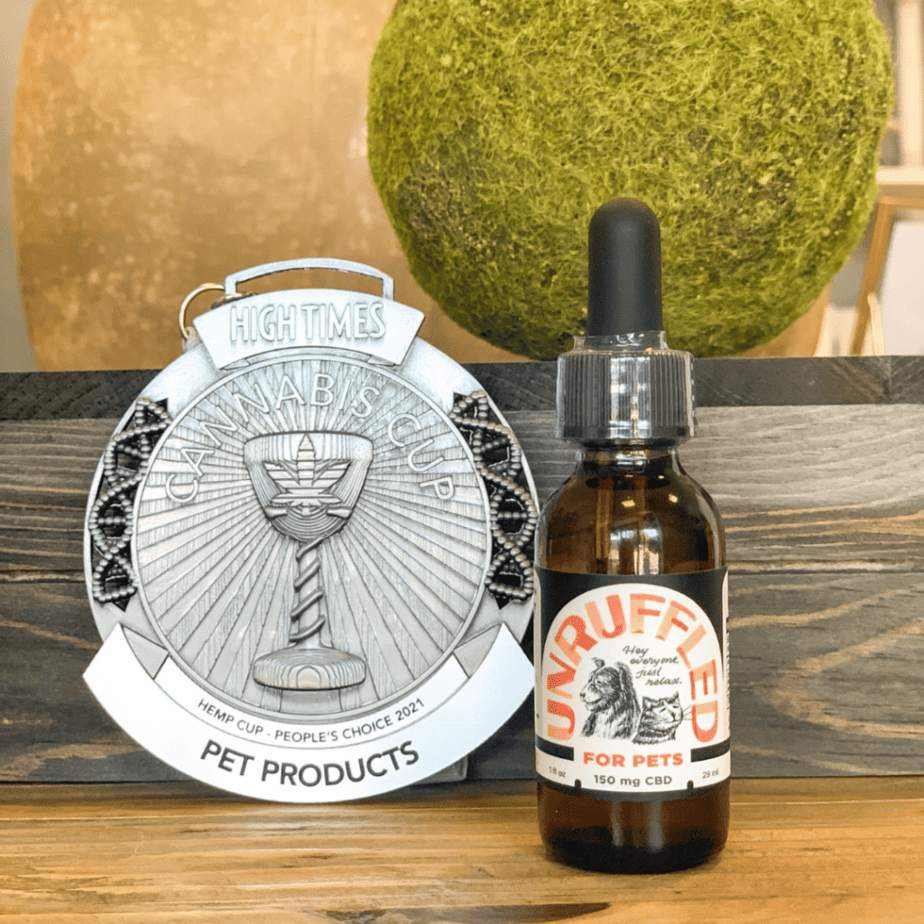
When selecting the best CBD product for your pet, there are several factors to consider. First of all, make sure that the product comes from a reputable source with organic ingredients and no artificial additives or preservatives. Unruffled CBD for pet is Award-Winning CBD oil for pets. If you are interested in one of the best CBD for pet products take a look at the Unruffled Pet Bundle.

Secondly, look for products specifically designed for use in animals; these will typically contain lower doses than those made for humans. Finally, always consult your veterinarian before administering any new medication or supplement to ensure safety and efficacy.

It is important to understand that while CBD may offer potential therapeutic benefits in some situations, it should never replace conventional veterinary care. It is also essential to remember that not all products are created equal; always read labels carefully and research each brand thoroughly prior to purchase. By following these tips you can help ensure that your pet receives the highest quality products available so they can enjoy the health benefits associated with using CBD safely and responsibly.

Award Winning!

Our Unruffled CBD Pet Bite won the Silver Cup in the High Times people’s Choice Awards!

Frequently Asked Questions

Is CBD Safe For My Pet?

The safety of CBD for pets is an important question to consider. With its potential health benefits, the use of Cannabidiol (CBD) as a remedy for pet ailments has become increasingly popular among owners. However, as with any medication, it is essential to understand the risks associated before administering it to animals:

1. Is there a risk of overdose?

2. Could long-term use have negative consequences?

3. Are there any interactions between CBD and other medications?

4. What are the side effects of taking CBD in pets?

These questions are valid concerns and must be addressed when considering using this substance on your beloved pet.

It is worth noting that although CBD comes from marijuana plants - which contain psychoactive compounds - it does not produce psychoactive effects in humans or animals due to its low tetrahydrocannabinol (THC) content (<0.3%). This means that while you can’t get high from giving your pet CBD products, It's also possible for them to suffer allergic reactions if their bodies do not tolerate certain ingredients found in certain brands of CBD oil or treats. To prevent these adverse reactions, consult your veterinarian before starting treatment and make sure you purchase only quality products from a reputable source.

When administered properly under veterinary supervision, studies suggest that CBD may provide relief from pain and inflammation associated with various medical conditions in dogs and cats alike; however, more research needs to be done before we can confidently say how safe it is for our furry friends over time. While we wait for further evidence-based results related to long-term usage , we should keep up with regular checkups so professionals can monitor any signs of uncomfortable symptoms immediately. Ultimately, with proper guidance and monitoring, CBD could prove beneficial for animal well-being but until then caution must be taken when deciding whether or not this alternative therapy is suitable for your pet companion..

How Long Does It Take For CBD To Take Effect On My Pet?

Cannabidiol (CBD) is receiving increasing attention due to its potential health benefits as it relates to both humans and animals. A common question among pet owners is how long does it take for CBD to take effect on their pets? To answer this, several factors must be considered:

  1. The nature of the ailment being treated
  2. The size and weight of the animal
  3. The delivery method of the CBD product

When treating an ailment with CBD, results will depend on the type and severity of condition being addressed. For example, if a pet has acute pain or inflammation, relief may come more quickly than when managing chronic conditions such as anxiety or seizures. In addition, larger animals typically require higher doses than smaller animals; therefore, a large dog may experience effects faster than a small cat would under similar circumstances. Finally, one's choice in delivery method can impact the speed at which effects appear – bites take longer than liquids because they must first pass through digestive processes before entering the bloodstream.

In order to determine how long it takes for CBD to begin working in your pet’s body, some experimentation may be necessary to find what works best for your situation. Consulting with a veterinarian familiar with cannabis-based treatments and keeping track of dosing information over time can help you assess effectiveness accurately and confidently decide whether CBD is right for your furry friend.

How Do I Know If My Pet Is Getting The Right Dosage?

The question of how to know the correct dosage of CBD for pets can be overwhelming. It is important that pet owners take their time and do research in order to ensure they are providing a safe and effective dose for their animal companions. To ensure your pet's safety, here is what you need to consider when determining the right dosage:

  1. The size of your pet - Larger animals will require more CBD than smaller ones
  2. The severity of symptoms - A higher dose may be necessary depending on the condition being treated
  3. Your pet's response - Observing how your pet responds after administering a certain dose can help determine if it should be adjusted up or down

It is also essential to remember that all pets respond differently to treatment plans, so there isn't necessarily one standard dosing accepted by all veterinarians or holistic practitioners alike. This means it may take some trial and error before finding an appropriate amount for your particular pet’s needs. Additionally, each brand formulates its products differently; therefore, the suggested serving size outlined on the packaging may not be accurate for every pet owner’s situation.

When beginning any new medication regimen with your beloved four-legged family member, consulting with a veterinarian beforehand is key—they are best able to advise on possible interactions between existing medications and provide guidance about proper dosages based on breed, weight and medical history. Regular monitoring of health markers through bloodwork during treatment will give further insight into how well the chosen dose is working for them over time. With diligence and patience, trusting your intuition combined with professional advice, you'll soon find success in arriving at just the right quantity needed to promote health and wellbeing in your furry friend!

Are There Any Side Effects Of CBD For Pets?

The use of cannabidiol (CBD) for pets has become increasingly popular in recent years, with many pet owners turning to this natural remedy as an alternative to traditional medications. However, while CBD may provide significant therapeutic benefits, it is important to understand the potential side effects associated with its use. In this article, we will explore the various possible side effects of using CBD for pets and how to determine if your pet is getting the right dosage.

When considering any type of medication or supplement for a pet, it is essential to consult with a veterinarian first before administering anything. This includes determining if there are any contraindications between existing medications and adding CBD into the mix. Additionally, when starting out on a new treatment plan involving CBD, it is best practice to begin slowly by giving small doses and monitoring your pet's reaction over time.

Common side effects that have been reported in animals taking CBD include decreased appetite and digestive issues such as diarrhea or vomiting. Other more serious adverse events can occur rarely, including changes in heart rate or respiratory depression – both requiring immediate veterinary attention. If you observe any unusual behavior after introducing CBD into your pet’s routine, contact a vet immediately for advice on how to proceed safely.

It should also be noted that some people report behavioral changes in their pets due to the sedative qualities of hemp-derived products like CBD oil; however these reports remain inconclusive at present given the lack of research available on this particular topic. Ultimately, understanding potential risks is key when deciding whether or not to give your pet CBD supplements so make sure you do your due diligence beforehand .

Are There Any Potential Drug Interactions With My Pet's Current Medications?

When it comes to animal medications, potential drug interactions are a serious concern for pet owners. As such, the question of whether cannabidiol (CBD) can interact with other drugs must be addressed. In order to examine this issue in depth, it is necessary to explore the pharmacokinetics and pharmacodynamics of CBD as well as its effects on cytochrome P450 enzymes.

The pharmacokinetic profile of CBD involves absorption from different routes - oral, topical, sublingual - followed by distribution throughout the body tissues before undergoing metabolism and eventual excretion. This process takes several hours and may result in variable bioavailability depending on the route used. Additionally, various factors such as age, weight, diet, genetics and disease state may affect how quickly or slowly CBD is metabolized in an individual organism.

Furthermore, when considering the impact of CBD on cytochrome P450 enzymes – proteins responsible for metabolizing many therapeutic drugs – there have been conflicting results across studies. While some research suggests that CBD has no effect on these enzymes, further research indicates that at high concentrations it could potentially interfere with certain enzyme activities leading to increased blood levels of drugs which may cause adverse reactions or toxicity in animals.

It is clear then that more investigation into the long-term safety implications and efficacy of using CBD alongside other medications needs to occur before firm conclusions can be drawn about potential drug interactions between them. Although current evidence provides insight into this area of study and understanding the underlying mechanisms involved will help guide future decision making for veterinary practitioners.

Conclusion

CBD has become a popular remedy for pets, with many pet owners turning to this natural supplement as an alternative method of treatment. Through research and testing, it appears that CBD is generally safe for animals when taken in moderate doses; however, its efficacy can vary depending on the individual animal. Careful monitoring and appropriate dosing are key components to ensure safety and effectiveness. It is important to understand potential side effects and potential drug interactions in order to weigh the risks against the benefits before giving your pet CBD.

The bottom line is that while there may be some benefit associated with administering CBD to pets, more research is needed before it can be deemed a reliable form of treatment or prevention. As such, it is recommended that pet owners consult their veterinarian prior to starting any type of regimen involving CBD products for their beloved furry friends. By taking proactive measures like these, we can ensure our pets receive only the best care possible – from head-to-tail! Like a puzzle piece fitting perfectly into place, proper information gathering and communication between owner and vet will create the perfect picture for successful CBD usage within our four-legged family members.
award-winning cbd pet oil
CBD Bundle Deals: Compare Oils, Topicals, Bath Soaks, and Savings

CBD Bundle Deals: Compare Oils, Topicals, Bath Soaks, and Savings

Bluegrass Hemp Oil bundle guide

CBD Bundle Deals: Compare Oils, Topicals, Bath Soaks, and Savings

CBD bundles can help adults compare multiple product formats while reviewing current bundle savings. Before choosing a bundle, check what is included, CBD amount per serving, THC content, ingredients, product directions, Certificates of Analysis, lab-testing information, and safety warnings.

AuthorBluegrass Hemp Oil Editorial Team
Last updatedMay 19, 2026
Page focusCBD bundle deals, labels, COAs, THC, lab testing, product formats, and safety

What Are CBD Bundles?

A CBD bundle is a product set that combines multiple hemp-derived CBD formats, such as CBD oil, topicals, bath soaks, capsules, gummies, pet products, or lip balm. Bundles can make it easier to compare product formats and may offer savings compared to buying each item separately.

Before choosing a CBD bundle, review what is included, product sizes, CBD amount per product, CBD amount per serving when applicable, THC content, ingredient information, product directions, batch-specific Certificates of Analysis, lab-testing dates, safety warnings, and the current bundle price.

View Bluegrass Hemp Oil CBD bundle deals

Current shop options

CBD Bundles and Gift Sets on the Bluegrass Hemp Oil Shop Page

The live Bluegrass Hemp Oil shop page includes a CBD Bundles & Gift Sets area where shoppers can review current bundle listings, product formats, and prices. Because pricing and availability can change, use the shop page as the source for the latest bundle details before purchasing.

01

Holiday Wellness Kit

How to compare it: Review included items, product sizes, CBD amount, THC content, label directions, and current sale information on the live shop page.

View current Holiday Wellness Kit details

02

Genesis Blend Extra Strength AM/PM Bundle

How to compare it: Review CBD amount per serving, total CBD per bottle, THC content, flavor or formula details, product directions, and COAs.

View current Genesis Blend AM/PM Bundle details

05

CBD Oil, Roller & Bath Soak Bundle

How to compare it: Review the oil label, topical roller ingredients, bath soak ingredients, external-use directions, THC content, and current price range.

View CBD Oil, Roller & Bath Soak Bundle details

06

Unruffled Pet Bundle

How to compare it: Review pet-specific labels, ingredients, THC content, serving directions, COAs, and veterinarian guidance before considering pet hemp products.

View current Unruffled Pet Bundle details

Bundle comparison

Compare CBD Bundle Deals by Product Format

Use this comparison to review bundle contents, product formats, and label details without relying on symptom-based product names or medical claims.

Bundle Type What It May Include What to Review
CBD oil and botanical bundle Genesis Blend CBD Oil plus a botanical body-care format. CBD amount, THC content, ingredients, directions, and Certificate of Analysis.
CBD oil and topical bundle Genesis Blend CBD Oil plus a topical product. Oral-use directions, external-use directions, ingredients, THC content, and COA.
CBD oil, roller, and bath soak bundle Genesis Blend CBD Oil, CBD roll-on, and CBD bath soak. Product size, CBD amount, THC content, topical ingredients, bath ingredients, and lab-testing date.
CBD starter kit CBD oil, CBD skin salve, and CBD lip balm. Product sizes, ingredients, THC content, Certificate of Analysis, and directions.
Pet hemp bundle Pet oil and pet bites or treats depending on current availability. Pet label, ingredients, THC content, serving directions, COA, and veterinarian guidance.

Buyer confidence

What to Check Before Choosing a CBD Bundle

Bundle savings are useful only when the product details are clear. Review each item in the bundle the same way you would review a single CBD product.

What to Check Why It Matters
CBD amount per serving Helps compare product strength.
Total CBD per product Helps compare bundle value.
THC content Full-spectrum CBD may contain trace THC.
Product format Oils, topicals, capsules, gummies, and bath products are used differently.
Ingredients Helps identify allergens, fragrances, carrier oils, sweeteners, or additives.
Product directions Oral and topical products should be used differently.
Batch number Should match the Certificate of Analysis.
Certificate of Analysis Supports cannabinoid and testing transparency.
Lab-testing date Helps verify product-specific testing.
Warning language Responsible CBD companies include safety cautions.

Product formats

CBD Oil, Topicals, Bath Soaks, Gummies, and Capsules Are Used Differently

A bundle may include more than one product format. Review each label separately and use each product only as directed.

Product Format What to Review
CBD oil CBD per serving, carrier oil, THC content, product label, directions, and Certificate of Analysis.
CBD topicals External-use directions, ingredients, fragrance, skin-sensitivity cautions, product label, and Certificate of Analysis.
CBD bath soaks External-use directions, ingredients, fragrance, skin-sensitivity cautions, product label, and Certificate of Analysis.
CBD gummies CBD per gummy, sweeteners, ingredients, THC content, product label, and Certificate of Analysis.
CBD capsules CBD per capsule, capsule ingredients, THC content, product label, and Certificate of Analysis.

THC transparency

Full-Spectrum CBD, THC, and Drug Testing

Full-spectrum CBD products may contain trace THC. People subject to workplace, athletic, professional, licensing, probation, or other testing should review product labels and Certificates of Analysis carefully before choosing CBD bundles.

Hemp-derived does not automatically mean THC-free.Review THC content on the product label and COA.
Full-spectrum CBD may contain trace THC.Trace THC may matter for people subject to testing.
No CBD company should guarantee drug-test outcomes.Testing policies and thresholds can vary.

CBD Safety and Medication Cautions

CBD may interact with medications and may not be appropriate for everyone. Speak with a licensed healthcare professional before using CBD if you take prescription medication, over-the-counter medication, herbs, supplements, sedatives, sleep aids, blood thinners, seizure medications, liver-affecting drugs, or other products.

  • CBD may cause drowsiness in some people.
  • CBD may not be appropriate during pregnancy or breastfeeding.
  • CBD may not be appropriate for people with liver concerns.
  • Full-spectrum CBD may contain trace THC.
  • Use each product only as directed on the label.

Review CBD medication interaction guidance

Transparent shopping

How to Use the Live Shop Page When Comparing CBD Bundles

The live shop page is the best place to confirm current bundle names, product sizes, prices, sale status, and availability. After selecting a bundle, review the product page, product label details, ingredients, COA, and lab-testing information before purchasing.

Trust and transparency

Bluegrass Hemp Oil’s Approach to CBD Bundle Transparency

Bluegrass Hemp Oil focuses on CBD education, product transparency, lab testing, Certificates of Analysis, product labels, THC information, and customer support. These resources help adults review CBD product details before choosing hemp-derived CBD products or bundles.

CBD Product Labels

Understand CBD amount per serving, THC content, ingredients, directions, and warning language before choosing CBD products.

Read the CBD product label guide

CBD Lab Testing

Learn what lab testing can show about cannabinoid content, THC levels, and product transparency.

Learn about CBD lab testing

Related resources

Related CBD Shopping and Product Transparency Resources

FAQ

Frequently Asked Questions About CBD Bundle Deals

What is a CBD bundle?

A CBD bundle is a set of CBD products sold together, often including product formats such as CBD oil, topicals, bath soaks, capsules, gummies, pet products, or lip balm.

Are CBD bundles cheaper than buying products separately?

Some bundles may offer savings compared to buying each product individually. Review the live bundle price, product sizes, CBD amount, and current product details before purchasing.

What should I check before choosing a CBD bundle?

Review CBD amount per serving, total CBD per product, THC content, ingredients, product directions, batch number, Certificate of Analysis, lab-testing date, and warning language.

Can CBD bundles help with pain, stress, allergies, or skin issues?

Bluegrass Hemp Oil products are not intended to diagnose, treat, cure, or prevent pain, stress, anxiety, allergies, respiratory issues, skin conditions, inflammation, or disease.

Can full-spectrum CBD bundles contain THC?

Yes. Full-spectrum CBD products may contain trace THC. Review the product label and Certificate of Analysis before use.

Can CBD interact with medications?

Yes. CBD may interact with medications and may not be appropriate for everyone. Speak with a licensed healthcare professional before using CBD if you take medication.

Are CBD topicals and CBD oils used the same way?

No. CBD oil is an oral product format, while topicals and bath products are external-use formats. Use each product only as directed.

Why do COAs matter for CBD bundles?

Certificates of Analysis help customers review cannabinoid content, THC levels, batch information, and available testing details. They support transparency but do not prove medical effectiveness.

What product formats can be included in CBD bundles?

CBD bundles may include product formats such as CBD oil, CBD topicals, CBD bath soaks, CBD gummies, CBD capsules, pet products, or lip balm. Review the live shop page for current bundle contents.

How do I compare CBD bundle deals?

Compare product sizes, total CBD, CBD per serving, THC content, ingredients, product directions, COAs, lab-testing dates, current pricing, and savings compared to buying products separately.

Sources and Editorial Standards

This article is provided for educational purposes and is not medical advice. It is designed to help adults compare CBD bundle deals, product formats, CBD amount, THC content, ingredients, Certificates of Analysis, lab testing, product directions, current pricing, savings, and safety considerations before choosing hemp-derived CBD products.

Indica vs Sativa for Pain? Why Cannabis Labels Do Not Predict Effects

Indica vs Sativa for Pain? Why Cannabis Labels Do Not Predict Effects

Cannabis label education

Indica vs Sativa for Pain? Why Cannabis Labels Do Not Predict Effects

Many people search for indica vs sativa for pain when trying to understand cannabis and pain-related claims. The safer answer is that indica and sativa labels do not reliably predict how a cannabis or hemp-derived product will affect someone.

A more useful approach is to review the plant’s chemotype, cannabinoid profile, THC content, terpene information, product label, Certificate of Analysis, lab-testing date, and safety warnings.

Author: Bluegrass Hemp Oil Editorial Team

Last updated: May 20, 2026

Article type: Educational cannabis label explainer

Medical review: Not a substitute for professional medical guidance

Is Indica or Sativa Better for Pain?

Neither label is a reliable medical guide. Indica and sativa are visual, morphological, and historical cannabis categories, not dependable predictors of pain-related effects. Product experience may depend on cannabinoid profile, THC content, CBD content, terpene profile, serving amount, product format, individual sensitivity, medication use, and whether the product is accurately labeled.

Myths About Indica, Sativa, and Pain-Related Searches

Search engines are full of simple strain-label explanations, but simple does not always mean accurate. Use the table below to separate common claims from safer, more useful product-literacy questions.

Common Claim Better Explanation
Indica is better for pain. Indica is not a reliable medical-effect category. Review cannabinoid profile, THC content, COA, and professional guidance instead.
Sativa is better for daytime pain. Sativa is not a reliable medical-effect category. The label alone does not prove how a product will affect someone.
CBD is the pain-relief cannabinoid. Retail CBD products should not be marketed as pain treatments. Review safety, labels, COAs, and healthcare guidance.
Terpenes prove effects. Terpenes may help describe aroma, but they should not be turned into pain, sleep, anxiety, or medical claims.

Hemp vs Marijuana: Legal Definition vs Botanical Chemotype

The legal THC threshold matters for compliance, but it does not fully explain the plant. Hemp and marijuana are both cannabis. Botanically, hemp-type cannabis is generally CBDa / CBD dominant, while marijuana or drug-type cannabis is generally THCa / THC dominant. These tendencies are shaped by genetics and cannabinoid synthase expression.

Category Legal / Botanical Explanation
Legal hemp Defined by THC compliance. Hemp rules focus on total THC compliance, including THCA conversion, at no more than the applicable legal threshold.
Botanical hemp-type cannabis Commonly CBDa / CBD dominant cannabis.
Marijuana or drug-type cannabis Commonly THCa / THC dominant cannabis.
Shared identity Hemp and marijuana are both cannabis.
Sativa and indica Visual, morphological, and historical plant-type labels that can appear across hemp-type and marijuana-type cannabis.

Sativa-like and indica-like visual traits can appear across hemp-type and marijuana-type cannabis. These labels should not be used as guarantees of relaxation, energy, sleep support, anxiety relief, pain outcomes, or medical benefit.

Why Indica and Sativa Labels Are Not Reliable Effect Claims

Indica and sativa labels may describe growth traits, leaf shape, plant structure, aroma expectations, or historical breeding language. They should not be used as guarantees of pain outcomes, relaxation, energy, sleep, anxiety changes, or medical benefit.

CBDa / CBD dominanceTHCa / THC dominanceCannabinoid profileTerpene profileTotal THCProduct formatServing labelCertificate of AnalysisLab-testing dateSafety warnings

Cannabinoids Matter More Than the Label

For shoppers comparing CBD and cannabis terminology, the product’s cannabinoid profile provides more useful information than an indica or sativa label. Even then, cannabinoid information should be used for product literacy, not self-treatment claims.

Compound Safe Explanation
CBDa The acidic precursor commonly associated with CBD-dominant hemp-type cannabis.
CBD A non-intoxicating cannabinoid. Retail CBD products are not FDA-approved for pain treatment.
THCa The acidic precursor commonly associated with THC-dominant marijuana or drug-type cannabis.
THC The primary intoxicating cannabinoid. THC may carry impairment, legal, drug-testing, and safety concerns.
CBN A cannabinoid associated with aged THC. Do not claim sleep or sedation benefits.
Terpenes Aromatic compounds that may contribute to product aroma, but should not be turned into pain, sleep, anxiety, mood, or medical claims.

What CBD Shoppers Should Review Instead

If you are comparing hemp-derived CBD products, focus on objective product information. This helps you evaluate labels and transparency without relying on indica or sativa marketing terms.

What to Review Why It Matters
CBD amount per serving Helps compare product strength.
Total CBD per package Helps compare oils, gummies, capsules, and topicals.
THC content Full-spectrum CBD may contain trace THC.
CBDa / THCa information if available Helps users understand chemotype and cannabinoid profile.
Product format Oils, gummies, capsules, and topicals are used differently.
Ingredients Helps identify allergens, sweeteners, carrier oils, or additives.
Batch number Should match the Certificate of Analysis.
Certificate of Analysis Supports cannabinoid and testing transparency.
Lab-testing date Helps verify product-specific testing.
Warning language Responsible brands include safety cautions.

Full-Spectrum CBD, THC, and Drug Testing

Full-spectrum CBD products may contain trace THC. People subject to workplace, athletic, professional, licensing, probation, or other testing should review product labels and Certificates of Analysis carefully before using CBD.

  • Hemp-derived does not automatically mean THC-free.
  • THC content should be reviewed on the product label and COA.
  • CBD itself is not typically the target of standard drug tests.
  • Trace THC may still matter for people subject to testing.
  • No CBD company should guarantee drug-test outcomes.

CBD Safety and Medication Cautions

CBD may interact with medications and may not be appropriate for everyone. People taking prescription medication, over-the-counter medication, herbs, supplements, sleep aids, sedatives, antidepressants, anti-anxiety medications, seizure medications, blood thinners, or liver-affecting drugs should speak with a licensed healthcare professional before using CBD.

  • CBD may cause drowsiness in some people.
  • CBD may not be appropriate during pregnancy or breastfeeding.
  • CBD may not be appropriate for people with liver concerns.
  • Do not stop, reduce, replace, or combine medications with CBD without medical guidance.

Review CBD medication interaction guidance

Where CBD Product Information Fits

Product links should help readers review labels, ingredients, CBD amount, THC content, Certificates of Analysis, lab-testing information, and product format details. Do not link products from pain, nerve pain, inflammation, arthritis, relief, treatment, or medical-effect language.

Product Label Review

Use product pages and education pages to compare CBD amount, ingredients, THC content, and warning language.

Read the CBD product label guide

Bluegrass Hemp Oil’s Approach to CBD Transparency

Bluegrass Hemp Oil focuses on CBD education, product transparency, lab testing, Certificates of Analysis, product labels, THC information, and customer support. These resources help adults review CBD product details before choosing hemp-derived CBD products.

CBD Product Labels

Understand CBD amount per serving, THC content, ingredients, and warning language before choosing a CBD product.

Read the CBD product label guide

CBD Lab Testing

Learn what lab testing can show about cannabinoid content, THC levels, and product transparency.

Learn about CBD lab testing

Related Cannabis Label and CBD Safety Resources

Frequently Asked Questions

Is indica or sativa better for pain?

Indica and sativa labels should not be used as medical guidance. They do not reliably predict pain-related effects.

Do indica and sativa have different cannabinoids?

They can, but the label itself is not enough. A product’s cannabinoid profile, terpene profile, THC content, Certificate of Analysis, and lab testing provide more useful information.

What is the real difference between hemp and marijuana?

Legally, hemp is defined by THC compliance. Botanically, hemp-type cannabis is usually CBDa / CBD dominant, while marijuana or drug-type cannabis is usually THCa / THC dominant.

Are hemp and marijuana both cannabis?

Yes. Hemp and marijuana are both cannabis, but they differ by legal classification, chemotype, breeding goals, and cannabinoid dominance.

Are sativa and indica types of hemp and marijuana?

Sativa and indica are visual, morphological, and historical cannabis labels. Both hemp-type and marijuana-type cannabis can show sativa-like or indica-like traits.

Does CBD treat pain or nerve pain?

Bluegrass Hemp Oil products are not intended to diagnose, treat, cure, or prevent pain, nerve pain, inflammation, arthritis, or disease.

Can full-spectrum CBD contain THC?

Yes. Full-spectrum CBD may contain trace THC. Review the product label and Certificate of Analysis before use.

Can CBD interact with medications?

Yes. CBD may interact with medications and may not be appropriate for everyone. Speak with a licensed healthcare professional before using CBD if you take medication.

Why do COAs matter for CBD products?

Certificates of Analysis help customers review cannabinoid content, THC levels, batch information, and available testing details. They support transparency but do not prove medical effectiveness.

What should I check before choosing a CBD product?

Review CBD amount per serving, THC content, ingredients, product directions, warning language, batch number, Certificate of Analysis, lab-testing date, and medication cautions.

Sources and Editorial Standards

This article is provided for educational purposes and is not medical advice. It is designed to help adults understand indica vs sativa search intent, cannabis labels, CBDa-dominant hemp, THCa-dominant marijuana, cannabinoids, terpenes, THC content, Certificates of Analysis, lab testing, medication-interaction concerns, and safety considerations before choosing hemp-derived CBD products.


Indica vs Sativa: Hemp, Marijuana, Cannabinoids, and COAs

Cannabis education, product labels, and transparency

Indica vs Sativa: Hemp, Marijuana, Cannabinoids, and What Labels Mean

Indica and sativa are widely used cannabis terms, but they are often treated as effect categories when they are better understood as visual, historical, and morphological labels. A more useful way to evaluate hemp-derived CBD products is to look at cannabinoids, terpenes, THC content, product labels, Certificates of Analysis, and lab testing.

By Bluegrass Hemp Oil Editorial Team
Last updated May 20, 2026
Educational article
Important safety note: This article is for educational purposes only and is not medical advice. Bluegrass Hemp Oil products are not intended to diagnose, treat, cure, or prevent disease. CBD may interact with medications and may not be appropriate for everyone. Full-spectrum CBD products may contain trace THC. Speak with a licensed healthcare professional before using CBD if you take medication, are pregnant or nursing, have a medical condition, or are subject to drug testing.

Quick answer

The Better Way to Understand Indica, Sativa, Hemp, and Marijuana

01

Both hemp and marijuana are cannabis

Hemp and marijuana are both forms of cannabis. Federal hemp rules use THC compliance to separate legal hemp from cannabis treated as marijuana under federal hemp rules.

02

Hemp is commonly CBDa or CBD dominant

Botanically and chemically, hemp-type cannabis is often selected for CBDA and CBD dominance rather than high THCA or THC expression.

03

Marijuana is commonly THCa or THC dominant

Marijuana, also called drug-type cannabis in some scientific contexts, is typically selected for THCA and THC dominance.

04

Sativa and indica are not effect guarantees

Sativa and indica labels should not be used to promise relaxation, energy, sleep support, anxiety relief, pain relief, or medical benefit.

05

Plant labels do not replace testing

Product-specific labels and lab reports are more useful than plant-type marketing terms when reviewing CBD amount, THC content, ingredients, and batch details.

06

COAs support transparency

Certificates of Analysis can support product transparency, but they do not prove that CBD treats symptoms, conditions, or disease.

Classification, not a promise

What Indica and Sativa Actually Describe

Indica and sativa are historical cannabis terms that are often used to describe plant appearance, growth traits, leaf shape, plant height, and breeding history. In consumer marketing, these labels are sometimes used as shorthand for expected experiences. That shortcut can be misleading.

Modern cannabis and hemp products should be evaluated by chemistry and transparency. A product label, cannabinoid panel, terpene information, THC content, serving details, ingredients, and a batch-specific Certificate of Analysis are more useful than an indica or sativa label.

For deeper background on cannabis compounds, learn about cannabinoids in hemp and review Bluegrass Hemp Oil terpene education.

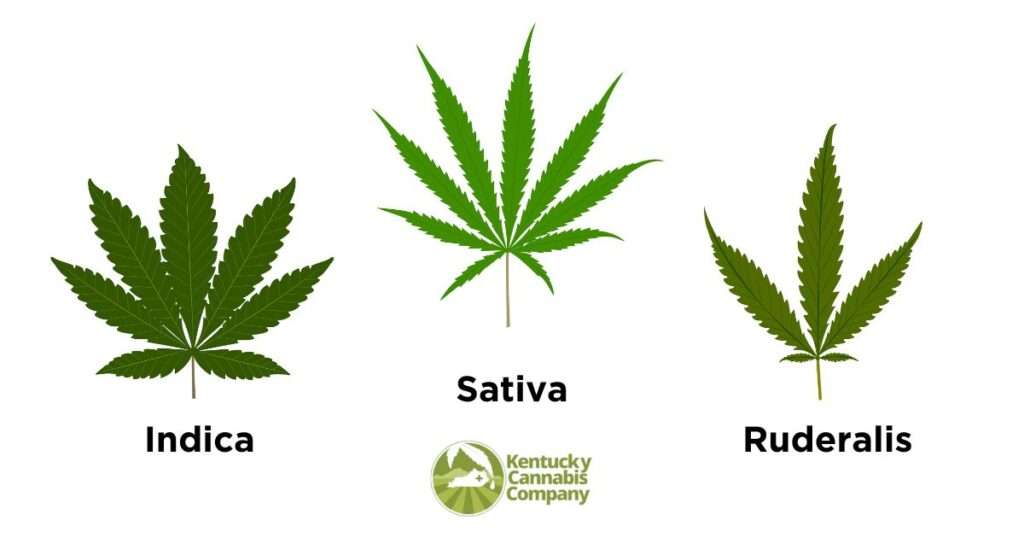
Cannabis leaf morphology comparison for indica sativa and ruderalis
Leaf-shape comparisons can be useful for plant education, but they do not replace product-specific cannabinoid and THC testing.

Sativa vs indica chart

What the Labels Can and Cannot Tell You

Term Useful For Not Reliable For What to Check Instead
Sativa Historical classification, plant shape, leaf structure, growth habit, and breeding context. Predicting energy, focus, anxiety relief, pain relief, sleep support, or medical benefit. Cannabinoids, terpenes, THC content, serving size, ingredients, product label, and COA.
Indica Historical classification, shorter or bushier plant descriptions, broader leaf traits, and morphology. Predicting relaxation, sedation, anxiety relief, pain relief, sleep support, or medical benefit. Cannabinoid panel, terpene panel, THC content, product directions, batch number, and lab report.
Hybrid Describing mixed breeding background or blended visual traits. Guaranteeing a balanced experience or specific outcome. Product-specific testing and a clear Certificate of Analysis.
Hemp-type cannabis Describing cannabis selected for hemp use and, often, CBDA or CBD dominance. Assuming THC-free status or assuming any medical effect. THC content, full-spectrum status, COA, lab-testing date, and warnings.
Marijuana or drug-type cannabis Describing cannabis typically selected for THCA or THC dominance. Assuming every product has the same chemistry or effect profile. State rules, THC amount, cannabinoid profile, terpene profile, and product-specific testing.

Legal plus botanical framing

Hemp vs Marijuana: The Legal Threshold Is Not the Whole Botanical Story

Legal hemp is defined by THC compliance. Under U.S. federal hemp rules, hemp is cannabis that meets the applicable THC threshold, and cannabis above that threshold is treated as marijuana under federal hemp rules. That legal distinction matters, but it is not the full botanical or chemical story.

Botanically and chemically, hemp-type cannabis is usually better understood as CBDa or CBD-dominant cannabis. Marijuana, or drug-type cannabis, is usually better understood as THCa or THC-dominant cannabis. These patterns are driven largely by genetics and cannabinoid synthase expression, including the plant's tendency to produce more CBDA or more THCA from shared cannabinoid precursors.

Plain-language takeaway: Legal hemp is defined by THC compliance. Botanical hemp is commonly CBDa or CBD dominant. Marijuana is commonly THCa or THC dominant. Both are cannabis, and both can show sativa-like or indica-like visual traits.

Cannabinoid chemistry

CBDA, THCA, and Why Genetics Matter

CBDA and CBD dominance

Hemp-type cannabis is commonly selected for a cannabinoid profile dominated by CBDA in the plant and CBD after processing or decarboxylation. This does not mean every hemp product is THC-free, and it does not mean a product has a medical effect.

THCA and THC dominance

Drug-type cannabis is commonly selected for a cannabinoid profile dominated by THCA in the plant and THC after processing, heating, or decarboxylation. THC content should always be reviewed through product-specific labeling and testing.

Cannabis plants make cannabinoids through biochemical pathways. CBDA and THCA are produced from shared cannabinoid precursors, and the plant's genetics help determine which acidic cannabinoid becomes dominant. That is why cannabinoid profiles and lab reports matter more than broad indica or sativa language.

For a broader introduction, read the endocannabinoid system guide. For product-level quality questions, read the CBD quality guide.

YMYL-safe consumer guidance

Why Indica and Sativa Should Not Be Used as Medical Categories

Indica and sativa terms should not be used to claim that a product will produce specific effects such as relaxation, energy, sleep support, anxiety relief, pain relief, or medical benefit. Those outcomes depend on many factors, including cannabinoid content, THC exposure, serving size, product format, other ingredients, medication use, health history, and individual response.

Bluegrass Hemp Oil products are not intended to diagnose, treat, cure, or prevent disease. If you take medication, use alcohol or sedating products, are pregnant or nursing, have a medical condition, or are subject to drug testing, speak with a licensed healthcare professional before using CBD.

Review CBD medication interaction guidance

Product transparency checklist

What to Check Before Choosing a Hemp-Derived CBD Product

What to Check Why It Matters
CBD amount per serving Helps you understand the product label and compare formats.
Total CBD per package Helps compare products without relying on marketing terms.
THC content Full-spectrum CBD products may contain trace THC.
Cannabinoid profile Shows whether a product is CBD dominant and what other cannabinoids are reported.
Terpene information Can describe aroma-related compounds, but should not be used as medical proof.
Ingredient list Helps identify carrier oils, allergens, sweeteners, flavors, and additives.
Batch number Should match the Certificate of Analysis for the product batch.
Certificate of Analysis Supports cannabinoid and testing transparency, but does not prove medical effectiveness.
Lab-testing date Helps confirm product-specific testing details.
Warnings and directions Responsible products include clear use directions and safety cautions.

Bluegrass Hemp Oil trust module

Our Approach to Cannabis and CBD Transparency

Product labels

Review serving information, THC content, ingredients, warnings, and directions before choosing a CBD product.

Read the CBD product label guide

Certificates of Analysis

Use batch-specific lab reports to review cannabinoid content, THC levels, and available testing details.

View Bluegrass Hemp Oil Certificates of Analysis

Lab testing

Understand what lab testing can and cannot tell you about cannabinoid content and product transparency.

Learn about CBD lab testing

Quality standards

Review how Bluegrass Hemp Oil approaches hemp sourcing, product education, and customer support.

Review Bluegrass Hemp Oil quality standards

Related education

Related CBD and Cannabis Transparency Resources

Frequently asked questions

Indica, Sativa, Hemp, Marijuana, and CBD Product Labels

What is the real difference between indica and sativa?

Indica and sativa are historical and visual cannabis labels. They may describe plant structure, leaf shape, growth pattern, or breeding history, but they are not reliable categories for predicting effects or medical outcomes.

Does indica always mean relaxing and sativa always mean energizing?

No. Those effect claims are marketing shortcuts, not dependable scientific rules. Cannabinoid content, terpene profile, THC amount, product format, serving size, and individual factors matter more than an indica or sativa label.

Are hemp and marijuana both cannabis?

Yes. Hemp and marijuana are both cannabis. Under U.S. hemp rules, legal hemp is defined by THC compliance, while marijuana is cannabis above the federal hemp THC threshold.

Is the 0.3% THC threshold the whole difference between hemp and marijuana?

No. The 0.3% THC threshold is the legal distinction used for federal hemp compliance. Botanically and chemically, hemp-type cannabis is commonly CBDa or CBD dominant, while marijuana or drug-type cannabis is commonly THCa or THC dominant.

Can hemp have sativa-like or indica-like traits?

Yes. Hemp-type cannabis and marijuana-type cannabis can both show sativa-like or indica-like visual traits. Those visual traits do not prove cannabinoid profile, THC content, or product effects.

What are CBDA and THCA?

CBDA and THCA are acidic cannabinoid forms produced by cannabis plants. Heat, time, and processing can convert CBDA toward CBD and THCA toward THC. The plant's genetics and cannabinoid synthase expression influence which cannabinoids dominate.

Why do product labels matter more than indica or sativa terms?

A label can show CBD amount, THC content, ingredients, directions, warnings, batch information, and product format. Indica and sativa terms do not provide that level of product-specific transparency.

Why do Certificates of Analysis matter?

A Certificate of Analysis can help customers review cannabinoid content, THC levels, batch information, and available lab-testing details. COAs support transparency, but they do not prove medical effectiveness.

Can full-spectrum CBD contain THC?

Yes. Full-spectrum CBD products may contain trace THC. Review the product label and Certificate of Analysis before choosing a product, especially if THC exposure matters to you.

Can CBD affect a drug test?

CBD itself is not typically the target of standard drug tests, but full-spectrum CBD products may contain trace THC. No CBD company should guarantee a drug-test outcome.

Are retail CBD products FDA-approved to treat medical conditions?

Retail CBD products are not FDA-approved to diagnose, treat, cure, or prevent disease. Speak with a licensed healthcare professional before using CBD if you take medication, are pregnant or nursing, have a medical condition, or are subject to drug testing.

What should I check instead of relying on indica or sativa marketing?

Review cannabinoids, terpenes, THC content, serving information, ingredients, product directions, warnings, batch number, Certificates of Analysis, lab-testing date, and company contact information.

Sources and references

Authoritative References Used for This Guide

This article is based on public cannabis, hemp, CBD safety, and product-testing information from government, academic, and peer-reviewed sources. These sources are included for education and do not make Bluegrass Hemp Oil products medical products.

CBD Starter Kit for Beginners: Labels, COAs, Safety, and What’s Included

CBD Starter Kit for Beginners: Labels, COAs, Safety, and What’s Included

Beginner CBD product guide

CBD Starter Kit for Beginners: Labels, COAs, Safety, and What’s Included

A CBD starter kit can help adults compare different CBD product formats in one bundle. Before choosing a kit, review what is included, CBD amount per serving, THC content, ingredients, product directions, Certificates of Analysis, lab-testing information, and safety warnings.

Author: Bluegrass Hemp Oil Editorial Team
Last updated: May 20, 2026
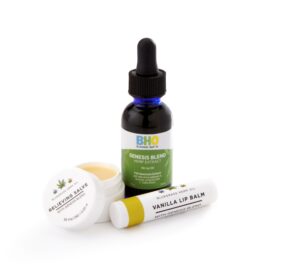
Genesis Blend CBD Starter Kit product bundle

Starter kit overview

Use this guide to review product formats, labels, COAs, THC content, ingredients, directions, and safety cautions before choosing a CBD kit.

Learn about CBD lab testing

What Is a CBD Starter Kit?

Voice search answer: A CBD starter kit is a bundle of CBD products designed to help adults compare different product formats, such as CBD oil, a topical product, and lip balm.

Different CBD formats have different directions, ingredient lists, and label details. Beginners should review serving information, THC content, product directions, the batch number, and the matching Certificate of Analysis before choosing a CBD kit.

For the current kit contents and product-specific information, View Genesis Blend CBD Starter Kit product details.

What Comes in the Bluegrass Hemp Oil CBD Starter Kit?

The starter kit should be understood as an adult product-format bundle, not a first-aid kit or treatment kit. Avoid attaching CBD oil, salve, or lip balm to symptom or disease claims.

Product Format What to Review
Genesis Blend CBD Oil CBD per serving, total CBD, flavor, carrier oil, THC content, directions, product label, and Certificate of Analysis.
Travel-size CBD skin salve External-use directions, ingredients, skin-sensitivity cautions, product label, and Certificate of Analysis.
CBD lip balm Ingredients, external-use directions, CBD amount, skin sensitivity, product label, and Certificate of Analysis.

Who Is a CBD Starter Kit For?

May be a fit for adults who want to:

  • Compare CBD oil and topical product formats.
  • Review smaller-format CBD products before choosing a larger size.
  • Understand serving labels, directions, ingredients, and COAs.
  • Choose a gift for another adult who can review the product label.

Not a fit for:

  • Children or pets.
  • Pregnant or nursing users without clinician guidance.
  • Anyone expecting disease or symptom treatment.
  • Anyone taking medication without healthcare professional guidance.
  • Anyone subject to drug testing without reviewing THC content.

CBD Oil vs Topicals vs Lip Balm

CBD oil, topicals, and lip balm are different product formats. Use each product only as directed on its label, and review ingredients carefully before use.

Format How to Think About It Safely
CBD oil Oral CBD format. Review the serving label, THC content, Certificate of Analysis, ingredients, and medication cautions.
CBD skin salve External-use body-care format. Review ingredients, directions, and skin-sensitivity cautions. Avoid broken or irritated skin unless a qualified professional advises otherwise.
CBD lip balm External-use lip-care format. Review ingredients and stop use if irritation occurs.

For broader product-format education, Compare CBD oil, gummies, and capsules and Explore CBD topical product education.

What to Check Before Buying a CBD Starter Kit

Voice search answer: Before buying a CBD starter kit, review the label, CBD amount per serving, THC content, ingredients, directions, warning language, batch number, COA, and lab-testing information.

What to Check Why It Matters
CBD amount per serving Helps adults understand the product label.
Total CBD per product Helps compare kit sizes and formats.
THC content Full-spectrum CBD may contain trace THC.
Product directions Oil, salve, and lip balm are used differently.
Ingredient list Helps identify allergens, carrier oils, fragrances, sweeteners, or additives.
Batch number Should match the Certificate of Analysis.
Certificate of Analysis Supports cannabinoid and testing transparency.
Lab-testing date Helps confirm product-specific testing.
Warning language Responsible brands include safety cautions.
Adult-use guidance CBD products should be kept away from children and pets.

Full-Spectrum CBD, THC, and Drug Testing

Can full-spectrum CBD contain THC? Yes. Full-spectrum CBD products may contain trace THC. Hemp-derived does not automatically mean THC-free, and THC content should be reviewed on the product label and Certificate of Analysis.

Can CBD affect a drug test? CBD itself is not typically the target of standard drug tests, but trace THC may still matter for people subject to workplace, athletic, professional, licensing, probation, or other testing. No CBD company should guarantee drug-test outcomes.

Understand full-spectrum CBD products, Understand the difference between CBD and THC, and Learn whether CBD can matter for drug testing.

CBD Starter Kit Safety Notes

General safety review

  • For adult use only.
  • Keep CBD products out of reach of children and pets.
  • Use each product only as directed.
  • CBD oil is an oral product format.
  • Topicals and lip balms are external-use products.
  • Avoid contact with eyes.
  • Do not apply topical products to broken or irritated skin unless advised by a qualified professional.
  • Stop use if irritation occurs.

Ask a professional before use if:

  • You take prescription or over-the-counter medication.
  • You are pregnant or nursing.
  • You have a medical condition.
  • You are subject to drug testing.
  • You are combining CBD with alcohol, herbs, supplements, or products that may cause drowsiness.

For more context, Review CBD medication interaction guidance.

The Genesis Blend CBD Starter Kit product page should be linked only from neutral product-information sections. Product links should help adults review kit contents, product sizes, flavor options, ingredients, label information, COAs, and current product details.

View Genesis Blend CBD Starter Kit product details when you are ready to review current kit information.

Bluegrass Hemp Oil’s Approach to CBD Starter Kit Transparency

Bluegrass Hemp Oil focuses on CBD education, product transparency, lab testing, Certificates of Analysis, product labels, THC information, and customer support. These resources help adults review CBD product details before choosing hemp-derived CBD products.

CBD Product Labels

Understand CBD amount per serving, THC content, ingredients, directions, and warning language before choosing a CBD product.

Read the CBD product label guide

Certificates of Analysis

Review available product-specific lab reports before choosing a CBD product.

View Bluegrass Hemp Oil Certificates of Analysis

CBD Lab Testing

Learn what lab testing can show about cannabinoid content, THC levels, and product transparency.

Learn about CBD lab testing

CBD Quality Standards

Review how Bluegrass Hemp Oil approaches product transparency, customer education, and quality standards.

Review Bluegrass Hemp Oil quality standards

Related CBD Beginner and Product Transparency Resources

Additional education: Read the full CBD oil use guide, Learn about cannabinoids in hemp, Learn about the Bluegrass Hemp Oil process, and Contact Bluegrass Hemp Oil with CBD product questions.

Frequently Asked Questions About CBD Starter Kits

What is a CBD starter kit?

A CBD starter kit is a bundle of CBD products designed to help adults compare different product formats, such as CBD oil, a topical product, and lip balm.

What comes in the Bluegrass Hemp Oil CBD Starter Kit?

The kit includes Genesis Blend CBD Oil, a travel-size CBD skin salve, and CBD lip balm. Review the product page for current size, flavor, CBD amount, and ingredient details.

Is a CBD starter kit good for beginners?

A starter kit may be useful for adults who want to compare product formats, review serving labels, and understand Certificates of Analysis before choosing a larger product size.

Can children use a CBD starter kit?

No. CBD products should be kept out of reach of children and pets. Speak with a qualified healthcare professional before considering CBD for a child.

Can a CBD starter kit help with pain, anxiety, or sleep?

Bluegrass Hemp Oil products are not intended to diagnose, treat, cure, or prevent pain, anxiety, sleep problems, inflammation, mood concerns, or any disease.

Can full-spectrum CBD contain THC?

Yes. Full-spectrum CBD products may contain trace THC. Review the product label and Certificate of Analysis before use.

Can CBD affect a drug test?

CBD itself is not typically the target of standard drug tests, but full-spectrum CBD may contain trace THC. People subject to testing should review THC content and Certificates of Analysis carefully.

Can CBD interact with medication?

Yes. CBD may interact with medications and may not be appropriate for everyone. Speak with a doctor or pharmacist before using CBD if you take medication.

What should I check before buying a CBD starter kit?

Review CBD amount per serving, THC content, ingredients, product directions, warning language, batch number, Certificate of Analysis, and lab-testing information.

Are CBD topicals and lip balm used the same way as CBD oil?

No. CBD oil is an oral product format, while topicals and lip balm are external-use products. Use each product only as directed on its label.

Sources and Editorial Notes

This article is provided for educational purposes and is not medical advice. It is designed to help adults understand what a CBD starter kit includes, how CBD oil, topicals, and lip balm differ, how to review product labels, why THC content matters, how Certificates of Analysis support transparency, and what safety considerations apply before choosing hemp-derived CBD products.