Best CBD Gummies for Anxiety: 2026 Quality & Safety Guide

Quality & Safety Guide

Best CBD Gummies for Anxiety: A Quality & Safety Guide.

If you are searching for the best CBD gummies for anxiety, the safest starting point is product quality, transparent testing, and realistic expectations.

CBD gummies are popular as hemp edibles for calm, everyday stress routines, and gentle relaxation support, but they should not be described as a treatment or cure for anxiety disorders.

This guide explains how to compare full-spectrum CBD gummies, read third-party test results, and choose products that fit an adult wellness routine.

Why Quality Matters Before You Buy CBD Gummies

CBD gummies for stress, full-spectrum CBD gummies, and hemp gummies for relaxation are often compared by adults who want a calm, easy-to-use hemp edible.

The most trustworthy options are transparent about testing, hemp source, ingredients, serving size, and the limits of what CBD products can claim. Bluegrass Hemp Oil emphasizes Kentucky-grown hemp, clear labels, COA review, and support for balance in the endocannabinoid system without making disease-treatment claims.

Look for a batch-specific Certificate of Analysis that confirms cannabinoids, THC level, and contaminant screening.

Hemp source matters. Kentucky-grown hemp gives shoppers a clearer origin story and stronger accountability.

Know whether the gummy is full-spectrum, broad-spectrum, or isolate. Compare full-spectrum CBD.

For gummies, 1 Unit means 1 gummy. Stay consistent for a 14-Day Observation Period before adjusting.

Important Anxiety and Wellness Note

Anxiety can be serious. If anxious feelings are persistent, worsening, or affecting sleep, school, work, relationships, or daily functioning, speak with a licensed healthcare professional.

CBD is not FDA-approved to diagnose, treat, cure, or prevent anxiety or any disease. This page is educational shopping guidance, not medical advice.

CBD Gummies: Start With the Basics

Before comparing flavors or prices, confirm what the product is and how the company explains it.

The four topics below explain CBD, full-spectrum extracts, product quality, and routine-based use in plain language.

CBD is a hemp-derived cannabinoid that interacts with the body’s endocannabinoid system. It should not be treated like a prescription anxiety medication.

Read: What is CBD Oil?

Full-spectrum CBD gummies contain CBD plus additional hemp compounds, including trace THC within legal limits. This broader profile is often discussed as the entourage effect.

Learn about Full Spectrum CBD

Compare CBD type, serving size, COA, THC disclosure, hemp source, and ingredient quality before you buy.

Learn How to Shop CBD Safely

CBD gummies may fit into an adult wellness routine for calm and relaxation support, but they should not replace professional care for anxiety disorders.

Full-Spectrum vs Isolate CBD Gummies: What to Compare

Full-spectrum and isolate CBD gummies are different products, and the right choice depends on what you want to verify on the label.

Full-spectrum gummies include a broader hemp profile. Isolate gummies contain CBD only. Neither format should be marketed as a cure for anxiety.

If you prefer full-spectrum products, review the cannabinoid profile, trace THC amount, ingredients, and COA before comparing price.

Read Bluegrass Hemp Oil’s Full Spectrum CBD guide

The CBD Gummy Safety Checklist

A safe comparison starts with product verification, clear labels, realistic language, and a serving routine you can observe consistently.

Choose products with recent, batch-specific third-party testing. The COA should be easy to find, not hidden.

Full-spectrum hemp products may contain trace THC. Review the COA if you are sensitive to THC or subject to drug testing.

Look for CBD per gummy, total CBD per package, ingredients, serving instructions, and storage guidance.

A trustworthy brand avoids claiming that CBD treats anxiety, panic attacks, depression, PTSD, or other medical conditions.

Talk with a healthcare professional before using CBD if you take prescriptions, sleep aids, mood medications, or blood thinners.

Gummies can resemble candy. Keep them away from children and pets, especially full-spectrum products.

Product Comparison: Bluegrass Hemp Oil Gummies vs Candy-Style Brands

This comparison focuses on CBD gummy quality standards, transparency, and product accountability. It is not a medical ranking.

Quality Factor Bluegrass Hemp Oil Gummies Standard Candy-Style Brands to Verify Carefully
Primary Focus Full-spectrum hemp wellness format with education-first guidance. May emphasize flavor, novelty, or packaging before transparency.
Hemp Source Kentucky-grown hemp focus and founder-led brand history. Source may be unclear or spread across unnamed suppliers.
Testing COA verified CBD should be available for quality review. Testing may be missing, outdated, or not batch-specific.
Labeling Designed for simple serving review and 1 Unit Dosing. Labels may focus on milligram hype without practical guidance.
Marketing Claims Educational language should avoid treatment or cure claims. Be cautious if the product promises anxiety relief, sleep cures, or medical outcomes.

Browse CBD Gummies

1 Unit Dosing for CBD Gummies

For gummies, 1 Unit means 1 gummy.

Use the same 1 Unit serving consistently for a 14-Day Observation Period before adjusting.

Track timing, routine consistency, drowsiness, digestive comfort, sleep routine, focus notes, and general wellness observations.

Do not increase quickly. Make one change at a time, and speak with a qualified healthcare professional if you take medication or have a diagnosed condition.

Timeframe Serving Routine Purpose What to Observe
Days 1–7 1 gummy daily, if consistent with the label. Build a baseline. Timing, drowsiness, digestive comfort, daily routine notes.
Days 8–14 Continue the same 1 Unit routine. Observe consistency. Sleep routine, focus notes, stress routine, product tolerance.
Day 15+ Adjust only if appropriate. Personalize carefully. Make one change at a time and observe again.

Ready to Compare Full-Spectrum CBD Gummies?

The Bluegrass Hemp Oil gummy category includes current product options, serving details, ingredients, and full-spectrum positioning.

It is a practical next step for adults comparing full-spectrum CBD gummies, CBD gummies for everyday stress routines, or hemp gummies for relaxation support.

Authority: Bill Polyniak CBD Expert

Bill Polyniak founded Bluegrass Hemp Oil and Kentucky Cannabis Company from a family-first commitment to quality, transparency, and education.

Bill has worked in Kentucky hemp since 2014 and held Kentucky License #5, the only Kentucky license at that time dedicated to cannabinoid research.

That Pioneer’s Perspective supports a simple standard: explain CBD clearly, verify quality, and avoid exaggerated anxiety claims.

Read Bill Polyniak’s Bio

Featured In / Press Recognition

Bluegrass Hemp Oil’s press archive provides additional context on the company’s history, Kentucky hemp work, and founder-led education.

The archive includes coverage connected to Kentucky hemp, company history, and public education around full-spectrum CBD.

Frequently Asked Questions

Can CBD gummies cure anxiety?

No. CBD gummies should not be described as a cure for anxiety. CBD is not FDA-approved to treat anxiety, and persistent symptoms should be discussed with a licensed healthcare professional.

How many CBD gummies should I take for anxiety?

Follow the product label. For Bluegrass Hemp Oil-style 1 Unit guidance, start with 1 gummy as 1 Unit and use a 14-Day Observation Period before adjusting.

Are full-spectrum CBD gummies better than isolate?

Full-spectrum products include a broader hemp profile, while isolate contains CBD only. The better choice depends on your goals, THC sensitivity, drug-testing concerns, and COA review.

What makes a CBD gummy high quality?

Look for a clearly labeled extract type, third-party testing, transparent THC disclosure, Kentucky-grown hemp when available, sensible ingredients, and realistic marketing language.

Can I take CBD gummies with anxiety medication?

Ask a healthcare professional first. CBD can interact with medications, including mood, sleep, seizure, blood thinner, and anxiety-related prescriptions.

Medical and Compliance Disclaimer

This page is for educational and shopping guidance only. It is not medical advice.

Bluegrass Hemp Oil products are not intended to diagnose, treat, cure, or prevent any disease.

Consult a qualified healthcare professional before using CBD if you are pregnant, nursing, taking medication, managing a diagnosed condition, preparing for drug testing, or making decisions for a child.

CBD For Epilepsy

CBD and Epilepsy: Medical Safety, Research, and Hemp Product Transparency

Direct answer: CBD is part of serious epilepsy research, but over-the-counter hemp CBD products are not seizure medicines. Families should separate prescription cannabidiol evidence from wellness products and work with a neurologist before making any CBD-related decision.

Epilepsy is a medical condition that deserves careful, clinician-guided decisions. This page explains CBD research, medication-safety questions, Certificates of Analysis, and why Bluegrass Hemp Oil discusses hemp with transparency rather than treatment promises.

Important: CBD should be used as an adjunctive therapy only under strict medical supervision when epilepsy is involved. Never stop, replace, or change current anti-seizure medications without consulting your neurologist.

Third-Party Lab Tested

Does CBD help with focal-onset seizures?

Current evidence and active 2026 clinical trials suggest prescription CBD oral solutions may reduce seizure frequency in focal-onset epilepsy when standard treatments have failed to provide adequate medical relief.

This statement refers to prescription-style CBD oral solution research and clinical monitoring, not to consumer hemp oils, gummies, capsules, or full-spectrum wellness products. For seizure-related decisions, talk with a neurologist or epilepsy specialist.

Key Research Findings for CBD and Epilepsy

Prescription CBD Is Different

FDA-approved cannabidiol oral solution is a regulated prescription medicine for specific seizure-related conditions. It is not the same as hemp-derived CBD sold for general wellness.

Clinical Trial Results for CBD and Seizure Reduction 2026

Research into CBD and seizure frequency continues, including focal-onset seizure studies. Families should read study details carefully and avoid applying trial findings to unrelated consumer products.

Medication Monitoring Matters

CBD interaction with anti-seizure medications can involve sedation, dose adjustments, and liver-enzyme monitoring, especially when clobazam or valproate are part of care.

Quality Does Not Equal Treatment

Third-party testing and Kentucky-grown hemp are trust signals, but quality documentation does not make a hemp product an epilepsy medication.

Biological Stabilization: How CBD Is Studied in the Brain

Researchers continue to study how cannabidiol may influence abnormal electrical activity, neurotransmitter balance, inflammatory signaling, and the Endocannabinoid System. This area is complex, and the precise mechanisms behind prescription CBD’s anti-seizure effects are still being investigated.

For people searching for full-spectrum CBD for treatment-resistant epilepsy, the safest framing is this: full-spectrum hemp products are not prescription seizure therapies. They may be discussed with a clinician as hemp-derived wellness products, but they should not replace evidence-based epilepsy care.

Receptor Distribution and Balance

CB1 and CB2 receptors appear in different tissues, and cannabinoids may interact directly or indirectly with multiple pathways. The role of CB1 and CB2 receptors is important for understanding ECS research, but it should not be simplified into a product claim.

Explore the Endocannabinoid System

Endocannabinoids vs Phytocannabinoids

Endocannabinoids are produced by the body. Phytocannabinoids, such as CBD, come from hemp or cannabis plants. Understanding endocannabinoids vs phytocannabinoids helps explain why research findings must be interpreted carefully.

Medication Safety Guide: CBD, Clobazam, Valproate, and Liver Enzymes

Use this section as a conversation starter with a neurologist or epilepsy specialist. It is not a medication guide and does not replace prescribing advice.

CBD interaction with anti-seizure medications

CBD can interact with anti-seizure medications. Families should ask the prescribing clinician whether CBD could affect medication levels, sedation, alertness, appetite, or monitoring needs.

Is it safe to use CBD with clobazam?

Clobazam is one of the most important medications to discuss with a neurologist. Prescription cannabidiol can increase exposure to clobazam’s active metabolite, and dose adjustments may be needed if adverse effects occur.

Sodium valproate and liver-enzyme monitoring

Valproate is associated with increased concern for liver-enzyme elevations when used with prescription cannabidiol. Clinicians may monitor ALT, AST, bilirubin, and other relevant labs.

Phenytoin and other anti-seizure medications

Phenytoin and other anti-seizure medications should be reviewed by a clinician before CBD use. Product labels and COAs do not replace medication-interaction screening.

What is the best CBD dosage for child epilepsy?

There is no general over-the-counter CBD dosage for child epilepsy. Pediatric epilepsy decisions require a neurologist, diagnosis-specific care, and prescription-level monitoring when cannabidiol is appropriate.

Transparency Module: Third-Party Lab Tested CBD and COA Verification

How to Read COA for Epilepsy Purity Questions

A Certificate of Analysis cannot prove seizure benefit, but it can help verify product identity and purity. Check the batch number, CBD amount, THC amount, and contaminant panels.

Step 1: Confirm the COA matches the product batch.
Step 2: Review CBD and THC per serving.
Step 3: Look for “ND” or “Not Detected” where appropriate for heavy metals, pesticides, residual solvents, and microbes.
Step 4: Ask your healthcare professional whether any ingredient or THC level is inappropriate for your situation.

Learn How CBD Lab Testing Works
View Certificates of Analysis

Kentucky-Grown Hemp, Neurological-Support Questions, and Honest Education

Some families search for Kentucky-grown hemp for neurological support. For YMYL topics, the right trust signal is not a promise of medical outcome. It is transparency: clear labels, batch-specific lab testing, responsible language, and a company that encourages medical guidance.

Bluegrass Hemp Oil’s education is connected to founder Bill Polyniak, whose family story with Colten shaped the company’s careful approach to hemp education. Personal experience can explain motivation, but it should never be treated as clinical proof.

Colten Polyniak during an EEG, part of the Bluegrass Hemp Oil family story behind responsible CBD education

Family experience explains the “why” behind education and transparency. It does not replace medical evidence or neurologist guidance.

Questions to Ask Your Neurologist Before Using CBD

Bring product labels and COAs to the appointment. That gives your clinician a clearer picture of CBD amount, THC amount, serving size, ingredients, and contaminant testing.

Is CBD appropriate for this diagnosis?
Could CBD interact with current anti-seizure medications?
Would liver function monitoring be needed?
Should THC, even in trace amounts, be avoided?
Are there ingredients or sweeteners to avoid?
What side effects or alertness changes should we watch for?

CBD and Epilepsy FAQ

Does CBD help with focal-onset seizures?

Prescription CBD oral solution is being studied for focal-onset seizures, and current evidence is evolving. Hemp-derived wellness products should not be treated as seizure medications.

Can I find lab-tested CBD for seizures near me?

You can find lab-tested hemp products, but lab testing does not make a product a seizure treatment. Start by reviewing the CBD Lab Testing page and bring the COA to your healthcare professional.

Is it safe to use CBD with clobazam?

Clobazam requires clinician review because prescription CBD can affect clobazam-related exposure and sedation. Do not combine CBD and clobazam without medical supervision.

What is the best CBD dosage for child epilepsy?

There is no general consumer CBD dosage for child epilepsy. Pediatric seizure care should be handled by a neurologist or qualified epilepsy specialist.

Can full-spectrum CBD contain THC?

Yes. Full-spectrum hemp products may contain legal trace amounts of THC. People with seizure disorders, medication concerns, or THC sensitivity should review COAs and speak with a clinician.

Does hemp help my body’s balance?

Hemp-derived cannabinoids may interact with the broader Endocannabinoid System, which is involved in balance and homeostasis. That does not mean hemp products treat epilepsy or replace medical care.

Keep Epilepsy Decisions Medical, and Keep Hemp Products Transparent

Review lab testing, learn about full-spectrum hemp, and contact Bluegrass Hemp Oil with product-label questions. For seizure care, work directly with your neurologist.

Help CBD Help You

Help CBD Help You

Bluegrass Hemp Oil CBD Routine Guide

Quick Answer: How Do You
Help CBD Help You?

The best way to help CBD help you is to choose the right product format, read the label carefully, compare CBD per serving, check THC content, review the batch-specific Certificate of Analysis, keep your routine consistent, and track your experience without expecting CBD to treat medical conditions.

CBD is not risk-free, may interact with medications, and may not be appropriate for everyone. Start with a label-guided, COA-verified routine and ask a qualified healthcare professional when safety questions apply.

Fast summary

Key Takeaways

Start with the label

The CBD label should explain product type, CBD per serving, ingredients, directions, warnings, batch or lot information, and COA access.

No universal serving size

There is no single CBD serving size for everyone. Compare CBD per serving and follow the product label rather than guessing from bottle size.

Verify full-spectrum details

Full-spectrum CBD may contain trace THC. Review the COA before use, especially if THC sensitivity or drug testing matters.

Ask safety questions early

CBD may interact with medications and may increase drowsiness with alcohol or sedating products. Healthcare guidance may be needed.

Track the routine

Consistency helps you compare format, timing, food pattern, CBD per serving, and personal preference without self-treating symptoms.

Avoid condition claims

CBD products should not be promoted as treating anxiety, pain, inflammation, sleep disorders, seizures, pet behavior concerns, or any medical condition.

Expectation setting

What This Guide Means by “Help CBD Help You”

“Help CBD help you” does not mean using CBD to treat a disease or replace medical care. It means making a more informed product decision by checking the format, label, CBD per serving, THC content, ingredients, batch-specific COA, and safety warnings before building a consistent routine.

Claim safety note

CBD should not be described as treating, curing, preventing, reducing, or managing medical conditions. This guide focuses on product fit, label clarity, COA verification, safety questions, and professional guidance.

Entity summary

CBD Routine Terms to Know

These terms help you compare CBD products without relying on unsupported condition claims.

EntitySimple ExplanationWhy It Matters
CBD routineRepeatable way someone uses a CBD productHelps users compare experience consistently
Product labelDirections and product facts on the packageStarting point for responsible use
CBD per servingAmount of CBD in one labeled servingHelps compare products
Full-spectrum CBDCBD plus other hemp compounds and possible trace THCImportant for THC and COA review
Broad-spectrum CBDMultiple hemp compounds, typically without THCUseful for THC-avoidance shoppers
CBD isolateCBD-only product typeUseful for simple CBD-only comparison
COACertificate of AnalysisVerifies CBD, THC, cannabinoids, and testing
Trace THCSmall THC amount possible in full-spectrum CBDRelevant for drug testing and THC sensitivity
Medication interactionCBD may affect how some drugs are processedHealthcare guidance may be needed
Product formatOil, gummy, capsule, topical, edible, or pet productDetermines routine fit

Label first

Start With the Product Label

A CBD label should help you understand what you are using before you begin a routine. Do not judge a product by bottle size, flavor, or marketing claims alone. Start with CBD per serving, product type, extract type, THC information, ingredients, directions, warnings, and COA access.

For a deeper walkthrough, use the Bluegrass Hemp Oil guide to how to read a CBD product label.

CBD Label Checklist

  • Product name
  • Product type
  • CBD per serving
  • Total CBD
  • Full-spectrum, broad-spectrum, or isolate status
  • THC information
  • Ingredient list
  • Carrier oil
  • Flavor ingredients
  • Serving directions
  • Safety warnings
  • Batch or lot number
  • Expiration date
  • COA access
  • Company contact information

Product fit

Choose the CBD Format That Fits Your Routine

Different CBD formats fit different routines. The right choice depends on product preference, label directions, CBD per serving, ingredients, THC information, COA access, and safety considerations.

Compare the CBD product guide for oils, gummies, capsules, and topicals and the guide to which CBD delivery method is right for your routine before choosing.

Product FormatBest FitWhat to Check
CBD oilFlexible serving routinesCBD per mL, carrier oil, THC level, COA
CBD gummiesPre-measured edible formatCBD per gummy, sugar, allergens, THC level
CBD capsulesSimple consistent routineCBD per capsule, capsule ingredients, COA
CBD topicalsExternal-use skin and body-care routinesIngredients, fragrance, patch test, total CBD
CBD ediblesFood-style CBD formatCBD per serving, sugar, allergens, onset expectations
Pet CBDPet-owner researchVeterinarian guidance, THC level, pet-specific directions

Serving clarity

Compare CBD Serving Sizes Without Guessing

There is no universal CBD serving size for everyone. Compare products by CBD per serving, product type, THC level, ingredients, label directions, safety warnings, and COA results.

For oil-specific routine questions, review how to take CBD oil safely.

Product TypeWhat to Look ForWhat Not to Do
CBD oilCBD per mL or dropperDo not guess based on bottle size
GummiesCBD per gummyDo not assume all gummies are equal
CapsulesCBD per capsuleDo not combine formats without checking total CBD
TopicalsTotal CBD, container size, ingredientsDo not compare like oral products
Full-spectrum productsTHC level and COADo not ignore drug-testing concerns

Consistency

Keep Your CBD Routine Consistent

A consistent CBD routine makes it easier to compare product fit, timing, serving size, food timing, and personal preference. Track your routine without using CBD as a substitute for medical care.

What to TrackWhy It Helps
Product nameKeeps the routine clear
CBD per servingHelps avoid guessing
Product formatOil, gummy, capsule, edible, or topical
Time of dayHelps compare routine consistency
Food timingMay influence absorption
THC contentImportant for full-spectrum products
Batch numberHelps match the COA
NotesHelps track personal preference without making medical claims

Timing and absorption

CBD Oil With Food, Timing, and Absorption

Food timing, product format, carrier oil, and consistency can affect a CBD routine. Keep your routine consistent and avoid changing too many variables at once.

For more context, review CBD absorption and bioavailability explained and the MCT oil and CBD carrier oil guide.

Routine QuestionSafer Answer
Should I take CBD with food?CBD is fat-soluble, so food timing may influence absorption. Keep the pattern consistent.
Should I change serving size quickly?No. Follow the label and avoid changing too many variables at once.
How long should I track a routine?Track consistently before judging product fit, unless side effects or safety concerns occur.
Can I combine CBD formats?Check total CBD, THC, and ingredients before combining formats.
Should I use CBD with alcohol?Use caution. CBD may increase drowsiness with alcohol or sedating products.

Full-spectrum context

Full-Spectrum CBD, Trace THC, and Drug Testing

Full-Spectrum CBD and THC

Full-spectrum CBD products may contain trace THC within legal hemp limits. CBD itself is not usually the target of standard drug testing, but THC exposure can matter for workplace, athletic, legal, medical, military, probation, or professional testing programs. No CBD company should guarantee that a full-spectrum CBD product will not affect a drug test. Review the COA before use.

Use these guides for more context: what full-spectrum CBD means and hemp vs marijuana and THC differences.

Important claim boundary

What CBD Should Not Be Claimed to Treat

CBD Claim Caution

Do not claim that Genesis Blend, full-spectrum CBD oil, CBD gummies, CBD capsules, CBD topicals, or pet CBD products diagnose, treat, cure, prevent, reduce, or manage anxiety, panic attacks, depression, OCD, ADHD, pain, inflammation, kidney stones, nerve pain, sleep disorders, headaches, neuropathy, focus problems, nausea, hangovers, seizures, dog aggression, or any medical or veterinary condition. A safer page should explain product type, label directions, CBD per serving, safety questions, COAs, and professional guidance.

YMYL safety

CBD Safety: Medications, Liver, Drowsiness, Alcohol, Pregnancy, and THC

CBD Safety Note

CBD is not risk-free. CBD may interact with medications, may increase drowsiness when combined with alcohol or sedating products, and may not be appropriate for people who are pregnant, nursing, taking prescriptions, managing liver concerns, or managing a medical condition. Full-spectrum CBD may contain trace THC and may create drug-testing concerns. Talk with a qualified healthcare professional before use when needed.

Safety TopicWhy It MattersSafer Guidance
Prescription medicationsCBD may interact with medicationsAsk a qualified healthcare professional
Liver concernsCBD may raise liver-safety questionsGet healthcare guidance before use
AlcoholMay increase drowsiness or impairment concernsAvoid assuming the combination is safe
Sedating productsMay increase sleepinessUse caution and ask a professional
Pregnancy or nursingCBD may not be appropriateAvoid use unless directed by a qualified professional
Drug testingFull-spectrum CBD may contain trace THCReview the COA carefully

Responsible tracking

How to Track Your CBD Routine Responsibly

Tracking your CBD routine can help you compare product fit and consistency. Do not use a tracking journal to self-treat symptoms or delay medical care.

CBD Routine Tracking Checklist

  • Product name
  • Product format
  • CBD per serving
  • Full-spectrum, broad-spectrum, or isolate status
  • THC level from COA
  • Batch number
  • Serving time
  • Food timing
  • Other CBD products used that day
  • Alcohol or sedating products used that day
  • Medication or supplement changes
  • Personal notes
  • Any side effects or concerns
  • Whether healthcare guidance is needed

Verification

How to Check a CBD Certificate of Analysis

A CBD Certificate of Analysis helps verify what is in a specific product batch. Review the COA before building a consistent routine, especially with full-spectrum CBD products.

Use the Bluegrass Hemp Oil pages for CBD lab testing and Certificates of Analysis and to review CBD Certificates of Analysis.

CBD COA Checklist

  • Match the product name.
  • Match the batch or lot number.
  • Confirm CBD amount.
  • Confirm CBD per serving.
  • Check delta-9 THC.
  • Check total THC if provided.
  • Review minor cannabinoids.
  • Look for terpene testing if claimed.
  • Look for pesticide testing.
  • Look for heavy metal testing.
  • Look for residual solvent testing.
  • Look for microbial testing.
  • Check the lab name.
  • Check the testing date.
  • Contact Bluegrass Hemp Oil if anything is unclear.

Buyer checklist

What to Ask Before Buying CBD Online

Before buying CBD online, slow down and compare the product format, CBD per serving, THC information, ingredients, safety warnings, batch-specific COA, and company support. The CBD quality guide for choosing transparent hemp products can help organize those questions.

Buyer Questions Checklist

  • What product format fits my routine?
  • How much CBD is in each serving?
  • Is it full-spectrum, broad-spectrum, or isolate?
  • Does it contain trace THC?
  • Could THC matter for my job, testing, or personal preference?
  • Are the ingredients clear?
  • Is there a batch-specific COA?
  • Does the COA match the product?
  • Are contaminant panels included?
  • Do I take medications or have a health condition?
  • Am I pregnant, nursing, or managing liver concerns?
  • Do I need to ask a healthcare professional before use?

Vet-first safety

Pet CBD: Why Veterinary Guidance Comes First

Pet CBD Safety

Do not use this guide to claim CBD treats pet anxiety, seizures, aggression, pain, arthritis, inflammation, or behavior problems. Pet CBD questions should start with a licensed veterinarian. Full-spectrum pet products may contain trace THC, and animals may respond differently to cannabinoids than humans.

Use this internal safety resource for CBD for pets vet guidance, safety, THC, and COAs.

Brand transparency

How Bluegrass Hemp Oil Supports Product Transparency

Bluegrass Hemp Oil supports shoppers through product education, clear labels, batch-specific COAs, lab testing information, full-spectrum CBD education, and customer support. Product transparency should not be used as a medical claim.

Author and brand context Bill Polyniak

Founder of Bluegrass Hemp Oil and Kentucky Cannabis Company

E-E-A-T support

About the Author and Bluegrass Hemp Oil

Bluegrass Hemp Oil was founded by Bill Polyniak and his family after their personal experience searching for reliable hemp-derived CBD products. Today, Bluegrass Hemp Oil focuses on Kentucky-grown hemp, full-spectrum CBD oil education, transparent product labeling, batch-specific Certificates of Analysis, and customer support.

This guide is written to help shoppers understand CBD routines, product labels, CBD per serving, full-spectrum CBD, trace THC, COAs, and safety questions without relying on unsupported medical claims. Bill Polyniak’s role on this page is to provide brand and product-process context, not medical advice.

Safe product pathway

Compare CBD Products With Your Routine in Mind

If you are comparing CBD products, focus on product format, CBD per serving, THC information, ingredients, batch-specific COA, contaminant testing, and company support rather than claims about treating conditions.

Shop by Product Format

Browse CBD oils, gummies, capsules, topicals, and other formats with routine fit and verification in mind.

FAQ

Frequently Asked Questions

How do I help CBD help me?

Start with the product label, compare CBD per serving, check THC content, review the COA, choose a product format that fits your routine, and track your routine consistently without expecting CBD to treat medical conditions.

Is there a universal CBD serving size?

No. There is no universal CBD serving size for everyone. Compare products by CBD per serving, product type, THC level, ingredients, label directions, and safety warnings.

Should I use CBD oil, gummies, or capsules?

CBD oil may fit people who want flexible serving routines. Gummies are pre-measured edible products. Capsules are simple routine-based formats. Compare labels, ingredients, THC levels, and COAs before choosing.

Should I take CBD oil with food?

CBD is fat-soluble, so food timing may influence absorption. A consistent routine is more useful than changing food timing every day.

Can CBD interact with medications?

Yes. CBD may interact with medications. Speak with a qualified healthcare professional before use if you take prescriptions, manage liver concerns, use sedating products, drink alcohol, or manage a medical condition.

Can full-spectrum CBD contain THC?

Yes. Full-spectrum CBD may contain trace THC within legal hemp limits. Review the product COA for the exact THC level.

Can CBD show up on a drug test?

CBD itself is not usually the target of standard drug tests, but full-spectrum CBD may contain trace THC. THC exposure can matter for workplace, athletic, legal, medical, military, probation, or professional testing programs.

What should a CBD product label show?

A clear CBD label should show product type, CBD per serving, total CBD, ingredients, THC information, serving directions, warnings, batch number, expiration date, and COA access.

What is a CBD COA?

A COA, or Certificate of Analysis, is a lab report that helps verify CBD amount, THC level, cannabinoid profile, and contaminant testing for a specific product batch.

Can I give CBD to my pet?

Talk with a licensed veterinarian before giving CBD to a pet. Do not use human CBD products for pets unless your veterinarian is directly involved.

Final takeaway

Final Takeaway

The best way to help CBD fit your routine is to compare product format, CBD per serving, THC information, ingredients, safety warnings, batch-specific COAs, and company support. CBD should not be used as a substitute for medical care, and it should not be promoted as a treatment for anxiety, pain, inflammation, sleep problems, nausea, seizures, pet behavior problems, or any medical or veterinary condition.

Educational note: This page is for consumer education and product-comparison support. It is not medical or veterinary advice. Ask a qualified healthcare professional about CBD if you take medications, manage a medical condition, are pregnant or nursing, have liver concerns, use sedating products, drink alcohol, or are subject to drug testing.

CBD and Children: Parent Safety Guide, Epidiolex, Labels & COAs

Parent Safety Guide

Quick Answer: What Should Parents Know About CBD and Children?

CBD and children requires extra caution. Parents should not treat over-the-counter CBD products as interchangeable with prescription Epidiolex. Epidiolex is an FDA-approved prescription cannabidiol medicine for specific seizure disorders in patients 1 year of age and older, while retail CBD products are not FDA-approved for pediatric treatment decisions.

Parents should speak with a licensed pediatrician, pediatric neurologist, or pharmacist before considering any CBD product for a child. This guide is educational and is designed to help parents prepare safer questions about labels, COAs, trace THC, side effects, medication interactions, and product quality.

Key takeaways

Key Takeaways

1

High-caution topic

CBD and children should start with pediatric-provider guidance, not product marketing.

2

Prescription vs retail

Parents should not treat over-the-counter CBD products as interchangeable with prescription Epidiolex.

3

FDA distinction

Epidiolex is a prescription cannabidiol medicine for specific seizure disorders. Retail CBD products are different.

4

Safety questions

CBD may raise questions about liver safety, medication interactions, drowsiness, GI effects, mood, and appetite.

5

Trace THC matters

Full-spectrum CBD may contain trace THC, so parents should review a current batch-specific COA.

6

Labels first

Parents should review ingredients, CBD amount, serving information, warnings, batch number, and expiration date.

7

COAs help verify

A COA helps compare label claims with lab-reported CBD, THC, batch, and testing information.

8

No pediatric treatment claims

This page does not claim retail CBD treats anxiety, autism, behavior issues, sleep, pain, inflammation, seizures, or any pediatric condition.

Entity summary

CBD and Children Terms to Know

Parents often encounter the same CBD terms in search results, product labels, articles, and lab reports. These definitions keep the page focused on education and safety instead of child-use promotion.

Entity Simple Explanation Why It Matters
CBD and children Parent safety topic involving pediatric-provider guidance High-caution YMYL topic
CBD for kids Common search phrase parents use Should be handled as education, not product promotion
Epidiolex FDA-approved prescription cannabidiol medicine for specific seizure disorders Not the same as retail CBD
Over-the-counter CBD Retail CBD product not approved to treat disease Should not be promoted for children
Full-spectrum CBD CBD plus other hemp compounds May contain trace THC
Trace THC Small THC amount possible in full-spectrum CBD Important child-safety concern
CBD label Product information panel Helps parents and providers review ingredients and CBD amount
COA Certificate of Analysis Helps verify CBD, THC, batch, and testing information
Medication interactions CBD may affect how some medications work Important provider discussion topic
Pediatric provider Licensed pediatrician, pediatric neurologist, or pharmacist Should guide any child-related CBD decision
Pediatric caution

CBD and Children: Why This Topic Requires Extra Caution

Why parents search

Parents may research CBD when they have questions about seizures, autism, anxiety, behavior, sleep, pain, inflammation, medication options, or product safety. This guide answers those questions carefully without claiming that over-the-counter CBD products treat pediatric conditions.

Parent safety note

This article is educational and is not medical advice. Parents should not delay medical evaluation, change medications, stop prescribed treatment, or use CBD products for a child based on marketing claims or online articles.

Prescription vs retail

Epidiolex vs Over-the-Counter CBD: Why the Difference Matters

The most important distinction for parents is that prescription Epidiolex and retail CBD products are not the same thing.

Topic Epidiolex Over-the-Counter CBD Products
Regulatory status FDA-approved prescription CBD drug for specific seizure disorders Not FDA-approved to diagnose, treat, cure, or prevent disease
Pediatric relevance Approved for certain seizure conditions in patients 1 year and older Not evaluated by FDA for general pediatric use
Medical supervision Used under licensed healthcare provider supervision Should not be used for children without pediatric provider guidance
Dosing Determined by prescription labeling and clinician oversight No FDA-evaluated OTC pediatric dosing
Quality control Prescription drug manufacturing standards Product quality, CBD amount, THC content, and contaminants can vary
Parent takeaway Medical product for specific diagnosed conditions Do not treat as equivalent to prescription CBD

For more background, compare Epidiolex vs retail CBD oil, review the CBD for epilepsy education guide, read the CBD for seizures education guide, and use the understanding seizures guide for families when preparing questions for a qualified clinician.

FDA approval

Is CBD FDA-Approved for Children?

Prescription Epidiolex

Prescription Epidiolex is FDA-approved for specific seizure disorders in patients 1 year of age and older. It is a prescription medicine used under clinician oversight.

Parent takeaway

“FDA-approved prescription CBD” and “retail CBD product” are not the same thing. Parents should avoid assuming that retail CBD oil, CBD gummies, or full-spectrum CBD products have the same safety, dosing, supervision, or quality controls as prescription CBD.

Search intent

Why Parents Research CBD for Kids

Most parents who search for CBD for kids are looking for clarity, not hype. A safety-first guide should help parents ask better questions without turning a child-related search into a product pitch.

Parent Concern Safe Page Response
Seizures Discuss prescription Epidiolex and pediatric neurology guidance
Anxiety Do not claim retail CBD treats anxiety in children
Autism Do not claim CBD treats autism or behavior concerns
Sleep Do not claim CBD treats sleep disorders
Pain Do not claim CBD treats pain or inflammation
Medication questions Ask a pediatrician, pediatric neurologist, or pharmacist
THC concerns Review full-spectrum status and COA
Product quality Review label, COA, batch, and ingredients
Provider conversation

What Parents Should Review Before Discussing CBD With a Provider

Parents should gather product details before asking a pediatric provider about CBD. The goal is not to self-dose a child. The goal is to have a safer, more informed conversation with a qualified professional.

What to Bring Why It Matters
Product label Lets the provider review ingredients and serving information
Ingredient list Helps identify allergens, sweeteners, oils, botanicals, or additives
CBD amount Helps clarify how much CBD the product claims to contain
THC information Important for safety and full-spectrum product review
COA Helps verify CBD, THC, batch, and testing information
Medication list Helps the provider check interaction risk
Child’s diagnosis/history Helps keep the discussion specific and medically appropriate
Reason you are researching CBD Helps avoid broad or unsupported use

When to contact a healthcare provider

Contact a pediatrician, pediatric neurologist, pharmacist, emergency department, or poison control resource if a child accidentally ingests CBD, THC, gummies, edibles, or an unknown hemp/cannabis product, or if a child has unusual sleepiness, vomiting, behavior changes, trouble walking, breathing difficulty, or other concerning symptoms.

Label literacy

CBD Labels: What Parents Should Check

A CBD label should make product review easier, not harder. Parents should use labels as a starting point for provider conversations, not as pediatric dosing guidance.

Label Item Why Parents Should Check It
Product type Oil, gummy, capsule, topical, or other format
CBD amount Helps verify the label claim
Serving information Helps provider understand proposed exposure
THC disclosure Important because full-spectrum products may contain trace THC
Ingredient list Helps identify allergens, sweeteners, or other additives
Warnings Important for safety review
Batch number Needed to match the product to its COA
Expiration date Helps assess product freshness
Company contact information Important if parents or providers have questions

For deeper label review, see how to read a CBD product label and the CBD oil guide for labels, THC, COAs, and safety questions.

COA verification

COAs and Lab Testing: How Parents Can Verify Product Information

A Certificate of Analysis helps compare the product label with lab-reported results. For parents, COAs matter because CBD amount, THC amount, batch information, and contaminant testing are important safety discussion points.

COA Item Why It Matters
Product name Confirms the report matches the product
Batch or lot number Confirms the report matches the package
Testing date Shows report freshness
Lab name Identifies who performed the testing
CBD amount Helps verify label claim
THC amount Important for full-spectrum and child-safety review
Minor cannabinoids Helps understand product profile
Heavy metals testing Important contaminant check
Pesticide testing Important contaminant check
Residual solvent testing Important production-quality check
Microbial testing Important product-safety check

Use CBD lab testing and Certificates of Analysis, review CBD Certificates of Analysis, and the CBD quality guide for transparent hemp products before discussing a product with a pediatric provider.

Trace THC

Full-Spectrum CBD, Trace THC, and Children

What full-spectrum means

Full-spectrum CBD products may contain CBD along with other hemp compounds and trace THC. Parents should not assume that “hemp-derived” means THC-free. THC information should be verified through a current, batch-specific COA before any provider conversation.

Related educational guides include what full-spectrum CBD means, hemp vs marijuana and THC differences, CBD, THC, drug testing, and COA questions, cannabinoids in hemp products explained, and terpenes in hemp products explained.

Trace THC safety box

Full-spectrum CBD may contain trace THC. Children should not be exposed to THC-containing products without medical supervision. Parents should store CBD, THC, cannabis, gummies, edibles, and supplements securely and out of reach.

Safety

CBD Safety: Liver, Medications, Drowsiness, Mood, Appetite, and GI Effects

CBD is not risk-free

Parents should discuss CBD with a licensed pediatrician, pediatric neurologist, or pharmacist before considering any product for a child. CBD may raise concerns about liver safety, medication interactions, drowsiness, diarrhea, appetite changes, mood changes, and product quality. Full-spectrum CBD may contain trace THC.

Safety Topic Why It Matters Safer Guidance
Medications CBD may interact with some medications Ask a pediatric provider or pharmacist
Liver concerns CBD can raise liver-safety questions Ask a healthcare provider before use
Drowsiness CBD may cause sleepiness or changes in alertness Do not assume it is harmless
GI effects Diarrhea or appetite changes may occur Discuss concerns with a provider
Mood changes Mood changes have been reported as a possible concern Monitor concerns and seek guidance
THC exposure Full-spectrum CBD may contain trace THC Review COA and avoid assumptions
Product quality Retail CBD quality can vary Review label, batch, and COA
Claim boundaries

What CBD Should Not Be Claimed to Treat in Children

Retail CBD child-use claim boundary

CBD oil, CBD gummies, full-spectrum CBD, hemp extract, cannabinoids, terpenes, Genesis Blend, and Bluegrass Hemp Oil products should not be described as diagnosing, treating, curing, preventing, reducing, relieving, or managing anxiety, autism, aggression, ADHD, sleep disorders, pain, inflammation, seizures, epilepsy, depression, behavioral disorders, developmental conditions, or any pediatric medical condition.

Important nuance: Prescription Epidiolex is different. It is an FDA-approved prescription cannabidiol medication for specific seizure disorders in patients 1 year of age and older. This page does not imply that retail CBD products are equivalent to Epidiolex.

Questions to ask

Questions to Ask a Pediatrician, Pediatric Neurologist, or Pharmacist

Use these questions to keep the conversation specific, documented, and safety-first.

  • Is this question appropriate for my child’s pediatrician or specialist?
  • Could CBD interact with my child’s current medications?
  • Are there liver-safety concerns for my child?
  • Is there any reason to avoid CBD based on my child’s diagnosis?
  • Is prescription Epidiolex relevant to my child’s condition?
  • Is over-the-counter CBD different from prescription CBD?
  • What product details should I bring for review?
  • How should I interpret the product’s COA?
  • Should full-spectrum products or trace THC be avoided?
  • What should I do if my child accidentally ingests CBD, THC, gummies, or edibles?
Product transparency

How Bluegrass Hemp Oil Supports CBD Education and Transparency

1

CBD education first

This page is educational and not a child-use product page. Medical questions about children belong with licensed pediatric healthcare providers.

2

Label literacy

Labels help parents and providers review CBD amount, ingredients, warnings, and serving information.

3

COA review

COAs help verify CBD amount, THC amount, batch information, and testing details.

4

Full-spectrum hemp education

Full-spectrum products may contain multiple hemp compounds and trace THC.

5

Safety boundaries

Bluegrass Hemp Oil should not position retail CBD products as treatments for pediatric conditions.

6

Customer support

Families can contact Bluegrass Hemp Oil with label or COA questions, but medical questions belong with licensed pediatric providers.

Helpful company resources include how Bluegrass Hemp Oil sources, formulates, tests, and supports CBD products, contact Bluegrass Hemp Oil for CBD label and COA questions, and review CBD Certificates of Analysis before discussing products with a provider.

Founder perspective

About Bill Polyniak and Bluegrass Hemp Oil

Bill Polyniak, founder of Bluegrass Hemp Oil and Kentucky Cannabis Company

Bill Polyniak, founder of Bluegrass Hemp Oil and Kentucky Cannabis Company has built his work around Kentucky hemp education, full-spectrum CBD product transparency, clear labeling, Certificates of Analysis, and helping families understand what questions to ask before choosing any hemp-derived product.

This CBD and children guide is written to help parents understand the difference between prescription Epidiolex and over-the-counter CBD products, review labels and COAs, identify THC and medication-interaction questions, and speak with qualified pediatric healthcare providers without relying on unsupported pediatric treatment claims.

Official sources

Official Safety and Regulatory References

FDA CBD consumer information

Use official FDA consumer information to understand CBD safety questions, the distinction between approved prescription CBD and retail products, and why children, medication use, pregnancy, and breastfeeding require extra caution.

FDA consumer update on cannabis and CBD products

Epidiolex prescribing information

Use the current prescribing information when discussing prescription Epidiolex with a qualified clinician. This page does not give pediatric dosing instructions.

FDA-approved Epidiolex prescribing information

Pregnancy and breastfeeding caution

Parents and caregivers who are pregnant or breastfeeding should review official safety guidance with a qualified healthcare professional.

FDA guidance on cannabis, CBD, pregnancy, and breastfeeding

Accidental ingestion and poisoning

Children can be harmed by accidental ingestion of cannabis or THC-containing products. Store CBD, THC, gummies, edibles, and supplements securely and out of reach.

CDC information on cannabis poisoning and children

FAQ

Frequently Asked Questions

Is CBD safe for kids?

CBD and children requires pediatric-provider guidance. Parents should not use over-the-counter CBD products for children without speaking with a licensed pediatrician, pediatric neurologist, or pharmacist.

What should parents know about CBD and children?

Parents should know that prescription Epidiolex and over-the-counter CBD products are different. Retail CBD products are not FDA-approved to diagnose, treat, cure, or prevent pediatric conditions.

Is CBD FDA-approved for children?

Prescription Epidiolex is FDA-approved for specific seizure disorders in patients 1 year of age and older. Over-the-counter CBD products are different and are not FDA-approved for pediatric treatment.

What is Epidiolex?

Epidiolex is a prescription cannabidiol medicine approved for specific seizure disorders. It is used under licensed healthcare-provider supervision and should not be treated as the same thing as retail CBD oil.

Is Epidiolex the same as over-the-counter CBD oil?

No. Epidiolex is a prescription drug with FDA-reviewed labeling, dosing, manufacturing standards, and clinician oversight. Over-the-counter CBD products vary by label, formulation, testing, and quality controls.

Can kids take CBD gummies?

Parents should not give a child CBD gummies or any retail CBD product without guidance from a licensed pediatric healthcare provider. Gummies and edibles also require secure storage because accidental ingestion can be serious.

Should I give my child CBD oil?

This is a medical-provider question. Bring the product label, ingredient list, COA, medication list, and the reason you are researching CBD to a licensed pediatrician, pediatric neurologist, or pharmacist.

Can CBD interact with my child’s medication?

CBD may interact with some medications. Parents should ask a pediatric provider or pharmacist to review possible interaction concerns before considering any CBD-related decision for a child.

Can CBD affect the liver?

CBD can raise liver-safety questions, especially when medications or medical conditions are involved. Parents should discuss liver-related concerns with a licensed healthcare provider.

Does full-spectrum CBD contain THC?

Full-spectrum CBD may contain trace THC. Parents should not assume that hemp-derived means THC-free and should review a current batch-specific COA.

Can CBD products contain more THC than the label says?

Product quality can vary in the retail CBD market. A current batch-specific COA helps compare label claims with lab-reported CBD and THC results.

What should parents check on a CBD product label?

Parents should check product type, CBD amount, serving information, THC disclosure, ingredients, warnings, batch number, expiration date, and company contact information.

What is a CBD Certificate of Analysis?

A CBD Certificate of Analysis, or COA, is a lab report that helps verify CBD amount, THC amount, batch information, and testing details when available.

What should I bring to my child’s doctor before discussing CBD?

Bring the product label, ingredient list, current COA, medication list, medical history details, and the specific reason you are researching CBD.

Does CBD treat anxiety, autism, behavior issues, sleep problems, pain, inflammation, or seizures in children?

This page does not claim retail CBD products diagnose, treat, cure, prevent, reduce, relieve, or manage any pediatric condition. Prescription Epidiolex is different and should be discussed with a qualified clinician when relevant.

How does Bluegrass Hemp Oil support CBD education and transparency?

Bluegrass Hemp Oil supports CBD education through label literacy, COA review, full-spectrum hemp education, product transparency, and clear safety boundaries. Medical questions about children should be directed to licensed pediatric healthcare providers.

Final takeaway

Final Takeaway

CBD and children should be approached with caution

CBD and children should be approached with pediatric-provider guidance and a clear understanding of the difference between prescription Epidiolex and over-the-counter CBD products. Parents should review labels, COAs, THC information, ingredients, medication interactions, liver-safety concerns, and provider questions before considering any CBD-related decision for a child.

Retail CBD products should not be promoted as treating anxiety, autism, sleep issues, behavior concerns, pain, seizures, or any pediatric condition.


The Ultimate Guide to CBD Balm: Benefits, Uses, and Types

The Ultimate Guide to CBD Balm: Benefits, Uses, and Types

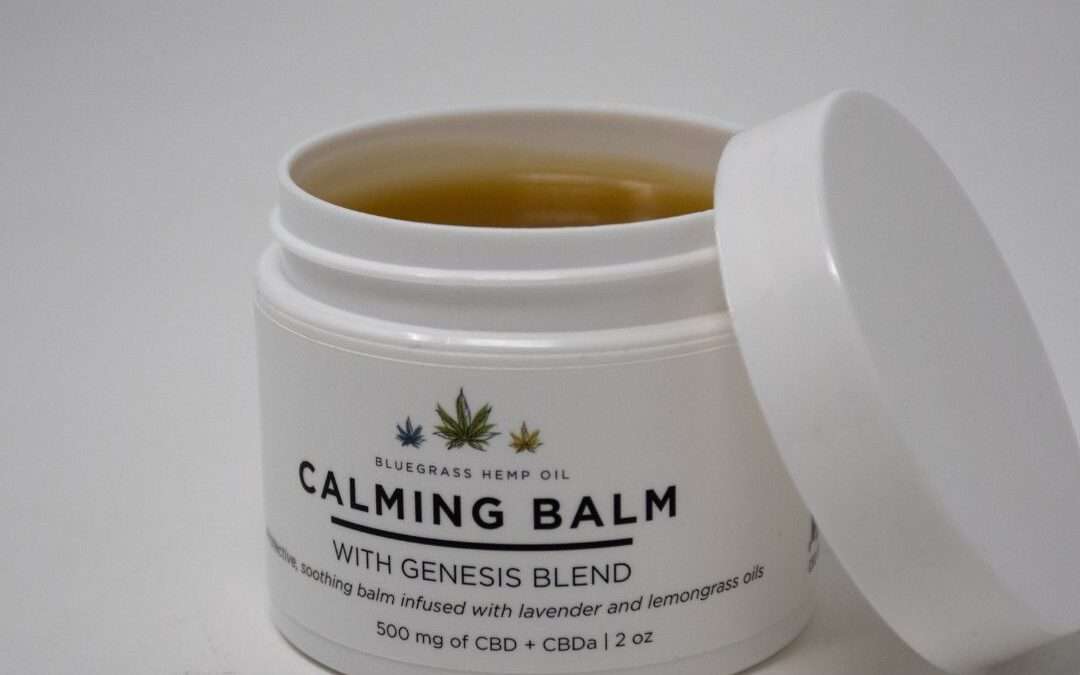
 Discover the Power of Genesis Blend Full Spectrum CBD Balm for Ultimate Relief and Skin Care

In the domain of wellness products, Genesis Blend Full Spectrum CBD Balm stands out as a multifaceted solution for both pain relief and skin care. By harnessing the therapeutic properties of full-spectrum hemp CBDa extract, this balm addresses muscle soreness and joint discomfort while also enhancing skin hydration and protection. Its unique formulation combines natural moisturizing agents and essential oils, promising a holistic approach to recovery. However, the specific mechanisms behind its effectiveness and the distinctive qualities that set Genesis Blend apart from other options warrant further exploration.

What is CBD Balm and How Does It Work?

CBD balms, such as Genesis Blend Full Spectrum CBD Balm, offer a targeted approach to pain relief and skin care by harnessing the therapeutic properties of cannabinoids.

These balms are formulated to penetrate the skin, allowing the active ingredients to interact with cannabinoid receptors found in skin and muscle tissues. This interaction promotes relief from soreness, inflammation, and dryness, making them a valuable addition to holistic health solutions like full spectrum CBD oil.

Genesis Blend Full Spectrum CBD Balm is distinguished by its use of full-spectrum hemp CBDa extract, which contains a range of cannabinoids and terpenes. This full-spectrum formulation enhances the therapeutic effects through the entourage effect, allowing for more effective pain relief and skin benefits compared to CBD isolate or broad-spectrum products.

Key ingredients like castor seed oil, beeswax, and essential oils enrich the balm, providing moisturizing properties and additional healing benefits.

Castor seed oil serves as an effective carrier, ensuring the active ingredients are absorbed effectively, while beeswax creates a protective barrier that locks in moisture. The inclusion of soothing essential oils, such as lavender and lemongrass, further contributes to its calming and anti-inflammatory effects, making Genesis Blend CBD Balm a thorough solution for pain management and skin care.

The Benefits of Genesis Blend CBD Balm

Genesis Blend CBD Balm offers significant advantages for pain relief, making it an effective choice for those suffering from muscle soreness and joint discomfort.

Its full-spectrum formulation enhances the therapeutic benefits, providing a thorough approach to recovery and overall wellness.

In addition, this balm is formulated with high-quality ingredients sourced from carefully cultivated hemp blooms, ensuring peak potency and purity.

Additionally, the combination of soothing essential oils further amplifies its effectiveness, promoting not only relief but also skin health.

CBD Balm for Pain Relief

Experience the soothing power of a natural remedy with Genesis Blend CBD Balm, specifically formulated to address muscle and joint discomfort. This balm harnesses theanti-inflammatory properties of full-spectrum hemp CBDa extract, combined with the analgesic benefits of lemongrass essential oil. Together, they provide targeted relief, making it an effective alternative to traditional pain balms that often rely on synthetic ingredients.

Unlike conventional products that may contain harsh chemicals or irritants, Genesis Blend CBD Balm is crafted from all-natural ingredients, ensuring a gentle application on the skin. The soothing properties of lavender essential oil further enhance the balm's efficacy, contributing to a calming experience while alleviating pain and inflammation.

The inclusion of moisturizing agents like castor seed oil and beeswax not only aids in pain relief but also nourishes and hydrates the skin, making it suitable for areas prone to dryness, such as elbows and knees.

CBD Muscle and Joint Balm for Recovery

A well-formulated muscle and joint balm can greatly enhance recovery after intense workouts by targeting soreness and inflammation. Genesis Blend Full Spectrum CBD Balm utilizes the potent anti-inflammatory properties of hemp CBDa extract, along with soothing essential oils like lemongrass and lavender, to effectively alleviate muscle discomfort.

By applying the balm directly to affected areas, users can experience localized relief, making it an ideal solution for post-exercise recovery.

The unique formulation also provides moisturizing benefits, as ingredients like castor seed oil and beeswax nourish and protect the skin. This dual-action approach not only addresses muscle soreness but also promotes overall skin health, making it suitable for various skin conditions.

For those on the go, the convenience of a CBD muscle balm stick adds to its appeal. Its portable design allows for easy application anytime, anywhere, ensuring that relief is always within reach.

Whether after a strenuous workout or a long day, Genesis Blend CBD Balm is an effective tool for supporting recovery and maintaining skin wellness. Experience the power of this all-natural balm to enhance your post-workout routine and soothe tired muscles.

Full Spectrum CBD Balm: Amplified Benefits

Harnessing the full potential of hemp, full spectrum CBD balm offers amplified benefits through the inclusion of minor cannabinoids and terpenes that work synergistically to enhance the entourage effect. This holistic approach guarantees that users experience greater relief from muscle soreness, joint pain, and skin irritations compared to isolated CBD products.

The therapeutic properties of the full spectrum hemp CBDa extract in Genesis Blend CBD Balm are further enhanced by the presence of essential oils, such as lavender and lemongrass. Lavender oil not only contributes a soothing aroma but also possesses anti-inflammatory and skin-healing benefits, making it particularly effective for conditions like eczema and psoriasis.

Meanwhile, lemongrass oil acts as a natural analgesic, alleviating muscle tension and discomfort.

Additionally, the moisturizing components, including castor seed oil and beeswax, guarantee that the balm provides long-lasting hydration and skin protection. The combination of these high-quality ingredients results in a balm that not only addresses pain relief but also promotes overall skin health.

Consequently, Genesis Blend Full Spectrum CBD Balm stands out as a thorough solution for those seeking natural relief and effective skin care.

Nourish and Moisturize: How CBD Balm Softens and Protects Skin

Nourishing and moisturizing the skin is crucial for maintaining its health and liveliness, particularly in rough areas like feet and elbows that are prone to dryness. Genesis Blend Full Spectrum CBD Balm is specifically formulated to address these concerns, combining the hydrating benefits of natural ingredients with the therapeutic properties of CBD.

Recent studies suggest that CBD's anti-inflammatory effects may also support skin healing, making it a significant addition to topical skincare products.

Key components such ascastor seed oil and beeswax play an important role in softening and protecting the skin. Castor seed oil is renowned for its intense moisturizing properties, effectively hydrating and rejuvenating dry skin.

Meanwhile, beeswax acts as a natural emollient, creating a protective barrier that locks in moisture and shields the skin from environmental stressors.

The inclusion of hemp CBDa extract enhances the balm's efficacy, delivering anti-inflammatory benefits that promote overall skin health.

Additionally, the soothing properties of lavender and lemongrass essential oils provide an aromatic experience while aiding in skin healing and further hydration.

Together, these potent ingredients in Genesis Blend CBD Balm not only nourish and moisturize but also guarantee long-lasting protection for rough, dry skin, making it an essential part of any skincare routine.

Why Genesis Blend is the Best CBD Balm for Pain Relief and Skin Care

Genesis Blend CBD Balm stands out as an exceptional solution for both pain relief and skin care, effectively combining recovery and nourishment in one product.

Its unique formulation harnesses the anti-inflammatory properties of full-spectrum hemp CBDa extract and essential oils, providing targeted relief for sore muscles and joint pain.

Additionally, the moisturizing ingredients guarantee that the balm not only alleviates discomfort but also promotes healthy, hydrated skin.

Recovery and Relief in One Balm

Combining the therapeutic benefits of full-spectrum hemp CBDa extract with an array of carefully selected natural ingredients, the Genesis Blend CBD Balm stands out as a premier solution for muscle recovery and skin care.

This versatile balm effectively addresses everyday aches and long-term recovery needs, making it an essential addition to any wellness routine.

The inclusion of powerful anti-inflammatory components, such as CBDa and lemongrass essential oil, allows the balm to alleviate muscle soreness and joint pain with remarkable efficacy.

Meanwhile, hydrating agents like castor seed oil and beeswax guarantee that the skin remains moisturized, making it particularly beneficial for dry or irritated areas.

Genesis Blend CBD Balm is not just a remedy for discomfort; its natural formulation also promotes skin healing.

The calming properties of lavender essential oil work in synergy with CBDa to soothe irritation and support recovery from skin conditions.

How to Use Genesis Blend CBD Muscle Balm

To effectively utilize Genesis Blend CBD Muscle Balm for targeted relief, begin by ensuring the affected area is clean and dry. This preparation allows the balm to penetrate the skin effectively.

Take a small amount of the balm and warm it between your fingers. Apply it directly to the sore or tense muscles, using gentle circular motions to massage it into the skin. This not only aids absorption but also enhances relaxation.

For best results, consider applying the balm post-physical activity or at the end of the day. After exercising, the balm can help alleviate muscle soreness and reduce inflammation, providing immediate comfort.

Additionally, using the balm before bedtime can promote relaxation and support recovery during sleep.

Be mindful to start with a small quantity, gradually increasing as needed based on your comfort and the severity of the discomfort. For ongoing relief, consistent application throughout the day can be beneficial.

Always store the balm in a cool, dry place to maintain its integrity. With these practical steps, you can harness the full benefits of Genesis Blend CBD Muscle Balm for both relief and skin care.

What Makes Genesis Blend CBD Balm Different from Other Products?

Genesis Blend CBD Balm stands out in a crowded market due to its full-spectrum CBDa extract, which harnesses the synergy of cannabinoids and terpenes for enhanced therapeutic effects.

Unlike products such as CBD Unlimited Muscle and Joint Balm, Genesis Blend prioritizes natural ingredients, combining plant oils and essential oils that not only alleviate pain but also nourish and hydrate the skin.

This commitment to quality and efficacy positions Genesis Blend as a compelling natural alternative to conventional pain relief balms.

CBD Unlimited Muscle and Joint Balm Comparison

Numerous CBD balms are available on the market, yet Genesis Blend Full Spectrum CBD Balm stands out due to its extensive formulation and commitment to quality.

Unlike CBD Unlimited Muscle and Joint Balm, which primarily focuses on pain relief, Genesis Blend offers a holistic approach that combines targeted relief with superior skin care benefits.

One significant difference lies in the use of full-spectrum hemp CBDa extract in Genesis Blend. This extract contains a range of minor cannabinoids and terpenes, enhancing the therapeutic effects through the entourage effect.

In contrast, CBD Unlimited may rely on a narrower spectrum of cannabinoids, potentially limiting its efficacy.

Additionally, Genesis Blend incorporates high-quality, plant-based ingredients such as castor seed oil and beeswax, which not only contribute to pain relief but also provide significant moisturizing benefits.

This dual-action formulation sets Genesis Blend apart, as it addresses both discomfort and skin hydration.

The inclusion of lavender and lemongrass essential oils further offers calming and anti-inflammatory properties that enhance the overall user experience.

Pain Balm CBD: A Natural Alternative

While many pain relief products on the market rely on synthetic ingredients and harsh chemicals, Genesis Blend Full Spectrum CBD Balm distinguishes itself by offering a natural alternative that prioritizes both efficacy and safety.

This balm is meticulously formulated with full-spectrum hemp CBDa extract and synergistic essential oils, ensuring a holistic approach to pain and skin care.

Key ingredients such as castor seed oil and beeswax provide deep hydration and form a protective barrier, promoting long-lasting moisture retention.

In contrast to conventional pain balms, which often contain irritating additives, Genesis Blend utilizes natural components that are gentle on the skin while delivering effective relief from muscle soreness and joint pain.

The inclusion of lemongrass essential oil enhances the balm's analgesic properties, making it particularly effective for alleviating tension and discomfort.

Lavender essential oil not only contributes a soothing scent but also aids in reducing inflammation and promoting skin healing.

Where to Buy the Best CBD Balm for Pain and Muscle Relief

Finding the best CBD balm for pain and muscle relief can be an intimidating task, given the plethora of options available on the market today. For those seeking a reliable and effective product, Genesis Blend Full Spectrum CBD Balm is available for purchase directly from Bluegrass Hemp Oil. Their official website offers a simple and secure online shopping experience, guaranteeing you receive a high-quality product made from Kentucky-grown hemp.

In addition to online availability, select local health and wellness stores may carry Genesis Blend CBD Balm. It is advisable to call ahead to confirm stock, as not all retailers may have this specific balm on hand.

When selecting the right strength, consider your specific needs; those with mild discomfort may opt for a lower concentration, while individuals with chronic pain may benefit from a higher potency product.

Always read the product descriptions carefully and, if possible, consult with a healthcare professional to ascertain the chosen balm aligns with your health goals.

Frequently Asked Questions

Is Genesis Blend CBD Balm Safe for Sensitive Skin Types?

Genesis Blend CBD Balm is formulated with all-natural ingredients, making it generally safe for sensitive skin types.

The inclusion of soothing components such as lavender and lemongrass essential oils, alongside moisturizing agents like castor seed oil and beeswax, contributes to its gentle profile.

However, individuals with specific allergies or sensitivities should conduct a patch test prior to full application.

Consulting with a healthcare professional is advisable for those with pre-existing skin conditions.

Can I Use CBD Balm on My Face?

Yes, CBD balm can be used on the face, provided it is formulated with skin-safe ingredients.

The moisturizing properties of components like castor seed oil and beeswax can benefit facial skin by providing hydration and soothing irritation.

However, individuals with sensitive skin should perform a patch test before full application to ascertain compatibility.

Always consult with a dermatologist if you have specific skin conditions or concerns regarding new topical products.

How Quickly Will I Feel Relief After Applying the Balm?

How swiftly can one experience relief after applying a topical balm? The onset of relief from Genesis Blend Full Spectrum CBD Balm typically occurs within 15 to 30 minutes, depending on individual factors such as skin type and the area of application.

The full-spectrum hemp CBDa extract, combined with soothing essential oils, works synergistically to target discomfort and inflammation, offering a natural solution for those seeking prompt alleviation and hydration for their skin.

Is There a Scent to Genesis Blend CBD Balm?

Genesis Blend CBD Balm features a pleasant scent derived from its natural ingredients, particularly the inclusion of lavender and lemongrass essential oils.

Lavender provides a calming, soothing aroma, while lemongrass contributes a revitalizing citrus note. This fragrant combination not only enhances the overall user experience but also complements the therapeutic properties of the balm, promoting relaxation and well-being during application.

The scent is subtle, ensuring it remains enjoyable without being overpowering.

Can I Use This Balm Alongside Other Skincare Products?

Yes, you can use Genesis Blend Full Spectrum CBD Balm alongside other skincare products.

Its formulation is designed to complement a variety of skincare routines without causing adverse reactions.

However, for best results, it is advisable to apply the balm on clean, dry skin after other products have absorbed.

This approach allows the balm's active ingredients to penetrate effectively, providing targeted relief and hydration while enhancing your overall skincare regimen.

Conclusion

To sum up, the Genesis Blend Full Spectrum CBD Balm stands as a beacon of hope for those seeking relief from pain and enhanced skin care. By harnessing the synergistic effects of full-spectrum hemp extract and natural moisturizing agents, this balm addresses both discomfort and skin health. Ultimately, it serves as a versatile tool in the wellness arsenal, allowing individuals to reap the benefits of nature's bounty while soothing the aches and strains of daily life.

Enhancing Cannabinoid Delivery

Enhancing Cannabinoid Delivery

Cannabinoid Delivery Guide

Quick Answer: Cannabinoid Delivery, CBD Bioavailability, and Product Format

Cannabinoid delivery describes how hemp compounds such as CBD move from a product format into the body. CBD bioavailability refers to how much CBD becomes available after use, but higher absorption should not be presented as a guaranteed health result.

MCT oil and phospholipids are often discussed because CBD is fat-soluble and lipid-based delivery systems are being studied. Shoppers should compare CBD products by extract type, CBD amount, THC amount, carrier oil, serving directions, batch number, lab testing, COA access, and safety considerations.

Key Takeaways

Quick Answer Box

Cannabinoid delivery and CBD bioavailability are product-format and absorption terms. They help explain why oils, gummies, capsules, topicals, carrier oils, MCT oil, phospholipids, serving directions, full-spectrum status, trace THC, and batch-specific lab reports matter when comparing CBD products.

CBD is not risk-free. People who take medications, manage a medical condition, have liver concerns, use alcohol or sedating products, are pregnant or nursing, are considering CBD for a child, or are subject to drug testing should talk with a qualified healthcare professional before using CBD.

Delivery is product-format language

Cannabinoid delivery describes how CBD and other hemp compounds move from a product format into the body.

Bioavailability is not a promise

CBD bioavailability is about absorption and availability, not guaranteed results or medical outcomes.

Formats differ

CBD oils, gummies, capsules, topicals, and pet products have different label, ingredient, serving, and safety considerations.

MCT oil is a carrier oil

MCT oil is commonly used in CBD oils, but it should not be described as guaranteeing effectiveness.

Phospholipids are a research topic

Phospholipids are studied in lipid-based delivery contexts, but research should not become retail product outcome claims.

COAs and THC matter

Full-spectrum CBD may contain trace THC, so labels and batch-specific COAs should be reviewed before use.

Cannabinoid Delivery, CBD Bioavailability, and COA Terms to Know

This entity summary helps readers, caregivers, pet owners, and CBD shoppers understand the main product-format, label, and testing terms used throughout this guide.

Entity Simple Explanation Why It Matters
Cannabinoid delivery How cannabinoids such as CBD move from a product format into the body Helps compare oils, gummies, capsules, topicals, and other formats
CBD bioavailability How much CBD becomes available after use Bioavailability does not guarantee a specific result
MCT oil A carrier oil often used in CBD oils Should not be described as guaranteeing CBD effectiveness
Phospholipids Lipid molecules involved in cell membranes and studied in delivery systems Research topics should not become retail treatment claims
Full-spectrum CBD Hemp extract with CBD plus other naturally occurring hemp compounds May contain trace THC and should be verified by COA
Trace THC A small amount of THC that may be present in full-spectrum CBD products Important for THC-sensitive users and drug-testing concerns
COA Certificate of Analysis or lab report connected to a product batch Helps verify cannabinoid potency and safety testing information

What Does Cannabinoid Delivery Mean?

Cannabinoid delivery is a way to describe how hemp compounds move from a product format into the body. It includes questions such as whether a product is an oil, gummy, capsule, topical, or pet product; what carrier oil or ingredients are used; and how the label explains serving directions.

Cannabinoids, Carrier Oils, and Product Format

CBD and other cannabinoids are fat-soluble compounds. In finished CBD oils, they are often blended with a carrier oil such as MCT oil, hemp seed oil, olive oil, or another food-grade oil. For broader context, review cannabinoids in hemp products explained and CBD product types explained.

Delivery Is Not the Same as a Medical Outcome

A product format may influence how a shopper compares serving directions, ingredients, label clarity, and COA access. It should not be used to claim that CBD is intended for pain, anxiety, inflammation, sleep problems, seizures, epilepsy, or any medical condition.

Safe Product-Format Language

Use cannabinoid delivery to discuss product format, label review, carrier oils, serving directions, THC information, lab testing, and COA access. Do not use it to promise stronger effects, fast results, or targeted product outcomes.

What Is CBD Bioavailability?

CBD bioavailability means how much CBD becomes available after use. Oral CBD absorption can vary, and researchers continue to study formulation, food context, lipid-based systems, and individual differences. A 2024 review notes that strategies studied to improve oral CBD bioavailability are predominantly lipid-based formulations, but research findings should not be turned into guaranteed retail product outcomes. See this 2024 review on CBD bioavailability strategies for broader research context.

Why Oral CBD Absorption Can Vary

Oral CBD absorption can vary because product format, food context, formulation, serving size, carrier oil, metabolism, and individual factors may all play a role.

Why Fat-Soluble CBD Is Often Discussed With Oils

CBD is fat-soluble, so it is often blended into oils for liquid products. This helps with formulation and serving consistency, but it does not guarantee a specific experience.

What Bioavailability Does Not Prove

Bioavailability does not prove that CBD will deliver a medical benefit, improve a symptom, or work the same way for every person.

Term What It Means Safe Language Avoid Saying
Bioavailability Amount available after use May vary by product format and individual factors Claiming a guaranteed stronger result
Absorption How a compound enters the body Can be influenced by format, food, and carrier oil Treats symptoms faster
Delivery method Product format and route Oils, gummies, capsules, topicals, and other formats differ Best method for pain, anxiety, inflammation, or medical conditions
Carrier oil Oil used to hold hemp extract MCT oil is commonly used in CBD oils MCT oil guarantees results

How MCT Oil Relates to CBD Delivery

MCT oil is commonly used as a CBD carrier oil. It is not CBD by itself, and it should not be described as guaranteeing faster, stronger, or better results. MCT oil belongs in a delivery-format and label discussion, not a treatment-claim discussion.

MCT Oil as a CBD Carrier Oil

MCT oil can help create a consistent CBD oil format. Shoppers should still verify CBD amount, THC amount, serving directions, ingredients, and COA access. Related guide: MCT oil as a CBD carrier oil.

What MCT Oil Can and Cannot Claim

MCT oil can be described as a carrier oil. It should not be described as making CBD medically effective, improving brain health, reducing inflammation, or creating guaranteed results.

MCT Oil vs. Hemp Seed Oil vs. Other Carrier Oils

Different carrier oils have different ingredient profiles, textures, and flavor considerations. The finished product label and batch-specific COA matter more than carrier-oil marketing claims.

Ingredient / Topic What It Is CBD Relationship What Not to Claim
MCT oil Carrier oil made of medium-chain triglycerides Often used as a CBD carrier oil Do not claim it guarantees CBD results
Hemp seed oil Oil from hemp seeds May be a carrier oil but usually does not contain CBD unless hemp extract is added Do not confuse hemp seed oil with CBD oil
Phospholipids Lipid molecules involved in cell membranes Studied in lipid-based delivery contexts Do not claim they treat conditions or guarantee absorption
Full-spectrum hemp extract Hemp extract with CBD and other compounds May contain cannabinoids, terpenes, flavonoids, and trace THC Do not claim it treats disease

Helpful related reading: CBD MCT oil carrier-oil guide.

How Phospholipids Relate to Cannabinoid Delivery

Phospholipids are lipid molecules involved in cell membranes. They also appear in some research and formulation discussions involving lipid-based delivery systems. That does not mean a retail CBD product should claim to treat conditions, guarantee absorption, or deliver specific outcomes.

What Phospholipids Are

Phospholipids are part of cell membrane structure and can be discussed as a science concept. For background, see understanding phospholipids and cell membranes.

Why Lipid-Based Delivery Is Studied

Because CBD is fat-soluble, researchers study lipid-based strategies for absorption and formulation. Research language should remain separate from retail product claims.

Why Research Does Not Equal Retail Product Claims

A study topic is not the same as proof that a finished retail CBD product treats disease, improves symptoms, or produces a specific result.

Research Boundary Box

Phospholipids, MCT oil, full-spectrum hemp extract, cannabinoids, and terpenes should not be described as diagnosing, treating, curing, preventing, reducing, relieving, or managing any disease, symptom, disorder, or medical condition.

Related guide: phospholipids, MCT oil, and cannabinoids explained carefully.

CBD Delivery Methods Compared

Different CBD product formats raise different label and safety questions. A good comparison starts with the facts on the label and the batch-specific COA, not with outcome claims.

Format How Users Typically Take It What to Compare Safety Note
CBD oil Taken by mouth according to label directions CBD amount, THC amount, extract type, carrier oil, serving directions, and COA Full-spectrum CBD may contain trace THC
CBD gummies Edible format CBD per gummy, ingredients, sugar, THC amount, and COA Individual experiences vary and effects should not be guaranteed
CBD capsules Swallowed format CBD per capsule, ingredients, serving directions, and COA Ask a healthcare professional if taking medications
CBD topicals Applied to skin Ingredients, CBD amount, intended product format, and warnings Do not make pain or inflammation claims for topical CBD
Pet CBD Animal-use product Ingredients, THC information, serving directions, and COA Pet CBD questions should start with a licensed veterinarian

Related guide: which CBD delivery method is right for your routine and CBD product guide for oils, gummies, capsules, topicals, and pet products.

Pet CBD Safety Note

Pet CBD questions should start with a licensed veterinarian. The FDA has stated that cannabis-derived products marketed for animals raise regulatory and safety questions, and FDA materials note that no FDA-approved, conditionally approved, or indexed animal drugs contain CBD. Review the FDA cannabis and CBD regulation FAQ for animal-use questions before making pet CBD decisions.

Full-Spectrum CBD, Trace THC, and Lab Reports

Full-spectrum CBD contains CBD plus other naturally occurring hemp compounds and may contain trace THC within legal hemp limits. Full-spectrum is a product-composition term. It should not be used to promise a stronger effect, medical benefit, or specific outcome.

Full-Spectrum CBD Contains Multiple Hemp Compounds

A full-spectrum hemp extract may include CBD, minor cannabinoids, terpenes, flavonoids, and trace THC. Learn more in the full-spectrum CBD guide.

Trace THC and Drug Testing Questions

Full-spectrum CBD may contain trace THC. People subject to drug testing should review the product label, THC amount, batch-specific COA, and applicable testing policies before use.

Why Batch-Specific COAs Matter

A COA should match the product batch and show cannabinoid potency, including CBD and THC amounts, along with available safety testing information.

Trace THC / Drug Testing Box

Full-spectrum CBD may contain trace THC. People who are subject to drug testing should review the product label, THC amount, batch-specific COA, and employer or testing policies before using a full-spectrum CBD product. A COA can help identify what cannabinoids were detected in a specific batch, but it cannot guarantee a drug-testing outcome.

Helpful links: review CBD Certificates of Analysis, CBD lab testing and Certificates of Analysis, and hemp vs marijuana and THC differences.

CBD Safety Questions to Review Before Choosing a Product

CBD Safety Box

CBD is not risk-free. CBD may interact with medications, may cause drowsiness or changes in alertness, and may carry liver-related safety concerns. Full-spectrum CBD may contain trace THC. Talk with a qualified healthcare professional before using CBD if you take medications, manage a medical condition, have liver concerns, use alcohol or sedating products, are pregnant or nursing, considering CBD for a child, or are subject to drug testing.

CBD products should not be described as diagnosing, treating, curing, preventing, reducing, relieving, or managing any disease, symptom, disorder, or medical condition. The FDA continues to highlight unanswered questions around CBD product science, safety, and quality; see the FDA consumer update on cannabis and CBD products.

Medication Interactions

CBD may raise medication-interaction questions. Ask a qualified healthcare professional before use if you take prescription or over-the-counter medications.

Drowsiness and Changes in Alertness

CBD may raise drowsiness or alertness concerns. Do not combine CBD with alcohol or sedating products unless a qualified professional says it is appropriate.

Alcohol and Sedating Products

Alcohol and sedating products can compound drowsiness concerns. Use caution and ask a qualified healthcare professional.

Liver Safety Questions

People with liver concerns should ask a healthcare professional before using CBD. Liver-related safety questions should not be minimized.

Pregnancy, Nursing, Children, and Medical Conditions

People who are pregnant, nursing, considering CBD for a child, or managing a medical condition should get qualified guidance before using CBD.

Drug Testing

Full-spectrum CBD may contain trace THC. COAs can provide cannabinoid data, but they cannot guarantee drug-testing outcomes.

How to Compare CBD Products by Delivery Format

Compare CBD products by objective product information: CBD amount, THC amount, extract type, carrier oil, ingredients, serving directions, batch number, COA access, and warnings. This shopper-first approach is more useful than broad claims about guaranteed results.

What to Review Why It Matters
CBD amount per serving Helps compare products accurately
THC amount Important for full-spectrum and drug-testing concerns
Extract type Distinguishes full-spectrum, broad-spectrum, and isolate products
Carrier oil Helps shoppers understand MCT oil, hemp seed oil, or other oils
Ingredients Helps identify allergens, sweeteners, flavors, or added supplement ingredients
Serving directions Reduces guesswork
Batch number Connects the product to the correct COA
COA access Shows cannabinoid potency and safety testing details
Warnings Supports medication, liver, sedation, pregnancy, and drug-testing decisions

CBD Label Checklist

  • Product name
  • CBD amount per serving
  • Total CBD amount
  • THC amount
  • Extract type
  • Carrier oil
  • Ingredients
  • Serving directions
  • Warnings
  • Batch or lot number
  • Expiration date
  • Company contact information
  • COA access

COA Checklist

  • Product name
  • Batch or lot number
  • Testing date
  • CBD amount
  • THC amount
  • Minor cannabinoids when applicable
  • Terpenes when tested
  • Heavy metals
  • Pesticides
  • Residual solvents
  • Microbials
  • Lab information

Helpful guides: how to read a CBD product label, CBD quality guide for choosing transparent hemp products, and how to take CBD oil safely.

Bluegrass Hemp Oil’s Product Transparency Approach

Bluegrass Hemp Oil focuses on Kentucky-grown hemp education, full-spectrum CBD product transparency, clear labeling, batch-specific Certificates of Analysis, and helping shoppers understand what they are buying. This approach should be framed around product facts, label clarity, COA access, safety questions, and customer support — not unsupported medical outcomes.

Clear Product Format

Shoppers should be able to tell whether a product is an oil, gummy, capsule, topical, or pet product, and how the format is meant to be used according to the label.

Label and COA Transparency

Product labels and COAs should help shoppers compare CBD amount, THC amount, extract type, ingredients, batch information, and testing details.

Safety-First Education

Medical questions belong with qualified healthcare professionals. Product support can help with labels, COAs, serving directions, and format questions.

Product Transparency Cards

The following links are included for product transparency and comparison only. They should not be used to imply that CBD delivery methods treat conditions or guarantee outcomes.

Genesis Blend Product Details

Genesis Blend full-spectrum CBD oil product details can help shoppers review product format, serving information, ingredients, and COA-related questions.

Compare CBD Oil Bundles

CBD oil bundles for comparing product routines should be reviewed by product facts, not disease or symptom claims.

Shop by Product Format

shop CBD products by format to compare oils, gummies, capsules, topicals, and pet products by label and COA details.

Ask Label or COA Questions

contact Bluegrass Hemp Oil for CBD label and COA questions when you need help understanding product information. Medical advice should come from a qualified healthcare professional.

Related Cannabinoid Delivery, CBD Bioavailability, Label, and COA Guides

About Bill Polyniak and Bluegrass Hemp Oil

Bill Polyniak Author / Founder Authority Box

Bill Polyniak, founder of Bluegrass Hemp Oil and Kentucky Cannabis Company, works in Kentucky hemp education, full-spectrum CBD product transparency, clear labeling, Certificates of Analysis, and helping shoppers understand what they are buying before choosing a CBD product.

This guide is written to help readers compare cannabinoid delivery methods, CBD bioavailability questions, MCT oil, phospholipids, full-spectrum hemp extract, trace THC information, labels, lab reports, COAs, safety questions, and product transparency without relying on unsupported medical treatment claims.

FAQs About Cannabinoid Delivery and CBD Bioavailability

What does cannabinoid delivery mean?

What does cannabinoid delivery mean?

Cannabinoid delivery describes how cannabinoids such as CBD move from a product format into the body. It is a product-format and absorption concept, not a promise that a CBD product will create a specific result.

What is CBD bioavailability?

What is CBD bioavailability?

CBD bioavailability refers to how much CBD becomes available after use. Bioavailability can vary by product format, food context, formulation, and individual factors, but it does not guarantee a health outcome.

Why is CBD absorption inconsistent?

Why is CBD absorption inconsistent?

Oral CBD absorption can vary because CBD is fat-soluble and because serving format, food, carrier oil, individual digestion, metabolism, and product formulation can all matter. This variability is why labels and COAs are important.

Does MCT oil help CBD absorption?

Does MCT oil help CBD absorption?

MCT oil is commonly used as a CBD carrier oil, and CBD is fat-soluble. However, MCT oil should not be described as guaranteeing better results, faster effects, or medical benefits. Shoppers should review the product label, serving directions, ingredients, full-spectrum status, THC amount, and batch-specific COA.

What are phospholipids?

What are phospholipids?

Phospholipids are lipid molecules involved in cell membranes. They are studied in some delivery-system contexts, but they should not be described as treating conditions or guaranteeing CBD absorption.

How do phospholipids relate to CBD delivery?

How do phospholipids relate to CBD delivery?

Phospholipids may appear in research and formulation discussions because lipid-based delivery systems are studied for fat-soluble compounds. Research topics should not be turned into retail CBD product outcome claims.

Is better CBD absorption the same as better results?

Is better CBD absorption the same as better results?

No. CBD bioavailability describes how much CBD becomes available after use, but it does not guarantee a specific result. Individual experiences vary, and CBD should not be presented as treating, curing, preventing, reducing, relieving, or managing any disease, symptom, disorder, or medical condition.

What is the difference between CBD oil and hemp seed oil?

What is the difference between CBD oil and hemp seed oil?

CBD oil is a finished product that contains hemp-derived CBD blended with a carrier oil. Hemp seed oil is made from hemp seeds and usually does not contain CBD unless hemp extract has been added and the label states CBD content.

Is MCT oil the same as CBD oil?

Is MCT oil the same as CBD oil?

No. MCT oil is a carrier oil. CBD oil is a finished hemp product that contains CBD when properly formulated and labeled. MCT oil by itself should not be assumed to contain CBD or THC.

Which CBD delivery method is best?

Which CBD delivery method is best?

There is no single best CBD delivery method for everyone. CBD oils, gummies, capsules, topicals, and pet products have different product-format considerations. Compare CBD amount, THC amount, serving directions, ingredients, product type, and COA access.

Can full-spectrum CBD contain trace THC?

Can full-spectrum CBD contain trace THC?

Yes. Full-spectrum CBD may contain trace THC within legal hemp limits. People who are sensitive to THC or subject to drug testing should review the label, THC amount, batch-specific COA, and applicable testing policies before use.

What should a CBD label show?

What should a CBD label show?

A CBD label should clearly show CBD amount per serving, total CBD amount, THC information, extract type, carrier oil, ingredients, serving directions, warnings, batch number, expiration date, company contact information, and COA access.

What should a CBD COA show?

What should a CBD COA show?

A CBD COA should connect to the product batch and show cannabinoid potency, including CBD and THC amounts. A strong COA may also include minor cannabinoids, terpenes when tested, heavy metals, pesticides, residual solvents, microbials, testing date, and lab information.

Can CBD interact with medications?

Can CBD interact with medications?

Yes. CBD may interact with medications and may carry liver-related and drowsiness-related safety concerns. People who take medications, manage medical conditions, use alcohol or sedating products, are pregnant or nursing, or are subject to drug testing should talk with a qualified healthcare professional before using CBD.

Should I talk with a healthcare professional before using CBD?

Should I talk with a healthcare professional before using CBD?

Yes. Talk with a qualified healthcare professional before using CBD if you take medications, manage a medical condition, have liver concerns, use alcohol or sedating products, are pregnant or nursing, are considering CBD for a child, or are subject to drug testing.

Educational Disclaimer

What This Article Does Not Claim

CBD oil, full-spectrum CBD oil, hemp extract, cannabinoids, terpenes, MCT oil, phospholipids, Genesis Blend, and Bluegrass Hemp Oil products should not be described as diagnosing, treating, curing, preventing, reducing, relieving, or managing any disease, symptom, disorder, or medical condition.

This article is educational and focuses on cannabinoid delivery, CBD bioavailability, product format, label review, COA review, trace THC awareness, and healthcare-professional guidance. It is not medical advice.

Internal Backlinks to Add Later

To strengthen the cluster, add contextual links to this rebuilt post from existing guides using anchors such as: cannabinoid delivery and CBD bioavailability explained, how MCT oil relates to CBD delivery questions, CBD carrier oils and bioavailability education, phospholipids, MCT oil, and cannabinoid delivery, full-spectrum CBD delivery, trace THC, and lab reports, and COAs for CBD delivery and product transparency.