How Cannabinoids Impact Your Health: From Molecules to Movement

High-Trust Cannabinoid Education

Comprehensive Insights Into Cannabinoids and Their Impact on Health

Quick answer: Cannabinoids are natural signaling compounds that interact with the endocannabinoid system, a body-wide network involved in homeostasis. CBD, CBG, CBN, CBC, terpenes, and carrier oils can all influence how a product performs, but results vary and CBD should not replace medical care.

Last Updated
May 8, 2026

Health and Safety Note

This article is for education only. Bluegrass Hemp Oil products are not intended to diagnose, treat, cure, or prevent any disease. Talk with a qualified healthcare professional before using CBD or other cannabinoids if you take medication, have liver concerns, are pregnant or nursing, have a medical condition, are subject to drug testing, or are considering cannabinoids for a child or pet.

What Is the Endocannabinoid System and Why Does It Matter?

  • The endocannabinoid system, or ECS, supports physiological homeostasis.
  • It uses endogenous cannabinoids, cannabinoid receptors, and enzymes.
  • Phytocannabinoids from hemp can interact with ECS-related pathways.

The endocannabinoid system regulation topic can sound technical, but the idea is simple: your body has a communication network that helps keep internal conditions balanced. Researchers describe the ECS as involving endocannabinoids such as anandamide and 2-AG, receptors such as CB1 and CB2, and enzymes such as FAAH and MAGL that help manage how long signals last.

One helpful analogy is locks and keys. Receptors act like locks on or near cells. Endocannabinoids and phytocannabinoids act like keys or signal helpers. When the right signal reaches the right receptor pathway, the cell can adjust its behavior. This is why cannabinoid receptor binding is studied in connection with pain signaling, inflammation support, mood balance, appetite, immune communication, and sleep-wake rhythm.

That does not mean CBD or any cannabinoid product is a cure. It means researchers are interested in how this biological network works and how non-synthetic CBD and lab-tested full spectrum hemp may fit into a wellness routine.

Anatomical Guide: Where CB1 and CB2 Receptors Are Commonly Discussed

🧠

CB1 Receptors

Often discussed in the brain and central nervous system. Related research looks at mood, memory, appetite, pain perception, and nervous-system signaling.

🛡️

CB2 Receptors

Often discussed in immune and peripheral tissues. Related research looks at immune system modulation, inflammation signaling, and recovery pathways.

CB1 vs CB2 Receptors: A Simple Comparison

  • CB1 is best known for its role in the central nervous system.
  • CB2 is best known for immune and body-tissue signaling.
  • Both are G-protein coupled receptors, often called GPCRs.
Receptor Primary Location Key Roles Plain-English Meaning
CB1 Brain and central nervous system Mood, memory, pain perception, appetite Helps explain why cannabinoids are studied in relation to how the brain and nerves communicate.
CB2 Immune system and body tissues Inflammation, immunity, recovery signaling Helps explain why cannabinoids are studied in relation to immune system response and body comfort.

What Is Retrograde Signaling?

Retrograde signaling is one of the ECS’s most interesting features. Many cell signals move forward from one nerve cell to the next. Endocannabinoid signaling can move backward, from the receiving cell toward the sending cell. In plain English, this is one way the body can tell an overactive signal to slow down.

That backward signal is one reason researchers connect the ECS with natural homeostasis support. It helps explain why ECS science is not just about “CBD benefits.” It is about how the body communicates when balance is needed.

Beyond CB1 and CB2: GPR55, TRP Channels, and PPARs

Modern cannabinoid science also discusses receptor systems beyond CB1 and CB2. GPR55 is sometimes called an “orphan” cannabinoid-related receptor. TRP channels are involved in sensation and cellular response. PPAR nuclear receptors are studied in metabolism, inflammation, and gene expression. These pathways do not turn CBD into a medical cure, but they show why peer-reviewed hemp research is more complex than a simple “CBD binds to one receptor” story.

CBD vs CBG vs CBN: How Minor Cannabinoids Fit Into Full-Spectrum Hemp

  • CBD is the main non-intoxicating cannabinoid in many hemp wellness products.
  • CBG is being studied for focus, inflammation pathways, and neuroprotective antioxidants.
  • CBN is commonly discussed in sleep routines, but evidence is still developing.

Full-spectrum vs isolate efficacy is a major quality conversation because full-spectrum hemp keeps CBD with other naturally occurring compounds, including minor cannabinoids and terpenes. This is often called terpene synergy or the entourage effect. Isolate removes those companion compounds and contains only purified CBD.

CBD

Non-intoxicating hemp cannabinoid commonly used in daily wellness products. Studied for therapeutic applications of CBD, bioavailability and absorption, inflammation pathways, and non-psychoactive relief.

CBG

A minor cannabinoid found in smaller amounts. CBG research discusses neuroprotection, oxidative stress, and receptor activity, but consumer claims should remain conservative.

CBN

Often marketed for sleep, especially when paired with CBD. It should be presented as sleep routine support, not as a guaranteed insomnia treatment.

Chemical Structure Comparison: Similar Plant Family, Different Research Profiles

CBD
○—◇—○

Daily wellness and ECS-related signaling research.

CBG
◇—○—◇

Minor cannabinoid research, focus, oxidative stress, and cellular pathways.

CBN
○—○—◇

Sleep routine research and cannabinoid pairing questions.

Bioavailability and Absorption: Why the Product Format Matters

  • Oils offer flexible serving control and are commonly used for daily routines.
  • Capsules and edibles are convenient but may take longer to feel noticeable.
  • Topicals stay focused on the application area and are not the same as ingestible CBD.

Bioavailability means how much of a compound can be used by the body after it is taken. CBD absorption can be influenced by format, carrier oil, timing, food intake, body chemistry, and consistency. This is one reason Bluegrass Hemp Oil education emphasizes practical product guidance instead of one-size-fits-all claims.

MCT oil is often used as a carrier because cannabinoids are fat-soluble. Carrier oils can make a product easier to measure and use consistently, but they do not turn CBD into a guaranteed medical treatment.

From the Lab: Why Bluegrass Hemp Oil Focuses on Flower and Transparency

At Bluegrass Hemp Oil, our product education starts with a practical question: what part of the hemp plant carries the compounds people are actually shopping for? In our work with Kentucky-grown hemp, the focus has been on flower-rich material because the blooms carry the trichomes where cannabinoids and terpenes are most concentrated.

That farm-to-bottle transparency matters. Stalk-heavy biomass can dilute therapeutic cannabinoid density and terpene character. Flower-focused extracts are easier to evaluate through a Certificate of Analysis because the COA should show cannabinoid strength, total THC, and, when tested, a meaningful terpene profile.

Bill Polyniak’s hemp work dates back to the early Kentucky pilot-program years and centers on full-spectrum CBD, Kentucky-grown hemp, product quality, and practical customer education. Read his background here: Bill Polyniak bio.

Full-Spectrum Hemp vs Isolate: What Quality-Minded Shoppers Should Know

Full-spectrum hemp products contain CBD plus other naturally occurring hemp compounds. Isolate products contain purified CBD without the rest of the plant profile. Synthetic or chemically converted intoxicating products are a different category and should not be confused with non-synthetic CBD wellness products.

Product Type What It Means Best Fit Quality Check
Flower-focused full spectrum CBD with minor cannabinoids and terpenes from hemp flower-rich extract. Daily balance, full-spectrum hemp benefits, and terpene synergy. Check cannabinoid potency, total THC, and terpene profile if available.
CBD isolate Purified CBD with other plant compounds removed. People avoiding THC or needing a very narrow ingredient profile. Confirm CBD amount, contaminants, and whether it is truly THC-free.
Synthetic or converted intoxicating hemp Often chemically converted products made for intoxication rather than wellness support. Not recommended for people seeking non-psychoactive relief. Avoid unclear labels, missing COAs, or products focused on a “high.”

How to Read a CBD Certificate of Analysis

A third-party lab verified COA is one of the strongest trust signals in CBD. It helps shoppers confirm what is actually in the bottle instead of relying on marketing language.

1. Match the batch
Compare the product label or QR code with the batch number on the COA.
2. Check potency
Look for CBD per serving and per container, not just a large front-label number.
3. Review total THC
Confirm THC-related values match your personal, legal, and workplace requirements.
4. Look for safety panels
Check pesticides, heavy metals, solvents, and microbial contaminants when available.
5. Review terpenes
A flower-rich extract may show myrcene, beta-caryophyllene, pinene, limonene, or other terpene markers.
6. Avoid disease claims
A trustworthy CBD brand should educate clearly without promising to diagnose, treat, cure, or prevent disease.

View Bluegrass Hemp Oil COAs

Interactive Glossary: Tap a Term to Learn More

Use this glossary for technical terms without leaving the page.

Endocannabinoid System

A body-wide signaling network involved in maintaining internal balance, also called homeostasis.

Bioavailability

The amount of a compound that becomes available for the body to use after it is taken.

Entourage Effect

The theory that cannabinoids, terpenes, and other plant compounds may work together differently than isolated compounds.

Clinical Endocannabinoid Deficiency

A research hypothesis proposing that altered ECS signaling may be involved in some chronic conditions. It is not a consumer self-diagnosis.

Frequently Asked Questions

Can cannabinoids support wellness without intoxication?

CBD is commonly described as non-intoxicating, unlike THC. Full-spectrum hemp can contain trace THC, so shoppers should review COAs, start low, and consider drug-testing needs before use.

How do I dose for sleep?

There is no universal dose for sleep. Start with the label directions, use a consistent evening routine, avoid combining CBD with alcohol or sedating medication unless a clinician approves, and speak with a healthcare professional if insomnia is ongoing.

Can CBD interact with medications?

Yes. CBD may affect how some drugs are processed, especially medications that rely on liver enzymes. Ask a healthcare professional or pharmacist before using CBD with prescriptions or other supplements.

What does farm-to-bottle transparency mean?

It means the brand can explain where the hemp came from, what part of the plant was used, how it was extracted, how it was tested, and how to match the finished bottle to its lab report.

Sources and Further Reading

  1. NIH/PMC: Review of the Endocannabinoid System
  2. NIH/PMC: The Endocannabinoid System in Human Disease
  3. PubMed: Canonical Cannabinoid Receptors
  4. NIH/PMC: Cannabigerol (CBG) Review
  5. FDA: What to Know About Products Containing Cannabis and CBD
  6. NCCIH: Cannabis, Marijuana, and Cannabinoids
  7. Bill Polyniak Bio

Medical Disclaimer

This content is educational and is not a substitute for professional medical advice, diagnosis, or treatment. Do not ignore or delay medical advice because of something you read here. Bluegrass Hemp Oil products are hemp-derived and third-party tested, but they are not intended to diagnose, treat, cure, or prevent disease.

MCT Oil and CBD: Carrier Oils, Absorption, Labels, COAs & Safety

MCT Oil and CBD: Carrier Oils, Absorption, Labels, COAs & Safety

MCT Oil and CBD Guide

Quick Answer: Why Is MCT Oil Used in CBD Oil?

MCT oil and CBD are often discussed together because MCT oil is commonly used as a CBD carrier oil. CBD and other cannabinoids are fat-soluble compounds that are blended into oils for serving, consistency, and product formulation.

MCT oil should be explained as a carrier oil, not as a proven way to repair myelin, protect nerves, improve cognition, reduce inflammation, treat neurological disorders, or create guaranteed CBD results. A high-quality CBD oil should be compared by CBD per serving, CBD per mL, carrier oil, extract type, trace THC, ingredients, batch number, Certificate of Analysis, and safety considerations.

Key Takeaways

MCT oil is a carrier oil

MCT oil is commonly used to carry fat-soluble hemp compounds in finished CBD oil products.

MCT oil alone is not CBD oil

MCT oil does not contain CBD unless hemp extract has been added and the label identifies the CBD amount.

Carrier oils support formulation

Carrier oils help with liquid consistency, serving measurement, texture, flavor, and product experience.

Absorption should not be overstated

CBD absorption and bioavailability research is complex and depends on formulation, serving format, individual factors, and study design.

Full-spectrum may contain trace THC

Full-spectrum CBD oil may contain trace THC, so shoppers should review labels, drug-testing rules, and batch-specific COAs.

Avoid brain and nerve claims

CBD products should not be claimed to repair myelin, protect nerves, improve cognition, reduce inflammation, or treat neurological conditions.

MCT Oil, CBD, Carrier Oil, and COA Terms to Know

This entity summary helps readers compare CBD oils by formulation, serving strength, label clarity, THC information, and COA transparency.

Entity Simple Explanation Why It Matters
MCT oil Medium-chain triglyceride oil often used as a carrier oil Helps with CBD oil formulation and serving consistency
CBD oil A hemp-derived CBD product blended with a carrier oil Should be verified by label and COA
CBD carrier oil An oil used to carry CBD and other fat-soluble hemp compounds Helps explain ingredient choices
CBD per mL CBD amount in one milliliter of oil Helps compare tincture strength
CBD per serving CBD amount in the suggested serving Helps compare labels
Full-spectrum CBD Hemp extract with multiple hemp compounds and possible trace THC Important for THC and COA review
Trace THC Small THC amount possible in full-spectrum CBD Important for drug-testing and THC sensitivity
COA Certificate of Analysis Helps verify CBD, THC, and testing information
Bioavailability How much of a compound becomes available to the body Often discussed with absorption, but should not be overstated
Myelin Insulating layer around nerves Should not be used as a CBD product claim

What Is MCT Oil?

MCT oil stands for medium-chain triglyceride oil. In CBD products, MCT oil is often used as a carrier oil. A carrier oil helps blend fat-soluble hemp compounds into a consistent oil format. MCT oil should not be confused with CBD oil, and MCT oil alone should not be assumed to contain CBD or THC. The NIH Dietary Supplement Label Database entry for MCT oil identifies MCT oil as medium-chain triglycerides, which is a fat category rather than a CBD ingredient by itself.

Important Product Boundary

MCT oil should not be described as repairing myelin, protecting nerves, improving cognition, reducing inflammation, or treating neurological conditions. On this page, MCT oil is discussed as an ingredient and formulation topic.

What Is a CBD Carrier Oil?

A CBD carrier oil is an oil used to dilute, carry, and help evenly distribute hemp extract in a finished CBD oil product. Carrier oils can affect texture, flavor, ingredient preference, and label comparison. Common carrier oils include MCT oil, hemp seed oil, olive oil, and other food-grade oils. You can also compare CBD product types explained and CBD absorption and serving-format questions when choosing a product format.

Simple Definition

A CBD carrier oil is not the same thing as CBD. It is the oil that carries CBD when the product is formulated.

CBD Oil vs MCT Oil: What’s the Difference?

The difference matters because shoppers sometimes see MCT oil on a CBD oil label and assume it is the active hemp ingredient. MCT oil is the carrier. CBD, other cannabinoids, and trace THC information should be confirmed through the CBD oil guide for labels, THC, COAs, and safety questions and the batch-specific COA.

Topic CBD Oil MCT Oil
What it is A hemp-derived CBD product blended with a carrier oil A carrier oil made of medium-chain triglycerides
Main role Delivers CBD and other hemp compounds when formulated that way Helps carry and dilute fat-soluble ingredients
Contains CBD? Yes, if properly formulated and labeled No, not unless CBD has been added
Contains THC? Full-spectrum CBD oil may contain trace THC MCT oil alone should not contain THC
What to check CBD amount, THC amount, ingredients, extract type, COA Source, ingredients, allergens, product label
Buyer takeaway Verify through label and COA Do not confuse carrier oil with CBD oil

Why Carrier Oils Matter for CBD Products

Carrier oils matter because CBD and other cannabinoids are fat-soluble compounds. In finished CBD oil products, the carrier oil helps create a consistent liquid format, supports serving measurement, and gives the product its texture and flavor profile. Carrier oil choice should be discussed as a formulation factor, not as proof of a medical outcome.

What to Compare in a CBD Carrier Oil

  • Carrier oil type
  • CBD per mL
  • CBD per serving
  • Extract type
  • THC information
  • Ingredients
  • Flavor
  • Allergens or sensitivities
  • Batch number
  • COA access

Does MCT Oil Help CBD Absorption? What the Research Does and Does Not Show

CBD absorption and bioavailability are complex topics. Because cannabinoids are fat-soluble, lipid-based formulations are often studied and used in product development. A 2024 review on CBD bioavailability strategies notes that strategies studied to improve oral CBD bioavailability are predominantly lipid-based, but that does not mean one carrier oil guarantees a specific outcome for every person or every product.

This page should not claim that MCT oil guarantees stronger CBD effects, faster results, or medical benefits. Absorption depends on formulation, serving format, individual factors, and study design.

CBD Absorption Research Limits

  • MCT oil is commonly used as a carrier oil.
  • Carrier oils may matter for formulation and consistency.
  • Bioavailability research is complex.
  • Do not claim MCT oil guarantees stronger CBD results.
  • Do not claim MCT oil makes CBD medically effective.
  • Do not claim MCT oil improves brain health, cognition, nerve health, inflammation, or myelin.

Related guides: CBD absorption and serving-format questions and how to take CBD oil safely.

MCT Oil vs Hemp Seed Oil, Olive Oil, and Other CBD Carrier Oils

Different carrier oils can be appropriate for different formulas. The better question is not only which oil is used, but whether the finished CBD product has clear label information, a matching batch number, and a transparent COA. For more background, review MCT oil as a CBD carrier oil and hemp vs marijuana and THC differences.

Carrier Oil Why Brands Use It What Shoppers Should Check
MCT oil Common CBD carrier oil; light texture; mixes well in tinctures Source, ingredients, allergens, CBD per mL, COA
Hemp seed oil Hemp-derived carrier oil from seeds Do not assume it contains CBD; check label and COA
Olive oil Common food oil and possible CBD carrier Flavor, shelf stability, CBD per mL, COA
Other carrier oils Used for formulation, taste, or texture Ingredients, allergens, serving info, COA

Where Myelin and Phospholipids Fit: A Safer Science Explanation

Myelin and phospholipids are important neuroscience topics, but they should not be used as product claims for CBD oil or MCT oil. While researchers study lipids, cell membranes, cannabinoids, and the nervous system, this page should not claim that CBD oil, MCT oil, full-spectrum hemp extract, or Genesis Blend repairs myelin, protects nerves, improves cognitive function, reduces neuroinflammation, or treats neurological disorders.

Science Boundary

This section is for education only. It does not mean that MCT oil, CBD oil, cannabinoids, terpenes, or Bluegrass Hemp Oil products repair myelin, protect nerves, improve brain function, or treat any neurological condition.

What CBD Should Not Be Claimed to Do for Myelin, Nerves, or Brain Health

Claim Boundary

CBD oil, MCT oil, full-spectrum CBD oil, Genesis Blend, cannabinoids, terpenes, hemp extract, and Bluegrass Hemp Oil products should not be described as diagnosing, treating, curing, preventing, reducing, relieving, or managing neurological disorders, myelin damage, nerve damage, cognitive decline, inflammation, neuroinflammation, oxidative stress, anxiety, depression, pain, sleep disorders, multiple sclerosis, Parkinson’s disease, Alzheimer’s disease, seizures, dementia, or any medical condition.

This guide focuses on carrier oils, CBD oil formulation, labels, COAs, trace THC, product quality, and safety questions.

Full-Spectrum CBD in MCT Oil, Trace THC, and Drug Testing

Full-spectrum CBD describes a hemp extract that may contain CBD, other cannabinoids, terpenes, and trace THC within legal hemp limits. Full-spectrum CBD should not be described as medically better for brain health, myelin, or nerve function. It is a product-composition term.

Trace THC and Drug Testing

Anyone concerned about THC exposure or drug testing should review the product label and batch-specific COA carefully. Learn more about what full-spectrum CBD means, CBD, THC, drug testing, and COA questions, and hemp vs marijuana and THC differences.

CBD Oil Labels: What to Check Before Buying

A clear CBD oil label helps shoppers understand what is in the bottle before they buy. The label should make it easy to compare the carrier oil, extract type, CBD amount, THC information, serving directions, and COA access. For a deeper walk-through, review how to read a CBD product label.

CBD Oil Label Checklist

  • Product name
  • CBD amount
  • CBD per serving
  • CBD per mL
  • Extract type
  • Carrier oil
  • Full-spectrum, broad-spectrum, or isolate status
  • THC information
  • Ingredients
  • Flavoring
  • Serving directions
  • Warnings
  • Batch or lot number
  • Expiration date
  • COA access
  • Company contact information

CBD per mL and CBD per Serving: Why Label Math Matters

CBD per mL and CBD per serving help shoppers compare CBD oil products more accurately. Two bottles can look similar but contain different CBD concentrations. Always compare the label and COA before choosing a CBD oil.

CBD per mL = total CBD in bottle ÷ total mL in bottle

CBD per serving = amount of CBD in the serving size listed on the label

Important Note

Do not use condition-based CBD dosage recommendations. Follow label directions and healthcare-professional guidance, especially if medications, liver concerns, alcohol, pregnancy, nursing, children, or drug testing are involved.

CBD COAs: How to Verify CBD, THC, and Product Quality

A Certificate of Analysis helps shoppers compare the product label with lab-reported results. A strong CBD COA can help verify CBD amount, THC amount, batch information, and contaminant testing when available. Learn more about CBD lab testing and Certificates of Analysis and review CBD Certificates of Analysis.

COA Item Why It Matters
Product name Confirms the report matches the bottle
Batch or lot number Connects the report to the product
Testing date Shows report freshness
CBD amount Verifies label accuracy
THC amount Important for full-spectrum CBD and drug testing
Minor cannabinoids Helps confirm full-spectrum profile
Terpenes, if tested Helps explain aroma/profile when available
Heavy metals Contaminant check
Pesticides Contaminant check
Residual solvents Extraction-quality check
Microbials Product safety review

CBD Safety: Medications, Liver, Drowsiness, Alcohol, Pregnancy, and Drug Testing

CBD is not risk-free. The FDA CBD consumer safety update explains that CBD can raise concerns such as liver injury, drug interactions, and increased sedation or drowsiness when used with alcohol or other products that slow brain activity.

Safety First

Talk with a qualified healthcare professional before using CBD if you take medications, manage a medical condition, have liver concerns, use alcohol or sedating products, are pregnant or nursing, considering CBD for a child, or are subject to drug testing. Full-spectrum CBD may contain trace THC.

Safety Topic Why It Matters Safer Guidance
Medications CBD may raise interaction questions Ask a healthcare professional first
Liver concerns CBD may raise liver-safety questions Ask a clinician before use
Drowsiness CBD may affect alertness Avoid combining with alcohol or sedating products unless professionally guided
Alcohol Alcohol may increase drowsiness concerns Use caution and ask a professional
Pregnancy/nursing Extra caution is needed Avoid unless directed by a qualified clinician
Children CBD use in children requires medical guidance Do not use retail CBD without qualified guidance
Drug testing Full-spectrum CBD may contain trace THC Review product type and COA

Where Genesis Blend Fits: Full-Spectrum CBD Oil and Product Transparency

Genesis Blend can be discussed as a full-spectrum CBD oil product with label, ingredient, THC, batch, and COA transparency. This page should not position Genesis Blend as a product for myelin repair, nerve protection, brain health, cognition, inflammation, pain, sleep, anxiety, or any medical condition.

Full-spectrum hemp profile

Full-spectrum describes product composition. It should not be used as a medical treatment claim.

Carrier oil clarity

Shoppers should review the carrier oil and the full ingredient list before choosing a product.

CBD per serving

Serving information should be clearly shown on the label so shoppers can compare products.

THC and trace THC

Full-spectrum CBD may contain trace THC and should be verified through a COA.

Batch-specific COAs

COAs help verify CBD amount, THC level, and testing details for the specific batch.

Customer support

Bluegrass Hemp Oil can answer product label and COA questions, while medical questions belong with qualified healthcare professionals.

Product transparency resources: Genesis Blend full-spectrum CBD oil product details, CBD oil bundles for comparing product routines, shop CBD products by format, and contact Bluegrass Hemp Oil for CBD label and COA questions.

About Bill Polyniak and Bluegrass Hemp Oil

Bill Polyniak, founder of Bluegrass Hemp Oil and Kentucky Cannabis Company, has spent years helping shoppers understand full-spectrum CBD product transparency, clear labeling, Certificates of Analysis, and what to review before choosing a CBD product.

This MCT oil and CBD guide is written to help adults understand CBD carrier oils, CBD per serving, CBD per mL, full-spectrum hemp extract, trace THC, lab testing, COAs, and safety questions without presenting CBD oil, MCT oil, or cannabinoids as treatments for neurological conditions, myelin damage, cognitive decline, or any medical condition.

Learn more about how Bluegrass Hemp Oil sources, formulates, tests, and supports CBD products.

Related CBD Oil, MCT Oil, Label, COA, and Full-Spectrum Guides

Frequently Asked Questions

Why is MCT oil used in CBD oil?

MCT oil is commonly used as a carrier oil in CBD oil because CBD and other cannabinoids are fat-soluble compounds that are blended into oils for serving, consistency, and formulation. It should not be presented as proof of a medical outcome.

What is a CBD carrier oil?

A CBD carrier oil is the oil used to carry hemp extract in a finished CBD oil product. Carrier oils can affect texture, flavor, serving consistency, and ingredient preference.

Is MCT oil the same as CBD oil?

No. MCT oil is a carrier oil. CBD oil is a finished product that contains hemp-derived CBD blended with a carrier oil. MCT oil alone does not contain CBD unless CBD has been added.

Does MCT oil contain CBD?

MCT oil by itself does not contain CBD. A product should clearly list CBD amount on the label and provide a batch-specific COA to verify CBD content.

Does MCT oil help CBD absorption?

MCT oil is commonly used in CBD formulations because cannabinoids are fat-soluble. However, CBD absorption research is complex, and this page should not claim that MCT oil guarantees stronger effects, faster results, or medical benefits.

Is MCT oil better than hemp seed oil for CBD?

Different carrier oils can be used in CBD products. MCT oil, hemp seed oil, olive oil, and other oils have different texture, flavor, and ingredient profiles. Shoppers should compare CBD per mL, ingredients, THC information, and COAs.

Is MCT oil better than olive oil for CBD?

Not necessarily. Carrier oil preference depends on product formulation, taste, texture, ingredients, and shopper needs. The CBD amount, THC amount, label clarity, and COA matter more than marketing claims.

What does CBD bioavailability mean?

CBD bioavailability refers to how much CBD becomes available to the body after use. Bioavailability depends on formulation, serving format, individual factors, and study design, so claims should not be overstated.

What does CBD per mL mean?

CBD per mL means the amount of CBD in one milliliter of CBD oil. It helps shoppers compare tincture strength and serving information.

What should I check on a CBD oil label?

Check CBD amount, CBD per serving, CBD per mL, extract type, carrier oil, ingredients, THC information, serving directions, warnings, batch number, expiration date, and COA access.

Does full-spectrum CBD in MCT oil contain THC?

Full-spectrum CBD oil may contain trace THC within legal hemp limits. Review the product label and batch-specific COA to confirm THC information.

Can full-spectrum CBD oil show up on a drug test?

Full-spectrum CBD may contain trace THC, and THC exposure may matter for drug testing. Review the label, COA, and any drug-testing policies before use.

What should a CBD COA show?

A CBD COA should show product name, batch or lot number, testing date, CBD amount, THC amount, minor cannabinoids when applicable, and contaminant testing such as heavy metals, pesticides, residual solvents, and microbials when available.

Can CBD in MCT oil interact with medications?

CBD may raise medication-interaction questions. Talk with a qualified healthcare professional before using CBD if you take medications or manage a medical condition.

Should I take CBD with alcohol?

CBD may raise drowsiness or alertness concerns, especially when combined with alcohol or sedating products. Ask a qualified healthcare professional when safety questions apply.

Does CBD in MCT oil repair myelin or protect nerves?

No. This page should not claim that CBD in MCT oil repairs myelin, protects nerves, treats neurological disorders, reduces neuroinflammation, improves cognitive function, or manages any medical condition. MCT oil should be discussed as a CBD carrier oil, while CBD products should be compared by label clarity, CBD amount, THC amount, ingredients, serving information, COAs, and safety considerations.

Does CBD in MCT oil improve cognitive function or brain health?

No. This page should not claim that CBD in MCT oil improves cognition, enhances brain health, improves mental clarity, or treats any medical condition. Keep the focus on carrier oil education, labels, COAs, THC information, and safety.

Where does Genesis Blend fit?

Genesis Blend can be discussed as a full-spectrum CBD oil product with label, ingredient, THC, batch, and COA transparency. It should not be positioned as a product for myelin repair, nerve protection, brain health, cognition, inflammation, or any medical condition.

Final Takeaway

MCT oil is best understood as a CBD carrier oil that helps create a consistent oil format for hemp-derived CBD products. The strongest CBD oil comparison starts with CBD per mL, CBD per serving, carrier oil, extract type, trace THC, ingredients, label clarity, batch number, COA access, and safety considerations.

CBD oil, MCT oil, cannabinoids, and full-spectrum hemp extract should not be promoted as repairing myelin, protecting nerves, improving cognition, reducing inflammation, or treating neurological or medical conditions.

Omega-3, Omega-6, and Phospholipids: Building Blocks of Cellular Health

Omega-3, Omega-6, and Phospholipids: Building Blocks of Cellular Health

You've probably heard about Omega-3 and Omega-6 fatty acids and their importance for heart health, but have you considered their role as building blocks of your cellular health? These essential fatty acids, along with phospholipids, aren't just beneficial for your heart - they're critical for your cells. Acting as gatekeepers, they regulate nutrient absorption while maintaining cell structure and function. Intriguingly, when combined with CBD, they can enhance cellular communication and provide an entourage effect. Curious about how these nutrients interact and the potential for personalized therapy based on your individual fatty acid profile? Let's explore this further.

What are Omega-3 and Omega-6 Fatty Acids?

essential fatty acids explanation

You've likely heard about Omega-3 and Omega-6 fatty acids, but you mightn't know exactly what they are.

They're essential fatty acids your body needs but can't produce, so you've got to get them from your diet.

They play a crucial role in your health, affecting everything from brain function to heart health.

Essential Fatty Acids for Overall Health

Let's explore the world of essential fatty acids, Omega-3 and Omega-6, which are important for your overall health and must be obtained through your diet as your body can't produce them on its own.

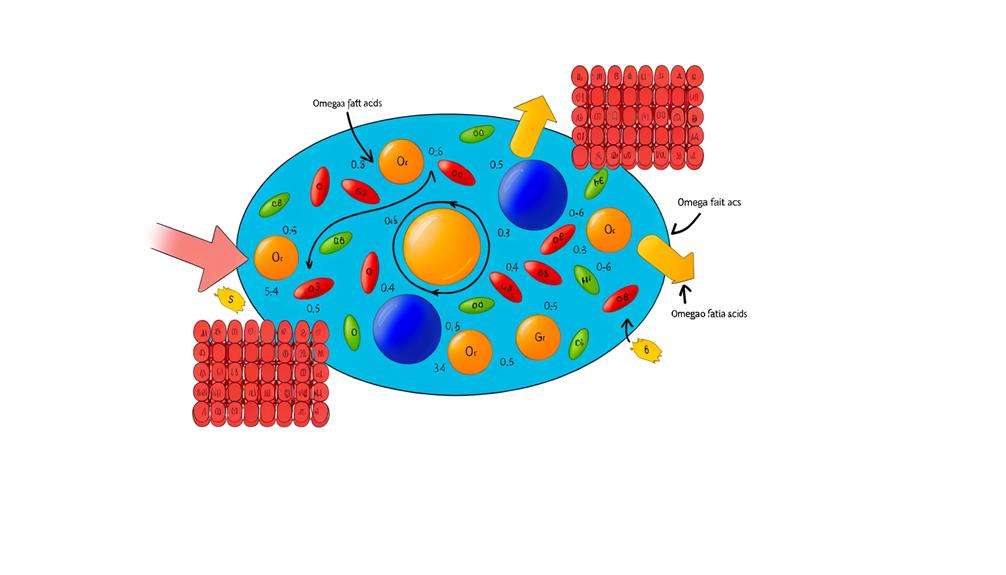
These EFAs play a massive role in maintaining cellular health. Omega-3s and Omega-6s are involved in constructing the phospholipids that form the structure of your cell membranes. These membranes are the gatekeepers of your cells, determining what goes in and out, including signals that regulate bodily functions.

The Difference Between Omega-3 and Omega-6

Now that you understand the importance of Omega-3 and Omega-6 in your diet, it's time to learn about the unique properties and roles of each of these essential fatty acids (EFAs).

Both Omega-3 and Omega-6 are polyunsaturated fatty acids (PUFAs) that play a vital role in cell membrane structure. Omega-3 deficiency symptoms may include poor memory, fatigue, and heart problems. On the flip side, an imbalance in Omega-6 can lead to inflammation and cardiovascular disease.

To maintain excellent health, it's key to strike a balance between these EFAs in your diet. Remember, these PUFAs are essential building blocks for cellular health, and your body can't produce them. So, make sure you're consuming them in sufficient amounts.

What are Phospholipids?

Let's move on to phospholipids, an essential component in our body. They're the building blocks of cell membranes and work closely with Omega-3 and Omega-6 fatty acids.

Understanding their function can give you a better grasp of how our bodies maintain cellular health.

The Building Blocks of Cell Membranes

Diving deeper into the cellular world, you'll find phospholipids, the remarkable molecules that form the foundation of cell membranes. Like a well-tuned orchestra, these phospholipids harmonize with Omega-3s and Omega-6s, creating a dynamic, adaptable barrier for your cells.

This isn't just a wall, though. It's a communicator, a gatekeeper, and a guardian of cellular health. When these elements combine, an entourage effect is sparked, enhancing each component's essential strengths. Imagine, if you will, your cells humming with efficient, coordinated activity, all thanks to these crucial building blocks.

In the ever-evolving field of cellular health, understanding the role of phospholipids, Omega-3s, and Omega-6s in cell membranes opens new doors to innovation and well-being. It's the science of life, in the palm of your hand.

How Phospholipids Work with Omega-3 and Omega-6

In order to truly grasp the importance of phospholipids in cellular health, you must understand how they work in harmony with Omega-3 and Omega-6 fatty acids. Phospholipids serve as the cell's gatekeepers, selectively regulating what enters and exits. They also facilitate the 'entourage effect', a synergistic interaction enhancing cellular health.

When Omega-3 and Omega-6 are incorporated into phospholipids, they influence how nutrients are absorbed by the cell. This not only optimizes nutrient utilization but also triggers the entourage effect, amplifying the potential benefits of each nutrient.

Understanding Phospholipids: Their Role in Cell Membranes and Health Benefits

The Importance of Omega-3, Omega-6, and Phospholipids for Health

essential fatty acids for health

You've likely heard about Omega-3 and Omega-6, but did you know they're essential for maintaining cellular health?

Not only do they play a significant role in brain function and development, but they also promote heart health.

Let's explore the importance of these fatty acids, alongside phospholipids, and how they collaborate to guarantee your body's well-being.

Supporting Brain Function and Development

When it comes to supporting brain function and development, the roles of Omega-3, Omega-6, and phospholipids can't be overstated.

Omega-3 fatty acids, particularly DHA, are pivotal for promoting neuronal health and optimizing cognitive function. Think of them as the building blocks for your brain, helping to improve memory, mood regulation, and overall mental performance.

Meanwhile, phospholipids join the act, forming the structure of cell membranes, which can influence neuronal communication and nutrient transport.

Promoting Heart Health

Let's shift our focus to the crucial role Omega-3, Omega-6, and phospholipids play in promoting heart health. Omega-3 and Omega-6, found in abundance in omega-6 rich foods, possess anti-inflammatory properties. These properties help reduce inflammation in your blood vessels, a key factor in improving cardiovascular health. Additionally, these essential fats help lower triglycerides, harmful fats in your bloodstream, offering further protection for your heart.

Don't overlook the importance of phospholipids, too. Taking supplements for phospholipids can reinforce these heart-healthy effects. They strengthen your cell membranes, ensuring optimal function of heart cells. Embrace these building blocks for a stronger heart and a healthier you. Innovation in health is here, and it's as simple as Omega-3, Omega-6, and phospholipids.

Maintaining Cellular Health

Understanding the roles of Omega-3, Omega-6, and phospholipids is key to maintaining the health of your body's cells. These nutrients are your cells' building blocks, and striking a dietary balance guarantees you reap the benefits of omega-3 fatty acids while also acknowledging the importance of omega-6 fatty acids in the body.

Phospholipids, too, play an essential role in cell health, acting as gatekeepers for what enters and exits the cell. So, how do you get enough omega-3s in your diet? Opt for fatty fish, walnuts, chia seeds, and fortified foods. Don't forget, your body thrives on variety, so mix it up for overall health.

These nutritional tools empower you to protect, repair, and nourish your cells, fostering overall well-being.

Sources of Omega-3, Omega-6, and Phospholipids

essential fatty acids sources

You might be wondering where you can get these essential nutrients - Omega-3, Omega-6, and phospholipids.

It's important to know that these key cellular health builders are found in specific foods.

Let's explore the dietary sources that are rich in these beneficial elements.

Dietary Sources of Omega-3 and Omega-6

To ensure your body gets the essential fatty acids it needs, it's crucial to include Omega-3 and Omega-6 rich foods in your diet. These polyunsaturated fatty acids (PUFAs), known as essential fatty acids (EFAs), serve as the building blocks for eicosanoids, bioactive compounds that play key roles in your body's cellular functions.

For Omega-3, fatty fish like salmon, mackerel, and sardines are your best bets. Chia seeds, flaxseeds, and walnuts also offer substantial amounts. When it comes to Omega-6, think vegetable oils, poultry, eggs, whole grain foods, and most nuts and seeds. Embracing these foods not only fuels your body with EFAs but also paves the way for innovative health solutions, ensuring you're at the forefront of nutritional well-being.

The Potential Benefits of Combining Phospholipids, MCT Oil, and Cannabinoids

Foods Rich in Phospholipids

Exploring the world of phospholipids, it is essential to know the right foods that can supply you with this vital substance, along with Omega-3 and Omega-6. These nutrients are the building blocks of your cells, so consuming foods rich in them can help support your overall health.

Here's a simple table to help guide your food choices:

Food Phospholipids Content
Egg Yolks High
Soybeans Moderate
Organ Meats High

Conclusion: Ensuring a Balanced Intake

In today's fast-paced world, maintaining a balanced intake of Omega-3s, Omega-6s, phospholipids, and full-spectrum CBD oil is key to supporting your cellular health and overall well-being. You're not just eating to satisfy hunger, you're fueling your body's complex cellular machinery. Ensuring a balance of these essential nutrients is essential.

The reality is, your diet mightn't be providing enough of these essential building blocks. And that's where supplementation can step in. The right blend of Omega-3 and Omega-6 fatty acids, coupled with phospholipids and CBD oil, can help fill those nutritional gaps. This isn't just about taking a pill; it's about embracing a holistic approach to your health.

But remember, not all supplements are created equal. You'll want to opt for high-quality products that prioritize bioavailability and purity. Look for innovative solutions that ensure these nutrients reach your cells and fulfill their purpose.

In this journey towards excellent cellular health, you're not alone. Be proactive, seek out expert advice, and make informed choices. Your body's complex cellular machinery deserves nothing less. As you work towards balance, remember: you're taking a critical step towards a healthier, vibrant life.

Unveiling the Synergy: How Essential Nutrients Enhance CBD Absorption

nutrients boost cbd absorption

You're about to uncover the intriguing synergy between essential nutrients and CBD absorption. Picture phospholipids as your cellular gatekeepers, determining how cannabinoids are absorbed in your body.

Now, imagine the entourage effect as a symphony of Omega-3s, Omega-6s, and cannabinoids in full-spectrum CBD oil, all working together to enhance your health.

Phospholipids: The Gateway to Cellular Communication and Cannabinoid Absorption

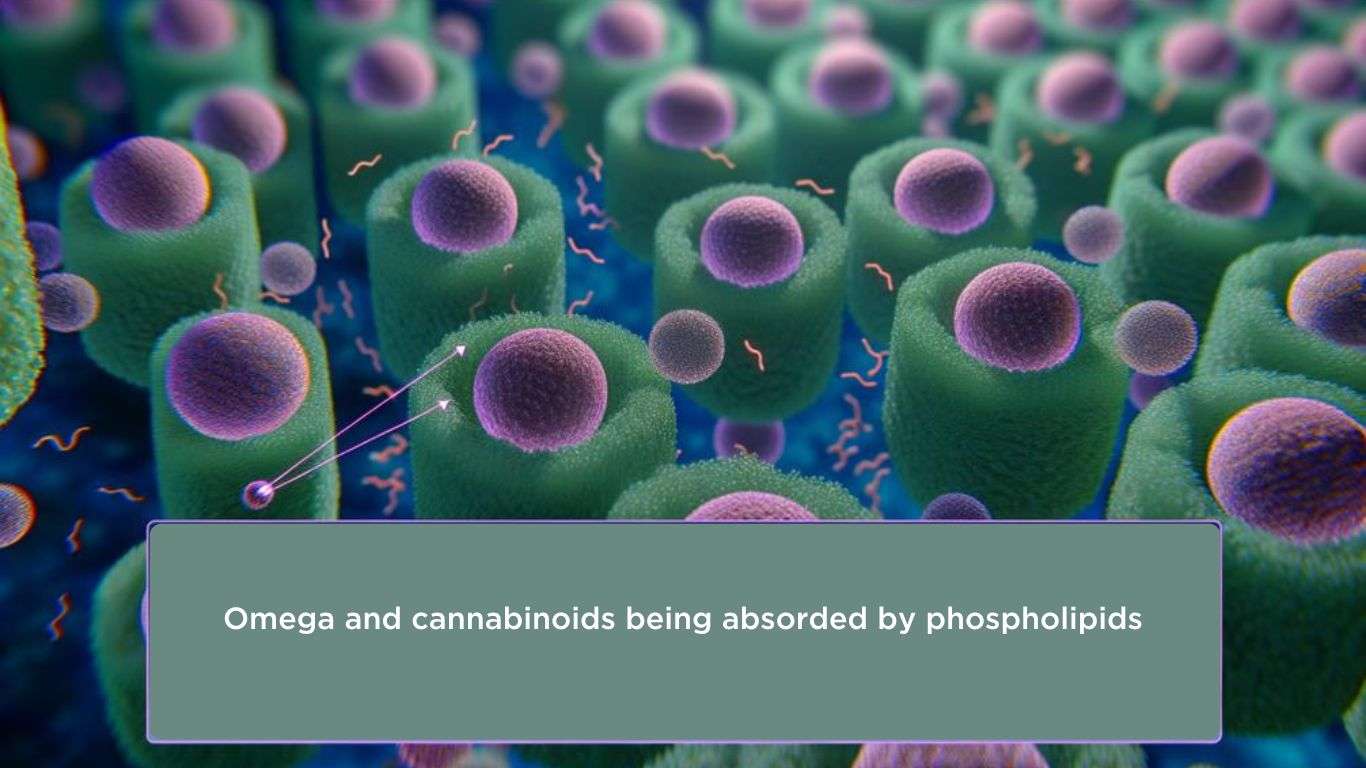
Delving into the domain of cellular health, it's phospholipids that act as the gatekeepers, controlling what can pass in and out of our cells, including the absorption of cannabinoids like CBD.

Phospholipids are crucial in this process, ensuring only the right substances enter our cells. They're not just doorkeepers, though. They're also architects, creating a conducive environment for absorption and communication.

When cannabinoids meet phospholipids, a fascinating interaction occurs, enhancing the absorption of CBD into your cells. It's a synergy that could revolutionize your wellness routine.

The Entourage Effect: A Symphony of Omega-3s, Omega-6s, and Cannabinoids in Full-Spectrum CBD Oil

Let's reveal the entourage effect, a remarkable synergy where Omega-3s, Omega-6s, and cannabinoids like CBD harmoniously work together in full-spectrum CBD oil to enhance your cellular health.

This trio's interaction isn't a solo performance; they're part of a larger ensemble including phospholipids, essential players in your body's cellular orchestra.

When Omega-3s and Omega-6s embed into phospholipid molecules, they can influence how cannabinoids are absorbed by your cells.

This unique blend in full-spectrum CBD oil creates an amplified effect, orchestrating a potentially greater range of health benefits.

Beyond Individual Benefits: The Power of Interaction Between Essential Nutrients and CBD

It's not just about individual benefits when it comes to essential nutrients and CBD.

You'll find that Omega-3s and Omega-6s can enhance how your cells take in cannabinoids, amplifying their effect.

This, along with the entourage effect of full-spectrum CBD oil, can reveal a whole new level of potential in your cellular health.

How Omega-3s and Omega-6s Influence Cannabinoid Uptake by Cells

Beyond their individual benefits, Omega-3s and Omega-6s play a crucial role in influencing how your body absorbs cannabinoids like CBD. These fatty acids integrate with cell membranes, enhancing their permeability. This allows cannabinoids to pass more effectively into the cells.

Imagine your cells as exclusive clubs; Omega-3s and Omega-6s act as bouncers, identifying cannabinoids and ushering them in. This not only guarantees a more efficient uptake of CBD but also enhances its effects, providing you with optimized benefits.

This is a game-changer in the world of cellular health and wellness. So, don't underestimate the power of these fatty acids. They're not just nutrients; they're essential facilitators, revolutionizing the way your body interacts with cannabinoids.

The Entourage Effect: Unlocking the Potential of Full-Spectrum CBD Oil with Essential Fatty Acids

While Omega-3 and Omega-6 fatty acids play an instrumental role in optimizing the absorption of cannabinoids, it's their interaction with full-spectrum CBD oil that truly reveals a world of potential wellness benefits, giving rise to the phenomenon known as the entourage effect.

You see, full-spectrum CBD oil contains a plethora of cannabinoids, each with unique properties. When teamed up with these essential fatty acids, the cannabinoids' effects are enhanced, unveiling a myriad of potential health benefits. This synergy, or 'entourage effect,' could optimize your body's endocannabinoid system, influencing mood, memory, and overall well-being.

It's a groundbreaking revelation in wellness innovation. So, don't just settle for CBD oil. Harness the true potential of nature's bounty by opting for a full-spectrum solution enriched with Omega-3 and Omega-6.

Research Frontiers: Exploring the Science Behind Omega-3s, Omega-6s, Phospholipids, and CBD

exploring nutraceutical science topics

Let's turn our attention to the exciting frontiers of research in cellular health.

Imagine if we could tailor your CBD use based on your individual fatty acid profiles.

This could revolutionize how we comprehend and apply Omega-3s, Omega-6s, phospholipids, and CBD in our pursuit of peak health.

The Future of Research: Can We Tailor CBD Use Based on Individual Fatty Acid Profiles?

Looking ahead, the potential to tailor CBD use based on an individual's fatty acid profile opens up exciting new avenues in the field of personalized wellness and cannabinoid therapy. Imagine a future where you can optimize your CBD intake, aligning it perfectly with your unique biology. Your specific omega-3 and omega-6 levels could guide the way, influencing cannabinoid absorption and the resultant health benefits.

Researchers are already exploring this frontier, keen to unravel the complex interplay between these essential fatty acids, phospholipids, and cannabinoids. As the puzzle pieces fit together, you'll gain more control over your wellness journey. You're not just a bystander in this process; you're an active participant. The promise of personalized CBD therapy, driven by your unique fatty acid profile, is closer than you might think.

Combining CBD And Omega 3 Supplements For Optimal Health Benefits

Photo: Genesis Blend Full Spectrum CBD with Omega-3 EPA and DHA


Genesis Blend Omega-3 and Full Spectrum CBD oil capsules for enhanced cell absorption


Frequently Asked Questions

What Is the Endocannabinoid System and How Does It Interact With Phospholipids?

Your body's endocannabinoid system (ECS) helps maintain balance and wellbeing. It's a complex network of receptors and signaling molecules.

Phospholipids, which form the building blocks of cell membranes, interact with the ECS. They act like gatekeepers, controlling what goes in and out of your cells. This includes how cannabinoids are absorbed by the cell, influencing the ECS and potentially your overall health.

It's an intricate, fascinating system.

How Does the 'Entourage Effect' of Full-Spectrum CBD Oil Work?

Imagine you're at a concert, but it's not just any concert. It's the 'entourage effect' of full-spectrum CBD oil at work. Each cannabinoid is a musician, playing its part in this wellness symphony. They're not just playing solo, they're harmonizing, amplifying each other's benefits.

It's a revolutionary show that could potentially enhance your health. This is the future of wellness, and you're invited to experience it firsthand.

What Roles Do Omega-3 and Omega-6 Fatty Acids Play in Brain and Heart Health?

Omega-3s and Omega-6s, essential fats your body can't make, are vital for your brain and heart. Omega-3s, especially DHA, enhance cognitive function, memory, and mood.

Both Omega-3s and Omega-6s promote a healthy heart by supporting good cholesterol levels and blood pressure. They're not just important, they're necessary.

How Do Omega-3s, Omega-6s, and Phospholipids Enhance the Absorption of Cannabinoids?

Imagine you're sipping a smoothie packed with Omega-3s and Omega-6s. These essential fatty acids don't just fuel your body, they also enhance your body's ability to absorb cannabinoids.

When incorporated into phospholipid molecules, they act like a VIP pass, helping cannabinoids enter your cells more efficiently. This boosts the entourage effect of full-spectrum CBD oil, maximizing its potential benefits.

What Is the Importance of a Balanced Intake of Omega-3, Omega-6, and Phospholipids?

Balancing your intake of Omega-3, Omega-6, and phospholipids is vital for peak health. These components are cellular building blocks, aiding in brain development, heart health, and nutrient transport.

They're also key in regulating what enters and exits your cells. Without a balanced intake, your body's function and overall well-being could be compromised.

Therefore, it's important to get these nutrients through your diet and make sure they're working together efficiently.

Conclusion

So, you've seen how omega-3, omega-6, and phospholipids aren't just essential nutrients, but the very building blocks of our cellular health.

Throw in CBD, and it's like hitting the health jackpot. Their synergy isn't just potent, it's groundbreaking, promising a personalized wellness revolution.

Remember, it's not just about what these nutrients can do individually, but the power of their combined effect.

So, let's keep exploring, and let the science lead us to even greater wellness possibilities.

Enhancing Cannabinoid Delivery

Enhancing Cannabinoid Delivery

Cannabinoid Delivery Guide

Quick Answer: Cannabinoid Delivery, CBD Bioavailability, and Product Format

Cannabinoid delivery describes how hemp compounds such as CBD move from a product format into the body. CBD bioavailability refers to how much CBD becomes available after use, but higher absorption should not be presented as a guaranteed health result.

MCT oil and phospholipids are often discussed because CBD is fat-soluble and lipid-based delivery systems are being studied. Shoppers should compare CBD products by extract type, CBD amount, THC amount, carrier oil, serving directions, batch number, lab testing, COA access, and safety considerations.

Key Takeaways

Quick Answer Box

Cannabinoid delivery and CBD bioavailability are product-format and absorption terms. They help explain why oils, gummies, capsules, topicals, carrier oils, MCT oil, phospholipids, serving directions, full-spectrum status, trace THC, and batch-specific lab reports matter when comparing CBD products.

CBD is not risk-free. People who take medications, manage a medical condition, have liver concerns, use alcohol or sedating products, are pregnant or nursing, are considering CBD for a child, or are subject to drug testing should talk with a qualified healthcare professional before using CBD.

Delivery is product-format language

Cannabinoid delivery describes how CBD and other hemp compounds move from a product format into the body.

Bioavailability is not a promise

CBD bioavailability is about absorption and availability, not guaranteed results or medical outcomes.

Formats differ

CBD oils, gummies, capsules, topicals, and pet products have different label, ingredient, serving, and safety considerations.

MCT oil is a carrier oil

MCT oil is commonly used in CBD oils, but it should not be described as guaranteeing effectiveness.

Phospholipids are a research topic

Phospholipids are studied in lipid-based delivery contexts, but research should not become retail product outcome claims.

COAs and THC matter

Full-spectrum CBD may contain trace THC, so labels and batch-specific COAs should be reviewed before use.

Cannabinoid Delivery, CBD Bioavailability, and COA Terms to Know

This entity summary helps readers, caregivers, pet owners, and CBD shoppers understand the main product-format, label, and testing terms used throughout this guide.

Entity Simple Explanation Why It Matters
Cannabinoid delivery How cannabinoids such as CBD move from a product format into the body Helps compare oils, gummies, capsules, topicals, and other formats
CBD bioavailability How much CBD becomes available after use Bioavailability does not guarantee a specific result
MCT oil A carrier oil often used in CBD oils Should not be described as guaranteeing CBD effectiveness
Phospholipids Lipid molecules involved in cell membranes and studied in delivery systems Research topics should not become retail treatment claims
Full-spectrum CBD Hemp extract with CBD plus other naturally occurring hemp compounds May contain trace THC and should be verified by COA
Trace THC A small amount of THC that may be present in full-spectrum CBD products Important for THC-sensitive users and drug-testing concerns
COA Certificate of Analysis or lab report connected to a product batch Helps verify cannabinoid potency and safety testing information

What Does Cannabinoid Delivery Mean?

Cannabinoid delivery is a way to describe how hemp compounds move from a product format into the body. It includes questions such as whether a product is an oil, gummy, capsule, topical, or pet product; what carrier oil or ingredients are used; and how the label explains serving directions.

Cannabinoids, Carrier Oils, and Product Format

CBD and other cannabinoids are fat-soluble compounds. In finished CBD oils, they are often blended with a carrier oil such as MCT oil, hemp seed oil, olive oil, or another food-grade oil. For broader context, review cannabinoids in hemp products explained and CBD product types explained.

Delivery Is Not the Same as a Medical Outcome

A product format may influence how a shopper compares serving directions, ingredients, label clarity, and COA access. It should not be used to claim that CBD is intended for pain, anxiety, inflammation, sleep problems, seizures, epilepsy, or any medical condition.

Safe Product-Format Language

Use cannabinoid delivery to discuss product format, label review, carrier oils, serving directions, THC information, lab testing, and COA access. Do not use it to promise stronger effects, fast results, or targeted product outcomes.

What Is CBD Bioavailability?

CBD bioavailability means how much CBD becomes available after use. Oral CBD absorption can vary, and researchers continue to study formulation, food context, lipid-based systems, and individual differences. A 2024 review notes that strategies studied to improve oral CBD bioavailability are predominantly lipid-based formulations, but research findings should not be turned into guaranteed retail product outcomes. See this 2024 review on CBD bioavailability strategies for broader research context.

Why Oral CBD Absorption Can Vary

Oral CBD absorption can vary because product format, food context, formulation, serving size, carrier oil, metabolism, and individual factors may all play a role.

Why Fat-Soluble CBD Is Often Discussed With Oils

CBD is fat-soluble, so it is often blended into oils for liquid products. This helps with formulation and serving consistency, but it does not guarantee a specific experience.

What Bioavailability Does Not Prove

Bioavailability does not prove that CBD will deliver a medical benefit, improve a symptom, or work the same way for every person.

Term What It Means Safe Language Avoid Saying
Bioavailability Amount available after use May vary by product format and individual factors Claiming a guaranteed stronger result
Absorption How a compound enters the body Can be influenced by format, food, and carrier oil Treats symptoms faster
Delivery method Product format and route Oils, gummies, capsules, topicals, and other formats differ Best method for pain, anxiety, inflammation, or medical conditions
Carrier oil Oil used to hold hemp extract MCT oil is commonly used in CBD oils MCT oil guarantees results

How MCT Oil Relates to CBD Delivery

MCT oil is commonly used as a CBD carrier oil. It is not CBD by itself, and it should not be described as guaranteeing faster, stronger, or better results. MCT oil belongs in a delivery-format and label discussion, not a treatment-claim discussion.

MCT Oil as a CBD Carrier Oil

MCT oil can help create a consistent CBD oil format. Shoppers should still verify CBD amount, THC amount, serving directions, ingredients, and COA access. Related guide: MCT oil as a CBD carrier oil.

What MCT Oil Can and Cannot Claim

MCT oil can be described as a carrier oil. It should not be described as making CBD medically effective, improving brain health, reducing inflammation, or creating guaranteed results.

MCT Oil vs. Hemp Seed Oil vs. Other Carrier Oils

Different carrier oils have different ingredient profiles, textures, and flavor considerations. The finished product label and batch-specific COA matter more than carrier-oil marketing claims.

Ingredient / Topic What It Is CBD Relationship What Not to Claim
MCT oil Carrier oil made of medium-chain triglycerides Often used as a CBD carrier oil Do not claim it guarantees CBD results
Hemp seed oil Oil from hemp seeds May be a carrier oil but usually does not contain CBD unless hemp extract is added Do not confuse hemp seed oil with CBD oil
Phospholipids Lipid molecules involved in cell membranes Studied in lipid-based delivery contexts Do not claim they treat conditions or guarantee absorption
Full-spectrum hemp extract Hemp extract with CBD and other compounds May contain cannabinoids, terpenes, flavonoids, and trace THC Do not claim it treats disease

Helpful related reading: CBD MCT oil carrier-oil guide.

How Phospholipids Relate to Cannabinoid Delivery

Phospholipids are lipid molecules involved in cell membranes. They also appear in some research and formulation discussions involving lipid-based delivery systems. That does not mean a retail CBD product should claim to treat conditions, guarantee absorption, or deliver specific outcomes.

What Phospholipids Are

Phospholipids are part of cell membrane structure and can be discussed as a science concept. For background, see understanding phospholipids and cell membranes.

Why Lipid-Based Delivery Is Studied

Because CBD is fat-soluble, researchers study lipid-based strategies for absorption and formulation. Research language should remain separate from retail product claims.

Why Research Does Not Equal Retail Product Claims

A study topic is not the same as proof that a finished retail CBD product treats disease, improves symptoms, or produces a specific result.

Research Boundary Box

Phospholipids, MCT oil, full-spectrum hemp extract, cannabinoids, and terpenes should not be described as diagnosing, treating, curing, preventing, reducing, relieving, or managing any disease, symptom, disorder, or medical condition.

Related guide: phospholipids, MCT oil, and cannabinoids explained carefully.

CBD Delivery Methods Compared

Different CBD product formats raise different label and safety questions. A good comparison starts with the facts on the label and the batch-specific COA, not with outcome claims.

Format How Users Typically Take It What to Compare Safety Note
CBD oil Taken by mouth according to label directions CBD amount, THC amount, extract type, carrier oil, serving directions, and COA Full-spectrum CBD may contain trace THC
CBD gummies Edible format CBD per gummy, ingredients, sugar, THC amount, and COA Individual experiences vary and effects should not be guaranteed
CBD capsules Swallowed format CBD per capsule, ingredients, serving directions, and COA Ask a healthcare professional if taking medications
CBD topicals Applied to skin Ingredients, CBD amount, intended product format, and warnings Do not make pain or inflammation claims for topical CBD
Pet CBD Animal-use product Ingredients, THC information, serving directions, and COA Pet CBD questions should start with a licensed veterinarian

Related guide: which CBD delivery method is right for your routine and CBD product guide for oils, gummies, capsules, topicals, and pet products.

Pet CBD Safety Note

Pet CBD questions should start with a licensed veterinarian. The FDA has stated that cannabis-derived products marketed for animals raise regulatory and safety questions, and FDA materials note that no FDA-approved, conditionally approved, or indexed animal drugs contain CBD. Review the FDA cannabis and CBD regulation FAQ for animal-use questions before making pet CBD decisions.

Full-Spectrum CBD, Trace THC, and Lab Reports

Full-spectrum CBD contains CBD plus other naturally occurring hemp compounds and may contain trace THC within legal hemp limits. Full-spectrum is a product-composition term. It should not be used to promise a stronger effect, medical benefit, or specific outcome.

Full-Spectrum CBD Contains Multiple Hemp Compounds

A full-spectrum hemp extract may include CBD, minor cannabinoids, terpenes, flavonoids, and trace THC. Learn more in the full-spectrum CBD guide.

Trace THC and Drug Testing Questions

Full-spectrum CBD may contain trace THC. People subject to drug testing should review the product label, THC amount, batch-specific COA, and applicable testing policies before use.

Why Batch-Specific COAs Matter

A COA should match the product batch and show cannabinoid potency, including CBD and THC amounts, along with available safety testing information.

Trace THC / Drug Testing Box

Full-spectrum CBD may contain trace THC. People who are subject to drug testing should review the product label, THC amount, batch-specific COA, and employer or testing policies before using a full-spectrum CBD product. A COA can help identify what cannabinoids were detected in a specific batch, but it cannot guarantee a drug-testing outcome.

Helpful links: review CBD Certificates of Analysis, CBD lab testing and Certificates of Analysis, and hemp vs marijuana and THC differences.

CBD Safety Questions to Review Before Choosing a Product

CBD Safety Box

CBD is not risk-free. CBD may interact with medications, may cause drowsiness or changes in alertness, and may carry liver-related safety concerns. Full-spectrum CBD may contain trace THC. Talk with a qualified healthcare professional before using CBD if you take medications, manage a medical condition, have liver concerns, use alcohol or sedating products, are pregnant or nursing, considering CBD for a child, or are subject to drug testing.

CBD products should not be described as diagnosing, treating, curing, preventing, reducing, relieving, or managing any disease, symptom, disorder, or medical condition. The FDA continues to highlight unanswered questions around CBD product science, safety, and quality; see the FDA consumer update on cannabis and CBD products.

Medication Interactions

CBD may raise medication-interaction questions. Ask a qualified healthcare professional before use if you take prescription or over-the-counter medications.

Drowsiness and Changes in Alertness

CBD may raise drowsiness or alertness concerns. Do not combine CBD with alcohol or sedating products unless a qualified professional says it is appropriate.

Alcohol and Sedating Products

Alcohol and sedating products can compound drowsiness concerns. Use caution and ask a qualified healthcare professional.

Liver Safety Questions

People with liver concerns should ask a healthcare professional before using CBD. Liver-related safety questions should not be minimized.

Pregnancy, Nursing, Children, and Medical Conditions

People who are pregnant, nursing, considering CBD for a child, or managing a medical condition should get qualified guidance before using CBD.

Drug Testing

Full-spectrum CBD may contain trace THC. COAs can provide cannabinoid data, but they cannot guarantee drug-testing outcomes.

How to Compare CBD Products by Delivery Format

Compare CBD products by objective product information: CBD amount, THC amount, extract type, carrier oil, ingredients, serving directions, batch number, COA access, and warnings. This shopper-first approach is more useful than broad claims about guaranteed results.

What to Review Why It Matters
CBD amount per serving Helps compare products accurately
THC amount Important for full-spectrum and drug-testing concerns
Extract type Distinguishes full-spectrum, broad-spectrum, and isolate products
Carrier oil Helps shoppers understand MCT oil, hemp seed oil, or other oils
Ingredients Helps identify allergens, sweeteners, flavors, or added supplement ingredients
Serving directions Reduces guesswork
Batch number Connects the product to the correct COA
COA access Shows cannabinoid potency and safety testing details
Warnings Supports medication, liver, sedation, pregnancy, and drug-testing decisions

CBD Label Checklist

  • Product name
  • CBD amount per serving
  • Total CBD amount
  • THC amount
  • Extract type
  • Carrier oil
  • Ingredients
  • Serving directions
  • Warnings
  • Batch or lot number
  • Expiration date
  • Company contact information
  • COA access

COA Checklist

  • Product name
  • Batch or lot number
  • Testing date
  • CBD amount
  • THC amount
  • Minor cannabinoids when applicable
  • Terpenes when tested
  • Heavy metals
  • Pesticides
  • Residual solvents
  • Microbials
  • Lab information

Helpful guides: how to read a CBD product label, CBD quality guide for choosing transparent hemp products, and how to take CBD oil safely.

Bluegrass Hemp Oil’s Product Transparency Approach

Bluegrass Hemp Oil focuses on Kentucky-grown hemp education, full-spectrum CBD product transparency, clear labeling, batch-specific Certificates of Analysis, and helping shoppers understand what they are buying. This approach should be framed around product facts, label clarity, COA access, safety questions, and customer support — not unsupported medical outcomes.

Clear Product Format

Shoppers should be able to tell whether a product is an oil, gummy, capsule, topical, or pet product, and how the format is meant to be used according to the label.

Label and COA Transparency

Product labels and COAs should help shoppers compare CBD amount, THC amount, extract type, ingredients, batch information, and testing details.

Safety-First Education

Medical questions belong with qualified healthcare professionals. Product support can help with labels, COAs, serving directions, and format questions.

Product Transparency Cards

The following links are included for product transparency and comparison only. They should not be used to imply that CBD delivery methods treat conditions or guarantee outcomes.

Genesis Blend Product Details

Genesis Blend full-spectrum CBD oil product details can help shoppers review product format, serving information, ingredients, and COA-related questions.

Compare CBD Oil Bundles

CBD oil bundles for comparing product routines should be reviewed by product facts, not disease or symptom claims.

Shop by Product Format

shop CBD products by format to compare oils, gummies, capsules, topicals, and pet products by label and COA details.

Ask Label or COA Questions

contact Bluegrass Hemp Oil for CBD label and COA questions when you need help understanding product information. Medical advice should come from a qualified healthcare professional.

Related Cannabinoid Delivery, CBD Bioavailability, Label, and COA Guides

About Bill Polyniak and Bluegrass Hemp Oil

Bill Polyniak Author / Founder Authority Box

Bill Polyniak, founder of Bluegrass Hemp Oil and Kentucky Cannabis Company, works in Kentucky hemp education, full-spectrum CBD product transparency, clear labeling, Certificates of Analysis, and helping shoppers understand what they are buying before choosing a CBD product.

This guide is written to help readers compare cannabinoid delivery methods, CBD bioavailability questions, MCT oil, phospholipids, full-spectrum hemp extract, trace THC information, labels, lab reports, COAs, safety questions, and product transparency without relying on unsupported medical treatment claims.

FAQs About Cannabinoid Delivery and CBD Bioavailability

What does cannabinoid delivery mean?

What does cannabinoid delivery mean?

Cannabinoid delivery describes how cannabinoids such as CBD move from a product format into the body. It is a product-format and absorption concept, not a promise that a CBD product will create a specific result.

What is CBD bioavailability?

What is CBD bioavailability?

CBD bioavailability refers to how much CBD becomes available after use. Bioavailability can vary by product format, food context, formulation, and individual factors, but it does not guarantee a health outcome.

Why is CBD absorption inconsistent?

Why is CBD absorption inconsistent?

Oral CBD absorption can vary because CBD is fat-soluble and because serving format, food, carrier oil, individual digestion, metabolism, and product formulation can all matter. This variability is why labels and COAs are important.

Does MCT oil help CBD absorption?

Does MCT oil help CBD absorption?

MCT oil is commonly used as a CBD carrier oil, and CBD is fat-soluble. However, MCT oil should not be described as guaranteeing better results, faster effects, or medical benefits. Shoppers should review the product label, serving directions, ingredients, full-spectrum status, THC amount, and batch-specific COA.

What are phospholipids?

What are phospholipids?

Phospholipids are lipid molecules involved in cell membranes. They are studied in some delivery-system contexts, but they should not be described as treating conditions or guaranteeing CBD absorption.

How do phospholipids relate to CBD delivery?

How do phospholipids relate to CBD delivery?

Phospholipids may appear in research and formulation discussions because lipid-based delivery systems are studied for fat-soluble compounds. Research topics should not be turned into retail CBD product outcome claims.

Is better CBD absorption the same as better results?

Is better CBD absorption the same as better results?

No. CBD bioavailability describes how much CBD becomes available after use, but it does not guarantee a specific result. Individual experiences vary, and CBD should not be presented as treating, curing, preventing, reducing, relieving, or managing any disease, symptom, disorder, or medical condition.

What is the difference between CBD oil and hemp seed oil?

What is the difference between CBD oil and hemp seed oil?

CBD oil is a finished product that contains hemp-derived CBD blended with a carrier oil. Hemp seed oil is made from hemp seeds and usually does not contain CBD unless hemp extract has been added and the label states CBD content.

Is MCT oil the same as CBD oil?

Is MCT oil the same as CBD oil?

No. MCT oil is a carrier oil. CBD oil is a finished hemp product that contains CBD when properly formulated and labeled. MCT oil by itself should not be assumed to contain CBD or THC.

Which CBD delivery method is best?

Which CBD delivery method is best?

There is no single best CBD delivery method for everyone. CBD oils, gummies, capsules, topicals, and pet products have different product-format considerations. Compare CBD amount, THC amount, serving directions, ingredients, product type, and COA access.

Can full-spectrum CBD contain trace THC?

Can full-spectrum CBD contain trace THC?

Yes. Full-spectrum CBD may contain trace THC within legal hemp limits. People who are sensitive to THC or subject to drug testing should review the label, THC amount, batch-specific COA, and applicable testing policies before use.

What should a CBD label show?

What should a CBD label show?

A CBD label should clearly show CBD amount per serving, total CBD amount, THC information, extract type, carrier oil, ingredients, serving directions, warnings, batch number, expiration date, company contact information, and COA access.

What should a CBD COA show?

What should a CBD COA show?

A CBD COA should connect to the product batch and show cannabinoid potency, including CBD and THC amounts. A strong COA may also include minor cannabinoids, terpenes when tested, heavy metals, pesticides, residual solvents, microbials, testing date, and lab information.

Can CBD interact with medications?

Can CBD interact with medications?

Yes. CBD may interact with medications and may carry liver-related and drowsiness-related safety concerns. People who take medications, manage medical conditions, use alcohol or sedating products, are pregnant or nursing, or are subject to drug testing should talk with a qualified healthcare professional before using CBD.

Should I talk with a healthcare professional before using CBD?

Should I talk with a healthcare professional before using CBD?

Yes. Talk with a qualified healthcare professional before using CBD if you take medications, manage a medical condition, have liver concerns, use alcohol or sedating products, are pregnant or nursing, are considering CBD for a child, or are subject to drug testing.

Educational Disclaimer

What This Article Does Not Claim

CBD oil, full-spectrum CBD oil, hemp extract, cannabinoids, terpenes, MCT oil, phospholipids, Genesis Blend, and Bluegrass Hemp Oil products should not be described as diagnosing, treating, curing, preventing, reducing, relieving, or managing any disease, symptom, disorder, or medical condition.

This article is educational and focuses on cannabinoid delivery, CBD bioavailability, product format, label review, COA review, trace THC awareness, and healthcare-professional guidance. It is not medical advice.

Internal Backlinks to Add Later

To strengthen the cluster, add contextual links to this rebuilt post from existing guides using anchors such as: cannabinoid delivery and CBD bioavailability explained, how MCT oil relates to CBD delivery questions, CBD carrier oils and bioavailability education, phospholipids, MCT oil, and cannabinoid delivery, full-spectrum CBD delivery, trace THC, and lab reports, and COAs for CBD delivery and product transparency.

Phospholipids, MCT Oil, and Cannabinoids: CBD Absorption, Labels, COAs & Safety

Phospholipids, MCT Oil & CBD Education

Quick Answer: Phospholipids, MCT Oil, Cannabinoids, and CBD Product Education

Phospholipids, MCT oil, and cannabinoids are useful product-education topics because they help shoppers understand CBD formulation, fat-soluble compounds, carrier oils, label review, COAs, full-spectrum CBD, trace THC, and safety questions.

CBD absorption research is complex, and better absorption should not be presented as a guaranteed medical, wellness, or product outcome. Shoppers should compare CBD products by CBD amount, THC amount, extract type, carrier oil, ingredients, serving directions, batch number, Certificate of Analysis, and safety considerations.

Key Takeaways

Quick Answer Box

Phospholipids, MCT oil, and cannabinoids are connected through product-format and absorption discussions. Phospholipids are lipid molecules, MCT oil is commonly used as a CBD carrier oil, and cannabinoids are hemp compounds found in hemp extract. These topics should help readers understand labels, carrier oils, serving directions, trace THC, batch-specific COAs, and safety questions—not create unsupported medical claims.

Phospholipids are a science concept

Phospholipids are lipid molecules involved in cell membrane structure and discussed in some lipid-based delivery research.

MCT oil is a carrier oil

MCT oil is commonly used as a CBD carrier oil, but it should not be described as guaranteeing faster or stronger results.

Cannabinoids are hemp compounds

Cannabinoids include CBD and minor cannabinoids found in hemp extract and measured on batch-specific COAs.

Bioavailability is not a promise

CBD bioavailability is about absorption and availability, not guaranteed outcomes or medical results.

Trace THC matters

Full-spectrum CBD may contain trace THC, so labels and batch-specific COAs matter for THC-sensitive users and drug-testing questions.

Compare product facts

Shoppers should compare CBD amount, THC amount, extract type, carrier oil, ingredients, serving directions, batch number, COA access, and warnings.

Phospholipids, MCT Oil, Cannabinoids, and COA Terms to Know

This entity summary helps readers and search engines understand the main product-format, label, absorption, and safety terms used throughout this guide.

Entity Simple Explanation Why It Matters
Phospholipids Lipid molecules involved in cell membranes and studied in some lipid-based delivery contexts Useful for science education, but not a CBD product-outcome claim
MCT oil Medium-chain triglyceride oil commonly used as a CBD carrier oil Helps shoppers understand carrier oils and CBD oil formulation
Cannabinoids Hemp compounds such as CBD and minor cannabinoids found in hemp extract Measured on COAs and part of full-spectrum CBD composition
CBD bioavailability How much CBD becomes available after use Bioavailability does not guarantee a specific result
CBD carrier oil An oil used to hold or dilute hemp extract in a finished CBD oil product Helps compare product ingredients and format
Full-spectrum CBD Hemp extract containing CBD plus other naturally occurring hemp compounds and possible trace THC Important for THC, drug-testing, and COA review
Trace THC A small amount of THC that may be present in full-spectrum CBD products Important for THC-sensitive users and drug-testing policies
COA Certificate of Analysis connected to a product batch Helps verify cannabinoid potency and available safety testing information

What Are Phospholipids, MCT Oil, and Cannabinoids?

The current page topic is valuable when it is handled as product education. Phospholipids, MCT oil, and cannabinoids can help explain why CBD products are formulated in different ways, why labels matter, and why shoppers should verify product details through a batch-specific COA.

Phospholipids Explained Simply

Phospholipids are lipid molecules involved in cell membranes. They are also discussed in some formulation and delivery-system research, but they should not be used as a retail CBD treatment claim. For background, see understanding phospholipids and cell membranes.

MCT Oil as a CBD Carrier Oil

MCT oil is a medium-chain triglyceride oil commonly used as a carrier oil in CBD oils. MCT oil is not CBD, and it does not guarantee faster, stronger, or better results. Review MCT oil as a CBD carrier oil.

Cannabinoids in Full-Spectrum Hemp Extract

Cannabinoids are hemp compounds such as CBD and minor cannabinoids. Full-spectrum hemp extract may also contain terpenes, flavonoids, and trace THC. See cannabinoids in hemp products explained.

Topic What It Is CBD Relationship Safe Language Avoid Saying
Phospholipids Lipid molecules involved in cell membranes Studied in some lipid-based delivery contexts May help explain why lipid-based delivery is studied Guarantees CBD absorption or improves health outcomes
MCT oil Medium-chain triglyceride carrier oil Common CBD carrier oil Helps shoppers understand CBD oil formulation Makes CBD work faster or better
Cannabinoids Hemp compounds such as CBD and minor cannabinoids Found in hemp extract Full-spectrum CBD may contain multiple hemp compounds and trace THC Treats pain, anxiety, inflammation, mood, or cognition
Full-spectrum hemp extract Hemp extract with CBD and other plant compounds May include trace THC Compare labels and COAs carefully Produces guaranteed entourage benefits

How This Topic Relates to CBD Absorption

CBD is fat-soluble, so oils, lipids, food context, serving format, and formulation are often discussed in CBD absorption research. That does not mean absorption should be treated as a guaranteed result, medical outcome, or product promise.

What CBD Bioavailability Means

CBD bioavailability means how much CBD becomes available after use. Bioavailability can vary by product format, food context, carrier oil, formulation, metabolism, and individual factors.

Why CBD Is Often Discussed With Oils and Lipids

Because CBD is fat-soluble, lipid-based systems are often studied in formulation research. A 2024 review notes that strategies studied to improve oral CBD bioavailability are predominantly lipid-based formulations, but research context should not become a retail product claim. See the 2024 review on CBD bioavailability strategies.

Why Absorption Does Not Guarantee Results

Better absorption does not prove better results. CBD should not be positioned as treating symptoms, improving health outcomes, or working the same way for every person.

Term What It Means Safe Explanation Do Not Claim
Bioavailability How much CBD becomes available after use Can vary by product format and individual factors Better absorption means better results
Absorption How a compound enters the body May be influenced by food, carrier oil, and format Faster relief or symptom reduction
Carrier oil Oil used to hold hemp extract MCT oil and hemp seed oil may be used differently Carrier oil guarantees effectiveness
Delivery format Product type such as oil, gummy, capsule, or topical Formats differ in serving directions and label review One format treats a condition better

CBD Absorption Research Limits Box

CBD absorption research is complex. MCT oil, phospholipids, and lipid-based delivery systems may be discussed in product formulation and research contexts, but this does not mean a retail CBD product guarantees stronger effects, faster results, medical benefits, or better wellness outcomes.

Do not claim that CBD, MCT oil, or phospholipids treat disease, reduce symptoms, repair cells, protect nerves, improve cognition, or improve brain health.

Related reading: CBD absorption and serving-format questions and cannabinoid delivery and CBD bioavailability explained.

Phospholipids and CBD: What We Can Say Carefully

Phospholipids can be discussed in a consumer-friendly way as part of cell membrane education and lipid-based formulation research. The key is to avoid turning a scientific topic into a product outcome claim.

Phospholipids and Cell Membranes

Phospholipids are a major part of cell membrane structure. That fact helps explain why lipids are part of science education, but it does not prove a CBD product benefit.

Lipid-Based Delivery Research

Lipid-based delivery systems are studied for fat-soluble compounds such as CBD. Research may guide product-format conversations, but it should be explained with limits.

What Research Does Not Prove About Retail CBD Products

Research does not prove that a finished retail CBD product treats disease, improves symptoms, repairs cells, protects nerves, or creates guaranteed outcomes.

What This Article Does Not Claim Box

CBD oil, full-spectrum CBD oil, hemp extract, cannabinoids, terpenes, MCT oil, phospholipids, Genesis Blend, and Bluegrass Hemp Oil products should not be described as diagnosing, treating, curing, preventing, reducing, relieving, or managing any disease, symptom, disorder, or medical condition.

This article is educational and focuses on phospholipids, MCT oil, cannabinoids, CBD bioavailability, product format, label review, COA review, trace THC awareness, and healthcare-professional guidance.

Additional context: omega-3, omega-6, and phospholipids for cell membrane education.

MCT Oil and CBD: Product Format, Not a Promise

MCT oil is commonly used as a CBD carrier oil because CBD and other cannabinoids are fat-soluble compounds often blended into oils. MCT oil should be described as part of product format and ingredient review, not as a guaranteed result.

Why MCT Oil Is Used in Some CBD Oils

MCT oil can help create a consistent liquid oil format. The label should still clearly show CBD amount, THC amount, serving directions, carrier oil, ingredients, and COA access.

MCT Oil vs. Hemp Seed Oil vs. Other Carrier Oils

Different carrier oils have different ingredient profiles, textures, and flavor considerations. The finished product label and COA matter more than carrier-oil marketing claims.

What MCT Oil Should Not Be Claimed to Do

MCT oil should not be described as making CBD medically effective, improving brain health, reducing inflammation, accelerating relief, or guaranteeing results.

Related guide: CBD MCT oil carrier-oil guide.

Cannabinoids, Full-Spectrum CBD, and Trace THC

Cannabinoids are hemp compounds found in hemp extract. Full-spectrum CBD may contain CBD, minor cannabinoids, terpenes, flavonoids, and trace THC. This is product-composition language; it should not be turned into a promise of guaranteed benefits.

CBD, Minor Cannabinoids, and Terpenes

A full-spectrum hemp extract may include CBD and other naturally occurring hemp compounds. See terpenes in hemp products explained.

Full-Spectrum CBD May Contain Trace THC

Full-spectrum CBD may contain trace THC. THC-sensitive users and people subject to drug testing should review labels, COAs, and applicable testing policies.

Entourage Effect Language: What to Say Safely

The entourage effect can be discussed as a full-spectrum hemp concept, but it should not be used to claim guaranteed results or medical superiority. See what the entourage effect means in full-spectrum CBD.

Trace THC / Drug Testing Box

Full-spectrum CBD may contain trace THC. People who are subject to drug testing should review the product label, THC amount, batch-specific COA, and employer or testing policies before using a full-spectrum CBD product. A COA can help identify what cannabinoids were detected in a specific batch, but it cannot guarantee a drug-testing outcome.

Helpful links: full-spectrum CBD guide, hemp vs marijuana and THC differences, and review CBD Certificates of Analysis.

CBD Safety Questions to Review First

CBD Safety Box

CBD is not risk-free. CBD may interact with medications, may cause drowsiness or changes in alertness, and may carry liver-related safety concerns. Full-spectrum CBD may contain trace THC. Talk with a qualified healthcare professional before using CBD if you take medications, manage a medical condition, have liver concerns, use alcohol or sedating products, are pregnant or nursing, considering CBD for a child, or are subject to drug testing.

CBD products should not be described as diagnosing, treating, curing, preventing, reducing, relieving, or managing any disease, symptom, disorder, or medical condition. The FDA continues to highlight concerns and unanswered questions around CBD safety, including potential liver injury and medication interactions; see the FDA consumer update on cannabis and CBD products.

Medication Interactions

CBD may raise medication-interaction questions. Ask a qualified healthcare professional before using CBD if you take medications.

Drowsiness and Changes in Alertness

CBD may cause drowsiness or changes in alertness. Use caution with driving, machinery, or activities requiring alertness.

Alcohol and Sedating Products

Alcohol and sedating products can compound drowsiness concerns. Ask a qualified professional when safety questions apply.

Liver Safety Questions

People with liver concerns should ask a healthcare professional before using CBD. Liver-related safety questions should not be minimized.

Pregnancy, Nursing, Children, and Medical Conditions

People who are pregnant, nursing, considering CBD for a child, or managing a medical condition should get qualified guidance before using CBD.

Drug Testing and Trace THC

Full-spectrum CBD may contain trace THC. COAs provide cannabinoid data, but they cannot guarantee drug-testing outcomes.

How to Compare CBD Products That Use MCT Oil or Lipid-Based Formulations

Compare CBD products by objective facts: CBD amount, THC amount, extract type, carrier oil, ingredients, serving directions, batch number, COA access, and warnings. This approach is more useful than claims about stronger effects or faster results.

What to Review Why It Matters
CBD amount per serving Helps compare products clearly
THC amount Important for full-spectrum and drug-testing concerns
Extract type Distinguishes full-spectrum, broad-spectrum, and isolate products
Carrier oil Helps identify MCT oil, hemp seed oil, or other oils
Ingredients Helps identify allergens, flavors, sweeteners, or added supplement ingredients
Serving directions Helps shoppers understand how the product is labeled for use
Batch number Connects the product to the correct COA
COA access Shows cannabinoid potency and safety testing information
Warnings Supports medication, liver, sedation, pregnancy, nursing, and drug-testing decisions

CBD Label Checklist

  • Product name
  • CBD amount
  • CBD per serving
  • CBD per mL when applicable
  • Extract type
  • Carrier oil
  • Full-spectrum, broad-spectrum, or isolate status
  • THC information
  • Ingredients
  • Serving directions
  • Warnings
  • Batch or lot number
  • Expiration date
  • COA access
  • Company contact information
COA Item What to Look For
Batch number Should match the product label
CBD potency Should show cannabinoid amount
THC level Important for full-spectrum and drug-testing concerns
Minor cannabinoids Helps clarify full-spectrum profile
Contaminant testing Look for testing information when available
Lab name and date Helps verify the report is specific and current
Product name Should match the purchased product

Useful guides: how to read a CBD product label, CBD lab testing and Certificates of Analysis, and review CBD Certificates of Analysis.

Bluegrass Hemp Oil’s Product Transparency Approach

Bluegrass Hemp Oil’s education-first approach should focus on helping shoppers understand full-spectrum CBD products through clear labeling, batch-specific Certificates of Analysis, product support, and safe comparison language. This is brand trust content, not a product-outcome claim.

Kentucky Hemp Education

Bluegrass Hemp Oil and Kentucky Cannabis Company can use this page to educate readers about hemp product format, ingredient transparency, and COA review.

Full-Spectrum CBD Product Transparency

Full-spectrum should be described as product composition, including the possibility of trace THC, not as a guaranteed treatment advantage.

Clear Labeling and COAs

Clear labels and batch-specific COAs help shoppers compare CBD amount, THC amount, ingredients, and testing details.

Where Genesis Blend Fits: Product Transparency, Not Medical Claims

Genesis Blend can be discussed as a full-spectrum CBD oil product with label, ingredient, THC, batch, and COA transparency. It should not be positioned as a product for pain, anxiety, inflammation, sleep, cognition, brain health, mood, energy, or any medical condition.

Full-Spectrum Hemp Profile

Full-spectrum describes product composition. It should not be used as a medical treatment claim. Review Genesis Blend full-spectrum CBD oil product details.

Carrier Oil Clarity

Shoppers should review the carrier oil and full ingredient list before choosing a CBD oil.

CBD per Serving

Serving information should be clear on the label so shoppers can compare CBD oil products accurately.

THC and Trace THC

Full-spectrum CBD may contain trace THC, and THC information should be verified through the label and COA.

Batch-Specific COAs

COAs help verify CBD amount, THC amount, and available testing details.

Customer Support

Bluegrass Hemp Oil can answer label and COA questions; medical questions belong with qualified healthcare professionals. You can contact Bluegrass Hemp Oil for CBD label and COA questions.

About Bill Polyniak and Bluegrass Hemp Oil

Bill Polyniak Author / Founder Authority Box

Bill Polyniak, founder of Bluegrass Hemp Oil and Kentucky Cannabis Company is rooted in Kentucky hemp education, full-spectrum CBD product transparency, clear labeling, Certificates of Analysis, and helping shoppers understand what they are buying before choosing a CBD product.

This guide is written to help readers compare phospholipids, MCT oil, cannabinoids, CBD absorption questions, full-spectrum hemp extract, trace THC information, labels, lab reports, COAs, safety questions, and product transparency without relying on unsupported medical treatment claims.

Related CBD Absorption, Carrier Oil, COA, and Full-Spectrum Guides

Use these related guides to build topical depth and internal linking around CBD absorption, carrier oils, full-spectrum CBD, COAs, labels, trace THC, and safe product comparison.

CBD absorption and serving-format questions

CBD absorption and serving-format questions

cannabinoid delivery and CBD bioavailability explained

cannabinoid delivery and CBD bioavailability explained

MCT oil as a CBD carrier oil

MCT oil as a CBD carrier oil

CBD MCT oil carrier-oil guide

CBD MCT oil carrier-oil guide

understanding phospholipids and cell membranes

understanding phospholipids and cell membranes

cannabinoids in hemp products explained

cannabinoids in hemp products explained

terpenes in hemp products explained

terpenes in hemp products explained

what the entourage effect means in full-spectrum CBD

what the entourage effect means in full-spectrum CBD

full-spectrum CBD guide

full-spectrum CBD guide

CBD oil guide for labels, THC, COAs, and safety questions

CBD oil guide for labels, THC, COAs, and safety questions

CBD quality guide for choosing transparent hemp products

CBD quality guide for choosing transparent hemp products

CBD lab testing and Certificates of Analysis

CBD lab testing and Certificates of Analysis

FAQs About Phospholipids, MCT Oil, Cannabinoids, and CBD

These short answers are written for voice search, AI summaries, and readers who want direct answers without unsafe product claims.

What are phospholipids, MCT oil, and cannabinoids?

What are phospholipids, MCT oil, and cannabinoids?

Phospholipids are lipid molecules involved in cell membranes. MCT oil is a medium-chain triglyceride oil commonly used as a CBD carrier oil. Cannabinoids are hemp compounds such as CBD and minor cannabinoids found in hemp extract.

How do phospholipids relate to CBD oil?

How do phospholipids relate to CBD oil?

Phospholipids may appear in cell membrane education and lipid-based delivery research. They should not be described as guaranteeing CBD absorption, treating conditions, or improving health outcomes.

What does MCT oil do in CBD oil?

What does MCT oil do in CBD oil?

MCT oil is commonly used as a carrier oil in CBD oil. It helps create a consistent oil format, but it should not be described as making CBD work faster, stronger, or better.

Is MCT oil the same as CBD oil?

Is MCT oil the same as CBD oil?

No. MCT oil is a carrier oil. CBD oil is a finished hemp product that contains CBD when hemp extract has been added and the label identifies the CBD amount.

Do phospholipids improve CBD absorption?

Do phospholipids improve CBD absorption?

Phospholipids are studied in some lipid-based delivery contexts, but a retail CBD product should not claim that phospholipids guarantee absorption or guarantee a result.

What is CBD bioavailability?

What is CBD bioavailability?

CBD bioavailability refers to how much CBD becomes available after use. Bioavailability can vary by product format, food context, carrier oil, formulation, and individual factors.

Is better CBD absorption the same as better results?

Is better CBD absorption the same as better results?

No. CBD bioavailability describes how much CBD becomes available after use, but it does not guarantee a specific result. CBD should not be presented as treating, curing, preventing, reducing, relieving, or managing any disease, symptom, disorder, or medical condition.

What are cannabinoids in full-spectrum CBD?

What are cannabinoids in full-spectrum CBD?

Cannabinoids are hemp compounds such as CBD and minor cannabinoids. Full-spectrum CBD may also contain naturally occurring terpenes, flavonoids, and trace THC.

Can full-spectrum CBD contain trace THC?

Can full-spectrum CBD contain trace THC?

Yes. Full-spectrum CBD may contain trace THC within legal hemp limits. People who are THC-sensitive or subject to drug testing should review the product label, THC amount, batch-specific COA, and relevant testing policies before use.

What is the difference between CBD oil and hemp seed oil?

What is the difference between CBD oil and hemp seed oil?

CBD oil contains hemp-derived CBD when properly formulated and labeled. Hemp seed oil is made from hemp seeds and usually does not contain CBD unless hemp extract has been added.

What should I check on a CBD product label?

What should I check on a CBD product label?

Check CBD amount per serving, total CBD amount, THC information, extract type, carrier oil, ingredients, serving directions, warnings, batch number, expiration date, company contact information, and COA access.

What should a CBD COA show?

What should a CBD COA show?

A CBD COA should match the product batch and show cannabinoid potency, including CBD and THC amounts. A strong COA may also include minor cannabinoids, terpenes when tested, heavy metals, pesticides, residual solvents, microbials, lab name, and testing date.

Can CBD interact with medications?

Can CBD interact with medications?

Yes. CBD may interact with medications and may carry liver-related and drowsiness-related safety concerns. People who take medications or manage medical conditions should talk with a qualified healthcare professional before using CBD.

Can CBD cause drowsiness?

Can CBD cause drowsiness?

CBD may cause drowsiness or changes in alertness for some people. Use caution with alcohol, sedating products, driving, or operating machinery, and ask a qualified healthcare professional when safety questions apply.

Should I talk with a healthcare professional before using CBD?

Should I talk with a healthcare professional before using CBD?

Yes. Talk with a qualified healthcare professional before using CBD if you take medications, manage a medical condition, have liver concerns, use alcohol or sedating products, are pregnant or nursing, considering CBD for a child, or are subject to drug testing.

Educational Disclaimer

Final Takeaway

Phospholipids, MCT oil, and cannabinoids are best understood as product-education and formulation topics. The strongest CBD comparison starts with CBD amount, THC amount, extract type, carrier oil, ingredients, serving directions, batch number, COA access, trace THC awareness, and safety considerations.

CBD oil, MCT oil, phospholipids, cannabinoids, full-spectrum hemp extract, Genesis Blend, and Bluegrass Hemp Oil products should not be promoted as treating disease, reducing symptoms, repairing cells, protecting nerves, improving cognition, improving mood, increasing energy, or guaranteeing results.