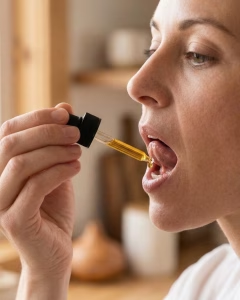
Questions to Ask Before Buying CBD: Safety, Labels, and Testing

CBD Product Selection & Transparency Guide

Use this guide to compare what can be verified before buying: product type, CBD per serving, THC content, ingredients and allergens, batch number, warnings, independent laboratory testing, Certificates of Analysis, and company support.

Reader goalCompare verifiable product facts
Written byBill Polyniak
UpdatedSeptember 9, 2026

Important Safety Note

CBD is not risk-free. Full-spectrum products may contain detectable THC, and CBD can raise medication, pregnancy, nursing, liver, child-use, pet-use, and other medical questions. Those questions belong with the appropriate qualified professional. A label or COA helps verify product information; it does not determine whether CBD is appropriate for a particular person or animal.

FDA CBD safety information for consumers

Comparison Checklist

Questions to Ask Before Buying CBD

What product type is it?

Confirm full-spectrum CBD, broad-spectrum CBD, CBD isolate, or another clearly identified format.

How much CBD is in one serving?

Compare CBD per serving separately from the total CBD in the container.

What does the COA report for THC?

Check the batch report rather than assuming a product is THC-free.

What are all of the ingredients?

Review carrier oils, sweeteners, flavors, botanicals, inactive ingredients, and any published allergen information.

Where is the batch or lot number?

The package identifier should connect the physical product to the correct laboratory report.

What warnings are on the label?

Read the manufacturer's current warning and storage information before buying.

Who performed the testing?

Look for an identifiable independent laboratory, testing date, report type, and the panels actually performed.

Can you open the original COA?

A summary can help, but the original report should remain available for the complete laboratory details.

Can you contact the company?

A transparent company should make product-label, ingredient, batch, and COA support easy to find.

Compare the Product Type Before Comparing Marketing

Product typeWhat the term generally describesWhat to verify
Full-spectrum CBDCBD with a broader hemp-compound profile and possible detectable THC.CBD, THC, other cannabinoids, ingredients, batch, and COA.
Broad-spectrum CBDCBD with multiple hemp compounds, commonly processed to reduce or remove THC.The actual cannabinoid results and THC status on the COA.
CBD isolateCBD separated from the broader hemp-compound profile.CBD amount, ingredient list, and COA cannabinoid results.

Read the dedicated CBD product-types guide.

Label Review

Use the Label to Compare the Product in Your Hand

The front of a package is not enough. The full label should make the product format, CBD amount, serving information, THC statement, ingredients, allergen information when provided, warnings, manufacturer information, and batch or lot identifier understandable.

Use the full CBD label-reading guide for a deeper walkthrough.

Firsthand Bluegrass Hemp Oil Example

See How a Real Product, Batch Number, and COA Connect

Elderberry Full Spectrum CBD Gummies — public laboratory example

This is a real Bluegrass Hemp Oil / Kentucky Cannabis Company example from the public COA repository. It demonstrates the matching process; it should not be assumed to be the currently shipping batch unless the package identifier matches.

Published strength
15 mg CBD per gummy
Package
60 count / 900 mg total CBD
Batch
3190-3165
Sample ID
SA-241205-53052
Laboratory
KCA Laboratories
Testing date
December 12, 2024
Report scope
Cannabinoid potency. This report should not be described as a complete contaminant panel.

Open the Elderberry Gummies KCA Laboratories potency report for batch 3190-3165

Search the full Bluegrass Hemp Oil COA repository

Independent Testing

Match the Batch Before Relying on a Certificate of Analysis

A useful COA should identify the product or sample, connect to the package batch or lot number, identify the laboratory and testing date, and make clear which tests were actually performed.

COA identity checklist

  • Product or sample name
  • Batch, lot, or sample identifier
  • Laboratory name
  • Testing or completion date
  • CBD and THC results
  • Other cannabinoids when reported

Testing-scope checklist

  • Potency / cannabinoid panel
  • Heavy metals when tested
  • Pesticides when tested
  • Residual solvents when tested
  • Microbial or mycotoxin panels when tested
  • Other panels only when the report actually includes them

Learn how Bluegrass Hemp Oil explains laboratory testing and review the public COA repository.

Company Transparency

What a CBD Company Should Be Able to Answer

Product support should stay practical: what the product is, what the label says, how much CBD and THC are reported, what ingredients are used, where the batch number is located, and where to find the matching laboratory report.

Bluegrass Hemp Oil can answer label, ingredient, batch, product-format, and COA questions. Medical, medication, pregnancy, nursing, pediatric, veterinary, or other individualized health questions belong with the appropriate professional.

Contact Bluegrass Hemp Oil about product-label, batch, or COA questions

Author & Scope

About Bill Polyniak and This Guide

This product-education guide was written by Bill Polyniak based on his experience with hemp cultivation, extraction, manufacturing, labels, laboratory testing, and customer education. It is not medical advice. Questions involving medications, pregnancy, nursing, liver concerns, children, pets, or medical conditions should be directed to the appropriate qualified professional.

Read Bill Polyniak's author profile

Published • Updated

Related Product-Selection Resources

Final Educational Disclaimer

This page is a product-selection and transparency guide, not individualized medical advice. Bluegrass Hemp Oil products are not intended to diagnose, treat, cure, or prevent disease. Use current labels and matching batch-specific laboratory reports when comparing products.

CBDA for Anxiety: Early Research, CBD Comparison, and Safety

CBDA and CBD Education

CBDA and Anxiety: Early Research, CBD Comparison, and Safety

CBDA is the raw, acidic form that can convert into CBD when hemp is heated. This consumer guide explains what early research can and cannot say, how CBDA compares with CBD, and how to review full-spectrum hemp products without confusing education with medical treatment.

Important anxiety and CBD safety note

This article is educational and is not medical advice. Bluegrass Hemp Oil products are not intended to diagnose, treat, cure, or prevent anxiety, panic attacks, depression, sleep disorders, or any disease. Speak with a licensed healthcare professional if anxiety affects your work, sleep, relationships, safety, or daily life, or before using CBD or CBDA products if you take medication, are pregnant or nursing, have liver concerns, are subject to drug testing, or manage a medical condition.

Quick Answer

What Does the Evidence Say About CBDA and Anxiety?

CBDA is an early-research cannabinoid, not an established anxiety treatment. CBDA-specific anxiety evidence cited on this page comes primarily from animal and laboratory research. CBD has some human clinical research, but CBD findings should not be treated as evidence that CBDA or a retail full-spectrum product will produce the same result.

1

CBDA is different from CBD

CBDA is the acidic precursor to CBD. Heat can convert CBDA into CBD through decarboxylation.

2

CBD has more human research

CBD has more anxiety-related human research than CBDA, but evidence is still limited and does not replace professional care.

3

Product review still matters

Compare labels, CBD and CBDA amounts, THC content, ingredients, and current Certificates of Analysis before buying.

Plain-English Basics

What Is CBDA?

CBDA stands for cannabidiolic acid, an acidic cannabinoid naturally present in raw hemp. When CBDA is heated, it can lose a carboxyl group and convert into CBD through decarboxylation. CBDA and CBD are chemically related but distinct compounds; that chemical difference does not establish that either one is medically superior.

A product that highlights CBDA should make the CBDA amount clear on its label or Certificate of Analysis. Composition information can identify what is present, but it does not establish that the product is appropriate for treating anxiety.

For broader context, review what cannabinoids are and how they differ.

Voice-search style answer

What is CBDA in simple terms? CBDA is the raw acidic form of CBD found in hemp before heat changes it. Some full-spectrum hemp products may preserve CBDA alongside CBD, but shoppers should verify the cannabinoid profile with a lab report.

  • Look for CBDA listed on the COA.
  • Check whether the product is full-spectrum, broad-spectrum, or isolate.
  • Confirm THC information if sensitivity or drug testing matters.
Evidence Types and Limits

What the Research Can and Cannot Establish

CBDA research related to anxiety is early. The strongest CBDA-specific material cited here comes from laboratory and animal work, not clinical trials showing that CBDA treats anxiety in people. CBD has some human anxiety-related studies, but those findings concern CBD under specific research conditions and should not be transferred to CBDA or to a retail hemp product.

Animal research

Pertwee et al. (2018) tested CBDA and a stable CBDA analogue in rat models that included stress-related anxiety-like behavior. Results in rats do not establish that CBDA reduces, relieves, manages, or treats anxiety in people.

Original peer-reviewed animal study

Laboratory research

The same paper also included in-vitro experiments using human 5-HT1A receptor-containing cell membranes. Receptor activity measured in a laboratory is not a demonstrated clinical effect and does not establish that a retail CBDA product will improve anxiety.

Original peer-reviewed laboratory study

Human clinical evidence

A randomized study by Bergamaschi et al. (2011) evaluated CBD, not CBDA, in 24 treatment-naive people with social anxiety during a simulated public-speaking test. That study is useful for understanding the CBD evidence base, but it does not establish an anxiety-treatment effect for CBDA or for retail full-spectrum products.

Original peer-reviewed CBD human study

Observational human evidence

This guide does not rely on observational human evidence to claim that CBDA improves anxiety. Consumer experiences or associations observed outside controlled research should not be treated as proof of treatment effectiveness.

Proposed biological mechanism

Serotonin 5-HT1A-related activity has been explored as a possible biological mechanism for CBDA-related effects in laboratory and animal models. A proposed mechanism is not proof of a medical benefit in humans.

Mechanism discussed in the original peer-reviewed study

Evidence limitation

No animal, laboratory, receptor-mechanism, or CBD-specific human study cited on this page proves that CBDA is an established anxiety treatment. Research findings should remain tied to the compound, study population, model, formulation, and outcomes that were actually studied.

For broader health context, see the NCCIH overview of cannabis and cannabinoids.

Compare Carefully

CBDA and CBD: How Their Chemistry and Evidence Differ

CBDA and CBD are related cannabinoids with different chemical forms and different research histories. Current evidence does not establish that CBDA is medically superior to CBD, or that either compound should be selected as a retail treatment for anxiety.

QuestionCBDACBDConsumer takeaway
What is it? The acidic precursor to CBD found in raw hemp. A more widely known cannabinoid often found in oils, gummies, capsules, and topicals. They are related but not interchangeable.
Research status Earlier-stage research and smaller human evidence base. More human anxiety-related discussion, but still not a replacement for care. Avoid “better than” claims unless supported by evidence.
Where it appears Often highlighted in raw, acidic, or minimally heated hemp profiles. Common in full-spectrum, broad-spectrum, and isolate products. Check the COA to confirm actual amounts.
Product questions How much CBDA is listed per serving and per container? How much CBD is listed per serving and per container? Both should be label-clear and lab-verified.

Learn more with what full-spectrum CBD means, CBD vs THC explained, and CBD lab testing and Certificates of Analysis.

Full-spectrum composition is not proof of a better outcome

A broader full-spectrum chemical profile can include CBD, CBDA, minor cannabinoids, terpenes, and trace THC. A broader chemical profile does not prove better outcomes, greater safety, or suitability for a particular person.

Product Label Education

How to Review a CBDA or CBD Product Before Buying

A professional-looking product page is not enough. Use the label and COA to confirm what the product actually contains.

CBD

CBD amount

Review CBD per serving and total CBD per container.

A

CBDA amount

Check whether CBDA is listed clearly on the lab report.

THC

THC content

Full-spectrum products may contain trace THC, which can matter for sensitivity and drug testing.

COA

Batch-specific COA

The COA should match the product and batch number you are using.

Safety First

CBDA, CBD, Anxiety, and Medication Safety

CBD and CBDA products should be approached carefully if you take medications or have health concerns. CBD may raise concerns around liver safety, drug interactions, and drowsiness, especially when combined with alcohol or sedating products.

For safety context, review the FDA CBD safety information for consumers.

Talk with a professional first if any of these apply

  • You take prescription or over-the-counter medication.
  • You use alcohol, sleep aids, sedatives, muscle relaxers, or mood-related medication.
  • You are pregnant, trying to become pregnant, or breastfeeding.
  • You have liver concerns or a medical condition.
  • You are subject to workplace or legal drug testing.
  • Anxiety is severe, persistent, worsening, or affecting daily life.

FDA strongly advises against CBD, THC, and marijuana use during pregnancy or while breastfeeding. Review FDA guidance on cannabis and CBD during pregnancy or breastfeeding.

Quality Checklist

Questions to Ask Before Buying a CBDA or CBD Product

Buyer questionWhat to look forHelpful resource
Does the product list CBDA? CBDA amount on the COA, not just marketing language. Learn about cannabinoids
Is it full-spectrum? CBD, minor cannabinoids, terpenes, and possible trace THC. Read about full-spectrum CBD
Could THC matter? Delta-9 THC, total THC where listed, and drug-testing concerns. Review CBD and drug testing
Is the COA batch-specific? Product name, batch number, date, lab name, cannabinoid panel, and contaminant testing. View Certificates of Analysis
Are safety warnings clear? Medication, pregnancy, nursing, drowsiness, THC, age, and storage cautions. Read CBD interaction considerations
Author

About Bill Polyniak

Bill Polyniak is the founder of Bluegrass Hemp Oil and Kentucky Cannabis Company. His experience includes hemp genetics, cultivation, extraction, cannabinoid chemistry, formulation and manufacturing, product labels, laboratory testing, and Certificates of Analysis.

Bill is presented here as a hemp-product and product-composition educator, not as a mental-health clinician, physician, pharmacist, psychologist, or psychiatrist.

Medical review disclosure

This page has not been independently medically reviewed. It summarizes early research and product-composition information for general education and is not a recommendation to use CBDA or CBD to treat anxiety or another medical condition.

Published • Updated

Read Bill Polyniak’s full bio

Questions

CBDA for Anxiety FAQs

Does CBDA treat anxiety?

No. CBDA should not be presented as a treatment for anxiety. It is a cannabinoid with early research interest, but anxiety that affects daily life should be discussed with a licensed healthcare professional.

Is CBDA better than CBD for anxiety?

There is not enough evidence to say CBDA is better than CBD for anxiety. CBD has more human anxiety-related research than CBDA, while CBDA remains an earlier-stage research topic.

What is the difference between CBDA and CBD?

CBDA is the acidic precursor to CBD. When raw hemp is heated, CBDA can convert into CBD through decarboxylation. They are related, but they are not the same ingredient.

Can full-spectrum CBD contain CBDA?

Some full-spectrum hemp products may contain CBDA, CBD, minor cannabinoids, terpenes, and trace THC. Check the batch-specific Certificate of Analysis to confirm the cannabinoid profile.

Can I use CBDA or CBD with anxiety medication?

Ask a doctor or pharmacist before combining CBD or CBDA products with anxiety medication, sleep medication, sedatives, alcohol, prescription medication, over-the-counter medication, herbs, or supplements.

Will full-spectrum products contain THC?

Full-spectrum hemp products may contain trace THC within applicable hemp limits. THC can matter for sensitivity, personal preference, and drug testing, so review the COA before buying.

What should I check before buying a CBDA product?

Check CBD and CBDA amounts, THC content, serving size, ingredients, product type, warnings, batch number, lab name, lab date, contaminant testing, and a batch-specific Certificate of Analysis.

Next Step

Compare CBDA and CBD Products With Clear Labels, COAs, and Realistic Expectations

CBDA may be interesting, but responsible shopping starts with clear product information. Review the label, serving information, cannabinoid profile, THC content, and batch-specific COA before making a buying decision.

CBD, Anxiety, and Depression: Research, Safety, and Product Quality

CBD, Anxiety, and Depression: Research, Safety, and Product Quality

CBD Mental Health Safety Guide

CBD, Anxiety, and Depression: Research, Safety, and Product Quality

Many adults compare CBD products while also dealing with anxious thoughts, low mood, sleep disruption, or stress. This guide explains what CBD research can and cannot say, when professional care comes first, and how to review labels, THC content, Certificates of Analysis, and safety questions before buying.

Important mental health and CBD safety note

This article is educational and is not medical advice. Bluegrass Hemp Oil products are not intended to diagnose, treat, cure, or prevent anxiety, depression, panic attacks, sleep disorders, or any disease. If symptoms affect your work, sleep, relationships, safety, or daily life, talk with a licensed healthcare professional. If you or someone you know is in immediate emotional distress in the United States, call or text 988 for the Suicide & Crisis Lifeline, or call 911 if there is immediate danger.

Quick Answers

Quick Answers About CBD, Anxiety, Depression, and Safety

These plain-English answers help shoppers understand the topic before they compare CBD products, talk with a clinician, or review a lab report.

Is CBD approved to treat anxiety or depression?

No. Retail CBD products are not approved to treat anxiety, depression, panic attacks, or any mental health condition. Treat CBD as a product-quality and safety conversation, not a replacement for mental health care.

Can I take CBD with anxiety or depression medication?

Ask a doctor or pharmacist first. CBD may affect how some medications are processed and may increase drowsiness when combined with alcohol, sleep products, sedatives, or other substances that slow brain activity.

What should I do during a mental health crisis?

Do not rely on CBD for urgent mental health symptoms. In the United States, call or text 988 for crisis support, or call 911 if there is immediate danger.

Care Comes First

Anxiety and Depression Deserve Professional Support

Anxiety and depression can affect sleep, work, relationships, appetite, energy, focus, and safety. The right next step depends on symptoms, medical history, medication use, substance use, trauma history, sleep quality, and crisis risk.

Use this article to become a more informed shopper, not to self-diagnose or delay care. If symptoms are new, worsening, persistent, or interfering with daily life, speak with a licensed healthcare professional.

For background on symptoms and treatment options, review the official NIMH anxiety disorders resource and NIMH depression resource.

Research Reality

What CBD Research Can and Cannot Say About Anxiety and Depression

Cannabis and cannabinoid research is active, but shoppers should not confuse early signals, small studies, preclinical mechanisms, or testimonials with proof that a retail CBD product treats anxiety or depression.

Question Consumer-friendly answer Safe takeaway
Does CBD research exist? Yes, cannabinoids are studied in relation to stress response, sleep, mood, and the endocannabinoid system. Research interest does not make retail CBD a treatment.
Does CBD cure anxiety or depression? No. CBD products should not be described as cures or treatments for mental health conditions. Use professional care for diagnosis and treatment planning.
Are testimonials enough? No. Individual experiences can be real for that person, but they are not clinical proof. Compare products with labels, COAs, and safety review.
Do mechanisms prove benefit? No. Research mechanisms, such as receptor or signaling discussions, do not guarantee results for an individual. Avoid products that make disease-treatment promises.

For general cannabinoid research context, review the NCCIH cannabis and cannabinoids overview. For CBD basics, start with what CBD oil is and how shoppers compare CBD products.

Safety Questions

CBD Safety, Medication Interactions, and Drowsiness Risk

CBD is not risk-free. It may interact with medications, may be associated with liver-related safety concerns, and may increase drowsiness when combined with alcohol, sleep medication, anxiety medication, sedatives, muscle relaxers, or other products that slow brain activity.

Before using CBD, especially for sensitive mental health topics, review CBD medication interaction questions and discuss your situation with a healthcare professional.

  • Do not stop or reduce anxiety or depression medication without clinician guidance.
  • Avoid combining CBD with alcohol or sedating products unless a clinician says it is appropriate.
  • Do not use CBD during pregnancy or breastfeeding without medical guidance.
  • Keep CBD, THC, and hemp products away from children and pets.
Before You Buy

How to Compare CBD Products for Label Clarity and Product Quality

A responsible CBD shopper compares what can be verified. A polished bottle is not enough. Look for label clarity, batch-specific testing, COA access, THC transparency, and realistic language that does not promise mental health treatment.

Label clarity

Confirm product type, CBD per serving, total CBD, ingredients, serving directions, and warnings. Use the CBD product label guide for a step-by-step review.

COA access

Review the product name, batch number, cannabinoid profile, CBD amount, THC content, testing date, and contaminant screening on the current COA.

Product type

Compare full-spectrum CBD, broad-spectrum CBD, and CBD isolate based on THC concerns, taste, personal preference, and professional guidance.

Realistic language

A trustworthy CBD education page should not promise to treat anxiety, depression, panic, trauma, insomnia, or other medical conditions.

CBD Type

Full-Spectrum CBD, THC-Free CBD, and Product Fit

Product type What it usually means What shoppers should verify
Full-spectrum CBD CBD plus other hemp compounds and possible trace THC. THC amount, cannabinoid profile, batch COA, and drug-testing concerns.
Broad-spectrum CBD CBD plus other hemp compounds with THC removed or reduced. A COA showing THC status and cannabinoid profile.
CBD isolate CBD separated from other hemp compounds. CBD amount, ingredient list, purity, and COA.
Unclear hemp extract A label that does not clearly explain the extract type. Ask for a COA or choose a clearer product.

For deeper product education, compare what full-spectrum CBD means, how CBD lab testing works, and batch-specific Certificates of Analysis.

About the Author

Bill Polyniak, Founder and CBD Educator

Bill Polyniak is the founder of Bluegrass Hemp Oil and Kentucky Cannabis Company. His work focuses on Kentucky-grown hemp, full-spectrum CBD education, product-label clarity, batch-specific lab testing, COAs, extraction standards, and helping shoppers ask better questions before choosing a CBD product.

Bill’s education style is especially important for sensitive topics like anxiety and depression. Rather than presenting CBD as a cure or replacement for care, he focuses on what consumers can verify: ingredients, CBD amount, THC content, serving information, lab testing, and when to speak with a licensed healthcare professional.

Continue Learning

Helpful CBD Safety and Product Education Resources

FAQ

Frequently Asked Questions

Is CBD approved to treat anxiety or depression?

No. Retail CBD products are not FDA-approved to treat anxiety, depression, panic attacks, sleep disorders, or any mental health condition. This guide is educational and should not replace professional mental health care.

Can I stop my medication and use CBD instead?

No. Do not stop, reduce, or replace prescribed medication without guidance from a licensed healthcare professional. Sudden medication changes can be unsafe.

Is it safe to use CBD with anxiety or depression medication?

Ask a doctor or pharmacist first. CBD may interact with some medications and may increase drowsiness when combined with sedating products, alcohol, sleep medication, anxiety medication, or other substances that slow brain activity.

Can full-spectrum CBD affect a drug test?

Full-spectrum CBD may contain trace THC. People subject to drug testing should review the product label, COA, THC results, and workplace rules before using any hemp product.

What should I check on a CBD Certificate of Analysis?

Check the product name, batch number, CBD amount, THC content, other cannabinoids, testing date, lab name, and contaminant screening for pesticides, heavy metals, residual solvents, microbials, and mold.

What should I do if I feel unsafe or in crisis?

In the United States, call or text 988 for the Suicide & Crisis Lifeline. Call 911 or go to emergency care if there is immediate danger.

Next Step

Compare CBD Products With Safety, Labels, and COAs First

Use this guide to ask better questions. Start with the label, then check the batch-specific Certificate of Analysis, THC content, ingredients, product type, and medication safety considerations before deciding whether a CBD product belongs in your routine.

Questions to Ask Before Buying CBD

Questions to Ask Before Buying CBD

CBD Buyer Education

Questions to Ask Before Buying CBD

A clear CBD buying decision starts with labels, lab reports, THC information, ingredients, and safety questions. Use this guide to compare CBD products without relying on hype or medical promises.

Quick Answers

Quick Answers About Buying CBD

These plain-English answers help shoppers compare CBD products quickly before reading the deeper sections below.

What should I ask before buying CBD?

Ask what type of CBD it is, how much CBD is listed per serving, whether THC is present, whether a current COA is available, and whether the label includes realistic safety information.

How do I know if a CBD product is transparent?

A transparent CBD product has a clear label, batch-specific lab report, ingredients, CBD amount, THC results, company contact information, and no disease-treatment promises.

Can CBD interact with medication?

Yes. CBD can interact with some medications and may increase drowsiness with alcohol or sedating products. Ask a doctor or pharmacist before using CBD with medication.

Buyer Questions

What Questions Should You Ask Before Buying CBD?

A trustworthy CBD product should be easy to evaluate before purchase. If a brand cannot explain product type, CBD amount, THC content, ingredients, testing, and COA access, treat that as a reason to slow down and ask more questions.

What type of CBD is it?

Compare full-spectrum CBD, broad-spectrum CBD, and CBD isolate. Each format has different cannabinoid and THC considerations.

How much CBD is listed?

Review CBD per serving, total CBD per package, serving directions, and whether the package makes the math easy to understand.

Is there a current COA?

A batch-specific Certificate of Analysis helps shoppers compare the label with available lab data.

Are the claims realistic?

A CBD product should not promise to diagnose, treat, cure, or prevent disease. Education should come before claims.

Label Reading

How Much CBD Is Listed Per Serving?

Serving information helps customers understand what the label says. It should not be used as medical dosage advice. Follow the product label and ask a healthcare professional if you are unsure whether CBD is appropriate for you.

Label itemWhat it tells youWhy it matters
CBD per servingThe amount of CBD listed for one stated serving.Helps compare products using the same serving-size lens.
Total CBD per packageThe total CBD listed in the entire container.Helps compare package size and overall value.
Product formatOil, gummy, capsule, topical, or pet-specific product.Different formats are used differently and may have different ingredients.
Warnings and storageSafety notes, age guidance, child/pet storage, and directions.Responsible labels should help buyers use and store products carefully.

For more help, read the CBD product label guide and compare CBD oil, gummies, and capsules.

CBD Types

What Type of CBD Is It?

Full-spectrum, broad-spectrum, and isolate CBD are different product types. One is not automatically better for everyone. The right fit depends on personal preference, THC concerns, label review, and professional guidance when appropriate.

CBD typePlain-English meaningWhat to review
Full-spectrum CBDCBD plus other hemp compounds and possible trace THC within applicable hemp limits.THC content, COA, cannabinoid profile, and personal THC concerns.
Broad-spectrum CBDCBD plus other hemp compounds, typically with THC removed or reduced.COA details and whether THC was detected.
CBD isolateCBD-focused ingredient without other hemp compounds.CBD amount, purity, ingredient list, and COA.

For related education, learn what full-spectrum CBD means, learn about cannabinoids in hemp, learn about hemp terpenes, and understand the difference between CBD and THC.

Testing

Is There a Certificate of Analysis?

A Certificate of Analysis, or COA, helps shoppers compare product-label information with available lab data. COAs support transparency, but they do not prove that a CBD product treats symptoms or disease.

Cannabinoid content

A COA can help shoppers review the CBD amount and other cannabinoids reported by the lab.

THC levels

A COA can help shoppers review whether THC was detected and how that compares with label expectations.

Batch matching

Batch-specific testing helps connect a product package with its available lab report.

Transparency limits

Lab reports support product review. They should not be presented as proof of medical effectiveness.

View Bluegrass Hemp Oil Certificates of Analysis, learn about CBD lab testing, and read the CBD quality guide.

THC Review

Does the Product Contain THC?

Do not assume a hemp-derived product is THC-free. Full-spectrum CBD may contain trace THC within applicable hemp limits. Review the product label and COA to understand whether THC is present.

Drug testing

THC content can matter for employment testing, athletics, licensing, probation, or other screening requirements.

THC sensitivity

Some people prefer to avoid THC because of personal preference, sensitivity, or comfort level.

Current lab results

Use product-specific COAs instead of relying only on front-label claims.

Safety Questions

Can CBD Interact With Medication?

Important safety note: This article is educational and is not medical advice. Bluegrass Hemp Oil products are not intended to diagnose, treat, cure, or prevent any disease. Speak with a licensed healthcare professional before using CBD if you take medication, are pregnant or nursing, have liver concerns, manage a medical condition, or are shopping for a child, pet, or dependent.

  • Medication: CBD may interact with prescription medications, over-the-counter medications, herbs, supplements, alcohol, sleep aids, anxiety medication, seizure medication, pain medication, blood thinners, and other therapies.
  • Drowsiness: CBD may increase sedation or drowsiness, especially when combined with alcohol or other sedating products.
  • Liver-related questions: CBD may raise liver-safety questions for some people, especially at higher exposures or with certain medicines.
  • Pregnancy and breastfeeding: Avoid CBD, THC, and cannabis products during pregnancy or breastfeeding unless a qualified healthcare professional directs otherwise.

Review CBD medication interaction guidance and read how long CBD may stay in your system.

Ingredients

What Ingredients Are Used?

Ingredients matter for taste, format, sensitivities, dietary preferences, and product use. Ingredient review should not be confused with claims that a CBD product treats a health condition.

Oral products

Review carrier oils, sweeteners, flavorings, capsule ingredients, allergens, serving details, and THC content.

Topical products

Review external-use directions, skin-sensitivity warnings, fragrance, essential oils, and storage guidance.

Household safety

Keep CBD products away from children and pets. Food-like CBD products, such as gummies, need extra care with storage.

Prescription CBD

Is CBD Approved for Seizures?

The FDA-approved CBD drug Epidiolex is a prescription medication for seizures associated with certain seizure disorders. Retail CBD oils, gummies, capsules, and topicals are not the same as prescription Epidiolex and should not be used as seizure treatments.

Read the Epidiolex vs CBD oil safety guide.

Related Reading

Helpful CBD Buying Resources

These related guides help shoppers compare labels, product types, THC content, testing, and safety questions before buying.

BP Bill Polyniak Founder · Product Developer · CBD Educator

About the Author

Bill Polyniak

Bill Polyniak is the founder of Bluegrass Hemp Oil and Kentucky Cannabis Company. His work focuses on Kentucky hemp education, full-spectrum CBD, product quality, labels, Certificates of Analysis, and transparent customer education.

For shoppers, Bill’s message is straightforward: understand the product before you buy it. A quality CBD product should be clearly labeled, batch-tested, and presented without medical promises.

FAQ

Questions to Ask About CBD: FAQs

What is the first question to ask before buying CBD?

Start by asking what type of CBD the product contains and whether the label clearly lists CBD per serving, THC content, ingredients, warnings, and COA access.

How do I know if a CBD product has been lab tested?

Look for a batch-specific Certificate of Analysis from a third-party lab. The batch number on the product should match the lab report when possible.

Does full-spectrum CBD contain THC?

Full-spectrum CBD may contain trace THC within applicable hemp limits. Review the COA to understand whether THC was detected and how much is listed.

Is CBD safe to use with medication?

CBD may interact with some medications and may increase drowsiness with alcohol or sedating products. Ask a doctor or pharmacist before using CBD if you take medication.

Are retail CBD products approved to treat health conditions?

No. Retail CBD products should not be presented as treatments for disease. The FDA-approved CBD drug Epidiolex is a prescription medication for specific seizure disorders and is not the same as retail CBD products.

Final Takeaway

Good CBD Questions Lead to Better Product Decisions

Before buying CBD, compare the label, COA, THC content, ingredients, product type, company transparency, and safety questions. When a product is easy to understand and avoids medical promises, shoppers can make a more informed choice.

Top 5 CBD Benefits People Seek: A Practical Wellness Guide

CBD Benefits Guide

Top 5 CBD Benefits People Seek: A Practical Wellness Guide

CBD benefit searches usually come from real life questions: comfort, stress, sleep, skin care, and long-term wellness. This guide explains what people commonly ask, what research can and cannot say, and how to compare CBD products with labels, COAs, THC information, and safety in mind.

Quick Answers

What CBD Benefits Do People Ask About Most?

The five most common CBD benefit topics are comfort routines, stress support, sleep routines, skin care, and brain-health research. A responsible CBD guide explains these topics without promising that CBD will treat or cure a medical condition.

1

Comfort

People often ask about CBD for sore muscles, stiff joints, or daily comfort routines. Product format and safety review matter.

2

Stress

CBD is often researched for calm routines, but it is not a substitute for mental health care, therapy, or prescribed medication.

3

Sleep

Some shoppers use CBD as part of a wind-down routine. Persistent insomnia or sleep disruption deserves medical guidance.

4

Skin

CBD topicals are often compared for external-use skin and massage routines, not as cures for acne, eczema, or psoriasis.

5

Brain health

CBD research includes oxidative stress and neuroprotection topics, but retail CBD should not be marketed as disease prevention.

CBD Wellness Map

Match the CBD Format to the Wellness Goal

CBD is not one-size-fits-all. Oils, gummies, capsules, topicals, and rollers fit different routines. Use this table as a shopping guide, then confirm serving size, ingredients, THC content, and the current lab report before buying.

Wellness goalFormat to compareWhat to check first
Daily wellness routineCBD oil or capsulesCBD per serving, total CBD per package, carrier oil, THC content, and COA.
Localized massage routineCBD topical, salve, or rollerExternal-use directions, skin-sensitivity notes, ingredients, and fragrance or essential oils.
Simple repeatable routineCBD gummies or capsulesServing size, sugar content, storage needs, THC content, and child-resistant storage habits.
Evening wind-downCBD oil or sleep rollerTiming, sedating ingredients, medication interactions, alcohol use, and next-day responsibilities.

Important CBD Safety Note

This article is educational and is not medical advice. Bluegrass Hemp Oil products are not intended to diagnose, treat, cure, or prevent pain, anxiety, insomnia, inflammation, acne, neurological disease, or any medical condition. Talk with a qualified healthcare professional before using CBD if you take medication, have liver concerns, are pregnant or nursing, manage a medical condition, are shopping for a child or dependent, or are subject to drug testing.

Top Benefit Topics

The Top 5 CBD Benefits People Seek, Explained Carefully

These topics are common because they match real shopper questions. The safest content path is to explain the wellness context, point to research responsibly, and remind readers to verify product quality before use.

01

CBD for comfort and inflammation interest

Many shoppers compare CBD for sore muscles, stiff joints, exercise recovery, and daily comfort. A topical may fit a localized massage routine, while CBD oil may fit a whole-body routine. Chronic, severe, or worsening discomfort should be discussed with a healthcare professional.

02

CBD for stress and calm routines

People often ask whether CBD can support calm without the high associated with THC. The consumer-friendly answer is cautious: CBD may fit a stress-management routine, but it should not replace professional mental health care or medication guidance.

03

CBD for sleep routines

CBD sleep searches often come from trouble winding down. A responsible routine also looks at caffeine, screen time, alcohol, pain, medication, stress, and sleep schedule. Ongoing insomnia should not be self-treated without support.

04

CBD for skin and topical care

CBD skincare interest often relates to irritated-looking skin, massage, and topical wellness. Topicals should be used externally as directed and should not be described as cures for acne, eczema, psoriasis, wounds, or skin disease.

05

CBD and brain-health research

CBD is studied in relation to oxidative stress, inflammation, and neuronal protection. That research is interesting, but it does not mean retail CBD prevents dementia, Parkinson’s disease, Alzheimer’s disease, stroke, or cognitive decline.

COA

Product quality connects every benefit topic

Before comparing CBD benefits, check the product label, CBD per serving, ingredients, THC amount, batch number, and current Certificate of Analysis. Quality and transparency make the conversation more useful.

Product Quality

How to Compare CBD Products Before You Buy

CBD benefit articles are more useful when they help readers make practical buying decisions. A strong product page should make the label, COA, ingredient list, serving information, and THC content easy to review.

Full-Spectrum vs Isolate

Why the Type of CBD Matters

Full-spectrum CBD contains CBD plus other naturally occurring hemp compounds, including minor cannabinoids and terpenes, and may include trace THC within applicable hemp limits. CBD isolate focuses on CBD only. Broad-spectrum CBD typically includes CBD and other hemp compounds while removing or reducing THC.

One type is not automatically best for everyone. A shopper with THC sensitivity, drug-testing concerns, or uncertainty may want to avoid full-spectrum products. A shopper interested in whole-plant hemp education may want to compare full-spectrum products and their COAs. For more context, learn what full-spectrum CBD means, learn about cannabinoids in hemp, and learn about hemp terpenes.

Serving Size

How Much CBD Should Someone Take?

Quick answer: There is no universal CBD serving for comfort, stress, sleep, skin care, or wellness. Start with the product label, use the lowest practical serving, track your response, and ask a healthcare professional if you take medication or manage a diagnosed condition.

What affects serving decisions?

Product type, timing, food intake, body sensitivity, medication use, THC content, and the total cannabinoid profile can all matter.

What should shoppers avoid?

Do not start several new wellness products at the same time, and do not change prescription medication without professional guidance.

For more product-shopping context, read the CBD product label guide and review CBD medication interaction guidance.

Keep Learning

Helpful CBD Education Resources

These related guides help readers compare CBD product types, benefits, safety questions, labels, COAs, and THC content before buying.

About the Author

BP

Bill Polyniak

Founder • Product Developer • CBD Educator

About Bill Polyniak

Bill Polyniak is the founder of Bluegrass Hemp Oil and Kentucky Cannabis Company. His work focuses on Kentucky-grown hemp education, full-spectrum CBD product development, transparent labels, batch-specific Certificates of Analysis, and practical guidance that helps shoppers understand what they are buying.

For readers comparing CBD benefits, Bill’s message is simple: start with education, review the product label, check the COA, and avoid confusing wellness products with medical treatment.

FAQ

CBD Benefits FAQs

What are the top CBD benefits people seek?

The most common topics are comfort routines, stress support, sleep routines, skin care, and brain-health research. CBD products should be discussed as wellness products, not as cures or treatments for diagnosed conditions.

Is CBD good for pain or inflammation?

CBD is often researched and discussed for comfort and inflammation-related wellness routines, but retail CBD products should not be presented as treatments for chronic pain, arthritis, injury, neuropathy, or inflammatory disease.

Can CBD help with stress or sleep?

Some adults use CBD as part of calm or nighttime routines, but results vary. Ongoing anxiety, depression, insomnia, or sleep disruption should be discussed with a qualified healthcare professional.

Will full-spectrum CBD show up on a drug test?

Full-spectrum CBD may contain trace THC. THC content, product quality, and mislabeling can matter for drug testing. Review the COA and consider avoiding full-spectrum CBD if drug testing is a concern.

What should shoppers check before buying CBD?

Check the product type, CBD per serving, total CBD per package, ingredients, THC content, warnings, batch number, company transparency, and current Certificate of Analysis.

Bottom Line

CBD Benefits Are Best Understood Through Quality, Safety, and Fit

CBD benefits should be explained with realistic expectations. Match the product format to the routine, review the label and COA, understand THC content, watch for medication interactions, and ask a healthcare professional when symptoms are chronic, severe, diagnosed, or changing.

Full-Spectrum Hemp Oil, REM Cycles & Better Nighttime Routines

Sleep Architecture Guide

Full-Spectrum Hemp Oil, REM Cycles, and Better Nighttime Routines

The goal of a nighttime routine is not simply to feel knocked out. Restorative sleep depends on moving through non-REM and REM stages in a natural rhythm, usually across four to six cycles each night. This guide explains the Dream Gap, why heavy sedation can feel different from true restoration, and how Genesis Blend Full Spectrum CBD Oil fits into a calmer evening routine.

Educational content only. Bluegrass Hemp Oil products are not intended to diagnose, treat, cure, or prevent insomnia, sleep apnea, anxiety disorders, or any disease. Talk with a qualified healthcare professional before using CBD, especially if you take medication, are pregnant or nursing, have a medical condition, are subject to drug testing, or are considering CBD for a pet.

Start Here: The Dream Gap

The Dream Gap is the difference between being sedated and being restored. Many sleep aids focus on fast onset, but your brain still needs enough time and stability to move through the full architecture of sleep. REM sleep, deep non-REM sleep, and lighter transition stages all play a role in how clear, steady, and recovered you feel the next morning.

Genesis Blend is positioned for people who want a steady evening ritual rather than a forceful knockout. The focus is measured, full-spectrum hemp support, trace THC within legal hemp limits, and consistency over escalation.

Sleep cycles need room

Healthy sleep moves through repeating stages rather than one flat state. A good routine should help you wind down without overpowering that rhythm.

REM matters

REM sleep is associated with dreaming, emotional processing, and next-day mental clarity. Protecting REM is part of protecting restorative rest.

Consistency beats force

A measured 10mg/ml full-spectrum oil makes it easier to repeat the same evening routine instead of chasing stronger effects.

The Science of Sleep Architecture: REM vs. Sedation

Sleep is not one long block. The National Heart, Lung, and Blood Institute explains that sleep cycles through REM and non-REM stages about every 80 to 100 minutes, and many adults complete four to six cycles each night. That is why the better question is not only “Did I fall asleep?” It is “Did my brain have room to cycle?”

Sedatives / High-THC Formulas

  • Fast onset: designed to make you feel knocked out quickly.
  • REM pressure: higher THC exposure has been associated with less REM time and delayed REM onset in controlled sleep research.
  • Dreamless sleep: some users feel asleep, but not always restored.
  • Morning fog: next-day heaviness may occur, especially when cannabinoids are combined with alcohol or sedatives.

Genesis Blend Full-Spectrum Approach

  • Natural onset: built for a calm wind-down routine rather than intoxication.
  • Sleep architecture mindset: keeps trace THC within legal hemp limits and focuses on the hemp matrix.
  • Restorative sleep goal: supports evening relaxation without chasing a high-THC knockout.
  • Morning clarity goal: the 10mg/ml format helps adults personalize slowly and consistently.

The THC Interference

A pilot randomized trial using 10mg THC plus 200mg CBD in adults with insomnia found reduced REM sleep and delayed REM latency. That does not mean every THC product affects every person the same way, but it shows why REM matters.

The “Dreamless” State

REM is where vivid dreaming most often occurs. When REM is shortened or pushed later, a person may feel like they slept while still waking up groggy, emotionally flat, or unrested.

The CBD Advantage

CBD is non-intoxicating and is being studied for its interaction with stress, serotonin, and endocannabinoid pathways. For sleep, the responsible promise is support for a calmer routine, not a guaranteed insomnia cure.

Why You Wake Up Tired: The “THC Hangover” Explained

“THC hangover” is a practical phrase people use for next-morning fog, heavy eyes, low motivation, or a sedated feeling after high-THC nighttime products. It can also overlap with ordinary sleep debt, alcohol use, medication effects, or untreated sleep disorders, so persistent symptoms deserve professional guidance.

REM Rebound, explained simply

When REM sleep has been repeatedly shortened, the brain may try to recover that lost stage later. Some people describe this as vivid dreams or intense nightmares after stopping high-THC use. The experience is not proof that THC caused every dream, but it fits the broader pattern researchers describe when REM is suppressed and then returns.

Genesis Blend takes a different path. A natural 10mg/ml full-spectrum extract gives adults a measured option that fits into a consistent wind-down routine without trying to overpower the brain’s sleep stages.

The Botanical Standard: Direct-from-Plant vs. Chemically Altered

The Bluegrass Hemp Oil philosophy is simple: do less to the plant so the plant can do more of the work. Genesis Blend Original Strength uses full-spectrum hemp bloom extract oleoresin in USP MCT oil from coconut, with CBD, minor cannabinoids, terpenes, and trace THC within legal hemp limits.

For sleep, that botanical context matters. A product built around the plant’s original profile gives the body a broader hemp matrix than isolate-only formulas, while still keeping the experience non-intoxicating.

Woman using Full Spectrum Genesis Blend CBD oil with a dropper

Full-spectrum hemp oil with approximately 10mg CBD per ml in the 4oz bottle.

The “spiking” red flag

Some sleep products chase a stronger effect with added isolate, high THC, melatonin-heavy formulas, or synthetic-feeling blends. Stronger is not always more restorative.

The Bluegrass standard

Bloom-only oleoresin keeps the plant’s natural context intact, including aromatic terpenes such as myrcene and linalool that are commonly discussed in sleep-focused cannabinoid research.

The 10mg/ml logic

The 4oz Genesis Blend bottle contains 1190mg total CBD in 119ml, giving approximately 10mg CBD per ml for precise, repeatable serving control.

Important: Full-spectrum hemp oil can contain trace THC within legal hemp limits. Anyone subject to drug testing should review current lab reports and speak with a qualified professional before use.

Why We Refuse to Use CBD Isolate in Our Sleep Blends

Isolate removes the plant context

CBD isolate is like taking a single vitamin instead of eating the fruit. The compound may be useful in some situations, but it removes minor cannabinoids, aromatic terpenes, and other plant constituents.

Full-spectrum keeps the evening ritual whole

For a sleep-focused routine, Bluegrass Hemp Oil prefers the original hemp profile because the broader plant matrix may contribute to the overall calming experience. The claim stays careful: support for relaxation, not treatment for insomnia.

Clinical Insights: How Full-Spectrum CBD May Support Circadian Balance

CBD sleep research is still developing, so the most responsible approach is to connect emerging evidence with practical sleep hygiene. Genesis Blend is best understood as part of a consistent evening routine that supports relaxation, not as a stand-alone medical sleep treatment.

Cortisol and the “too alert” night

Nighttime waking is often tied to stress physiology. Some human research has reported decreased plasma cortisol after oral CBD at much higher doses than typical hemp oil servings. This is a research signal, not a disease claim.

Anandamide support

CBD may influence endocannabinoid tone through mechanisms involving FAAH and anandamide, sometimes called the body’s bliss molecule. Researchers are exploring how that may relate to nervous-system balance.

Circadian consistency

The strongest sleep routine still begins with timing: consistent bedtime, low light, less alcohol, limited late caffeine, and a measured serving used the same way each evening.

A Rest-First Evening Routine With Genesis Blend

The best CBD sleep routine is simple enough to repeat. Treat Genesis Blend as one part of a larger wind-down ritual, alongside light, temperature, timing, and screen habits.

1. Set the same window

Use CBD at the same point in your evening routine so your body learns the pattern.

2. Lower stimulation

Dim lights, reduce scrolling, and give your nervous system fewer signals to stay alert.

3. Start low and observe

Use the labeled serving guidance and track how you feel the next morning before increasing.

4. Protect the morning

If you feel groggy, pause changes and review alcohol, late caffeine, medications, and sleep schedule.

Peer-Reviewed Evidence & Helpful References

These references help explain the difference between product education, emerging evidence, and medical certainty.

  1. Suraev et al. sleep architecture trial: A pilot randomized crossover trial in adults with insomnia used 10mg THC plus 200mg CBD and found REM-related changes. Macquarie University record and CED Clinic brief.
  2. CBD and sleep outcomes: A 2025 Clinical and Translational Oncology study reported that higher CBD dose categories correlated with sleep disturbance score improvements in a cancer-care setting. Springer article.
  3. CBD-terpene formulation: A randomized crossover study evaluated a THC-free CBD plus terpene formulation in adults with insomnia. Journal of Clinical Sleep Medicine abstract.
  4. Sleep stages: The NHLBI explains REM and non-REM cycle timing and the usual four to six sleep cycles per night. NHLBI sleep stages guide.
  5. CBD safety: CBD is non-intoxicating, but it is not risk-free. Review CDC and FDA consumer guidance before use. CDC CBD overview and FDA consumer update.

Related Sleep and Anxiety Education

Nighttime routines and anxiety-related CBD searches often overlap, but the safest approach is still product education, realistic expectations, medication awareness, and professional guidance for persistent symptoms. For a separate safety-first shopping resource, review our best CBD products for anxiety guide.

Use that companion article to compare labeling, extract type, COA access, THC considerations, and cautious CBD language without treating retail CBD as a medical anxiety solution.

FAQ: Navigating Sleep With Bluegrass Hemp Oil

Will Genesis Blend make me feel groggy?

Genesis Blend is non-intoxicating and stays within legal hemp THC limits, so it is not designed to create a high-THC knockout effect. CBD can still cause drowsiness in some people. Start with the labeled serving, avoid alcohol or sedatives unless your clinician approves, and do not drive until you know how you respond.

Can I use this for my pet’s sleep?

Use pet-specific products and involve your veterinarian. The FDA has not approved CBD for animal use, and human products may contain flavors, carrier oils, or trace THC levels that are not appropriate for every animal.

Why is 4oz better than 1oz for sleep?

The larger bottle does not make CBD stronger or medically superior. Its advantage is consistency: 119ml at approximately 10mg/ml supports a repeatable nightly routine, fewer reorders, and less variation in serving habits.

Is full-spectrum CBD the same as THC?

No. CBD and THC are different cannabinoids. CBD is non-intoxicating, while THC is the compound most associated with the cannabis high. Full-spectrum hemp oil can contain trace THC within legal hemp limits, so anyone with drug-testing concerns should review lab reports and seek professional guidance.

Can CBD cure insomnia?

No. Over-the-counter hemp CBD products are not FDA-approved to diagnose, treat, cure, or prevent insomnia or any disease. If sleeplessness lasts more than a few weeks, includes snoring or gasping, causes daytime impairment, or is linked to anxiety, depression, pain, or medication changes, speak with a healthcare professional.

Choose Restoration Over Knockout Sleep

Genesis Blend Original Strength is built for adults who want a consistent full-spectrum hemp oil, clear serving information, and a plant-forward approach to evening relaxation.

These statements have not been evaluated by the Food and Drug Administration. This product is not intended to diagnose, treat, cure, or prevent any disease. Keep out of reach of children.

Reader Guide

Quick Answers for Full-Spectrum Hemp Oil and Nighttime Routines

Use this section as a plain-English summary before comparing full-spectrum hemp oil products. It keeps the focus on sleep routines, REM-aware education, CBD safety, product labels, and batch-specific lab reports.

What should a nighttime CBD routine focus on?

A good routine should help you wind down consistently. It should not promise to treat insomnia, sleep apnea, anxiety, or any diagnosed condition.

Why does REM sleep matter?

REM sleep is part of normal sleep architecture. Adults usually move through several REM and non-REM cycles each night, so the goal is steady rest, not simply feeling knocked out.

What should shoppers verify?

Check the CBD amount, serving information, THC content, ingredients, drug-testing concerns, and a current batch-specific Certificate of Analysis.

BP

Bill Polyniak

Founder • Product Developer • CBD Educator

About the Author

Bill Polyniak

Bill Polyniak is a Kentucky hemp pioneer associated with Bluegrass Hemp Oil and Kentucky Cannabis Company. His consumer-education work focuses on full-spectrum hemp, transparent product labels, batch-specific Certificates of Analysis, and helping shoppers understand CBD without medical hype.

For nighttime CBD education, Bill’s approach is simple: protect the reader first. Compare labels, review COAs, understand THC content, avoid disease-treatment claims, and ask a qualified healthcare professional when sleep issues, medications, pregnancy, nursing, liver concerns, or drug testing are part of the decision.

Read Bill Polyniak’s Bluegrass Hemp Oil profile and learn how CBD hemp oil came to Kentucky.