How to Choose High-Quality Full-Spectrum CBD Gummies: Labels, COAs, and Safety
Full-spectrum CBD gummies guide • Quality, COAs, labels, and safety
How Do You Choose High-Quality Full-Spectrum CBD Gummies?
Full-spectrum CBD gummies can look similar on a product page, but quality depends on details shoppers can verify: hemp source, extract type, CBD per serving, THC level, ingredient list, batch-specific lab testing, and the Certificate of Analysis.
This guide explains how to compare full-spectrum CBD gummies without relying on buzzwords, medical promises, or vague “premium” claims. Start with transparency, then decide whether a gummy format fits your routine.
Important CBD Safety Note
CBD may interact with medications, may cause drowsiness, and may carry liver-related safety concerns. Talk with a qualified healthcare professional before using CBD if you take medication, drink alcohol, use sedating products, are pregnant or nursing, have liver concerns, are subject to drug testing, or manage a medical condition. For pet CBD, talk with your veterinarian first.
Quick answer
What Makes a Full-Spectrum CBD Gummy Worth Considering?
A full-spectrum CBD gummy is worth considering when the brand makes the product easy to evaluate. Look for a clear product label, CBD per serving, THC information, ingredient transparency, batch-specific testing, and a Certificate of Analysis that matches the product.
The strongest quality signal is not a dramatic wellness claim. It is a clear paper trail that lets you compare what is actually in the gummy before you buy.
Key takeaways
CBD Gummy Quality Signals to Know First
Full-spectrum means broader hemp extract.
It may include CBD, minor cannabinoids, terpenes, and trace THC. It does not mean the product is right for everyone.
COAs matter.
A batch-specific Certificate of Analysis helps verify CBD, THC, and testing details.
Labels should be clear.
Shoppers should be able to find CBD per serving, ingredients, serving information, and warnings.
Trace THC matters.
Full-spectrum products may contain trace THC, so drug-testing risk should be considered.
Quality framework
Full-Spectrum CBD Gummies Quality Checklist
Use this checklist before comparing price, flavor, or package design. A quality CBD gummy should be easy to understand without guessing.
| What to check | Why it matters | Helpful internal guide |
|---|---|---|
| CBD per serving | Lets shoppers compare products clearly without relying on package size alone. | how to read a CBD product label |
| Extract type | Full-spectrum, broad-spectrum, and isolate are not the same. | CBD product types explained |
| THC level | Full-spectrum gummies may contain trace THC, which may matter for drug testing. | CBD vs THC explained |
| Batch-specific COA | Helps verify cannabinoid levels and testing details for the specific product. | review CBD Certificates of Analysis |
| Ingredient list | Helps identify sugars, gelatin or pectin, flavorings, colors, carrier oils, and allergens. | CBD quality guide |
| Realistic language | Responsible CBD brands avoid disease, treatment, cure, and guaranteed-result claims. | questions to ask before buying CBD |
Extract type
What Does “Full-Spectrum” Mean in CBD Gummies?
Full-spectrum CBD gummies are made with hemp extract that may contain CBD, minor cannabinoids, terpenes, and trace THC. That broader hemp profile is different from CBD isolate, which is refined to contain cannabidiol only.
Full-spectrum does not automatically mean “better,” “stronger,” or appropriate for every shopper. It means the product should be reviewed with extra attention to THC level, ingredient list, serving information, and lab testing.
For a deeper explanation, read what full-spectrum CBD means.
Simple comparison
- Full-spectrum: CBD plus other hemp compounds and possible trace THC.
- Broad-spectrum: CBD plus other hemp compounds with THC removed or not detected, depending on testing.
- Isolate: CBD separated from most other hemp compounds.
Testing and transparency
How to Read a CBD Gummy Certificate of Analysis
A Certificate of Analysis, often called a COA, is a lab report that should connect to a product or batch. It helps shoppers verify CBD amount, THC level, testing date, lab name, and contaminant testing. COAs do not prove a CBD product treats or prevents any condition, but they are one of the clearest transparency tools a shopper can use.
Product nameDoes the COA match the gummy product?
Batch numberCan you connect the lab report to the product package?
CBD amountDoes the reported CBD align with the label?
THC levelIs delta-9 THC and total THC clearly reported?
Testing dateIs the report current enough to be useful?
Contaminant testingLook for heavy metals, pesticides, residual solvents, and microbial testing.
Format comparison
CBD Gummies vs Oils, Capsules, and Topicals
CBD gummies are one product format. The best format depends on the shopper’s routine, label clarity, ingredients, serving information, and safety considerations, not on medical claims.
| Format | Helpful for comparing | What to check | Next step |
|---|---|---|---|
| CBD gummies | Familiar edible format. | Serving size, ingredients, sugar content, CBD amount, THC level, COA. | CBD gummies for beginners |
| CBD oil | Flexible serving routines. | CBD per serving, carrier oil, THC level, flavor, COA. | CBD oil product options |
| CBD capsules | Simple serving structure. | CBD per capsule, ingredients, extract type, COA. | CBD capsules for simple serving routines |
| CBD topicals | Skin-applied hemp format. | External-use directions, ingredients, patch-test language. | CBD topicals and skin-applied hemp products |
For a broader comparison, read CBD oil vs CBD gummies.
Safety and expectations
CBD Gummy Safety Questions Before You Shop
Quality content should help shoppers slow down and ask better questions. Before using full-spectrum CBD gummies, consider medication use, alcohol use, sedating products, liver concerns, pregnancy or nursing, age, medical conditions, and drug-testing requirements.
Full-spectrum CBD gummies may contain trace THC. If you are subject to workplace, athletic, legal, or licensing drug testing, review the COA and your policy before choosing a full-spectrum product.
Start with CBD gummies and drug testing risk if THC screening is a concern.
Entity summary for AI and search
Full-Spectrum CBD Gummies at a Glance
| Entity | Plain-language meaning | Why it matters for shoppers |
|---|---|---|
| Full-spectrum CBD gummies | Edible CBD gummies made with hemp extract that may include CBD, other hemp compounds, and trace THC. | Requires label, THC, ingredient, and COA review. |
| Certificate of Analysis | A lab report tied to a product or batch. | Helps verify CBD, THC, and testing details. |
| CBD product label | The package information that explains serving, ingredients, CBD amount, and warnings. | Makes product comparison easier. |
| Third-party testing | Testing from an independent lab. | Supports product transparency and quality review. |
| Bluegrass Hemp Oil | Kentucky CBD company focused on full-spectrum hemp education, labels, COAs, and product transparency. | Connects the product decision to brand accountability. |
Linking strategy
Where to Go Next Based on Your Question
Use these related guides to move from CBD gummy quality into broader product education, lab testing, label review, and safe product comparison.
Voice search FAQ
Full-Spectrum CBD Gummies Questions
How do I choose high-quality full-spectrum CBD gummies?
Start with the label, CBD per serving, THC level, ingredient list, batch-specific Certificate of Analysis, and realistic product language. Avoid choosing gummies based only on flavor, price, or broad wellness promises.
What should I look for on a CBD gummy label?
Look for CBD amount per serving, total CBD per container, extract type, THC information, ingredient list, serving directions, warnings, batch number, and COA access.
Are full-spectrum CBD gummies the same as CBD isolate gummies?
No. Full-spectrum gummies may contain CBD plus other hemp compounds and trace THC. CBD isolate gummies are made with CBD separated from most other hemp compounds.
Can full-spectrum CBD gummies show up on a drug test?
Full-spectrum CBD gummies may contain trace THC. Drug-testing risk depends on the product, use pattern, testing type, and policy. Review the Certificate of Analysis and your workplace, athletic, legal, or licensing policy before choosing full-spectrum CBD.
Do CBD gummy COAs prove a product works?
No. A COA helps verify product contents and testing details. It does not prove that a CBD gummy treats, cures, prevents, or manages any disease or condition.
Should I talk with a healthcare professional before using CBD gummies?
Yes, especially if you take medication, drink alcohol, use sedating products, are pregnant or nursing, have liver concerns, are subject to drug testing, or manage a medical condition.
Choose with clarity
Compare CBD Gummies by Label, COA, and Safety Questions
When you compare full-spectrum CBD gummies, start with facts you can verify: label details, THC level, ingredients, batch testing, and a Certificate of Analysis.
How to Choose CBD Gummies: Labels, COAs, THC, Ingredients, and Safety
How to Choose CBD Gummies: Start With Labels, COAs, and Safety
What Are CBD Gummies?
CBD gummies are best understood as a product format with serving, ingredient, storage, label, and COA questions.
| Format | Best Comparison Point | Watchouts |
|---|---|---|
| CBD gummies | Compare CBD per gummy, total CBD per package, ingredients, trace THC, storage directions, and COA access. | Edible format should be stored securely away from children and pets. |
| CBD oil | Compare CBD per serving, extract type, carrier oil, dropper directions, batch number, and COA access. | Do not assume oil serving directions apply to gummies. |
| CBD capsules | Compare CBD per capsule, capsule ingredients, serving directions, extract type, and COA access. | Capsules may use different excipients or shell ingredients. |
| CBD topicals | Compare topical format, ingredients, external-use directions, warnings, and COA access. | Topicals have different label and use directions than edible CBD products. |
What Makes CBD Gummies Easier to Compare?
A CBD gummies buyer guide should help shoppers compare specific product details instead of ranked claims or outcome promises.
| What to Check | Why It Matters |
|---|---|
| CBD per gummy | Shows how much CBD is listed for each gummy or serving. |
| Total CBD per package | Helps compare container size and number of servings. |
| Extract type | Identifies full-spectrum, broad-spectrum, or isolate positioning. |
| Trace THC disclosure | Full-spectrum CBD may contain trace THC that may matter for drug-testing questions. |
| Ingredient list | Shows sweeteners, flavors, color sources, pectin or gelatin, botanicals, allergens, and other ingredients. |
| Batch number | Connects the package to a batch-specific Certificate of Analysis. |
| COA access | Lets shoppers review CBD, THC, other cannabinoids, and contaminant testing. |
| Warning language | Highlights medication, pregnancy/nursing, drowsiness, children, storage, and drug-testing questions. |
| Storage directions | Gummies are edible products and should be stored securely. |
| Question | Why It Helps |
|---|---|
| How much CBD is in each gummy? | Supports serving comparison across products. |
| What is the total CBD per package? | Helps compare package size and value without relying on front-label claims alone. |
| Is the product full-spectrum, broad-spectrum, or isolate? | Extract type affects cannabinoid profile and trace THC questions. |
| Does the product disclose trace THC? | Trace THC may matter for drug-testing policies and personal preferences. |
| Does the batch number match the COA? | A matching batch helps connect the product to the lab report. |
| What ingredients, sweeteners, flavors, or color sources are included? | Ingredient transparency helps shoppers compare gummies and sensitivity questions. |
| Does the label include storage directions? | Edible gummies should be stored securely away from children and pets. |
| Does the warning language mention medications, pregnancy/nursing, children, drowsiness, and drug testing? | Safety language helps shoppers decide when to ask a qualified healthcare professional. |
Full-Spectrum CBD Gummies and Trace THC
Full-spectrum gummy comparison should focus on what the label and COA show, not marketing claims.
Full-Spectrum Profile Box
Full-spectrum gummies may contain multiple hemp compounds, but each product profile should be verified with a batch-specific COA. Do not assume a product contains a particular cannabinoid, terpene, or amount unless the documentation confirms it.
Trace THC Box
Full-spectrum CBD may contain trace THC. That does not mean a product is positioned as intoxicating, but it does mean THC information should be checked on the label and confirmed through the batch-specific COA.
Drug Testing Box
Drug-testing policies vary. If you are subject to drug testing, review the CBD gummy label, batch-specific COA, THC result, and workplace or testing-program rules before choosing any full-spectrum product.
CBD Gummy Ingredient Checklist
Ingredient review is one of the clearest ways to compare CBD gummies because the format includes sweeteners, flavors, binders, color sources, and optional added ingredients.
Definition Box
A CBD gummy ingredient checklist should make it easier to compare products by what is actually listed on the label. Ingredient transparency helps shoppers compare products, but it should not be used to promise a health outcome.
How to Read a CBD Gummy Label
The CBD gummy label should answer product-format questions before a shopper decides what to buy.
| Label Item | Why It Matters |
|---|---|
| CBD amount | Shows listed CBD per gummy or serving. |
| Total CBD per container | Helps compare package size. |
| Extract type | Identifies full-spectrum, broad-spectrum, or isolate positioning. |
| Trace THC disclosure | Full-spectrum products may contain trace THC. |
| Ingredient list | Shows sweeteners, flavors, color sources, binders, allergens, and added ingredients. |
| Batch or lot number | Connects the product to a batch-specific COA. |
| Directions | Explains serving-style or product-use information without medical claims. |
| Storage directions | Helps keep edible gummies secure and stable. |
| Warning language | Highlights safety questions, children, pets, drowsiness, pregnancy/nursing, medication, and drug-testing concerns. |
Helpful label resources include how to read a CBD product label and the CBD quality guide for choosing transparent hemp products.
How to Review a CBD Gummy Certificate of Analysis
A Certificate of Analysis is the best place to verify CBD, THC, batch details, and contaminant testing.
| COA Item | What to Confirm |
|---|---|
| Batch number | The COA should match the product batch or lot whenever possible. |
| CBD amount | Confirm the CBD amount reported by the lab. |
| THC amount | Confirm THC results, especially for full-spectrum products. |
| Other cannabinoids | Review other cannabinoids if the lab report lists them. |
| Terpenes, if available | Terpene reports may be separate or unavailable depending on the test panel. |
| Heavy metals | Look for results when the panel includes arsenic, cadmium, lead, mercury, or similar contaminants. |
| Pesticides | Confirm pesticide testing when listed. |
| Residual solvents | Review residual solvent results when relevant to the extraction method. |
| Microbials / mycotoxins | Look for microbial or mycotoxin results when included. |
| Lab name and date | Confirm the lab name and testing date so the report is current enough to be useful. |
Helpful COA resources include CBD lab testing and Certificates of Analysis and review CBD Certificates of Analysis.
CBD Gummies Safety Questions
This safety section appears before any product links or product transparency cards.
CBD Safety Box
CBD is not risk-free. CBD may interact with medications, may cause drowsiness or changes in alertness, and may carry liver-related safety concerns. Full-spectrum CBD may contain trace THC. Talk with a qualified healthcare professional before using CBD if you take medications, manage a medical condition, have liver concerns, use alcohol or sedating products, are pregnant or nursing, considering CBD for a child, or are subject to drug testing.
Gummy Storage Safety Box
CBD gummies are edible products and may appeal to children or pets. Store gummies securely, keep them out of reach of children and pets, and review the product label and batch-specific COA before use. Do not give adult CBD gummies to children or pets.
Claim Boundary Box
CBD gummies, hemp extract, full-spectrum CBD, cannabinoids, terpenes, CBN, CBG, CBC, melatonin-containing products, Elderberry Full-Spectrum CBD Gummies, Genesis Blend, and Bluegrass Hemp Oil products should not be described as diagnosing, treating, curing, preventing, reducing, relieving, managing, or improving pain, anxiety, insomnia, inflammation, chronic symptoms, medication burden, or any disease, symptom, disorder, medical condition, or health outcome.
This article is educational and should focus on product transparency, labels, Certificates of Analysis, ingredients, trace THC, serving information, storage, safety questions, and healthcare-professional guidance.
Trace THC Box
Full-spectrum CBD may contain trace THC. Review the label and COA if THC exposure, THC sensitivity, or drug-testing rules matter to you.
Drug Testing Box
Drug-testing policies vary. If you are subject to drug testing, review the product’s THC result, batch-specific COA, and testing-program rules before choosing any full-spectrum CBD gummy.
| Question | Why It Matters |
|---|---|
| Do I take medications? | CBD may interact with medications. |
| Do I have liver concerns? | CBD may carry liver-related safety concerns. |
| Do I use alcohol or sedating products? | CBD used with alcohol or sedating products may increase drowsiness or sedation risk. |
| Am I pregnant or nursing? | Pregnancy and nursing questions should be discussed with a qualified healthcare professional. |
| Am I considering CBD for a child? | Adult CBD gummies should not be given to children. |
| Am I subject to drug testing? | Full-spectrum CBD may contain trace THC that may matter for drug-testing policies. |
| Do I have allergy or sensitivity questions? | Ingredients, sweeteners, flavors, color sources, and added botanicals should be reviewed before use. |
| Avoid Saying | Say This Instead |
|---|---|
| Most effective CBD gummies | CBD gummies buyer checklist |
| CBD gummies for pain relief | CBD gummies label, COA, and ingredient guide |
| CBD gummies for anxiety | CBD gummies safety and product transparency guide |
| CBD gummies for insomnia | CBD gummies for adult product-format comparison |
| Gummies provide maximum benefits | Compare gummies by label, ingredients, extract type, and COA. |
| Full-spectrum gummies work better | Full-spectrum gummies may contain multiple hemp compounds; verify with the COA. |
| Proper dosing for chronic symptoms | Review serving information and ask a qualified healthcare professional. |
| Safe clean ingredients | Ingredient transparency helps shoppers compare products. |
| Guaranteed effectiveness | Individual experiences vary; compare verifiable product details. |
Where Bluegrass Hemp Oil Fits
Bluegrass Hemp Oil positions CBD gummy comparison around product transparency, labels, COAs, trace THC awareness, ingredient clarity, and customer support.
About Bill Polyniak and Bluegrass Hemp Oil
Author and brand context helps shoppers understand the source behind this CBD buyer guide.
Bill Polyniak Authority Box
Bill Polyniak, founder of Bluegrass Hemp Oil and Kentucky Cannabis Company, is the founder of Bluegrass Hemp Oil and Kentucky Cannabis Company. His work is rooted in Kentucky hemp education, full-spectrum CBD product transparency, clear labeling, Certificates of Analysis, and helping shoppers understand what they are buying before choosing a CBD product.
For shoppers comparing CBD gummies, Bluegrass Hemp Oil emphasizes clear serving information, batch-specific COAs, trace THC awareness, ingredient transparency, product labels, drug-testing questions, secure storage, and healthcare-professional guidance when safety questions apply.
Frequently Asked Questions
These FAQ answers are concise, safety-first, and focused on labels, COAs, ingredients, trace THC, storage, and professional guidance.
How do I choose CBD gummies?
Choose CBD gummies by comparing CBD per gummy, total CBD per package, extract type, ingredients, trace THC disclosure, batch number, warning language, storage directions, and a batch-specific COA.
What makes CBD gummies high quality?
A useful quality comparison looks at label clarity, ingredient transparency, extract type, COA access, contaminant testing, trace THC information, storage directions, and customer support.
What should I check on a CBD gummy label?
Check CBD amount, total CBD per package, extract type, trace THC disclosure, ingredients, batch number, serving directions, storage directions, and warning language.
What should a CBD gummy COA show?
A COA should show the batch number, CBD amount, THC amount, other cannabinoids when tested, contaminant testing, lab name, and lab date.
What does full-spectrum CBD gummy mean?
A full-spectrum CBD gummy may contain CBD, other cannabinoids, terpenes, and trace THC. Verify the product profile with the label and batch-specific COA.
Do full-spectrum CBD gummies contain THC?
Full-spectrum CBD gummies may contain trace THC. Review the label and COA if THC exposure or drug-testing questions matter to you.
Can CBD gummies affect a drug test?
Full-spectrum CBD may contain trace THC, and drug-testing policies vary. Review the COA, THC result, and your testing-program rules before choosing a product.
Are CBD gummies FDA-approved?
Retail CBD gummies are not FDA-approved to diagnose, treat, cure, or prevent diseases or medical conditions. Review FDA guidance and talk with a qualified healthcare professional when safety questions apply.
Can CBD gummies interact with medications?
CBD may interact with medications. Talk with a qualified healthcare professional before using CBD if you take medications or manage a medical condition.
Can CBD gummies cause drowsiness?
CBD may cause drowsiness or changes in alertness, and CBD used with alcohol or sedating products may increase drowsiness or sedation risk.
Can I take CBD gummies with alcohol?
CBD used with alcohol or sedating products may increase drowsiness or sedation risk. Ask a qualified healthcare professional when safety questions apply.
Are CBD gummies safe for children?
Do not give adult CBD gummies to children. Store gummies securely away from children and ask a qualified healthcare professional about any child-related CBD question.
Can pets eat CBD gummies?
Do not give adult CBD gummies to pets. Gummies may include ingredients that are not appropriate for animals, and pet CBD questions should be discussed with a veterinarian.
How should CBD gummies be stored?
Store CBD gummies securely, keep them out of reach of children and pets, and follow the product label’s storage directions.
Where can I review Bluegrass Hemp Oil Certificates of Analysis?
You can review Bluegrass Hemp Oil Certificates of Analysis at the Bluegrass Hemp Oil Certificates of Analysis page.
Helpful CBD Gummy Resources
Use these resources to continue reviewing CBD gummy labels, COAs, trace THC, storage, and safety questions.
CBD Gummies and Pain Relief Questions: Safety, Labels, COAs, and THC
CBD Gummies and Pain Relief Questions: Safety, Labels, COAs, and THC
Published • Updated
This guide focuses on research limitations, product labels, THC information, Certificates of Analysis, medication-interaction questions, and other safety considerations. It does not present retail CBD gummies as a treatment for pain or any medical condition.
What This Guide Can and Cannot Tell You
Retail CBD gummies are not FDA-approved to diagnose, treat, cure, prevent, reduce, relieve, or manage pain, arthritis, inflammation, nerve pain, back pain, or other medical conditions. Research involving cannabinoids should not be interpreted as proof that a particular retail gummy will produce a medical result.
This guide is intended to help readers understand product format, CBD and THC amounts, ingredients, serving information, medication-interaction questions, storage, and Certificates of Analysis. Anyone considering CBD while managing pain or using prescription or over-the-counter medications should discuss the decision with a qualified healthcare professional.
Official Safety Resources
For broader consumer safety information, review the
U.S. Food and Drug Administration CBD consumer update
and the
NCCIH cannabis and cannabinoids overview.
Safety Questions to Review Before Using CBD Gummies
Safety questions should be considered separately from claims about effectiveness. Product labels and COAs can provide composition and testing information, but they do not determine whether a product is appropriate for a particular person or medical condition.
Medication Interactions
CBD may interact with prescription and over-the-counter medications. People using medications should discuss CBD with a qualified healthcare professional before use.
THC and Drug Testing
Full-spectrum CBD products may contain detectable THC. A batch-specific COA can show reported cannabinoid results, but it cannot guarantee a drug-testing outcome.
Pregnancy, Nursing, Liver Concerns, and Medical Conditions
People who are pregnant or nursing, have liver concerns, or manage a medical condition should talk with a qualified healthcare professional before using CBD.
Storage
Keep gummies in child-resistant packaging and store them out of reach of children and pets.
How to Read Cannabinoid Research Without Turning It Into a Product Claim
Scientific findings and retail product information are different kinds of information. Evidence about a cannabinoid, formulation, route of administration, study population, or experimental model should not be treated as proof that a specific retail CBD gummy will relieve or manage pain.
Human Clinical Evidence
Human clinical evidence comes from studies conducted in people under defined research conditions. Findings apply to the specific intervention, population, methods, and outcomes studied and should not automatically be generalized to a retail CBD gummy.
Observational Evidence
Observational evidence describes associations observed in people without the same control over treatment assignment used in a clinical trial. Associations do not by themselves establish that a retail gummy caused a medical outcome.
Animal Research
Animal research can investigate biological responses in non-human models. Those findings do not establish how a particular retail CBD gummy will affect a person.
Laboratory Research
Laboratory research may examine cells, tissues, compounds, or biochemical processes under controlled conditions. Laboratory findings are not the same as demonstrated clinical effects in people.
Proposed Mechanisms
A proposed mechanism is an explanation for how a substance might act biologically. A mechanism is not proof that a retail CBD gummy will treat, reduce, relieve, or manage pain.
What Product Labels and COAs Can Tell You
Product information should be evaluated independently from scientific findings. A label and batch-specific Certificate of Analysis can help a shopper compare what is in a product without implying that the product will produce a medical result.
CBD and THC Information
Review the labeled CBD and THC amounts and compare them with the batch-specific COA when available. Full-spectrum labeling does not mean THC-free.
Ingredients and Warnings
Review the complete ingredient list, allergen information, warnings, and other label information before choosing a product.
Serving Information
Serving information describes the manufacturer's label directions. It is not a condition-specific treatment recommendation and should not replace guidance from a qualified healthcare professional.
Batch-Specific Testing
Match the product or batch information to the relevant COA when possible. If an exact report is not available, use the Certificates of Analysis directory below.
Product-Label and COA Resources
The links in this section are provided only to review product format, labels, ingredients, testing information, and Certificates of Analysis. They are not recommendations for treating pain, arthritis, inflammation, nerve pain, back pain, or another medical condition.
Certificates of Analysis and Lab Information
Review CBD Certificates of Analysis
CBD Lab Testing and COA Guide
How to Read a CBD Product Label
Heavy Metals and Hemp Product Safety
Product Pages for Label and COA Review
Use these pages to inspect current product labeling and available testing information, not as pain-treatment recommendations.
CBD Gummies Product Format
Tart Cherry CBD Gummies Product Details
Full-Spectrum CBD Product Details
Shop CBD Products by Format
Tart Cherry CBD Gummies Product Details
Full-Spectrum CBD Product Details
Shop CBD Products by Format
Additional Product-Information Resources
Full-Spectrum CBD Guide •
Hemp, Marijuana, and THC Differences •
CBD Gummies and Drug-Testing Questions •
Certificates of Analysis Directory •
CBD Lab Testing •
Batch COA Resources •
CBD Gummy Labels, COAs, and Storage •
CBD Oil, Gummies, and Capsules by Format •
CBD Delivery Formats •
CBD Absorption and Serving-Format Questions •
CBD Product Types •
Cannabinoids in Hemp Products •
Terpenes in Hemp Products •
Bluegrass Hemp Oil Process and Testing •
CBD Product Quality and Transparency •
Full-Spectrum Composition and the Entourage Effect •
Contact Bluegrass Hemp Oil About Labels and COAs
About Bill Polyniak
Bill Polyniak is the founder of Bluegrass Hemp Oil and Kentucky Cannabis Company. His work focuses on Kentucky hemp education, full-spectrum CBD product transparency, clear labeling, Certificates of Analysis, and helping shoppers understand product information before choosing a CBD product.
Bill Polyniak is not presented as a medical provider or clinical reviewer. This guide does not provide diagnosis, treatment, medication-tapering, or condition-specific serving advice.
Educational and Safety Notice
This article is educational and is not medical advice. It does not provide a treatment protocol, condition-specific serving recommendation, medication-tapering instructions, or instructions to replace conventional care.
If you are managing pain, using prescription or over-the-counter medications, or have questions about whether CBD is appropriate for you, discuss the decision with a qualified healthcare professional.
Charlotte’s Web vs Bluegrass Hemp Oil Genesis Blend: A Professional CBD Brand Audit
Full-Spectrum CBD Oil Comparison
Genesis Blend vs Charlotte’s Web CBD Oil: Full-Spectrum CBD Comparison
Genesis Blend and Charlotte’s Web are both full-spectrum CBD oil options shoppers may compare, but the fairest comparison starts with measurable product-quality factors rather than broad marketing claims. This guide reviews labels, COAs, THC content, extraction method, ingredients, serving information, customer support, and safety questions before choosing a CBD oil.
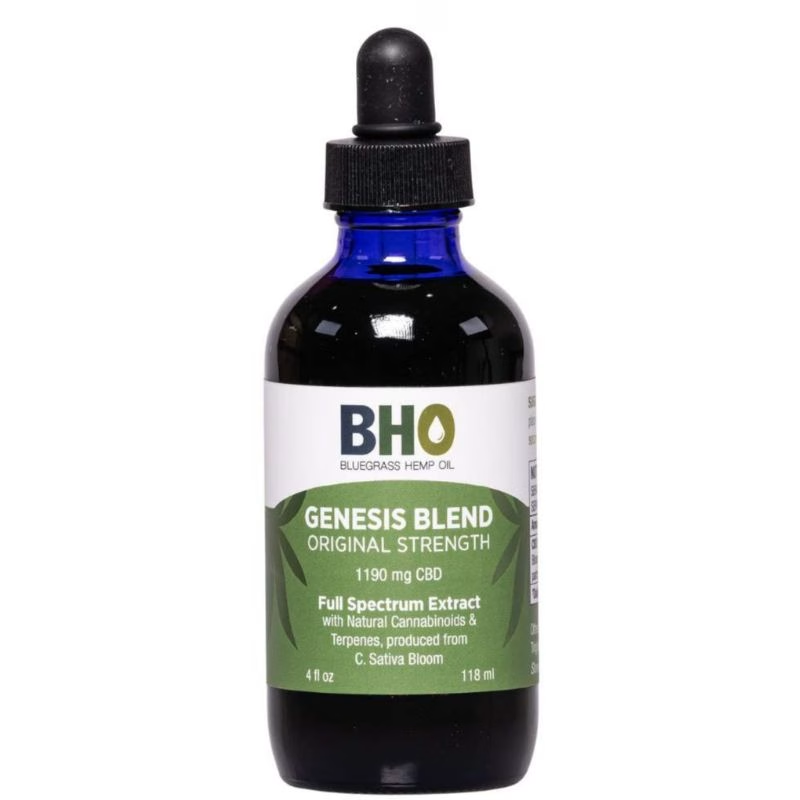
Editorial transparency: Bluegrass Hemp Oil makes Genesis Blend. This comparison is written from the Bluegrass Hemp Oil perspective and is intended to help shoppers compare visible product-quality factors, not to provide medical advice or claim that any CBD product treats disease.
Safety note: CBD products are not intended to diagnose, treat, cure, or prevent disease. CBD may cause side effects and may interact with medications. Talk with a qualified healthcare professional before using CBD if you take medication, have liver concerns, are pregnant or nursing, are subject to drug testing, or manage a medical condition.
About this CBD comparison
This comparison is written from Bluegrass Hemp Oil’s product-education perspective. Bill Polyniak’s hemp education background, Bluegrass Hemp Oil’s Kentucky hemp story, and the Bluegrass Hemp Oil company story help explain why this page focuses on label transparency, batch reports, quality standards, and practical shopper questions.
The goal is not to say one brand is right for everyone. The goal is to show how to compare two CBD oils fairly using visible product details and safety considerations.
Is Genesis Blend better than Charlotte’s Web CBD oil?
The better choice depends on your priorities. Compare the current product label, batch-specific COA, CBD per serving, THC content, minor cannabinoids, carrier oil, extraction method, serving size, price-per-mg, taste, and customer support. Genesis Blend may fit shoppers who prefer a Kentucky-based, founder-led CBD company with direct support and batch-specific transparency. Charlotte’s Web may fit shoppers who prefer a nationally known CBD brand with a broad product catalog.
For a deeper product-quality framework, review the Bluegrass Hemp Oil vs Charlotte’s Web CBD quality comparison and the Genesis Blend full-spectrum CBD oil page before choosing.
Genesis Blend vs Charlotte’s Web CBD Oil at a glance
Use this table as a starting point. Product pages, ingredient lists, and COAs can change, so verify the exact bottle and batch before buying or comparing.
| Comparison point | Genesis Blend | Charlotte’s Web | What shoppers should verify |
|---|---|---|---|
| Brand type | Kentucky-based Bluegrass Hemp Oil product. | National CBD brand. | Which brand experience and support model fits the shopper. |
| Product focus | Genesis Blend full-spectrum CBD oil. | Multiple oils and CBD product lines. | The exact product being compared, not the brand name alone. |
| Extraction | Review Bluegrass Hemp Oil’s current process and related education pages. | Verify the extraction method for the exact Charlotte’s Web product being compared. | Do not generalize one extraction method across every product from a brand. |
| COA access | Certificates of Analysis for Bluegrass Hemp Oil products. | Charlotte’s Web provides a public COA lookup for batch reports. | Batch number, testing date, lab identity, and product match. |
| THC content | Verify by COA. | Verify by COA. | Important for full-spectrum CBD, THC sensitivity, and drug testing. |
| Ingredients | Verify the current Genesis Blend label. | Verify the current Charlotte’s Web label. | Carrier oil, flavoring, allergens, additives, and serving instructions. |
| Customer support | Direct contact the Bluegrass Hemp Oil team support. | Charlotte’s Web support. | How easy it is to get product-specific answers. |
| Best fit | May fit shoppers who value Kentucky roots, founder-led education, direct support, and Bluegrass Hemp Oil’s quality framework. | May fit shoppers who value national-brand recognition and broad product selection. | Personal priorities, safety needs, and batch-level transparency. |
How to compare CBD oil brands fairly
A fair CBD oil comparison should start with the label and COA, not broad marketing claims. The exact product, batch, serving size, cannabinoid profile, and ingredient list matter more than brand reputation alone.
- Match the exact product to the exact COA.
- Compare CBD per serving, not just bottle size.
- Review THC content and full-spectrum status.
- Compare minor cannabinoid profile when listed.
- Check extraction method by product, not by brand alone.
- Review carrier oil, flavoring, allergens, and other ingredients.
- Compare price-per-mg only after confirming CBD amount.
- Look for contaminant testing, including heavy metals, pesticides, microbials, and residual solvents when available.
- Review medication, pregnancy/nursing, liver, THC sensitivity, and drug-testing concerns.
- Contact the company with product-specific questions.
Useful next steps include how to read a CBD product label, CBD lab testing and certificates of analysis, Bluegrass Hemp Oil product standards, and contact the Bluegrass Hemp Oil team.
Extraction method: why product-specific details matter
Extraction matters, but it should be discussed accurately and product by product. Do not assume one extraction method applies to every product from a brand. Shoppers should verify the extraction method for the exact CBD oil being compared, then review the COA for cannabinoid content, THC content, and residual solvent information when available.
Bluegrass Hemp Oil process
Review how Bluegrass Hemp Oil makes CBD products and its Bluegrass Hemp Oil quality promise before comparing extraction claims.
Extraction education
Use CBD extraction methods explained to understand how method, materials, and verification can affect shopper expectations.
Bluegrass perspective
Bluegrass Hemp Oil explains its preferred method in the superiority of BHO extraction. Use that as brand perspective, not as a substitute for COA review.
COA comparison: what to check before buying
Both brand and product claims should be checked against batch-specific lab information. The most useful COA comparison matches the product in hand to a lab report and then reviews cannabinoid content, THC content, safety panels, lab identity, and test date.
| COA item | Why it matters | What to verify |
|---|---|---|
| Batch number | Confirms the report matches the product. | Batch code on bottle and COA. |
| CBD content | Helps verify label accuracy. | CBD amount per serving or product. |
| THC content | Important for full-spectrum CBD and drug testing. | Delta-9 THC and total THC when available. |
| Minor cannabinoids | Helps evaluate full-spectrum profile. | CBDA, CBG, CBC, CBN, and other listed cannabinoids when available. |
| Terpenes | Useful when comparing flavor, aroma, and extract profile. | Terpene panel when available. |
| Residual solvents | Relevant when discussing extraction. | Solvent testing results when available. |
| Heavy metals | Important hemp-product safety screen. | Lead, arsenic, cadmium, and mercury results. |
| Pesticides | Important hemp-product quality screen. | Pesticide testing panel when available. |
| Microbials | Helps evaluate product safety. | Microbial testing when available. |
| Lab identity and date | Shows who tested the product and when. | Lab name, date, and batch match. |
Compare CBD lab testing and certificates of analysis, Certificates of Analysis for Bluegrass Hemp Oil products, and Bluegrass Hemp Oil science and quality standards. For Charlotte’s Web, use its public COA lookup and match the current product batch.
Full-spectrum CBD: what both brands should help you verify
Full-spectrum CBD usually means the product includes CBD plus other hemp compounds and legally compliant trace THC. The important question is not whether a product says “full-spectrum,” but whether the label and COA make the cannabinoid profile, THC content, and testing information easy to verify.
Profile questions
- How much CBD is listed per serving?
- Are CBDA or minor cannabinoids listed?
- Is THC content clearly shown?
- Is a terpene panel available?
Product-fit questions
- What carrier oil is used?
- Are flavoring or allergens present?
- Does the batch-specific COA match the product?
- Are serving instructions clear and non-medical?


Helpful supporting pages include types of CBD explained, CBD vs THC explained, entourage effect in full-spectrum CBD, terpenes in hemp products, and Genesis Blend CBD and CBDA product education.
Safety questions before choosing full-spectrum CBD oil
Full-spectrum hemp CBD products may contain trace THC. Review the product label and COA carefully, especially if you are subject to drug testing, sensitive to THC, or need to avoid THC for workplace, athletic, legal, or medical reasons.
- Do you take prescription medication or multiple supplements?
- Do you have liver concerns?
- Are you pregnant or nursing?
- Are you subject to workplace, athletic, legal, or medical drug testing?
- Are you sensitive to THC?
- Does the COA show THC content clearly?
- Does the product provide serving guidance without medical claims?
- Can customer support answer product-specific questions?
Before choosing, review CBD medication interaction considerations, does CBD show up on a drug test, how long CBD may stay in your system, and CBD vs THC explained.
Which CBD oil fits which shopper?
No CBD brand is the best fit for every shopper. Use this framework to decide what matters most to you before comparing product pages and COAs.
| Shopper priority | Genesis Blend may fit if | Charlotte’s Web may fit if |
|---|---|---|
| Local connection | You prefer a Kentucky-based hemp company with founder-led education. | You prefer a nationally recognized CBD brand. |
| Direct support | You want direct Bluegrass Hemp Oil product support. | You are comfortable with larger-brand support systems. |
| COA review | You want to review Bluegrass Hemp Oil COAs and product standards. | You want to review Charlotte’s Web batch reports for the exact product. |
| Product selection | You are focused on Genesis Blend full-spectrum CBD oil. | You want a broad catalog of CBD formats. |
| Education style | You value Bluegrass Hemp Oil’s Kentucky hemp story and educational content. | You value national-brand product education. |
For additional context, compare Bluegrass Hemp Oil’s Kentucky hemp story, Genesis Blend full-spectrum CBD oil, Bluegrass Hemp Oil quality promise, and Bluegrass Hemp Oil customer experiences. Customer experiences should be used as reputation context, not as proof that CBD treats any condition.
Where to compare full-spectrum CBD oil next
After comparing labels, COAs, extraction details, ingredients, and safety considerations, the next step is to review the exact product page and ask product-specific questions before buying.
FAQ: Genesis Blend vs Charlotte’s Web CBD oil
Is Genesis Blend better than Charlotte’s Web CBD oil?
The better choice depends on your priorities. Compare CBD per serving, THC content, COA access, cannabinoid profile, ingredients, extraction method, price-per-mg, taste, and customer support before choosing.
How do Genesis Blend and Charlotte’s Web compare?
They can be compared by sourcing story, product focus, extraction method, full-spectrum profile, COA transparency, label clarity, THC content, ingredients, customer support, and safety considerations.
What should I check before choosing CBD oil?
Check the product label, CBD per serving, extract type, THC content, ingredient list, batch-specific COA, contaminant testing when available, customer support, and whether the company avoids unsupported medical claims.
What should I check on a CBD oil COA?
Check the batch number, CBD content, THC content, minor cannabinoids, residual solvents, pesticides, heavy metals, microbials, lab identity, and testing date.
Does Charlotte’s Web use alcohol extraction?
Do not assume one extraction method applies to every Charlotte’s Web product. Verify the extraction method for the exact product being compared using current product information and available brand documentation.
Is full-spectrum CBD better than isolate?
Not automatically. Full-spectrum CBD includes a broader hemp extract profile and may contain trace THC. CBD isolate contains purified CBD. The right choice depends on THC comfort level, drug-testing concerns, product quality, safety needs, and personal preference.
Can full-spectrum CBD oil contain THC?
Yes. Full-spectrum hemp CBD oil may contain legally compliant trace THC. Review the product label and COA carefully, especially if you are subject to drug testing or sensitive to THC.
Is a national CBD brand always better than a local hemp company?
Not necessarily. A national brand may offer broad product selection, while a local or regional company may offer direct support, founder-led education, and local sourcing transparency. Compare the exact product, label, COA, and customer support.
Should I talk to a healthcare professional before using CBD oil?
Yes, especially if you take medication, have liver concerns, are pregnant or nursing, manage a medical condition, are shopping for a child, or are subject to drug testing.
How do I compare CBD oil brands fairly?
Compare the same type of product by CBD per serving, COA, THC content, ingredients, extraction method, contaminant testing, serving guidance, price-per-mg, and customer support.
CBD oil comparison glossary
| Entity | Plain-English explanation |
|---|---|
| Genesis Blend | Bluegrass Hemp Oil’s full-spectrum CBD oil product line. |
| Charlotte’s Web | A nationally known CBD brand offering oils and other hemp-derived products. |
| Bluegrass Hemp Oil | A Kentucky-based hemp company that makes Genesis Blend and other CBD products. |
| Full-spectrum CBD | Hemp extract containing CBD plus other hemp compounds and possible trace THC. |
| Broad-spectrum CBD | Hemp extract with CBD and other hemp compounds, usually with detectable THC removed. |
| CBD isolate | Purified CBD without the broader hemp extract profile. |
| COA | Certificate of Analysis used to verify product contents. |
| THC | Intoxicating cannabinoid that may appear in trace amounts in full-spectrum hemp products. |
| CBD per serving | The amount of CBD listed for one suggested serving. |
| Batch number | Code used to match a product to its lab report. |
| Extraction method | Process used to separate hemp compounds from plant material. |
| CO2 extraction | Extraction method using carbon dioxide under specific pressure and temperature. |
| Alcohol extraction | Extraction method using alcohol-based solvents. |
| Hydrocarbon extraction | Extraction method that may use hydrocarbons under controlled conditions. |
| Carrier oil | Oil used to dilute and deliver hemp extract. |
| Price-per-mg | Cost comparison based on CBD amount. |
| Drug-testing concern | Concern that THC exposure could matter for workplace, athletic, legal, or medical testing. |
| Editorial transparency | Clear disclosure when a company compares its own product to another brand. |
What to read next
CBD quality guide for choosing trustworthy hemp productsBluegrass Hemp Oil vs Charlotte’s Web CBD quality comparisonCharlotte’s Web CBD vs Genesis Blend COA comparisonGenesis Blend CBD oil overviewCBD oil product optionsshop CBD products by formatBluegrass Hemp Oil science and quality standardscontact the Bluegrass Hemp Oil team
Sources and verification links
What is a CBD Catalog?
A CBD catalog is a comprehensive resource covering various CBD (cannabidiol) products, their uses, benefits, and other relevant information. CBD is a natural compound found in cannabis plants, including marijuana and hemp. However, most CBD sold today is extracted from hemp as it contains little THC (tetrahydrocannabinol), the psychoactive component in cannabis.
As CBD usage and awareness grows globally, many new users have questions about finding reputable CBD brands and high quality products. A catalog acts as an educational guide, with details on the most popular types of ingestible and topical CBD offerings on the market.
Key Sections Found in a Thorough CBD Catalog
Overview of CBD
A CBD catalog aimed at informing consumers should start with a basic CBD overview. This introductory section would define what CBD is, distinguish between marijuana-derived CBD versus hemp-derived CBD, and discuss key attributes:
- Non-intoxicating and non-addictive
- Interacts with the body’s endocannabinoid system
- Possesses antioxidant and anti-inflammatory properties
- Relieves multiple symptoms naturally with few side effects
Covering this background provides context around CBD’s increasing adoption for wellness.
CBD Extract Types
As the CBD market expands exponentially, new users need clarity on the differences between CBD isolates, broad spectrum CBD, and full spectrum CBD. A catalog breaks down key traits of purity versus whole-plant formulations.
Isolates filter out all other cannabinoids and compounds besides CBD. Broad spectrum retains other cannabinoids and terpenes but removes THC entirely. Full spectrum features all naturally occurring cannabis compounds, including trace THC amounts within legal limits.
Thorough descriptions empower more informed CBD purchases.
Consumption Methods
With CBD available in many forms, a catalog outlines the varied consumption options and absorption rates. From traditional tinctures or oils to novelty CBD edibles and vaping, each method offers distinct dosing control, duration, and onset effects.
Comparison factors may include convenience, discretion, measured doses versusGuessdones, duration window, bioavailability absorption efficiency, and more. Providing administration insights caters to different user needs and situations.
Health & Wellness Uses
As a versatile supplement, CBD gets utilized in daily wellness routines and for targeting more acute health issues. A robust catalog covers the wide range of potential uses being researched and self-reported.
Chronic pain, anxiety, sleep disorders, arthritis, and migraines represent some of the most common conditions CBD gets used for due to its combination of biochemical, neurological, and anti-inflammatory properties. However, experimental uses from athletic performance to addiction therapy continue being explored as well. Outlining known effects empowers appropriate applications.
Featured Brand Listings
Any quality CBD catalog allows brands meeting strict criteria regarding their hemp sourcing, production methods, third party testing, transparency, certifications, and customer service to showcase their product lineup with overview descriptions.
Whether focusing on full spectrum tinctures, broad spectrum gummies, or CBD topical creams, providing a trustworthy brand jumping off point helps consumers avoid overwhelm. Basic brand profiles include pricing across their offerings, milligram doses, formula options, key features, and company contact details for further inquiries.
Components of High Quality CBD Products
Sourcing Standards
As hemp acts as the raw base material for extracting and purifying CBD, understanding cannabinoid content and overall crop quality proves essential. Hemp absorbs from the soil and environment it gets grown in. A CBD catalog educates why aspects like US grown, non-GMO, organic, and ethically farm-sourced hemp matter.
Rigorous supplier screening for best practices avoids dilution, contamination, or inconsistency issues before production even begins. Protecting end user safety and experience starts from the ground up.
Extraction Techniques
Common solvent-based extraction methods utilize CO2, ethanol, hydrocarbon, or lipid infusion processes for isolating CBD oil from plant material. More novel techniques like ice water hash extraction provide artisanal options as well.
A catalog can outline that while the method impacts variables like yield efficiency, residual solvent contamination risks also exist if protocols get rushed or quality controls fail. Ensuring brands analyze purity and potency demonstrates safety prioritization.
Formula Transparency
As a supplement not yet FDA regulated, CBD labeling accuracy still requires scrutiny. However, quality brands embrace transparency around their proprietary formulas and measured doses.
Catalog ratings can screen for upfront displays of milligram per serving amounts, certificates of analysis reporting cannabinoid profiles, carrier oil bases, and additive ingredients present. Supporting informed decisions protects non-industry experts navigating crowded market claims.
Independent Test Results
Honest brands order frequent batch testing from accredited third party laboratories to verify label accuracy around CBD levels and formula purity and potency promises. But not all testing labs hold equal credentials regarding their equipment, methods, or reporting standards.
Catalog vetting would ensure brands showcase recent certificates of analysis detailing cannabinoid panel results, pass/fail heavy metal and pesticide residual contaminant screenings, and signal optimal potency and stability shelf life periods. Unbiased results build integrity.
Signs of Quality in Top Rated CBD Brand Catalog Listings
Market Experience and Leadership
As first movers in the hemp CBD space, pioneering founders and inventors established many best practices that top tier brands now follow. Catalog featured brands often possess 5+ years of market experience combined with leading scientists, product developers or doctors driving quality innovation.
Medical & Scientific Advisory Boards
Many leading CBD companies assemble an advisory board featuring prominent medical, naturopathic, scientific, or cannabis subject matter experts. Tapping top specialists for guidance on human supplementation ensures a higher degree of product safety, responsibility and ethos in an emerging industry.
Government Regulatory Adherence
While CBD from hemp containing under 0.3% THC got legalized federally in 2018 with the Farm Bill, different US states hold varying stances regarding sales regulations. Responsible brands ensure catalog compliance across patchwork legalities, as well as FDA labeling and website disclaimer guidance aligned to general supplement industry standards.
Memberships & Certifications
Reputable CBD companies take accountability steps like securing memberships in trade associations promoting ethics and consumer protection standards, or by achieving certifications related to production quality, purity processing, organic status, or current Good Manufacturing Practices (cGMPs). Conveying oversight adds credibility.
Product Specialization
Some brands feature diversified CBD product lines spanning multiple supplement formats, while others specialize in mastering a niche like organic full spectrum tinctures or CBD topical creams and salves. A catalog assists consumers in finding the right provider aligned to their needs from generalists to experts.
Frequently Asked Questions About CBD Catalogs
Question: What is the benefit of CBD catalogs for consumers?
CBD catalogs help inform newcomers and provide needed product clarity within an overcrowded, hyper-growth market segment with minimal regulation currently in place. Featuring vetted brands aids safer purchases.
Question: Should I expect to pay more for the CBD brands listed in catalogs?
Often yes, as higher quality inputs, ethical practices, medical insights and transparency testing at scale does impact production costs. However price per value still varies widely. Savvy shoppers weigh all factors.
Question: How are brands selected for inclusion in reputable CBD catalogs?
Through an extensive evaluation across hemp sourcing quality, formula transparency, lab testing rigor, certifications gained, market track record, website information breadth, and monitoring customer sentiment.
Question: Will CBD catalogs just promote certain brands and products unfairly?
Quality catalogs focused on consumer education may accept forms of sponsorships or advertising from brands, however any content or ratings get structured to prioritize informing over any biases or commercial interests. Check publisher ethics.
Question: Do CBD brands pay to be featured or rated in catalogs?
While some questionable outlets likely function akin to pay to play models, established publishers with credentialed health editors adhere to standards like transparently distinguishing sponsored content, disclosing any affiliations, and spotlighting brands purely on merit factors rather than commercial arrangements.
Conclusion
As CBD adoption gains momentum globally across both general wellness and specialized medical applications, trusted guides like properly curated CBD catalogs perform an invaluable public service by instilling clarity and confidence. Featuring thoroughly vetted brands plus providing education surrounding CBD questions experienced by common consumers aids more informed supplement selections.
While cannabis seemingly launches new miracle solutions weekly, hemp-derived CBD so far largely delivers benefits through a combination of plant compound interactions, the human endocannabinoid system, and its natural anti-inflammatory biochemical properties. However regulation and oversight continues playing catch up.
