What Are Cannabinoids? A Clear Guide to CBD, THC & the ECS

CBD Science Guide

What Are Cannabinoids? A Clear Guide to CBD, THC & the ECS

CBD labels can feel confusing when you start seeing terms like cannabinoids, CBD, THC, CBG, CBN, full-spectrum hemp extract, and COAs. This guide breaks it down clearly so you can understand what cannabinoids are and how to compare CBD products with confidence.

Reviewed for clarity: This page is educational and is not intended to diagnose, treat, cure, or prevent disease. Bluegrass Hemp Oil products are not intended to diagnose, treat, cure, or prevent disease.

CBD and THC explained clearly Minor cannabinoids made simple Lab testing and COA guidance
CBDNon-intoxicating cannabinoid
THCMain intoxicating cannabinoid
CBGMinor cannabinoid
CBNMinor cannabinoid

A cannabinoid profile helps shoppers understand which hemp compounds are listed on a product label or Certificate of Analysis.

What Are Cannabinoids?

Cannabinoids are naturally occurring compounds found in cannabis and hemp. CBD and THC are the best-known cannabinoids, but researchers have identified many others, including CBG, CBN, CBC, CBDA, and THCA.

  • Cannabinoids are plant compounds found in cannabis and hemp.
  • CBD and THC are the most familiar cannabinoids.
  • Minor cannabinoids occur in smaller amounts.
  • Cannabinoids are often discussed because they relate to the endocannabinoid system.
  • A product’s cannabinoid profile can be reviewed through lab testing and a Certificate of Analysis.

Cannabinoids and the Endocannabinoid System

The endocannabinoid system, or ECS, is a body-wide signaling network that includes endocannabinoids, receptors, and enzymes. Cannabinoids are often discussed because of how they relate to ECS education.

🧬

Endocannabinoids

Endocannabinoids are compounds made by the body. They are part of normal ECS signaling.

🌿

Phytocannabinoids

Phytocannabinoids are cannabinoids found in plants. CBD and THC are examples of phytocannabinoids.

⚖️

ECS Education

The ECS is often discussed in relation to balance and signaling. This page is educational and does not make medical claims.

CBD vs THC: What Is the Difference?

CBD and THC are both cannabinoids, but they are not the same. THC is the main intoxicating cannabinoid associated with the “high” from cannabis. CBD is non-intoxicating. Shoppers should always review product labels, THC information, lab testing, and Certificates of Analysis before choosing CBD products.

For a deeper comparison, read our CBD vs THC guide.

Cannabinoid Description What Shoppers Should Review
CBD A non-intoxicating cannabinoid commonly found in hemp-derived CBD products. CBD amount, hemp extract type, ingredients, lab testing, and COA.
THC The main intoxicating cannabinoid associated with cannabis. THC amount, legal limits, product type, lab testing, and COA.

Major Cannabinoids: CBD and THC

CBD and THC are often called major cannabinoids because they are commonly found in larger amounts compared with many other cannabinoids. In hemp-derived CBD products, CBD is usually the primary cannabinoid, while THC should remain within legal limits.

CBD

CBD

CBD is a non-intoxicating cannabinoid commonly found in hemp-derived CBD products. Product labels and COAs can help shoppers review how much CBD is listed.

THC

THC

THC is the main intoxicating cannabinoid associated with cannabis. Shoppers should review THC information carefully on product labels and Certificates of Analysis.

Cannabinoid Profile

Minor Cannabinoids: CBG, CBN, CBC, CBDA, THCA and More

Minor cannabinoids are cannabinoids found in smaller amounts than CBD or THC. They are often discussed in CBD education because full-spectrum hemp extract can contain a broader cannabinoid profile.

Cannabinoid Simple Description
CBG A minor cannabinoid often discussed in hemp and cannabis education.
CBN A minor cannabinoid that may appear as cannabinoids change over time.
CBC A minor cannabinoid found in smaller amounts in some hemp extracts.
CBDA The acidic precursor form of CBD found in raw hemp plant material.
THCA The acidic precursor form of THC found in raw cannabis or hemp plant material.

Safety note: Research on many minor cannabinoids is still developing. Avoid treating minor cannabinoids as proven solutions for health conditions.

What Does Full-Spectrum Mean?

Full-spectrum CBD products contain hemp extract with multiple naturally occurring compounds from the hemp plant. This may include CBD, minor cannabinoids, terpenes, and trace THC within legal limits.

🌿

Full-Spectrum

Full-spectrum products contain a broader hemp extract profile. Review the COA to confirm cannabinoid content.

◇

CBD Isolate

CBD isolate products contain isolated CBD. They do not represent the same profile as a full-spectrum hemp extract.

🏷️

Verify the Profile

Product labels and COAs are the best way to verify what is in a product.

Compare the differences in our full-spectrum CBD vs CBD isolate guide.

Cannabinoids, Terpenes, and the Entourage Effect

Cannabinoids are not the only compounds found in hemp. Terpenes are aromatic plant compounds that contribute to the plant’s natural profile. The phrase entourage effect is often used in cannabis education to describe how multiple hemp compounds are discussed together.

Keep it practical: The entourage effect is a common concept in cannabis and hemp education, but shoppers should still review product labels, lab testing, and COAs.

How to Read a Cannabinoid Profile on a COA

A Certificate of Analysis, or COA, can help shoppers review which cannabinoids are listed in a CBD product. A COA may show CBD, THC, minor cannabinoids, potency information, and other product-quality details.

What to Review on a COA

  • Product name
  • Batch or lot number
  • CBD amount
  • THC amount
  • Minor cannabinoids

Quality Details to Match

  • Testing date
  • Lab name
  • Contaminant testing, when available
  • Whether the COA matches the product
  • Company transparency

Use our CBD lab testing page and Certificates of Analysis page to review product-quality details.

What to Review Before Choosing a CBD Product

Understanding cannabinoids can help shoppers read CBD product labels more carefully. Before choosing a product, review the cannabinoid profile, hemp extract type, ingredient list, serving information, third-party testing, and Certificate of Analysis.

  • CBD amount
  • THC information
  • Full-spectrum, broad-spectrum, or isolate profile
  • Minor cannabinoids
  • Ingredient list and carrier oil
  • Serving information
  • Lab testing and Certificate of Analysis
  • Company transparency
Product-quality next step: Review Genesis Blend full-spectrum CBD oil if you want to see how a full-spectrum product is presented with label and quality information.

Helpful Cannabinoid and CBD Quality Resources

Cannabinoids are only one part of understanding CBD products. To compare products more carefully, review the endocannabinoid system, terpenes, full-spectrum hemp extract, lab testing, and Certificates of Analysis.

Endocannabinoid System

Learn the ECS basics behind cannabinoid education.

Read Guide

CBD vs THC

Compare two of the best-known cannabinoids.

Compare

Terpenes

Learn about aromatic hemp plant compounds.

Learn More

COAs

Review cannabinoid and product-quality details.

View COAs
Author Experience
BP

About Bill Polyniak

Bill Polyniak is the founder of Bluegrass Hemp Oil and Kentucky Cannabis Company. His work focuses on hemp education, product quality, label transparency, lab testing, and helping shoppers understand CBD products before they buy.

Quality review: Reviewed by the Bluegrass Hemp Oil Quality Team for cannabinoid terminology, label clarity, CBD safety language, and source alignment. Last reviewed: May 2026.

Cannabinoids FAQs

What are cannabinoids?

Cannabinoids are compounds found in cannabis and hemp. CBD and THC are the best-known cannabinoids, but many other cannabinoids have been identified. Cannabinoids are often discussed because of how they relate to the endocannabinoid system.

Is CBD a cannabinoid?

Yes. CBD, short for cannabidiol, is a cannabinoid commonly found in hemp-derived CBD products. CBD is non-intoxicating.

Is THC a cannabinoid?

Yes. THC is a cannabinoid and is the main intoxicating compound associated with cannabis. Shoppers should review THC information on product labels and Certificates of Analysis.

What is the difference between CBD and THC?

CBD and THC are both cannabinoids, but THC is the main intoxicating cannabinoid associated with the “high” from cannabis. CBD is non-intoxicating. Product labels and COAs help shoppers compare CBD and THC content.

What are minor cannabinoids?

Minor cannabinoids are cannabinoids found in smaller amounts than CBD or THC. Examples include CBG, CBN, CBC, CBDA, and THCA. Research on many minor cannabinoids is still developing.

What does full-spectrum CBD mean?

Full-spectrum CBD products contain hemp extract with multiple naturally occurring compounds from the hemp plant, which may include CBD, minor cannabinoids, terpenes, and trace THC within legal limits.

How do I know which cannabinoids are in a CBD product?

Review the product’s Certificate of Analysis. A COA can show cannabinoid content, THC levels, and other product-quality details when available.

Choose CBD Products With Cannabinoid Quality in Mind

Understanding cannabinoids makes it easier to compare CBD products. Before buying, review the product label, cannabinoid profile, hemp extract type, ingredient list, third-party testing, and Certificate of Analysis.

Review CBD Lab Testing

Full-Spectrum CBD vs. Isolate: The 2026 Clinical Guide to the Entourage Effect

CBD education • product composition • lab reports

Full-spectrum CBD contains CBD alongside other hemp constituents, while CBD isolate is purified CBD rather than a multi-cannabinoid plant extract. The actual composition of a full-spectrum product varies by extract, formulation, and batch. That difference in composition does not, by itself, prove that one format produces better clinical results for every person.

The short answer: compare what is actually in the product, not just the category name. Look at the ingredient list, CBD concentration, measured minor cannabinoids, THC results, batch identity, and the scope of the laboratory report. Bluegrass Hemp Oil manufactures and sells full-spectrum products, so our perspective comes from hands-on experience making that type of formulation. We still do not treat “full-spectrum” as a guarantee of superiority.

Start with composition

Full-Spectrum CBD and Isolate at a Glance

These labels describe different ingredient profiles. They do not tell you whether a finished product is accurately labeled, well made, appropriately tested, or clinically effective.

Comparison point Full-spectrum CBD CBD isolate
Composition CBD plus other compounds retained from or formulated to represent a broader hemp extract profile. The measured profile varies by product and batch. Purified cannabidiol as the cannabinoid ingredient, without the broader cannabinoid mixture that defines a full-spectrum extract.
How the ingredient is produced Hemp is extracted and processed while retaining a broader range of extract constituents. The extraction and refinement method varies by manufacturer. CBD is separated and refined to a high-purity ingredient, often after an initial plant extraction. Purification is not the same thing as chemical synthesis.
THC considerations May contain measurable THC. Check the actual batch report rather than assuming the amount from the words “full-spectrum.” Intended to contain CBD without THC as part of the isolate ingredient. Finished-product testing still matters because other ingredients and manufacturing steps can affect the final result.
Flavor and aroma Can retain more plant-like flavor or aroma, depending on the extract and finished formula. Typically has a more neutral flavor and aroma, although the finished product may contain flavors, carriers, or other added ingredients.
What testing can establish A cannabinoid panel can show measured CBD, THC, and listed cannabinoids. Separate testing is needed for terpenes or contaminants when those claims matter. Testing can verify CBD purity and whether other targeted cannabinoids are detected. The finished product still needs testing appropriate to its ingredients and claims.
Why someone might compare the formats Preference for a broader hemp profile, product flavor, formulation philosophy, or a specific documented batch composition. Preference for a CBD-only cannabinoid ingredient, a more neutral base, formulation consistency, or a desire to avoid measurable THC.

For the broader three-way overview that also covers broad-spectrum products, see Types of CBD: Full-Spectrum, Broad-Spectrum & Isolate.

A category, not a fixed recipe

What Full-Spectrum CBD Contains

“Full-spectrum” describes a broader hemp-extract category. It does not mean every product contains the same cannabinoids, the same amount of THC, or meaningful quantities of every terpene, flavonoid, or minor cannabinoid found in the original plant.

Plant genetics, harvest conditions, extraction choices, refinement, formulation, storage, and batch-to-batch variation can all affect what reaches the finished bottle. That is why the most useful question is not simply “Is this full-spectrum?” but “What does this specific batch actually measure?”

What a cannabinoid panel can show

Depending on the laboratory panel, a report may quantify CBD, THC, CBG, CBC, or other cannabinoids. The exact analytes and reporting limits matter.

What a cannabinoid panel cannot prove by itself

It does not independently establish terpene content, the absence of every possible contaminant, or clinical effectiveness. Those are different questions that require different evidence.

Purified cannabidiol

What CBD Isolate Contains

CBD isolate is a highly purified cannabidiol ingredient. In plant-derived production, hemp is first extracted and the CBD is then further separated, refined, and commonly crystallized. The word isolate describes the purified ingredient. It does not mean the CBD was necessarily made through chemical synthesis.

Manufacturers can dissolve isolate into a carrier oil, add it to gummies or capsules, or combine it with other ingredients to create a finished product. Once other cannabinoids or botanical ingredients are added, the composition of that finished product should be evaluated as a formulation rather than by treating the isolate ingredient as the entire product.

CBD isolate should not be described as biologically inactive or inherently dangerous simply because it lacks the broader hemp mixture. Purified CBD has demonstrated biological and clinical activity in specific controlled research settings. What those studies do not prove is that a retail isolate product will produce the same outcome, dose, or safety profile.

Our manufacturing perspective

Why We Choose Full-Spectrum Formulations

Bluegrass Hemp Oil is the consumer-facing retail and education brand for products made by Kentucky Cannabis Company. Founder Bill Polyniak’s documented hemp work dates to Kentucky’s 2014 pilot-program era and developed from genetics and cultivation into extraction, formulation, manufacturing, batch control, cannabinoid testing, and third-party laboratory review.

That experience shaped our choice to make full-spectrum formulations. We prefer to work with a defined hemp extract profile and then carry that profile through formulation and batch testing rather than starting with CBD as the only cannabinoid ingredient. For us, the choice is a manufacturing philosophy built around plant material, extraction, formulation, and verification.

It is not a claim that every full-spectrum product is better than every isolate product, or that full-spectrum CBD produces superior clinical outcomes for every person.

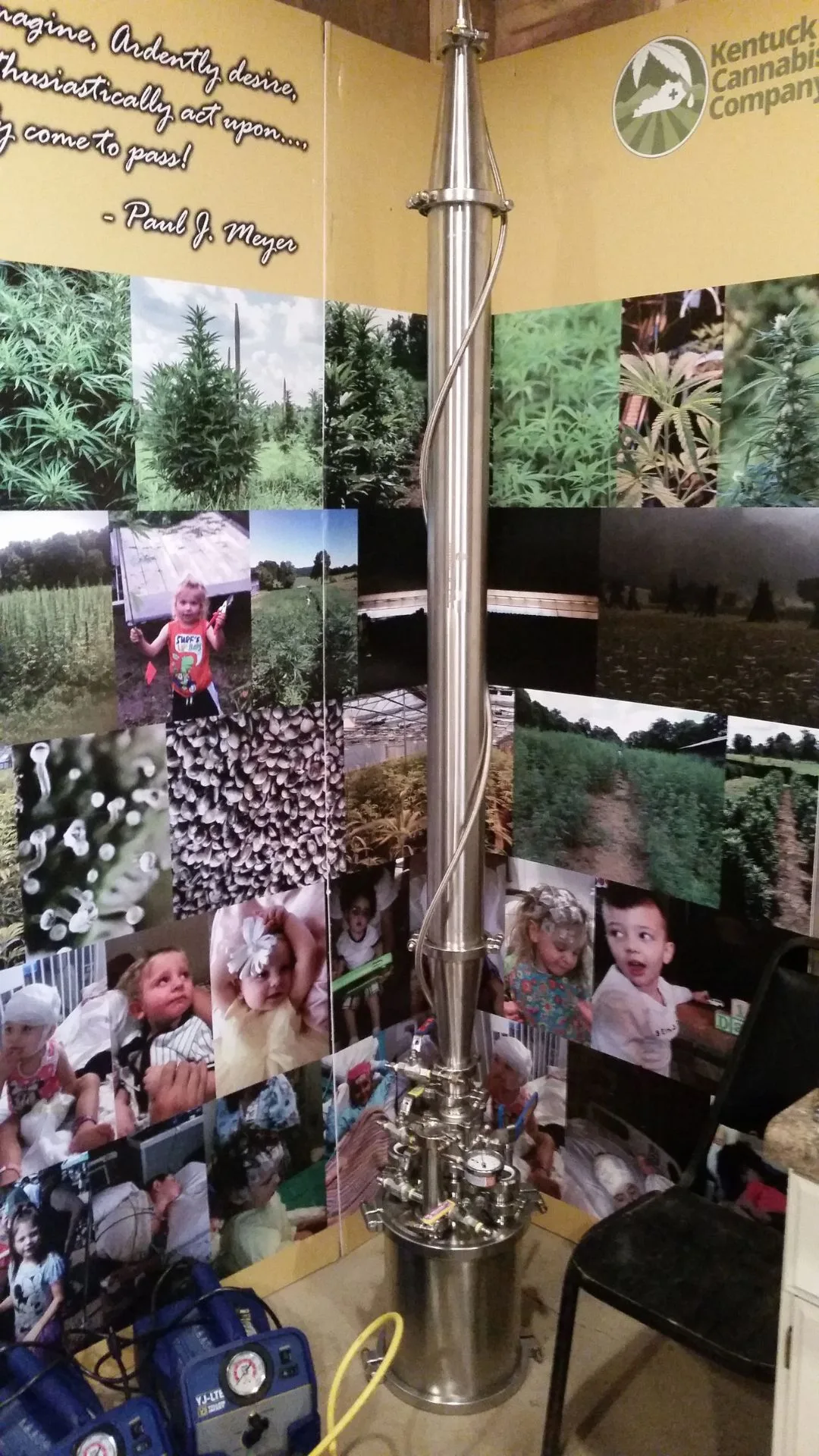
Early hydrocarbon extraction system used by Kentucky Cannabis Company
Early hydrocarbon extraction equipment used by Kentucky Cannabis Company. Hands-on extraction work is part of the manufacturing experience behind Bluegrass Hemp Oil’s full-spectrum formulation approach.

Learn about Bill Polyniak’s Kentucky hemp experience.

What the research can and cannot answer

Does Full-Spectrum CBD Work Better?

There is not enough controlled human evidence to say that full-spectrum CBD is clinically better than CBD isolate for everyone. The answer depends on the specific extract, dose, condition studied, comparator, and outcome.

Controlled human research

A randomized, double-blind, placebo-controlled trial in Dravet syndrome found that a standardized purified cannabidiol oral solution reduced convulsive-seizure frequency more than placebo. That study demonstrates that purified CBD can have clinical effects in a specific prescription-drug setting. It does not establish how retail CBD isolate compares with retail full-spectrum products. Read the controlled trial on PubMed.

Observational human comparisons

A 2018 meta-analysis pooled observational studies in treatment-resistant epilepsy and compared CBD-rich extracts with purified CBD. Some outcomes favored CBD-rich extracts, but the standard threshold of at least 50% seizure reduction did not differ between groups, and the authors stated that controlled studies were needed to confirm whether other plant compounds were responsible for any apparent advantage. The underlying studies were heterogeneous and not randomized head-to-head trials. Read the observational meta-analysis.

Laboratory and animal research

Preclinical work can show that mixtures and isolated compounds behave differently in cells or animals. For example, a 2015 mouse study reported a different dose-response pattern for a CBD-rich extract versus purified CBD. That is useful mechanistic evidence, but mouse results cannot establish clinical superiority in people or across commercial products. Read the mouse study.

Practical takeaway: a product category is not a clinical result. Controlled human trials, observational studies, animal experiments, and laboratory assays answer different questions and should not be blended into one universal claim.

A hypothesis about interactions

What About the Entourage Effect?

The entourage effect is a proposed interaction among cannabis constituents. It is not simply another name for having a full-spectrum chemical profile.

CBD isolate by itself does not contain the multi-compound mixture needed to test interactions among absent cannabinoids, terpenes, or other constituents. That does not mean CBD alone has no biological effects, and it does not prove that every full-spectrum product produces clinically meaningful synergy. Likewise, if purified CBD is later formulated with other compounds, those compounds may still interact; the fact that one starting ingredient was isolate does not prevent interaction in the finished mixture.

For the deeper science discussion, see What Is the Entourage Effect?

Compare batches, not slogans

How to Compare Two Actual Products

  1. Start with the ingredient list. Identify whether the finished product uses a full-spectrum extract, isolate, another extract type, or a combination of ingredients.
  2. Normalize the CBD amount. Compare CBD per mL, capsule, gummy, or other consistent unit rather than relying only on the total number printed on the front label.
  3. Review the measured cannabinoid profile. Look for CBD, THC, and any other cannabinoids the laboratory actually quantified. Do not assume compounds that were not tested or reported.
  4. Check THC results and reporting limits. This matters when a person wants to minimize THC exposure or is subject to testing.
  5. Match the batch identity. A laboratory report is most useful when the lot or batch number on the package matches the report.
  6. Check the scope of testing. Potency, terpenes, pesticides, heavy metals, solvents, microbials, and mycotoxins are different panels. One panel does not substitute for the others.
  7. Keep clinical claims separate from chemistry. A COA can document measured chemistry. It cannot prove that the product will produce a particular health outcome.

Historical Bluegrass Hemp Oil batch example: Genesis Blend 1082 C

This historical report is useful because it shows why the exact report and panel matter. It is not presented as a current production-batch COA.

Product
Genesis Blend Hemp Oil — Regular Strength
Batch
Genesis Blend
Laboratory sample
KCA Sample 2103KCA0356.0861
Laboratory
KCA Laboratories
Testing date
Tested March 11, 2021; completed March 12, 2021
Reported potency
Total CBD 12.71 mg/mL; Total THC 0.64 mg/mL

The compiled PDF includes cannabinoid potency plus separate contaminant and terpene panels. That distinction matters: a potency result by itself does not prove terpene content or the absence of every contaminant.

Open the original Genesis Blend 1082 C laboratory PDF. For the current repository, visit Certificates of Analysis.

Useful distinctions

Common Questions

Is CBD isolate the same thing as synthetic CBD?

No. “Isolate” describes purified cannabidiol as an ingredient. CBD can be purified from plant-derived material. Chemical synthesis is a different production route.

Does full-spectrum always mean there are meaningful amounts of terpenes?

No. Full-spectrum products vary, and a cannabinoid potency report does not tell you the terpene profile unless terpene testing is also included. Review the actual batch documentation.

Can a COA prove the entourage effect?

No. A COA can document measured chemistry for the analytes tested. Demonstrating a clinically meaningful interaction requires research designed to test that interaction.

Can purified CBD have biological effects without other hemp compounds?

Yes. Controlled human research with standardized purified cannabidiol has demonstrated effects in specific prescription settings. Those results should not be generalized to every retail CBD product or health condition.

Which format should I choose?

There is no universal winner. Compare the chemical profile you want, THC considerations, ingredients, flavor, formulation, and the batch-specific lab report. If medication use, pregnancy, a medical condition, or drug testing is relevant, discuss CBD use with an appropriate healthcare professional.

Research cited on this page

Compare the Label, the Batch, and the Product You’re Actually Buying

If you want to explore the full-spectrum products Bluegrass Hemp Oil makes, start with the product information and lab documentation rather than assuming a category label tells the whole story.

Comfort and Relaxation Guide: Topicals, CBD Safety, COAs & How to Choose

Comfort and Relaxation Guide: Topicals, CBD Safety, COAs & How to Choose

Comfort and Relaxation Guide

Quick Answer: What Is a Comfort and Relaxation Guide?

A comfort and relaxation routine may include stretching, rest, hydration, gentle movement, topical body-care products, mindfulness, and label-conscious product choices. CBD topicals may be compared as external-use hemp-derived products, but they should not be described as treating pain, inflammation, arthritis, anxiety, stress disorders, sleep disorders, or any medical condition.

Safety-first shopping rule: Compare CBD topicals by product format, ingredients, CBD amount, full-spectrum status, THC information, directions, warnings, and batch-specific Certificate of Analysis.

Key takeaways

Key Takeaways

1

Build a general routine

A comfort routine can include movement, rest, hydration, mindfulness, and topical body-care products.

2

Know the format

CBD topicals are external-use products and are different from CBD oil, gummies, or capsules.

3

Compare texture and ingredients

CBD creams, balms, salves, and lotions vary by skin feel, ingredients, and product format.

4

Check trace THC

Full-spectrum CBD products may contain trace THC, so shoppers should review the COA.

5

Read the label

Product labels should show ingredients, warnings, directions, batch details, and COA access.

6

CBD is not risk-free

CBD may interact with medications and may not be appropriate for everyone.

7

Avoid treatment claims

CBD products should not be claimed to treat pain, anxiety, sleep disorders, inflammation, arthritis, or any medical condition.

8

Look for transparency

Bluegrass Hemp Oil product education should be supported through labels, COAs, and customer support.

Entity summary

Comfort and CBD Topical Terms to Know

These plain-language definitions help shoppers compare topical body-care products without turning a product-format guide into medical advice.

Entity Simple Explanation Why It Matters
Comfort routine A non-medical routine focused on body comfort and relaxation Keeps the page safer than pain-treatment claims
Relaxation routine A routine that may include rest, breathing, movement, or topical body-care Supports informational intent
CBD topical External-use hemp-derived product Different from oral CBD oil
CBD cream Smooth topical format Compare ingredients and CBD amount
CBD balm Thicker topical format Compare oils, waxes, and directions
CBD salve Oil/wax-based topical format Compare texture, ingredients, and COA
CBD lotion Lighter moisturizing topical Compare moisturizers, fragrance, CBD amount
Full-spectrum CBD CBD plus other hemp compounds May contain trace THC
Trace THC Small THC amount possible in full-spectrum CBD Important for label and drug-testing questions
COA Certificate of Analysis Helps verify CBD, THC, and testing details
Safe scope

Comfort, Relaxation, and CBD: What This Page Can Safely Explain

This guide can help shoppers compare comfort routines, topical product formats, CBD labels, ingredients, COAs, and safety questions. It should not claim that CBD products treat pain, inflammation, arthritis, anxiety, stress disorders, sleep disorders, or any medical condition.

Not medical advice

This article is educational and is not medical advice. Anyone with ongoing pain, new symptoms, severe discomfort, medication questions, pregnancy or nursing considerations, liver concerns, or a diagnosed condition should speak with a qualified healthcare professional.

Routine checklist

What a Comfort Routine Can Include

A comfort routine should be framed as general wellness support, not medical treatment. The right routine depends on the individual, health history, activity level, product preferences, and whether symptoms need professional evaluation.

  • Gentle movement
  • Stretching
  • Hydration
  • Rest
  • Breathwork or mindfulness
  • Supportive footwear or ergonomics when relevant
  • Warm bath or shower
  • Topical body-care products
  • Label-conscious product choices
  • Healthcare guidance when symptoms are ongoing, severe, or new
Product formats

CBD Topicals vs CBD Oil: What’s the Difference?

CBD topicals are applied externally. CBD oils, gummies, and capsules are used differently and should be compared by their own label details, serving information, ingredients, THC information, directions, warnings, and COA access.

Product Format How It’s Used What to Check
CBD topicals Applied externally Ingredients, CBD amount, fragrance, directions, warnings, COA
CBD oil Taken orally with a dropper CBD per mL, carrier oil, THC, serving directions, COA
CBD gummies Swallowed as an edible CBD per gummy, sugar, ingredients, THC, COA
CBD capsules Swallowed as a capsule CBD per capsule, ingredients, COA

For more context, compare CBD product types explained, which CBD delivery method is right for your routine, CBD oil vs CBD gummies, and CBD absorption and serving-format questions.

Topical comparison

CBD Cream, Balm, Salve, and Lotion: How to Compare Formats

Topical CBD products vary by texture, base ingredients, fragrance, and how they feel on skin. A label-conscious shopper should compare product format before comparing CBD amount alone.

Topical Format Typical Texture What to Compare
CBD cream Smooth, lighter body-care format CBD amount, ingredients, fragrance, skin feel
CBD balm Thicker, waxier texture Oils, waxes, CBD amount, external-use directions
CBD salve Oil/wax-based topical Ingredient list, consistency, CBD amount, COA
CBD lotion Lighter moisturizing format Moisturizers, fragrance, CBD amount, directions

Compare the CBD topicals guide for creams, balms, salves, and lotions, the CBD lotion guide for topical shoppers, the CBD balms guide for topical product comparison, and the hemp cream guide for skin-care product comparison.

Trace THC awareness

Full-Spectrum CBD Topicals, THC, and Label Questions

Full-spectrum CBD topicals may contain CBD along with other naturally occurring hemp compounds. Full-spectrum products may also contain trace THC within legal hemp limits. Shoppers should review the label and batch-specific COA instead of relying on marketing phrases alone.

Drug-testing caution: Anyone subject to workplace, athletic, legal, medical, military, probation, or professional drug testing should review COAs carefully and avoid assuming full-spectrum CBD is risk-free.

Helpful background guides include what full-spectrum CBD means, cannabinoids in hemp products explained, terpenes in hemp products explained, what the entourage effect means in full-spectrum CBD, hemp vs marijuana and THC differences, and CBD, THC, drug testing, and COA questions.

Ingredients

CBD Topical Ingredients: What to Check Before Buying

Ingredients matter because topical products are applied to the skin. Shoppers should review fragrance, essential oils, potential allergens, external-use directions, and warnings before choosing a topical product.

  • CBD amount
  • Full-spectrum, broad-spectrum, or isolate status
  • Carrier oils
  • Waxes
  • Butters
  • Essential oils
  • Fragrance
  • Menthol or cooling ingredients if present
  • Preservatives
  • Potential allergens
  • External-use directions
  • Warnings
  • Batch or lot number
  • COA access
Label checklist

CBD Product Labels: What Shoppers Should Review

A CBD topical label should help a shopper confirm the product type, ingredients, CBD amount, directions, warnings, batch details, and COA access before use.

Label Item Why It Matters
Product type Confirms cream, balm, salve, lotion, or oil
CBD amount Helps compare product strength
Ingredients Helps identify allergens, fragrance, oils, and waxes
Full-spectrum status Indicates broader hemp profile and possible trace THC
Directions Shows external-use instructions
Warnings Helps identify safety limits
Batch number Helps match product to COA
COA access Helps verify CBD, THC, and testing details

Use the CBD product label guide for a deeper label-reading walkthrough.

COA verification

How COAs Help Verify CBD Product Quality

A Certificate of Analysis helps shoppers compare the product label with lab-reported results. A strong COA can help verify CBD amount, THC level, batch information, and contaminant testing when available.

  • Product name
  • Batch or lot number
  • Testing date
  • Lab name
  • CBD amount
  • THC amount
  • Minor cannabinoids
  • Terpene profile when claimed
  • Heavy metals testing
  • Pesticide testing
  • Residual solvent testing
  • Microbial testing
  • Matching product and batch

Review CBD lab testing and Certificates of Analysis, CBD Certificates of Analysis, and the CBD quality guide for choosing transparent hemp products.

CBD safety

CBD Safety: Medications, Liver, Drowsiness, Alcohol, Pregnancy, and Drug Testing

CBD is not risk-free. CBD may interact with medications, may cause drowsiness or changes in alertness, and may carry liver-related safety concerns. Full-spectrum CBD may contain trace THC. Talk with a qualified healthcare professional before using CBD if you take medications, manage a medical condition, have liver concerns, use alcohol or sedating products, are pregnant or nursing, considering CBD for a child, or are subject to drug testing.

For broader consumer safety context, review the FDA consumer update on products containing cannabis or CBD and the CDC overview of CBD risks and public health considerations.

Safety Topic Why It Matters Safer Guidance
Medications CBD may interact with some medications Ask a qualified healthcare professional
Liver concerns CBD can raise liver-safety questions Get professional guidance before use
Alcohol May increase drowsiness or impairment concerns Use caution
Sedating products May increase sleepiness Avoid assuming the combination is safe
Pregnancy or nursing CBD may not be appropriate Avoid unless directed by a qualified professional
Children CBD should not be marketed casually for children Seek qualified medical guidance
Drug testing Full-spectrum CBD may contain trace THC Review the COA carefully
Claim boundary

What CBD Products Should Not Be Claimed to Treat

CBD topicals, CBD oil, full-spectrum CBD, Genesis Blend, hemp extract, cannabinoids, terpenes, and Bluegrass Hemp Oil products should not be described as diagnosing, treating, curing, preventing, reducing, relieving, or managing pain, chronic pain, arthritis, inflammation, anxiety, stress disorders, sleep disorders, insomnia, depression, seizures, or any medical condition.

This page should focus on comfort routines, topical product formats, ingredient review, labels, COAs, trace THC, safety questions, and product transparency.

Brand transparency

How Bluegrass Hemp Oil Supports Product Transparency

Transparent CBD shopping depends on clear product-format education, readable labels, batch-specific lab reports, and support when shoppers have label or COA questions.

1

Full-spectrum hemp education

Full-spectrum CBD products may contain multiple hemp compounds and trace THC. Shoppers should compare the label and COA.

2

CBD product labels

Labels help shoppers compare product type, ingredients, CBD amount, directions, warnings, and batch details.

3

Batch-specific COAs

COAs help verify CBD amount, THC level, and testing details for a specific batch when available.

4

Product format guidance

Shoppers can compare topicals, oils, gummies, capsules, and pet products by format rather than medical promises.

5

Customer support

Shoppers can contact Bluegrass Hemp Oil with label or COA questions before choosing a product.

6

Kentucky hemp roots

Bluegrass Hemp Oil focuses on hemp education, responsible product comparison, and transparency.

Founder expertise

About Bill Polyniak and Bluegrass Hemp Oil

Bill Polyniak is the founder of Bluegrass Hemp Oil and Kentucky Cannabis Company. His work is rooted in Kentucky hemp education, full-spectrum CBD product transparency, clear labeling, Certificates of Analysis, and helping shoppers understand what they are buying before choosing a CBD product.

This comfort and relaxation guide is written to help adults compare CBD topical formats, full-spectrum hemp products, ingredients, labels, COAs, trace THC information, and safety questions without relying on unsupported medical treatment claims.

FAQ

Frequently Asked Questions

What is a comfort and relaxation routine?

A comfort and relaxation routine may include gentle movement, stretching, hydration, rest, mindfulness, topical body-care products, and label-conscious product choices. It should not be framed as medical treatment.

Can CBD topicals be part of a comfort routine?

Some adults compare CBD topicals as external-use hemp-derived products within a general comfort routine. CBD topicals should be compared by product format, ingredients, CBD amount, full-spectrum status, THC information, directions, warnings, and COA access.

What is the difference between CBD cream, balm, salve, and lotion?

CBD creams are usually smoother and lighter. Balms and salves are often thicker and oil- or wax-based. Lotions are typically lighter moisturizing products. Compare ingredients, texture, CBD amount, directions, warnings, and COA access.

Are CBD topicals the same as CBD oil?

No. CBD topicals are applied externally, while CBD oil is usually taken orally with a dropper. Compare each format by label details, ingredients, directions, warnings, THC information, and COA access.

What should I check on a CBD topical label?

Check product type, CBD amount, ingredients, fragrance, full-spectrum status, directions, warnings, batch number, expiration date, and COA access.

What ingredients should I check in CBD topicals?

Review carrier oils, waxes, butters, essential oils, fragrance, preservatives, potential allergens, external-use directions, and warnings.

What is a CBD Certificate of Analysis?

A CBD Certificate of Analysis, or COA, is a lab report that helps verify CBD amount, THC level, cannabinoid profile, batch information, and testing details when available.

Do full-spectrum CBD topicals contain THC?

Full-spectrum CBD topicals may contain trace THC within legal hemp limits. Review the batch-specific COA to confirm THC information.

Can CBD products show up on a drug test?

CBD itself is not usually the target of standard drug testing, but full-spectrum CBD products may contain trace THC. THC exposure can matter for drug testing, so review COAs carefully and do not assume full-spectrum CBD is risk-free.

Are stronger CBD topicals better?

Not automatically. Stronger CBD topicals do not always mean better quality or better fit. Compare ingredients, CBD amount, directions, warnings, COA results, and safety considerations.

Can CBD interact with medications?

CBD may interact with some medications. Speak with a qualified healthcare professional before using CBD if you take prescription or over-the-counter medications.

Should pregnant or nursing people use CBD?

Pregnant or nursing people should avoid CBD unless directed by a qualified healthcare professional.

Does CBD treat pain, anxiety, stress, sleep, or inflammation?

No. This page should not claim that CBD treats, cures, prevents, reduces, relieves, or manages pain, anxiety, stress disorders, sleep disorders, inflammation, or any medical condition. CBD products should be compared by product type, ingredients, CBD amount, full-spectrum status, trace THC, label directions, safety considerations, and COA access.

How does Bluegrass Hemp Oil support product transparency?

Bluegrass Hemp Oil supports product transparency through full-spectrum hemp education, product labels, batch-specific COAs, product-format guidance, and customer support for label or COA questions.

Final takeaway

Final Takeaway

A strong comfort and relaxation routine should be built around realistic expectations, safe product comparison, label clarity, ingredient review, COA verification, and healthcare guidance when needed. CBD topicals and other hemp-derived products should be compared by format, ingredients, CBD amount, full-spectrum status, trace THC, directions, warnings, and batch-specific lab reports. CBD products should not be promoted as treating pain, anxiety, sleep disorders, inflammation, arthritis, or any medical condition.

Full-Spectrum CBD Edibles Guide: Gummies, THC, COAs & Safety

Full-Spectrum CBD Edibles Guide

Quick Answer: What Are Full-Spectrum CBD Edibles?

Full-spectrum CBD edibles are ingestible hemp-derived products, such as gummies, that contain CBD along with other naturally occurring hemp compounds. Full-spectrum products may contain trace THC, so shoppers should review the label and batch-specific Certificate of Analysis before use.

Safety-first reminder: Compare CBD edibles by CBD per serving, ingredients, full-spectrum status, THC information, serving directions, warnings, and COA access. CBD edibles should not be described as treating pain, anxiety, sleep disorders, inflammation, immune problems, or any medical condition.

Key takeaways

Key Takeaways

1

Full-spectrum has a broader hemp profile

Full-spectrum CBD edibles may contain CBD, minor cannabinoids, terpenes, and trace THC.

2

Gummies are edibles

CBD gummies are one common edible format, but edibles can also include chews, mints, beverages, and other ingestible products.

3

THC matters

Full-spectrum products may create THC or drug-testing concerns. A company should not guarantee drug-test safety.

4

CBD per serving matters

Compare CBD per gummy, piece, or suggested serving instead of relying only on total CBD in the package.

5

Ingredients need review

Sugar, allergens, flavorings, colorings, gelatin or pectin, and dietary preferences can matter.

6

COAs support verification

A batch-specific COA helps verify CBD amount, THC level, cannabinoid profile, and testing information when available.

7

CBD is not risk-free

CBD may interact with medications and may not be appropriate for everyone.

8

Avoid treatment claims

CBD edibles should not be claimed to treat pain, anxiety, sleep disorders, inflammation, or any medical condition.

Entity summary

Full-Spectrum CBD Edible Terms to Know

These plain-language definitions help shoppers compare CBD edible formats, labels, COAs, and THC information without relying on marketing language alone.

Entity Simple Explanation Why It Matters
Full-spectrum CBD edibles Ingestible CBD products with multiple hemp compounds and possible trace THC Helps shoppers understand product type.
CBD gummies A chewy edible format with pre-measured CBD per gummy Common edible format.
CBD per serving Amount of CBD in one gummy, piece, or suggested serving Helps compare products.
Trace THC Small THC amount possible in full-spectrum CBD Important for drug testing and THC sensitivity.
COA Certificate of Analysis Helps verify CBD, THC, and testing information.
Cannabinoids Hemp compounds such as CBD and minor cannabinoids Part of full-spectrum product identity.
Terpenes Aromatic hemp compounds May appear on advanced COAs.
Broad-spectrum CBD CBD extract with other hemp compounds and THC removed or reduced Must still be verified by COA.
CBD isolate Purified CBD-only extract Usually a simpler hemp profile.
Drug testing Testing programs may detect THC exposure Full-spectrum products may matter.

Definitions

Full-Spectrum CBD Edibles vs CBD Gummies: What’s the Difference?

CBD edibles are a broad product category. Gummies are one of the most common CBD edible formats. Other edible formats may include chews, chocolates, mints, beverages, or other ingestible products.

E

CBD edibles

Ingestible CBD products. Compare product type, CBD per serving, full-spectrum status, THC information, warnings, and COA access.

G

CBD gummies

A specific type of edible with a gummy texture and usually a pre-measured amount of CBD per gummy.

F

Full-spectrum CBD gummies

Gummies made with full-spectrum hemp extract that may contain trace THC within legal hemp limits.

✓

Buyer action

Review the label and COA before use. Do not rely on marketing phrases without verifying the batch details.

Hemp extract type

What Full-Spectrum Means in a CBD Edible

Full-spectrum CBD usually means the product contains CBD along with other naturally occurring hemp compounds, such as minor cannabinoids and terpenes. Full-spectrum products may also contain trace THC within legal hemp limits.

The phrase “full-spectrum” should be verified through a batch-specific COA, not accepted based on marketing language alone. Learn more about what full-spectrum CBD means, cannabinoids in hemp products, terpenes in hemp products, and what the entourage effect means in full-spectrum CBD.

Full-Spectrum vs Broad-Spectrum vs CBD Isolate Edibles

Extract Type What It Usually Means THC Consideration What to Check
Full-spectrum CBD edibles CBD plus other naturally occurring hemp compounds May contain trace THC COA, THC amount, CBD per serving, ingredients
Broad-spectrum CBD edibles CBD plus other hemp compounds with THC removed or reduced Intended to be THC-free, but verify COA, THC result, extract type
CBD isolate edibles CBD-only extract Usually THC-free, but verify COA, ingredient list, CBD amount

Trace THC and testing

Do Full-Spectrum CBD Edibles Contain THC?

Full-spectrum CBD edibles may contain trace THC within legal hemp limits. Anyone who is sensitive to THC or subject to workplace, athletic, legal, medical, military, probation, or professional drug testing should review the COA carefully and avoid assuming that full-spectrum CBD is risk-free.

Drug-testing note: CBD itself is not usually the target of standard drug testing, but THC exposure can matter. No CBD company should guarantee that full-spectrum CBD edibles will not affect a drug test.

Helpful next reads: CBD gummies and drug-testing questions, CBD, THC, drug testing, and COA questions, and hemp vs marijuana and THC differences.

Product formats

How CBD Edibles Compare to CBD Oil, Capsules, and Topicals

Different CBD product formats have different labels, serving language, ingredients, and use directions. Compare the format first, then review the label and COA.

Product Format How It’s Used What to Compare
CBD edibles / gummies Swallowed and digested CBD per serving, sugar, ingredients, THC, COA
CBD oil Taken orally with dropper CBD per mL, carrier oil, THC, COA
CBD capsules Swallowed as a pre-measured serving CBD per capsule, ingredients, COA
CBD topicals Applied externally Ingredients, fragrance, CBD amount, external-use directions
Pet CBD Pet-specific product format Veterinarian guidance, ingredients, THC, COA

For more product-format education, review CBD product types explained, which CBD delivery method is right for your routine, and CBD oil vs CBD gummies comparison.

Labels

CBD Edible Labels: What to Check Before You Buy

The label should help you understand product type, CBD per serving, ingredients, THC information, directions, warnings, and how to find the COA.

  • Product name
  • Product type
  • CBD amount
  • CBD per serving
  • Number of servings
  • Full-spectrum, broad-spectrum, or isolate status
  • THC information
  • Ingredient list
  • Sugar content
  • Flavorings
  • Allergens
  • Serving directions
  • Warnings
  • Batch or lot number
  • Expiration date
  • COA access
  • Company contact information

Use this with the full guide on how to read a CBD product label.

Serving math

CBD per Serving: Why the Label Matters

CBD per serving tells shoppers how much CBD is in one gummy, piece, or suggested serving. This is more useful than only looking at the total CBD in the package because serving size affects comparison and use.

CBD per serving formula

CBD per serving = total CBD in package ÷ number of servings

Example: If a package contains 300 mg CBD and 30 gummies, each gummy contains 10 mg CBD.

Important: This is an example only, not a recommended serving amount. Follow the product label and ask a qualified healthcare professional when needed.

Ingredients

Ingredients in CBD Gummies and Edibles

Ingredients matter because CBD edibles are swallowed and digested. Shoppers should review sweeteners, allergens, flavorings, colorings, gelatin or pectin, and any ingredients they personally avoid.

  • Sweeteners
  • Sugar amount
  • Flavorings
  • Colorings
  • Gelatin or pectin
  • Allergens
  • Carrier oils
  • Preservatives
  • Hemp extract type
  • THC information
  • Serving directions
  • Warnings

COA verification

How COAs Help Verify CBD Edible Quality

A Certificate of Analysis helps shoppers compare the product label with lab-reported results. A strong COA can help verify cannabinoid profile, THC level, batch information, and contaminant testing when available.

  • Product name
  • Batch or lot number
  • Testing date
  • Lab name
  • CBD amount
  • THC amount
  • Minor cannabinoids
  • Terpene profile when claimed
  • Heavy metals testing
  • Pesticide testing
  • Residual solvent testing
  • Microbial testing
  • Matching product and batch

Start with CBD lab testing and Certificates of Analysis and Bluegrass Hemp Oil Certificates of Analysis.

CBD safety

CBD Safety: Medications, Liver, Drowsiness, Alcohol, Pregnancy, and Children

CBD is not risk-free. CBD may interact with medications, may increase drowsiness when combined with alcohol or sedating products, and may not be appropriate for people who are pregnant, nursing, taking prescriptions, managing liver concerns, managing a medical condition, or subject to drug testing. Full-spectrum CBD may contain trace THC. Talk with a qualified healthcare professional before use when needed.

Safety Topic Why It Matters Safer Guidance
Medications CBD may interact with some medications Ask a qualified healthcare professional
Liver concerns CBD can raise liver-safety questions Get professional guidance before use
Alcohol May increase drowsiness or impairment concerns Use caution
Sedating products May increase sleepiness Avoid assuming the combination is safe
Pregnancy or nursing CBD may not be appropriate Avoid unless directed by a qualified professional
Children CBD edibles should not be marketed as safe or beneficial for children Keep CBD edibles away from children
Drug testing Full-spectrum CBD may contain trace THC Review the COA carefully

For consumer safety context, review the FDA’s information on products containing cannabis and CBD and cannabis, CBD, pregnancy, and breastfeeding.

Responsible product language

What CBD Edibles Should Not Be Claimed to Treat

Full-spectrum CBD edibles, CBD gummies, hemp gummies, CBD oil, Genesis Blend, and Bluegrass Hemp Oil products should not be described as diagnosing, treating, curing, preventing, reducing, relieving, or managing pain, anxiety, stress disorders, sleep disorders, insomnia, inflammation, immune problems, depression, seizures, cancer, Alzheimer’s disease, diabetes, or any medical condition.

This page focuses on product format, ingredients, CBD per serving, full-spectrum status, trace THC, labels, COAs, safety questions, and product transparency.

Product transparency

How Bluegrass Hemp Oil Supports Product Transparency

The strongest CBD edible comparison uses clear labels, batch-specific COAs, realistic safety language, and customer support that can answer product questions.

F

Full-spectrum hemp education

Full-spectrum CBD may contain multiple hemp compounds and trace THC. Product pages and labels should be checked against the COA.

L

CBD product labels

Labels help shoppers compare product type, ingredients, CBD amount, serving directions, and warnings.

C

Batch-specific COAs

COAs help verify CBD amount, THC level, batch information, and testing details when available.

S

Customer support

Shoppers can contact Bluegrass Hemp Oil with label or COA questions. Healthcare questions should go to a qualified professional.

K

Kentucky hemp roots

Bluegrass Hemp Oil focuses on hemp education, transparency, and responsible product comparison.

Author and brand transparency

About Bill Polyniak and Bluegrass Hemp Oil

Bill Polyniak is the founder of Bluegrass Hemp Oil and Kentucky Cannabis Company. His work is rooted in Kentucky hemp education, full-spectrum CBD product transparency, clear labeling, Certificates of Analysis, and helping shoppers understand what they are buying before choosing a CBD product.

This full-spectrum CBD edibles guide is written to help adults compare CBD edible formats, ingredients, CBD per serving, trace THC information, lab reports, COAs, and safety questions without relying on unsupported medical treatment claims.

FAQ

Frequently Asked Questions

What are full-spectrum CBD edibles?

Full-spectrum CBD edibles are ingestible hemp-derived products, such as gummies, that contain CBD along with other naturally occurring hemp compounds. They may contain trace THC, so shoppers should review the label and COA before use.

Are CBD gummies considered edibles?

Yes. CBD gummies are one type of CBD edible. Other edible formats may include chews, chocolates, mints, beverages, or other ingestible products.

Do full-spectrum CBD edibles contain THC?

Full-spectrum CBD edibles may contain trace THC within legal hemp limits. Review the batch-specific COA to confirm THC information.

Can full-spectrum CBD gummies show up on a drug test?

Full-spectrum CBD gummies may contain trace THC, and THC exposure can matter for drug testing. Anyone subject to workplace, athletic, legal, medical, military, probation, or professional testing should avoid assuming full-spectrum CBD is risk-free.

What is the difference between full-spectrum, broad-spectrum, and CBD isolate edibles?

Full-spectrum edibles may contain CBD, other hemp compounds, and trace THC. Broad-spectrum edibles are intended to include other hemp compounds with THC removed or reduced. CBD isolate edibles use purified CBD. Always verify the extract type with a COA.

How do CBD edibles compare to CBD oil?

CBD edibles are swallowed and digested, while CBD oil is usually taken orally with a dropper. Compare CBD per serving, ingredients, THC information, serving directions, and COA access.

What should I check on a CBD edible label?

Check product type, CBD amount, CBD per serving, ingredient list, allergens, full-spectrum status, THC information, directions, warnings, batch number, expiration date, and COA access.

What does CBD per serving mean?

CBD per serving means the amount of CBD in one gummy, piece, or suggested serving. It helps shoppers compare products more accurately than total package CBD alone.

What is a CBD Certificate of Analysis?

A CBD Certificate of Analysis, or COA, is a lab report that helps verify CBD amount, THC level, cannabinoid profile, batch information, and testing details when available.

Are full-spectrum CBD edibles safe for everyone?

No. CBD is not risk-free and may not be appropriate for everyone. People taking medications, managing medical conditions, using alcohol or sedating products, pregnant or nursing people, and anyone subject to drug testing should seek qualified guidance before use.

Can CBD edibles interact with medications?

CBD may interact with some medications. Speak with a qualified healthcare professional before using CBD if you take prescription or over-the-counter medications.

Should pregnant or nursing people use CBD edibles?

Pregnant or nursing people should avoid CBD unless directed by a qualified healthcare professional.

Are CBD edibles safe for children?

CBD edibles should not be marketed as safe or beneficial for children. Keep CBD edibles securely stored away from children.

Do CBD edibles treat pain, anxiety, or sleep problems?

No. This page should not claim that CBD edibles treat, cure, prevent, reduce, relieve, or manage pain, anxiety, sleep disorders, inflammation, or any medical condition. CBD edibles should be compared by product type, CBD per serving, ingredients, full-spectrum status, trace THC, label directions, and COA access.

Final takeaway

Final Takeaway

Full-spectrum CBD edibles should be compared by product format, CBD per serving, ingredients, full-spectrum status, trace THC, drug-testing considerations, labels, COAs, safety questions, and company transparency. The strongest buying decision is one that can be checked through clear labels, batch-specific lab reports, responsible safety language, and transparent customer support.

CBD edibles should not be promoted as treating pain, anxiety, sleep disorders, inflammation, immune concerns, or any medical condition.

Consumer safety references

Sources and Consumer Safety References

These external references are included to help readers review general CBD safety questions from consumer-facing public health sources.

Full-Spectrum CBD Concentrates: How to Compare Quality, Labels, and Safety

Full-Spectrum CBD Education

Full-Spectrum CBD Concentrates: What They Are, How to Compare Them, and What to Check Before You Buy

Full-spectrum CBD concentrates are highly concentrated hemp extracts used to create CBD oils, tinctures, capsules, gummies, topicals, and other finished products. This guide explains what “full-spectrum” means, how concentrates differ from finished CBD products, what quality markers to verify, and which safety questions to ask before adding CBD to a wellness routine.

Educational guide
Safety-first language
COA and label-focused
No disease-treatment claims
Important safety note: CBD products are not intended to diagnose, treat, cure, or prevent disease. CBD may cause side effects and may interact with medications. Talk with a qualified healthcare professional before using CBD if you take prescription medication, have liver concerns, are pregnant or nursing, are subject to drug testing, or manage a medical condition.

What Are Full-Spectrum CBD Concentrates?

A full-spectrum CBD concentrate is a concentrated hemp extract that contains CBD plus a broader profile of naturally occurring hemp compounds, which may include minor cannabinoids, terpenes, flavonoids, carrier ingredients, and legally compliant trace THC depending on the finished product. Concentrates are usually evaluated by cannabinoid content, THC content, extraction method, lab testing, ingredient transparency, and how the extract is used in a consumer-ready product.

If you are still learning how CBD oils, gummies, capsules, topicals, and other formats compare, start with the CBD product guide for oils, gummies, capsules, and how to choose. That broader guide helps shoppers understand the main product formats before comparing highly concentrated hemp extracts.

What “Full-Spectrum CBD” Means

CBD products are often described as full-spectrum, broad-spectrum, or isolate. These terms describe the hemp extract profile, not a guaranteed outcome. A product’s actual contents should always be confirmed with a current Certificate of Analysis, often called a COA.

CBD extract type What it usually contains What shoppers should verify
Full-spectrum CBD CBD plus a broader hemp profile, which may include minor cannabinoids, terpenes, flavonoids, and trace THC. CBD amount, THC content, batch testing, ingredient list, and drug-testing considerations.
Broad-spectrum CBD CBD plus some additional hemp compounds, usually processed to remove detectable THC. Whether the COA confirms THC status and cannabinoid profile.
CBD isolate Purified CBD without the broader naturally occurring hemp profile. CBD amount, purity, ingredient list, and whether isolate matches the shopper’s preferences.

For a deeper comparison, review types of CBD explained before choosing between full-spectrum, broad-spectrum, or isolate products.

CBD Concentrates vs Finished CBD Products

A CBD concentrate is typically an extract or ingredient used to formulate finished products. A finished CBD product is the consumer-ready oil, capsule, gummy, topical, or powder with serving guidance, packaging, ingredients, and testing information.

CBD concentrates

Highly concentrated hemp extracts used during formulation. These should be handled with careful quality controls, batch records, and lab testing.

Finished CBD products

Consumer-ready formulas with labels, serving guidance, ingredients, packaging, and customer support. These are the better fit for most shoppers.

Most consumers should compare finished products rather than raw concentrates. Start with CBD oil product options or shop CBD products by format if your goal is to choose a practical product for a wellness routine.

How to Read Potency, Serving Size, and Label Terms

Concentrated CBD language can be confusing because “mg” may refer to the total amount of CBD in the entire product, not the amount per serving. Comparing products responsibly means checking the label, the serving guidance, and the lab report together.

Label term Plain-English meaning Why it matters
Total CBD The amount of CBD in the entire container. Helps compare overall product strength.
CBD per serving The amount of CBD in one suggested serving. More useful for daily routine planning than total CBD alone.
CBD per mL The amount of CBD in each milliliter of oil or liquid. Helpful when comparing tinctures or oils.
COA A Certificate of Analysis from a lab. Helps verify cannabinoid content and quality information.
THC content The amount of THC present in the product. Important for full-spectrum products and drug-testing concerns.

For serving-routine education, use the guide on how to take CBD oil safely and consistently. For absorption questions, review the CBD absorption and bioavailability guide.

How to Evaluate Full-Spectrum CBD Concentrate Quality

Product quality matters more than marketing language. A trustworthy CBD company should make it easy to understand what is in the product, how it was tested, how much CBD it contains, and whether THC is present.

Before buying, check for:

  • Current lab testing: Look for batch-specific cannabinoid information and contaminant screening when available.
  • Clear CBD amount: Confirm total CBD and CBD per serving.
  • THC transparency: Full-spectrum hemp products may contain trace THC, so review the COA carefully.
  • Ingredient clarity: Look for carrier oils, flavors, sweeteners, or other added ingredients.
  • Product format: Compare oils, capsules, gummies, topicals, powders, and pet products by use case.
  • Company support: Favor brands that provide product education, contact information, and realistic expectations.
  • Responsible claims: Avoid brands that claim CBD treats, cures, prevents, or manages disease.

If you are comparing newer formulation methods, the guides to nanotechnology in CBD absorption and water-soluble CBD powder explained can help you understand how product technology may affect format, mixing, and routine fit.

Full-Spectrum CBD Concentrates and the Entourage Effect

Full-spectrum CBD is often discussed alongside the “entourage effect,” a proposed concept that cannabinoids, terpenes, flavonoids, and other hemp compounds may contribute to a broader extract profile together. This concept should not be used as a medical claim or a promise of stronger results.

For a deeper explanation, read about the entourage effect in full-spectrum CBD and the role of terpenes in hemp products.

How Full-Spectrum Extracts Appear in Different CBD Products

Full-spectrum hemp extract can be used in several finished product formats. The best format depends on label clarity, serving preference, ingredient comfort, and safety considerations.

Product format Best-fit routine Helpful next page
CBD oil or tincture Flexible serving routines and easy adjustment based on product label guidance. CBD oil product options
CBD capsules Pre-measured serving routines and simple consistency. CBD capsules for simple serving routines
CBD gummies or edibles Familiar format for adults who prefer a pre-portioned option. CBD gummies for beginners
Water-soluble CBD powder Mixable format for shoppers comparing product technology and routine fit. water-soluble CBD powder explained
CBD topicals Skin-care or topical wellness routines without making disease-treatment claims. topical comfort and relaxation guide

CBD Safety Questions to Ask Before Using Full-Spectrum Products

CBD can affect people differently. The FDA warns that CBD can cause liver injury, interact with medications, and increase drowsiness or sedation when combined with alcohol or other substances that slow brain activity. The National Center for Complementary and Integrative Health also notes possible side effects and drug interactions. Use these resources as safety background, not as personal medical advice:
FDA CBD consumer safety information ↗ and
NCCIH cannabis and cannabinoid overview ↗.

Ask a qualified healthcare professional first if:

  • You take prescription medication or supplements.
  • You have liver concerns or a diagnosed medical condition.
  • You are pregnant, nursing, or trying to conceive.
  • You are subject to drug testing.
  • You are sensitive to THC or sedating products.
  • You are shopping for a child or pet.
  • You have had side effects from hemp, cannabis, or supplements before.

Full-spectrum CBD products may contain trace THC. If drug testing matters for your job, athletics, medical care, or legal situation, review the COA carefully and consider whether a non-THC option is more appropriate.

Buyer Checklist: Choosing a Full-Spectrum CBD Product

1. Verify the extract type

Confirm whether the product is full-spectrum, broad-spectrum, or isolate.

2. Read the label

Look for CBD amount, serving guidance, ingredients, and THC information.

3. Review lab testing

Ask for a COA that matches the batch or product you plan to buy.

4. Match the format

Choose oils, capsules, gummies, powders, or topicals based on routine fit.

5. Check safety factors

Consider medication use, pregnancy/nursing, liver concerns, and drug testing.

6. Choose support

Favor companies that answer product questions clearly and responsibly.

If you want help comparing local and online options, use the guide to CBD near me and online CBD shopping or contact the Bluegrass Hemp Oil team with product-selection questions.

Full-Spectrum CBD Concentrates FAQs

What is a full-spectrum CBD concentrate?

A full-spectrum CBD concentrate is a concentrated hemp extract that contains CBD plus a broader hemp compound profile, which may include minor cannabinoids, terpenes, flavonoids, and trace THC depending on the finished product.

Are CBD concentrates the same as CBD oil?

No. A concentrate is typically a high-strength extract or formulation ingredient. CBD oil is a finished consumer product that combines hemp extract with a carrier oil and should include label guidance and testing information.

What does full-spectrum mean on a CBD label?

Full-spectrum means the product is made with a broader hemp extract profile instead of CBD alone. Shoppers should verify CBD amount, THC content, ingredients, and lab testing before buying.

Can full-spectrum CBD contain THC?

Yes. Full-spectrum hemp CBD products may contain trace THC. Review the COA carefully, especially if drug testing or THC sensitivity matters to you.

Is full-spectrum CBD better than CBD isolate?

Not automatically. Full-spectrum CBD contains a broader hemp profile, while CBD isolate contains CBD only. The better option depends on THC comfort level, safety needs, product quality, and personal preference.

How do I know if a CBD product is high quality?

Look for clear labeling, current lab testing, transparent ingredients, THC information, realistic claims, accessible customer support, and a COA that matches the product or batch.

What should beginners know about concentrated CBD products?

Beginners should focus on finished products with clear serving guidance rather than raw concentrates. Read labels carefully, ask questions, and talk with a healthcare professional when safety factors apply.

Can the entourage effect prove that CBD treats medical conditions?

No. The entourage effect is a proposed concept about hemp compounds working together. It should not be used to claim that CBD treats, cures, prevents, or diagnoses disease.

Should I talk to a healthcare professional before using CBD?

Yes, especially if you take medication, have liver concerns, are pregnant or nursing, manage a medical condition, are subject to drug testing, or are unsure whether CBD is appropriate for you.

Full-Spectrum CBD Glossary

This glossary helps readers and search systems understand the key entities connected to full-spectrum CBD concentrates.

Term Plain-English explanation
CBD Cannabidiol, a non-intoxicating compound found in hemp.
Full-spectrum CBD Hemp extract that contains CBD plus a broader profile of hemp compounds and may include trace THC.
CBD concentrate A concentrated hemp extract or formulation ingredient used to make finished CBD products.
Finished CBD product A consumer-ready product such as CBD oil, capsules, gummies, topicals, or water-soluble powder.
COA Certificate of Analysis, a lab report used to verify cannabinoid content and product quality information.
THC The intoxicating cannabinoid associated with marijuana; full-spectrum hemp products may contain trace compliant amounts.
Terpenes Aromatic plant compounds that contribute to the hemp extract profile.
Minor cannabinoids Additional hemp compounds such as CBG, CBC, CBN, or CBDA.
Carrier oil An oil used to dilute and deliver hemp extract in finished products.
Serving size The suggested amount listed on a finished product label.
Third-party testing Independent lab testing used to verify product contents and quality markers.
Drug-testing concern The possibility that trace THC in full-spectrum products may matter for workplace, athletic, legal, or medical testing.