
Indica vs Sativa for Pain? Why Cannabis Labels Do Not Predict Effects
Indica vs Sativa for Pain? Why Cannabis Labels Do Not Predict Effects
Many people search for indica vs sativa for pain when trying to understand cannabis and pain-related claims. The safer answer is that indica and sativa labels do not reliably predict how a cannabis or hemp-derived product will affect someone.
A more useful approach is to review the plant’s chemotype, cannabinoid profile, THC content, terpene information, product label, Certificate of Analysis, lab-testing date, and safety warnings.
Is Indica or Sativa Better for Pain?
Neither label is a reliable medical guide. Indica and sativa are visual, morphological, and historical cannabis categories, not dependable predictors of pain-related effects. Product experience may depend on cannabinoid profile, THC content, CBD content, terpene profile, serving amount, product format, individual sensitivity, medication use, and whether the product is accurately labeled.
Myths About Indica, Sativa, and Pain-Related Searches
Search engines are full of simple strain-label explanations, but simple does not always mean accurate. Use the table below to separate common claims from safer, more useful product-literacy questions.
| Common Claim | Better Explanation |
|---|---|
| Indica is better for pain. | Indica is not a reliable medical-effect category. Review cannabinoid profile, THC content, COA, and professional guidance instead. |
| Sativa is better for daytime pain. | Sativa is not a reliable medical-effect category. The label alone does not prove how a product will affect someone. |
| CBD is the pain-relief cannabinoid. | Retail CBD products should not be marketed as pain treatments. Review safety, labels, COAs, and healthcare guidance. |
| Terpenes prove effects. | Terpenes may help describe aroma, but they should not be turned into pain, sleep, anxiety, or medical claims. |
Hemp vs Marijuana: Legal Definition vs Botanical Chemotype
The legal THC threshold matters for compliance, but it does not fully explain the plant. Hemp and marijuana are both cannabis. Botanically, hemp-type cannabis is generally CBDa / CBD dominant, while marijuana or drug-type cannabis is generally THCa / THC dominant. These tendencies are shaped by genetics and cannabinoid synthase expression.
| Category | Legal / Botanical Explanation |
|---|---|
| Legal hemp | Defined by THC compliance. Hemp rules focus on total THC compliance, including THCA conversion, at no more than the applicable legal threshold. |
| Botanical hemp-type cannabis | Commonly CBDa / CBD dominant cannabis. |
| Marijuana or drug-type cannabis | Commonly THCa / THC dominant cannabis. |
| Shared identity | Hemp and marijuana are both cannabis. |
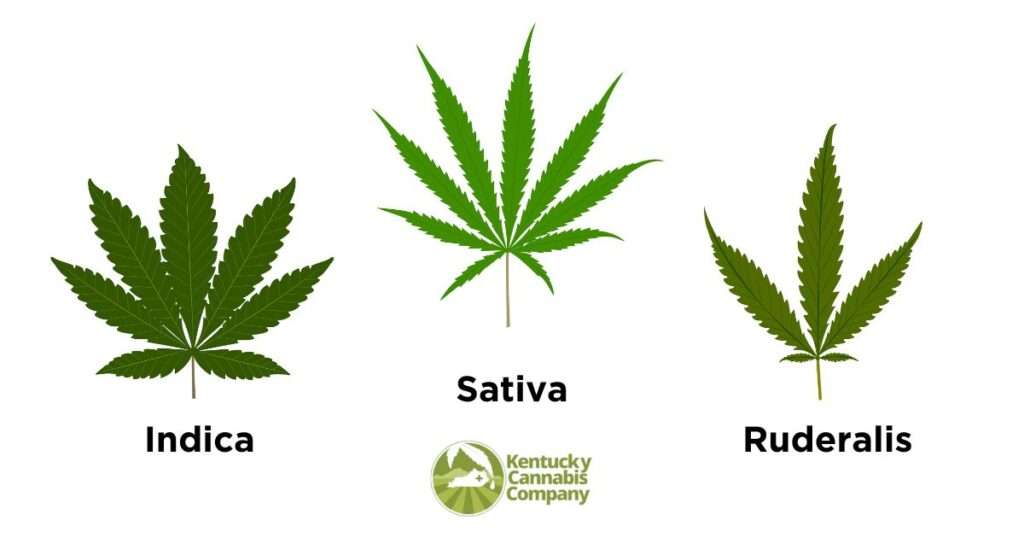
| Sativa and indica | Visual, morphological, and historical plant-type labels that can appear across hemp-type and marijuana-type cannabis. |
Sativa-like and indica-like visual traits can appear across hemp-type and marijuana-type cannabis. These labels should not be used as guarantees of relaxation, energy, sleep support, anxiety relief, pain outcomes, or medical benefit.
Why Indica and Sativa Labels Are Not Reliable Effect Claims
Indica and sativa labels may describe growth traits, leaf shape, plant structure, aroma expectations, or historical breeding language. They should not be used as guarantees of pain outcomes, relaxation, energy, sleep, anxiety changes, or medical benefit.
Cannabinoids Matter More Than the Label
For shoppers comparing CBD and cannabis terminology, the product’s cannabinoid profile provides more useful information than an indica or sativa label. Even then, cannabinoid information should be used for product literacy, not self-treatment claims.
| Compound | Safe Explanation |
|---|---|
| CBDa | The acidic precursor commonly associated with CBD-dominant hemp-type cannabis. |
| CBD | A non-intoxicating cannabinoid. Retail CBD products are not FDA-approved for pain treatment. |
| THCa | The acidic precursor commonly associated with THC-dominant marijuana or drug-type cannabis. |
| THC | The primary intoxicating cannabinoid. THC may carry impairment, legal, drug-testing, and safety concerns. |
| CBN | A cannabinoid associated with aged THC. Do not claim sleep or sedation benefits. |
| Terpenes | Aromatic compounds that may contribute to product aroma, but should not be turned into pain, sleep, anxiety, mood, or medical claims. |
What CBD Shoppers Should Review Instead
If you are comparing hemp-derived CBD products, focus on objective product information. This helps you evaluate labels and transparency without relying on indica or sativa marketing terms.
| What to Review | Why It Matters |
|---|---|
| CBD amount per serving | Helps compare product strength. |
| Total CBD per package | Helps compare oils, gummies, capsules, and topicals. |
| THC content | Full-spectrum CBD may contain trace THC. |
| CBDa / THCa information if available | Helps users understand chemotype and cannabinoid profile. |
| Product format | Oils, gummies, capsules, and topicals are used differently. |
| Ingredients | Helps identify allergens, sweeteners, carrier oils, or additives. |
| Batch number | Should match the Certificate of Analysis. |
| Certificate of Analysis | Supports cannabinoid and testing transparency. |
| Lab-testing date | Helps verify product-specific testing. |
| Warning language | Responsible brands include safety cautions. |
Full-Spectrum CBD, THC, and Drug Testing
Full-spectrum CBD products may contain trace THC. People subject to workplace, athletic, professional, licensing, probation, or other testing should review product labels and Certificates of Analysis carefully before using CBD.
- Hemp-derived does not automatically mean THC-free.
- THC content should be reviewed on the product label and COA.
- CBD itself is not typically the target of standard drug tests.
- Trace THC may still matter for people subject to testing.
- No CBD company should guarantee drug-test outcomes.
CBD Safety and Medication Cautions
CBD may interact with medications and may not be appropriate for everyone. People taking prescription medication, over-the-counter medication, herbs, supplements, sleep aids, sedatives, antidepressants, anti-anxiety medications, seizure medications, blood thinners, or liver-affecting drugs should speak with a licensed healthcare professional before using CBD.
- CBD may cause drowsiness in some people.
- CBD may not be appropriate during pregnancy or breastfeeding.
- CBD may not be appropriate for people with liver concerns.
- Do not stop, reduce, replace, or combine medications with CBD without medical guidance.
Where CBD Product Information Fits
Product links should help readers review labels, ingredients, CBD amount, THC content, Certificates of Analysis, lab-testing information, and product format details. Do not link products from pain, nerve pain, inflammation, arthritis, relief, treatment, or medical-effect language.
Product Label Review
Use product pages and education pages to compare CBD amount, ingredients, THC content, and warning language.
Product-Format Comparison
Oils, gummies, capsules, and topicals are different formats, so shoppers should review directions and labels carefully.
Questions Before Choosing
When a label, COA, or product format is unclear, ask product-specific questions before buying.
Bluegrass Hemp Oil’s Approach to CBD Transparency
Bluegrass Hemp Oil focuses on CBD education, product transparency, lab testing, Certificates of Analysis, product labels, THC information, and customer support. These resources help adults review CBD product details before choosing hemp-derived CBD products.
CBD Product Labels
Understand CBD amount per serving, THC content, ingredients, and warning language before choosing a CBD product.
Certificates of Analysis
Review available product-specific lab reports before choosing a CBD product.
CBD Lab Testing
Learn what lab testing can show about cannabinoid content, THC levels, and product transparency.
CBD and THC Education
Review why CBD, THC, full-spectrum hemp, and product labels should be understood before choosing CBD products.
Related Cannabis Label and CBD Safety Resources
CBD Product Labels
Learn how to review CBD amount per serving, THC content, ingredients, and warning language.
CBD Lab Testing
Learn why cannabinoid testing, THC testing, and batch-specific COAs matter.
CBD vs THC
Understand why CBD and THC are different and why THC content matters.
CBD Medication Interactions
Review why medication and safety questions should be discussed with a licensed healthcare professional.
Frequently Asked Questions
Is indica or sativa better for pain?
Indica and sativa labels should not be used as medical guidance. They do not reliably predict pain-related effects.
Do indica and sativa have different cannabinoids?
They can, but the label itself is not enough. A product’s cannabinoid profile, terpene profile, THC content, Certificate of Analysis, and lab testing provide more useful information.
What is the real difference between hemp and marijuana?
Legally, hemp is defined by THC compliance. Botanically, hemp-type cannabis is usually CBDa / CBD dominant, while marijuana or drug-type cannabis is usually THCa / THC dominant.
Are hemp and marijuana both cannabis?
Yes. Hemp and marijuana are both cannabis, but they differ by legal classification, chemotype, breeding goals, and cannabinoid dominance.
Are sativa and indica types of hemp and marijuana?
Sativa and indica are visual, morphological, and historical cannabis labels. Both hemp-type and marijuana-type cannabis can show sativa-like or indica-like traits.
Does CBD treat pain or nerve pain?
Bluegrass Hemp Oil products are not intended to diagnose, treat, cure, or prevent pain, nerve pain, inflammation, arthritis, or disease.
Can full-spectrum CBD contain THC?
Yes. Full-spectrum CBD may contain trace THC. Review the product label and Certificate of Analysis before use.
Can CBD interact with medications?
Yes. CBD may interact with medications and may not be appropriate for everyone. Speak with a licensed healthcare professional before using CBD if you take medication.
Why do COAs matter for CBD products?
Certificates of Analysis help customers review cannabinoid content, THC levels, batch information, and available testing details. They support transparency but do not prove medical effectiveness.
What should I check before choosing a CBD product?
Review CBD amount per serving, THC content, ingredients, product directions, warning language, batch number, Certificate of Analysis, lab-testing date, and medication cautions.
Sources and Editorial Standards
This article is provided for educational purposes and is not medical advice. It is designed to help adults understand indica vs sativa search intent, cannabis labels, CBDa-dominant hemp, THCa-dominant marijuana, cannabinoids, terpenes, THC content, Certificates of Analysis, lab testing, medication-interaction concerns, and safety considerations before choosing hemp-derived CBD products.
- Review USDA hemp production compliance guidance
- Review FDA cannabis and CBD regulation guidance
- Review FDA CBD consumer safety information
- Review CDC CBD public health information
- Review Nature Plants research on indica and sativa labeling
- Review NIH-indexed research on cannabis synthase genes and phytochemistry
Visible External Source Links
These external references are repeated here as visible links and raw URLs so they remain accessible if WordPress, Divi, or theme styling hides normal inline source links.