
Understanding Dementia and the Potential Benefits of Full-Spectrum CBD Oil

Bluegrass Hemp Oil Caregiver Guide

Dementia, Brain Health, and CBD Oil: What Caregivers Should Know

Dementia is not one specific disease. It is an umbrella term for symptoms that affect memory, thinking, communication, behavior, and daily functioning. This guide explains dementia basics, common signs, caregiver safety considerations, and what current research does and does not suggest about CBD oil and dementia-related symptoms.

🧠

Caregiver-first guidance

Start with diagnosis, safety planning, medication review, and professional care. CBD should never be positioned as a dementia treatment or a substitute for medical guidance.

Quick Answer: Can CBD Oil Help Dementia?

CBD oil has not been proven to cure, prevent, reverse, or slow dementia. Some early research has explored cannabinoids for dementia-related behavioral symptoms such as agitation, but the evidence is limited and not strong enough to make treatment claims. Caregivers should speak with a qualified healthcare professional before considering CBD, especially because older adults often take medications that may interact with CBD.

Important note: CBD products are not intended to diagnose, treat, cure, or prevent dementia, Alzheimer’s disease, or any other medical condition. Dementia care should be guided by qualified healthcare professionals.

Table of Contents

Key Takeaways for Caregivers

Dementia is not one disease

Dementia is a group of symptoms that can affect memory, thinking, judgment, communication, behavior, and daily life.

Alzheimer’s is one type

Alzheimer’s disease is the most common cause of dementia, but vascular dementia, Lewy body dementia, frontotemporal dementia, and mixed dementia also exist.

CBD is not a dementia cure

CBD oil has not been proven to cure, prevent, reverse, slow, or manage dementia.

Research is limited

Some cannabinoid studies focus on agitation or behavioral symptoms, but the evidence is still emerging and should not be overstated.

Medication safety matters

Older adults may take multiple medications, and CBD may interact with some drugs or increase drowsiness.

Caregiver guidance matters

Diagnosis, professional care, daily routines, home safety, and caregiver support are essential parts of dementia care.

What Is Dementia?

Dementia is a term used to describe symptoms that interfere with memory, thinking, communication, judgment, behavior, and daily life. Dementia is not a normal part of aging, and memory loss alone does not always mean a person has dementia.

A medical evaluation is important because different causes require different care plans. Some dementia-like symptoms may also be related to medication effects, infection, sleep problems, depression, vitamin deficiency, or other health conditions that need professional evaluation.

Caregiver reminder

When changes affect daily safety, driving, finances, medication use, communication, or decision-making, it is time to talk with a qualified healthcare professional.

Term Simple Explanation
Dementia A group of symptoms affecting memory, thinking, behavior, and daily function.
Alzheimer’s disease The most common cause of dementia.
Vascular dementia Dementia related to blood flow or blood vessel changes in the brain.
Lewy body dementia Dementia that may affect thinking, movement, sleep, behavior, and alertness.
Frontotemporal dementia Dementia that often affects personality, behavior, language, or movement.
Mild cognitive impairment Cognitive changes greater than expected for age, but not always severe enough to interfere with independence.
Caregiver A family member, friend, or professional who helps support someone with dementia.

Dementia vs Alzheimer’s: What Is the Difference?

Dementia and Alzheimer’s disease are related, but they are not the same thing. Dementia is the broader term for symptoms that interfere with daily life. Alzheimer’s disease is one specific disease and the most common cause of dementia.

Dementia Alzheimer’s Disease
Umbrella term for symptoms. Specific disease process.
Can have many causes. Most common cause of dementia.
May involve memory, judgment, communication, behavior, movement, or daily function. Often begins with memory and thinking changes.
Includes Alzheimer’s, vascular dementia, Lewy body dementia, frontotemporal dementia, and others. One type within the dementia category.

Common Types of Dementia

Dementia can have different causes and patterns. Knowing the type helps families and clinicians plan safer care, understand likely symptoms, and choose appropriate support.

Alzheimer’s Disease

Alzheimer’s disease is the most common cause of dementia and is often associated with changes in memory, thinking, and daily function.

Vascular Dementia

Vascular dementia is related to changes in blood flow or blood vessel health in the brain.

Lewy Body Dementia

Lewy body dementia may involve changes in thinking, alertness, movement, sleep, and behavior.

Frontotemporal Dementia

Frontotemporal dementia often affects personality, behavior, communication, or movement.

Mixed Dementia

Mixed dementia means more than one type of dementia-related brain change may be present.

Professional evaluation matters

Different dementia types can require different caregiver strategies, safety plans, and medical follow-up.

Common Signs and Symptoms of Dementia

Dementia symptoms can look different from person to person. Changes may develop gradually and become more noticeable over time. A healthcare professional should evaluate symptoms that interfere with daily life.

  • Memory changes that disrupt daily life
  • Difficulty planning or solving problems
  • Trouble completing familiar tasks
  • Confusion with time or place
  • Word-finding or communication problems
  • Changes in judgment
  • Mood, personality, or behavior changes
  • Withdrawal from activities
  • Trouble with visual or spatial processing
  • Increased safety concerns at home or while driving

When Should a Loved One Be Evaluated for Dementia?

A person should be evaluated by a healthcare professional if memory, thinking, communication, behavior, or daily decision-making changes interfere with everyday life. A diagnosis matters because some dementia-like symptoms may have treatable causes, and different types of dementia may require different care plans.

Seek immediate medical evaluation for: sudden confusion, sudden weakness, slurred speech, severe headache, head injury, sudden behavior change, or rapid worsening.

Concern Why It Matters
Memory problems affecting daily life May signal cognitive changes that need evaluation.
Sudden confusion May indicate an urgent medical issue.
Medication changes Some medicines can affect memory, alertness, or behavior.
Falls or balance problems May increase safety risks.
Personality or behavior changes May be part of dementia or another health issue.
Wandering or unsafe decisions May require caregiver safety planning.

CBD Oil and Dementia: What Does the Research Actually Say?

CBD oil is not approved as a treatment for dementia, Alzheimer’s disease, memory loss, or cognitive decline. Some research has explored cannabinoids for behavioral symptoms associated with dementia, such as agitation or aggression, but the evidence is limited.

Studies may use specific cannabinoid preparations, clinical supervision, or controlled settings that are not the same as over-the-counter CBD products. For that reason, this page discusses dementia and CBD oil as a safety and research-literacy topic, not as a product recommendation for dementia care.

Claim Area Safe Content Framing Evidence Level
CBD cures dementia Do not say this. Not supported
CBD prevents dementia Do not say this. Not supported
CBD reverses Alzheimer’s disease Do not say this. Not supported
CBD slows cognitive decline Do not claim this. Not established
Cannabinoids and agitation Some small studies have explored cannabinoids for dementia-related agitation or behavioral symptoms. Emerging / limited
Full-spectrum CBD and brain health Discuss as a wellness-support topic, not a dementia treatment. Theoretical / indirect
CBD safety in older adults Requires medical guidance because of medication interactions, drowsiness, fall risk, THC exposure, and individual health factors. Important safety concern

Full-Spectrum CBD Oil and Brain Health: A Cautious Look

Full-spectrum CBD oil contains CBD along with other hemp compounds such as minor cannabinoids and terpenes. Some people are interested in full-spectrum hemp products because of the entourage effect, but full-spectrum CBD oil has not been proven to treat dementia, reverse memory loss, or prevent Alzheimer’s disease.

For someone with dementia, CBD should only be considered after a conversation with a qualified healthcare professional who understands the person’s medications, symptoms, age, fall risk, THC sensitivity, and overall health.

For background on hemp extract categories, read the full-spectrum CBD oil guide and the explanation of the entourage effect in full-spectrum CBD.

Read the Full-Spectrum CBD Oil Guide

Full-spectrum THC note

Full-spectrum hemp products may contain trace THC within legal limits. THC exposure, drug testing, sensitivity, confusion, sedation, and fall risk should be discussed with a healthcare professional before use.

CBD Safety Questions Caregivers Should Ask

Before considering CBD for someone with dementia, caregivers should speak with a qualified healthcare professional. This is especially important for older adults, people taking multiple medications, people at risk of falls, and anyone with liver concerns or complex health needs.

Dementia care should be guided by qualified healthcare professionals. Anyone considering CBD for a person with dementia should first discuss CBD interactions with medications, fall risk, drowsiness, THC exposure, and overall health with a healthcare professional.

Question Why It Matters
Has the person received a formal diagnosis? Different dementia types may require different care planning.
What medications are being taken? CBD may interact with some medications.
Is there fall risk or drowsiness? CBD and THC-containing products may affect alertness.
Is the person sensitive to appetite or mood changes? Older adults may respond differently to supplements and hemp products.
Is the product full-spectrum? Full-spectrum products may contain trace THC within legal limits.
Is there a certificate of analysis? COAs help verify cannabinoid content and THC levels.
Has a healthcare professional reviewed CBD use? Dementia care should be medically supervised.

How to Compare CBD Products Safely

If a healthcare professional says CBD may be considered, caregivers should compare products carefully. Product quality, clear labeling, third-party testing, cannabinoid content, THC levels, serving directions, and certificates of analysis all matter.

Use educational resources first, including how to read a CBD product label, CBD lab testing and certificates of analysis, certificates of analysis for Bluegrass Hemp Oil products, and the complete guide to CBD products.

Product-quality checklist

  • Clear product label
  • Third-party lab testing
  • Batch-specific certificate of analysis
  • CBD amount listed clearly
  • THC content listed clearly
  • Ingredient transparency
  • Serving directions
  • Contact information for product questions
  • No exaggerated medical claims

Frequently Asked Questions About Dementia and CBD Oil

Can CBD oil help dementia?

CBD oil has not been proven to cure, prevent, reverse, or slow dementia. Some studies have explored cannabinoids for dementia-related behavioral symptoms such as agitation, but the evidence is limited. Caregivers should speak with a healthcare professional before considering CBD.

Is CBD oil safe for someone with dementia?

CBD may not be appropriate for every person with dementia. Older adults often take medications, and CBD can interact with some medicines. A healthcare professional should review medications, symptoms, fall risk, drowsiness, liver concerns, THC exposure, and overall health before CBD is used.

Can CBD oil help dementia agitation?

Some early studies have explored cannabinoids for agitation in dementia, but the research is limited and often uses specific clinical preparations. CBD oil should not be used as a substitute for professional dementia care.

Does CBD oil prevent Alzheimer’s disease?

No. CBD oil has not been proven to prevent Alzheimer’s disease or any form of dementia.

Does CBD oil reverse memory loss?

No. CBD oil has not been proven to reverse memory loss or restore cognitive function in dementia.

What is the difference between dementia and Alzheimer’s?

Dementia is an umbrella term for symptoms that affect memory, thinking, behavior, communication, and daily life. Alzheimer’s disease is the most common cause of dementia.

What should caregivers ask before considering CBD?

Caregivers should ask a healthcare professional about medication interactions, fall risk, drowsiness, liver concerns, THC exposure, product testing, serving size, and whether CBD is appropriate for the person’s diagnosis and care plan.

What should I look for in a CBD product?

Look for a clear product label, third-party lab testing, a certificate of analysis, cannabinoid content, THC levels, ingredient transparency, serving directions, and guidance from a healthcare professional.

Sources and Further Reading

Make CBD Decisions Carefully and Confidently

Dementia care should be guided by qualified healthcare professionals. If CBD is being considered, start with education, review safety concerns, compare lab-tested products, and ask the right questions before making a decision.

Full-Spectrum CBD vs. Isolate: The 2026 Clinical Guide to the Entourage Effect

CBD education • product composition • lab reports

Full-spectrum CBD contains CBD alongside other hemp constituents, while CBD isolate is purified CBD rather than a multi-cannabinoid plant extract. The actual composition of a full-spectrum product varies by extract, formulation, and batch. That difference in composition does not, by itself, prove that one format produces better clinical results for every person.

The short answer: compare what is actually in the product, not just the category name. Look at the ingredient list, CBD concentration, measured minor cannabinoids, THC results, batch identity, and the scope of the laboratory report. Bluegrass Hemp Oil manufactures and sells full-spectrum products, so our perspective comes from hands-on experience making that type of formulation. We still do not treat “full-spectrum” as a guarantee of superiority.

Start with composition

Full-Spectrum CBD and Isolate at a Glance

These labels describe different ingredient profiles. They do not tell you whether a finished product is accurately labeled, well made, appropriately tested, or clinically effective.

Comparison point Full-spectrum CBD CBD isolate
Composition CBD plus other compounds retained from or formulated to represent a broader hemp extract profile. The measured profile varies by product and batch. Purified cannabidiol as the cannabinoid ingredient, without the broader cannabinoid mixture that defines a full-spectrum extract.
How the ingredient is produced Hemp is extracted and processed while retaining a broader range of extract constituents. The extraction and refinement method varies by manufacturer. CBD is separated and refined to a high-purity ingredient, often after an initial plant extraction. Purification is not the same thing as chemical synthesis.
THC considerations May contain measurable THC. Check the actual batch report rather than assuming the amount from the words “full-spectrum.” Intended to contain CBD without THC as part of the isolate ingredient. Finished-product testing still matters because other ingredients and manufacturing steps can affect the final result.
Flavor and aroma Can retain more plant-like flavor or aroma, depending on the extract and finished formula. Typically has a more neutral flavor and aroma, although the finished product may contain flavors, carriers, or other added ingredients.
What testing can establish A cannabinoid panel can show measured CBD, THC, and listed cannabinoids. Separate testing is needed for terpenes or contaminants when those claims matter. Testing can verify CBD purity and whether other targeted cannabinoids are detected. The finished product still needs testing appropriate to its ingredients and claims.
Why someone might compare the formats Preference for a broader hemp profile, product flavor, formulation philosophy, or a specific documented batch composition. Preference for a CBD-only cannabinoid ingredient, a more neutral base, formulation consistency, or a desire to avoid measurable THC.

For the broader three-way overview that also covers broad-spectrum products, see Types of CBD: Full-Spectrum, Broad-Spectrum & Isolate.

A category, not a fixed recipe

What Full-Spectrum CBD Contains

“Full-spectrum” describes a broader hemp-extract category. It does not mean every product contains the same cannabinoids, the same amount of THC, or meaningful quantities of every terpene, flavonoid, or minor cannabinoid found in the original plant.

Plant genetics, harvest conditions, extraction choices, refinement, formulation, storage, and batch-to-batch variation can all affect what reaches the finished bottle. That is why the most useful question is not simply “Is this full-spectrum?” but “What does this specific batch actually measure?”

What a cannabinoid panel can show

Depending on the laboratory panel, a report may quantify CBD, THC, CBG, CBC, or other cannabinoids. The exact analytes and reporting limits matter.

What a cannabinoid panel cannot prove by itself

It does not independently establish terpene content, the absence of every possible contaminant, or clinical effectiveness. Those are different questions that require different evidence.

Purified cannabidiol

What CBD Isolate Contains

CBD isolate is a highly purified cannabidiol ingredient. In plant-derived production, hemp is first extracted and the CBD is then further separated, refined, and commonly crystallized. The word isolate describes the purified ingredient. It does not mean the CBD was necessarily made through chemical synthesis.

Manufacturers can dissolve isolate into a carrier oil, add it to gummies or capsules, or combine it with other ingredients to create a finished product. Once other cannabinoids or botanical ingredients are added, the composition of that finished product should be evaluated as a formulation rather than by treating the isolate ingredient as the entire product.

CBD isolate should not be described as biologically inactive or inherently dangerous simply because it lacks the broader hemp mixture. Purified CBD has demonstrated biological and clinical activity in specific controlled research settings. What those studies do not prove is that a retail isolate product will produce the same outcome, dose, or safety profile.

Our manufacturing perspective

Why We Choose Full-Spectrum Formulations

Bluegrass Hemp Oil is the consumer-facing retail and education brand for products made by Kentucky Cannabis Company. Founder Bill Polyniak’s documented hemp work dates to Kentucky’s 2014 pilot-program era and developed from genetics and cultivation into extraction, formulation, manufacturing, batch control, cannabinoid testing, and third-party laboratory review.

That experience shaped our choice to make full-spectrum formulations. We prefer to work with a defined hemp extract profile and then carry that profile through formulation and batch testing rather than starting with CBD as the only cannabinoid ingredient. For us, the choice is a manufacturing philosophy built around plant material, extraction, formulation, and verification.

It is not a claim that every full-spectrum product is better than every isolate product, or that full-spectrum CBD produces superior clinical outcomes for every person.

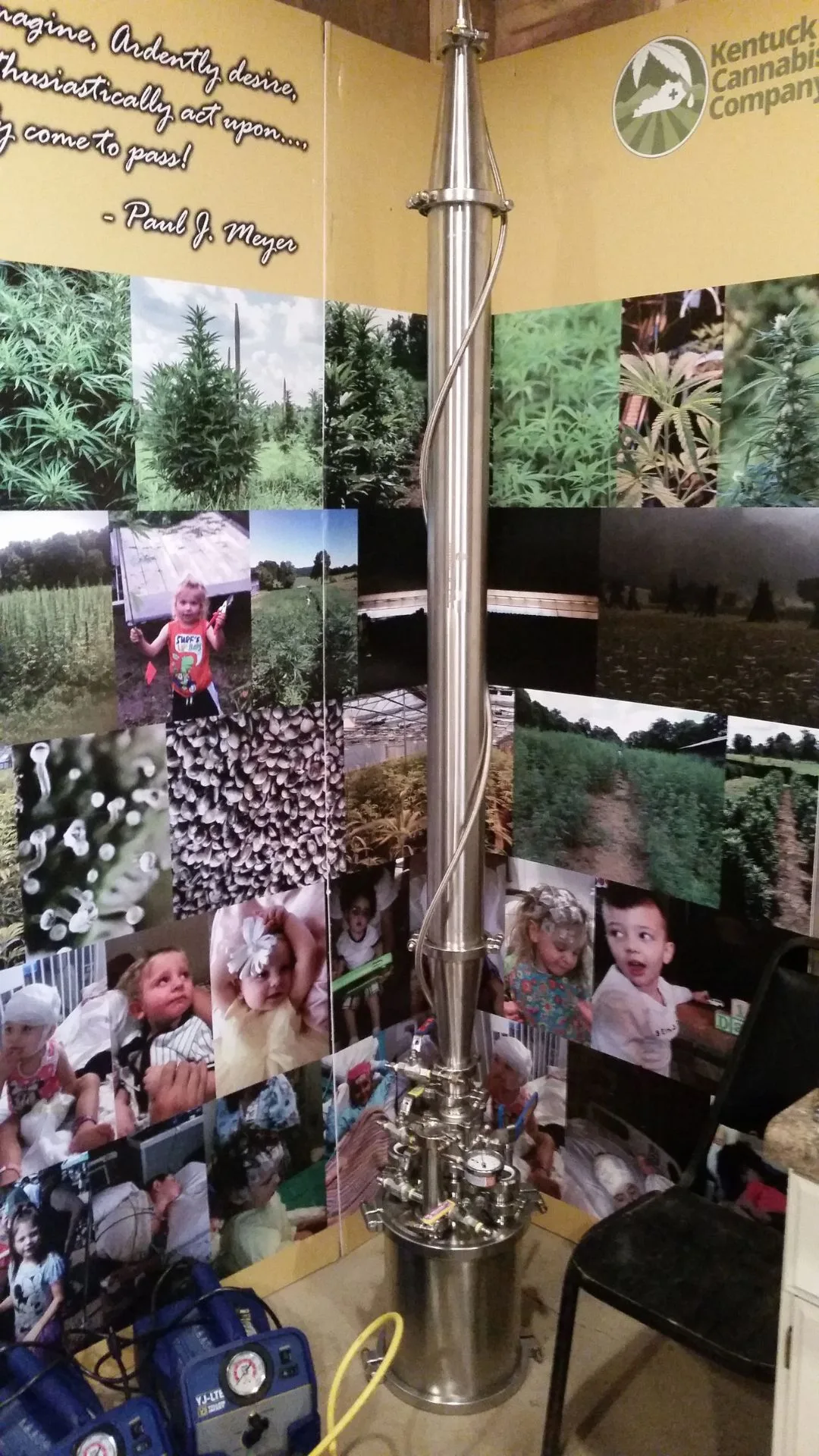
Early hydrocarbon extraction system used by Kentucky Cannabis Company
Early hydrocarbon extraction equipment used by Kentucky Cannabis Company. Hands-on extraction work is part of the manufacturing experience behind Bluegrass Hemp Oil’s full-spectrum formulation approach.

Learn about Bill Polyniak’s Kentucky hemp experience.

What the research can and cannot answer

Does Full-Spectrum CBD Work Better?

There is not enough controlled human evidence to say that full-spectrum CBD is clinically better than CBD isolate for everyone. The answer depends on the specific extract, dose, condition studied, comparator, and outcome.

Controlled human research

A randomized, double-blind, placebo-controlled trial in Dravet syndrome found that a standardized purified cannabidiol oral solution reduced convulsive-seizure frequency more than placebo. That study demonstrates that purified CBD can have clinical effects in a specific prescription-drug setting. It does not establish how retail CBD isolate compares with retail full-spectrum products. Read the controlled trial on PubMed.

Observational human comparisons

A 2018 meta-analysis pooled observational studies in treatment-resistant epilepsy and compared CBD-rich extracts with purified CBD. Some outcomes favored CBD-rich extracts, but the standard threshold of at least 50% seizure reduction did not differ between groups, and the authors stated that controlled studies were needed to confirm whether other plant compounds were responsible for any apparent advantage. The underlying studies were heterogeneous and not randomized head-to-head trials. Read the observational meta-analysis.

Laboratory and animal research

Preclinical work can show that mixtures and isolated compounds behave differently in cells or animals. For example, a 2015 mouse study reported a different dose-response pattern for a CBD-rich extract versus purified CBD. That is useful mechanistic evidence, but mouse results cannot establish clinical superiority in people or across commercial products. Read the mouse study.

Practical takeaway: a product category is not a clinical result. Controlled human trials, observational studies, animal experiments, and laboratory assays answer different questions and should not be blended into one universal claim.

A hypothesis about interactions

What About the Entourage Effect?

The entourage effect is a proposed interaction among cannabis constituents. It is not simply another name for having a full-spectrum chemical profile.

CBD isolate by itself does not contain the multi-compound mixture needed to test interactions among absent cannabinoids, terpenes, or other constituents. That does not mean CBD alone has no biological effects, and it does not prove that every full-spectrum product produces clinically meaningful synergy. Likewise, if purified CBD is later formulated with other compounds, those compounds may still interact; the fact that one starting ingredient was isolate does not prevent interaction in the finished mixture.

For the deeper science discussion, see What Is the Entourage Effect?

Compare batches, not slogans

How to Compare Two Actual Products

  1. Start with the ingredient list. Identify whether the finished product uses a full-spectrum extract, isolate, another extract type, or a combination of ingredients.
  2. Normalize the CBD amount. Compare CBD per mL, capsule, gummy, or other consistent unit rather than relying only on the total number printed on the front label.
  3. Review the measured cannabinoid profile. Look for CBD, THC, and any other cannabinoids the laboratory actually quantified. Do not assume compounds that were not tested or reported.
  4. Check THC results and reporting limits. This matters when a person wants to minimize THC exposure or is subject to testing.
  5. Match the batch identity. A laboratory report is most useful when the lot or batch number on the package matches the report.
  6. Check the scope of testing. Potency, terpenes, pesticides, heavy metals, solvents, microbials, and mycotoxins are different panels. One panel does not substitute for the others.
  7. Keep clinical claims separate from chemistry. A COA can document measured chemistry. It cannot prove that the product will produce a particular health outcome.

Historical Bluegrass Hemp Oil batch example: Genesis Blend 1082 C

This historical report is useful because it shows why the exact report and panel matter. It is not presented as a current production-batch COA.

Product
Genesis Blend Hemp Oil — Regular Strength
Batch
Genesis Blend
Laboratory sample
KCA Sample 2103KCA0356.0861
Laboratory
KCA Laboratories
Testing date
Tested March 11, 2021; completed March 12, 2021
Reported potency
Total CBD 12.71 mg/mL; Total THC 0.64 mg/mL

The compiled PDF includes cannabinoid potency plus separate contaminant and terpene panels. That distinction matters: a potency result by itself does not prove terpene content or the absence of every contaminant.

Open the original Genesis Blend 1082 C laboratory PDF. For the current repository, visit Certificates of Analysis.

Useful distinctions

Common Questions

Is CBD isolate the same thing as synthetic CBD?

No. “Isolate” describes purified cannabidiol as an ingredient. CBD can be purified from plant-derived material. Chemical synthesis is a different production route.

Does full-spectrum always mean there are meaningful amounts of terpenes?

No. Full-spectrum products vary, and a cannabinoid potency report does not tell you the terpene profile unless terpene testing is also included. Review the actual batch documentation.

Can a COA prove the entourage effect?

No. A COA can document measured chemistry for the analytes tested. Demonstrating a clinically meaningful interaction requires research designed to test that interaction.

Can purified CBD have biological effects without other hemp compounds?

Yes. Controlled human research with standardized purified cannabidiol has demonstrated effects in specific prescription settings. Those results should not be generalized to every retail CBD product or health condition.

Which format should I choose?

There is no universal winner. Compare the chemical profile you want, THC considerations, ingredients, flavor, formulation, and the batch-specific lab report. If medication use, pregnancy, a medical condition, or drug testing is relevant, discuss CBD use with an appropriate healthcare professional.

Research cited on this page

Compare the Label, the Batch, and the Product You’re Actually Buying

If you want to explore the full-spectrum products Bluegrass Hemp Oil makes, start with the product information and lab documentation rather than assuming a category label tells the whole story.

10 Benefits of CBD

CBD Benefits Education Guide

10 CBD Benefits People Ask About: Research, Safety, COAs & Product Quality

People search for CBD benefits because they want to understand what cannabidiol is, why shoppers compare CBD products, what research is still exploring, and how to choose products responsibly. This guide reviews 10 CBD benefit topics people commonly ask about while clearly separating research questions from retail CBD product claims.

Safety-first note: CBD products are not intended to diagnose, treat, cure, or prevent disease. CBD may cause side effects and may interact with medications. Talk with a qualified healthcare professional before using CBD if you take medication, have liver concerns, are pregnant or nursing, are subject to drug testing, or manage a medical condition.

Author and transparency

About this CBD benefits guide

This guide was created to help shoppers understand CBD benefit questions, product-quality signals, COAs, THC considerations, and safety checkpoints before buying. Bluegrass Hemp Oil’s hemp education background may provide product-transparency context, but CBD safety and medical questions should be discussed with a qualified healthcare professional.

For company context, review Bill Polyniak’s hemp education background, Bluegrass Hemp Oil’s Kentucky hemp story, and the Bluegrass Hemp Oil quality promise.

Quick answer

What are the benefits of CBD?

CBD is a non-intoxicating cannabinoid that many shoppers compare for wellness routines, full-spectrum hemp profiles, product-format flexibility, and personal preference. Retail CBD products should not be presented as disease treatments, and research interest should not be used as a product claim.

The safest way to compare CBD products is by reviewing COAs, THC content, CBD per serving, ingredients, lab testing, and medication-interaction considerations. Start with what cannabidiol is and how CBD products compare, the CBD product guide for oils, gummies, capsules, and how to choose, and CBD medication interaction considerations.

Safer benefit framework

10 CBD benefit topics people commonly ask about

Instead of treating “CBD benefits” as a list of medical outcomes, use these 10 topics to compare CBD education, product quality, and safety questions.

# CBD benefit topic Safe explanation Helpful internal link
1 CBD is non-intoxicating by itself. CBD does not cause a high by itself, but full-spectrum products may contain trace THC. CBD vs THC explained
2 CBD products come in multiple formats. CBD is available as oils, gummies, capsules, topicals, and concentrates, each with different label and serving considerations. CBD product guide for oils, gummies, capsules, and how to choose
3 Full-spectrum CBD offers a broader hemp profile. Full-spectrum CBD may contain CBD, minor cannabinoids, terpenes, and legally compliant trace THC. full-spectrum CBD explained
4 CBD may fit into some wellness routines. Some consumers include CBD in general wellness routines, but retail CBD products should not be presented as disease treatments. Bluegrass Hemp Oil CBD catalog
5 CBD is an active research topic. Researchers continue to study cannabinoids, but research interest is not the same as a product treatment claim. what cannabidiol is and how CBD products compare
6 COAs help verify product transparency. A COA helps shoppers review CBD content, THC content, batch identity, and lab information. Certificates of Analysis for Bluegrass Hemp Oil products
7 Labels help compare CBD per serving. Clear labels help shoppers understand CBD per serving, ingredients, extract type, and serving information. how to read a CBD product label
8 THC awareness matters. Full-spectrum CBD may contain trace THC, which can matter for THC sensitivity and drug testing. does CBD show up on a drug test
9 Ingredient review helps compare products. Carrier oils, flavorings, allergens, sweeteners, and additives should be reviewed before buying. CBD product guide for oils, gummies, capsules, and how to choose
10 Professional guidance is important. People taking medication or managing medical conditions should discuss CBD with a qualified healthcare professional. CBD medication interaction considerations

CBD vs THC

Does CBD get you high?

CBD itself is not intoxicating and does not cause a high by itself. THC is the cannabinoid most associated with intoxication. Full-spectrum CBD products may contain legally compliant trace THC, so shoppers should review the label and COA.

Topic CBD THC
Intoxication Not intoxicating by itself. Intoxicating.
Product relevance Common in hemp-derived CBD products. May appear in trace amounts in full-spectrum CBD.
What to verify CBD amount, extract type, and COA. THC amount, drug-testing risk, and COA.

For a deeper comparison, review CBD vs THC explained, does CBD show up on a drug test, and Certificates of Analysis for Bluegrass Hemp Oil products.

Extract types

Is full-spectrum CBD better than isolate?

Not automatically. Full-spectrum CBD, broad-spectrum CBD, and CBD isolate are different extract types. The better choice depends on THC comfort level, drug-testing concerns, ingredient preferences, product quality, COA results, and personal safety needs.

Extract type What it may contain What to verify
Full-spectrum CBD CBD, minor cannabinoids, terpenes, and legally compliant trace THC. THC content and cannabinoid profile on the COA.
Broad-spectrum CBD CBD and other hemp compounds, usually with detectable THC removed. COA-confirmed THC status.
CBD isolate Purified CBD. CBD amount, ingredients, and testing.

Compare types of CBD explained, full-spectrum CBD explained, the entourage effect in full-spectrum CBD, what cannabinoids are in hemp products, and terpenes in hemp products.

Regulatory clarity

Are retail CBD products FDA-approved?

Retail CBD products should not be described as FDA-approved unless that specific product is approved. Prescription cannabinoid products are different from over-the-counter hemp-derived CBD products and should not be replaced or combined without guidance from a qualified healthcare professional.

Important: Do not start, stop, replace, or combine prescription medications with retail CBD products without guidance from a qualified healthcare professional.

COAs and lab testing

Why do COAs matter when comparing CBD benefits?

COAs matter because they help shoppers verify what is actually in a CBD product. A CBD benefit discussion should include product transparency, because labels and marketing language are less useful without batch-specific testing.

COA item Why it matters
Batch number Matches the lab report to the product.
CBD content Helps verify label accuracy.
THC content Important for full-spectrum CBD and drug-testing concerns.
Minor cannabinoids Shows the broader hemp extract profile.
Terpenes Supports plant-profile transparency when available.
Testing date Shows whether the report is current.
Lab identity Shows who performed the testing.
Heavy metals Important hemp-product safety screen when available.
Pesticides Important agricultural safety screen when available.
Microbials Helps evaluate contamination risk.
Residual solvents Relevant to extraction quality.

Review Certificates of Analysis for Bluegrass Hemp Oil products, CBD lab testing and certificates of analysis, and Bluegrass Hemp Oil science and quality standards.

Label reading

What should I check before buying CBD?

Product label checklist

  1. Confirm total CBD amount.
  2. Check CBD per serving or CBD per mL.
  3. Identify the extract type.
  4. Review THC information.
  5. Review the carrier oil.
  6. Check flavorings, allergens, sweeteners, and additives.
  7. Match the product to a batch-specific COA.
  8. Review serving instructions.
  9. Check whether the company avoids disease-treatment claims.
  10. Contact the company with product questions.

Helpful resources

Use how to read a CBD product label with the CBD product guide for oils, gummies, capsules, and how to choose before choosing a product format.

Questions about labels, COAs, or product selection can go to the contact the Bluegrass Hemp Oil team with product questions page.

THC and testing

Can CBD show up on a drug test?

Full-spectrum CBD products may contain legally compliant trace THC. Trace THC can matter for people subject to workplace, athletic, legal, or medical drug testing. Review the product label, extract type, and batch-specific COA before using CBD.

Do not assume every CBD product is THC-free. Verify the extract type and batch-specific test results before use.

Compare CBD vs THC explained, does CBD show up on a drug test, and Certificates of Analysis for Bluegrass Hemp Oil products.

Medication questions

Can CBD interact with medication?

Yes, CBD may interact with some medications. People taking prescription or over-the-counter medications should talk with a qualified healthcare professional before using CBD, especially when liver concerns, sedating medications, pregnancy, nursing, or complex medical conditions are involved.

Questions to ask before use

  • Do I take prescription medication?
  • Do I take over-the-counter medication?
  • Do I use sleep aids, anxiety medication, antidepressants, or seizure medication?
  • Do I have liver concerns?
  • Am I pregnant or nursing?
  • Could CBD increase drowsiness?
  • Could CBD affect medication levels?
  • Should I avoid CBD with my current treatment plan?

Next step

Bring the product label and COA to a qualified healthcare professional. Use CBD medication interaction considerations as a starting point for the conversation.

Product example

How should I evaluate Genesis Blend full-spectrum CBD oil?

Genesis Blend full-spectrum CBD oil can be evaluated using the same product-quality checklist in this guide: CBD per serving, extract type, THC content, ingredient list, batch-specific COA, lab testing, and customer support.

It should not be presented as a treatment for pain, anxiety, sleep, inflammation, depression, seizures, or any medical condition.

FAQs

CBD benefits FAQ

What are the benefits of CBD?

CBD benefit questions should be answered with research context, product-quality information, and safety limits. CBD is non-intoxicating by itself, comes in multiple product formats, and can be compared by COAs, labels, THC content, extract type, and ingredients. Retail CBD products should not be presented as disease treatments.

Does CBD get you high?

CBD itself is not intoxicating and does not cause a high by itself. Full-spectrum CBD products may contain legally compliant trace THC, so shoppers should review the label and COA.

Is CBD safe?

CBD is not risk-free. It may cause side effects and may interact with medications. People with liver concerns, pregnancy, nursing, medical conditions, or drug-testing concerns should talk with a qualified healthcare professional before using CBD.

Can CBD interact with medication?

Yes. CBD may interact with medications. People taking prescription or over-the-counter medication should talk with a qualified healthcare professional before using CBD.

Can CBD show up on a drug test?

Full-spectrum CBD products may contain trace THC, which can matter for workplace, athletic, legal, or medical drug testing. Review the product label and batch-specific COA before using CBD.

What is full-spectrum CBD?

Full-spectrum CBD is hemp extract that may contain CBD, minor cannabinoids, terpenes, and legally compliant trace THC. Shoppers should verify the cannabinoid profile and THC content with a COA.

Is full-spectrum CBD better than isolate?

Not automatically. Full-spectrum CBD, broad-spectrum CBD, and CBD isolate are different extract types. The better choice depends on THC comfort level, drug-testing concerns, ingredients, product quality, and personal safety needs.

What should I check before buying CBD?

Check the product label, COA, THC content, CBD per serving, extract type, ingredients, batch information, lab testing, and company transparency.

Are CBD products FDA-approved?

Retail CBD products should not be described as FDA-approved unless that specific product is approved. Prescription cannabinoid products are different from over-the-counter hemp-derived CBD products.

Should I talk to a doctor before using CBD?

Yes, especially if you take medication, have liver concerns, are pregnant or nursing, manage a medical condition, are shopping for a child, or are subject to drug testing.

Glossary

CBD benefits glossary

Entity Plain-English explanation
CBD Cannabidiol, a non-intoxicating cannabinoid found in cannabis and hemp.
CBD benefits A search phrase that should be answered with research context, safety limits, and product-comparison guidance.
Full-spectrum CBD Hemp extract containing CBD, other hemp compounds, and possible trace THC.
Broad-spectrum CBD Hemp extract with CBD and other compounds, usually with detectable THC removed.
CBD isolate Purified CBD without the broader hemp compound profile.
THC Intoxicating cannabinoid that may appear in trace amounts in full-spectrum CBD.
COA Certificate of Analysis used to verify product contents.
Cannabinoid profile The list and amounts of cannabinoids shown on a lab report.
Terpenes Aromatic hemp compounds that contribute to the plant profile.
Entourage effect A theory that hemp compounds may work together differently than isolated compounds.
CBD per serving Amount of CBD listed for one suggested serving.
CBD per mL CBD concentration per milliliter of oil.
Carrier oil Oil used to deliver hemp extract.
Batch number Code used to match a product to a lab report.
Drug-testing concern Concern that trace THC exposure may matter for testing.
Medication interaction A concern when CBD affects, or is affected by, medications.
Prescription cannabinoid product A cannabinoid medication used under healthcare-professional supervision.
Retail CBD product An over-the-counter hemp-derived CBD product that should not be presented as a disease treatment.
Genesis Blend Bluegrass Hemp Oil’s full-spectrum CBD oil product line.
Bluegrass Hemp Oil Kentucky-based CBD brand.
Kentucky Cannabis Company Company connected to Bluegrass Hemp Oil.
Bill Polyniak Founder and hemp educator associated with Bluegrass Hemp Oil.

Sources and further reading

External safety and content-quality references

Final CBD safety reminder

CBD products are not intended to diagnose, treat, cure, or prevent disease. CBD may cause side effects and may interact with medications. Talk with a qualified healthcare professional before using CBD if you take medication, have liver concerns, are pregnant or nursing, are subject to drug testing, or manage a medical condition.


CBD Product Guide: Oils, Gummies, Capsules & Topicals

Bluegrass Hemp Oil CBD Product Guide

CBD Product Guide: Oils, Gummies, Capsules, Edibles, Topicals & How to Choose

Choosing a CBD product can feel confusing because CBD comes in many formats, including oils, gummies, capsules, edibles, topicals, and pet products. Each format has a different routine, serving style, onset expectation, ingredient profile, and label-checking process.

This guide explains how CBD product types explained compare, what to check before buying, how to read CBD labels, how full-spectrum CBD differs from other CBD types, and when to review CBD Certificates of Analysis before use.

Compare by
Format, label, COA, THC level, and safety warnings
  • CBD oil
  • CBD gummies and edibles
  • CBD capsules and pills
  • CBD topicals and pet CBD

What Are the Main Types of CBD Products?

CBD products come in several formats, including CBD oil, gummies, capsules, edibles, topicals, and pet CBD. The best CBD product depends on how you prefer to use CBD, how quickly you want to compare serving information, whether you want a pre-measured option, whether you want a topical product, and whether you need to avoid THC. Before buying, review the product label, CBD amount, THC level, ingredients, batch-specific Certificate of Analysis, and safety warnings.

Key Takeaways Before You Compare CBD Products

CBD oilOffers flexible serving control.
CBD gummies and ediblesAre pre-measured and easy to use.
CBD capsules and pillsSupport simple, consistent serving routines.
CBD topicalsAre applied externally to the skin.
Pet CBDShould only be considered with veterinary guidance.
Full-spectrum CBDMay contain trace THC.
Labels and COAsShould be reviewed before buying.
CBD safetyCBD may interact with medications and is not risk-free.

CBD Product Terms in Plain English

Entity Simple Explanation
CBD products Products made with cannabidiol, commonly sold as oils, gummies, capsules, edibles, topicals, and pet formulas.
CBD oil Liquid CBD product often used with a dropper.
CBD gummies Pre-measured edible CBD format.
CBD capsules Encapsulated CBD format for simple serving routines.
CBD edibles Food-style CBD products.
CBD topicals External-use CBD products applied to the skin.
Pet CBD CBD products marketed for animals; use should be discussed with a veterinarian.
Full-spectrum CBD CBD product type that may contain minor cannabinoids, terpenes, and trace THC.
Broad-spectrum CBD CBD product type with multiple hemp compounds, typically without THC.
CBD isolate CBD-only product type.
COA Certificate of Analysis showing CBD, THC, cannabinoid profile, and contaminant testing.
Trace THC Small THC amount that may appear in full-spectrum CBD products.

CBD Product Comparison Table

Use this table as a starting point. The best CBD product for your routine depends on label directions, serving preference, ingredients, THC comfort level, and whether a batch-specific COA is available.

CBD Product Type Best For What to Check Internal Link
CBD oil Flexible serving routines CBD per mL, carrier oil, THC level, COA CBD oil product options
CBD gummies Pre-measured edible format CBD per gummy, ingredients, THC level, COA CBD gummies for beginners
CBD capsules Simple routine CBD per capsule, capsule ingredients, COA CBD capsules for simple serving routines
CBD pills Capsule-style CBD format CBD per pill, ingredients, label directions CBD pills and capsules explained
CBD edibles Food-style CBD format CBD per serving, sugar, allergens, onset expectations CBD edibles and gummies
CBD topicals External skin/body-care use Ingredients, patch testing, fragrance, irritants CBD topicals and skincare products
Pet CBD Pet-owner research Vet guidance, THC, pet-specific COA CBD oil options for dogs

CBD Oil vs Gummies vs Capsules: Which CBD Product Is Right for You?

CBD oil may fit adults who want flexible serving control. Gummies and edibles may appeal to people who prefer a pre-measured format. Capsules and pills may work well for people who want a simple routine without using a dropper.

Choose CBD oil product options if you want more flexibility when comparing label directions. Choose CBD gummies for beginners if you prefer a pre-measured edible format. Choose CBD capsules for simple serving routines or CBD pills and capsules explained if you want a familiar supplement-style routine. Choose CBD edibles and gummies if you prefer food-style CBD products.

Quick CBD Product Chooser

  • CBD oil: flexible serving control.
  • CBD gummies: pre-measured edible format.
  • CBD capsules or pills: simple routine.
  • CBD edibles: food-style CBD products.
  • CBD topicals: external-use skin or body-care routines.
  • Pet CBD: discuss with a veterinarian first.

How to Compare CBD Serving Sizes Without Guessing

There is no universal CBD serving size that works for everyone. Instead of guessing, compare CBD products by reading the label and checking the amount of CBD per serving.

For CBD oil, check CBD per mL. For gummies, check CBD per gummy. For capsules or pills, check CBD per capsule or pill. For edibles, check CBD per serving. For topicals, check total CBD, container size, ingredients, and usage directions. A useful next step is reading how to read a CBD product label and reviewing how to take CBD oil safely.

Product Type Label Detail to Check
CBD oil CBD per mL
CBD gummies CBD per gummy
CBD capsules CBD per capsule
CBD pills CBD per pill
CBD edibles CBD per serving
CBD topicals Total CBD, container size, ingredients
Pet CBD Pet-specific directions and veterinary guidance

CBD, Hemp, Marijuana, and THC: What Shoppers Should Know

CBD shoppers should understand the difference between hemp, marijuana, CBD, and THC before choosing a product. Full-spectrum CBD products may contain trace THC, while broad-spectrum and isolate products are often chosen by people who want to avoid THC exposure.

Before comparing products, review hemp vs marijuana explained, what full-spectrum CBD means, and CBD product types explained. These foundational guides can help clarify why THC content, cannabinoid profile, and product type matter.

Does full-spectrum CBD contain THC?

Full-spectrum CBD may contain trace THC within legal hemp limits. Review the product COA to confirm the exact cannabinoid profile and THC level.

CBD Topicals, Lotions, Balms, and Skin-Care Products

CBD topicals are applied externally to the skin. These products may include creams, lotions, balms, salves, tattoo balms, and other skin-care formats.

When comparing CBD topicals, check the ingredient list, fragrance, essential oils, menthol, camphor, total CBD, container size, and patch-test guidance. Related skin-care resources include CBD skincare for dry-feeling hands, the dry feet care guide, and tattoo balm for skin-care routines.

What About CBD Products for Pets?

Pet CBD should be handled differently from adult CBD products. Dogs, cats, and other animals may respond differently to cannabinoids, and full-spectrum products may contain trace THC.

Pet owners should talk with a veterinarian before giving CBD to a pet, especially if the animal takes medication, has a medical condition, is senior, pregnant, nursing, or has liver-related concerns. For pet-related education, review how to choose CBD oil for dogs, CBD for hyperactive dogs, and CBD oil safety for dogs.

Veterinary guidance comes first

The FDA has not approved CBD for any use in animals. Talk with a veterinarian about appropriate options for your pet before using CBD products.

How to Shop CBD Products Online

When shopping for CBD online, compare more than price. Review the product type, CBD amount, THC level, ingredients, batch number, lab report, return policy, and company transparency.

A trustworthy CBD product should make it easy to understand what is in the bottle, gummy, capsule, edible, or topical before you buy. Start with shop CBD products by format. If you are comparing local and online buying options, review CBD near me and online CBD shopping and the CBD oil in Vermont guide.

CBD Absorption, Onset Time, and Product Format

CBD product format can affect how a product fits into someone’s routine. Oils, gummies, capsules, edibles, and topicals are used differently, and individual response can vary.

Product quality, serving size, carrier ingredients, digestion, body chemistry, and consistency can all influence the user experience. For deeper comparison, read about CBD absorption and bioavailability, nanotechnology in CBD absorption, and which CBD delivery method is right for you.

Important wording

Avoid assuming one product format is always faster, stronger, or better. Onset can vary by product format and individual response.

What Should You Check Before Buying CBD?

Before buying CBD products, check the product type, CBD amount per serving, total CBD amount, CBD type, THC level, ingredients, batch number, Certificate of Analysis, contaminant testing, company transparency, label directions, and safety warnings.

CBD Buying Checklist

  1. Product type
  2. CBD amount per serving
  3. Total CBD amount
  4. CBD type: full-spectrum, broad-spectrum, or isolate
  5. THC level
  6. Ingredient list
  7. Batch number
  8. Certificate of Analysis
  9. Contaminant testing
  10. Company transparency
  11. Label directions
  12. Safety warnings

What should a CBD COA show?

A COA should help verify CBD potency, THC level, cannabinoid profile, and contaminant testing. Review CBD lab testing and Certificates of Analysis and review CBD Certificates of Analysis before buying.

For labels, use the guide on how to read a CBD product label.

CBD Safety Note

CBD is not risk-free. CBD may interact with medications, may increase drowsiness when combined with alcohol or sedating products, and may not be appropriate for people who are pregnant, nursing, taking prescriptions, managing liver concerns, or managing a medical condition. Full-spectrum CBD may contain trace THC and may create drug-testing concerns. Talk with a qualified healthcare professional before use when needed.

For health-sensitive shopping decisions, review CBD safety questions by age group, CBD interactions with medications, and CBD and drug testing.

About Bluegrass Hemp Oil and Bill Polyniak

This CBD Product Guide is published by Bluegrass Hemp Oil, a Kentucky-based hemp company focused on full-spectrum CBD education, clear product labels, third-party lab testing, and product transparency.

Bill Polyniak, founder of Bluegrass Hemp Oil and Kentucky Cannabis Company, brings Kentucky hemp experience, product-development perspective, and customer education to the Bluegrass Hemp Oil brand.

Use this guide to compare CBD product formats, CBD amount, ingredients, THC information, label directions, safety questions, and Certificates of Analysis before choosing a CBD product.

This article is educational and is not medical advice. CBD products are not intended to diagnose, treat, cure, or prevent any disease.

CBD Product FAQ

What are the main types of CBD products?

The main CBD product types include CBD oil, gummies, capsules, pills, edibles, topicals, and pet CBD products.

What CBD product is best for beginners?

Beginners often compare CBD oil, gummies, and capsules first because they are common and easy to understand. The best choice depends on label directions, serving preference, THC comfort level, and ingredients.

Is CBD oil better than CBD gummies?

Not always. CBD oil offers more serving flexibility, while gummies are pre-measured and easy to use.

Are CBD capsules the same as CBD pills?

They are similar routine-based formats, but shoppers should compare CBD per capsule or pill, ingredients, and label directions.

What are CBD edibles?

CBD edibles are food-style CBD products. Gummies are one of the most common CBD edible formats.

What are CBD topicals?

CBD topicals are external-use products such as creams, lotions, balms, salves, and skin-care products.

Can I give CBD products to my dog?

Talk with your veterinarian before giving CBD to a dog, cat, or other pet, especially if the pet takes medication or has a medical condition.

Does full-spectrum CBD contain THC?

Full-spectrum CBD may contain trace THC. Review the product COA for the exact THC level.

How do I shop CBD online safely?

Check the CBD amount, THC level, ingredients, batch number, COA, lab testing, and company transparency before buying.

Can CBD interact with medications?

Yes. CBD may interact with medications and may increase drowsiness with alcohol or sedating products. Speak with a healthcare professional when needed.

What should a CBD product label show?

A clear label should show CBD amount, serving information, ingredients, THC status, warnings, batch number, and directions.

What is a CBD COA?

A COA is a Certificate of Analysis that helps verify CBD potency, THC level, cannabinoid profile, and contaminant testing.

Helpful Safety and Search Quality References

Ready to Compare CBD Products?

Start with product type, CBD amount, THC level, ingredients, batch-specific lab testing, and a CBD format that fits your routine.

Polypharmacy in the Elderly: Medication Review, Risks, Deprescribing, and CBD Safety Questions

Medication safety guide for older adults and caregivers

Quick Answer: What Is Polypharmacy in the Elderly?

This guide explains what polypharmacy in elderly care means, why multiple medications can create safety concerns, how caregivers can prepare for medication reviews, what deprescribing means, and what CBD safety questions should be discussed with a healthcare professional before adding CBD to an existing medication routine.

An older adult and caregiver reviewing medication bottles at a table with a nurse.
Medication reviews work best when the patient, caregiver, clinician, and pharmacist can see the full medication picture.

Quick answer box

Polypharmacy in the elderly usually means an older adult is taking multiple medications, often along with over-the-counter products, vitamins, herbs, or supplements. The concern is not simply the number of medicines. The bigger question is whether each medication is still needed, whether directions are clear, whether duplicate therapies exist, and whether medications or supplements may interact.

Older adults and caregivers should not stop medications on their own. The safer next step is a complete medication review with a qualified healthcare professional or pharmacist. Bring a full medication list, prescription bottles, over-the-counter products, supplements, and any CBD products being considered.

CBD should not be presented as a treatment or as something that takes the place of prescription medications. CBD is not risk-free and may interact with medications, cause drowsiness, or raise liver-related safety questions.

Key takeaways

  • Polypharmacy in older adults often involves prescriptions, over-the-counter products, vitamins, herbs, supplements, and sometimes CBD.
  • The main concern is whether medications are still needed, clearly understood, and safely combined.
  • Medication reviews should include doctors, pharmacists, caregivers, and a complete medication list.
  • Deprescribing means reducing or stopping medications under healthcare-professional guidance.
  • Older adults should not stop or reduce medications on their own.
  • CBD may interact with medications and should be discussed with a qualified healthcare professional or pharmacist before use.

Entity summary box

Polypharmacy: The use of multiple medications, often along with over-the-counter products, supplements, herbs, or other health products.
Medication review: A structured review with a healthcare professional or pharmacist to evaluate medications, doses, duplicates, side effects, and ongoing need.
Medication reconciliation: The process of comparing all medications a person is taking against current prescriptions and care plans to reduce errors or duplications.
Deprescribing: A supervised healthcare process for reducing or stopping medications that may no longer be needed or may create more risk than benefit.
Over-the-counter products: Non-prescription products such as pain relievers, sleep aids, allergy medicines, vitamins, herbs, or supplements.
CBD: Cannabidiol, a hemp-derived compound that may interact with medications and should be discussed with a qualified healthcare professional before use, especially in older adults.
Full-spectrum CBD: A hemp-derived product type that may include CBD, minor cannabinoids, terpenes, flavonoids, and trace THC.
COA: A Certificate of Analysis, or lab report, that should connect to a product batch and show cannabinoid potency and available safety testing information.

What Does Polypharmacy Mean for Older Adults?

For many families, polypharmacy begins gradually. One medication is added after a diagnosis, another after a hospital visit, another after a specialist appointment, and several over-the-counter products may be used without appearing on the official medication list. That is why medication safety for older adults should include prescriptions, non-prescription products, vitamins, herbs, supplements, and CBD products.

Multiple Medications, Supplements, and Over-the-Counter Products

A complete medication picture includes prescription drugs, as-needed medicines, allergy products, sleep aids, pain relievers, vitamins, herbal products, dietary supplements, and CBD. These items may come from different stores, prescribers, or pharmacies, so they are easy to miss unless someone documents them.

Appropriate vs. Inappropriate Polypharmacy

Some older adults need multiple medications, and the goal is not to stop everything. Appropriate polypharmacy means the care team understands why each medicine is used and how the combination is monitored. Inappropriate polypharmacy may involve duplicates, outdated prescriptions, unclear directions, preventable interactions, or medications that are no longer aligned with current goals of care.

Why Medication Context Matters

The same number of medicines can mean different things for different people. Health conditions, kidney or liver function, fall history, alcohol use, caregiver support, memory changes, pharmacy coordination, and supplement use all affect how a medication list should be reviewed.

Why Polypharmacy Can Be Risky for Seniors

Polypharmacy risks can include drug interactions, duplicate therapy, confusing instructions, drowsiness, dizziness, falls, new confusion, and medication side effects that look like new health problems. These concerns do not mean a person should stop medication. They mean the full regimen deserves careful review.

Drug Interactions

Drug interactions can happen when one medication changes the effect, level, or side effect profile of another medication. Interactions may also involve over-the-counter products, herbs, supplements, alcohol, and CBD.

Side Effects and Overlapping Symptoms

Some medication side effects can resemble new symptoms. A new symptom should be discussed with the care team, especially if it appears after a medication change or hospital discharge.

Dizziness, Confusion, Falls, and Alertness Changes

Drowsiness, dizziness, balance changes, and confusion are important warning signs in older adults. They may relate to medication effects, a new medical problem, or both.

Kidney, Liver, and Chronic Condition Concerns

Some medicines need extra monitoring when kidney function, liver function, chronic conditions, or age-related changes affect how the body handles medications.

Polypharmacy risk checklist

Risk AreaWhat It May Look LikeWhy It Matters
Drug interactionsNew side effects after adding a medication.Multiple medicines can change how each other works.
Duplicate therapyTwo medicines used for similar reasons.May increase side effect risk.
Confusing directionsDifferent doses or timing instructions.Can increase missed doses or accidental double dosing.
Drowsiness or dizzinessSleepiness, balance changes, falls.Important for older adults and fall-risk prevention.
Memory or alertness changesConfusion, forgetfulness, unusual fatigue.May be medication-related or signal another problem.
OTC and supplement interactionsHerbs, vitamins, sleep aids, pain relievers, CBD.These should be included in medication reviews.
Liver or kidney concernsMedication buildup or safety monitoring needs.Older adults may need extra monitoring.
Multiple prescribersDifferent specialists prescribing separately.Coordination helps prevent duplication and conflict.

Common Causes of Polypharmacy in Older Adults

Polypharmacy in older adults often develops from normal healthcare complexity rather than one obvious mistake. The goal is to identify where medication information becomes fragmented and then bring the full list back into one coordinated review.

Multiple Prescribers

Primary care clinicians, specialists, urgent care visits, and hospital teams may each add or change medications. Without coordination, duplicate therapies or conflicting directions can occur.

Chronic Conditions

Older adults often manage more than one chronic condition. Each condition may have its own treatment plan, monitoring schedule, and medication risks.

Hospital Discharge Medication Changes

Medication lists can change quickly during a hospital stay or rehabilitation transition. Discharge paperwork should be compared with the bottles and directions used at home.

Over-the-Counter Products and Supplements

OTC products, vitamins, herbs, sleep aids, pain relievers, and CBD may not appear in the medical chart unless patients and caregivers bring them up.

Duplicate or Outdated Prescriptions

Older bottles, automatic refills, and medication changes from multiple clinicians can leave outdated medications in the home.

Signs an Older Adult May Need a Medication Review

A medication review is not only for emergencies. It can be useful any time the medication list changes, a new symptom appears, a caregiver notices a change, or instructions become hard to follow.

Call a Healthcare Professional If

Call a qualified healthcare professional promptly if an older adult has sudden confusion, severe drowsiness, dizziness, repeated falls, fainting, trouble breathing, chest pain, severe weakness, new hallucinations, signs of allergic reaction, medication dosing mistakes, accidental double dosing, or symptoms that appear after a new medication, supplement, or CBD product is started.

This article is educational and does not replace medical advice.

New Confusion, Drowsiness, or Dizziness

Document when it started, what changed recently, and whether the symptom happens after certain doses.

Falls or Balance Changes

Falls should be discussed with a healthcare professional, especially if there were recent medication changes.

Appetite, Sleep, or Mood Changes

Changes in appetite, sleep pattern, mood, or alertness can have many causes. Medication review can help rule out preventable medication issues.

Duplicate Medications or Unclear Directions

Two bottles with similar names, confusing timing, or unclear as-needed directions should be reviewed before mistakes happen.

New Symptoms After a Medication Change

If a symptom appears after a new medication, supplement, or CBD product is added, note the timing and contact the care team.

How to Prepare for a Medication Review

A medication review older adults appointment is most useful when the care team can see the full routine, not just a partial list. A caregiver can help gather bottles, label photos, pharmacy information, and symptom notes before the visit.

Build a Complete Medication List

List each medicine, dose, timing, reason for use, prescriber, pharmacy, and whether it is daily or as needed.

Include Prescriptions, OTC Products, Herbs, Supplements, and CBD

Include everything used regularly or occasionally, even if it was not prescribed.

Bring Bottles, Labels, and Questions

Bottles and labels can reveal details that a written list misses, such as refill dates, directions, duplicate products, and expired items.

Ask About Risks, Benefits, Duplicates, and Deprescribing

Ask whether each medication is still needed, whether any duplicates exist, and whether any changes should be considered under medical supervision.

Medication review preparation checklist

What to BringWhy It Helps
Prescription medication listHelps the provider see the full regimen.
Medication bottlesReduces confusion about dose, label, and frequency.
Over-the-counter medicinesOTC products can interact with prescriptions.
Vitamins, herbs, and supplementsSupplements can contribute to interactions.
CBD products or product labelsCBD may interact with medications and should be disclosed.
Symptom notesHelps connect changes with medication timing.
Fall, dizziness, or confusion historyImportant for medication risk review.
Caregiver observationsHelps identify changes the patient may not notice.
Pharmacy informationSupports coordination and refill review.

Questions to ask a doctor or pharmacist

QuestionWhy It Matters
Is each medication still needed?Helps identify outdated prescriptions.
Are any medications duplicates?Reduces accidental overlap.
Are there safer alternatives?Keeps discussion provider-guided.
Can any medication be reduced or deprescribed?Deprescribing should be supervised.
Could any medication cause dizziness or confusion?Important for fall-risk and cognition.
Could any medicine affect the liver or kidneys?Helps with monitoring questions.
Could OTC products or supplements interact?Includes non-prescription risks.
Should CBD be avoided with any current medication?CBD may interact with medications.
Who should coordinate medication changes?Prevents conflicting advice from multiple prescribers.

What Is Deprescribing?

Deprescribing older adults conversations should be supervised, planned, and individualized. Deprescribing does not mean a person should stop medications on their own. It means a healthcare professional reviews whether any medication may no longer be needed, may be causing more risk than benefit, or may need a different plan.

Deprescribing Is a Healthcare-Guided Process

Deprescribing may involve reducing a dose, changing timing, stopping a medicine, monitoring for changes, or adjusting a plan. The process should be directed by a qualified healthcare professional.

Why Seniors Should Not Stop Medications on Their Own

Some medications can cause harm if stopped abruptly. Others need monitoring or tapering. A doctor, pharmacist, or care team should guide medication changes.

Questions to Ask a Doctor or Pharmacist

Caregivers can support the conversation by bringing a complete list and asking about ongoing need, duplicate therapy, risks, benefits, monitoring, and who will coordinate changes.

Deprescribing Questions Box

Deprescribing questions to ask a doctor or pharmacist:

  • Is this medication still needed?
  • What condition is it treating?
  • Is it duplicating another medication?
  • Could it be causing dizziness, confusion, fatigue, or falls?
  • Could it interact with an over-the-counter product, supplement, or CBD?
  • What would happen if the dose changed?
  • Is there a safer option?
  • What should be monitored if a medication is reduced?
  • Who should coordinate any medication change?

Important: Do not stop, reduce, or combine medications without healthcare-professional guidance.

How Caregivers Can Help Manage Medication Safety

Caregivers can make medication safety easier by organizing information, not by making medication decisions alone. The safest role is to observe, document, ask questions, and help the older adult communicate clearly with the care team.

Medication List Support

Maintain a current medication list for seniors that includes prescriptions, OTC products, vitamins, herbs, supplements, and CBD.

Pharmacy Coordination

Using one pharmacy when possible can help with refill review and interaction screening. Ask the pharmacist how to share updates from other prescribers.

Appointment Preparation

Bring bottles, printed lists, symptom notes, and questions to doctor visits or pharmacist consultations.

Monitoring for Changes

Watch for new confusion, dizziness, drowsiness, falls, appetite changes, or symptoms that start after medication changes.

Caregiver medication list template

Use this template as a starting point before a pharmacist medication review or healthcare appointment.

Medication or product name: Include brand and generic name if available.
Type: Prescription, OTC product, vitamin, herb, supplement, CBD, or other.
Dose and timing: Write the amount, time of day, and whether it is daily or as needed.
Reason listed on the label or care plan: Do not guess. Ask if unclear.
Prescriber and pharmacy: List who prescribed it and where it is filled.
Observed changes or questions: Note dizziness, confusion, drowsiness, falls, missed doses, or concerns.

CBD and Polypharmacy: Safety Questions to Ask First

CBD and polypharmacy requires a cautious, healthcare-professional-first conversation. CBD should not be used in place of prescribed medication, to change prescriptions on your own, or to avoid a medication review. The practical question is whether CBD is appropriate to discuss with the clinician or pharmacist who understands the full medication list.

CBD and Medication Safety Box

CBD is not risk-free. CBD may interact with medications, may cause drowsiness or changes in alertness, and may carry liver-related safety concerns. Full-spectrum CBD may contain trace THC. Talk with a qualified healthcare professional or pharmacist before using CBD if you take medications, manage a medical condition, have liver concerns, use alcohol or sedating products, are pregnant or nursing, considering CBD for a child, or are subject to drug testing.

CBD should not be used in place of prescribed medication, to change prescriptions on your own, or to avoid a medication review. Medication changes and deprescribing decisions should be made with a qualified healthcare professional.

CBD May Interact With Medications

CBD medication interactions should be discussed before use, especially when an older adult takes prescription medications, OTC products, herbs, or supplements.

Drowsiness, Alertness, and Fall-Risk Questions

CBD drowsiness risk matters because drowsiness or changes in alertness can affect fall risk, driving, and daily activities.

Liver Safety Questions

CBD liver safety should be discussed with a healthcare professional, especially when liver concerns or medications with liver-related monitoring are involved.

Alcohol and Sedating Product Concerns

CBD used with alcohol or sedating products may increase sedation or drowsiness risk. Ask a clinician or pharmacist how this applies to the current medication list.

Full-Spectrum CBD, Trace THC, and Drug Testing

Full-spectrum CBD may contain trace THC. Review the label and COA, and do not rely on any product to guarantee a drug-testing outcome.

CBD safety questions table

CBD QuestionWhy It Matters
Could CBD interact with my medications?CBD may interfere with how some medications work.
Could CBD increase drowsiness or fall risk?Sedation or alertness changes matter for older adults.
Are there liver-related concerns?CBD may carry liver-related risks.
Is the product full-spectrum?Full-spectrum CBD may contain trace THC.
Could THC affect drug testing?COAs cannot guarantee drug-test outcomes.
What is the CBD amount per serving?Helps compare products clearly.
What ingredients are included?Important for allergy, alcohol, or supplement concerns.
Is there a batch-specific COA?Supports product transparency.
Has a doctor or pharmacist reviewed it?Essential before combining CBD with medications.

Trace THC / Drug Testing Box

Full-spectrum CBD may contain trace THC. A COA can help identify what cannabinoids were detected in a specific batch, but it cannot guarantee a drug-testing outcome. People who are subject to drug testing should review the product label, THC amount, batch-specific COA, and workplace or testing policies before using full-spectrum CBD.

Responsible Claim Boundary Box

This guide does not describe polypharmacy, medication reviews, deprescribing, CBD, full-spectrum CBD, hemp extract, cannabinoids, terpenes, Genesis Blend, or Bluegrass Hemp Oil products as diagnosing, treating, curing, preventing, reducing, relieving, or managing any disease, symptom, disorder, medication burden, or medical condition.

This guide does not claim CBD can take the place of medications, change medication needs, minimize prescriptions, or serve as a substitute for prescribed medication.

This article is educational and focuses on medication review, caregiver preparation, pharmacist questions, deprescribing conversations, CBD medication-interaction questions, labels, COAs, trace THC, and healthcare-professional guidance.

How to Compare CBD Products if You Take Medications

If a qualified healthcare professional says CBD is appropriate to discuss further, compare products by label clarity, full-spectrum status, ingredients, warnings, serving information, and batch-specific COAs. Do not evaluate CBD products by marketing claims or bottle size alone.

CBD Label Checklist

  • CBD amount per serving and total CBD.
  • THC amount and extract type.
  • Carrier oil and other ingredients.
  • Serving directions and warnings.
  • Batch number and company contact information.

CBD COA Checklist

  • Product name and batch or lot number match.
  • CBD and THC results are visible.
  • Lab name and test date are clear.
  • Minor cannabinoids and contaminant panels are reviewed when available.
  • The COA is current enough for the product being considered.

Product Transparency Questions

  • Can the company explain the label?
  • Can the company help locate a COA?
  • Is safety guidance easy to find?
  • Does the product avoid disease-treatment claims?
  • Can you contact support before buying?

CBD product label checklist

A medication-aware CBD label review should check CBD amount, THC amount, extract type, carrier oil, other ingredients, serving directions, warnings, batch number, and company contact information. Bring the label to a doctor or pharmacist before using CBD with medications.

CBD COA checklist

A COA should match the product and batch number. It should show cannabinoid potency, THC results, lab name, test date, and available screening for contaminants such as heavy metals, pesticides, residual solvents, microbes, or mycotoxins when available.

Bluegrass Hemp Oil’s CBD Safety and Transparency Approach

Bluegrass Hemp Oil’s safest role in a polypharmacy article is education, transparency, and label-first support. The article should not present CBD as a substitute for prescribed medication or as a reason to change prescriptions. It should help readers ask better questions before combining any CBD product with a medication routine.

Label clarity

Product details should make CBD amount, THC amount, extract type, carrier oil, ingredients, serving directions, warnings, and batch information easy to review.

Batch-specific COAs

A Certificate of Analysis should match the product and batch number and should show cannabinoid results, THC results, test date, lab name, and available contaminant panels.

Safety-first language

Responsible CBD education should discuss medication interactions, drowsiness, liver-related questions, trace THC, and healthcare-professional guidance.

Company support

A transparent company should make it easy to ask label, COA, ingredient, and product-format questions before making a purchase decision.

Review CBD Products Only After Safety Questions

Use product links only after reviewing medication questions, CBD interaction cautions, label details, COAs, trace THC, and drug-testing considerations.

About Bill Polyniak and Bluegrass Hemp Oil

Experience and trust context

Bill Polyniak, founder of Bluegrass Hemp Oil and Kentucky Cannabis Company, is connected to Kentucky hemp education, full-spectrum product transparency, lab testing, and customer guidance. For CBD-adjacent YMYL content, trust comes from clear authorship context, cautious safety language, label-first education, COA access, and healthcare-professional guidance.

Bluegrass Hemp Oil content should help readers understand what can be verified: product labels, ingredients, THC information, lab testing, Certificates of Analysis, and the limits of what CBD content should claim.

Related CBD Education and Product Transparency Resources

Use these resources to compare labels, COAs, full-spectrum details, product formats, and safety questions before shopping.

FAQs About Polypharmacy in the Elderly

What is polypharmacy in the elderly?

Polypharmacy in the elderly usually means an older adult is taking multiple medications. It may also include over-the-counter products, vitamins, herbs, supplements, and CBD. The key safety question is whether the combination is still needed, clearly understood, and safely coordinated.

How many medications is considered polypharmacy?

Many healthcare discussions use five or more medications as a practical marker, but the number alone is not the whole issue. A smaller number can still be risky if directions are unclear, duplicate therapies exist, or medications interact.

Why is polypharmacy risky for older adults?

Polypharmacy can increase the chance of drug interactions, side effects, duplicate therapy, dizziness, confusion, falls, and dosing mistakes. Older adults may also have kidney, liver, or chronic condition concerns that make medication review especially important.

What are common signs of overmedication in seniors?

Possible warning signs include new confusion, unusual drowsiness, dizziness, balance changes, falls, appetite changes, sleep changes, mood changes, or symptoms that start after a medication, supplement, or CBD product is added. These signs should be discussed with a qualified healthcare professional.

What is a medication review?

A medication review is a structured conversation with a healthcare professional or pharmacist to evaluate each medication, dose, direction, duplicate, side effect, interaction risk, and ongoing need.

What should I bring to a medication review?

Bring a current medication list, prescription bottles, over-the-counter products, vitamins, herbs, supplements, CBD products or labels, symptom notes, recent falls or confusion history, pharmacy information, and questions about whether any medication is duplicated, outdated, risky, or still needed.

How can caregivers help with medication safety?

Caregivers can help maintain a medication list, organize bottles, attend appointments when invited, track symptoms, coordinate with one pharmacy when possible, and encourage regular medication reviews with the care team.

What is deprescribing?

Deprescribing is a planned, supervised healthcare process for reducing or stopping medications that may no longer be needed or may create more risk than benefit. It should be guided by a doctor, pharmacist, or care team.

Should seniors stop medications on their own?

No. Older adults should not stop, reduce, or combine medications without guidance from a qualified healthcare professional. Medication changes and deprescribing should be supervised by a doctor, pharmacist, or care team.

How can a pharmacist help with polypharmacy?

A pharmacist can help review prescriptions, over-the-counter products, supplements, refill patterns, duplicate therapies, possible interactions, and medication directions. Pharmacists can also help prepare questions for the prescribing clinician.

Should supplements be included in a medication review?

Yes. Vitamins, herbs, dietary supplements, sleep aids, non-prescription products, and CBD products should be included because they can contribute to interactions, side effects, or duplicate effects.

Can CBD interact with medications?

Yes. CBD may interact with medications, over-the-counter products, herbs, and supplements. Older adults taking medications should talk with a qualified healthcare professional or pharmacist before using CBD.

Should older adults talk to a doctor before using CBD?

Yes. Older adults should talk with a qualified healthcare professional or pharmacist before using CBD, especially if they take medications, have liver concerns, use alcohol or sedating products, manage a medical condition, or are subject to drug testing.

Can full-spectrum CBD contain THC?

Yes. Full-spectrum CBD may contain trace THC. Review the label and batch-specific COA before use, especially if drug testing, THC sensitivity, or medication safety questions apply.

What should a CBD label or COA show if someone takes medications?

A CBD label should show CBD amount, THC amount, extract type, carrier oil, ingredients, serving directions, warnings, batch number, and contact information. A COA should match the product and batch number and show cannabinoid results, THC results, lab name, test date, and available contaminant panels.

Educational and Medical Disclaimer

This article is educational and is not medical advice. It does not diagnose, treat, cure, prevent, reduce, relieve, or manage any disease, symptom, medication burden, or medical condition. Medication changes, medication reviews, and deprescribing decisions should be made with a qualified healthcare professional.

CBD is not risk-free. CBD may interact with medications, may cause drowsiness or changes in alertness, and may carry liver-related safety concerns. Full-spectrum CBD may contain trace THC. Talk with a qualified healthcare professional or pharmacist before using CBD if you take medications, manage a medical condition, have liver concerns, use alcohol or sedating products, are pregnant or nursing, considering CBD for a child, or are subject to drug testing.

For additional safety context, review the FDA consumer update about cannabis-derived products, including CBD, the National Institute on Aging guidance on taking medicines safely as you age, and the Merck Manual Professional overview of medication-related problems in older adults.

polypharmacy in elderlypolypharmacy in older adultsmedication review older adultsdeprescribing older adultspolypharmacy risksmedication list for seniorsadverse drug interactions elderlypharmacist medication reviewCBD medication interactionsCBD and polypharmacyCBD liver safetyCBD drowsiness riskCertificates of Analysisfull-spectrum CBDBluegrass Hemp Oil