
Cannabis Gummies Guide: CBD vs THC, Safety, Legality, COAs & Quality
What Should You Know Before Choosing Cannabis Gummies?
Cannabis gummies can mean very different things depending on the product. Some gummies are CBD-focused, some are full-spectrum hemp gummies with trace THC, and others are intoxicating THC or delta-8 products.
Before choosing any cannabis gummy, review the label, cannabinoid type, CBD or THC amount per serving, ingredients, legal status, batch-specific Certificate of Analysis, and safety considerations.
Cannabinoid type
THC level
COA verification
THC level
COA verification
Important Medical and Legal Note
This article is educational and is not medical advice or legal advice. Bluegrass Hemp Oil products are not intended to diagnose, treat, cure, or prevent any disease. CBD may interact with medications, may cause drowsiness, and may carry liver-related safety concerns. Laws for cannabis, hemp-derived cannabinoids, THC products, delta-8 products, shipping, and travel vary by location and can change. Talk with a qualified healthcare professional before using CBD if you take medication, drink alcohol, use sedating products, are pregnant or nursing, have liver concerns, are subject to drug testing, or manage a medical condition. For pet CBD, talk with your veterinarian first.
New to non-intoxicating CBD gummy formats? Start with CBD gummies for beginners before comparing cannabis gummies by THC level or product type.
Quick answer
Quick Answer: What Are Cannabis Gummies?
Cannabis gummies can refer to CBD gummies, full-spectrum hemp gummies with trace THC, marijuana-derived THC gummies, delta-8 gummies, or other cannabinoid edibles. The safest way to compare them is to check the cannabinoid type, THC level, CBD or THC per serving, ingredients, legal status, batch-specific Certificate of Analysis, and whether the product makes disease or symptom claims.
For more background on swallowed cannabinoid formats, read the CBD edibles guide.
Fast filter before buying
- What cannabinoid is listed?
- Does the product contain THC or delta-8?
- Is the COA batch-specific?
- Are laws and travel rules verified?
- Are safety questions reviewed?
Reader-first summary
Key Takeaways for Cannabis Gummies
Broad category
“Cannabis gummies” is a broad term and may refer to CBD, THC, full-spectrum, delta-8, or other cannabinoid gummies.
CBD is different from THC
CBD gummies are not the same as intoxicating THC gummies. The label and COA should make the difference clear.
Trace THC matters
Full-spectrum CBD gummies may contain trace THC, which matters for drug-testing and personal safety decisions.
Delta-8 caution
Delta-8 gummies and converted cannabinoid products require extra caution because labeling and manufacturing can vary.
Legality varies
Legality depends on cannabinoid type, THC level, product source, state law, age restrictions, and shipping or travel rules.
COA verification
A batch-specific Certificate of Analysis helps verify CBD, THC, cannabinoid profile, and testing details.
Medication considerations
CBD may interact with medications and may cause drowsiness, especially with alcohol or sedating products.
Storage safety
Gummies should be stored away from children and pets and should never be left where they may be mistaken for regular gummy snacks.
No DIY instructions
This guide does not provide home-infusion instructions because homemade gummies create serving-size, contamination, and labeling risks.
For a broader quality framework, use the CBD quality guide before comparing CBD gummies vs THC gummies.
Definition
What Are Cannabis Gummies?
Cannabis gummies are gummy-style products that contain cannabinoids from hemp or cannabis. The term is broad, so shoppers should not assume every cannabis gummy is the same. A CBD gummy is different from an intoxicating THC gummy, and a full-spectrum CBD gummy may differ from a broad-spectrum or isolate gummy.
The first question should be: what cannabinoid is actually in the gummy? You can learn more with CBD product types explained and what are cannabinoids.
| Term | Simple Meaning | What to Check |
|---|---|---|
| CBD gummies | Gummies focused on cannabidiol. | CBD per serving, THC level, COA. |
| Full-spectrum CBD gummies | CBD gummies that may contain trace THC. | THC level and drug-testing considerations. |
| Broad-spectrum CBD gummies | CBD gummies usually made to reduce or remove THC. | COA to verify THC status. |
| CBD isolate gummies | Gummies made with CBD isolate. | CBD amount and ingredients. |
| THC gummies | Intoxicating gummies with delta-9 THC or similar cannabinoids. | Age limits, legality, impairment, safety. |
| Delta-8 gummies | Intoxicating cannabinoid gummies often made through conversion. | FDA safety warnings and COA details. |
| COA | Certificate of Analysis. | Batch, CBD, THC, and contaminant testing details. |
Major comparison
CBD Gummies vs THC Gummies: What Is the Difference?
CBD gummies and THC gummies are not the same. The most important differences involve intoxication, legality, drug-testing risk, safety considerations, and what the product label and COA show.
| Comparison Point | CBD Gummies | THC Gummies |
|---|---|---|
| Main cannabinoid | CBD. | THC. |
| Intoxication | CBD is not impairing. | THC can be intoxicating. |
| Drug testing | Full-spectrum CBD may contain trace THC. | THC can create drug-test risk. |
| Legal status | Depends on hemp rules and state law. | Depends heavily on state law and product type. |
| Safety focus | Medications, drowsiness, liver concerns, THC level. | Impairment, accidental ingestion, serving size, legality. |
| Best next step | Review label and COA. | Check state law, age limits, impairment risk, and product testing. |
Helpful guides: CBD gummies for beginners · do CBD gummies have THC · what full-spectrum CBD means · hemp vs marijuana explained.
Extract type clarity
Full-Spectrum CBD Gummies, Broad-Spectrum Gummies, and Isolate Gummies
Full-spectrum CBD gummies may contain CBD, minor cannabinoids, terpenes, and trace THC. Broad-spectrum gummies may contain multiple hemp compounds but are usually formulated to reduce or remove THC. CBD isolate gummies contain CBD without the broader hemp extract profile.
No extract type is automatically better, safer, or more appropriate for every person. The label and COA should guide the comparison.
| Extract Type | What It Means | What to Review |
|---|---|---|
| Full-spectrum CBD gummies | CBD plus other hemp compounds and possible trace THC. | THC level, cannabinoid profile, COA, drug-testing considerations. |
| Broad-spectrum CBD gummies | CBD plus other hemp compounds, usually formulated to reduce or remove THC. | COA to verify THC status. |
| CBD isolate gummies | CBD without the broader hemp extract profile. | Ingredient list, CBD amount, COA. |
| Intoxicating cannabinoid gummies | Products designed around THC, delta-8, or other intoxicating cannabinoids. | Legality, impairment risk, COA, age restrictions, safety warnings. |
Learn more: what full-spectrum CBD means · full-spectrum CBD FAQ · CBD product types explained.
Safety warning
Delta-8 Gummies and Converted Cannabinoids: Why Extra Caution Matters
Some gummies marketed as hemp products contain delta-8 THC or other converted cannabinoids. These products should not be treated the same as non-intoxicating CBD gummies. They may be intoxicating, may vary in labeling, and may carry additional contamination or manufacturing concerns.
Extra caution for converted cannabinoids
Review the cannabinoid type, COA, THC level, legal status, and safety warnings before buying or using any intoxicating hemp-derived gummy. The FDA has warned that delta-8 THC products have not been evaluated or approved for safe use and may be marketed in ways that put public health at risk.
Background: what are cannabinoids and FDA consumer warning on delta-8 THC.
Legal considerations
Are Cannabis Gummies Legal?
This section is educational and is not legal advice. Cannabis, hemp, CBD, THC, delta-8, shipping, and travel laws vary by federal, state, and local rules. Always verify current laws and carrier rules before buying, mailing, carrying, or traveling with cannabis gummies.
Cannabis gummy legality depends on the cannabinoid, THC level, product source, state law, age restrictions, and whether the product is hemp-derived or marijuana-derived. Do not assume a gummy is legal to buy, ship, carry, or travel with just because it is labeled “hemp.”
| Question | Safe Answer |
|---|---|
| Are CBD gummies federally legal? | Hemp production was authorized under the 2018 Farm Bill, but CBD products remain subject to FDA-regulated product requirements and state rules. |
| Are THC gummies legal? | It depends on state law and product type. |
| Can I mail cannabis gummies? | Do not assume. Check federal law, destination-state law, carrier rules, and product type. |
| Can I travel with gummies? | Laws vary by state and country. Avoid traveling with intoxicating cannabis products unless legality is verified. |
| Are delta-8 gummies legal? | Laws and enforcement vary, and safety concerns remain. |
Related reading: hemp vs marijuana explained · Kentucky hemp program and lab-tested hemp guide · USDA hemp research and extension FAQ.
Safety checklist
Cannabis Gummies Safety: What to Review Before Use
Cannabis gummies are not risk-free. CBD gummies, full-spectrum gummies, THC gummies, and delta-8 gummies have different safety concerns. Shoppers should review the cannabinoid type, THC level, serving size, ingredients, COA, medication considerations, drowsiness risk, drug-testing risk, and whether the product is kept away from children and pets.
| Safety Question | Why It Matters |
|---|---|
| What cannabinoid is in the gummy? | CBD, THC, delta-8, and other cannabinoids are not the same. |
| How much CBD or THC is listed per serving? | Helps avoid label confusion. |
| Is the product intoxicating? | THC and delta-8 can impair. |
| Is there a batch-specific COA? | Helps verify cannabinoid levels and contaminants. |
| Am I taking medications? | CBD may interact with medications. |
| Do I use alcohol or sedating products? | Drowsiness or sedation risk may increase. |
| Am I pregnant or nursing? | Avoid use unless guided by a clinician. |
| Am I subject to drug testing? | Full-spectrum CBD and THC products can create risk. |
| Is it stored away from children and pets? | Gummies can be mistaken for ordinary gummy snacks. |
For more safety-oriented education, review how to take CBD oil safely and the CBD quality guide.
Timing expectations
How Long Do Cannabis Gummies Usually Take?
Cannabis gummy timing varies because gummies are swallowed and digested. Timing can depend on food, metabolism, body size, serving amount, cannabinoid type, and product formulation. No timing window should be treated as a guarantee.
A better timing question
Ask whether the product is intoxicating, whether the label is clear, whether the serving information is understandable, and whether the COA matches the product batch.
For education on swallowed product formats, see CBD absorption and bioavailability.
COA and lab testing
How to Verify a Lab-Tested Cannabis Gummy
A trustworthy gummy should have a batch-specific Certificate of Analysis that matches the product. The COA should help verify cannabinoid levels, THC level, testing date, lab name, and relevant contaminant screens.
COA checklist
- Product name
- Batch number
- CBD per serving
- THC per serving
- Total THC per package
- Extract type
- Cannabinoid profile
- Ingredient list
- Testing date
- Lab name
- Heavy metals testing
- Pesticide testing
- Residual solvent testing
- Microbial testing
- Match between label and COA
Verification resources
Lab testing supports product transparency, not medical claims.
Review CBD Certificates of Analysis
Learn About CBD Lab Testing
How to Read a CBD Product Label
CBD gummy selection
How to Choose CBD Gummies Safely
For shoppers looking for non-intoxicating CBD gummies, the best comparison points are label clarity, CBD per serving, THC level, extract type, ingredient list, batch-specific COA, company transparency, and realistic product language.
| What to Check | Why It Matters |
|---|---|
| CBD per gummy | Helps compare serving information. |
| THC level | Important for full-spectrum products and drug-testing considerations. |
| Extract type | Full-spectrum, broad-spectrum, or isolate. |
| Ingredients | Helps identify sweeteners, allergens, and additives. |
| COA | Verifies cannabinoid and testing details. |
| Company contact information | Supports accountability. |
| No disease claims | Responsible brands avoid treatment claims. |
| Clear storage guidance | Gummies should be kept away from children and pets. |
Helpful pages: CBD gummies for beginners · how to read a CBD product label.
Storage and accidental ingestion
Storing Cannabis Gummies Safely
Store gummies according to the product label, usually in a cool, dry place away from heat, light, children, and pets. Gummies should not be left where children, guests, or animals could mistake them for regular gummy snacks.
Accidental-ingestion warning
Keep all cannabinoid gummies away from children and pets. Seek professional medical, poison-control, or veterinary guidance if accidental ingestion is suspected.
Pet safety resource: pet cannabis risk and safety considerations and CDC cannabis poisoning and accidental exposure information.
DIY safety warning
Should You Make Cannabis Gummies at Home?
Homemade cannabis gummies create extra risk because cannabinoid concentration, ingredient mixing, serving size, contamination, and labeling are hard to verify without proper controls and lab testing. For safety, this page does not provide a recipe or instructions for making cannabis gummies.
Why this guide avoids home-infusion instructions
Without reliable controls and testing, it can be difficult to verify cannabinoid content, uniformity, ingredients, or contaminant screens.
Learn why testing matters: CBD lab testing and Certificates of Analysis.
Product bridge
Bluegrass Hemp Oil’s Approach to CBD Gummies
Bluegrass Hemp Oil’s CBD gummy education focuses on clear product labels, batch-specific Certificates of Analysis, full-spectrum hemp transparency, THC verification, realistic product language, and customer support. CBD gummies should not be presented as a treatment for symptom or disease outcomes.
Tart Cherry CBD Gummies Product Information
Review product details, serving information, ingredients, cannabinoid information, and batch-testing resources before choosing a CBD gummy format.
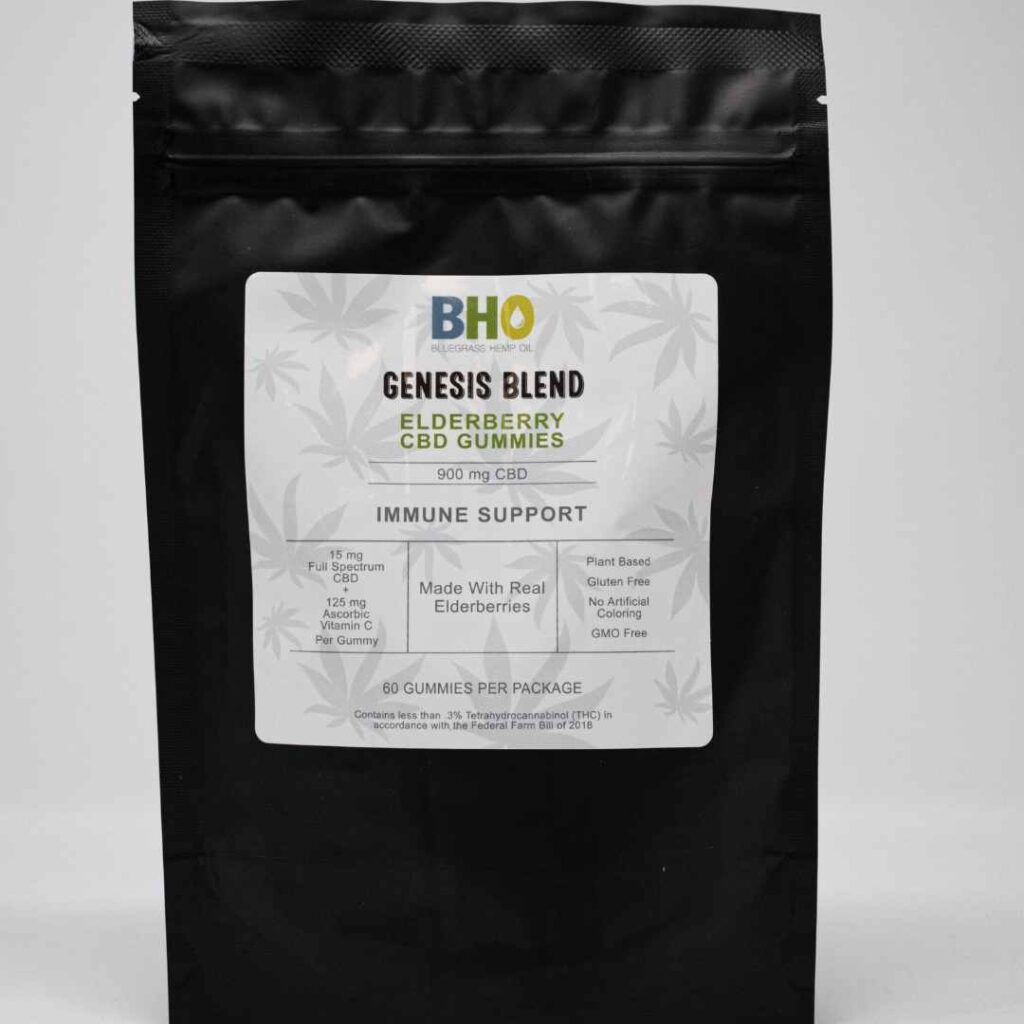
Elderberry Full Spectrum CBD Gummies
Compare full-spectrum hemp extract format, label details, ingredient information, and COA resources.
Need help comparing formats?
Choose by cannabinoid type, CBD per serving, THC level, ingredient list, batch-specific COA, and realistic product language.
CBD gummies for beginners
Shop CBD products by format
Contact Bluegrass Hemp Oil with CBD gummy questions
Entity summary
Cannabis Gummy Terms at a Glance
| Entity | Simple Explanation |
|---|---|
| Cannabis gummies | Gummy-style cannabinoid products made with CBD, THC, or other cannabinoids. |
| CBD gummies | Gummies focused on cannabidiol and usually non-intoxicating. |
| THC gummies | Intoxicating cannabis gummies containing THC. |
| Full-spectrum CBD gummies | CBD gummies that may contain trace THC and other hemp compounds. |
| Broad-spectrum CBD gummies | CBD gummies with multiple hemp compounds, usually formulated to reduce or remove THC. |
| CBD isolate gummies | Gummies made with CBD isolate. |
| Delta-8 gummies | Intoxicating gummies made with delta-8 THC or converted cannabinoids. |
| COA | Certificate of Analysis used to verify cannabinoid levels and testing details. |
| THC level | Amount of THC shown on the label or COA. |
| Drug-testing risk | Risk that THC exposure may affect a drug test. |
Voice-search FAQ
Frequently Asked Questions About Cannabis Gummies
What are cannabis gummies?
Cannabis gummies are gummy-style products that contain cannabinoids such as CBD, THC, delta-8 THC, or other hemp/cannabis compounds.
Are cannabis gummies the same as CBD gummies?
No. CBD gummies are one type of cannabis or hemp-derived gummy. Some cannabis gummies contain intoxicating THC or delta-8 THC.
Are CBD gummies the same as THC gummies?
No. CBD is not impairing, while THC can be intoxicating. Always review the label and COA.
Do CBD gummies have THC?
Some full-spectrum CBD gummies may contain trace THC. Review the COA before use.
Do cannabis gummies cause intoxication?
THC and delta-8 gummies can be intoxicating. CBD-focused gummies should not be treated the same as THC gummies.
Are cannabis gummies legal?
Legality depends on cannabinoid type, THC level, product source, and state law. Check current laws before buying, shipping, or traveling.
Can I mail cannabis gummies?
Do not assume. Mailing rules depend on product type, THC level, federal law, destination-state law, and carrier rules.
Can I travel with cannabis gummies?
Laws vary by state and country. Avoid traveling with cannabis gummies unless legality is verified.
How long do cannabis gummies take?
Timing varies because gummies are swallowed and digested. Food, metabolism, serving size, and cannabinoid type can all affect timing.
Can cannabis gummies show up on a drug test?
Full-spectrum CBD gummies may contain trace THC, and THC gummies can create drug-testing risk.
Are delta-8 gummies safe?
FDA has warned that delta-8 THC products have not been evaluated or approved for safe use and may carry additional risks.
Should I make cannabis gummies at home?
This page does not provide home-infusion instructions. Homemade gummies create serving-size, contamination, and labeling risks.
Safe final CTA
Compare CBD Gummies With Clear Labels and Lab Testing
Choose CBD gummies by cannabinoid type, CBD per serving, THC level, ingredient list, batch-specific Certificate of Analysis, and realistic product language. Bluegrass Hemp Oil can help answer product-label, COA, and CBD gummy format questions before you choose.
CBD gummies for beginners
Review CBD Certificates of Analysis
Contact Bluegrass Hemp Oil with CBD gummy questions
Sources
Educational Sources and Safety References
These external references are included for reader education and source transparency. They are not product endorsements.
- FDA consumer update on cannabis-derived products, including CBD
- FDA consumer warning on delta-8 THC
- FDA guidance on cannabis and CBD during pregnancy or breastfeeding
- CDC cannabis poisoning and accidental exposure information
- USDA hemp research and extension FAQ
- USDA AMS hemp frequently asked questions
Structured Data Recommendations
Use Article schema, FAQ schema, and BreadcrumbList schema for this post. The FAQ schema should match the visible FAQ questions on the page.

CBD Near Me: Trusted Local CBD Stores, Online Shopping, COAs & Safety
Why Quality Matters When Searching for CBD Products Near You
If you're like many people searching for CBD near me, you've likely seen countless options pop up. But just because something is close doesn't mean it's the best choice. In the rapidly expanding CBD industry, ensuring you’re getting high-quality CBD products is key to experiencing the maximum benefits. Here's what you need to know when looking for CBD oil, CBD gummies, and more near you, and why Bluegrass Hemp Oil is the trusted choice.
Not All CBD Is Created Equal
You might be wondering, where to buy CBD oil near me or where to buy CBD gummies near me. But before you make that purchase, consider the quality. Many CBD products on the market today are made from isolated water-soluble CBD, which might sound appealing but lacks the benefits of full-spectrum CBD. Water-soluble CBD is often marketed for its easier absorption, but it fails to create the entourage effect — the synergistic relationship between all the cannabinoids, terpenes, and flavonoids found in full-spectrum products.
The entourage effect is crucial because it enhances the interaction between these compounds within the endocannabinoid system, providing more comprehensive benefits like pain relief, anxiety reduction, and overall wellness. Without this, isolated CBD may offer fewer benefits, meaning you're likely spending more money on a product that delivers less.
At Bluegrass Hemp Oil, we've been in the CBD industry for over 10 years, so we understand what it takes to produce high-quality, effective CBD products. That’s why we offer real full-spectrum CBD products that deliver the maximum benefit for your body’s endocannabinoid system.
When searching for where to buy CBD oil capsules near me or where to buy CBD bath bombs near me, remember that not all CBD stores are equal. Our Kentucky-grown hemp ensures that each product we offer delivers the full benefits of CBD oil with no fillers or unnecessary additives, unlike isolated CBD products.
Why Choose Bluegrass Hemp Oil
- Experience & Expertise: We've been at the forefront of the CBD industry for over a decade. We aren't just another CBD store — we're CBD experts, offering personalized customer service through our storefront, content-filled website, and knowledgeable team available for phone orders and questions.
- Full-Spectrum Products Only: Unlike many other CBD companies, Bluegrass Hemp Oil and Kentucky Cannabis Company are committed to only offering real full-spectrum CBD products. Whether you're looking for CBD oil, CBD gummies for pain near me, or even CBD dog treats, you’ll find only the best at Bluegrass Hemp Oil. Our products are full-spectrum, made from organically grown Kentucky hemp, and third-party tested for quality and purity. Check out our best CBD gummies for anxiety to experience the difference.
- Personalized Customer Service: Unlike big-box retailers, we take pride in offering personalized support. You can stop by our store, shop online, or even call us to place an order with a real person — not just an automated system.
Finding High-Quality CBD Near You
If you're searching for CBD gummies near me or CBD gummies for sale near me, make sure to ask the important questions: Is the product full-spectrum? Is it made from locally grown hemp? At Bluegrass Hemp Oil, we make it easy to answer these questions with a resounding "Yes!"
From our storefront in Lexington, KY to our Midway, KY manufacturing facility, we are committed to providing you with full-spectrum CBD gummies near me that deliver relief and promote well-being. Whether you need CBD gummies for men near me, sleep CBD gummies near me, or CBD gummies for pain, we have you covered.
Don't Forget Your Furry Friends!
Wondering where to buy CBD dog treats near me or where to get CBD for dogs near me? We haven't forgotten about your pets! Our high-quality CBD products for pets are made with the same care and precision as our human offerings. When searching for who sells CBD dog treats near me, you can trust that our products are just as beneficial for your furry companions. Learn more about how CBD can benefit your pets in our Ultimate Guide to Using CBD for Cats.
Final Thoughts: Trust the Experts
When it comes to where to buy CBD near me, it’s about more than just location. It’s about finding a company you can trust to deliver high-quality, safe, and effective products. That’s why Bluegrass Hemp Oil and Kentucky Cannabis Company only offer full-spectrum CBD — because we believe in providing products that work with your endocannabinoid system to offer maximum benefits.
We’ve been doing this for 10 years, ensuring CBD would always be near me — and always of the highest quality. So next time you're searching for full-spectrum CBD gummies near me or other CBD products, make sure you're choosing quality.
Visit our CBD store in Lexington, KY or stop by our Midway, KY facility. You can also explore our content-rich website or give us a call at 859-963-3550 to place an order with a knowledgeable team member.

Melatonin vs CBD Gummies for Sleep: Safety, Labels, and Key Differences
Safety-first comparison guide
Melatonin vs CBD Gummies: Quick Comparison
When comparing melatonin vs CBD gummies, the most useful question is not which one “works best.” A safer comparison looks at ingredient type, label transparency, serving information, trace THC, Certificates of Analysis, medication questions, drowsiness questions, and whether a qualified healthcare professional should be involved.
Quick Answer
Start with Product Type and Label Transparency
Melatonin gummies and CBD gummies are different types of products. Melatonin is a hormone-related supplement commonly discussed for sleep-wake timing. Full-spectrum CBD gummies contain hemp extract that may include cannabinoids, terpenes, and trace THC.
Neither retail CBD gummies nor melatonin gummies should be treated as a guaranteed solution for sleep problems. Compare the label, serving size, ingredients, third-party lab results, trace THC disclosure, medication warnings, and safety guidance before choosing either product.
Key Takeaways
What to Check Before Choosing a Nighttime Gummy
- Melatonin gummies and CBD gummies are not the same type of product.
- Melatonin is commonly discussed in relation to sleep-wake timing.
- Full-spectrum CBD gummies contain hemp extract and may contain trace THC.
- CBD is not risk-free and may interact with medications.
- Full-spectrum CBD may be relevant to drug-testing questions.
- Product labels and batch-specific COAs should be reviewed before choosing a CBD gummy.
- Chronic sleep problems, medication use, pregnancy or nursing, liver concerns, children, and drug-testing questions should be discussed with a qualified healthcare professional.
Entity Summary
Melatonin: A hormone-related dietary supplement commonly discussed for sleep-wake timing.
CBD Gummies: Edible hemp-derived products that contain CBD in gummy form.
Full-Spectrum CBD: A hemp extract type that may include CBD, other cannabinoids, terpenes, and trace THC.
Trace THC: A small amount of THC that may be present in full-spectrum hemp products.
Certificate of Analysis: A lab report that should show cannabinoid levels, THC levels, batch information, and contaminant testing.
Bluegrass Hemp Oil: A Kentucky-rooted CBD company focused on full-spectrum hemp products, transparent labels, Certificates of Analysis, and customer education.
What Melatonin Gummies Are Usually Used For
Melatonin is a hormone the body naturally produces in connection with the sleep-wake cycle. In supplement form, melatonin is commonly discussed for timing-related questions, such as travel, schedule changes, or delayed sleep-wake timing. That does not make melatonin gummies a guaranteed solution, and it does not replace professional evaluation for ongoing sleep problems.
Melatonin and the Sleep-Wake Cycle
Melatonin levels are connected to time of day and light exposure. For shoppers comparing CBD gummies vs melatonin for sleep-related routines, the important distinction is that melatonin is hormone-related, while CBD gummies are hemp-derived product formats. The two should not be treated as interchangeable.
People with chronic sleep problems, shift-work concerns, mood changes, medication questions, or daytime impairment should ask a qualified healthcare professional before relying on any nighttime gummy.
Melatonin Gummy Label Concerns
Melatonin gummies safety starts with the Supplement Facts panel. Look for the listed melatonin amount per serving, other active ingredients, serving directions, warnings, child-resistant storage, and whether third-party testing is mentioned.
The National Center for Complementary and Integrative Health summarizes research finding that many tested melatonin gummy products contained amounts that differed from the label. That makes label review and professional guidance especially important for children, pregnancy or nursing, medication use, and next-day drowsiness concerns.
Melatonin Safety Note
Melatonin is a hormone-related dietary supplement, not a guaranteed sleep solution. Long-term safety questions, use in children, pregnancy or nursing, medication interactions, next-day drowsiness, and chronic sleep problems should be discussed with a qualified healthcare professional.
What Full-Spectrum CBD Gummies Are
Full-spectrum CBD gummies are edible hemp-derived products. They may contain CBD, other cannabinoids, terpenes, and trace THC. Some shoppers search for full-spectrum CBD gummies for sleep, but a safety-first comparison should focus on product transparency, labels, COAs, trace THC, and healthcare-professional questions rather than promised outcomes.
CBD, Full-Spectrum Hemp Extract, and Trace THC
Full-spectrum hemp extract is different from CBD isolate because it may include multiple naturally occurring hemp compounds. That can include trace THC. Shoppers who are sensitive to THC, subject to drug testing, or trying to avoid THC should review the product label and batch-specific COA before choosing a full-spectrum product.
For more context, see the full-spectrum CBD guide, cannabinoids in hemp products explained, and terpenes in hemp products explained.
Why COAs Matter for CBD Gummies
A Certificate of Analysis, often called a COA, is a lab report connected to a product batch. A useful CBD gummies COA should help shoppers verify cannabinoid amounts, THC levels, batch information, and contaminant testing where available.
COAs are not medical advice and do not prove a health outcome. They are transparency tools that help shoppers compare products based on what is actually reported for a batch.
Trace THC Box
Full-spectrum CBD trace THC language matters. Full-spectrum CBD may contain trace THC, and THC may be relevant to drug-testing concerns. Always review the product label, the batch-specific COA, and your own testing rules before choosing a full-spectrum CBD product.
Melatonin vs CBD Gummies: Main Differences
The comparison below is designed for shoppers who want clear, safety-first information before choosing a nighttime product format.
| Factor | Melatonin Gummies | Full-Spectrum CBD Gummies |
|---|---|---|
| Main ingredient | Melatonin, a hormone-related dietary supplement. | Hemp extract that contains CBD and may include other cannabinoids, terpenes, and trace THC. |
| Product type | Dietary supplement format. | Hemp-derived gummy product format. |
| Main comparison point | Often discussed around sleep-wake timing and schedule-related questions. | Often compared by hemp extract type, COA transparency, trace THC disclosure, and safety questions. |
| Key label question | How much melatonin is listed per serving, and are there other active ingredients? | How much CBD is listed per serving, what type of extract is used, and is trace THC disclosed? |
| Safety question | Could it cause next-day drowsiness or interact with medications? | Could it interact with medications, affect alertness, or raise liver-related safety questions? |
| Testing question | Is the supplement third-party tested for ingredient accuracy? | Is there a batch-specific CBD gummies COA with cannabinoid and contaminant results? |
| Drug-testing question | Not typically the central concern for melatonin itself. | Full-spectrum CBD trace THC may be relevant to drug-testing questions. |
| Healthcare-professional question | Is melatonin appropriate for your situation, especially with chronic sleep problems, children, pregnancy, nursing, or medications? | Is CBD appropriate for your situation, especially with medications, liver concerns, pregnancy, nursing, children, sedating products, or drug testing? |
Ingredient Type
Melatonin is hormone-related. Full-spectrum CBD gummies contain hemp extract and may contain other hemp compounds, including trace THC.
Intended Use
Melatonin is commonly discussed for sleep-wake timing. CBD gummies should be compared as hemp-derived product formats, not as treatments or guaranteed sleep solutions.
Label Transparency
Melatonin labels should clearly list melatonin per serving. CBD labels should clearly list CBD per serving, extract type, trace THC disclosure, warnings, and batch details.
Drug Testing and Trace THC
Drug-testing questions are more commonly associated with full-spectrum CBD because trace THC may be present. The COA and the testing authority matter.
Medication and Drowsiness Questions
Both product categories can raise drowsiness or medication questions. CBD may interact with medications and may carry liver-related safety concerns.
Product Format Comparison Table
Use the table below to compare common gummy formats without assuming a health result.
| Product Format | What It Usually Contains | Main Shopper Question |
|---|---|---|
| Melatonin gummies | Melatonin plus sweeteners, flavorings, and other gummy ingredients. | Is the melatonin amount appropriate for my situation, and does the label match the contents? |
| Full-spectrum CBD gummies | CBD-rich hemp extract with other hemp compounds and possible trace THC. | Can I review the label and batch-specific COA before deciding? |
| CBD gummies with melatonin | CBD plus added melatonin and gummy ingredients. | Should I ask a healthcare professional about combining CBD and melatonin together? |
Can You Take CBD and Melatonin Together?
Why This Should Be a Healthcare-Professional Question
CBD and melatonin together can raise questions about drowsiness, next-day alertness, medications, alcohol, sedating products, liver concerns, pregnancy or nursing, and whether the product includes other ingredients. This article does not provide dosing advice or encourage combining products.
CBD gummies with melatonin should be evaluated carefully because the label may include two different active ingredients in one product. Ask a qualified healthcare professional whether the combination is appropriate for your situation.
Medication Interaction Questions
- Do you take prescription or over-the-counter medications?
- Do you use alcohol, sleep medicines, sedating products, or cannabis products?
- Do you have liver concerns or abnormal liver tests?
- Do you need to drive, work, or care for others the next morning?
- Are you pregnant, trying to become pregnant, nursing, or considering a product for a child?
Safety Questions Before Choosing a Nighttime Gummy
Safety guidance should come before any product comparison or shopping decision. This is especially important for CBD sleep gummies safety questions, CBD and melatonin combinations, medication use, pregnancy or nursing, children, liver concerns, alcohol or sedating products, chronic sleep problems, and drug-testing concerns.
CBD Safety Box
CBD is not risk-free. CBD may interact with medications, may cause drowsiness or changes in alertness, and may carry liver-related safety concerns. Full-spectrum CBD may contain trace THC. Talk with a qualified healthcare professional before using CBD if you take medications, manage a medical condition, have liver concerns, use alcohol or sedating products, are pregnant or nursing, considering CBD for a child, or are subject to drug testing.
Claim Boundary Box
CBD, hemp extract, full-spectrum CBD, cannabinoids, terpenes, Genesis Blend, and Bluegrass Hemp Oil products should not be described as diagnosing, treating, curing, preventing, reducing, relieving, managing, repairing, or protecting against any disease, symptom, disorder, medical condition, medication burden, or health outcome.
This article is educational and should focus on product transparency, labels, COAs, safety questions, healthcare-professional guidance, and informed comparison.
Drug Testing Box
CBD itself is not usually the target of standard THC drug tests, but full-spectrum CBD may contain trace THC and some hemp products may have inaccurate labels. If a drug test could affect your job, license, sports eligibility, legal status, or medical care, ask the testing authority and a qualified professional before using full-spectrum CBD.
Medication, Liver, Drowsiness, Alcohol, Pregnancy, Children, and Drug Testing
| Situation | Question to Ask |
|---|---|
| Taking medications | Could CBD, melatonin, or another gummy ingredient interact with my prescription or over-the-counter medicines? |
| Liver concerns | Do I need to avoid CBD or have liver-related monitoring before using hemp-derived products? |
| Alcohol or sedating product use | Could this product increase drowsiness or affect next-day alertness? |
| Pregnancy or nursing | Should I avoid CBD, melatonin, or cannabis-derived ingredients while pregnant, trying to become pregnant, or breastfeeding? |
| Considering CBD for a child | Is this appropriate for a child, and what safer alternatives or evaluations should come first? |
| Subject to drug testing | Could full-spectrum CBD trace THC affect my workplace, legal, athletic, or medical testing requirements? |
| Chronic sleep problems | Should I be evaluated for an underlying sleep disorder or another health issue instead of relying on a gummy product? |
| Next-day drowsiness concerns | Could this ingredient or combination affect driving, work, caregiving, or operating equipment? |
How to Compare CBD Gummies Before You Buy
A good CBD gummy comparison is based on transparent product information, not health promises. Review labels, COAs, trace THC language, ingredient lists, warning statements, and customer support access before choosing a product.
Label Checklist
| Label Item | Why It Matters |
|---|---|
| CBD per serving | Shows the listed amount of CBD in each gummy or serving. |
| Full-spectrum, broad-spectrum, or isolate | Helps identify whether other hemp compounds and trace THC may be present. |
| Trace THC disclosure | Important for shoppers with THC sensitivity or drug-testing concerns. |
| Suggested serving | Helps avoid accidental overuse and supports more informed questions for a healthcare professional. |
| Ingredient list | Shows sweeteners, allergens, flavorings, melatonin, botanicals, or other added ingredients. |
| Batch number | Connects the product to its matching lab report. |
| Warning language | Helps identify drowsiness, medication, pregnancy, nursing, child-use, and other safety considerations. |
| Storage guidance | Helps preserve product quality and reduces accidental access by children or pets. |
COA Checklist
| COA Item | What to Check |
|---|---|
| Batch number | The COA batch should match the package or product page. |
| CBD amount | The measured CBD amount should be reasonably consistent with the product label. |
| THC amount | The report should clearly show THC levels and whether THC is detectable. |
| Heavy metals | Look for results for arsenic, cadmium, lead, mercury, or other listed metals. |
| Pesticides | Review whether the lab screened for pesticide residues. |
| Residual solvents | Relevant when extraction or processing could leave solvent residues. |
| Microbials / mycotoxins | Check for microbial and mycotoxin testing where provided. |
| Lab name and date | A current report from an identifiable third-party lab supports transparency. |
Full-Spectrum and Trace THC Checklist
- Confirm whether the label says full-spectrum, broad-spectrum, or isolate.
- Look for trace THC disclosure on the label or product page.
- Review the batch-specific COA for THC amounts and test date.
- Consider whether your workplace, athletic program, or other testing authority has THC restrictions.
- Ask a qualified professional if you have medication, liver, pregnancy, nursing, child-use, or drowsiness questions.
Definition Box: COA
A Certificate of Analysis is a lab report tied to a product batch. It should help confirm what the product reports for CBD, THC, and contaminant testing. A COA is a transparency document, not proof that a product will produce a specific health result.
Related guide: CBD lab testing and Certificates of Analysis and how to read a CBD product label.
Product Transparency Card: Labels
Clear labels should make serving size, extract type, ingredients, warnings, and batch information easy to find.
Product Transparency Card: COAs
Batch-specific COAs should be accessible and should match the product batch being reviewed.
Product Transparency Card: Support
Customer support should be able to help shoppers locate product labels, COAs, trace THC information, and general format details.
Where Bluegrass Hemp Oil Fits
Product Transparency, Labels, COAs, and Support
Bluegrass Hemp Oil focuses on Kentucky-rooted hemp education, full-spectrum CBD product transparency, clear labels, Certificates of Analysis, lab testing information, safety-first shopper education, and customer support.
For this comparison, the role of Bluegrass Hemp Oil is not to promise product outcomes. It is to help shoppers understand hemp product formats, label terms, batch-specific COAs, trace THC awareness, and questions to bring to a qualified healthcare professional.
Before You Shop
Review the safety boxes above before using any product link. Product pages should be used to compare formats, ingredients, labels, and COAs, not to self-treat chronic sleep problems or other medical concerns.
Product Format Details
Genesis Blend full-spectrum CBD oil product details can help shoppers review a specific product format, label language, and transparency information.
Compare Product Routines
CBD oil bundles for comparing product routines are listed for format comparison only, not for medical recommendations or promised outcomes.
CBD Product Types
CBD product types explained can help clarify full-spectrum, broad-spectrum, and isolate terminology before comparing gummies or oils.
About Bill Polyniak and Bluegrass Hemp Oil
Bill Polyniak Authority Box
Bill Polyniak, founder of Bluegrass Hemp Oil and Kentucky Cannabis Company, is rooted in Kentucky hemp education, full-spectrum CBD product transparency, clear labeling, Certificates of Analysis, and helping shoppers understand what they are buying before choosing a CBD product.
For shoppers comparing melatonin gummies and full-spectrum CBD gummies, Bluegrass Hemp Oil emphasizes safety questions, product labels, batch-specific COAs, trace THC awareness, and healthcare-professional guidance before choosing a nighttime product.
Frequently Asked Questions
What is the difference between melatonin gummies and CBD gummies?
Melatonin gummies contain melatonin, a hormone-related dietary supplement commonly discussed for sleep-wake timing. CBD gummies contain hemp-derived CBD in gummy form. Full-spectrum CBD gummies may also include other cannabinoids, terpenes, and trace THC.
Are CBD gummies the same as melatonin gummies?
No. CBD gummies and melatonin gummies are different product types with different ingredients, labels, and safety questions. Shoppers should compare serving information, warnings, third-party testing, and whether the product contains trace THC.
Are CBD gummies FDA-approved for sleep?
No retail CBD gummies are FDA-approved to diagnose, treat, cure, or prevent sleep disorders or other medical conditions. The FDA has approved one prescription CBD medicine for specific seizure disorders, which is different from retail CBD products.
Can you take CBD and melatonin together?
CBD and melatonin together should be a healthcare-professional question, especially if you take medications, use alcohol or sedating products, have liver concerns, are pregnant or nursing, or need to remain alert the next day.
Do full-spectrum CBD gummies contain THC?
Full-spectrum CBD products may contain trace THC. The exact amount should be checked on the product label and the batch-specific Certificate of Analysis.
Can full-spectrum CBD gummies affect a drug test?
They may be relevant to drug-testing concerns because full-spectrum CBD may contain trace THC and some products may be mislabeled. Anyone subject to workplace, legal, athletic, or medical testing should ask the testing authority and a qualified professional before using full-spectrum products.
What should I check before buying CBD gummies?
Check CBD per serving, product type, trace THC disclosure, suggested serving, ingredients, warning language, batch number, storage guidance, and whether a current batch-specific CBD gummies COA is available.
What should a CBD Certificate of Analysis include?
A CBD Certificate of Analysis should show the batch number, CBD amount, THC amount, lab name, test date, and contaminant testing such as heavy metals, pesticides, residual solvents, and microbials or mycotoxins.
Can CBD gummies cause drowsiness?
CBD may cause drowsiness or changes in alertness for some people. CBD used with alcohol or sedating products may increase drowsiness or sedation risk. Avoid driving or operating machinery if you feel impaired.
Can CBD interact with medications?
Yes. CBD may interact with medications. Talk with a qualified healthcare professional before using CBD if you take prescription or over-the-counter medicines, have liver concerns, or use alcohol or sedating products.
Should pregnant or nursing shoppers use CBD gummies?
Pregnant or nursing shoppers should talk with a qualified healthcare professional and should not rely on retail CBD products for medical guidance. Federal health agencies advise caution with cannabis-derived products during pregnancy and breastfeeding.
Should children use CBD or melatonin gummies?
Do not use this article as guidance for children. Parents or caregivers should talk with a pediatric healthcare professional before considering melatonin, CBD, or any nighttime gummy for a child.
Are melatonin gummy labels always accurate?
Not always. A 2023 study summarized by NCCIH found that many tested melatonin gummy products contained amounts that differed from the label. This is one reason melatonin gummies safety should include label review and professional guidance.
How are CBD gummies different from CBD oil?
CBD gummies are edible products with a pre-set serving format, while CBD oil is usually a liquid format that may allow different serving approaches. Both should be compared by label, ingredients, product type, trace THC disclosure, and COA availability.
Who should contact Bluegrass Hemp Oil before choosing a product?
Contact Bluegrass Hemp Oil if you need help locating labels, Certificates of Analysis, trace THC information, product format details, or general product transparency information. For medical questions, contact a qualified healthcare professional.
Editorial and Safety Sources
This guide is educational and consumer-facing. It is not medical advice. The safety language is informed by public health resources and should be discussed with a qualified healthcare professional for personal decisions.
- FDA consumer update on cannabis-derived products, including CBD
- FDA regulation of cannabis and cannabis-derived products
- CDC overview of CBD and public health considerations
- NCCIH melatonin safety and labeling information
- NCCIH cannabis and cannabinoids safety information
- FDA 101: dietary supplement regulation
- Mayo Clinic melatonin safety and interaction overview
CBD for Cats Safety Checklist: Vet Questions, Labels, COAs, and THC
CBD for Cats Safety Checklist: Start Here
CBD for cats safety checklist research should start with veterinarian guidance, product transparency, label review, trace THC awareness, and a batch-specific Certificate of Analysis. This guide is built for cat owners comparing pet CBD for cats as a product safety and label-review question, not as a treatment plan.
Quick Answer
Vet-First Safety Review
CBD for cats should be approached as a veterinarian-guided product safety question. It should not be framed as a treatment for anxiety, pain, seizures, appetite changes, urinary problems, aggression, overgrooming, or any veterinary condition.
Before choosing a pet CBD product, review the label, ingredient list, serving information, trace THC level, and batch-specific Certificate of Analysis. Talk with your veterinarian first, especially if your cat takes medication, has liver concerns, is very young or senior, is pregnant or nursing, has seizures, has urinary symptoms, or has ongoing behavior changes.
Key Takeaways
Label and COA Checks
- Handle CBD for cats as a safety and veterinarian-guidance topic.
- Pet CBD should not be described as treating veterinary conditions.
- Cat owners should use pet-specific products only.
- Avoid human CBD gummies, THC products, xylitol, chocolate, essential oils, and vague flavor blends.
- A pet CBD label should clearly show CBD amount, serving information, ingredients, and warning language.
- A batch-specific COA should show cannabinoid levels, THC results, contaminant testing, lab date, and batch number.
- Product links should appear only after safety, label, COA, THC, and veterinarian guidance.
Why Cat CBD Content Needs a Vet-First Approach
Cats are not small humans, and pet CBD content must avoid medical claims. A responsible article should help readers ask better questions, not replace veterinary care or present retail hemp products as veterinary solutions.
CBD Products Are Not Approved to Treat Cat Health Conditions
Retail CBD products should not be described as diagnosing, treating, curing, preventing, reducing, relieving, managing, repairing, or protecting against any veterinary condition. The FDA states that it has not approved cannabis for any use in animals and cautions pet owners to talk with a veterinarian about appropriate treatment options for pets.
This is why CBD for cats vet questions should come before product comparison, serving decisions, or purchase decisions.
Behavior, Appetite, Mobility, and Litter Box Changes Need Veterinary Review
Cat behavior changes should be discussed with a veterinarian. Appetite changes can signal medical concerns. Mobility changes or signs of discomfort need veterinary evaluation. Urinary symptoms can be urgent and should not be handled as a CBD question. Seizures require veterinary care.
Use this guide to organize label, COA, THC, ingredient, and medication questions before a conversation with your veterinary team.
Notice the concern
Write down behavior, appetite, mobility, litter box, or other changes without assuming the cause.
Call your veterinarian
Ask whether the situation needs an exam, testing, medication review, or urgent care.
Review the product
Check pet-specific format, ingredients, serving information, warnings, THC, and COA results.
Keep records
Save the product label, batch number, COA, and veterinary guidance for reference.
What to Check Before Choosing CBD for a Cat
A safer comparison starts with product format, ingredient simplicity, trace THC disclosure, batch-specific lab results, and veterinarian guidance.
Pet-Specific Product Format
Use pet-specific products only. Human gummies, human oils, and blended products may contain ingredients or serving assumptions that are not appropriate for cats.
Ingredient Simplicity
Choose labels that are easy to understand. Simpler ingredient lists are easier for you and your veterinarian to review.
THC Level and Full-Spectrum Hemp Extract
Full-spectrum hemp extract may contain CBD, other cannabinoids, terpenes, and trace THC. THC and cats should be reviewed carefully with the COA and your veterinarian.
Batch-Specific Certificate of Analysis
A batch-specific COA should match the product you have and show cannabinoid results, THC results, contaminant testing, batch number, and lab date.
| Check | What to Look For |
|---|---|
| Pet-specific product | A format made for pets, not human CBD gummies or human-use products. |
| Clear CBD amount | The label should show CBD amount and serving information in plain language. |
| THC disclosure | Full-spectrum products should disclose THC information and match the COA. |
| Batch-specific COA | The COA should match the product batch and include a recent lab date. |
| Ingredient list | Avoid xylitol, chocolate, essential oils, vague flavor blends, and unclear additives. |
| Veterinary guidance | Ask your veterinarian before giving CBD to a cat, especially with medications or health concerns. |
Entity Summary
CBD: A hemp-derived cannabinoid used in retail hemp products. Retail CBD products should not be described as treating veterinary conditions.
Pet CBD: A CBD product format made specifically for pets. Pet-specific labels, ingredients, and COAs should be reviewed before use.
Full-Spectrum Hemp Extract: A hemp extract that may include CBD, other cannabinoids, terpenes, and trace THC.
Trace THC: A small amount of THC that may be present in full-spectrum hemp products and should be reviewed carefully for pets.
Certificate of Analysis: A lab report that should show cannabinoid levels, THC levels, batch information, and contaminant testing.
Unruffled CBD Oil for Pets: A Bluegrass Hemp Oil pet CBD product that should be presented through product transparency, label review, COA review, and veterinarian guidance, not treatment claims.
Bluegrass Hemp Oil: A Kentucky-rooted CBD company focused on full-spectrum hemp products, transparent labels, Certificates of Analysis, lab testing, and customer education.
Cat CBD Label Checklist
A cat CBD label checklist should help you and your veterinarian answer basic product questions before use. The label should not ask you to trust vague promises or assume a serving is right for every cat.
CBD Per Serving
Look for the amount of CBD per serving, total CBD in the bottle, serving directions, and how the serving is measured. For CBD oil for cats, clarity matters because liquid serving amounts can be misunderstood.
Carrier Oil
Review the carrier oil and ask whether it is appropriate for your cat. Simple carrier-oil information is easier for a veterinary professional to evaluate.
Flavorings and Additives
Flavor blends should be specific. Avoid products that hide ingredients behind vague language or use sweeteners, essential oils, or human-focused flavor systems.
Warning Language
Responsible labels should include practical warnings, storage guidance, pet-specific use language, and a clear path for contacting the company with label or COA questions.
Definition Box: What “Pet-Specific” Should Mean
Pet-specific does not mean the product treats a veterinary condition. It means the format, serving information, ingredients, warnings, and COA are presented for pet-owner review and veterinary discussion.
Clear ingredients
Serving information
Batch-specific COA
Trace THC review
Serving information
Batch-specific COA
Trace THC review
Cat CBD COA Checklist
A CBD COA for cats helps you compare what the label says with what a lab report shows. Review CBD Certificates of Analysis and CBD lab testing and Certificates of Analysis before comparing pet CBD products.
Cannabinoid Results
Check whether CBD and other cannabinoids are listed clearly. The COA should help confirm that the product matches its label.
THC Results
Full-spectrum hemp extract may contain trace THC. Review the THC result and ask your veterinarian how to think about THC exposure risk for your cat.
Heavy Metals, Pesticides, Solvents, and Microbials
Contaminant testing matters because hemp products can vary by source, processing, and batch. A useful COA should show more than only CBD amount.
Batch Number and Lab Date
The batch number and lab date help you confirm that the COA belongs to the product you are reviewing.
| COA Item | What to Confirm |
|---|---|
| Batch number | The COA should match the product batch or lot number. |
| CBD amount | CBD levels should align with the label language. |
| THC amount | THC should be shown clearly, especially for full-spectrum hemp extract. |
| Heavy metals | Look for contaminant testing results for metals such as lead, arsenic, cadmium, and mercury. |
| Pesticides | Check whether pesticide testing is included and passed. |
| Residual solvents | Review solvent testing when extracts are used. |
| Microbials / mycotoxins | Look for microbial and mycotoxin screening when available. |
| Lab date | A recent, batch-relevant lab date is easier to trust than a generic report. |
Ingredients Cats Should Avoid
Ingredient review is a core part of CBD for cats safety. Human-focused products are especially risky because they may include ingredients that were never selected for cats.
Human CBD Gummies
Human CBD gummies should not be used for cats. They may contain sweeteners, flavorings, THC, melatonin, or other ingredients that are not appropriate for pets.
Xylitol, Chocolate, Essential Oils, and Vague Flavor Blends
Avoid products with xylitol, chocolate, essential oils, or unclear flavor blends. The safer product-review path is simple ingredient disclosure and veterinary guidance.
Unclear THC Products
Avoid products that do not clearly disclose THC information. If THC exposure is possible or suspected, contact a veterinarian, local animal emergency hospital, or animal poison control center.
| Ingredient / Product Type | Why It Matters |
|---|---|
| Human CBD gummies | May contain additives, sweeteners, flavor systems, or serving assumptions not appropriate for cats. |
| Xylitol | A sweetener that should not be included in pet CBD product decisions without veterinary review. |
| Chocolate | A known pet safety concern and not appropriate in cat CBD products. |
| Essential oils | Concentrated oils can be a pet safety concern and should not be hidden in flavor blends. |
| THC products | THC exposure can be a serious pet safety question and should be discussed with a veterinarian. |
| Vague flavor blends | Unclear wording makes it harder for cat owners and veterinarians to evaluate the product. |
Trace THC Box
Full-spectrum hemp extract may include trace THC. A transparent product should make THC review possible through the label and COA. For cats, do not rely on marketing language alone. Review the lab report and bring the question to your veterinarian.
Questions to Ask Your Veterinarian
A veterinarian can help you decide which concerns need an exam, diagnostic testing, medication review, or urgent care. Use these questions to prepare for that conversation.
Medication Questions
Ask whether CBD may interact with any medication, supplement, sedating product, or liver-metabolized product your cat already uses.
Liver and Senior Cat Questions
Ask whether your cat’s age, liver history, lab results, or medical history changes how your veterinarian thinks about CBD exposure and monitoring.
Behavior, Appetite, Seizure, Urinary, and Pain-Related Questions
Ask what signs need evaluation and whether any concern is urgent. These concerns should not be reframed as product-shopping questions.
CBD for Cats Side Effects Questions
Ask what side effects to watch for, what would be considered an adverse reaction, and when to stop and seek veterinary care.
| Situation | Question |
|---|---|
| Cat takes medication | Could CBD interact with any medication, sedating product, supplement, or liver-metabolized product? |
| Cat has liver concerns | Should liver history or lab values change how this product is evaluated? |
| Senior cat | Are there age-related risks, monitoring needs, or health concerns to review first? |
| Appetite changes | Does this change need an exam or diagnostic testing before any product is considered? |
| Urinary symptoms | Could this be urgent, and what should I do right now? |
| Seizures | What immediate veterinary care or medication guidance is needed? |
| Behavior changes | What medical causes should be ruled out before evaluating products? |
| Possible THC exposure | Should I contact an emergency veterinary hospital or animal poison control center? |
Pet CBD Safety Box
Pet CBD should not be described as treating anxiety, pain, seizures, inflammation, behavior problems, stress, urinary problems, appetite changes, overgrooming, aggression, or any veterinary condition. Talk with your veterinarian before giving CBD to a pet, especially if your pet takes medication, has liver concerns, has seizures, has urinary symptoms, is pregnant or nursing, is very young or senior, has ongoing behavior changes, or may have been exposed to THC. Use pet-specific products only, review the label and batch-specific COA, and avoid human CBD gummies, THC products, essential oils, xylitol, chocolate, and vague flavor blends.
Claim Boundary Box
CBD, hemp extract, full-spectrum CBD, cannabinoids, terpenes, Unruffled CBD Oil for Pets, and Bluegrass Hemp Oil products should not be described as diagnosing, treating, curing, preventing, reducing, relieving, managing, repairing, or protecting against any disease, symptom, disorder, medical condition, veterinary condition, medication burden, or health outcome.
This article is educational and focuses on product transparency, labels, COAs, safety questions, veterinarian guidance, and informed comparison.
Where Bluegrass Hemp Oil Fits
After safety, label, COA, ingredient, THC, and veterinarian guidance, Bluegrass Hemp Oil can help with product transparency questions, pet-specific label review, COA review, and customer support.
Pet-Specific Products, COAs, Labels, and Customer Support
Bluegrass Hemp Oil is a Kentucky-rooted company focused on full-spectrum hemp product transparency, clear labels, Certificates of Analysis, lab testing information, safety-first shopper education, and customer support.
The role of this section is not to promise outcomes. It is to help cat owners review Unruffled CBD Oil for Pets through product details, ingredients, serving information, trace THC awareness, and batch-specific COAs.
Transparency Before Product Decisions
- Review pet-specific product details.
- Compare the label with the batch-specific COA.
- Ask Bluegrass Hemp Oil label and COA questions.
- Bring medical or symptom questions to your veterinarian.
Product transparency
Unruffled CBD Oil for Pets
Review product details, ingredients, serving information, and COA questions. Do not use product pages as a substitute for veterinary care.
Label comparison
Unruffled CBD Oil for Pets 4 oz
Use product pages to compare format and label details, not to self-treat veterinary concerns.
Support
Ask Label and COA Questions
Contact the Bluegrass Hemp Oil team for product transparency questions. Contact your veterinarian for health concerns.
Contact Bluegrass Hemp Oil for pet CBD label and COA questions
About Bill Polyniak and Bluegrass Hemp Oil
Bill Polyniak Authority Box
Bill Polyniak and Bluegrass Hemp Oil focus on hemp education, product transparency, clear labels, Certificates of Analysis, and customer support. For pet CBD topics, the safest role for a brand is to help shoppers understand product details and encourage veterinarian-guided decision-making.
Readers can explore how Bluegrass Hemp Oil sources, formulates, tests, and supports CBD products for additional transparency context.
Trust Signals to Review
- Clear company identity and customer support access.
- Product labels that can be reviewed before purchase.
- Batch-specific Certificates of Analysis.
- Educational content that avoids veterinary treatment claims.
- Pet-specific questions routed toward veterinarian guidance.
Frequently Asked Questions
These answers are educational and product-transparency focused. They do not replace veterinary care.
Is CBD approved to treat health conditions in cats?
No. Retail CBD products should not be described as treating veterinary conditions. The safest starting point is to talk with your veterinarian and review the product label and batch-specific COA.
What should I check before choosing a CBD product for a cat?
Start with a pet-specific format, simple ingredients, clear CBD amount, trace THC information, batch-specific COA, warning language, and veterinarian guidance.
Can I give my cat human CBD gummies?
Human CBD gummies should not be used for cats. Gummies may contain sweeteners, flavors, additives, THC, or other ingredients that are not appropriate for pets.
Why does THC matter for cats?
Full-spectrum hemp products may contain trace THC. THC exposure can be a safety concern for pets, so cat owners should review the COA and contact a veterinarian if exposure is suspected.
What is a CBD COA for cats?
A CBD COA for cats is a Certificate of Analysis used to review a pet CBD product’s cannabinoid levels, THC results, batch number, lab date, and contaminant testing.
What CBD for cats side effects should I ask a veterinarian about?
Ask about drowsiness, changes in alertness, digestive changes, medication interactions, liver concerns, and what signs should prompt immediate veterinary care.
Should senior cats use CBD?
Senior cats should be evaluated by a veterinarian before any CBD product is considered, especially if they take medication, have liver concerns, or have ongoing health changes.
What if my cat has behavior, appetite, mobility, urinary, or seizure-related changes?
Those changes should be discussed with a veterinarian. They should not be handled as a CBD product question or delayed while comparing retail products.
What is the difference between pet CBD oil and human CBD oil?
Pet CBD oil should use pet-specific ingredients, clear serving information, and a batch-specific COA. Human products may contain ingredients or serving assumptions that are not appropriate for cats.
When should I contact Bluegrass Hemp Oil before choosing a pet CBD product?
Contact Bluegrass Hemp Oil for label, ingredient, serving, trace THC, and COA questions. For health symptoms, medication questions, or suspected THC exposure, contact your veterinarian.
Sources and Safety References
Use authoritative references along with your veterinarian’s guidance when evaluating pet CBD questions.
CBD Gummies for Sleep: Safety, Labels, THC, and COA Questions
Safety-first gummy guide
CBD Gummies for Sleep: Start With Safety, Labels, and COAs
Many shoppers search for CBD gummies for sleep while comparing products for an evening or nighttime routine. A safer guide does not treat gummies as a sleep treatment. It helps you review full-spectrum hemp extract, trace THC, serving information, ingredients, Certificates of Analysis, drug-testing questions, drowsiness questions, and healthcare-professional guidance.
What People Mean by “CBD Gummies for Sleep”
The phrase can reflect product research, but it should be handled with careful boundaries. This page treats it as a label, COA, trace THC, and safety question.
What Are Full-Spectrum CBD Gummies?
Full-spectrum is an extract-type term. It should be supported by a label and batch-specific COA.
How to Compare CBD Gummies for a Nighttime Routine
Use product transparency as the comparison framework. The goal is to compare label clarity, extract type, ingredients, trace THC, and COA access without making sleep-treatment claims.
| What to Check | Why It Matters |
|---|---|
| CBD per gummy | Shows the amount listed for each pre-measured gummy. |
| Full-spectrum, broad-spectrum, or isolate | Helps identify the extract type and what to verify on the COA. |
| Trace THC disclosure | Full-spectrum CBD may contain trace THC that can matter for drug-testing questions. |
| Ingredient list | Shows sweeteners, flavors, added botanicals, and other ingredients. |
| Batch number | Lets you match the product to a batch-specific COA. |
| COA access | Provides cannabinoid, THC, and contaminant testing details. |
| Warning language | Highlights medication, drowsiness, pregnancy, nursing, children, or other safety questions. |
| Storage guidance | Helps preserve the product according to the label. |
CBD Gummies, THC, and Drug-Testing Questions
Trace THC and drug testing are product-safety and personal-risk questions. Do not rely on assumptions. Review the label and COA.
Drug Testing Box
Full-spectrum CBD may contain trace THC. Trace THC may matter for workplace, athletic, legal, or other drug-testing situations. Anyone subject to drug testing should review the COA and talk with a qualified professional before choosing a product.
| Avoid Saying | Say This Instead |
|---|---|
| Outcome claim about gummies and sleep | CBD gummies are sometimes compared as part of a nighttime routine. |
| CBD gummies treat insomnia | Retail CBD gummies are not approved to treat sleep disorders. |
| CBD gummies help anxiety | Talk with a qualified healthcare professional about anxiety or ongoing stress symptoms. |
| Natural nighttime-outcome claim | Compare CBD gummies by label, COA, ingredients, and safety questions. |
| CBD gummies are safe for everyone | CBD is not risk-free and may interact with medications. |
| No-side-effect claim | CBD may cause drowsiness or changes in alertness. |
CBD Sleep Gummies Safety Questions
This safety section appears before product links. Use it to decide when professional guidance should come before choosing a CBD gummy.
Required CBD Safety Box
CBD is not risk-free. CBD may interact with medications, may cause drowsiness or changes in alertness, and may carry liver-related safety concerns. Full-spectrum CBD may contain trace THC. Talk with a qualified healthcare professional before using CBD if you take medications, manage a medical condition, have liver concerns, use alcohol or sedating products, are pregnant or nursing, considering CBD for a child, or are subject to drug testing.
Required Sleep Claim Boundary Box
CBD gummies, full-spectrum CBD, cannabinoids, terpenes, CBN, melatonin-containing products, Genesis Blend, Elderberry Full-Spectrum CBD Gummies, and Bluegrass Hemp Oil products should not be described as diagnosing, treating, curing, preventing, reducing, relieving, managing, or improving insomnia, sleep disorders, anxiety, pain, inflammation, medication burden, or any health outcome.
This article is educational and should focus on product transparency, labels, COAs, ingredients, trace THC, safety questions, and healthcare-professional guidance.
| Situation | Question to Ask |
|---|---|
| Taking medications | Could CBD interact with any medication I take? |
| Liver concerns | Should I avoid CBD or get clinical guidance before use? |
| Alcohol use | Could combining CBD with alcohol increase drowsiness or sedation risk? |
| Sedating product use | Could CBD add to drowsiness or changes in alertness? |
| Pregnancy or nursing | Should I avoid CBD while pregnant or nursing? |
| Considering CBD for a child | Is this appropriate, or should it be avoided unless directed by a qualified professional? |
| Subject to drug testing | Could trace THC create a drug-testing concern? |
| Chronic sleep problems | What should be evaluated before considering any nighttime product? |
| Next-day drowsiness concerns | Could CBD or other ingredients affect alertness the next day? |
How to Read a CBD Gummy Label
A useful label answers basic product questions before a shopper chooses a gummy.
| Label Item | What to Confirm |
|---|---|
| Serving information | CBD per gummy, servings per container, and serving directions. |
| Ingredient list | Sweeteners, flavors, colors, added botanicals, melatonin, CBN, or other sleep-positioned ingredients. |
| Warning language | Medication, drowsiness, pregnancy or nursing, children, alcohol, sedating products, and storage cautions. |
| Batch number | A batch code that can be matched to a COA. |
| Extract type | Full-spectrum, broad-spectrum, or isolate language that is supported by the COA. |
| Trace THC | THC details that match the product’s COA. |
Related resources: how to read a CBD product label and CBD quality guide for choosing transparent hemp products.
How to Review a CBD Gummy Certificate of Analysis
A COA is a lab report, not a marketing page. Use it to verify cannabinoid levels, THC levels, batch information, and contaminant testing.
| COA Item | What to Confirm |
|---|---|
| Batch number | The COA matches the product batch. |
| CBD amount | CBD potency aligns with the label. |
| THC amount | THC level is shown and understood before choosing a product. |
| Other cannabinoids | Other cannabinoids are listed when present. |
| Heavy metals | Contaminant testing includes heavy metals. |
| Pesticides | Pesticide screening is included. |
| Residual solvents | Solvent testing is included when relevant to the product. |
| Microbials / mycotoxins | Microbial and mycotoxin results are available. |
| Lab name and date | The report identifies the lab and a relevant lab date. |
Helpful resources: CBD lab testing and Certificates of Analysis, review CBD Certificates of Analysis, and heavy metals in cannabis and hemp product safety.
Where Bluegrass Hemp Oil Fits
Product links appear here only after safety, label, COA, trace THC, and healthcare-professional guidance.
About Bill Polyniak and Bluegrass Hemp Oil
Frequently Asked Questions
FAQ answers are concise and focused on labels, ingredients, COAs, trace THC, drug-testing questions, and healthcare-professional guidance.
Safety References Used in This Guide
This page is educational and does not replace medical advice.
Helpful CBD Gummy Resources
These consumer-facing resources are included as visible links so WordPress and SEO tools can detect the page’s outgoing links while readers can continue researching labels, COAs, trace THC, ingredients, and safety questions.
