
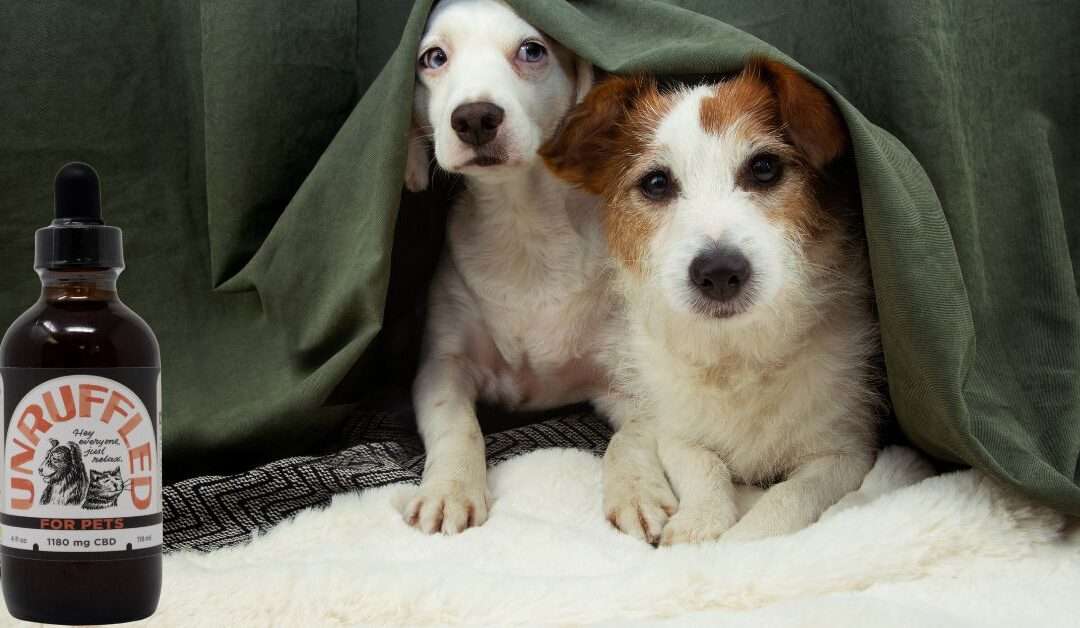
Fourth of July Pet Safety Guide: Fireworks, Food Hazards, Vet Guidance & CBD Questions
Fireworks, cookouts, guests, heat, open doors, and holiday leftovers can create real risks for dogs, cats, and other pets. This guide explains how to prepare before July 4, what to do during fireworks, and what pet owners should ask before comparing pet CBD products.
Veterinarian-first reminder: This article is educational and is not veterinary advice. If your pet has a history of severe fireworks reactions, medical conditions, medication use, or unusual symptoms, contact a licensed veterinarian before the holiday.
How Do I Keep My Pet Safe on the Fourth of July?
Start with a simple plan: keep pets indoors during fireworks, create a quiet safe space, update collars and microchips, remove party hazards, secure doors and gates, and clean up fireworks debris before pets go outside again.
If your dog, cat, or other pet has strong reactions to fireworks, call your veterinarian before July 4. Do not wait until fireworks begin to test a new product, garment, supplement, or medication strategy.
Fourth of July Pet Safety: What Matters Most
Prepare the safe space, update ID information, and talk with your veterinarian before the holiday.
Fireworks, crowds, and open gates can increase escape risk. Home is usually safer than a fireworks event.
Keep alcohol, chocolate, cooked bones, skewers, corn cobs, onions, garlic, and trash away from pets.
Fireworks debris can contain unsafe materials or sharp fragments. Check the yard before pets go outside.
Pressure garments, pheromones, medications, and pet CBD questions should be reviewed before the event.
Review pet-specific labels, trace THC information, serving directions, ingredients, and batch-specific COAs.
Why Are Pets Scared of Fireworks?
Fireworks are loud, sudden, bright, and unpredictable. Pets cannot understand the source of the sounds, so some may hide, tremble, pant, pace, bark, vocalize, refuse food, or try to escape.
Dogs and fireworks
Dog fireworks safety starts with preparation. Keep dogs indoors, use a secure room, add familiar bedding, keep identification current, and ask a veterinarian about severe reactions in advance.
Cats and fireworks
Cat fireworks safety means giving cats access to quiet hiding spaces, keeping windows and doors closed, and avoiding forced handling when a cat is already frightened.
A Simple July 4 Pet Safety Plan
| Timing | What to do | Why it matters |
|---|---|---|
| Before July 4 | Update ID tags, microchips, medication plans, safe-space supplies, and your veterinarian’s contact information. | Preparation lowers escape risk and gives you a plan before fireworks begin. |
| Earlier in the day | Exercise dogs safely before evening heat and fireworks, feed pets normally, secure gates, and move pets indoors. | Routines and secure spaces reduce preventable holiday hazards. |
| During fireworks | Keep pets indoors in a quiet room with water, bedding, familiar toys, and background sound at a comfortable volume. | Indoor separation helps reduce exposure to noise, flashes, guests, and open doors. |
| After fireworks | Check the yard for debris, confirm pets are acting normally, and contact a veterinarian if anything seems unsafe. | Fireworks debris, food scraps, and unusual behavior should be handled promptly. |
How to Make a Safe Space for Pets During Fireworks
A safe space should be indoors, quiet, comfortable, and secured before fireworks begin. It should feel familiar, not like a punishment.
| Safe-space item | Why it helps |
|---|---|
| Interior room | Creates more distance from outdoor fireworks sounds. |
| Closed windows, curtains, or blinds | Helps reduce sound and flashes of light. |
| Comfortable bedding | Gives pets a familiar resting area. |
| Water bowl | Keeps pets hydrated while indoors. |
| Favorite toy or blanket | Adds familiar scent and comfort. |
| White noise or soft music | Helps mask outdoor sounds without overwhelming pets. |
| Closed doors and baby gates | Reduces escape risk when guests enter or leave. |
| Supervision | Helps owners notice distress, ingestion hazards, or unusual behavior. |
Do not force tools that increase distress
Do not force a pet to stay in a crate, room, carrier, or pressure garment if that choice appears to increase distress. Ask your veterinarian for guidance if fireworks reactions are severe.
Pet ID, Microchips, Collars, and Escape Prevention
Many pets go missing around fireworks holidays because loud sounds, guests, open doors, and open gates create escape opportunities. Before July 4, confirm that your pet’s ID tag, collar, and microchip registration are current.
- Confirm the phone number on the ID tag.
- Confirm the address and contact information linked to the microchip.
- Use a properly fitted collar or harness.
- Keep pets away from doors during gatherings.
- Ask guests not to leave doors or gates open.
- Use baby gates or closed rooms as an extra layer of protection.
- Keep pets indoors during fireworks.
- Save your veterinarian and emergency animal hospital contact information.
Fourth of July Foods, Alcohol, and Fireworks Debris to Keep Away From Pets
| Hazard | Why it matters | Safer action |
|---|---|---|
| Fireworks noise | Loud sounds may frighten pets and increase escape risk. | Keep pets indoors in a quiet room. |
| Open doors and guests | Pets may slip out during parties. | Use gates, closed rooms, and updated ID tags. |
| Alcohol | Alcohol can be dangerous for pets. | Keep drinks out of reach and clean spills quickly. |
| Cooked bones | Bones can splinter or cause blockage. | Keep barbecue scraps away from pets. |
| Chocolate desserts | Chocolate can be toxic to pets. | Store desserts securely. |
| Onion and garlic | These can be harmful to pets. | Avoid feeding table scraps. |
| Corn cobs | Cobs can cause choking or blockage. | Keep plates and trash secured. |
| Skewers | Skewers can puncture or injure pets. | Dispose of skewers carefully. |
| Fireworks debris | Debris may contain chemicals or sharp fragments. | Clean outdoor areas before pets go outside. |
| Heat | July temperatures can create overheating risk. | Provide shade, water, and indoor rest. |
Pet Calming Options to Discuss With Your Veterinarian
If your pet has a history of severe fireworks reactions, contact your veterinarian before the holiday. Do not wait until fireworks begin to test new products or strategies.
| Option | What it is | What to check |
|---|---|---|
| Quiet room | Interior room away from fireworks. | Bedding, water, familiar toys, and secured doors. |
| White noise or music | Sound masking for the safe space. | Keep volume comfortable and avoid sudden loud sound. |
| Pressure vest | Snug garment used for some dogs. | Fit, comfort, supervision, and whether your dog tolerates it. |
| Pheromone diffuser | Species-specific calming product. | Use directions, species fit, and timing before the event. |
| Vet-prescribed medication | Prescription option for severe fireworks reactions. | Ask your veterinarian in advance and follow their directions. |
| Pet CBD product | Hemp-derived product some owners ask about. | Vet guidance, THC information, ingredients, serving directions, and COA. |
Pet CBD and Fireworks: What Owners Should Ask First
Some pet owners ask about CBD products before noisy holidays like the Fourth of July. Pet CBD questions should start with a licensed veterinarian, especially if your pet takes medications, has a medical condition, is very young or elderly, has liver concerns, or has previously reacted poorly to supplements or hemp products.
- Is CBD appropriate for my pet’s health history?
- Could CBD interact with my pet’s medications?
- Should I avoid full-spectrum products because of trace THC?
- What ingredients should I avoid?
- What serving directions should I follow?
- What side effects should I watch for?
- What should I do if my pet accidentally ingests too much CBD or any THC product?
- Which urgent symptoms should prompt immediate care?
Full-Spectrum Pet CBD, Trace THC, Labels, and COAs
Full-spectrum pet CBD products may contain multiple hemp compounds and trace THC within legal hemp limits. Pets may be more sensitive to cannabinoids than humans, so product review should be careful and veterinarian-informed.
Pet CBD label checklist
- Product name and pet-specific product type.
- CBD amount and CBD per serving.
- Full-spectrum, broad-spectrum, or isolate status.
- THC information and ingredient list.
- Flavor ingredients and serving directions.
- Warnings, batch number, expiration date, COA access, and company contact information.
Pet CBD COA checklist
- Product name matches the label.
- Batch or lot number matches.
- Testing date and lab name are visible.
- CBD and THC amounts are listed.
- Minor cannabinoids are listed when applicable.
- Heavy metals, pesticides, residual solvents, and microbial testing are available when claimed.
For product transparency, review CBD lab testing and Certificates of Analysis, Bluegrass Hemp Oil Certificates of Analysis, how to read a CBD product label, and hemp vs marijuana and THC differences.
What Pet CBD Should Not Be Claimed to Treat
Pet CBD, CBD oil, CBD dog treats, Unruffled CBD Oil, and full-spectrum pet CBD should not be described as diagnosing, treating, curing, preventing, reducing, relieving, or managing anxiety, fireworks fear, panic, seizures, pain, arthritis, inflammation, aggression, behavior problems, or any veterinary condition.
This guide focuses on pet safety, veterinarian guidance, safe-space planning, product labels, THC information, COAs, and responsible product comparison.
Unruffled Pet CBD Product Transparency
Pet products should be reviewed separately from human CBD products. If you are comparing Unruffled pet CBD, start with the label, serving directions, ingredient list, THC information, and available COA.
Pet products should be reviewed by species, size, ingredients, and serving directions.
Full-spectrum products may contain multiple hemp compounds and trace THC.
Pet owners should check CBD amount, ingredients, serving directions, and warnings.
COAs help verify CBD amount, THC level, and testing details.
Bluegrass Hemp Oil can answer label and COA questions, while veterinary questions should go to a licensed veterinarian.
Ask a veterinarian before pet CBD use when medication, age, liver concerns, or medical history matter.
When to Contact a Veterinarian or Animal Poison Control
Contact a veterinarian, emergency animal hospital, or animal poison control if your pet ingests CBD, THC, cannabis, gummies, edibles, fireworks, fireworks debris, alcohol, chocolate, cooked bones, onion, garlic, skewers, or any unknown substance.
Warning signs to take seriously
- Severe lethargy, wobbliness, or inability to stand.
- Vomiting, repeated diarrhea, drooling, or pale gums.
- Tremors, seizure-like activity, collapse, or trouble breathing.
- Extreme agitation, unusual behavior, or sudden weakness.
Do not wait for symptoms to become severe if you know your pet ingested something unsafe.
About Bill Polyniak and Bluegrass Hemp Oil
Bill Polyniak is the founder of Bluegrass Hemp Oil and Kentucky Cannabis Company. His work is rooted in Kentucky hemp education, full-spectrum CBD product transparency, clear labeling, Certificates of Analysis, and helping shoppers understand what they are buying before choosing a CBD product.
This Fourth of July pet safety guide is written to help pet owners compare safety steps, calming options, pet CBD labels, trace THC information, COAs, and veterinarian-first questions without relying on unsupported veterinary treatment claims.
Frequently Asked Questions
How do I keep my pet safe on the Fourth of July?
Keep pets indoors, create a quiet safe space, update collars and microchips, keep food and alcohol hazards away, clean up fireworks debris, and ask your veterinarian about calming options before the holiday.
Should I take my dog to fireworks?
Most pets are safer at home in a quiet indoor space than at a fireworks event. Loud noises, crowds, and unfamiliar environments can increase distress and escape risk.
Why are pets scared of fireworks?
Fireworks are loud, sudden, bright, and unpredictable. Pets may not understand the source of the noise and may try to hide, run, bark, pant, shake, or escape.
How do I create a safe space for my pet during fireworks?
Use a quiet interior room with bedding, water, familiar toys, closed windows, curtains, and soft background noise. Keep doors and gates secured.
What foods are dangerous for pets on July 4?
Keep alcohol, chocolate, cooked bones, onion, garlic, skewers, corn cobs, fatty scraps, and unsecured trash away from pets.
What should I do if my pet eats fireworks or fireworks debris?
Contact a veterinarian, emergency animal hospital, or animal poison control. Fireworks debris may contain chemicals, sharp fragments, or materials that are unsafe if swallowed.
Can I give my dog CBD before fireworks?
Pet CBD questions should start with a licensed veterinarian. Do not use pet CBD as a treatment claim for fireworks fear, anxiety, stress, panic, pain, seizures, or behavior problems.
Is CBD safe for pets?
CBD is not risk-free for pets. Pets may respond differently than humans, and full-spectrum pet CBD may contain trace THC. Ask a veterinarian before use, especially if your pet takes medication or has a medical condition.
Can full-spectrum pet CBD contain THC?
Yes. Full-spectrum pet CBD may contain trace THC within legal hemp limits. Review the product COA and ask your veterinarian if THC exposure is a concern.
What should I check on a pet CBD label?
Check product type, CBD amount, CBD per serving, ingredients, flavoring, full-spectrum status, THC information, directions, warnings, batch number, expiration date, and COA access.
What is a pet CBD COA?
A pet CBD COA, or Certificate of Analysis, is a lab report that helps verify CBD amount, THC level, cannabinoid profile, batch information, and testing details when available.
When should I contact a veterinarian?
Contact a veterinarian if your pet has severe distress, ingests unsafe food, alcohol, fireworks debris, cannabis, THC, CBD, gummies, edibles, or shows symptoms such as vomiting, wobbliness, tremors, collapse, trouble breathing, or unusual behavior.
Final Takeaway
The best Fourth of July pet safety plan starts before fireworks begin. Keep pets indoors, prepare a quiet safe space, update ID tags and microchips, remove food and alcohol hazards, clean up fireworks debris, and talk with your veterinarian about calming options.
If you are considering pet CBD, review the label, ingredients, THC information, and batch-specific COA with a vet-first mindset. Pet CBD should not be promoted as treating anxiety, fireworks fear, seizures, pain, aggression, or any veterinary condition.
Sources Used for Safety Framing
This guide is educational and is not veterinary advice. Use these resources as starting points, and contact a licensed veterinarian for care decisions specific to your pet.
