
CBD Oil Education Hub
CBD Oil FAQ: Labels, Full-Spectrum CBD, COAs & Daily Use
Have questions about CBD oil? This guide answers common questions about full-spectrum CBD oil, CBD drops, labels, CBD per mL, carrier oils, THC content, Certificates of Analysis, serving routines, and how to compare CBD oil before buying. Use this page as your starting point for safer, smarter CBD oil shopping.
COA & Lab Testing Guidance
Kentucky-Grown Hemp
Bluegrass Hemp Oil Support
Review THC content
Match the batch COA
Important CBD Oil Safety Note
CBD oil is an adult-use hemp product and may not be appropriate for everyone. Full-spectrum CBD oil may contain trace THC within legal hemp limits. Talk with a qualified healthcare professional before using CBD if you are pregnant, nursing, taking medication, managing a medical condition, have liver concerns, or are subject to workplace, athletic, licensing, probation, or other drug testing.
Jump to a Topic
Find Your CBD Oil Question
Choose a topic below or scroll through the complete CBD oil answer library. Each section starts with direct answers and points to deeper Bluegrass Hemp Oil resources when more detail is helpful.
Quick Answers
Quick Answers About CBD Oil
What is CBD oil?
CBD oil is hemp-derived CBD extract combined with a carrier oil, usually measured with a dropper.
What is full-spectrum CBD oil?
Full-spectrum CBD oil may include CBD, minor cannabinoids, terpenes, flavonoids, and trace THC.
What does CBD per mL mean?
CBD per mL tells you how much CBD is listed in one 1 mL oil serving.
Can CBD oil contain THC?
Full-spectrum CBD oil may contain trace THC within legal hemp limits. Always review the COA.
How do I compare CBD oils?
Compare CBD per mL, total CBD, extract type, carrier oil, THC content, ingredients, and COA access.
Where can I buy Bluegrass Hemp Oil CBD oil?
You can shop online or visit Bluegrass Hemp Oil for help comparing product labels and lab reports.
CBD Oil FAQ
CBD Oil Basics
What is CBD oil?
CBD oil is a hemp-derived product made by combining CBD-rich hemp extract with a carrier oil. It is usually measured with a dropper and used according to the product label. Shoppers should compare CBD oil by CBD per mL, total CBD, extract type, THC content, ingredients, carrier oil, serving directions, and COA access.
Is CBD oil the same as hemp oil?
CBD oil and hemp oil are not always the same. CBD oil is made with cannabinoid-rich hemp extract, while hemp seed oil usually comes from pressed hemp seeds and typically contains little to no CBD. Always review the label and COA to confirm what the product contains.
Is CBD oil the same as a CBD tincture?
Many shoppers use the terms CBD oil and CBD tincture interchangeably, but product formulas can differ. The safest approach is to review the label for CBD amount, carrier oil, extract type, THC content, serving directions, and COA access rather than relying on the name alone.
What are CBD drops?
CBD drops are CBD oil servings measured with a dropper. The product label should explain the CBD amount per mL, suggested serving, ingredients, and how to use the product. Dropper-based products are often chosen by adults who want more serving flexibility than gummies or capsules.
What is hemp extract in CBD oil?
Hemp extract is the cannabinoid-rich material taken from hemp plant material and used in CBD oil. Full-spectrum hemp extract may include CBD, minor cannabinoids, terpenes, flavonoids, and trace THC within legal hemp limits. The COA should verify the cannabinoid profile.
What is the difference between CBD oil and cannabis oil?
CBD oil is usually used to describe hemp-derived products focused on CBD. Cannabis oil is a broader term and may refer to products with very different cannabinoid profiles, including THC-dominant products. Shoppers should always review the label and COA instead of relying on broad terms.
CBD Oil FAQ
Full-Spectrum CBD Oil and THC Questions
What is full-spectrum CBD oil?
Full-spectrum CBD oil is hemp extract combined with a carrier oil and may include CBD, minor cannabinoids, terpenes, flavonoids, and trace THC within legal hemp limits. The exact cannabinoid profile should be confirmed through the product label and batch-specific COA.
Does full-spectrum CBD oil contain THC?
Full-spectrum CBD oil may contain trace THC within legal hemp limits. The THC amount can vary by product and batch, so shoppers should review the COA before using full-spectrum CBD oil, especially if they are THC-sensitive or drug-tested.
What does trace THC mean in CBD oil?
Trace THC means a small amount of THC may be present within legal hemp limits. Even trace amounts can matter for THC-sensitive shoppers and anyone subject to drug testing. Use the COA to check THC content.
Is full-spectrum CBD oil THC-free?
Full-spectrum CBD oil is generally not described as THC-free because full-spectrum hemp extract may contain trace THC. Shoppers looking for THC-free products should review the COA and understand the difference between full-spectrum, broad-spectrum, and CBD isolate products.
What is the difference between full-spectrum CBD oil and CBD isolate?
Full-spectrum CBD oil keeps a broader hemp profile, while CBD isolate is purified CBD separated from the rest of the plant profile. The better choice depends on THC sensitivity, product goals, ingredient preferences, and COA review.
What is the difference between full-spectrum and broad-spectrum CBD oil?
Full-spectrum CBD oil may contain trace THC, while broad-spectrum CBD oil is usually formulated to remove THC while keeping some hemp compounds. The only way to verify the actual cannabinoid profile is to review the COA.
What is the entourage effect in CBD oil?
The entourage effect is a research concept describing how cannabinoids, terpenes, and other hemp compounds may work together within a full-spectrum hemp profile. It should be explained as product science, not as a guaranteed medical result.
CBD Oil FAQ
CBD Oil Labels, Strength and CBD per mL
What should I look for on a CBD oil label?
A good CBD oil label should clearly list CBD per serving, total CBD per bottle, bottle size, extract type, THC information, ingredients, carrier oil, serving directions, warnings, batch number, and COA access. If the label is vague, ask questions before buying.
What does CBD per mL mean?
CBD per mL tells you how much CBD is listed in one 1 mL serving of oil. This helps shoppers compare CBD oils more accurately because total CBD and bottle size can vary from product to product.
What does total CBD per bottle mean?
Total CBD per bottle tells you the combined amount of CBD in the entire container. For example, a 1 oz bottle and a 2 oz bottle can have different totals, so CBD per mL is often the clearer comparison point.
How do I compare CBD oil strengths?
Compare CBD oil strengths by reviewing CBD per mL, total CBD per bottle, bottle size, serving directions, extract type, and COA results. Do not compare products by total CBD alone without checking the serving size.
What is the difference between 300mg, 750mg, 1500mg, and 3000mg CBD oil?
Those numbers usually refer to total CBD in the bottle, not necessarily CBD per serving. Always check the bottle size and CBD per mL before comparing strengths. The product label and COA should guide the comparison.
What is a carrier oil in CBD oil?
A carrier oil is the oil used to dilute and deliver hemp extract in a finished CBD oil product. Common examples include MCT oil or other food-grade oils. Review the ingredient list if you have dietary restrictions or sensitivities.
What is MCT oil in CBD products?
MCT oil is a commonly used carrier oil in CBD products. It helps create a consistent oil format and should be listed clearly in the ingredients when used. Shoppers with ingredient concerns should review the product label before buying.
What does “serving size” mean on a CBD oil label?
Serving size tells you how much product the label suggests using at one time. For CBD oil, this is often listed as 1 mL or another measured dropper amount. Follow the product label unless a qualified healthcare professional gives different guidance.
CBD Oil FAQ
CBD Oil Serving Size and Daily Use Questions
How much CBD oil should I take?
Follow the serving directions on the product label. Serving needs vary by product strength, body size, routine, personal sensitivity, medication use, and other factors. Talk with a qualified healthcare professional if you have medical questions.
What is a good CBD oil serving for beginners?
A beginner should start by following the product label and using one labeled serving unit as directed. For many CBD oils, that may mean a measured 1 mL serving, but the product label should be the source of truth.
Can I take CBD oil every day?
Some adults use CBD oil as part of a daily wellness routine, but daily use should still follow the product label and personal safety considerations. Ask a qualified healthcare professional if you take medications or manage a medical condition.
What time of day should I take CBD oil?
The best time depends on your routine, the product label, and personal preference. Some adults prefer a consistent morning or evening routine, but CBD oil should not be marketed as a guaranteed outcome product.
Should I take CBD oil once or twice daily?
Follow the product label directions. Some users prefer a consistent daily routine, but the right schedule depends on the product, serving size, personal routine, medication considerations, and professional guidance when needed.
What is 1 Unit Dosing for CBD oil?
1 Unit Dosing is a practical product-use framework that starts with one labeled unit, such as one 1 mL oil serving as directed. It is not medical dosing advice and should not replace label directions or professional guidance.
How long should I try a CBD oil routine before adjusting?
Treat the first couple of weeks as an observation period unless the label or a professional says otherwise. Keep the routine consistent, avoid adding multiple new products at once, and track timing, serving size, and unwanted effects.
Can I mix CBD oil with food or drinks?
Some CBD oils can be added to food or drinks, but product directions vary. If the label recommends sublingual use, follow those directions first. Always use the product according to the label.
CBD Oil FAQ
How to Take CBD Oil
How do I take CBD oil?
To use CBD oil, read the label, measure the serving, place the oil under your tongue if directed, hold briefly before swallowing, and keep your routine consistent. Use the label as the source of truth for serving instructions.
Should CBD oil be taken under the tongue?
Many CBD oils are used sublingually, meaning the oil is placed under the tongue before swallowing. Follow the product label because formulas and directions can vary.
How long should I hold CBD oil under my tongue?
Follow the product label directions. Many sublingual CBD oil routines involve holding the oil briefly under the tongue before swallowing, but the label should guide the exact use instructions.
Can I swallow CBD oil right away?
You can swallow CBD oil, but if the product label gives sublingual directions, follow those directions for the intended use. Product format and instructions matter when comparing CBD oil to gummies or capsules.
How long does CBD oil take to work?
Timing can vary by product, serving size, use method, food timing, metabolism, and the individual. CBD oil used sublingually may be noticed differently than swallowed edibles, but results vary and should not be guaranteed.
How long does CBD oil last?
How long CBD oil remains active can vary by product, serving size, metabolism, body chemistry, and routine. Follow label directions and avoid increasing use simply because you do not notice effects right away.
Can I take CBD oil with capsules or gummies?
Do not combine multiple CBD products without understanding total CBD intake, THC exposure, and product directions. If you use more than one CBD format, review each label and consider asking a qualified healthcare professional.
CBD Oil FAQ
CBD Oil COA and Lab Testing Questions
What is a CBD oil COA?
A CBD oil COA, or Certificate of Analysis, is a lab report that helps verify what is in a specific product batch. A useful COA should match the product batch and show CBD potency, THC content, cannabinoid profile, test date, lab name, and available contaminant testing.
How do I read a CBD oil lab report?
Start by matching the product name and batch number. Then review CBD potency, THC content, minor cannabinoids, testing date, lab identity, and available screens for residual solvents, pesticides, heavy metals, microbials, or mycotoxins.
Why does batch-specific testing matter for CBD oil?
Batch-specific testing matters because CBD products can vary by batch. A current COA tied to the exact product batch is more useful than a generic or outdated lab report.
What cannabinoids should appear on a full-spectrum CBD oil COA?
A full-spectrum CBD oil COA may show CBD along with minor cannabinoids and trace THC, depending on the product. The exact cannabinoid profile should come from the lab report, not marketing claims.
What does potency mean on a CBD oil lab report?
Potency refers to the measured amount of CBD and other cannabinoids in the product. Potency helps shoppers check whether the lab report supports the product label.
What contaminant testing should I look for in CBD oil?
Helpful contaminant testing may include heavy metals, pesticides, residual solvents, microbials, and mycotoxins, depending on the product and testing program. Shoppers should look for transparent lab documentation and ask questions when testing is unclear.
What are residual solvents in CBD oil testing?
Residual solvents are leftover extraction-related compounds that may be tested in finished hemp products. If a CBD oil is extracted using a solvent-based method, COA transparency can help shoppers review available residual solvent testing.
Why should CBD oil be third-party tested?
Third-party testing helps give shoppers an outside lab report to compare against the product label. It can support transparency around CBD potency, THC content, cannabinoid profile, and available contaminant screens.
CBD Oil FAQ
CBD Oil Safety and Medication Questions
Is CBD oil safe?
CBD oil may not be appropriate for everyone. Safety depends on the product, ingredients, THC content, serving size, medication use, health status, and storage. Talk with a qualified healthcare professional before using CBD if you have medical concerns.
Can CBD oil interact with medications?
CBD can interact with certain medications and supplements. People taking prescription drugs, sedatives, seizure medications, blood thinners, liver-affecting drugs, or multiple supplements should talk with a qualified healthcare professional before using CBD.
Can pregnant or nursing people use CBD oil?
Pregnant or nursing people should talk with a qualified healthcare professional before using CBD. This page should not recommend CBD oil during pregnancy or nursing.
Can children use CBD oil?
CBD oil should not be treated as a general-use product for children. Parents or caregivers should talk with a qualified healthcare professional before considering any CBD product for a child.
Can pets use human CBD oil?
Pets should use pet-specific CBD products only after label review, COA review, and veterinarian guidance. Human CBD oil may contain serving strengths, THC levels, carrier oils, or added ingredients that are not appropriate for animals.
What side effects can CBD oil have?
Some people report unwanted effects such as drowsiness, digestive changes, appetite changes, or discomfort when using CBD. Stop use and seek professional guidance if unwanted effects occur, especially if you take medications or manage a medical condition.
Can CBD oil affect drug testing?
CBD itself is not usually the target of standard drug tests, but full-spectrum CBD oil may contain trace THC that can create drug-testing risk. No CBD company should guarantee a negative drug test for full-spectrum products.
How should CBD oil be stored?
CBD oil should be stored according to the product label and kept securely away from children and pets. Keep the cap closed, avoid contamination, and follow any storage instructions listed on the bottle.
CBD Oil FAQ
CBD Oil Compared to Gummies, Capsules, and Topicals
Is CBD oil better than CBD gummies?
CBD oil is not automatically better than CBD gummies. CBD oil offers flexible serving control, while gummies offer a pre-measured edible format. The better choice depends on taste preference, serving flexibility, routine, label review, THC sensitivity, and COA transparency.
What is the difference between CBD oil and CBD gummies?
CBD oil is measured with a dropper and may be used sublingually according to the label, while CBD gummies are swallowed and digested as edibles. Compare them by serving control, timing, ingredients, flavor, and ease of use.
What is the difference between CBD oil and capsules?
CBD oil offers flexible serving control, while capsules provide a pre-measured, flavor-free format. Capsules may be simpler for some users, while oil may be better for those who want serving flexibility.
What is the difference between CBD oil and topicals?
CBD oil is taken according to label directions, while CBD topicals are applied to the skin. They are different product formats and should be compared by intended use, ingredients, labels, and COA access.
Is CBD oil good for beginners?
CBD oil can be beginner-friendly because the dropper allows flexible serving control. Beginners should still review CBD per mL, ingredients, THC content, serving directions, and COA access before choosing a product.
Should I choose CBD oil, gummies, capsules, or topicals?
Choose based on serving preference, taste, routine, label clarity, THC sensitivity, and COA review. Oils offer flexibility, gummies offer a chewable format, capsules offer simplicity, and topicals are applied to the skin.
CBD Oil FAQ
Bluegrass Hemp Oil CBD Oil Questions
Does Bluegrass Hemp Oil sell CBD oil?
Yes. Bluegrass Hemp Oil offers CBD oil online and through Kentucky store support. Shoppers should review each product page for current bottle size, CBD amount, ingredients, pricing, availability, serving directions, and lab-testing information.
What is Genesis Blend CBD oil?
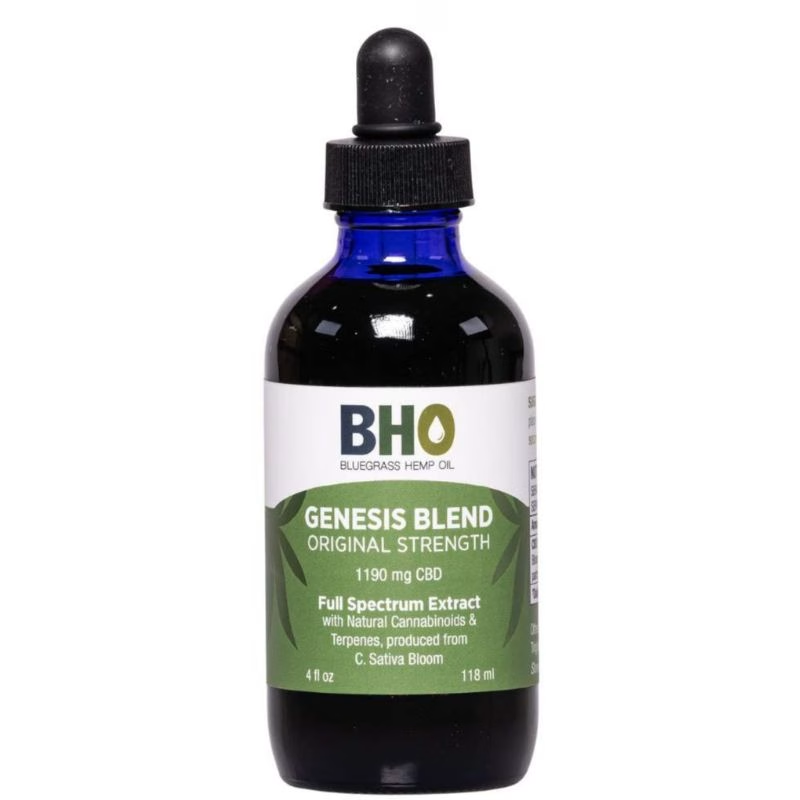
Genesis Blend is Bluegrass Hemp Oil’s full-spectrum CBD oil foundation used across select products. Shoppers should review product labels and COAs to understand CBD per mL, total CBD, ingredients, THC content, and cannabinoid profile.
Is Bluegrass Hemp Oil CBD oil full-spectrum?
Bluegrass Hemp Oil is known for full-spectrum CBD education and product transparency. Shoppers should review each product label and COA to confirm current extract type, cannabinoid profile, THC content, and product details.
Is Bluegrass Hemp Oil CBD oil lab-tested?
Bluegrass Hemp Oil emphasizes product transparency and lab-testing support. Shoppers should review the available COA for the specific product and batch before use.
Is Bluegrass Hemp Oil CBD oil made with Kentucky-grown hemp?
Bluegrass Hemp Oil is rooted in Kentucky hemp and full-spectrum CBD education. Product pages and labels should be used to confirm current sourcing, ingredients, and product details.
How do I choose the right Bluegrass Hemp Oil CBD oil?
Choose by reviewing CBD per mL, total CBD, bottle size, extract type, THC content, carrier oil, serving directions, COA access, and personal routine. Contact Bluegrass Hemp Oil for product-label help before buying.
CBD Oil FAQ
Kentucky CBD Oil and Local Shopping Questions
Where can I buy CBD oil in Kentucky?
Customers can shop Bluegrass Hemp Oil CBD oil online or contact the Kentucky team for help comparing product labels, CBD amount, THC information, serving directions, and COAs. Local shoppers can also use Bluegrass Hemp Oil store resources for product support.
Where can I buy CBD oil in Lexington, KY?
Customers searching for CBD oil in Lexington, KY can contact or visit Bluegrass Hemp Oil for product support, label questions, and COA guidance. Compare products by CBD amount, extract type, ingredients, THC information, and lab testing.
Where can I buy CBD oil near Midway, KY?
Customers near Midway, KY can use Bluegrass Hemp Oil’s local store support to compare CBD oil, gummies, capsules, topicals, and pet products. Review product labels and COAs before choosing.
Can I order CBD oil online?
Yes. Bluegrass Hemp Oil offers online shopping for CBD products. Review product pages for current pricing, availability, ingredients, package size, serving directions, and lab-testing information.
What should I ask before buying CBD oil locally?
Ask about CBD per mL, total CBD per bottle, extract type, THC content, ingredients, carrier oil, serving directions, COA access, batch testing, and whether the company avoids disease-treatment claims.
What makes a CBD oil company trustworthy?
A trustworthy CBD oil company should provide clear labels, batch-specific COAs, product support, transparent ingredients, THC information, and responsible education that avoids disease-treatment claims.
Buyer Checklist
How to Compare CBD Oil Before Buying
Use product labels and COAs as your source of truth. A quality CBD oil should make it easy to compare serving strength, ingredients, THC content, testing, and support before you choose.
| What to Check | Why It Matters |
|---|---|
| CBD per mL | Helps compare serving strength. |
| Total CBD per bottle | Helps compare product size. |
| Bottle size | Helps calculate CBD concentration. |
| Extract type | Shows whether the product is full-spectrum, broad-spectrum, or isolate. |
| THC content | Important for THC-sensitive shoppers and drug-testing concerns. |
| Carrier oil | Helps review ingredients and dietary needs. |
| COA access | Helps verify product batch, potency, and cannabinoid profile. |
| Serving directions | Helps shoppers use the product according to the label. |
| Company support | Helps customers ask product questions before buying. |
Helpful Resources
Helpful CBD Oil Resources
Use these Bluegrass Hemp Oil guides when you want deeper product education, label support, lab-testing information, or help comparing CBD formats.
How to Take CBD Oil: Serving Size, Safety & CBD Drops
Understand dropper use, product labels, serving directions, and responsible-use questions.
Shop Full-Spectrum CBD Oil
Compare current Bluegrass Hemp Oil CBD oil products by label, ingredients, and COA access.
CBD Lab Testing & Certificates of Analysis
Review how lab reports help verify CBD potency, THC content, and batch details.
Full-Spectrum CBD Guide
Learn what full-spectrum hemp extract may contain and why COAs matter.
CBD, THC & Drug Testing FAQ
Review THC awareness, full-spectrum CBD, and drug-testing risk questions.
CBD Product Comparison FAQ
Compare oils, gummies, capsules, topicals, extract types, and COA review steps.
CBD Oil vs CBD Gummies vs Capsules
Compare product formats by serving style, timing, ingredients, and label clarity.
Bluegrass Hemp Oil CBD Answer Library
Return to the main CBD education hub for more shopper questions.
Bill Polyniak and the Bluegrass Hemp Oil Story
Learn more about the founder behind Bluegrass Hemp Oil education.
Contact Bluegrass Hemp Oil for Product Help
Ask the Bluegrass Hemp Oil team about labels, COAs, ingredients, and product options.
Product Support
Ready to Compare Bluegrass Hemp Oil CBD Oil?
Review the product label, CBD per mL, total CBD, carrier oil, ingredients, THC information, serving directions, and batch-specific lab testing before choosing. Bluegrass Hemp Oil can help you compare CBD oil with confidence.
Bluegrass Hemp Oil Education
CBD Oil Education from Bluegrass Hemp Oil
This CBD Oil FAQ is designed to help shoppers ask better questions before buying: What type of extract is used? How much CBD is listed per mL? Does the product contain THC? Is the COA current? Are the ingredients clearly listed? Can the company answer product questions?
FDA Disclaimer
These statements have not been evaluated by the Food and Drug Administration. Bluegrass Hemp Oil products are not intended to diagnose, treat, cure, or prevent any disease. Talk with a qualified healthcare professional before using CBD if you take medication, have liver concerns, are pregnant or nursing, are subject to drug testing, or manage a medical condition. Keep CBD oil out of reach of children and pets.